Open Access Publisher and Free Library
SOCIAL SCIENCES.jpeg

SOCIAL SCIENCES

Social sciences examine human behavior, social structures, and interactions in various settings. Fields such as sociology, psychology, anthropology, and economics study social relationships, cultural norms, and institutions. By using different research methods, social scientists seek to understand community dynamics, the effects of policies, and factors driving social change. This field is important for tackling current issues, guiding public discussions, and developing strategies for social progress and innovation.

Unpacking the Politics of the US Deportation System

By Tina Law 

There is a growing multidisciplinary effort to understand the political causes and consequences of the US deportation system amid rapidly changing policies and significant data limitations. I contribute to this timely work by considering how interactions between an increasingly empowered executive branch and a politically polarized Congress shape deportation policymaking. I apply a policy feedback approach, a theoretical lens that analyzes policies and polities as co-constitutive, and construct a novel dataset to computationally analyze how Congressmembers publicly responded on Twitter to the Trump administration’s implementation and suspension of the family separation policy in 2018, during which migrant parents were prosecuted and detained separately from their children. Findings suggest that Republican and Democratic Congressmembers are unlikely to respond to executive assertions of power on deportation, even when policies are highly unpopular among the public. This raises concerns about shared governance on deportation policy and its implications for migration and democracy.

Imitate, Then Escalate: Social Influence and Its Consequences for the Subfederal Deportation System in the United States

By Ian G. Peacock 

I examine how social influence shapes both the adoption and implementation of 287(g) agreements—federal-local contracts that deputize local law enforcement to enforce immigration law. Drawing on organizational theory, the article highlights the role of public official associations (POAs) in diffusing interest in these agreements across counties. Using data on application letters and quasi-experimental methods, the study shows that counties with stronger ties to POAs were more likely to express interest in 287(g) agreements and to imitate language used by peer jurisdictions. It then links this imitation to variation in enforcement intensity: Counties that closely copied others’ applications were more likely to escalate their institutional commitment, including devoting more jail space to Immigration and Customs Enforcement (ICE) detainees, complying with ICE detainer requests at higher rates, and becoming more central to ICE’s detainee transfer network. This suggests that social influence may shape not only entry into immigration enforcement but also its long-term implementation.

The US Deportation System: History, Impacts, and New Empirical Research

By Caitlin Patler, Bradford Jones 

The United States is unique in the size and scope of its deportation system. Between 2001 and 2022, US Immigration and Customs Enforcement (ICE) carried out nearly 6.5 million deportations. Deportation is often framed as a singular event that happens to an individual. We conceptualize deportation more broadly as a system that encompasses premigration, within-US, and post-deportation contexts and outcomes. In this introduction, we explain this conceptualization, establishing the existence of differential paths into the deportation system that begin even prior to migration, depending on migrants’ access to paths to legal entry, which are shaped by political and economic factors. We then review multidisciplinary literature on the implications of the deportation system for individuals, families, and communities in the United States, as well as for the US economy, politics, and political outcomes. Finally, we review research on post-deportation outcomes in countries of origin and how deportation can lead to remigration to the United States, thus rebooting the deportation system. While a broad and interdisciplinary literature has helped illuminate the deportation system, there is still much to learn. To that end, we end with a description of the contributions of this issue and directions and challenges for future research.

AT WHAT COST? Inside the Trump Administration's Secret Deportation Deals

By the U..S. SENATE FOREIGN RELATIONS COMMITTEE.  MINORITY REPORT

For decades, the enforcement of U.S. immigration law has required coordination with foreign governments. But it has never before played such a central and transactional role in American foreign policy. This report finds that the Trump Administration has expanded and institutionalized a system in which the United States urges or coerces countries to accept migrants who are not their citizens, often through arrangements that are costly, wasteful and poorly monitored. Deporting migrants to countries they have no connection to—once a rare tool used only in exceptional circumstances—has become a routine instrument of diplomacy. This report finds that this shift has had three central consequences: First, the Administration’s use of third country deportations is coming at great taxpayer cost. The United States has spent tens of millions of dollars to move a relatively small number of individuals to third countries, some of whom, after being flown thousands of miles, are then flown back to their home country, again on U.S.-funded flights. In many cases, migrants could have been returned directly to their countries of origin, avoiding unnecessary flights and additional costs. Instead, taxpayers are funding a global deportation network that is little more than an expensive deterrent with no measurable benefit.Second, the Administration is conducting questionable deals by making direct payments primarily to corrupt and unstable foreign governments with track records of public corruption, human rights abuses and human trafficking, relying on assurances that these countries will comply with certain obligations. Yet there is no evidence the State Department is monitoring how U.S. funds are used, tracking the treatment of deportees or enforcing the terms of these agreements. In some cases, U.S. officials have been instructed not to follow up at all. This is not disciplined enforcement; it is outsourcing responsibility to governments the United States itself does not trust. Third, the Administration is not being transparent with Congress or the American people about the extent of its deal-making with foreign governments that agree to take in migrants, including what additional pressures and sweeteners it may be applying or offering up. Even where there are formal agreements with countries, questions remain about whether the Administration has made side deals or is providing other forms of U.S. assistance or favorable treatment. While distinct from third country deportations, the Administration has shown that in pursuit of its deportation agenda, it is even willing to cut deals with adversarial governments like Iran. Under secretive arrangements, the Administration has forcibly deported Iranians, including vulnerable individuals such as religious minorities and political dissidents. There is no transparency around the full terms of these arrangements with foreign governments and whether these deals have come at the expense of advancing more pressing U.S. national security interests. Taken together, these practices reflect a troubling shift in how the United States is exercising power. Deportation is being used as a bargaining chip. U.S. diplomacy is being conducted through secret cash payments and quiet concessions. Countries are being pressured with threats of tariffs, visa bans or cuts to assistance. Millions of taxpayer dollars are being spent without meaningful oversight or accountability. And speed and deterrence are being prioritized over due process and respect for human rights. At a time when the Administration is already straining its relationships with longstanding allies, it is building transactional relationships with corrupt and adversarial regimes—not around shared interests or strategic goals, but opaque deals that do not serve American taxpayers or American security. As Members of the Senate Foreign Relations Committee, we believe Congress has a responsibility to understand how U.S. foreign policy is being conducted, how taxpayer funds are being used and whether the Administration’s actions strengthen or undermine American interests.

Rage Against Society: Polarization, Violence, and What’s Really Going On

BY JEREMY DALRYMPLE, LISEL PETIS

Americans today increasingly describe the country as divided, dysfunctional, and drifting toward crisis. Political opponents are no longer merely mistaken—they are viewed as existential threats. And the majority of Americans believe political polarization is worse today than it was five years ago. In fact, “polarization” was Merriam-Webster’s 2024 Word of the Year, reflecting the growing belief that our nation is fracturing.

But what distinguishes today’s polarization is not just that Americans disagree—it is an attitude that accelerates the acceptance of violence as a possible response.

This growing sentiment has been fueled by high-profile tragedies, such as the assassination of political activist Charlie Kirk, the murder of a Minnesota state legislator and her husband, and the attempted assassinations of President Donald J. Trump, among others. According to the U.S. Capitol Police, the number of threats or concerning statements targeting members of Congress, their families, and staff has more than doubled in the past seven years, with 9,474 reported in 2024 alone—marking the second consecutive annual increase. More than one-third of election officials know someone who resigned (at least in part) due to safety concerns, and local leaders across the country are reporting elevated threats as well. Unsurprisingly, most Americans believe political violence is up and expect it to continue to grow. More concerning, a growing number of Americans say they “may have to resort to political violence to get the country back on track.”

Of course, political violence is not new to America. In the 18th and 19th centuries, acts like duels were rooted in a shared culture of honor, and congressional canings often arose in the heat of the moment over political disputes. In the 1960s and 1970s, political violence was more organized and typically tied to specific movements like civil rights or anti-war, where violence was used to advance defined policy goals.But violence no longer appears to advance a political agenda. Instead, it is impulsive, attention seeking, or crisis-driven—and far from culturally accepted.

What Americans mean by “political violence” is increasingly unclear. The phrase has become shorthand for nearly any shocking public attack, from targeted assassinations to mass shootings to online death threats. Some incidents may indeed be political; however, political violence remains rare. Regardless, this type of atypical violence is more prevalent now than at any point in recent memory and cannot be ignored.

Not only does mislabeling violent acts as politically motivated inflate public fear, it also obscures a deeper reality: rising rage against society itself.

This rage operates in a vacuum of political purpose, driven by alienation, instability, psychological distress, or a desire to be seen rather than any belief or cause. In these cases, violence becomes expression rather than advocacy. Attacks now occur in public spaces once considered safe, including schools, parks, courthouses, and civic forums. Some perpetrators invoke partisan language, while others profess no cause at all.

Washington, DC: R Street, 2025. 11p.

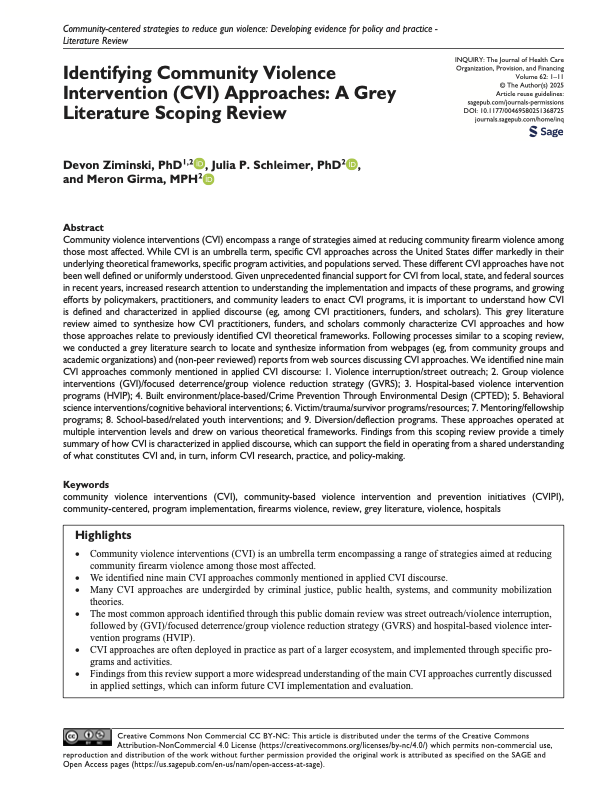
Identifying Community Violence Intervention (CVI) Approaches: A Grey Literature Scoping Review 

Community violence interventions (CVI) encompass a range of strategies aimed at reducing community firearm violence among those most affected. While CVI is an umbrella term, specific CVI approaches across the United States differ markedly in their underlying theoretical frameworks, specific program activities, and populations served. These different CVI approaches have not been well defined or uniformly understood. Given unprecedented financial support for CVI from local, state, and federal sources in recent years, increased research attention to understanding the implementation and impacts of these programs, and growing efforts by policymakers, practitioners, and community leaders to enact CVI programs, it is important to understand how CVI is defined and characterized in applied discourse (eg, among CVI practitioners, funders, and scholars). This grey literature review aimed to synthesize how CVI practitioners, funders, and scholars commonly characterize CVI approaches and how those approaches relate to previously identified CVI theoretical frameworks. Following processes similar to a scoping review, we conducted a grey literature search to locate and synthesize information from webpages (eg, from community groups and academic organizations) and (non-peer reviewed) reports from web sources discussing CVI approaches. We identified nine main CVI approaches commonly mentioned in applied CVI discourse: 1. Violence interruption/street outreach; 2. Group violence interventions (GVI)/focused deterrence/group violence reduction strategy (GVRS); 3. Hospital-based violence intervention programs (HVIP); 4. Built environment/place-based/Crime Prevention Through Environmental Design (CPTED); 5. Behavioral science interventions/cognitive behavioral interventions; 6. Victim/trauma/survivor programs/resources; 7. Mentoring/fellowship programs; 8. School-based/related youth interventions; and 9. Diversion/deflection programs. These approaches operated at multiple intervention levels and drew on various theoretical frameworks. Findings from this scoping review provide a timely summary of how CVI is characterized in applied discourse, which can support the field in operating from a shared understanding of what constitutes CVI and, in turn, inform CVI research, practice, and policy-making.

INQUIRY: The Journal of Health Care Organization, Provision, and Financing Volume 62: 1–11

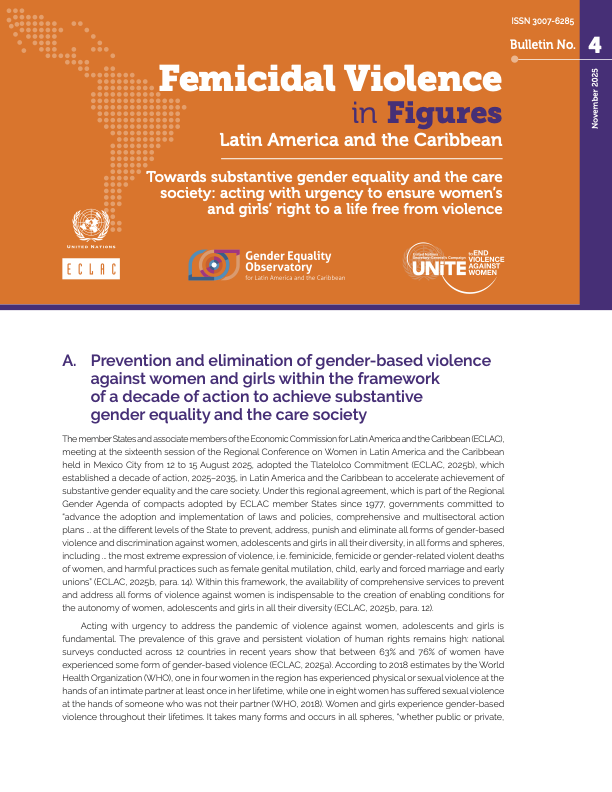
Towards substantive gender equality and the care society: acting with urgency to ensure women’s and girls’ right to a life free from violence

By The Economic Commission for Latin America and the Caribbean - ECLAC

This Bulletin No. 4 on feminicidal violence presents the official statistics submitted by the region’s governments to the Gender Equality Observatory for Latin America and the Caribbean on femicides, feminicides and gender-related killings of women reported in 2024. It is part of the UNiTE to End Violence against Women campaign of the Secretary-General of the United Nations, aimed at preventing and eliminating gender-based violence against women and girls worldwide. The campaign calls on governments, civil society, women’s organizations, young people, the private sector, the media and the entire United Nations system to join forces to tackle the global pandemic of violence against women and girls. The slogan for 2025 is “End digital violence against all women and girls”.3 Within this framework, it is important to highlight progress in the region in addressing online violence against women and girls, which is defined as “any act of gender-based violence against women that is committed, assisted or aggravated in part or fully by the use of information and communications technologies, ... against a woman because she is a woman, or affects women disproportionately” (United Nations, 2018).4 It is expressed in various forms and hampers women’s full autonomy and participation in society. Some groups of women are more vulnerable owing to their activities, identity or participation in the public sphere. Gender-based online violence includes a broad spectrum of behaviours, from cyberbullying, the unauthorized disclosure of intimate images and illegal access to personal information, to political violence and harassment targeting, in particular, women in leadership roles and public office (such as human rights defenders, journalists and activists) (ECLAC, 2023). Some legislative measures adopted in recent years reflect these advances. Brazil has passed a law on the responsibility of its federal police to investigate cybercrime (2019). In Ecuador, the Comprehensive Organic Criminal Code was amended in 2021 to criminalize online harassment and unauthorized dissemination of sexual or intimate images and to establish specific penalties for such acts. This regulatory framework also addresses sexual crimes perpetrated against children and adolescents on digital platforms, including online grooming. In Mexico, Olimpia’s Law of 2021, which established a set of reforms to the General Act on Women’s Access to a Violence-free Life and the Federal Criminal Code, recognizes online violence and penalties for crimes that violate people’s sexual privacy online. To date, 29 federal entities in Mexico have adopted regulations under this framework. In 2023, that country also passed the Ingrid Act, which establishes penalties for public servants who disclose images of victims and survivors of violence, with a view to protecting the dignity and integrity of these victims and survivors. This law also included an amendment to the Criminal Code to broaden the penalties for corruption and harassment of minors through electronic media. In 2020, Guatemala issued decrees against school bullying, while in Nicaragua, the Special Act on Cybercrime was adopted, which establishes specific penalties for crimes committed in the digital environment.Online gender-based violence against women is linked to other forms of violence and to the most extreme expression of gender-based violence, feminicide (the subject of this Bulletin), as it often reflects a continuum of discrimination and violence that begins online and leads to violence offline and vice versa. It also includes the use of technology itself to carry out violent acts against women and girls (for example, to locate victims or control their lives). Often, the different forms of online violence are an extension of coercive control and allow an acceleration in the progression of riskin abusive relationships, with technology and digital spaces allowing violence to continue even when perpetrators are not in physical proximity to survivors (United Nations Population Fund [UNFPA], 2021). A survey conducted by the United Nations Educational, Scientific and Cultural Organization (UNESCO) notes the high levels of online violence against women journalists, with 20% of women respondents in that sector saying that they had been attacked or abused offline in connection with online violence they had experienced. As a direct result, 13% of journalists surveyed had increased their physical security in responseto  online violence (Posetti et al, 2020). Similarly, a case study carried out by the Ibero-American General Secretariat (SEGIB) and the United Nations Development Programme (UNDP) in the region (Ibero-American General Secretariat, United Nations Development Programme and the Ibero-American Initiative to Prevent and Eliminate Violence Against Women, 2025) refers to groups of women who are particularly vulnerable to online violence owing to their participation in the public sphere. Violence occurs in different phases based on its intensity. It generally begins with constant harassment, then worsens with insults, disinformation and dissemination of false information, disclosure of personal data, threats and, lastly, verbal and physical violence. In Latin America and the Caribbean, the Follow-up Mechanism to the Belém do Pará Convention (MESECVI) underscores that online violence has a real impact online and offline, can worsen forms of violence, such as sexual harassment, and must be factored into risk assessment and protection plans (Follow-up Mechanism to the Belém do Pará Convention [MESECVI], 2024

Heretics

by Gilbert K. Chesterton.

In Heretics, the young and exuberant Gilbert K. Chesterton takes aim at the ruling ideas of the modern world with unmatched wit, clarity, and theatrical flair. First published in 1905, this explosive collection of essays dissects the fashionable philosophies and celebrated thinkers of the Edwardian era—from the cool determinism of H. G. Wells to the austere moralism of G. B. Shaw—with a mixture of sharp criticism, generous humor, and a deep belief in the necessity of conviction.

Chesterton’s “heretics” are the men and women who shape public opinion yet shy away from defining what they truly believe. Against the drift of vague optimism and breezy skepticism, he argues for the courage to declare, defend, and live by coherent principles. More than a century later, his challenge feels startlingly contemporary. In an age saturated with opinions but thin on first principles, Heretics speaks with renewed urgency and delight.

Vigorous, provocative, and endlessly quotable, Heretics remains one of Chesterton’s most engaging works—an invitation to think boldly, question fashion, and reclaim the intellectual adventure of believing in something definite. Whether read as cultural critique, literary performance, or philosophical provocation, it is a book that still has the power to unsettle, inspire, and illuminate.

Read-Me.Org Inc. New York-Philadelphia-Australia. 2026. 174p.

Artificial Intelligence Index Report 2024

Edited by Ray Perrault and Jack Clark

From the co-directors:

Although global private investment in AI decreased for the second consecutive year, investment in generative AI skyrocketed. More Fortune 500 earnings calls mentioned AI than ever before, and new studies show that AI tangibly boosts worker productivity. On the policymaking front, global mentions of AI in legislative proceedings have never been higher. U.S. regulators passed more AI-related regulations in 2023 than ever before. Still, many expressed concerns about AI’s ability to generate deepfakes and impact elections. The public became more aware of AI, and studies suggest that they responded with nervousness.

Stanford University Human Centered Artificial Intelligence. 2024. 502p.

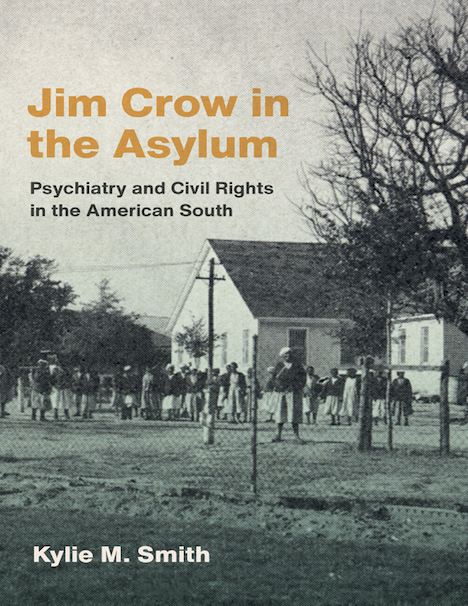
Jim Crow in the Asylum: 

Psychiatry and Civil Rights in the American South

By Kylie M. Smith

There is a complicated history of racism and psychiatric healthcare in the Deep South states of Georgia, Alabama, and Mississippi. The asylums of the Jim Crow era employed African American men and women; served as places of treatment and care for African Americans with psychiatric illnesses; and, inevitably, were places of social control. Black people who lived and worked in these facilities needed to negotiate complex relationships of racism with their own notions of community, mental health, and healing. Kylie M. Smith mixes exhaustive archival research, interviews, and policy analysis to offer a comprehensive look at how racism affected Black Southerners with mental illness during the Jim Crow era. Complicated legal, political, and medical changes in the late twentieth century turned mental health services into a battlefield between political ideology and psychiatric treatment approaches, with the fallout having long-term consequences for patient outcomes. Smith argues that patterns of racially motivated abuse and neglect of mentally ill African Americans took shape during this era and continue to the present day. As the mentally ill become increasingly incarcerated,Jim Crow in the Asylum reminds readers that, for many Black Southerners, having a mental illness was and still tantamount to committing a crime.

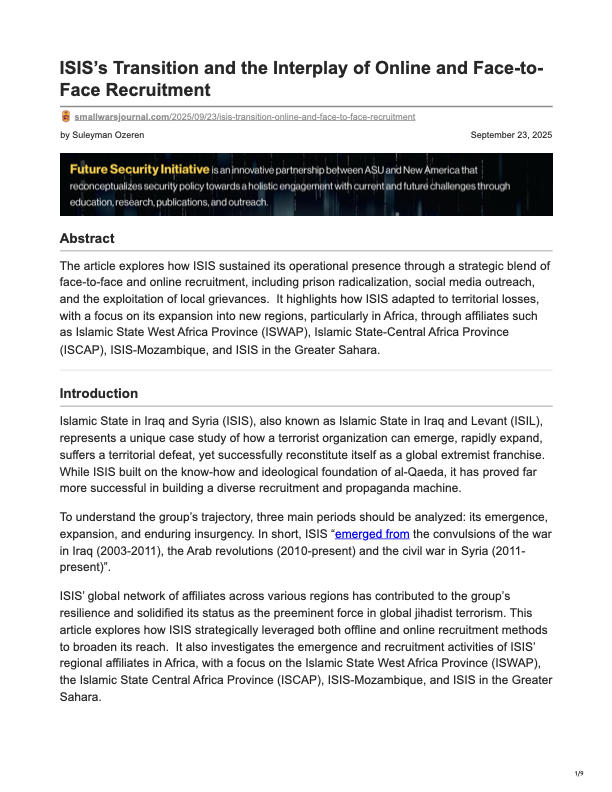
ISIS’s Transition and the Interplay of Online and Face-to-Face Recruitment

By Suleyman Ozeren,  Suat Cubukcu,  Gokhan Aksu

The article explores how ISIS sustained its operational presence through a strategic blend of face-to-face and online recruitment, including prison radicalization, social media outreach, and the exploitation of local grievances. It highlights how ISIS adapted to territorial losses, with a focus on its expansion into new regions, particularly in Africa, through affiliates such as Islamic State West Africa Province (ISWAP), Islamic State-Central Africa Province (ISCAP), ISIS-Mozambique, and ISIS in the Greater Sahara. 

Small Wars Journal, 2025

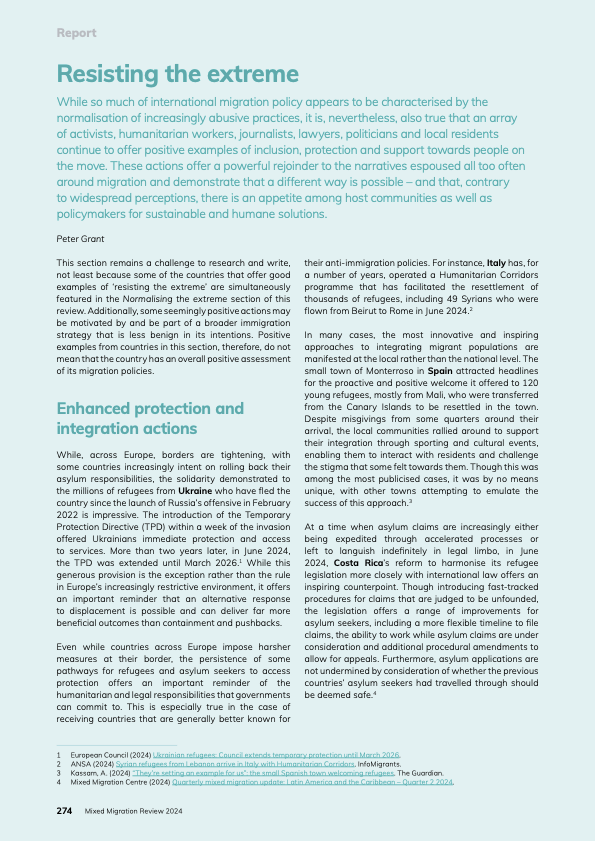
Resisting The Extreme 

By Peter Grant

While so much of international migration policy appears to be characterised by the normalisation of increasingly abusive practices, it is, nevertheless, also true that an array of activists, humanitarian workers, journalists, lawyers, politicians and local residents continue to offer positive examples of inclusion, protection and support towards people on the move. These actions offer a powerful rejoinder to the narratives espoused all too often around migration and demonstrate that a different way is possible – and that, contrary to widespread perceptions, there is an appetite among host communities as well as policymakers for sustainable and humane solutions. 

Mixed Migration Review, 2025. 6p.

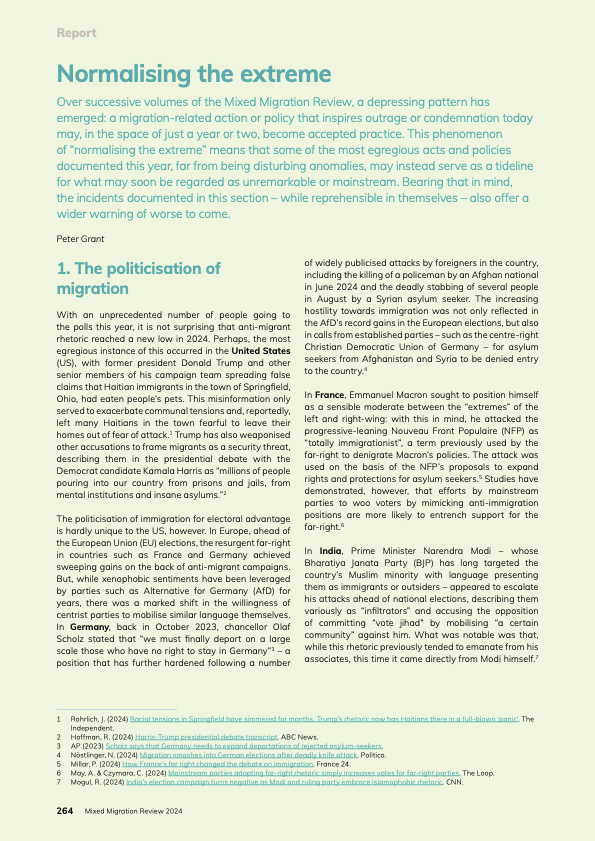
Normalising The Extreme

By Peter Grant

Over successive volumes of the Mixed Migration Review, a depressing pattern has emerged: a migration-related action or policy that inspires outrage or condemnation today may, in the space of just a year or two, become accepted practice. This phenomenon of “normalising the extreme” means that some of the most egregious acts and policies documented this year, far from being disturbing anomalies, may instead serve as a tideline for what may soon be regarded as unremarkable or mainstream. Bearing that in mind, the incidents documented in this section – while reprehensible in themselves – also offer a wider warning of worse to come.

Mixed Migration Review, 2024.. 10p.

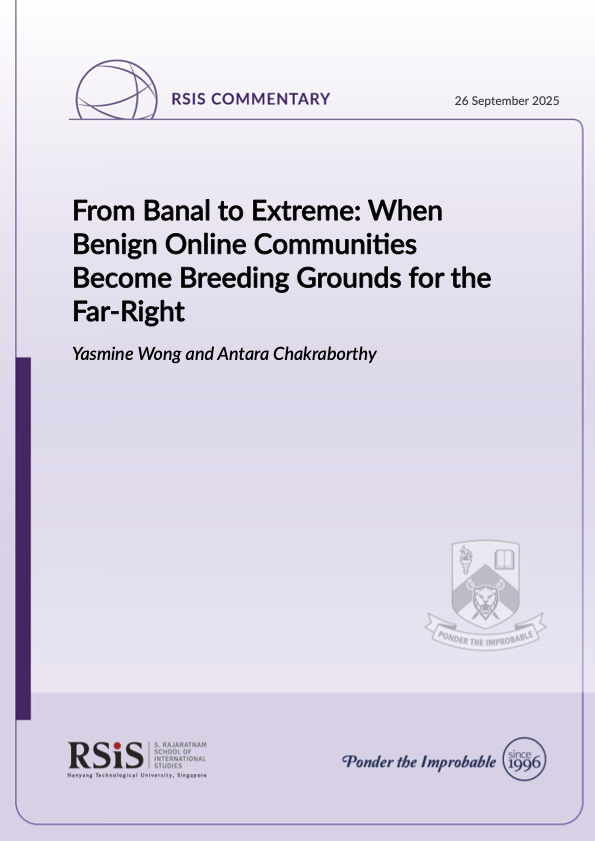
From Banal to Extreme: When Benign Online Communities Become Breeding Grounds for the Far-Right

By Yasmine Wong and Antara Chakraborthy

SYNOPSIS
The recent case of a 14-year-old male Singaporean radicalised through extremist content illustrates the dangers of how seemingly benign communities and platform algorithms are pipelines for radicalisation.


COMMENTARY

A 14-year-old male Singaporean was recently issued with Restriction Orders (RO) under Singapore’s Internal Security Act (ISA) for online self-radicalisation by what has been termed a “salad bar” of extremist ideologies, leading him to support the cause of the Islamic State in Iraq and Syria (ISIS) and far-right ideologies, such as the incel (aka involuntarily celibate) subculture.

The teenager had started unintentionally by accessing dubious or questionable far-right material posted by foreign extremists, which was recommended to him by platform algorithms after he consumed true crime content. This eventually led him to imbibe content supportive of the far-right and to join communities with violent antisemitic beliefs.

His encounter with incel (a portmanteau of “involuntary celibate”) ideology was similarly unintentional. An incel is a member of an online subculture of mostly male and heterosexual people who define themselves as unable to find a romantic or sexual partner, often blaming or hating women as a result. 

In 2023, after becoming more self-conscious about his appearance, he came across “looksmaxxing” content, a part of the incel subculture that focuses on maximising one’s own physical attractiveness. He started posting and sharing incel content online.

This transition reveals an interesting, albeit insidious, aspect of digital networks – the overlap and blurring of boundaries between extreme and benign communities, creating a pathway from the banal to the extreme. Increasingly, according to Matthew Kriner, managing director of the Accelerationism Research Consortium, “anything and everything is becoming a viable pathway to violence”.

Specifically, “antisocial, decentralised, online networks” are overlapping in ways that “encourage and inspire” young people to commit atrocities and various forms of violence. Amplified by algorithms, these ideologies are often deeply embedded within internet culture, making their extremist tenets difficult to detect.

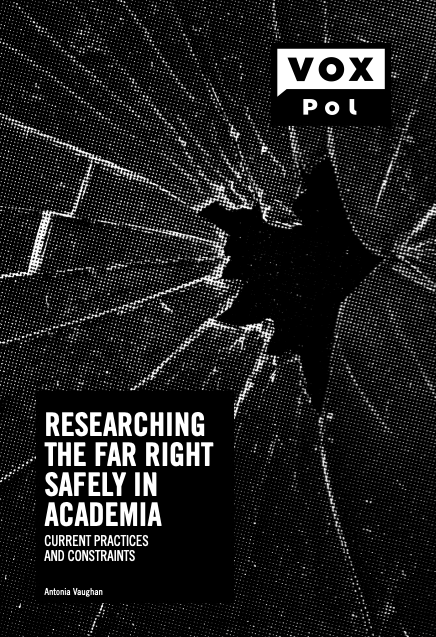
Researching The Far Right Safely In Academia Current Practices And Constraints

By Antonia Vaughan

Researchers of risky topics have benefitted from a burgeoning literature on researcher safety, including that specifically focused on researching the far right (Pearson et al. 2023; Pruden 2024; Gelashvili and Gagnon 2024; Sibley 2024). Much of this literature has focused on tackling urgent concerns and providing practical advice, targeting the individual and the institution. Drawing on 21 interviews with researchers of the far right and manosphere, this report complements these efforts by detailing how researcher safety is impacted by environmental factors. Focusing on three key stakeholders – the institution, the manager and the researcher themselves – the report illustrates how individual efforts and interactions between stakeholders have significant implications for safety and underlines the need to situate researchers within the academic context. Arguing that barriers to safety pivot on both what is known about risk and what is possible to mitigate, the report highlights areas to focus on to improve both current and future practice. To examine the impact of stakeholders and how their interactions have an impact on safety, this report proposes a matrix highlighting the varying roles, responsibilities and capabilities of each actor. In doing so, it illustrates the necessity of understanding the researcher within a broader framework rather than focusing on the researcher in isolation. These findings contribute to concerns about the ability of researchers to safeguard themselves, and the importance of environmental factors in affecting the safety of researchers. Although focused on researchers of the far right, the findings are likely applicable to researchers of extremism more broadly, who face similar harms in the same environment.

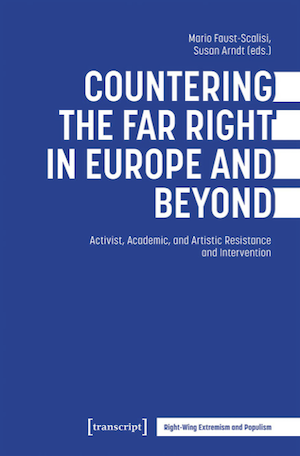
Countering the Far Right in Europe and Beyond. 

Activist, Academic, and Artistic Resistance and Intervention

By Faust-Scalisi, Mario (editor); 

Arndt, Susan (editor)

The far right and its fascism are on the rise. Again. The contributors to this volume bring together activist, scholarly, artist and journalist expertise on populism and propaganda, governance and media communication, far-right violence and terrorism. They address resistance strategies of academia and activism as well as NGOs and civil rights movements, by deconstructing far-right strategies of governance or communication and providing counter-argumentations and communication strategies, as well as strategies of political or civic education, empathy or solidarity as modes of intervention. The volume also contextualises the far right, taking historical and cross-spatial dis*continuities into account.

Bielefeld: transcript Verlag, 2025. 

Race and Multiraciality in Brazil and the United States. 

Converging Paths?

By Daniel G. Reginald

Although both Brazil and the United States inherited European norms that accorded whites privileged status relative to all other racial groups, the development of their societies followed different trajectories in defining white/black relations. In Brazil pervasive miscegenation and the lack of formal legal barriers to racial equality gave the appearance of its being a “racial democracy,” with a ternary system of classifying people into whites (brancos), multiracial individuals (pardos), and blacks (pretos) supporting the idea that social inequality was primarily associated with differences in class and culture rather than race. In the United States, by contrast, a binary system distinguishing blacks from whites by reference to the “one-drop rule” of African descent produced a more rigid racial hierarchy in which both legal and informal barriers operated to create socioeconomic disadvantages for blacks. But in recent decades, Reginald Daniel argues in this comparative study, changes have taken place in both countries that have put them on “converging paths.” Brazil’s black consciousness movement stresses the binary division between brancos and negros to heighten awareness of and mobilize opposition to the real racial discrimination that exists in Brazil, while the multiracial identity movement in the U.S. works to help develop a more fluid sense of racial dynamics that was long felt to be the achievement of Brazil’s ternary system. Against the historical background of race relations in Brazil and the U.S. that he traces in Part I of the book, including a review of earlier challenges to their respective racial orders, Daniel focuses in Part II on analyzing the new racial project on which each country has embarked, with attention to all the political possibilities and dangers they involve.

University Park, PA, Penn State University Pess, 2006

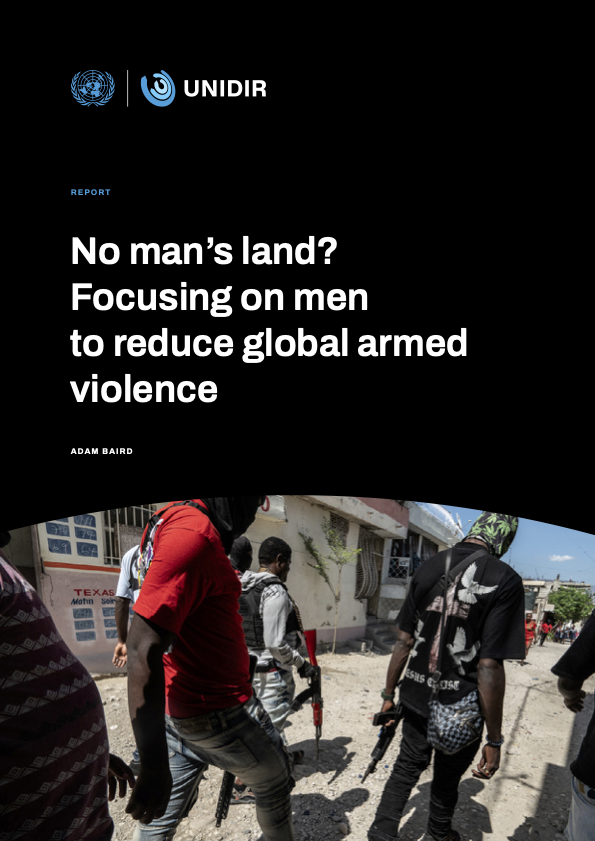
“No man’s land? Focusing on Men to Reduce Global Armed Violence”, 

By Adam Baird

Globally, 90% of firearms homicides are committed by men, and men also make up the vast majority of the victims. The highest rates of homicide are mainly found in cities in the Americas (including the Caribbean) and southern Africa, mainly in cities. “Men killing men” disproportionately affects young people in the Global South who live in precarious economic circumstances. This has been the consistent demographic of lethal armed violence for decades.

If men are at the centre of the global armed violence epidemic, it clearly has something to do with their gender. The report explains that when frustrated young men in contexts of persistent poverty gain easy access to small arms and ammunition, it creates a significant risk of an epidemic of lethal violence. This prompts the question: What work is being undertaken with men using a masculinities focus to prevent armed violence? The answer, in short, is none. Efforts to reduce armed violence that do not consider masculinities  will only have a limited effect.

The report suggests that greater debate about this issue is required and that the United Nations can lead progress by developing initiatives in collaboration with Member States, academia and civil society partners. However, to achieve this goal, greater advocacy, political support and funding are vital. 

UNIDIR, Geneva, 2025. 36p.

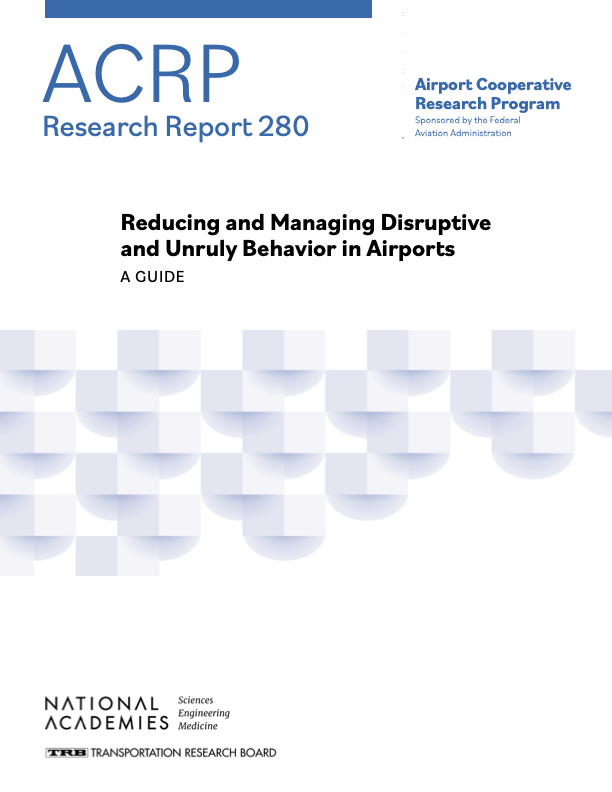
Reducing and Managing Disruptive and Unruly Behavior in Airports: A Guide.

By National Academies of Sciences, Engineering, and Medicine.

The number of incidents involving disruptive, threatening, or violent behavior in commercial airports has increased in recent years. However, much of the response to these incidents has been focused on addressing behavior in flight, leaving airport operators with limited guidelines tailored to the airport environment.

ACRP Research Report 280: Reducing and Managing Disruptive and Unruly Behavior in Airports: A Guide, from TRB's Airport Cooperative Research Program, presents a practical guide for reducing and responding to incidents of disruptive, threatening, or violent behavior in an airport setting. The guide examines the topic holistically and offers a structured approach to understanding root causes, prevention and mitigation strategies, coordinated response, and post incident analysis. 

Washington, DC: The National Academies Press. 2025. 100p

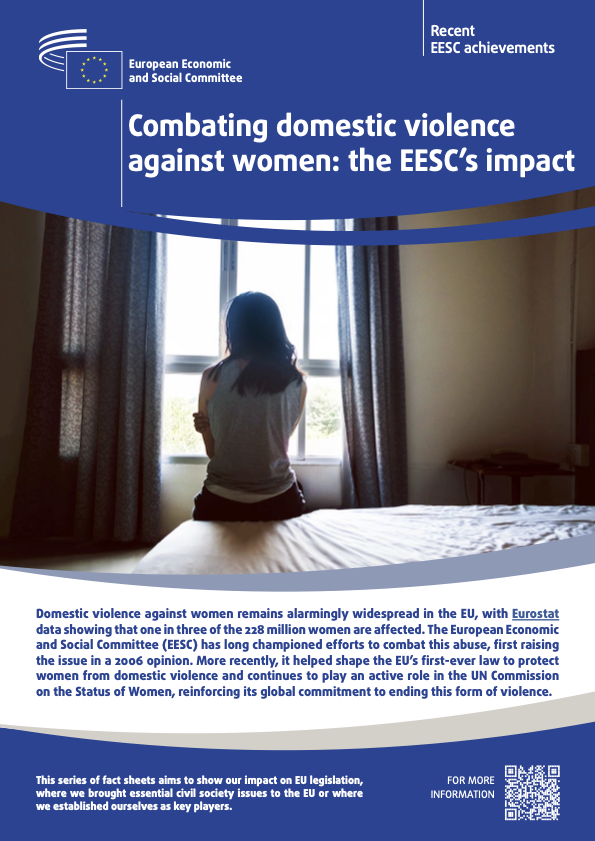
Combating Domestic Violence Against Women: The EESC’s impact

Domestic violence against women remains alarmingly widespread in the EU, with Eurostat data showing that one in three of the 228 million women are affected. The European Economic and Social Committee (EESC) has long championed efforts to combat this abuse, first raising the issue in a 2006 opinion. More recently, it helped shape the EU’s first-ever law to protect women from domestic violence and continues to play an active role in the UN Commission on the Status of Women, reinforcing its global commitment to ending this form of violence.

The first ever EU-wide legislation to fight violence against women and domestic violence.

In 2024, the EU adopted the first ever law to combat violence against women. The EESC directly contributed to this EU directive, which incorporated key provisions of our opinion:

  • a comprehensive definition of violence: the directive criminalises various forms of violence against women, such as female genital mutilation and cyber violence, aligning with the EESC’s call for a broad definition;

  • adopting an intersectional approach: the directive acknowledges the greater vulnerability of certain groups, including women with disabilities and migrant women, and calls for tailored support measures;

  • enhanced support services: the directive provides for specialised support services for victims, in line with the EESC’s emphasis on comprehensive victim support.

In addition, the EU set up the 116 016 EU-wide helpline number for victims of violence against women.

The EU directive not only criminalises various forms of violence, but also provides for the creation of victim support services and mandatory training for law enforcement, along with preventive measures such as awareness campaigns and educational programs. It also ensures cross-border cooperation and protection for victims, with legal procedures that are harmonised across EU Member States.

Member States will have until 14 June 2027 to transpose the directive into their national law and policy.

Strengthening EU measures:

The EESC recently adopted a further opinion, which identifies shortcomings in the directive and seeks to further strengthen EU-wide measures. It calls for:

  • a broader definition of violence against women (institutional violence, prostitution, chemical submission, pornography, etc.);

  • violence against women to be added to the list of EU crimes;

  • comprehensive sexuality education at all stages of education;

  • specific focus on women with disabilities and other vulnerable groups.

Taking action on the global stage

The Committee’s participation in the 69th session of the UN Commission on the Status of Women (UNCSW) provided an opportunity to reiterate the EESC’s position and recommendations on the issue of equality of women and the fight against gender-based violence. The EESC called for the direct involvement of civil society organisations in shaping national and regional plans to end violence against women. The political declaration adopted at the end of the session reaffirmed the global commitment to gender equality, including the commitment to end gender-based violence.

Looking ahead

The EESC remains committed to combating domestic violence and violence against women in general. It will continue its efforts to have newly emerging forms of violence recognised in the EU, such as ‘sexual digital forgeries’ or ‘deepfakes’. In June 2025, the EESC also adopted a resolution on Supporting the Declaration of principles for a gender-equal society, backing the European Commission’s Roadmap for Women’s Rights. This will guide the Committee’s policy agenda on gender equality in the long term.

  European Economic and Social Committee, 2025. 2p.