
Open Access Free Library
Fiction+Mediajpg.jpg

FICTION and MEDIA

CRIME AND MEDIA — TWO PEAS IN A POD

Posts tagged crime and punishment
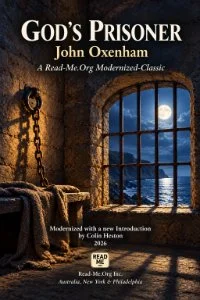
God’s Prisoner : A Modernized-Classic

By John Oxenham. Introduction and discussion notes b y Colin Heston

A murder no one suspects. A prisoner no jail can hold.

In a locked office in the City of London, James Ayrton faces ruin. His partner, John Brodie, has discovered the forged ledgers, and in a moment of rage and despair a single shot rings out. Within the hour, Brodie’s body is sealed in a packing case and lodged in a safe deposit vault under his own name. By morning Ayrton is beyond suspicion, free to take everything. He is also, as he soon discovers, a prisoner.

Then the impossible begins. Letters arrive from the Far East in Brodie’s handwriting. The newspapers report that Brodie survived a shipwreck and has married a fellow passenger. Ayrton, who knows exactly where Brodie lies, is driven to the edge of madness by a mystery he cannot confess and cannot solve.

First published in 1898, God’s Prisoner moves from the fog and gaslight of Victorian London to the blue water and coral reefs of the South Pacific. There, sailing under a new name aboard the trading schooner Bluewing, with a stubborn Yankee captain hunting a lost cargo of gold, Ayrton must face the question at the heart of the novel: can a man who has escaped all earthly justice ever be free?

Part psychological thriller, part sea adventure, and part story of redemption, this was among the first novels of John Oxenham (William Arthur Dunkerley, 1852-1941), the much-loved author of Bees in Amber and the hymn “In Christ There Is No East or West.” Readers who know Oxenham as a poet of quiet faith will discover here a gripping storyteller in the tradition of Wilkie Collins and Robert Louis Stevenson.

This Read-Me.Org Modernized-Classic edition features:

  • The complete text of the 1899 Henry Holt edition, corrected and lightly modernized in spelling and hyphenation, with Oxenham’s language and dialogue preserved

  • A new introduction by Colin Heston on the novel, its author, and its themes of guilt, conscience, and grace

  • Three original illustrations opening each of the novel’s three books: The Crime, The Punishment, and The Redemption

  • Review and discussion questions, ideal for book clubs, classrooms, and readers of Victorian fiction

Read-Me.Org Inc. is a nonprofit publisher dedicated to free online access to classic books. Every purchase supports its mission.

Read-Me.Org Inc. New York-Philadelphia-Australia. 2026. p237.
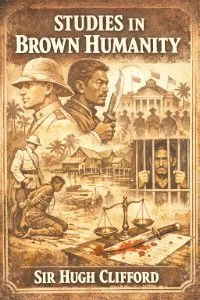
Studies in Brown Humanity: :Being Scrawls and Smudges in Sepia, White, and Yellow

By Hugh Clifford (Author), Graeme Newman (Introduction)

Studies in Brown Humanity by Sir Hugh Clifford is a striking collection of literary sketches drawn from the author’s experiences as a British colonial administrator in the Malay Peninsula during the late nineteenth century. Blending storytelling with observation, Clifford presents a series of vivid portraits of village life, local customs, personal conflicts, and dramatic encounters shaped by the social structures of colonial Southeast Asia. The narratives explore themes of honor, betrayal, justice, and authority, often focusing on moments when traditional Malay codes of conduct collide with the legal and moral framework imposed by the British colonial state.

Although written as literary sketches rather than formal social analysis, the book provides revealing insights into the ways communities understand wrongdoing and punishment. Clifford’s stories depict acts of violence, disputes over reputation, and conflicts between individuals and authority, illustrating how social norms, kinship ties, and communal expectations shape both criminal behavior and responses to it. In this sense, the work can be read not only as colonial literature but also as an early, informal contribution to the sociological study of crime and social control.

At the same time, Studies in Brown Humanity reflects the attitudes and assumptions of its imperial context. Clifford’s interpretations are filtered through the perspective of a European observer, and the book reveals much about the intellectual climate of the British Empire at the turn of the twentieth century. For modern readers, the volume is therefore both a vivid narrative of colonial life and a historical document that illuminates how crime, justice, and cultural difference were understood within the framework of empire.

Rich in atmosphere and dramatic detail, Clifford’s work remains valuable today as a window into the complex social worlds of colonial Southeast Asia and as a reminder of how early narratives about crime and punishment were shaped by the cultural and political conditions of their time.

Read-Me.Org Inc. New York-Philadelphia-Australia. 2026. 291p.