
Open Access Publisher and Free Library
Fiction+Mediajpg.jpg

FICTION and MEDIA

CRIME AND MEDIA — TWO PEAS IN A POD

Posts in Political Science
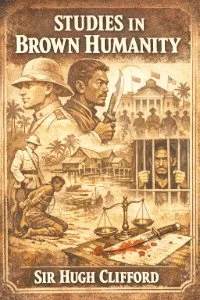
Studies in Brown Humanity: :Being Scrawls and Smudges in Sepia, White, and Yellow

By Hugh Clifford (Author), Graeme Newman (Introduction)

Studies in Brown Humanity by Sir Hugh Clifford is a striking collection of literary sketches drawn from the author’s experiences as a British colonial administrator in the Malay Peninsula during the late nineteenth century. Blending storytelling with observation, Clifford presents a series of vivid portraits of village life, local customs, personal conflicts, and dramatic encounters shaped by the social structures of colonial Southeast Asia. The narratives explore themes of honor, betrayal, justice, and authority, often focusing on moments when traditional Malay codes of conduct collide with the legal and moral framework imposed by the British colonial state.

Although written as literary sketches rather than formal social analysis, the book provides revealing insights into the ways communities understand wrongdoing and punishment. Clifford’s stories depict acts of violence, disputes over reputation, and conflicts between individuals and authority, illustrating how social norms, kinship ties, and communal expectations shape both criminal behavior and responses to it. In this sense, the work can be read not only as colonial literature but also as an early, informal contribution to the sociological study of crime and social control.

At the same time, Studies in Brown Humanity reflects the attitudes and assumptions of its imperial context. Clifford’s interpretations are filtered through the perspective of a European observer, and the book reveals much about the intellectual climate of the British Empire at the turn of the twentieth century. For modern readers, the volume is therefore both a vivid narrative of colonial life and a historical document that illuminates how crime, justice, and cultural difference were understood within the framework of empire.

Rich in atmosphere and dramatic detail, Clifford’s work remains valuable today as a window into the complex social worlds of colonial Southeast Asia and as a reminder of how early narratives about crime and punishment were shaped by the cultural and political conditions of their time.

Read-Me.Org Inc. New York-Philadelphia-Australia. 2026. 291p.
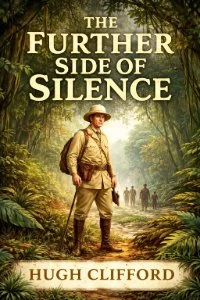
The Further Side of Silence

Sir Hugh Clifford, K. C. M. G.

The Further Side of Silence by Hugh Clifford is a collection of interrelated stories set in the Malay Peninsula during the late nineteenth century, a period when traditional Malay societies were increasingly encountering the expanding authority of the British Empire. Drawing heavily on Clifford’s own experiences as a colonial administrator in the region, the book portrays the lives, customs, conflicts, and moral dilemmas of the people who inhabited the jungles, villages, and royal courts of Malaya.

Through dramatic narratives and vivid descriptions of the tropical landscape, Clifford explores themes of loyalty, honor, justice, and power within a society shaped by ancient traditions and emerging colonial rule. His stories depict Malay chiefs, warriors, villagers, and forest peoples whose lives are entangled in political intrigue, personal rivalries, and the pressures of a changing world.

Part adventure literature and part social observation, the book offers modern readers a window into the cultural and political realities of Southeast Asia during a transformative historical moment. At the same time, it stands as an example of early twentieth-century colonial literature, reflecting both the fascination and the assumptions with which Western writers interpreted the societies they governed.

Read-Me.Org Inc. New York-Philadelphia-Australia. 2026. 198p.

5 Grams: Crack Cocaine, Rap Music, and the War on Drugs

By Dimitri A. Bogazianos

In 2010, President Barack Obama signed a law repealing one of the most controversial policies in American criminal justice history: the one hundred to one sentencing disparity between crack cocaine and powder whereby someone convicted of “simply” possessing five grams of crack—the equivalent of a few sugar packets—had been required by law to serve no less than five years in prison. In this highly original work, Dimitri A. Bogazianos draws on various sources to examine the profound symbolic consequences of America’s reliance on this punishment structure, tracing the rich cultural linkages between America’s War on Drugs, and the creative contributions of those directly affected by its destructive effects.

Focusing primarily on lyrics that emerged in 1990s New York rap, which critiqued the music industry for being corrupt, unjust, and criminal, Bogazianos shows how many rappers began drawing parallels between the “rap game” and the “crack game." He argues that the symbolism of crack in rap’s stance towards its own commercialization represents a moral debate that is far bigger than hip hop culture, highlighting the degree to which crack cocaine—although a drug long in decline—has come to represent the entire paradoxical predicament of punishment in the U.S. today.

UA Open. New York; London: NYU Press, 2011. 216p.