
Open Access Publisher and Free Library
Fiction+Mediajpg.jpg

FICTION and MEDIA

CRIME AND MEDIA — TWO PEAS IN A POD

Posts in travelogue
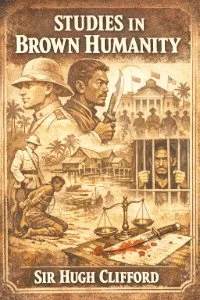
Studies in Brown Humanity: :Being Scrawls and Smudges in Sepia, White, and Yellow

By Hugh Clifford (Author), Graeme Newman (Introduction)

Studies in Brown Humanity by Sir Hugh Clifford is a striking collection of literary sketches drawn from the author’s experiences as a British colonial administrator in the Malay Peninsula during the late nineteenth century. Blending storytelling with observation, Clifford presents a series of vivid portraits of village life, local customs, personal conflicts, and dramatic encounters shaped by the social structures of colonial Southeast Asia. The narratives explore themes of honor, betrayal, justice, and authority, often focusing on moments when traditional Malay codes of conduct collide with the legal and moral framework imposed by the British colonial state.

Although written as literary sketches rather than formal social analysis, the book provides revealing insights into the ways communities understand wrongdoing and punishment. Clifford’s stories depict acts of violence, disputes over reputation, and conflicts between individuals and authority, illustrating how social norms, kinship ties, and communal expectations shape both criminal behavior and responses to it. In this sense, the work can be read not only as colonial literature but also as an early, informal contribution to the sociological study of crime and social control.

At the same time, Studies in Brown Humanity reflects the attitudes and assumptions of its imperial context. Clifford’s interpretations are filtered through the perspective of a European observer, and the book reveals much about the intellectual climate of the British Empire at the turn of the twentieth century. For modern readers, the volume is therefore both a vivid narrative of colonial life and a historical document that illuminates how crime, justice, and cultural difference were understood within the framework of empire.

Rich in atmosphere and dramatic detail, Clifford’s work remains valuable today as a window into the complex social worlds of colonial Southeast Asia and as a reminder of how early narratives about crime and punishment were shaped by the cultural and political conditions of their time.

Read-Me.Org Inc. New York-Philadelphia-Australia. 2026. 291p.

The Further Side of Silence

Sir Hugh Clifford, K. C. M. G.

The Further Side of Silence by Hugh Clifford is a collection of interrelated stories set in the Malay Peninsula during the late nineteenth century, a period when traditional Malay societies were increasingly encountering the expanding authority of the British Empire. Drawing heavily on Clifford’s own experiences as a colonial administrator in the region, the book portrays the lives, customs, conflicts, and moral dilemmas of the people who inhabited the jungles, villages, and royal courts of Malaya.

Through dramatic narratives and vivid descriptions of the tropical landscape, Clifford explores themes of loyalty, honor, justice, and power within a society shaped by ancient traditions and emerging colonial rule. His stories depict Malay chiefs, warriors, villagers, and forest peoples whose lives are entangled in political intrigue, personal rivalries, and the pressures of a changing world.

Part adventure literature and part social observation, the book offers modern readers a window into the cultural and political realities of Southeast Asia during a transformative historical moment. At the same time, it stands as an example of early twentieth-century colonial literature, reflecting both the fascination and the assumptions with which Western writers interpreted the societies they governed.

Read-Me.Org Inc. New York-Philadelphia-Australia. 2026. 198p.

Dr. NIKOLA - The Complete Saga: Volume 2


by Guy Boothby (Author), Graeme Newman (Editor), Colin Heston (Introduction)

. When the enigmatic Dr. Nikola first stepped onto the literary stage in 1895, clutching his sinister black cat Apollyon and weaving schemes that stretched from the back alleys of Shanghai to the hidden monasteries of Tibet, he didn't just capture the Victorian imagination—illegally or otherwise, he colonized it.
These volumes bring together, for the first time in a single definitive collection, the complete saga of Dr. Nikola: A Bid for Fortune, Dr. Nikola, The Lust of Hate, Dr. Nikola’s Experiment, and Farewell, Nikola. To read them in succession is to witness the birth of the modern "super-villain" and to appreciate the unique, rugged perspective Boothby brought to the crowded field of late-Victorian sensation fiction.
Born in Adelaide in 1867, Guy Newell Boothby was the son of a prominent South Australian parliamentarian. While he eventually found fame in the drawing rooms of London, his formative years were spent in the wide-open, often unforgiving landscapes of the Australian colonies.
In the 1890s, the literary world was reeling from "Sherlock-mania." While Sir Arthur Conan Doyle gave the world the ultimate champion of logic, Boothby gave it the ultimate agent of chaos. Dr. Nikola is not merely a criminal; he is a polymath, an occultist, and a man of immense physical and intellectual magnetism.
Across these five novels, we see Nikola evolve:
Volume 1:
A Bid for Fortune (1895): We are introduced to the Doctor through the eyes of Richard Hattasall. Here, Nikola is a vengeful shadow, a man whose "vendetta" drives a globe-trotting chase.
Dr. Nikola (1896): Arguably the centerpiece of the series, Boothby takes us into the forbidden heart of Tibet. It remains one of the finest examples of the "Lost World" genre, enriched by Stanley L. Wood’s iconic illustrations.
The Lust of Hate (1898): A darker, more psychological turn where Nikola manipulates a broken man’s desire for revenge.
Volume 2
Dr. Nikola’s Experiment (1899): Here, Boothby touches on the "mad scientist" tropes that would later define 20th-century sci-fi, as Nikola attempts to conquer death itself.
Farewell, Nikola (1901): The swan song of the character, providing a sense of closure to a man who lived his life in the liminal space between genius and madness.
Guy Boothby died tragically young at the age of 37, leaving behind a staggering 53 novels written in just over a decade. For years, his work languished in the shadows of more "academic" Victorian literature. However, as these works have entered the public domain, a new generation of readers—and editors—has rediscovered the sheer, unadulterated joy of his storytelling.
Boothby’s Dr. Nikola remains a vital link in the evolution of popular fiction. Without Nikola, would we have Sax Rohmer’s Fu Manchu? Would we have the sophisticated antagonists of James Bond? Probably not. By centering this edition on Boothby’s Australian roots, we acknowledge that the "King of Sensation" wasn't just a product of London’s Fleet Street, but a traveler of the world who brought the wild energy of the Antipodes to the heart of the Empire. This collection aims to preserve the thrill of the original serialization while providing the context necessary for a modern reader. As you follow the Doctor through the mist-shrouded streets of London and the sun-bleached ports of the Pacific, remember that you are in the hands of a master who knew those ports firsthand.
Welcome to the world of Dr. Nikola. Tread carefully—Apollyon is watching!

Read-Me.Org Inc. New York-Philadelphia-Australia. 2026. 292p.

The Wrecker: The Works of Robert Louis Stevenson VOL. XIII

By Robert Louis Stevenson (Author), LLoyd Osbourne (Author), Colin Heston (Editor)

The Wrecker, co-written by Robert Louis Stevenson and his stepson Lloyd Osbourne, is a globe-trotting mystery and adventure novel centered around the mysterious fate of a derelict ship found in the South Seas. The story follows Loudon Dodd, an idealistic artist turned reluctant adventurer, as he unravels the secrets of the wrecked ship Currency Lass. Combining elements of detective fiction, satire, and romance, the novel explores themes of ambition, identity, and the illusion of fortune. Set against a backdrop of San Francisco, Paris, and the Pacific Islands, it presents a vivid and at times ironic portrait of late 19th-century capitalist enterprise and artistic struggle. This novel is taken from The Works of Robert Louis Stevenson VOL. XIII. This volume has been carefully edited and redesigned by Colin Heston, renowned novelist and story writer, to make the book more comprehensible to the present-day reader.

Read-Me.Org Inc. New York-Australia-Philadelphia. 2025. 269p.