Open Access Publisher and Free Library
CRIME+CRIMINOLOGY.jpeg

CRIME

Violent-Non-Violent-Cyber-Global-Organized-Environmental-Policing-Crime Prevention-Victimization

Posts in Economic
2025 ACADEMIC ASSOCIATION INTEGRITY INDEX: THE STATE OF ANTISEMITISM IN PROFESSIONAL ACADEMIC ASSOCIATIONS

By The Anti-Defamation League


The State of Antisemitism in Professional Academic Associations, reveals a problem that extends far beyond faculty meetings or disciplinary debates. When bias takes hold in professional academic associations, it shapes the ideas, frameworks, and standards that guide entire fields and seeps into curricula, research, and public discourse, quietly shaping how students, future professionals and the wider public interpret the world. Simply put, the consequences of this reach everyone.

By assessing where antisemitism persists – and how associations are responding – RAI’s 2025 report provides both a warning and a path forward: to ensure that academic spaces remain not only intellectually rigorous, but also ethically sound, inclusive and accountable to the public they ultimately serve – and to the scholars who call these associations their academic homes.


Research on College in Prison and After Release

By Ericka B Lewy, et al.

Earning a postsecondary credential is a critical pathway to economic success. However, for more than 70 million people with a history of arrest, conviction, or incarceration, involvement in the criminal legal sys­tem results in a series of collateral consequences that limit their upward economic mobility. Limited access to education is one of these conse­quences. For decades, individuals who were incarcerated were not eligible for Pell Grants, a form of federal financial aid to help eligible students pay for college. As a result, higher education in prison was rare.

The July 2023 reinstatement of Pell Grant eligibility increased access to education for thousands of individuals, and a growing number of colleges and universities are offering degree programs to people who are incarcer­ated. Despite this growth, there are no regulatory bodies to set stand­ards for higher education programs within prisons, and there is a limited understanding of the academic needs of this subset of students. Rigorous evidence detailing students’ educational experiences or examining their long-term educational and employment outcomes is scarce. Instead, most evidence focuses on the effects of these programs on recidivism, or a relapse in criminal behavior, which is often measured by rearrest, reconvic­tion, or reincarceration. Even less systematic evidence exists about how to help people who are pursuing a degree after release.

Within this context, MDRC drew on existing research to identify opportunities to build more evi­dence about best practices to assist students who are pursuing higher education in prison and after release. To inform a research agenda that would be useful to program practitioners, policymakers, researchers, and students, the research team had several dozen conversations with college pro­gram staff members, college administrators, academic researchers, state officials, people working to assist individuals while incarcerated or who have recently been released, and students.

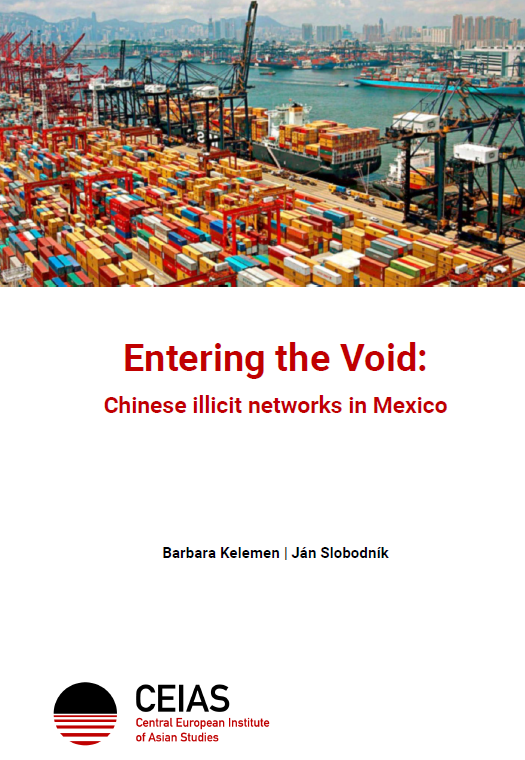
Entering the Void: Chinese illicit networks in Mexico

By Barbara Kelemen | Ján Slobodník

This CEIAS paper aims to shed light on cooperation between Chinese businesses and Mexican criminal groups. It specifically analyzes cases related to drug trafficking and the exploitation of natural resources in three states in Mexico. The topic is particularly relevant for countries in Latin America that have been expanding their commercial ties with China. This research suggests that the lack of state supervision in some of these countries could allow alternative structures—such as criminal groups and Chinese organized networks—to thrive and fill the security and economic void if not regulated properly.

Summary

Mexico’s macroeconomic stability and abundant natural resources have made the country into an attractive destination for Chinese businesses.

The country still suffers from a lack of internal security, most of it stemming from the Mexican Drug War, an ongoing multilateral low-intensity conflict between the Mexican government and a large number of criminal organizations.

In some of Mexico’s states, pervasive violence and instability have resulted in a power vacuum. With the government being unable to guarantee security, non-state actors such as criminal organizations and/or civilian militias seize the opportunity to establish their own rule.

When foreign companies operate in such troubled areas, they inevitably run into problems caused by Mexico’s security issues.

Within this trend of foreign companies operating in Mexico, some level of tacit cooperation has been observed between Chinese businesses and non-state actors. This cooperation is often an outcome of localized security vacuums that are exploited by alternative security providers, such as criminal organizations, that can fill them and provide operational safety for local businesses.

A growing body of research has identified the existence of Chinese illicit networks and their involvement in the trafficking of people, narcotics, and contraband goods, as well as money laundering and illegal arms trade in Mexico.

Concealed under the guise of legal commercial activity, networks of Mexican criminal organizations and their Chinese business partners exploit the dire security situation in some areas of Mexico.

Despite attempts by the Chinese and the Mexican governments to regulate certain sectors that contribute to the existence of the illicit networks in Mexico, there are still substantial opportunities that are ripe for exploitation by the criminal group-legitimate business partnerships

Illicit Synthetic Drugs: Trafficking Methods, Money Laundering Practices, and Coordination Efforts

By Michael E. Clements, Triana McNeil et al


What GAO Found Mexican transnational criminal organizations are a major supplier of the top two illicit synthetic drugs involved in overdose deaths in the U.S.—fentanyl and methamphetamine. To supply these drugs to U.S. users, these organizations • source and purchase precursor chemicals primarily from China, using payment methods such as electronic funds transfers and virtual currency; • produce or oversee the production of fentanyl and methamphetamine in clandestine labs in Mexico; and • smuggle the drugs across the U.S.-Mexico border and supply them to U.S.- based drug trafficking groups. Local drug trafficking groups sell these drugs to users through e-commerce platforms, online marketplaces, mobile applications, and social media using payment methods such as cash, peer-to-peer payment applications, and virtual currency, according to Financial Crimes Enforcement Network (FinCEN) and Drug Enforcement Administration (DEA) reports. Transnational criminal organizations launder the illicit proceeds from synthetic drug sales using methods such as • bulk cash smuggling (moving physical currency across international borders), • funnel accounts (bank accounts that collect deposits from members of the criminal network in multiple locations), • trade-based money laundering (using goods in trade transactions to disguise the movement of illicit funds), • virtual currency (exchanging bulk cash for virtual currency), and • Chinese money laundering networks. Chinese money laundering networks are largely decentralized and use both underground-banking mechanisms (which bypass formal banking channels) and other laundering methods within banking systems to convert, move, and obscure illicit proceeds for a fee. Mexican transnational criminal organizations are increasingly using these networks in part because their laundering schemes have lower costs than other organizations, according to law enforcement officials. To combat drug trafficking and related money laundering, federal agencies coordinate and share information with each other and with state, local, and international partners through task forces, working and advisory groups, colocation, and other information-sharing channels. These mechanisms help agencies share resources and expertise, prevent overlapping investigations, and combine unique authorities. In addition, starting on January 20, 2025, the administration began instituting a variety of new policies, including some aimed at combating the flow of synthetic drugs into the U.S. For example, ExecutiveOrder 14159 requires the Departments of Justice and Homeland Security to jointly establish Homeland Security Task Forces in all 50 states to end the presence of cartels and transnational criminal organizations in the U.S. Agencies reported that it is too early to assess the full impact of these policies.

Washington, DC: United States Government Accountability Office; 67pp; 2025. 67p.

Germany's cannabis act: a catalyst for European drug policy reform?

By Jakob Manthey, Jürgen Rehm,and Uwe Vertheina

With the enforcement of the Cannabis Act on 1 April 2024, Germany has adopted one of the most liberal legal approaches to cannabis on the continent. The German model prioritises a non-profit approach and precludes legal market mechanisms. We believe these are the main drivers for increasing cannabis use and related health problems, based on observations following cannabis legalisation in Canada and many states in the U.S. Although legalising cannabis possession and cultivation may not immediately eliminate the illegal market, it is expected to serve public health goals. Despite the overall positive evaluation of the Cannabis Act in Germany, there are three potential areas of concern: the potential for misuse of the medical system, the normalization of cannabis use, and the influence of the cannabis industry. The German model may herald the beginning of a new generation of European cannabis policies, but concerted efforts will be required to ensure that these policy reforms serve rather than undermine public health goals.

The LANCET Regional Health - Europe, Vol 42 July, 2024

CCP's Role in the Fentanyl Crisis

UNITED STATES. CONGRESS. HOUSE. SELECT COMMITTEE ON THE STRATEGIC COMPETITION BETWEEN THE UNITED STATES AND THE CHINESE COMMUNIST PARTY

From the document: "The fentanyl crisis is one of the most horrific disasters that America has ever faced. On average, fentanyl kills over 200 Americans daily, the equivalent of a packed Boeing 737 crashing every single day. Fentanyl is the leading cause of death for Americans aged 18-45 and a leading cause in the historic drop in American life expectancy. It has led to millions more suffering from addiction and the destruction of countless families and communities. Beyond the United States, fentanyl and other mass-produced synthetic narcotics from the People's Republic of China (PRC) are devastating nations around the world. It is truly a global crisis. The PRC, under the leadership of the Chinese Communist Party (CCP), is the ultimate geographic source of the fentanyl crisis. Companies in China produce nearly all of illicit fentanyl precursors, the key ingredients that drive the global illicit fentanyl trade. The House Select Committee on the Strategic Competition between the United States and the Chinese Communist Party (Select Committee) launched an investigation to better understand the role of the CCP in the fentanyl crisis. This investigation involved delving deep into public PRC websites, analyzing PRC government documents, acquiring over 37,000 unique data points of PRC companies selling narcotics online through web scraping and data analytics, undercover communications with PRC drug trafficking companies, and consultations with experts in the public and private sectors, among other steps. [...] [T]he Select Committee found thousands of PRC companies openly selling [...] illicit materials on the Chinese internet--the most heavily surveilled country-wide network in the world. The CCP runs the most advanced techno-totalitarian state in human history that 'leave[s] criminals with nowhere to hide' and has the means to stop illicit fentanyl materials manufacturers, yet it has failed to pursue flagrant violations of its own laws."

UNITED STATES. CONGRESS. HOUSE. SELECT COMMITTEE. 16 APR, 2024. 64p.

The political economy of illicit drug crops: forum introduction

By Frances Thomson, Patrick Meehan & Jonathan Goodhand (02 Apr 2024):

his article and the forum it introduces examine illicit drug crop (IDC) economies from agrarian perspectives. Examining IDCs as a group implies analysing how prohibition distinguishes them from other (licit) crops. We identify seven mechanisms through which prohibition shapes the agrarian political economy of IDCs and explore how these mechanisms and their effects generate distinctive patterns of development and political action amongst ‘illicit peasantries’. We also examine connections between illicit and licit crops, including how licit crop crises and illicit crop booms intertwine. We argue that IDC economies provide a bulwark for smallholders but are by no means peasant idylls.

The Journal of Peasant Studies. 2024. 39p.

EU Drug Markets Analysis 2024: Key insights for policy and practice

European Monitoring Centre for Drugs and Drug Addiction (EMCDDA)

Availability remains high across the main drugs used in Europe, evidenced by the large and in some cases increasing quantities that continue to be seized in the European Union. In addition, the market for illicit drugs is characterised by the diversification of consumer products and the widespread availability of a broader range of drugs, including new psychoactive substances, often of high potency or purity. Specialised equipment may be required to meet the detection and monitoring challenges posed by this diversification.

The recent emergence of highly potent opioids, particularly benzimidazoles (nitazenes), poses a particularly complex threat to public health due to their increased risk of life-threatening poisoning. The potential emergence of new patterns of consumption in Europe is also a key threat, due to the availability of cheap and highly potent or pure drugs. This is particularly the case for cocaine, which has seen unprecedented levels of availability

European Monitoring Centre for Drugs and Drug Addiction (EMCDDA), 2024. 39p.

Drug Trafficking on the High Seas: A Primer on the Maritime Drug Law Enforcement Act Brendan McDonald Trial Attorney Criminal Division Narcotic and Dangerous Drug Section

By Colleen King

In December 2023, the United States Coast Guard (USCG) offloaded approximately 18,219 pounds of cocaine from the USCG Cutter Waesche. The estimated street value of the cocaine was more than $239 million. The offload occurred as a result of six separate maritime interdictions, performed by separate cutters, taking place over a 17-day period off the coasts of Mexico and Central and South America. The interdictions were performed as part of the USCG’s counternarcotics mission. While interdictions of this size may seem out of the ordinary, the USCG routinely interdicts a variety of vessels, including Go-Fast Vessels and semi submersibles, with massive amounts of drugs (usually cocaine), moving from the Pacific and Caribbean coasts of South America northward to Mexico, the Caribbean, and eventually the United States. One can imagine that prosecuting interdictions like these may raise a variety of questions: could the United States assert jurisdiction over the suspected traffickers; would the maritime location of the interdiction matter; and would it make a difference if the ship carrying the contraband was flagged—registered—by another country? What about the transit time to a U.S. court for an initial appearance where the interdiction occurred over a thousand miles from the United States? The dizzying array of issues confronting a federal prosecutor following a high seas interdiction may not be typical of land-based legal challenges. Fortunately, a body of both federal law and international authorities is instructive on these questions. The Maritime Drug Law Enforcement Act (MDLEA) is the United States’ principal statute addressing high seas drug trafficking and has supported thousands of prosecutions for decades. The MDLEA, as it re lates to controlled substances,5 prohibits the distribution, manufacture, or possession with intent to distribute or manufacture, controlled sub stances aboard a “covered vessel.” Its prohibitions apply “outside the territorial jurisdiction of the United States,” and include both attempt and conspiracy liability. And, where an interdiction occurs outside of the United States, venue may be appropriate in your district. This article is intended to serve as an MDLEA primer. It will provide a brief his tory of the MDLEA, identify the MDLEA’s core definitional provisions, discuss its key criminal prohibition, detail its jurisdiction and venue pro vision, describe the MDLEA’s position on the use of international law as a defense, and finally, address its sentencing provisions.

March 2024 DOJ Journal of Federal Law and Practice

A Framework for Countering Organised Crime: Strategy, Planning, and the Lessons of Irregular Warfare

By David H. Ucko and Thomas A. Marks

Organised crime is not going well. According to the 2021 Global Organized Crime index, ‘the global illicit economy simply continue[s] along the upward trajectory it has followed over the past 20 years, posing an ever-increasing threat to security, development and justice – the pillars of democracy’ (Global Initiative, 2021, p. 8). Wherever governments seek to draw the line, criminal actors find profitable ways of crossing it; wherever governments fail to deliver on human need, criminal actors capitalise on citizens’ desire or despair. As of now, more than three-quarters of the world’s population ‘live in countries with high levels of criminality, and in countries with low resilience to organized crime’ (Global Initiative, 2021, p. 12). On aggregate, the associated activity amounts to an illicit form of governance, furnishing alternative services to a wide range of clients, be they the vulnerable and weak or a covetous elite. The breadth of organised crime, its clandestine nature, and its blending of creative and destructive effects make it difficult to counter. In past SOC ACE research, we argued that the response to organised crime often shares certain pitfalls with counterterrorism, at least since 9/11 (Ucko & Marks, 2022c). Both efforts have been stymied by 1) conceptual uncertainty of the problem at hand; 2) an urge to address the scourge head on (be it violence or crime), without acknowledging its socioeconomic-political context; and, therefore, 3) unquestioned pursuit of strategies that miss the point, whose progress is difficult to measure, and which may even be counterproductive. This convergence is based on the common features of the two phenomena, which are both concerned with i) collective actors, who ii) use violence and coercion among other methods; and who have iii) corrupting, or outright destructive effects on society. Though organised crime is not consciously political in its ideological motivation, it is – like terrorism – deeply political in its origins, activities, and effects. Given the conceptual overlap, and the common pathologies that undermine response, the lessons from countering terrorism are relevant also to the countering of organised crime. Focusing on the concept of ‘irregular warfare’, our past research identified six key lessons, touching upon 1) the socio-political embeddedness of the problem, 2) the tendency to militarise the response, 3) the mirror-imaging of state assistance programmes, 4) the invaluable role of community mobilisation, 5) the dearth of strategy, and 6) the need to engage more closely with questions of political will. As argued elsewhere, these challenges point to a need for greater strategic competence both in assessing the problem of organised crime and in designing a response (Ucko & Marks, 2022c).

To generate this strategic competence, this follow-on report sets out an analytical toolkit to assist planners and policymakers with the crafting of strategy. This ‘Framework of Analysis and Action’ builds upon lessons – negative and positive – learned via years of experience with irregular warfare, defined by the Department of Defense as ‘a violent struggle among state and non-state actors for legitimacy and influence over the relevant population(s)’ (U.S. Department of Defense, 2007, p. 1).1 It is a framework that finds its origins within the U.S. National Defense University’s College of International Security Affairs (CISA), where for two decades it has been used to teach strategic planning for complex and intensely political challenges (Ucko & Marks, 2022a). The framework consists of two parts: the Strategic Estimate of the Situation (which maps the problem, explores its drivers, frames, and methods, and critiques the current response) and the Course of Action (which uses the strategic estimate to design an appropriate strategy, guided by a theory of success). The framework is in this report adapted for organised crime, to enable the mapping of relevant actors and the crafting, thereby, of a viable response. By design, the framework responds to the six key lessons identified in our earlier work. This report goes through the framework and explains its adaptation to organised crime. Appendix A provides a summation of the toolkit, a ‘user’s guide’, that will facilitate application of the framework. Testing to date suggests great potential and we look forward to sustaining a dialogue with those engaged with countering organised crime to further evolve this toolkit. Indeed, since the beginning, this framework has been a living product, enriched by theoretical application in the classroom and practical use in the field.

SOC ACE Research Paper No. 19. Birmingham, UK: University of Birmingham, 2023. 45p.

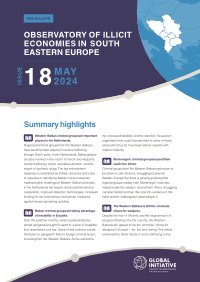
Observatory of Illicit Economies in South Eastern Europe

By Global Initiative Against Transnational Organized Crime’s Observatory of Illicit Economies in South Eastern Europe.

In this issue, we focus on three cases where criminal groups from the region have been active in recent years: the Netherlands, Ecuador and parts of Africa.

These examples illustrate the growing involvement of Balkan criminal groups in some of the world’s hotspots for illicit activity. Research for these articles is facilitated by the Global Initiative’s network of contacts with local investigative journalists, as well as close cooperation between regional observatories of illicit economies, namely South Eastern Europe, West Africa and Latin America.

As part of the GI-TOC’s analysis of the risks of firearms trafficking from Ukraine, in this issue we show that the Western Balkans remain the main source of illegal weapons in Europe. At present, weapons are still cheap and plentiful in the region, and stockpiles have been augmented by inflows from Turkey via Bulgaria, particularly of gas and alarm guns. More on this topic can be found in a forthcoming GI-TOC report on trends in arms trafficking from the Ukraine conflict.

In this issue, we also report on a major crackdown by Serbian authorities in late 2023 on increasingly violent smugglers operating along the border between Serbia and Hungary, and examine how this has displaced migration flows towards Bosnia and Herzegovina.

Risk Bulletin No. 18. Geneva, SWIT: Global Initiative Against Transnational Organized Crime, 2024. 25p.

Oil Theft, Energy Security and Energy Transition in Mexico

By Vlado Vivoda, Ghaleb Krame and Martin Spraggon

Oil theft refers to the exploitation of crude oil or refined petroleum products for criminal purposes. In Mexico, oil theft—referred to as huachicolero—is endemic and widespread. By framing it within the energy security and transition context, this paper offers a new perspective on the problem of oil theft in Mexico. Focusing on crude oil and refined petroleum, the paper demonstrates that Mexico’s energy security—as framed around the 4As (availability, accessibility, affordability, and acceptance)—has deteriorated over the past decade. Application of the 4As framework in the Mexican context shows that the increasing frequency of oil theft has contributed to this deterioration. The proposed solution to the energy security and oil theft problems is centred on Mexico moving from gasoline and diesel to electrification in the transportation sector. The paper demonstrates that, while transport electrification in Mexico has been lagging behind other countries, recent developments in the country point to growing momentum among the country’s political and business elites, in tandem with US partners, in support for the energy transition. Areas where further emphasis should be placed to accelerate Mexico’s energy transition in the transportation sector are identified. Finally, the feasibility of and potential limitations associated with implementing the transition are evaluated.

Resources 202312(2), 30; https://doi.org/10.3390/resources12020030

Organised Crime and the ecosystems of sexual exploitation in the United Kingdom: How supply and demand generate sexual exploitation and protection from prosecution

By Matt Hopkins, Rachel Keighley, Teela Sanders

  Thinking about organised crime as an ecosystem is not only novel but also offers much potential to add to the theoretical and policy-based literature in this area. While organised crime is often analysed as relationships between criminal groups and consumers of illicit goods/services, little work has analysed specific forms of organised crime activities as ecosystems where different constituent parts are dependent upon each other for the crime activity to occur. This paper analyses the organisation of sexual exploitation by entrepreneurial organised crime groups sell ing sex in the United Kingdom. Based upon 30 interviews with 23 law enforcement forces in England and Wales and five interviews with Adult Service Website Opera tors; it identifies how an ecosystem is built that ensures (a) profit generation and (b) avoidance of legal prosecution. Our analysis not only illustrates how a market ‘sup ply’ and ‘demand’ ecosystem is generated through mutually convenient ‘organiser’, ‘marketer’ and ‘buyer’ relationships, but also how the roles of these actors ensure sexual exploitation continues. Keywords Organised crime · 

Trends in Organized Crime, trends in Organized Crime. 2024, 20pg