Open Access Publisher and Free Library
CRIME+CRIMINOLOGY.jpeg

CRIME

Violent-Non-Violent-Cyber-Global-Organized-Environmental-Policing-Crime Prevention-Victimization

Posts in Demographics
Female Empowerment and Intimate Partner Violence

By Elisabetta Calabresi and Núria Rodríguez-Planas

The chapter reviews the economic literature on intimate partner violence (IPV), a widespread human rights violation affecting nearly one in three women globally and generating significant societal costs. It focuses on the relationship between various dimensions of female empowerment and IPV. The chapter begins by outlining key theoretical frameworks—including household bargaining, instrumental violence, male backlash, and exposure theories—as well as the main data sources used to study IPV. It then reviews empirical evidence on how factors shaping female empowerment at the individual, relationship, community, and societal levels influence IPV outcomes. Central themes include labor market dynamics, education, income shocks, family formation, legal frameworks, institutional access, and gender norms. The chapter also considers how these factors interact across levels and discusses additional drivers of IPV not directly linked to female empowerment. The goal is to provide an overview of causal evidence from the economic literature on IPV while emphasizing its complexity and the importance of a context-specific, intersectional approach to both its analysis and prevention.

Parental Leave and Intimate Partner Violence

By Dan Anderberg. Line Hjorth Andersen,  N.Meltem Daysal, Mette Ejrnæs

We examine the impact of a 2002 Danish parental leave reform on intimate partner violence (IPV) using administrative data on assault-related hospital contacts. Using a regression discontinuity design, we show that extending fully paid leave increased mothers’ leave-taking and substantially reduced IPV, with effects concentrated among less-educated women. The reform also lengthened birth spacing, while separations remained unchanged and earnings effects were modest. The timing and heterogeneity of impacts point to fertility adjustments—rather than exit options or financial relief—as the key mechanism. Parental leave policy thus emerges as an underexplored lever for reducing IPV.

Sovereignty and the Environment: complaints of environmental crimes and the protection of indigenous peoples as mechanisms of international constraint to Brazil

By Tássio Franchi

The text discusses, in an exploratory way, how the environmental issue related to the Brazilian Amazon attracts international attention and potentially serves as a mechanism of external constraint in Brazil’s internal affairs. Complaints of environmental crimes and crimes against indigenous peoples are debated in the international political environment, without considering Brazilian sovereignty on these and other topics. In some cases, such debates are used, as pretexts, to halt negotiations of trade agreements beneficial to the country. In summary, the text explores the concept of national sovereignty in the face of global pressures and the impacts of international agendas on Brazilian government action, pointing out that there are complexities and nuances of this geopolitical interaction, in addition to the common good of environmental preservation or the protection of indigenous peoples. 


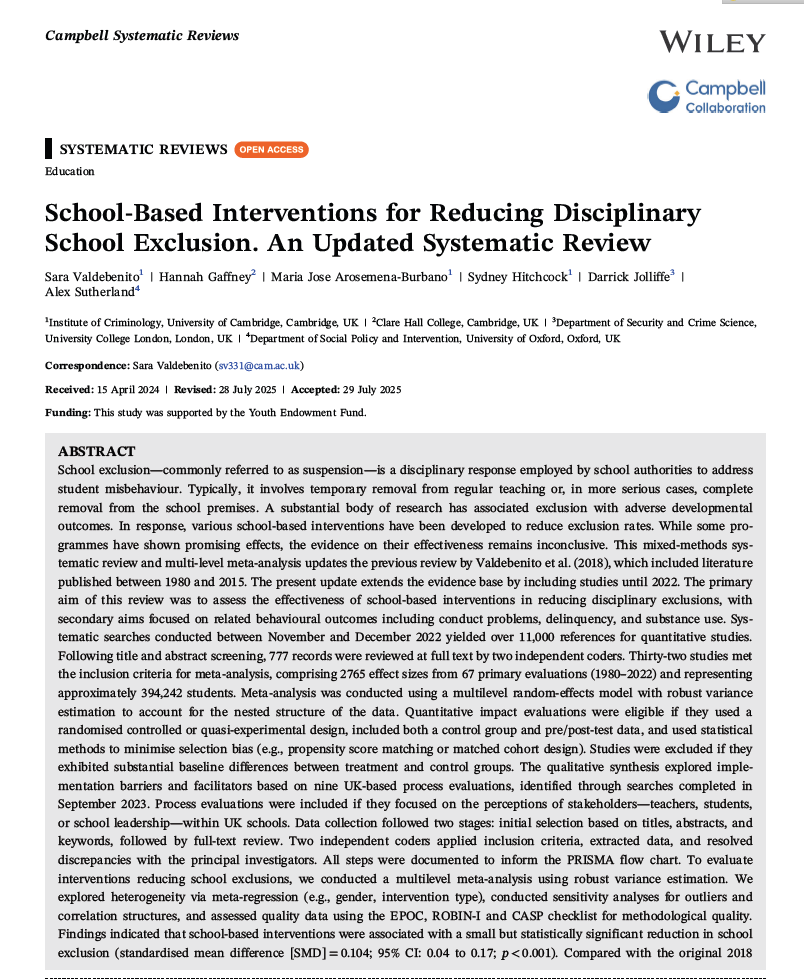
School-Based Interventions for Reducing Disciplinary School Exclusion. An Updated Systematic Review

By

Sara Valdebenito, Hannah Gaffney, Maria Jose Arosemena-Burbano, Sydney Hitchcock, Darrick Jolliffe, Alex Sutherland

School exclusion—commonly referred to as suspension—is a disciplinary response employed by school authorities to address student misbehaviour. Typically, it involves temporary removal from regular teaching or, in more serious cases, complete removal from the school premises. A substantial body of research has associated exclusion with adverse developmental outcomes. In response, various school-based interventions have been developed to reduce exclusion rates. While some programmes have shown promising effects, the evidence on their effectiveness remains inconclusive. This mixed-methods systematic review and multi-level meta-analysis updates the previous review by Valdebenito et al. (2018), which included literature published between 1980 and 2015. The present update extends the evidence base by including studies until 2022. The primary aim of this review was to assess the effectiveness of school-based interventions in reducing disciplinary exclusions, with secondary aims focused on related behavioural outcomes including conduct problems, delinquency, and substance use. Systematic searches conducted between November and December 2022 yielded over 11,000 references for quantitative studies. Following title and abstract screening, 777 records were reviewed at full text by two independent coders. Thirty-two studies met the inclusion criteria for meta-analysis, comprising 2765 effect sizes from 67 primary evaluations (1980–2022) and representing approximately 394,242 students. Meta-analysis was conducted using a multilevel random-effects model with robust variance estimation to account for the nested structure of the data. Quantitative impact evaluations were eligible if they used a randomised controlled or quasi-experimental design, included both a control group and pre/post-test data, and used statistical methods to minimise selection bias (e.g., propensity score matching or matched cohort design). Studies were excluded if they exhibited substantial baseline differences between treatment and control groups. The qualitative synthesis explored implementation barriers and facilitators based on nine UK-based process evaluations, identified through searches completed in September 2023. Process evaluations were included if they focused on the perceptions of stakeholders—teachers, students, or school leadership—within UK schools. Data collection followed two stages: initial selection based on titles, abstracts, and keywords, followed by full-text review. Two independent coders applied inclusion criteria, extracted data, and resolved discrepancies with the principal investigators. All steps were documented to inform the PRISMA flow chart. To evaluate interventions reducing school exclusions, we conducted a multilevel meta-analysis using robust variance estimation. We explored heterogeneity via meta-regression (e.g., gender, intervention type), conducted sensitivity analyses for outliers and correlation structures, and assessed quality data using the EPOC, ROBIN-I and CASP checklist for methodological quality. Findings indicated that school-based interventions were associated with a small but statistically significant reduction in school exclusion (standardised mean difference [SMD] = 0.104; 95% CI: 0.04 to 0.17; p < 0.001). Compared with the original 2018 review, which reported a slightly larger effect size, this update benefits from a broader evidence base and more advanced statistical modelling. However, the results for secondary behavioural outcomes were more limited: effects on conduct problems and delinquency were negligible or non-significant, and the impact on substance use was small and not statistically significant. Risk of bias was assessed using the Cochrane EPOC 2 tool (Higgins and Green 2011) for randomised controlled trials and ROBINS-I (Sterne et al. 2016) for quasi-experimental designs. Randomised studies generally exhibited lower risk of bias, while quasi-experimental studies showed greater variability in quality. Four major themes emerged from the analysis. First, intervention format mattered: flexible, collaborative, and well-structured interventions facilitated implementation, while outdated materials or content misaligned with local context impeded delivery. Second, consistency in school policies and practice enabled smoother implementation, whereas inconsistency acted as a barrier. Third, staff buy-in—particularly among senior leaders—was essential for successful implementation, although resistance from more experienced staff was noted. Finally, perceived effectiveness played a motivational role: visible improvements in pupil behaviour supported continued engagement with the intervention. In summary, the updated review finds that school-based interventions can modestly but significantly reduce school exclusions. While more serious disciplinary sanctions such as permanent exclusions and out-of-school suspensions appear less responsive, in-school exclusion shows greater potential for reduction. Impacts on other behavioural outcomes remain limited. These findings suggest that targeted, context-sensitive interventions supported by strong implementation strategies and whole-school engagement are most likely to achieve sustained reductions in school exclusion.

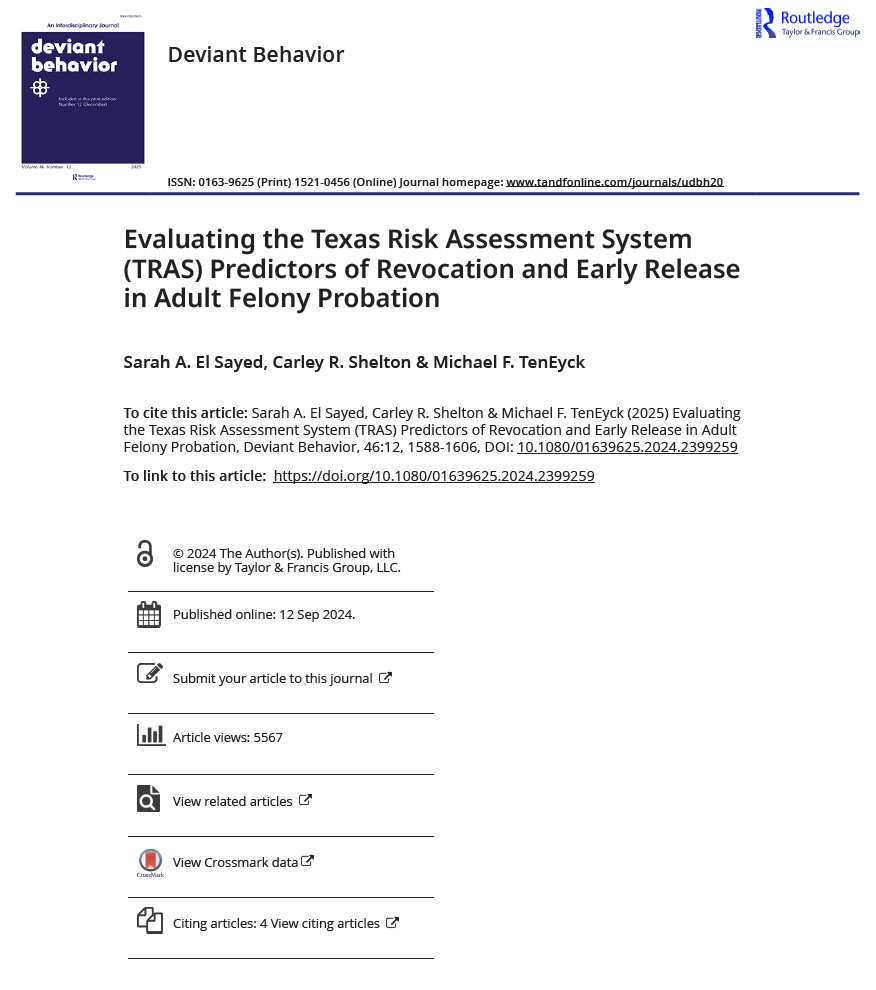
Evaluating the Texas Risk Assessment System (TRAS) Predictors of Revocation and Early Release in Adult Felony Probation

By Sarah A. El Sayeda, Carley R. Sheltonb, and Michael F. TenEyck

Although much is known about recidivism risk, less is known about factors predicting early release. The current study analyses a sample of 2,070 adult felony probation clients to see if offense characteristics, domains from the Texas Risk Assessment System (TRAS), and demographic variables impact both revocation and successful early release. Results revealed that predictors of early release mirrored those of revocation with one exception—race. Specifically, Black clients were 27% less likely to be granted early release. The findings highlight the TRAS is an effective tool to help mitigate bias for revocation of probation but not for granting early release.

Rikers Island and Mental Health: Pathways Toward Community-Based Diversion and Jail Population Reduction

By

María Fernanda Rodríguez, Nicolás Espejo Yaksic

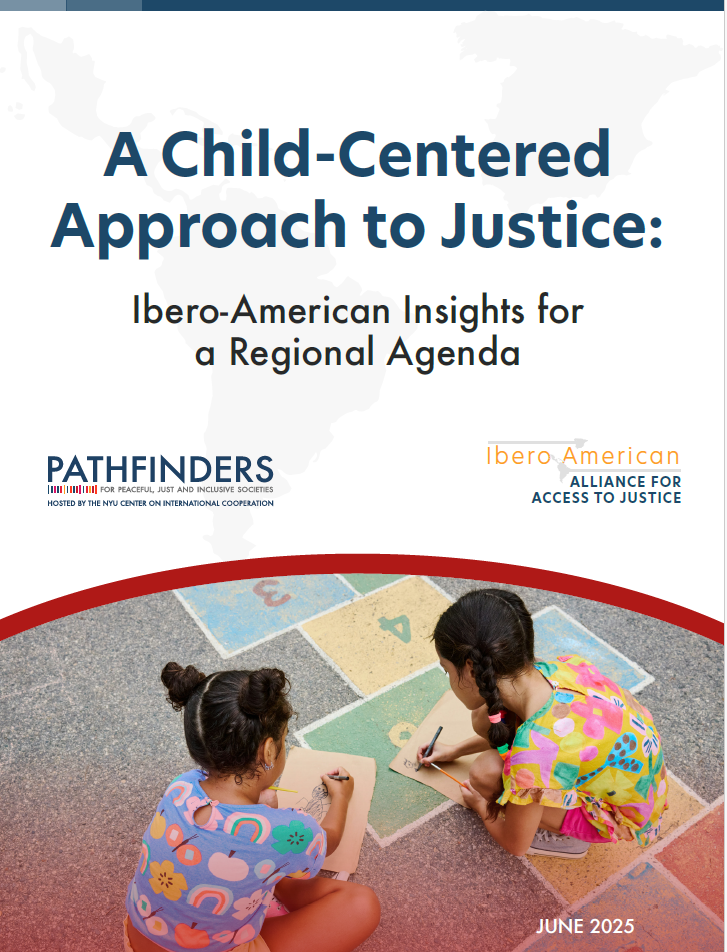
The IBA assumed the challenge of contributing to a profound and urgent transformation, under the conviction that protecting the rights of children is not only a legal and ethical obligation, but also an essential investment in strengthening the rule of law.

As such, this report highlights existing challenges as well as good practices and proposes a roadmap to advance toward a child-centered justice system, as part of the commitment to leave no one behind within the framework of the 2030 Agenda.

Likewise, the report seeks to be a tool for articulation. A meeting point for governments, the judiciary, ombudsmen, prosecutors, civil society, academia, international organizations, but most importantly, for the voices of children and adolescents.

The preparation of this report involved participants from the justice ecosystem across the region. In line with this collective effort, the report includes a detailed analysis of the drafting process of the Ibero-American Common Rules on Restorative Juvenile Criminal Justice, led by the main justice networks and regional bodies.

The report is divided up into the following sections:

Section 1–Regional Context

Section 2–Access to Justice and the Development Agenda: People-Centered and Child-Centered Justice

Section 3–Principles of Child-Centered Justice: Progress in the Region

Section 4–Vision and Regional Agenda


Maritime Security in the Southern Philippines: Building Upon Gains Amid Evolving Threats

By John Bradford and Aaron Jed Rabena

Key Takeaways

The maritime security situation in the southern Philippines and neighbouring areas of Malaysia and Indonesia has greatly improved in recent years, thanks to coordinated government action.

The threats from terrorism and kidnapping have been reduced, but other forms of maritime criminal activity have become even more prominent, with smuggling and human trafficking emerging as the foremost concerns.

The Philippines, its neighbours, and its partners should leverage the positive momentum to build upon the gains, rather than shifting resources away.

The Bangsamoro peace process in the southern Philippines has travelled a rocky road in the decade since the agreement was signed between the national government and the area’s largest armed group, the Moro Islamic Liberation Front (MILF), in 2014. In October 2025, a series of court cases that derailed the first elections in the Bangsamoro Autonomous Region in Muslim Mindanao presented the latest bump – possibly a very consequential one. However, in the same decade, the maritime security situation has significantly improved in this area’s seas, which, as a matter of geography, history, and culture, are directly linked to the larger Philippines–Malaysia–Indonesia tri-border area (TBA).

A decade ago, the waters around the TBA were awash with banditry. The kidnapping of mariners and coastal residents was one of the most lucrative forms of crime. When eleven kidnapping incidents (nine successful) were documented over a nine-month period during 2016, alarm bells rang in the shipping community.

The cresting waves of maritime violence prompted Indonesia, Malaysia and the Philippines to begin coordinating air and maritime patrols under the auspices of the 2017 Trilateral Cooperative Arrangement. Since then, the Philippine government has arrested hundreds of suspects and engaged in clashes with members of maritime-savvy armed organisations, while also focusing on the region’s economic development. There have been no incidents of kidnapping at sea since January 2020.

Given the range of intense challenges the three nations face – especially in the maritime domain – it is both natural and appropriate that they may reorient resources towards other priorities. However, it would be a mistake to rest on their laurels. While the violence may have lessened, the TBA waters are still plagued by crime. It would be wiser to continue building on this success rather than easing the pressure, thereby allowing the criminals to reconstitute. 


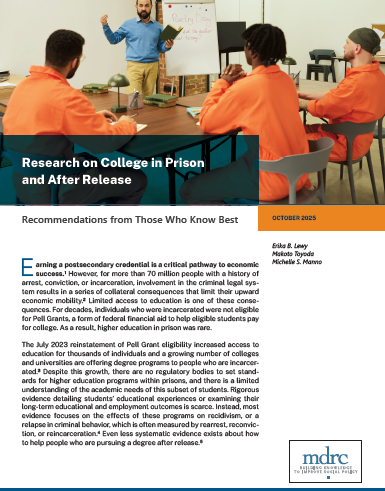
Research on College in Prison and After Release

By Ericka B Lewy, et al.

Earning a postsecondary credential is a critical pathway to economic success. However, for more than 70 million people with a history of arrest, conviction, or incarceration, involvement in the criminal legal sys­tem results in a series of collateral consequences that limit their upward economic mobility. Limited access to education is one of these conse­quences. For decades, individuals who were incarcerated were not eligible for Pell Grants, a form of federal financial aid to help eligible students pay for college. As a result, higher education in prison was rare.

The July 2023 reinstatement of Pell Grant eligibility increased access to education for thousands of individuals, and a growing number of colleges and universities are offering degree programs to people who are incarcer­ated. Despite this growth, there are no regulatory bodies to set stand­ards for higher education programs within prisons, and there is a limited understanding of the academic needs of this subset of students. Rigorous evidence detailing students’ educational experiences or examining their long-term educational and employment outcomes is scarce. Instead, most evidence focuses on the effects of these programs on recidivism, or a relapse in criminal behavior, which is often measured by rearrest, reconvic­tion, or reincarceration. Even less systematic evidence exists about how to help people who are pursuing a degree after release.

Within this context, MDRC drew on existing research to identify opportunities to build more evi­dence about best practices to assist students who are pursuing higher education in prison and after release. To inform a research agenda that would be useful to program practitioners, policymakers, researchers, and students, the research team had several dozen conversations with college pro­gram staff members, college administrators, academic researchers, state officials, people working to assist individuals while incarcerated or who have recently been released, and students.

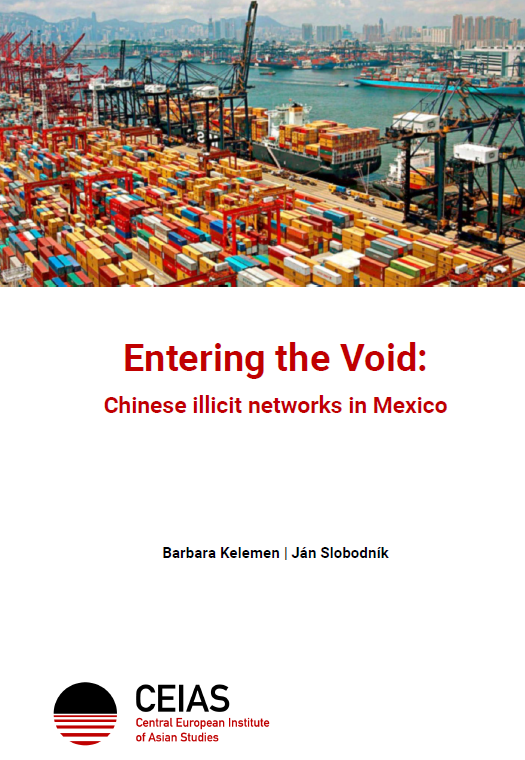
Entering the Void: Chinese illicit networks in Mexico

By Barbara Kelemen | Ján Slobodník

This CEIAS paper aims to shed light on cooperation between Chinese businesses and Mexican criminal groups. It specifically analyzes cases related to drug trafficking and the exploitation of natural resources in three states in Mexico. The topic is particularly relevant for countries in Latin America that have been expanding their commercial ties with China. This research suggests that the lack of state supervision in some of these countries could allow alternative structures—such as criminal groups and Chinese organized networks—to thrive and fill the security and economic void if not regulated properly.

Summary

Mexico’s macroeconomic stability and abundant natural resources have made the country into an attractive destination for Chinese businesses.

The country still suffers from a lack of internal security, most of it stemming from the Mexican Drug War, an ongoing multilateral low-intensity conflict between the Mexican government and a large number of criminal organizations.

In some of Mexico’s states, pervasive violence and instability have resulted in a power vacuum. With the government being unable to guarantee security, non-state actors such as criminal organizations and/or civilian militias seize the opportunity to establish their own rule.

When foreign companies operate in such troubled areas, they inevitably run into problems caused by Mexico’s security issues.

Within this trend of foreign companies operating in Mexico, some level of tacit cooperation has been observed between Chinese businesses and non-state actors. This cooperation is often an outcome of localized security vacuums that are exploited by alternative security providers, such as criminal organizations, that can fill them and provide operational safety for local businesses.

A growing body of research has identified the existence of Chinese illicit networks and their involvement in the trafficking of people, narcotics, and contraband goods, as well as money laundering and illegal arms trade in Mexico.

Concealed under the guise of legal commercial activity, networks of Mexican criminal organizations and their Chinese business partners exploit the dire security situation in some areas of Mexico.

Despite attempts by the Chinese and the Mexican governments to regulate certain sectors that contribute to the existence of the illicit networks in Mexico, there are still substantial opportunities that are ripe for exploitation by the criminal group-legitimate business partnerships

Birthright Citizenship and Youth Crime

By Leander Andres, Stefan Bauernschuster, Gordon B. Dahl, Helmut Rainer, Simone Schüller

This paper studies the impact of birthright citizenship on youth crime. We leverage a reform which automatically granted birthright citizenship to eligible immigrant children born in Germany after January 1, 2000 and administrative crime data from three federal states. Immigrant youth who acquired citizenship at birth are substantially less likely to engage in criminal activity, with estimates indicating a 70% reduction. These results are particularly relevant in light of ongoing debates in the U.S. about abolishing birthright citizenship. Our findings suggest that inclusive citizenship policies can reduce crime and its associated costs, which in turn could strengthen social cohesion.

Parental Child Abductions to Third Countries

By Marilyn FREEMAN

Cross-border parental child abductions in the EU are governed by The 1980 Hague Convention on the Civil Aspects of International Child Abduction and (except for Denmark) the Brussels II-ter Regulation. Countries outside of the EU may or may not be Contracting States to ‘the Convention’, but will not be bound by Brussels II-ter. Research has found that the often negative, long-lasting impact of abduction may continue throughout the lifecycle of those who have been abducted. It may also affect future generations of society. This means that every effort to deter abduction should be made. Where that is not possible, the 1980 Hague Child Abduction Convention should be nurtured to support its application in contemporary society. Specialist mediation should be encouraged in relation to international child abduction generally, and specifically in relation to Third Countries which are not Contracting States to ‘the Convention’. This study was commissioned by the European Parliament’s Policy Department for Citizens’ Rights and Constitutional Affairs at the request of the JURI Committee.

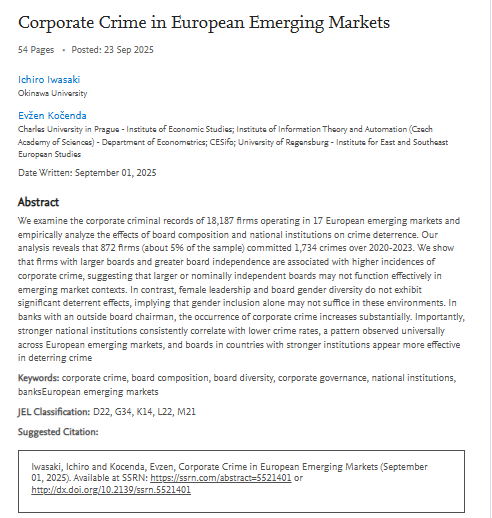
Corporate Crime in European Emerging Markets

By Ichiro Iwasaki and Kocenda, Evzen

We examine the corporate criminal records of 18,187 firms operating in 17 European emerging markets and empirically analyze the effects of board composition and national institutions on crime deterrence. Our analysis reveals that 872 firms (about 5% of the sample) committed 1,734 crimes over 2020-2023. We show that firms with larger boards and greater board independence are associated with higher incidences of corporate crime, suggesting that larger or nominally independent boards may not function effectively in emerging market contexts. In contrast, female leadership and board gender diversity do not exhibit significant deterrent effects, implying that gender inclusion alone may not suffice in these environments. In banks with an outside board chairman, the occurrence of corporate crime increases substantially. Importantly, stronger national institutions consistently correlate with lower crime rates, a pattern observed universally across European emerging markets, and boards in countries with stronger institutions appear more effective in deterring crime

CESifo Working Paper No. 12132 54 Pages Posted: 23 Sep 2025

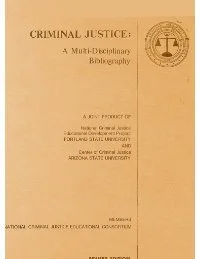
Criminal Justice: A Multidisciplinary Bibliography

By Florence Yosne. National Criminal Justice Educational Development Project Portland State University And Center Of Criminal Justice Arizona State University.

From the Introduction: This bibliography is the result of a cooperative effort between Portland State University and Arizona State University. It was developed in response to a need for a comprehensive and detailed multi-disciplinary compilation of available books and government documents that relate to the emerging field of Criminal Justice. Professional journals and magazine sources were not included due to person power constraints and the recognition that many of the more significant articles and statements relating to Criminal Justice can be found contained in recently-published books.

The bibliography is broken down into four general substantive areas: (1) criminal justice; (2) law enforcement; (3) corrections;  and (4) courts. The majority of the works are included under the heading "Criminal Justice." In this area, titles are included from such diverse fields as anthropology, economics, education, history, law, political science, psychology, the physical sciences, public administration, and sociology. The other three areas--"Law, Enforcement, " "Corrections, " and "Courts"--while more specific in nature, also reflect the use of information and research from many related and diverse sources.

Clearly, the specific subjects appearing within these four broad rubrics are varied and numerous. In order to facilitate the use of this bibliography, the four broad areas were further broken down into specific subjects such as "civil liberties, " "victimless crimes, " etc., with bibliography entries relating to those topics being identified. The detailed classification of bibliography entries appears at the end of this "Introduction."

It will be readily apparent to the user that the bibliography is multi-disciplinary in nature. This reflects the editor's view that Criminal Justice is a multi-disciplinary, problem-oriented field of scholarship, research, and teaching, embracing those aspects of the social, behavioral, natural, and medical sciences relating to understanding crime and social deviance and entailing a critical examination of the system which has evolved for the handling of attendant problems. The selection of authors, titles, and subjects reflects the need of Criminal Justice, as an emerging field of study, to be sensitive to the ideas and philosophies of a wide range of scholar sand researchers. A bibliography with a narrow focus is of organization and functioning of an entire society.

The sources for the bibliography were legion, and they also reflect the multi-disciplinary approach. Bibliographies from the faculty at Portland State University, Florida Slate University, Michigan State University, San Jose State University, and the University of California at Berkeley, in addition to the Index of Books in Print, catalogs from the National Criminal Justice Reference Service, lists from publishers, and reviews from the New York Review of Books, Psychology Today, and the Atlantic Monthly, provided the editor with the reference material necessary for so vast an undertaking.

 MEMBERS NATIONAL CRIMINAL JUSTICE EDUCATIONAL CONSORTIUM. 1975. 418p.

Deaths: Leading Causes for 2020

By Sally C. Curtin,  Betzaida Tejada-Vera, and Brigham A. Bastian

Objectives—This report presents final 2020 data on the 10 leading causes of death in the United States by age, race and Hispanic origin, and sex. Leading causes of infant, neonatal, and post-neonatal death are also presented. This report supplements “Deaths: Final Data for 2020,” the National Center for Health Statistics’ annual report of final mortality statistics. Methods—Data in this report are based on information from all death certificates filed in the 50 states and the District of Columbia in 2020. Causes of death classified by the International Classification of Diseases, 10th Revision (ICD–10) are ranked according to the number of deaths. Cause-of-death statistics are based on the underlying cause of death. Race and Hispanic-origin data are based on the Office of Management and Budget’s 1997 standards for reporting race and Hispanic origin. Results—In 2020, many of the 10 leading causes of death changed rank order due to the emergence of COVID-19 as a leading cause of death in the United States. The 10 leading causes of death in 2020 were, in rank order: Diseases of heart; Malignant neoplasms; COVID-19; Accidents (unintentional injuries); Cerebrovascular diseases; Chronic lower respiratory diseases; Alzheimer disease; Diabetes mellitus; Influenza and pneumonia; and Nephritis, nephrotic syndrome and nephrosis. They accounted for 74.1% of all deaths occurring in the United States. Differences in the rankings are evident by age, race and Hispanic origin, and sex. Leading causes of infant death for 2020 were, in rank order: Congenital malformations, deformations and chromosomal abnormalities; Disorders related to short gestation and low birth weight, not elsewhere classified; Sudden infant death syndrome; Accidents (unintentional injuries); Newborn affected by maternal complications of pregnancy; Newborn affected by complications of placenta, cord and membranes; Bacterial sepsis of newborn; Respiratory distress of newborn; Diseases of the circulatory system; and Neonatal hemorrhage.   

Hyattsville, MD: National Vital Statistics Reports; Centers for Disease Control and Prevention. 2023, 115pg