Open Access Publisher and Free Library
CRIME+CRIMINOLOGY.jpeg

CRIME

Violent-Non-Violent-Cyber-Global-Organized-Environmental-Policing-Crime Prevention-Victimization

Posts in Incarceration
Mental Health Care, Conditions And Related Matters In NDCS Facilities SUMMARY OF INVESTIGATIVE REPORT NO. 2025-01

By OFFICE OF INSPECTOR GENERAL OF THE NEBRASKA CORRECTIONAL SYSTEM; Doug Koebernick, Inspector General Zach Pluhacek, Assistant Inspector General

This report by the Office of Inspector General of the Nebraska Correctional System (OIG) explores five areas of interest and/or concern related to mental health services within Nebraska Department of Correctional Services (NDCS) facilities. The findings and recommendations in this report resulted from more than a year of examination of the NDCS mental health system. This work began in early 2024, after NDCS moved to consolidate almost all of its inpatient mental health beds for men from across the system into the Reception and Treatment Center (RTC) in Lincoln. The change – which was directed by NDCS administration, not mental health officials – prompted complaints from patients and their advocates about the living conditions and how this disruption had impacted their mental health. Through interactions with more patients and providers, additional matters came to the OIG’s attention. Although not an exhaustive list, the five topics addressed in this report were selected based on 1) how frequently they were mentioned by people in the system, including patients and staff; 2) the significance of their impact on the system; and 3) their relevance to the Legislature, based on existing statutes and past legislative engagements in this area. These five topics are as follows: 1. Staffing. NDCS mental health services are in a longstanding staffing crisis, which appear more significant than the staffing challenges facing the overall behavioral health industry, including other state-run institutions. However, NDCS appears to be making some progress in this area. 2. Living conditions. The OIG fielded a variety of complaints about the living conditions in NDCS mental health units, including the use of custody restraints, limited out-of-cell time, and quality of facilities. Some of these conditions may be improving with new facilities, management changes and better custody/security staffing, but concerns remain. 3. Restrictive housing for seriously mentally ill individuals. State statute prohibits placing seriously mentally ill people in longer-term restrictive housing. However, NDCS’ interpretation and implementation of statute results in many people with serious mental illnesses being placed in these settings, anyway. 4. Discharge review. State statute also requires NDCS to have “evidence-based criteria” for screening people nearing release who are mentally ill and dangerous and may require civil commitment. However, it is unclear whether an evidence-based tool even exists for such a purpose. 5. Programming for high-risk individuals. There is a general lack of structured, clinical treatment programming available for individuals in high-security settings. NDCS terminated its version of the Violence Reduction Program (VRP), intended for those at high risk for violence, in early 2024 and has yet to identify a replacement. More specific findings are included in each section of this report. The report concludes with a summary of these findings, as well as recommendations for NDCS and the Legislature to consider. The OIG appreciates the efforts of NDCS mental health providers, administrators, and others involved in this area of the correctional system. Although this report provides a broad (and, hopefully, instructive) look at NDCS mental health services, it is not intended to serve as a comprehensive review. It is hoped that these findings and recommendations will help further the Department’s own efforts at improving this system as well as the Legislature’s role in assisting and guiding that process through policy.

Rikers Island and Mental Health: Pathways Toward Community-Based Diversion and Jail Population Reduction

By Michael Rempel, Krystal Rodriguez, and Kellyann Bock

As New York City works toward its mandate to close Rikers Island, addressing the mental health needs of people detained in the jail system remains a central challenge—and a defining opportunity for reform. Developed by the Data Collaborative for Justice at John Jay College and the Katal Center for Equity, Health, & Justice, this report brings together the latest mental health data for people held at Rikers, lived-experience insights from directly impacted people, and a 15-point plan to create a more effective and humane path forward.

Grounded in evidence, the report aims to:

  1. Present updated data on the nature and scale of mental health needs among people held in the NYC jails.

  2. Give a voice to the people behind the numbers through select first-person accounts that highlight systemic gaps and unmet needs.

  3. Identify a continuum of safe and effective jail diversion strategies that can reduce the jail population while strengthening care, stability, and long-term public safety.

Taken together, this report offers a roadmap to reduce the number of people with serious mental health needs detained at Rikers and to strengthen NYC’s continuum of care.

America’s Incarceration Crossroads: Reversing Progress Amid Record-Low Crime Rates

By Nazgol Ghandnoosh and Sabrina Pearce

The U.S. criminal legal system stands at a crossroads. The United States remains a world leader in incarceration, locking up its citizens at a far higher rate than any other industrialized nation.

Between 1972 and 2009, the number of people imprisoned grew nearly 700%, while crime rates declined dramatically after peaking in 1991. Imprisonment levels slowly scaled back, achieving a 25% decline between 2009 and 2021. Then, the prison population has resumed its growth, according to the most recently available data. The prison population grew in 2022 and in 2023, 39 states increased their prison populations.

The COVID-19 pandemic contributed to a seismic increase in the most serious crime, homicide, which has fortunately declined to pre-pandemic levels. By 2024, homicide rates were 49% lower than their peak level in 1991. Violent and property crime rates overall have reached historic lows: 2024’s violent crime rate was 53% lower than its peak-1991 level and the property crime rate was 66% lower.

While crime rates are at historic lows, Americans deserve greater levels of community safety. A growing number of elected officials at the local, state, and federal levels have moved to overturn successful criminal justice reforms and revert to the failed playbook of mass incarceration, while the federal government has cut funding for important crime-prevention programs. Instead, policymakers should respond to crime upticks with evidence-based responses, while correcting the counterproductive, costly, and cruel responses of the past.

Excessive reliance on imprisonment in the United States is ineffective at addressing crime, diverts resources from effective public safety investments, upends family stability, contributes to trauma, and disproportionately harms communities of color. A vast body of research has established that we can advance community safety while reducing prison admissions as well as scaling back sentences for both those entering prisons and those already there

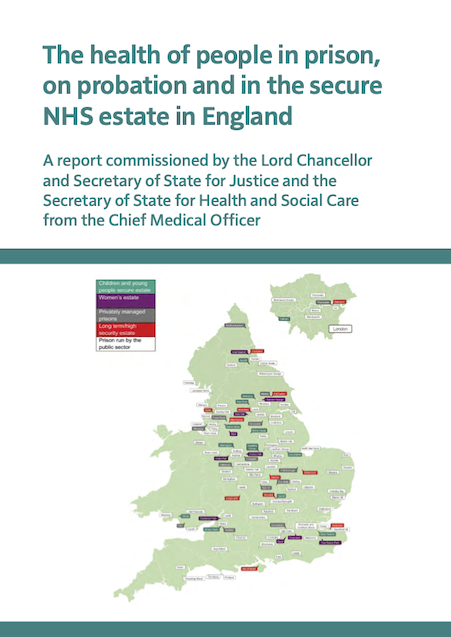
The Health Of People In Prison, On Probation And In The Secure NHS Estate In England

By Chris Whitty,

he aim of this report is to explore the health and healthcare of people in prison and on probation in England and make recommendations to improve these. It combines insights from, and individual chapters authored by: front line professionals working in prisons and the secure estate and in probation; public health professionals; commissioners and policy makers in health and justice; third sector organisations; academics and lived experience experts. These insights were gathered by extensive evidence gathering and stakeholder engagement, albeit by a small team within a defined time frame from September 2024 to July 2025. Regional health and justice teams across prison and probation were invited to share their written experiences and attend roundtables. Additional roundtables and workshops were conducted to explore specific themes such as the health needs and healthcare challenges of people on probation, health workforce and long-term conditions. We are very grateful for the time, enthusiasm and knowledgeable response from prison, probation, NHS and public health staff. Building on previous CMO visits looking at health to the secure estate (including secure mental health hospitals) we visited a further: 15 male and female prisons; 1 young offenders’ institution, 1 secure school and 1 secure children’s home; 1 secure NHS hospital and 4 probation delivery units. These covered all regions of England. During visits we discussed with frontline clinical and operational staff as well as people in prison, prison and probation officers, governors and healthcare leaders and we are very grateful for their time and expertise. In addition to lived experience identified by chapter authors and from group discussions during visits, we worked with the NHS Health and Justice Lived Experience Network and Empowering People: Inspiring Change (EP:IC) lived experience consultancy to bring together themes from existing lived experience engagement relevant to the chapters of this report, including engagement held for the 10 Year Health Plan. This was supplemented with additional lived experience focus groups held with pregnant women currently in prison, with people on probation and recently in prison on topics including the health and care needs of older adults in prison and health improvement in prison. One person with lived experience of the criminal justice system was a member of our steering group and contributed and reviewed all chapters. Lived experience contributions are incorporated throughout chapters in blue panels, practice examples (orange) and case studies (lilac) gathered from engagement are also included to illustrate findings.The development of the report was guided by 2 groups: ■ a stakeholder steering group with representation from UK Health Security Agency, Department of Health and Social Care, HM Prison and Probation Service, Ministry of Justice, NHS England and EP:IC lived experience consultancy ■ a clinical task and finish group chaired by the Royal College of General Practitioners: Secure Environments Group. Attended by front line clinicians and clinical leaders (GPs, nurses, pharmacists, psychologists, psychiatrists, midwives, obstetricians and peer support workers) working in, or with recent experience of, prisons, probation and the secure estateThe ‘children and young people’ chapter was guided by its own steering group with representation from NHS England, Youth Justice Board, Youth Custody Service and clinical advisers. The important challenges of substance misuse in prisons have been extensively explored in the recent independent review by Dame Carol Black published in 2024. For this reason we have not concentrated on this issue in this report and would point people to Dame Carol’s recommendations . Sentencing policy is obviously outside the remit of this report on health, although the implications of long and short sentences on health and healthcare is considered. Any response to the Sentencing Review by the Rt Hon David Gauke 2025 is likely to have an effect on prison and probation health and healthcare2 . While important to this population, it was outside the scope of this review to do an in depth review of social care in prisons. The ongoing independent commission into adult social care should consider the justice population.

Comprehensive Study of the Division of Adult Institutions Correctional, Mental Health, and Medical Practices with a focus on Restrictive Housing

By Falcon Correctional & Community Services, Inc

The Wisconsin Department of Corrections (WIDOC) Division of Adult Institutions (DAI) has long served the Wisconsin community with its three stated goals: • WIDOC works to protect the public through the constructive management of those placed in its charge. • WIDOC offers education, programming, and treatment to persons in WIDOC’s care that enables them to be successful upon returning to the community. • WIDOC’s mission is to achieve excellence in correctional practices while fostering safety for victims and communities. The WIDOC Executive Leadership Team sought outside assistance to conduct a comprehensive system-wide assessment of correctional, mental health, and physical health operations and practices, with a particular focus on restrictive housing and organizational culture. The project, initiated through discussions with Secretary Jared Hoy and his executive team, was designed to build upon recent reform efforts and respond to persistent staffing and operational challenges. The study used a multi-method approach that included data requests and analyses, staff interviews, workshops with DAI staff and other key stakeholders, site visits, interviews with incarcerated individuals, and policy reviews. The central objectives of the study were to (1) identify areas of strength that could be expanded upon throughout the department, (2) identify areas requiring improvements, and (3) provide actionable, evidence-based, and sustainable recommendations to achieve both short-term and long-term success. This independent assessment was conducted by an interdisciplinary team of Falcon Correctional and Community Services, Inc. (“Falcon, Inc.” or “Falcon”) experts with expertise in the administration of state prison operations, correctional medical and behavioral health practices, the assessment of criminogenic risk, large-scale system studies, and restrictive housing reform. The purpose of this independent evaluation was to serve as a tool to collectively understand, navigate, and prioritize recommendations for system improvements. Falcon would like to thank everyone at WIDOC for their assistance throughout this study. The time commitment was significant, from responding to data requests, organizing and facilitating site visits, and participating in workshops to providing the information necessary to complete this important project. We also thank you for the important work you do for the individuals in your care, your staff, and the Wisconsin community.Inc. 

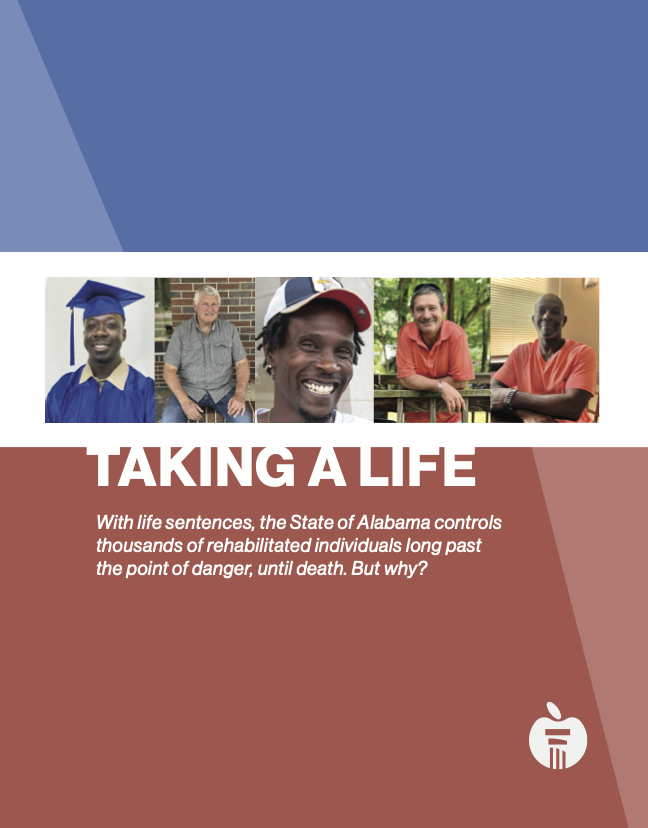
TAKING A LIFE. With life sentences, the State of Alabama controls thousands of rehabilitated individuals long past the point of danger, until death. But why?

By Alabama Appleseed

One of Five Incarcerated Alabamians is Serving a Life Sentence

When the Alabama Department of Corrections begins filling up the most expensive prison ever built in the United States, a sprawling $1.2 billion complex in Elmore County, the prison will not come close to housing only the prisoners serving life sentences. This mega prison will have a capacity of 4,000. Yet, more than 6,520 individuals are serving sentences of life with parole, life without parole, or virtual life. Lifers alone could fill the new prison to overflowing, and approximately 15,500 people would remain housed in the violent, dilapidated, understaffed prisons that have the state spending tens of millions in legal fees fighting multiple federal lawsuits while six years of unconstitutional brutality persists.

Alabama relies on long sentences at a higher rate than most of the United States with nearly one in five prisoners serving life sentences. Nationwide, the average is one in seven. A growing body of research shows that incarcerating people for these kinds of extreme sentences is generally unnecessary for public safety because it ignores the irrefutable truth that most people age out of criminality.

Incarcerating older people, many of whom are too feeble to do harm, drains resources that could be devoted to crime prevention or solving crimes, yet laws and parole practices in Alabama have failed to adjust accordingly, as this report will show.