Open Access Free Library
Fiction+Mediajpg.jpg

FICTION and MEDIA

CRIME AND MEDIA — TWO PEAS IN A POD

Posts tagged World War 1
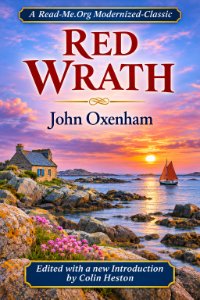
Red Wrath

By John Oxenham

On the wind-scoured granite islands of Chausey, off the coast of Normandy, young sailor Ronan Kerzec loves Aliette Kerello. Her father, the ruthless quarry-master who rules the islands, has sworn they will never marry. When Kerello is found murdered, the island whispers turn to Ronan, and he is far away when they do.

Swept into the Franco-Prussian War, Ronan defends Paris through the long siege at Fort Issy. Then, as the city turns on itself, the cunning Fernande Vilard, a schemer from Chausey who wants both Aliette and her fortune, presses him into the doomed Paris Commune. Ronan is trapped between the barricades and the firing squads as Paris burns. With his faithful giant friend Gros-Alain beside him, he must survive the Bloody Week, a living tomb, and the prison yards of Versailles, only to be shipped home in chains, to his own islands, where Vilard waits for him.

First published in 1913, Red Wrath is a sweeping story of love, loyalty and revenge set against one of the most savage episodes in French history.

This Read-Me.Org Modernized-Classic has been rewritten line by line in plain modern English and tightened for today’s readers, with a new introduction and discussion questions for book groups.

Read-Me.Org Inc. New York-Philadelphia-Australia. 2026. 300 p.

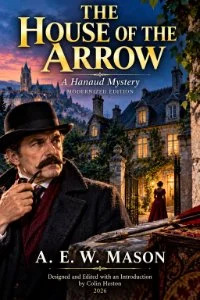
The House of the Arrow

By John Oxenham. Edite, adapted and introduced by Colin Heston.

A wealthy woman dies. A young heiress stands accused of murder. A mysterious poisoned arrow holds the key to a deadly secret.

First published in 1924, The House of the Arrow is one of the outstanding detective novels of the Golden Age of crime fiction. Written by A. E. W. Mason, creator of the celebrated French detective Inspector Hanaud, this ingenious mystery combines psychological suspense, forensic investigation, and an intricate puzzle in which appearances are dangerously deceptive.

When wealthy widow Jeanne-Marie Harlowe dies at her home in Dijon, France, her considerable fortune passes to her young niece, Betty Harlowe. But Betty's inheritance brings an unexpected nightmare. Boris Waberski, an embittered relative who has been excluded from the will, accuses her of poisoning her aunt.

An English solicitor, Jim Frobisher, travels to France to defend the frightened heiress. There he encounters the formidable Inspector Hanaud of the Paris Sûreté, a brilliant, unpredictable investigator whose methods alternately astonish, amuse, and exasperate his English companion.

At the center of the investigation stands the mysterious Maison Grenelle, an old French mansion filled with valuable antiques, concealed secrets, suspicious inhabitants, and a remarkable collection of exotic weapons. Among them is a poisoned arrow that may explain a death previously attributed to natural causes.

As anonymous letters spread fear through Dijon and suspicions multiply, Hanaud must unravel a complex web of greed, deception, jealousy, and carefully concealed motives. Every apparently insignificant detail may matter, from a clock on an antique cabinet to a misplaced book and the behavior of those who insist they have nothing to hide.

More than an ingenious whodunit, The House of the Arrow explores the difficulty of proving murder when the physical evidence is uncertain or nonexistent. Mason's vivid characterization, atmospheric French setting, and sophisticated treatment of criminal investigation make this novel both a compelling entertainment and a fascinating contribution to the history of detective fiction.

ABOUT THIS MODERNIZED EDITION

This complete and unabridged edition preserves Mason's original story, characters, dialogue, and intricate mystery while updating spelling and selected older language conventions for contemporary American readers.

A substantial new introduction by Colin Heston examines the novel's publishing history, its place in Golden Age detective fiction, the character and investigative methods of Inspector Hanaud, and its treatment of poisoning, criminal evidence, and French justice.

For readers of Agatha Christie, Dorothy L. Sayers, Arthur Conan Doyle, and classic British mysteries, The House of the Arrow offers an absorbing encounter with one of the genre's most distinctive detectives.

A classic mystery of murder, suspicion, and the elusive nature of truth-restored for a new generation of readers.

Read-Me.Org Inc. New York-Philadelphia-Australia. ..2026. p 221..

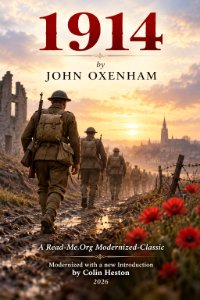
"1914"

By John Oxenham. Edite, adapted and introduced by Colin Heston.

July 25, 1914. In a quiet London suburb, merchant John Dare walks his garden at dawn. He has slept badly. Shipments from Germany have stopped without explanation, payments from the Continent have dried up, and the newspapers talk only of a minor quarrel in the Balkans. Within ten days Britain will be at war.

John Oxenham's 1914 follows two neighboring families, the Liberal Dares and the Conservative Luards, through the first six months of the Great War. Ray Luard races across a mobilizing Europe to bring Lois Dare home from Leipzig, and the two are stranded in Switzerland with less than five pounds between them. At home, Mr. Dare's business collapses overnight, the women organize relief for Belgian refugees, and spy fever turns a trusted local doctor into a suspect. The young men who once spent their days on the golf links enlist in the London Scottish and march toward the battle of Messines.

Oxenham wrote the novel while the war was still being fought, and it was published in 1916, before anyone knew how it would end. The result is a vivid record of how ordinary people met the opening months of a catastrophe, with courage, confusion, faith, and grief.

This Read-Me.Org Modernized-Classic presents the complete text with American spelling and lightly updated punctuation. It also includes:

• A new Introduction by Colin Heston on the novel, its author, and its historical moment
• 23 Review and Discussion Questions, ideal for book clubs and classrooms
• A clean, carefully formatted 5.5" × 8.5" layout

John Oxenham (William Arthur Dunkerley, 1852–1941) was one of the best-selling poets and novelists of the First World War era. He is remembered today for the hymn "In Christ There Is No East or West."

Read-Me.Org Inc. New York-Philadelphia-Australia. ..2026. p 285..

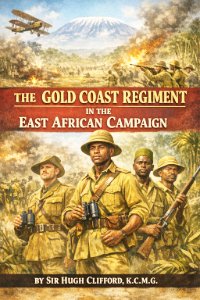
The Gold Coast Regiment In The East African Campaign

By Hugh Clifford.. Introduction by Graeme Newman

The East African Campaign of the First World War remains one of the most demanding and least understood theatres of that global conflict. Far removed from the trenches of Europe, it unfolded across vast expanses of dense bush, swamps, mountains, and savannah—lands where climate, terrain, and disease were often deadlier adversaries than the enemy’s rifles. In this harsh environment, the soldiers of the Gold Coast Regiment distinguished themselves with a fortitude and endurance that earned them a lasting place in the annals of imperial military history.

The Gold Coast Regiment, drawn predominantly from the peoples of West Africa and led by British officers, brought to East Africa a unique blend of discipline, adaptability, and martial tradition. Their participation in the long pursuit of General Paul von Lettow‑Vorbeck’s elusive Schutztruppe represented both a severe test of their abilities and a defining moment in their collective identity. The campaign demanded not only courage under fire but also the capacity to march extraordinary distances, survive with minimal supplies, and maintain cohesion amid the ravages of tropical disease and the unpredictable rhythms of guerrilla warfare.

Sir Hugh Clifford, K.C.M.G.—administrator, colonial governor, and a man deeply familiar with West Africa—brings a rare perspective to this narrative. His closeness to the region and its peoples lends the work a depth of understanding that extends beyond the purely military. Clifford’s account is not merely a chronicle of battles and maneuvers; it is also a tribute to the character, loyalty, and steadfastness of the African soldiers who served with such distinction. He illuminates how, in the face of profound hardship, these men forged bonds of trust and cooperation with their officers, contributing decisively to the eventual success of British and Allied arms in the region.

This book therefore stands as both a historical record and a testament—an effort to ensure that the bravery and sacrifices of the Gold Coast Regiment are neither forgotten nor overshadowed by more widely known campaigns. In revisiting their story, readers gain insight not only into a pivotal chapter of African military history but also into the wider, often overlooked global dimensions of the First World War. The narrative that follows invites us to honour the endurance, resilience, and unyielding spirit of a regiment that marched far from home and left an indelible mark on the course of the war in Africa.

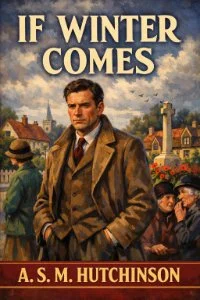
If Winter Comes

By A. S. M. Hutchinson. Introduction by Colin Heston.

When If Winter Comes appeared in 1921, it entered a literary moment marked by exhaustion, reassessment, and a profound unease about the moral and emotional consequences of the First World War. Written by A. S. M. Hutchinson, the novel achieved immediate popularity on both sides of the Atlantic, resonating with readers who recognized in its restrained drama a faithful portrait of postwar disillusionment. Today, the book stands as one of the most representative middle-class English novels of the early 1920s, combining psychological realism with a quietly devastating critique of social conformity.

At the center of If Winter Comes is Mark Sabre, a man neither heroic nor villainous, but painfully ordinary—an embodiment of the conscientious, educated Englishman caught between private integrity and public expectation. Sabre’s tragedy unfolds not through sensational events but through accumulated compromises: the erosion of affection within marriage, the pressures of respectability, and the moral cowardice of a community that prizes appearances above truth. Hutchinson’s great achievement is to dramatize these pressures with such precision that the reader comes to see how social cruelty can be enacted without overt malice, simply through silence, gossip, and moral indifference.

The novel reflects a society struggling to redefine itself after catastrophe. Although the war remains largely offstage, its psychological presence is unmistakable. Characters speak and act as if something fundamental has been broken: faith in institutions, confidence in moral authority, and trust in traditional roles. Hutchinson does not frame this as a generational revolt, as some of his modernist contemporaries did, but rather as a slow moral suffocation. The England of If Winter Comes is orderly, polite, and profoundly unforgiving—a place where deviation from accepted norms is punished less by law than by social annihilation.

Stylistically, Hutchinson occupies a middle ground between Edwardian realism and the emerging psychological novel. His prose is clear, controlled, and often deceptively simple. Sentiment is present, but carefully disciplined; emotional climaxes arise organically from character rather than authorial intrusion. This restraint partly explains the book’s enduring power. Hutchinson trusts the reader to perceive the cruelty embedded in everyday interactions and to grasp the cumulative weight of small injustices. The result is a novel that feels at once intimate and inexorable.

Equally important is Hutchinson’s treatment of marriage and masculinity. Mark Sabre is not undone by vice or ambition but by a moral rigidity that prevents him from acting decisively in his own defense. In this sense, If Winter Comes anticipates later twentieth-century explorations of male emotional paralysis. Sabre’s passivity—his belief that decency alone will protect him—proves to be a fatal misconception. Hutchinson exposes how a culture that rewards restraint and silence can become complicit in personal destruction.

Upon publication, the novel’s success was amplified by its adaptation into a widely seen stage play and later film versions, cementing its reputation as a defining postwar narrative. Yet its popularity should not obscure its seriousness. Beneath its accessible surface lies a sharp moral inquiry into responsibility, courage, and the cost of social obedience. Hutchinson does not offer easy consolation; the title itself suggests a stoic endurance rather than renewal, implying that survival may require a reckoning with loss rather than its denial.

Read today, If Winter Comes remains strikingly contemporary. Its depiction of reputational ruin, public shaming, and institutional indifference speaks to modern anxieties about social judgment and moral isolation. Hutchinson’s novel reminds us that cruelty need not be loud to be lethal, and that the gravest tragedies often occur not in moments of drama but in the long, quiet seasons of neglect. As such, this book endures not merely as a historical artifact of postwar Britain, but as a timeless study of how societies fail their most conscientious members when compassion yields to convention.

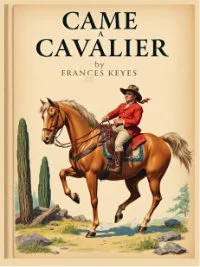
Came a Cavalier

By Frances Parkinson Keyes

Came a Cavalier by Frances Parkinson Keyes is a sweeping historical romance set against the backdrop of two world wars. The novel explores themes of resilience, identity, and the transformative power of love. At its heart is Constance “Connie” Galt, a young woman whose life is reshaped by personal betrayal and the chaos of global conflict. Her journey begins with heartbreak, which propels her into service with the American Red Cross in France during World War I. This experience becomes a crucible for her character, forcing her to confront suffering and loss while discovering inner strength and purpose.

The story delves deeply into the theme of personal growth through adversity. Connie’s evolution from a disillusioned college student to a confident, compassionate woman mirrors the broader societal shifts of the early twentieth century. Her relationships—first with Duncan Craig, an American doctor, and later with Tristan de Fremond, a French cavalry officer—highlight the tension between security and passion, as well as the cultural contrasts between America and Europe during wartime.

Historically, the novel captures the atmosphere of wartime France with vivid detail, from the scarcity and danger of the front lines to the elegance and traditions of the French aristocracy. It reflects the impact of war on both individuals and nations, portraying how global upheaval can dismantle old social orders while creating new opportunities for connection and renewal. The narrative also touches on themes of honor and duty, embodied in Tristan’s role within the prestigious Cadre Noir, and contrasts these ideals with the pragmatic realities of survival and love in times of uncertainty.

Ultimately, Came a Cavalier is not just a romance but a meditation on courage, endurance, and the human capacity for reinvention. It situates personal drama within the grand sweep of history, offering readers both an intimate love story and a rich portrait of a world in transition.

Julian Messner, Inc. NY. 1947. Read-Me.Org Inc. New York-Philadelphia-Australia. 2025. 437p.