Open Access Publisher and Free Library
TERRORISM.jpeg

TERRORISM

Terrorism-Domestic-International-Radicalization-War-Weapons-Trafficking-Crime-Mass Shootings

The Second Amendment on Board: Public and Private Historical Traditions of Firearm Regulation

By Joshua Hochman

 In New York State Rifle & Pistol Association v. Bruen, the Supreme Court reaffirmed that laws prohibiting the carrying of firearms in sensitive places were presumptively constitutional. Since Bruen, several states and the District of Columbia have defended their sensitive-place laws by analogizing to historical statutes regulating firearms in other places, like schools and government buildings. Many judges, scholars, and litigants appear to have assumed that only statutescan count as evidence of the nation’s historical tradition of firearm regulation. This Note is the first expansive account since Bruen to challenge this assumption. It argues that courts should consider sources of analogical precedent outside of statutory lawmaking when applying the Court’s Second Amendment jurisprudence. Taking public transportation as a case study, the Note surveys rules and regulations promulgated by railroad corporations in the nineteenth century and argues that these sources reveal a historical tradition of regulating firearm carriage on public transportation. Bruen permits courts to engage in more nuanced analogical reasoning when dealing with unprecedented concerns or dramatic changes. One such change is the shift in state capacity that has placed sites that were privately or quasi-publicly operated before the twentieth century under public control in the twenty-first century. As in the case of schools, which the Court has already deemed sensitive, a substantial portion of the nation’s transportation infrastructure in the nineteenth century was not entirely publicly owned and operated. For this reason, courts should consider evidence of historical firearm regulations enacted not just by legislatures but by quasi-public or private corporations. This case study instructs that courts and litigants can best honor Bruen’s history-based test by considering all of the nation’s history of firearm regulation.

Yale Law Review,  133:1676 2024
The Case for More Equitable and Community-Engaged Research to Address FirearmRelated Violence in Black and Brown Communities 

By Shani Buggs, Sheyla Delgado, Jocelyn Fontaine, Stephanie Hawkins, Talib Hudson, Tanya Sharpe

This report makes the case for the importance of more equitable and community-engaged research to address gun violence and the need to invest in and grow the field of Black, Brown, and historically underrepresented scholars committed to centering equity in the research process.

How do Communities Respond to Gun Violence Prevention Policies? A Community-Focused Study of Gun Violence Prevention Work in New Haven, CT

By The Justice Collaboratory, Yale Law School

The primary goal of this project was to explore how gun violence prevention work impacts individuals considered at high risk of being directly impacted by gun violence. The current study aimed to elevate the voices of gun violence prevention program participants and impacted communities who can best attest to the influence and power of the message and services received. Gun Violence Prevention Models and Projects The Group Violence Intervention (GVI) model used in this work is a focused-deterrence strategy that targets groups of people at high risk of gun violence. GVI is facilitated by law enforcement agencies that identify individuals who are associated with or members of groups responsible for shootings. These individuals receive an anti-violence message from law enforcement agencies partnered with community representatives and social services providers. In New Haven, CT, Project Safe Neighborhoods (2002) and Project Longevity (2012) are current initiatives modeled after the GVI strategy. Cure Violence is a public health approach to address violence as a disease to be treated by violence interrupters in the community that mediate conflicts. One prominent community-based organization that modeled the Cure Violence Approach in New Haven, CT is Connecticut Violence Intervention Program (CTVIP). The Community Perspective Numerous evaluations across the nation highlight the success of the GVI and Cure Violence programs. However, many of these policy evaluations do not include the perspectives of the people closest to the problem and they also fall short of addressing the complexities and concurrent, environmental factors underlying participation within GVI initiatives. To this end, the current study explored how individuals at high risk of gun violence benefit from gun violence prevention services whether simultaneously participating in a GVI strategy or not. The current study emphasized why the field of gun violence prevention policy needs studies that are designed to elucidate the critical components of such programs from the community perspective, with results that show that the theory of change accurately represents the impact mechanisms at work on the ground. This project, therefore, proposed an exploratory, qualitative study of initiatives to address gun violence in New Haven, CT. The goal was to explore how gun violence prevention work impacts individuals considered at high risk of being perpetrators or victims of gun violence. 

New Haven, CT: Justice Collaboratory, Yale Law School, 2025. 49p.

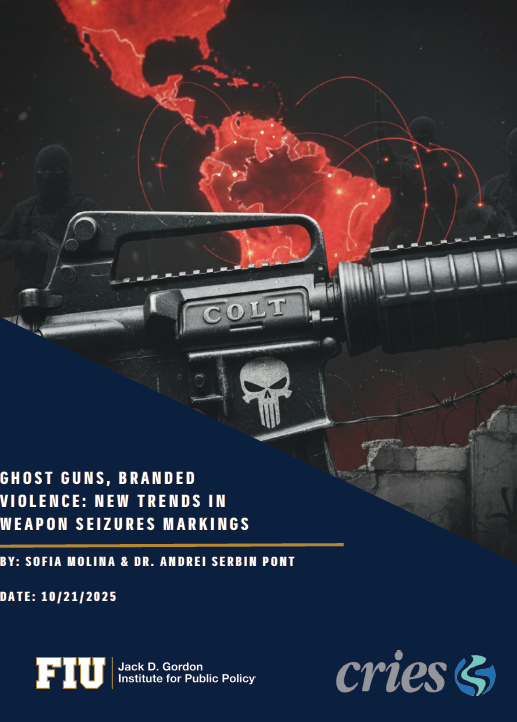
Ghost Guns, Branded Violence: New Trends in the Weapons Seizures Markings

By Sofia Molina, Andrei Serbin Pont

The enduring proliferation of illicit Small Arms and Light Weapons (SALW) remains a critical factor in the security and stability challenges facing Latin America. These armaments fuel organized crime, exacerbate violence, and empower non-state armed actors, thereby undermining governance and public safety. The foundational analysis presented by Andrei Serbin Pont and Alex Miller in the "Small Arms and Light Weapons Black Markets in Latin America" story map established a comprehensive framework for understanding these dynamics (Serbin Pont & Miller, 2022). This report builds upon that essential work, leveraging a new database of open-source seizure incidents to provide a current and granular update on the state of the illicit arms market.

The data analyzed, derived from police operations and journalistic reports compiled in the SALW dashboard from Brazil, Argentina, Panama, and Guatemala, reveals a market that is not only robust but also increasingly sophisticated and adaptive. A rigorous examination of the new dataset uncovers two significant phenomena that represent an evolution in the illicit arms trade. First, there is a proliferation of fake Colt markings on assault rifles. Second, the presence of other specific markings such as the "Punisher" skull, on seized firearms introduces another layer of analysis, indicating that weapons are not merely tools of violence but are also powerful symbols of criminal identity and ideology.

Miami: Florida International University, 2025. 9p.

Firearm access, storage practices, and suicide risk factors among Colorado adults during 2020–2022

By Leslie M. Barnard , Wei Perng ,, Ashley Brooks-Russell,, Talia L. Spark,

Background: Firearms are the most common and lethal method of suicide. Previous studies showed that households with firearms have a higher risk of suicide. It is unclear whether this is due to higher underlying risk of suicide among groups who have firearms or those who store their firearms securely. Methods: This cross-sectional analysis used Colorado Behavioral Risk Factor Surveillance System data from the period 2020–2022, which is weighted to represent the Colorado population. We used survey-weighted Poisson regression to calculate adjusted prevalence ratios (aPR) for associations of selected suicide risk factors (depressive disorder, excessive alcohol use, poor mental health, poor physical health) with firearm presence and storage practices. Results: One-third (36.5%; 95% CI: 35.8–37.7) of respondents said that they kept at least one firearm in/around their home; of those, 15.0% (95% CI 13.8–16.2) said at least one firearm was loaded and unlocked. Overall, 13.7% (95% CI 13.0–14.4) of adult Colorado residents reported poor mental health, 9.5% (95% CI 8.9–10.0) reported poor physical health, 20.4% (95% CI 19.6–21.2) reported a depressive disorder, and 30.5% (95% CI 29.4–31.7) reported excessive alcohol use. Only excessive alcohol use was more common among those keeping a firearm in/around the home compared to those not doing so (aPR 1.09 [95% CI 1.01–1.17]), and none were associated with unsecure firearm storage. Conclusions: These findings suggest that the association between household firearms and suicide is not explained by an increase in suicidality among those with firearms but rather may be explained by the presence or unsecure storage of a firearm.

2025, Academia Mental Health and Well-Being Volume 2; Issue 4

Report On The Emerging Patterns Of Misuse Of Technology By Terrorist Actors

By The Council of Europe

Although the misuse of new technologies by terrorist actors has been a major concern for some time, the capabilities offered by (and the availability of) a range of new and emerging technologies – including gaming platforms, unmanned aerial systems (UAS), artificial intelligence (AI) and 3D-printed weapons – have heightened these fears even further. An analysis of how and why terrorists adopt new technologies suggests that it remains highly context specific, with the extent and speed of innovation affected by internal factors (for example strategic, structural and individual factors) and external factors, particularly relationships, resources and the effects of counter-terrorism. In combination, these factors can encourage or inhibit the adoption of new technologies by terrorist actors, resulting in significant variations in the adoption and use of key technologies of concern. Terrorist actors in or affecting Europe have adopted (or are beginning to adopt) many of these technologies. Social media platforms, small or micro platforms, terrorist-hosted websites and gaming or gaming-adjacent platforms are all playing critical roles in the radicalisation and recruitment process. Emerging technologies used in this process include the decentralised web, the dark web and, most recently, generative AI. Although many terrorist attacks in Europe use a low-tech modus operandi, technology plays a key role in their preparation, planning and subsequent promotion. Propaganda and instructional material – typically stored and shared online – play a prominent role in shaping attack targets and methodology. For example, the emergence of 3D-printed weapon usage by terrorist actors in Europe has been fuelled by instructional materials developed by an active online subculture. Other far-right online subcultures have also encouraged the live-streaming of attacks and sharing of manifestos online. Terrorist actors in Europe use a range of licit and illicit activities to fund their attacks and radicalisation and recruitment activities, some of which (but not all) require the use of new technologies. These include mobile payment systems, online exchanges and wallets, crowdfunding, peer-to-peer online funds transfers and the solicitation of donations on social media platforms. Simultaneously, terrorist actors outside Europe, notably ISIL (Islamic State of Iraq and the Levant)/Daesh, are increasingly encouraging donations via virtual assets, driving a rise in the presence of virtual assets in European terrorist financing arrests and prosecutions. Interviews with national, regional and international experts identified lessons learned and good practices when responding to terrorist misuse of new technologies. These include reducing the lag between terrorist exploitation of new technologies and counter-terrorism responses to it (through horizon scanning exercises and greater information sharing), the criticality of multistakeholder approaches, the importance of identifying and managing human rights-related risks, and the benefits of greater strategic clarity, which can lead to a focus on desired outcomes, rather than the steps required to reach them

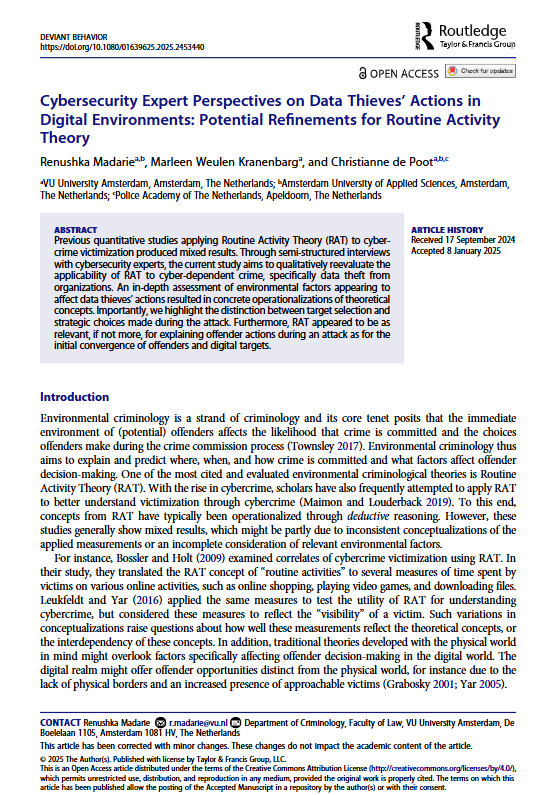
Cybersecurity Expert Perspectives on Data Thieves’ Actions in Digital Environments: Potential Refinements for Routine Activity Theory

By Renushka Madarie, Marleen Weulen Kranenbarg&Christianne de Poot


Previous quantitative studies applying Routine Activity Theory (RAT) to cybercrime victimization produced mixed results. Through semi-structured interviews with cybersecurity experts, the current study aims to qualitatively reevaluate the applicability of RAT to cyber-dependent crime, specifically data theft from organizations. An in-depth assessment of environmental factors appearing to affect data thieves’ actions resulted in concrete operationalizations of theoretical concepts. Importantly, we highlight the distinction between target selection and strategic choices made during the attack. Furthermore, RAT appeared to be as relevant, if not more, for explaining offender actions during an attack as for the initial convergence of offenders and digital targets.


DEVIANT BEHAVIOR 2025

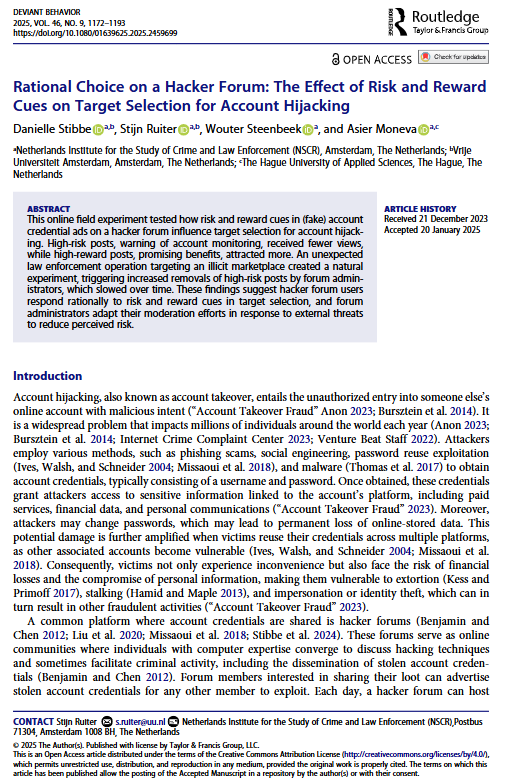
Rational Choice on a Hacker Forum: The Effect of Risk and Reward Cues on Target Selection for Account Hijacking

By Stibbe, D., Ruiter, S., Steenbeek, W., & Moneva, A.

This online field experiment tested how risk and reward cues in (fake) account credential ads on a hacker forum influence target selection for account hijacking. High-risk posts, warning of account monitoring, received fewer views, while high-reward posts, promising benefits, attracted more. An unexpected law enforcement operation targeting an illicit marketplace created a natural experiment, triggering increased removals of high-risk posts by forum administrators, which slowed over time. These findings suggest hacker forum users respond rationally to risk and reward cues in target selection, and forum administrators adapt their moderation efforts in response to external threats to reduce perceived risk.

DEVIANT BEHAVIOR 2025, VOL. 46, NO. 9, 1172–1193

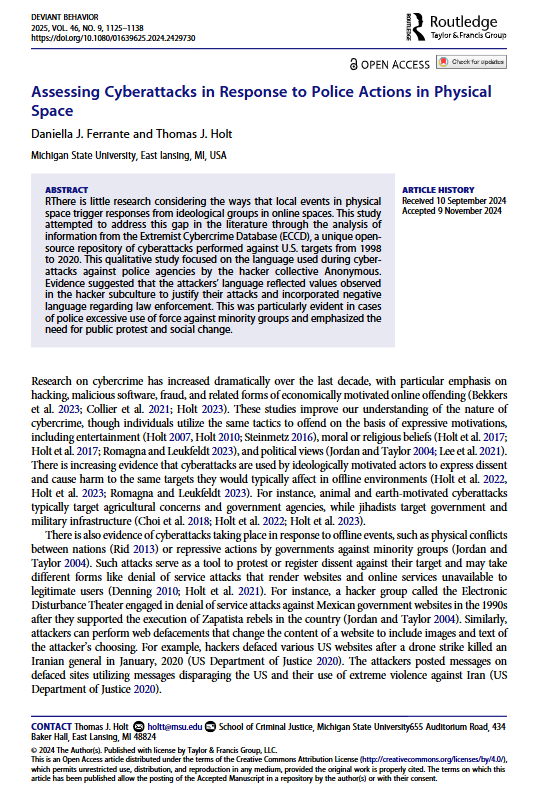
Assessing Cyberattacks in Response to Police Actions in Physical Space

By Daniella J. Ferrante & Thomas J. Holt

There is little research considering the ways that local events in physical space trigger responses from ideological groups in online spaces. This study attempted to address this gap in the literature through the analysis of information from the Extremist Cybercrime Database (ECCD), a unique open-source repository of cyberattacks performed against U.S. targets from 1998to 2020. This qualitative study focused on the language used during cyber-attacks against police agencies by the hacker collective Anonymous.Evidence suggested that the attackers’ language reflected values observed in the hacker subculture to justify their attacks and incorporated negative language regarding law enforcement. This was particularly evident in cases of police excessive use of force against minority groups and emphasized theneed for public protest and social change.
DEVIANT BEHAVIOR 2025, VOL. 46, NO. 9, 1125–1

Social Opportunity Structures in Hacktivism: Exploring Online and Offline Social Ties and the Role of Offender Convergence Settings in Hacktivist Networks 

 By Marco Romagna & Rutger Erik Leukfeldt  

  Hacktivism represents the promotion in the cyber landscape of ideologically motivated agendas using hacking techniques. Despite research on the topic has provided some clues on how hacktivist networks develop, the processes behind their evolution remain mostly unknown. This gap in the literature prompted us to research the role of online/offline social relationships and of the offender convergence settings in the creation, recruitment process and development of hacktivist networks. This study is based on 30 interviews with hacktivists, and it uses the social opportunity structures framework to analyze the development of 21 hacktivist networks. The results show that said networks can be divided in sub-categories based on the type of connections used to create them. Online social relationships and online convergence settings (particularly social media platforms and IRC channels) seem to play a key role in the development of hacktivist networks, while offline contacts are limited. For the recruitment process, hacktivists use comparable strategies to any organization, but three different categories were identified when discussing

VICTIMS & OFFENDERS Published online: 01 Jul 2024

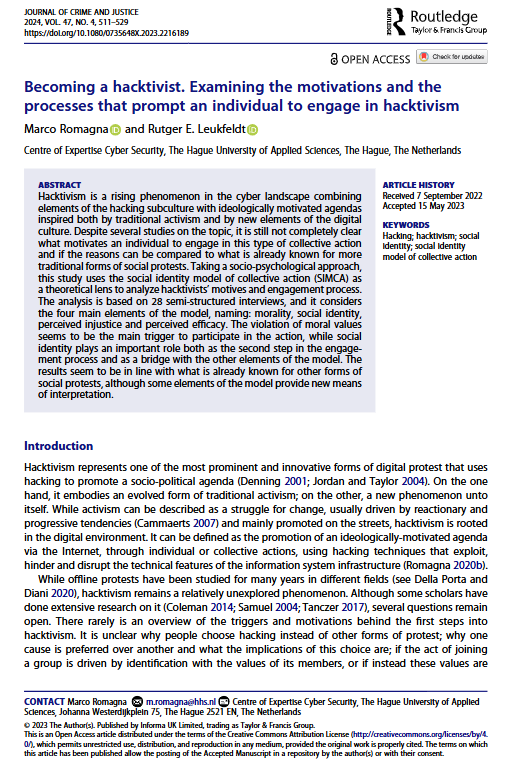
Becoming a hacktivist. Examining the motivations and the processes that prompt an individual to engage in hacktivism

By Marco Romagna & Rutger E. Leukfeldt

Hacktivism is a rising phenomenon in the cyber landscape combining elements of the hacking subculture with ideologically motivated agendas inspired both by traditional activism and by new elements of the digital culture. Despite several studies on the topic, it is still not completely clear what motivates an individual to engage in this type of collective action and if the reasons can be compared to what is already known for more traditional forms of social protests. Taking a socio-psychological approach, this study uses the social identity model of collective action (SIMCA) as a theoretical lens to analyze hacktivists’ motives and engagement process. The analysis is based on 28 semi-structured interviews, and it considers the four main elements of the model, naming: morality, social identity, perceived injustice and perceived efficacy. The violation of moral values seems to be the main trigger to participate in the action, while social identity plays an important role both as the second step in the engagement process and as a bridge with the other elements of the model. The results seem to be in line with what is already known for other forms of social protests, although some elements of the model provide new means of interpretation.

JOURNAL OF CRIME AND JUSTICE 2024, VOL. 47, NO. 4, 511–529

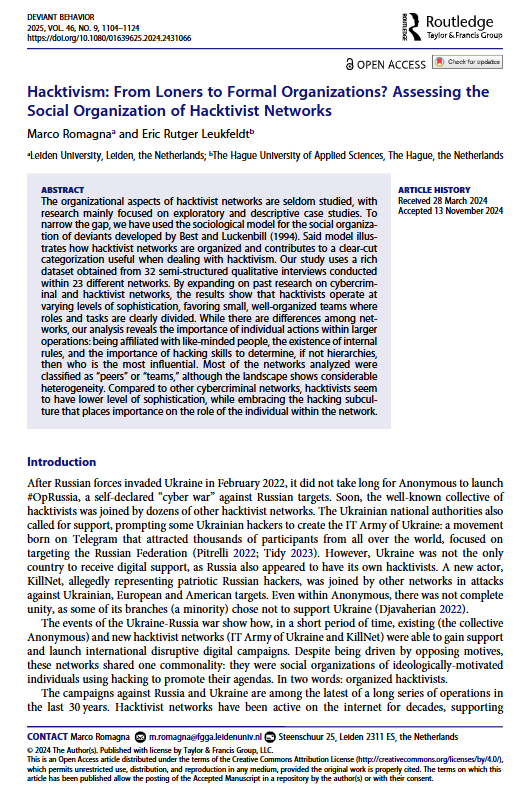
Hacktivism: From Loners to Formal Organizations? Assessing the Social Organization of Hacktivist Networks

By Marco Romagna & Eric Rutger Leukfeldt

The organizational aspects of hacktivist networks are seldom studied, with research mainly focused on exploratory and descriptive case studies. To narrow the gap, we have used the sociological model for the social organization of deviants developed by Best and Luckenbill (1994). Said model illustrates how hacktivist networks are organized and contributes to a clear-cut categorization useful when dealing with hacktivism. Our study uses a rich dataset obtained from 32 semi-structured qualitative interviews conducted within 23 different networks. By expanding on past research on cybercriminal and hacktivist networks, the results show that hacktivists operate at varying levels of sophistication, favoring small, well-organized teams where roles and tasks are clearly divided. While there are differences among networks, our analysis reveals the importance of individual actions within larger operations: being affiliated with like-minded people, the existence of internal rules, and the importance of hacking skills to determine, if not hierarchies, then who is the most influential. Most of the networks analyzed were classified as “peers” or “teams,” although the landscape shows considerable heterogeneity. Compared to other cybercriminal networks, hacktivists seem to have lower level of sophistication, while embracing the hacking subculture that places importance on the role of the individual within the network.
DEVIANT BEHAVIOR 2025, VOL. 46, NO. 9, 1104–1124

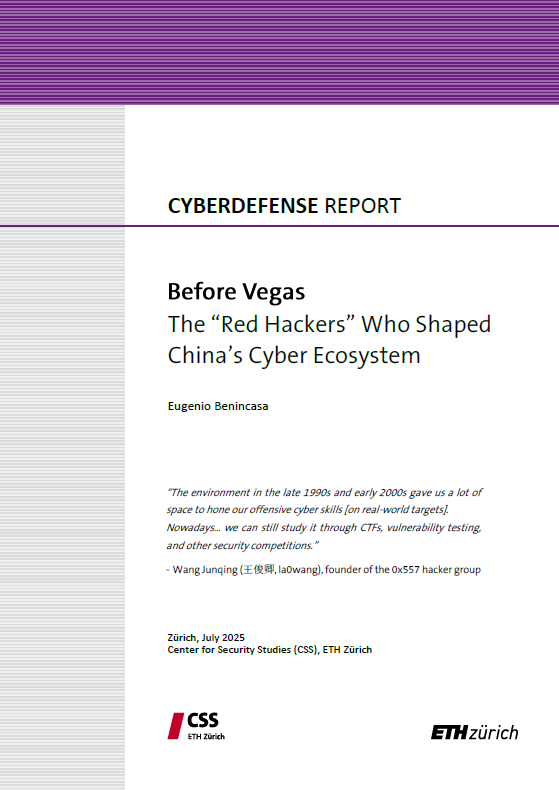
  Before Vegas: The “Red Hackers” Who Shaped China’s Cyber Ecosystem 

By   Eugenio Benincasa

Recent revelations of Chinese government-backed hacking show a recurring pattern: prominent hackers behind groups such as APT17, APT27, APT41, Flax Typhoon, and Red Hotel—monikers given by cybersecurity researchers for groups with similar tactics—trace their roots to a broader community of early elite hackers, known as “red hackers” or “Honkers” (红客, Hong Ke). Active in online forums during the mid-1990s and 2000s, these hackers operated independently but often aligned with state interests, targeting foreign entities perceived as hostile to China, including the US, Taiwan, and Japan. The author’s analysis builds upon prior research into China’s red hacker groups.

Center for Security Studies (CSS), ETH Zürich . 2025. 74p.

Transnational Dynamics In Violent Outcomes For Protest Movements: A Rapid Evidence Assessment

Aims

This review seeks to synthesise existing research on transnational mechanisms and processes to provide insights into the factors that shape protest-extremism dynamics to address the following primary research questions::

  1. What increases the vulnerability of protest mobilisations to transnational actors (states, violent movements, individuals) promoting violence across borders?

  2. What factors constrain the potential for violence, radicalisation, and terrorism in transnational social movements/ mobilisations?

  3. Under what conditions do alliances between social movements and international actors lead to an increased potential for violence? What characteristics of both types of actors contribute to this dynamic?

  4. What are the mechanisms of influence between transnational and local protest mobilisations?

Methodology 

This research uses a rapid evidence assessment (REA) approach, synthesising knowledge on specific topics in line with the research questions from published journal articles, book chapters, reports, and dissertations, including both academic and “grey” literature (e.g., government and think tank reports).

The REA adopted a streamlined methodology using keyword searches of major social science databases, after which identified documents were screened for inclusion based on pre-determined eligibility criteria.

Key findings 

The literature on both transnational protests and transnational interactions with local movements or protests does not significantly differ from the core findings of the previous two Rapid Evidence Assessments in this series which focused on social movement insights into violent protests (Salman, Marsden, Lewis, 2025) and interdisciplinary research into individual-level processes that shape radicalisation and violence related to protests (Peterscheck, Marsden & Salman, 2025). Earlier findings that remain highly relevant to transnational processes include:

  • Movement schism and fragmentation may increase potential for violence.

  • Exposure to misinformation influences protest dynamics in ways which can increase the danger of violent escalation.

  • The potential for counter-messaging to be counter-productive by producing unintended effects like reinforcing commitment to pre-existing positions, enhancing grievances like perceived discrimination, and reinforcing identities.

  • Digital platforms play a role in forging collective identities, including or especially transnational ones.

  • Fringe political movements are associated with increased acceptance of political violence.

  • Identity fusion, especially in relation to perceived threats against a group, increases the salience of group identity and individual commitment to actions in support or defence of the group, even at cost to the individual.

  • Perceptions of existential threats, discrimination, collective angst, and shared grievances can intensify group identity.

The social movement literature has developed a significant body of work on transnational movements. The key insights from the social movement and interdisciplinary literature on violence and protests also help to interpret cross-border influences. Transnational perspectives primarily add another layer of interaction, mutual influence, and opportunities for resource sharing and mobilisation. However, the mediating factors that influence contemporary social movement mobilisations, including new technology and the role of social media and their influence on violence have received less attention. This is particularly the case when violence is informed by local events and dynamics, but is influenced by transnational actors and processes. This suggests a broader gap to be filled by future research on the questions outlined in this report. 

London: CREST, The Centre for Research and Evidence on Security Threats , 2025. 48p.

2025 Assessment of Money Laundering and Terrorist Financing Risks in Canada

By Canada. Minister of Finance and National Revenue,

Canada has a robust Anti-Money Laundering and Anti-Terrorist Financing (AML/ATF) Regime that contributes to its efforts to combat transnational organized crime and is a key element of its counter-terrorism strategy. It comprises 13 federal departments and agencies with policy, regulatory, intelligence, and enforcement mandates. The federal Regime works with provincial and municipal counterparts and over 38,000 Canadian businesses with reporting obligations under the Proceeds of Crime (Money Laundering) and Terrorist Financing Act (PCMLTFA), known as reporting entities, to prevent, detect, and disrupt financial crime.

An accurate, nuanced, and up-to-date understanding of risks, informed by an assessment of money laundering and terrorist financing threats, vulnerabilities, and consequences, is the foundation for applying a risk-based approach to combatting these financial crimes in Canada. This includes balancing priorities of protecting the integrity of Canada's financial system and the safety and security of Canadians, respecting privacy and other rights of people in Canada, and mitigating regulatory burden and unintended consequences that may be faced by industry and the clients to whom they provide services.

The 2025 Assessment of Money Laundering and Terrorist Financing Risks in Canada is a comprehensive assessment of the most pressing money laundering and terrorist financing threats and vulnerabilities in Canada. It assesses inherent risks and discusses the mitigation measures put in place to respond to them. Findings are informed through consultations with federal government authorities and external stakeholders, including provincial and territorial governments, the private sector, non-profit organizations, and international partners.

The purpose of this report is to support evidence-based policymaking, resource allocation, and priority setting for public authorities, and to support private sector businesses and non-government organizations to apply focused and proportionate measures to mitigate risks.

Ottawa: Canada. Department of Finance 2025. 126p.

Battling Extremism: What Counts as Knowledge

By Mohamed Bin Ali, Sabariah Hussin and Muhammad Haziq Bin Jani

Recent years have shown that extremist worldviews are no longer limited to specific ideologies, regions, or grievances. Whether driven by Islamist militancy, far-right conspiracies, or historical grievances, the dissemination of radical beliefs today is shaped by a deeper and more fundamental issue: extremist epistemology, especially regarding how individuals come to know, filter, and reinforce what they believe to be true.

COMMENTARY

At the heart of radicalisation lies an epistemology that rigidly filters information, dismisses contradictory evidence, and resists alternative perspectives. Quassim Cassam and Olivia Bailey have described this as a “closed-minded worldview” that replaces open inquiry with ideological purity. In this view, epistemology refers not to formal theories of knowledge, but to the everyday frameworks and practices by which individuals justify their beliefs and decide what to believe or reject.

When a person becomes epistemically closed off – often through social media echo chambers or ideological networks – their epistemic autonomy is compromised. They no longer analyse evidence critically, instead relying on trusted sources or in-groups to determine what qualifies as “truth.” This vulnerability is what extremist groups exploit, online and offline.

Self-radicalised individuals – including those in Singapore detained under the Internal Security Act for plotting attacks or attempting to travel to conflict zones – often fell into these epistemic traps. Although the content they consumed may have varied, their radicalisation process was similar: they entered epistemic environments that made violence appear not only justified but also necessary.

These environments often revolve around radical ideologies that reinforce extremist epistemology by offering binary moral frameworks that simplify complex realities and by providing emotionally resonant certainties about the future – such as promises of martyrdom or apocalyptic triumph. These approaches help define individuals as they seek clarity, purpose, or control amid uncertainty.

S. Rajaratnam School of International Studies, NTU Singapore, 2025. 5p.

Undue Influence By Criminal and Extremist groups.

Attempts to influence elected officials and municipal administrations.

By David Andersson, Anna Horgby and Albin Östervall

This is a study of undue influence exerted by actors and groups constituting a systemic threat in Sweden, including undue influence against elected officials, political parties and decision-making bodies. The study also sheds light on what forms undue influence can take against municipalities. Particular focus is on actors and groups connected to organised crime.

English summary of Brå report 2025:4 Stockholm: The Swedish National Council for Crime Prevention (Brå) -2025. 14p.

Ordeal of a Diplomat

by C. Nabokoff (Author), Graeme Newman (Introduction)

The Ordeal of a Diplomat is a vivid and penetrating memoir by Constantin Nabokoff, a senior Russian diplomat who served in India and London during the final years of the Russian Empire and the First World War. Writing with candor and intellectual clarity, Nabokoff recounts his experiences at the heart of imperial diplomacy as long-established political structures gave way to revolution, war, and the collapse of old alliances. His narrative blends personal observation with acute political insight, illuminating the misunderstandings, rivalries, and illusions that shaped international relations on the eve of the modern world. At once a historical document and a timeless meditation on power, loyalty, and misjudgment, the book offers a rare insider’s view of diplomacy conducted amid global crisis and enduring relevance for readers interested in international affairs today.

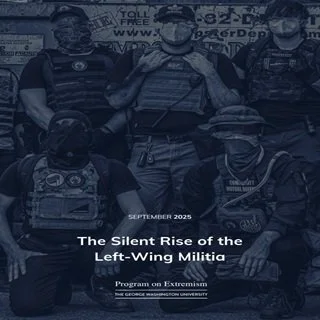
The Silent Rise of the Left-Wing Militia

By The Program on Extremism at The George Washington University

At a time in which violent Left Wing extremism is seeing a massive surge, this report sheds light on how armed, organized left-wing militias have quietly emerged across the U.S., often overlooked or mischaracterized by law enforcement, policymakers, and the media.

Drawing on thousands of court records, open-source videos, social media pages, manifestos, and more, the report profiles four prominent groups:

  • Redneck Revolt / John Brown Gun Clubs

  • The Socialist Rifle Association

  • The Not Fucking Around Coalition (NFAC)

  • The Huey P. Newton Gun Club / Guerilla Mainframe / Geronimo Tactical

These groups are armed, ideologically driven, and increasingly well-organized - championing causes from anti-fascism and Black nationalism to anti-capitalism. Many boast high levels of veteran involvement and adopt military-style recruitment tactics aimed at active-duty service members and former personnel.

Key findings include:

  • Left-wing militias are largely absent from federal extremism frameworks, allowing them to operate with less scrutiny than their right-wing counterparts.

  • Their rise correlates with high-profile flashpoints like the Ferguson protests and the 2016 election of Donald Trump.

  • They are highly active online, often with little-to-no content moderation, cultivating large digital followings across platforms like TikTok, Reddit, Instagram, and X.

  • While less violent overall, these groups glorify attacks by ideological allies and exhibit many of the same behaviors seen in right-wing militia ecosystems.

The Silent Rise of the Left-Wing Militia examines an underexplored and rapidly growing element of the domestic extremist landscape, at a time of rampant political violence across the ideological spectrum and urges policymakers, analysts, and the public to confront a rapidly evolving militia landscape without ideological blinders.

Washington, DC: The Program on Extremism at The George Washington University , 2025. 78p.

Cattle Rustling and Insecurity: Dynamics in the Tri-Border Area Between Burkina Faso, Côte d'Ivoire and Ghana

By FLORE BERGER

Cattle rustling is a major driver of conflict and instability in the Sahel and West Africa. The two groups posing the biggest threat in the Sahel are Jama’at Nusrat al-Islam wal-Muslimin (JNIM), an al-Qaeda affiliate, and Islamic State Sahel Province (IS Sahel).

These violent extremist organizations (VEOs) rely on cattle rustling as a stable source of income, using the proceeds to fund their operations and acquire necessary resources like weapons. Beyond this, they embed themselves within the broader livestock economy and, in areas where they hold significant influence, they even protect herder communities from looting by other conflict actors – gaining legitimacy in the process. Even further from their traditional operation’s zone in Mali and Burkina Faso, cattle rustling is still a critical aspect to the conflict.

JNIM in particular continues to expand further south, but it is not just territorial expansion – it’s a shift in logistics. JNIM relies on cross-border supply chains, including livestock looting and trafficking, to sustain operations and entrench their presence.

Geneva, SWIT:

The Global Initiative Against Transnational Organized Crime ,

2025. 40p.