Open Access Publisher and Free Library
CRIME+CRIMINOLOGY.jpeg

CRIME

Violent-Non-Violent-Cyber-Global-Organized-Environmental-Policing-Crime Prevention-Victimization

Posts in INCLUSION
Tipping Scales: Exposing the Growing Trade of African Pangolins into China’s Traditional Medicine Industry

By Faith Honor , Amanda Shaverand Devin Thorne

The trafficking of pangolins and their scales drives corruption, undermines the rule of law, creates public health risks, and even threatens local and regional security. Additionally, the illicit pangolin trade may have even played a role in onset of the COVID-19 pandemic.1 Critically, the trade—and all of its related challenges—appears to be growing: between 2015 and 2019, 253 tonnes2 of pangolin scales were confiscated, and the annual quantity of pangolin scales seized increased by nearly 400%. To expose the logistics of how these scales are trafficked internationally, Tipping the Scales uses publicly available seizure data and investigative case studies. The global plight of pangolins is increasingly well-known, but less understood are the opaque supply chains that enable pangolin trafficking. To trace this illicit system from consolidation hubs in West and Central Africa to China’s consumer markets, Tipping the Scales analyses 899 pangolin seizures. Drawing on C4ADS’ Wildlife Seizure Database, law enforcement partner seizure data, official government documents, corporate data, and expert interviews, the report details how traffickers nest their activities within licit systems of trade and commerce. To disrupt this trade, C4ADS identifies opportunities for intervention and capacity building.

In Section I, the report finds that pangolin scale traffickers have co-opted bushmeat supply chains and legal breeding programs for their illicit activities. Bushmeat scale trafficking supply chains are particularly prominent in Central and West Africa; 72% of African scale seizures over the last five years have come from those regions. Growing demand for pangolin meat and scales has made pangolins a dual-transaction good3 that relies on transport networks between rural areas and urban and coastal distribution hubs. Further, the report finds that pangolin breeding programs in sub-Saharan Africa obscure the lines between poaching, conservation, and science. In Section II, the report finds that bulk pangolin scale shipments often exit the continent through coastal countries in Central and West Africa. While 70% of intercontinental trafficking instances tied to Africa rely on the air transport sector, 81% of the total weight of pangolin scales are trafficked intercontinentally via the maritime transport sector. China and Hong Kong are the trade’s most prominent destinations. Since 2015, 42% of the 195 tonnes of pangolin scales seized throughout Asia originated in Africa and were seized in or bound for China or Hong Kong. In Section III, the report finds that there are more than 1,000 companies, hospitals, and other entities participating in China’s legal market for medicinal pangolin products. In this market, which allows companies to privately stockpile pangolin scales, traffickers exploit lax regulations to sell scales from Africa and Asia. Government-reported pangolin scale consumption quotas, geo-tagged company data, and seizures suggest that Guangdong and Hunan provinces have relatively high levels of exposure to both the legal pangolin market and pangolin trafficking. Based on these findings, Tipping the Scales makes 10 recommendations to increase detection of and improve enforcement against transnational criminal networks operating in Africa and Asia (see page 58).

Washington, D: C4ADS, 2020. 60p.

download
"Blasphemy" in Schools : Self-Censorship and Security Fears Amongst British Teachers

By Damon L. Perry

In Britain, no one has the right not to be offended. Words or actions that are taken by some as offensive – whether they relate to religion, sexuality or race – are not criminal as long as they are not intentionally hostile and meant, or likely, to incite hatred. The statutory guidance on Non Crime Hate Incidents, revised in March 2023, is consistent with the law in this regard. It states: “Fundamentally, offending someone is not, in and of itself, a criminal offence. To constitute an offence under hate crime legislation, the speech or behaviour in question must be threatening, abusive or insulting and be intended to, or likely to, stir up hatred”. Yet, this does not seem to be fully acknowledged in Britain’s schools. As this revealing survey of over a thousand teachers from YouGov and Policy Exchange demonstrates, since the Batley Grammar School protests, a small but significant proportion of British teachers have self-censored to avoid offence on religious grounds – 16%. (That proportion is slightly higher for teachers of certain subjects, including almost a fifth of all English teachers and art teachers – 19%). In areas with the largest Muslim populations, around 10% fewer teachers do not self-censor than those in areas with the smallest Muslim populations. A worrying proportion believe that – regardless of a teacher’s intentions – images of the prophet Muhammad should never be used in classrooms, even in the teaching of Islamic art or ethics: In addition to the 55% of teachers that would not personally use an image of Muhammad independently from the Batley Grammar School protests, an additional 9% said they personally were less likely to use it as a result of the events in Batley. The case of the teacher at Batley Grammar who went into hiding after death threats thus appears to have had a significant impact on teachers’ confidence and willingness to use materials that fall within the scope of the law. Alarmingly, half of British teachers believe that if blasphemy-related protests led by activist and advocacy groups occur outside their schools, there would be a risk to their physical safety. Despite most teachers thinking that headteachers get the balance right – between supporting them to use materials that are on the right side of the law but which might offend, and ensuring no offence is caused – they are clearly in need of greater confidence in the support they can expect from their headteachers and, in the case of activist-led protests outside their school gates, the police. Recent events have given further impetus to concerns regarding the physical safety of teachers and the security at schools. On 13 October, 2023, in Arras, France, a literature teacher, Dominque Bernard, was killed in a knife attack; the suspect, an Islamist extremist, was looking for teachers  of history or geography. The case has been compared to that of Samuel Paty, the teacher who was killed three years ago by an Islamist extremist for showing cartoons of Muhammad to a class on freedom of expression. Both teachers have been described by President Macron as champions of the values of the French republic. Although this tragic incident took place across the Channel, France’s battle with Islamist extremism is one shared with the UK. Closer to home, in the wake of the Hamas terrorist attacks on hundreds of civilians in Israel on 7 October, protests on the streets of the UK against Israeli reprisals in the name of the Palestinian “resistance” have demonstrated alarming levels of hateful extremism and antisemitism.5 Some Jewish schools were forced to close on 13 October, when Hamas called for a “Global Day of Jihad”, and several Jewish schools were vandalised with red paint. The atmosphere has been fraught. The Department for Education wrote to school leaders “to ensure that any political activity from pupils in response to the crisis does not create an ‘atmosphere of intimidation’”  etc.

London: Policy Exchange, 2024. 51p.

download
After the War on Crime: Race, Democracy, and a New Reconstruction

By Mary Louise Frampton, Ian Haney Lopez, and Jonathan Simon

Since the 1970s, Americans have witnessed a pyrrhic war on crime, with sobering numbers at once chilling and cautionary. Our imprisoned population has increased five-fold, with a commensurate spike in fiscal costs that many now see as unsupportable into the future. As American society confronts a multitude of new challenges ranging from terrorism to the disappearance of middle-class jobs to global warming, the war on crime may be up for reconsideration for the first time in a generation or more. Relatively low crime rates indicate that the public mood may be swinging toward declaring victory and moving on.
However, to declare that the war is over is dangerous and inaccurate, and After the War on Crime reveals that the impact of this war reaches far beyond statistics; simply moving on is impossible. The war has been most devastating to those affected by increased rates and longer terms of incarceration, but its reach has also reshaped a sweeping range of social institutions, including law enforcement, politics, schooling, healthcare, and social welfare. The war has also profoundly altered conceptions of race and community.
It is time to consider the tasks reconstruction must tackle. To do so requires first a critical assessment of how this war has remade our society, and then creative thinking about how government, foundations, communities, and activists should respond. After the War on Crime accelerates this reassessment with original essays by a diverse, interdisciplinary group of scholars as well as policy professionals and community activists. The volume's immediate goal is to spark a fresh conversation about the war on crime and its consequences; its long-term aspiration is to develop a clear understanding of how we got here and of where we should go.

New York; London: NYU Press, 2008.256p

download
Breaking the Devil's Pact: The Battle to Free the Teamsters from the Mob

By  James B. Jacobs and Kerry T. Cooperman

In 1988, Manhattan U.S. Attorney Rudy Giuliani brought a massive civil racketeering suit against the leadership of the International Brotherhood of Teamsters (IBT), at the time possibly the most corrupt union in the world. The lawsuit charged that the mafia had operated the IBT as a racketeering enterprise for decades, systematically violating the rights of members and furthering the interests of organized crime. On the eve of trial, the parties settled the case, and twenty years later, the trustees are still on the job.

Breaking the Devil’s Pact is an in-depth study of the U.S. v. IBT, beginning with Giuliani’s lawsuit and the politics surrounding it, and continuing with an incisive analysis of the controversial nature of the ongoing trusteeship. James B. Jacobs and Kerry T. Cooperman address the larger question of the limits of legal reform in the American labor movement and the appropriate level of government involvement.

New York; London: NYU Press, 2011. 320p.

download
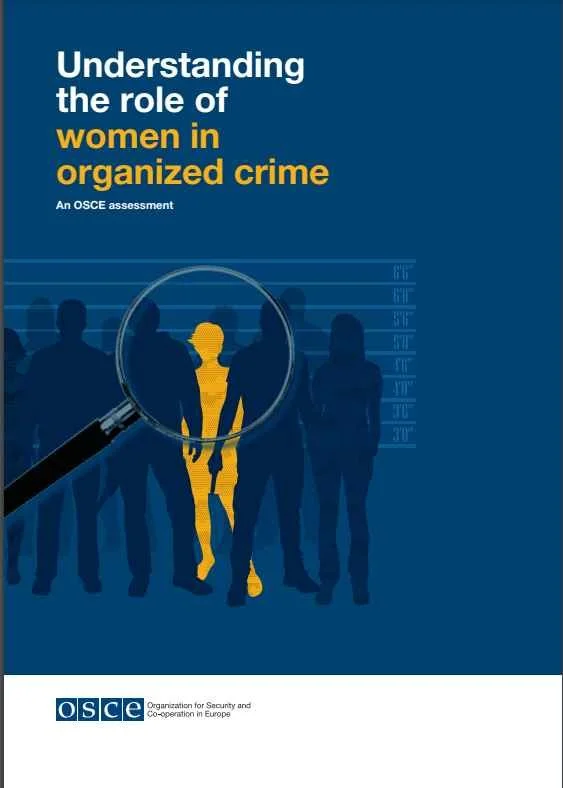
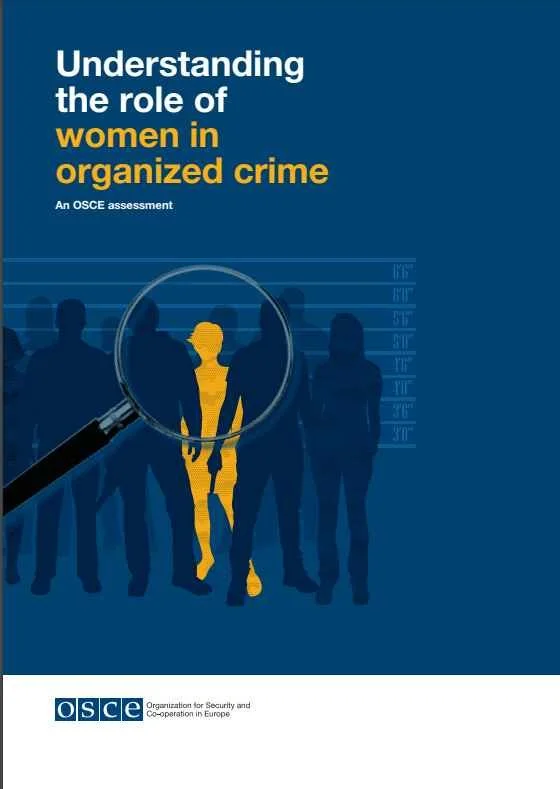
Understanding the Role of Women in Organized Crime

By The Organization for Security and Co-operation in Europe

This report offers empirical evidence and case studies from across the OSCE area on how women are recruited into organized crime groups, their roles within them, and how and why they exit these groups. It demonstrates that the role of women in organized crime is nuanced. Evidence shows that while women are often exploited and victimized by organized crime groups, they can also be important actors. Yet persistent gender stereotypes mean that women’s agency in organized crime is often not recognized by criminal justice practitioners. Failing to recognize women’s agency in organized crime impedes the understanding in participating States of the complexity of the organized crime landscape, and hampers their ability to combat transnational organized crime or support women to leave organized crime groups.

Vienna: OSCE, 2023. 72p.

Download
History, Linked Lives, Timing, and Agency: New Directions in Developmental and Life-Course Perspective on Gangs

 By David C. Pyrooz, John Leverso, Jose Antonio Sanchez, and James A. Densley

For more than three decades, developmental and life-course criminology has been a source of theoretical advancement, methodological innovation, and policy and practice guidance, bringing breadth and depth even to well-established areas of study, such as gangs. This review demonstrates how the developmental and life-course perspective on gangs can be further extended and better integrated within broader developments in criminology. Accordingly, we structure this review within the fourfold paradigm on human development that unites seemingly disparate areas in the study of gangs: (a) historical time and place, or the foregrounding of when and where you are; (b) linked lives, or the importance of dynamic multiplex relationships; (c) timing, or the age-grading of trajectories and transitions; and (d) human agency, or taking choice seriously. We conclude by outlining a vision that charts new directions to be addressed by the next generation of scholarship on gangs.

Annual Review of Criminology, Volume 7, Page 105 - 127

download
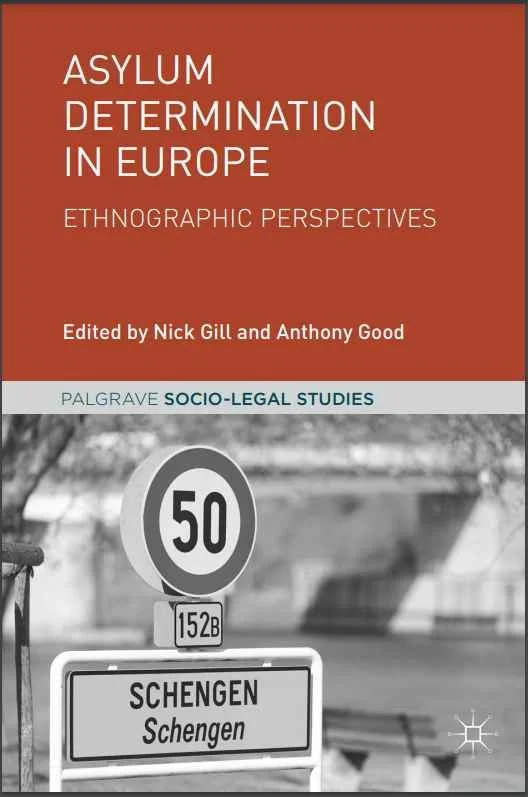
Asylum Determination in Europe: Ethnographic Perspectives

Edited by Nick Gill and Anthony Good

Drawing on new research material from ten European countries, Asylum Determination in Europe: Ethnographic Perspectives brings together a range of detailed accounts of the legal and bureaucratic processes by which asylum claims are decided. The book includes a legal overview of European asylum determination procedures, followed by sections on the diverse actors involved, the means by which they communicate, and the ways in which they make life-and-death decisions on a daily basis. It offers a contextually rich account that moves beyond doctrinal law to uncover the gaps and variances between formal policy and legislation, and law as actually practiced. The contributors employ a variety of disciplinary perspectives – sociological, anthropological, geographical, and linguistic – but are united in their use of an ethnographic methodological approach. Through this lens, the book captures the confusion, improvisation, inconsistency, complexity, and emotional turmoil inherent to the process of claiming asylum in Europe.

Basingstoke, UK: Palgrave Macmillan, 2019. 346p.

Download
Women as actors of transnational organized crime in Africa

By INTERPOL and ENACT Africa

In the last two decades the percentage of imprisoned women offenders is growing globally, at a faster rate than imprisoned male offenders. 1 Such global increase raises the question as to whether the same can be observed on the African continent . Information suggests that transnational organized crime (TOC) affects African women and girls differently than African men and boys. It is crucial to learn how and if men and women behave differently in TOC in Africa in order to uncover the main drivers of these differences and adapt policing methodology accordingly. While gendered data continues to be insufficiently reported upon by law enforcement authorities in Africa, the assessment suggests that African law enforcement authorities are possibly under -investigating and under -estimating the involvement of African women in TOC. African law enforcement authorities likely continue to perceive them as victims or accomplices only. They are possibly rarely seen as the criminals themselves and less so as being the organizers, leaders, traffickers or recruiters. This gap in police investigations is indeed known to be exploited to the benefit of organized crime as women are more likely to go under the radar . The assessment draws attention to the common features of African female offenders based on available data to share insights and encourage police forces to reconsider their approach.

Lyon, France: INTERPOL, 2021. 32p.

download
Post-traumatic Stress Disorder as a Risk Factor for Substance Use Disorder: Review and Recommendations for Intervention

By of Justice Assistance

Co-occurrence of post-traumatic stress disorder (PTSD) and substance use disorder (SUD) are very common, so it is crucial that SUD treatment providers incorporate initial PTSD screening and ongoing PTSD symptom monitoring. Doing so will allow for early intervention opportunities and better long-term outcomes. PTSD and SUDs often occur together, and an individual with diagnosed PTSD-SUD faces several associated long-term health risks. As a result, SUD treatment providers should consider PTSD screening at the beginning of treatment programs as well as ongoing PTSD symptom monitoring. Screening and monitoring for PTSD-SUD will allow for early intervention using strategies that are tailored for a dual diagnosis. Lifetime PTSD is a common psychiatric diagnosis (occurring in approximately 6.1 percent of adults), with even higher rates among rural, low-income communities. PTSD alone is associated with several adverse health outcomes, but individuals with PTSD also are likely to suffer from other disorders, including substance use disorders (SUDs). Individuals with both PTSD and an SUD (PTSD-SUD) report more severe long-term functional impairments than individuals with only one of these diagnoses. In addition, SUD recovery rates are much lower in people with PTSD than in those without.

Washington, DC: BJA, 2023. 6p.

download
Criminal gangs and elections in Kenya

By Ken Opala

Despite the August 2022 elections proceeding relatively smoothly, there is still a clear nexus between politics and crime in the country.

Election violence remains a major problem in Kenya despite attempts by the state and other actors to tackle it. Ahead of the country’s fifth general election, held on 9 August 2022, state agencies, the media and civil society predicted the re-emergence of gangs and militias keen to influence its outcome. Although the elections went off relatively smoothly there is still a clear nexus between politics and crime.

ENACT Africa, 2023. 24p.

download
Legalisation and Decriminalisation of Narcotic Drugs and Psychotropic Substances

Edited by Gian Ege, Andreas Schloenhardt ,Christian Schwarzenegger and Monika Stempkowski

Debates about decriminalising or even legalising certain narcotic drugs and psychotropic substances have gained much momentum in recent years. On the surface, it appears that more and more jurisdictions are exploring the introduction of measures to permit, albeit in very controlled ways, the use of some narcotic drugs, if only for medical purposes. Others further agree that the so-called ‘war on drugs’ has failed to produce any meaningful success and that new ways to prevent the abuse of narcotic drugs and psychotropic substances need to be explored. Nevertheless, most jurisdictions continue to impose near-complete bans on the production, manufacturing, trade, transport, supply, sale, and possession of illicit drugs. National authorities, along with international organisations, point out that any move to decriminalise narcotic drugs and psychotropic substances is inconsistent with international law.

Berlin: Carl Grossman Verlag 2023. 250p.

download
The Jungle Patrol: Fighting Illegal Loggers on the Guatemala-Mexico Border

By Alejandro Melgoza and Alex Papadovassilakis

We traveled over 300 kilometers through a trio of nature reserves to document how illegal loggers have ravaged some of the region’s most biodiverse forests and to chronicle the unlikely story of a small group of park rangers fighting back. This investigation, which used video and other multimedia elements to explain this complex criminal economy, is our most in-depth exploration of environmental crime yet..

Washington, DC: InSight Crime, 2022. 38p.

download
The Criminalization of Poverty in Tennessee

By Jack Norton, Stephen Jones, Bea Halbach-Singh, Jasmine Heiss

When people are arrested and charged for activities they are forced to engage in to survive—such as driving without a license or sleeping outside—poverty becomes criminalized. In these cases, being poor is essentially made illegal. In collaboration with Free Hearts—an organization led by formerly incarcerated women—Vera researchers explain how poverty has been criminalized across Tennessee and what this means for people who live in communities in the state. The effects of the criminalization of poverty are compounded through the collection of money bail; additional fines, fees, and costs; and barriers to housing, transportation, education, and employment. With deep dives into several counties across Tennessee, the report shows how incarceration and policing are related to other systems that both punish and exacerbate poverty in the state. The report outlines actionable steps that can be taken now to build toward a vision of safety that includes all Tennesseans.

New York: Vera Institute of Justice, 2022. 58p.

download
Hate in the Machine: Anti-Black and Anti-Muslim Social Media Posts as Predictors of Offline Racially and Religiously Aggravated Crime

By Matthew L Williams; Pete Burnap, Amir Javed, Han Liu, Sefa Ozalp

Hate crimes have risen up the hierarchy of individual and social harms, following the revelation of record high police figures and policy responses from national and devolved governments. The highest number of hate crimes in history was recorded by the police in England and Wales in 2017/18. The 94,098 hate offences represented a 17 per cent increase on the previous year and a 123 per cent increase on 2012/13. Although the Crime Survey for England and Wales has recorded a consistent decrease in total hate crime victimization (combining race, religion, sexual orientation, disability and transgender), estimations for race and religion-based hate crimes in isolation show an increase from a 112,000 annual average (April 13–March 15) to a 117,000 annual average (April 15–March 17) (ONS, 2017). This increase does not take into account the likely rise in hate victimization in the aftermath of the 2017 terror attacks in London and Manchester. Despite improvements in hate crime reporting and recording, the consensus is that a significant ‘dark figure’ remains. There continues a policy and practice needed to improve the intelligence about hate crimes, and in particular to better understand the role community tensions and events play in patterns of perpetration. The HMICFRS (2018) inspection on police responses to hate crimes evidence that forces remain largely ill-prepared to handle the dramatic increases in racially and religiously

The British Journal of Criminology, Volume 60, Issue 1, January 2020, Pages 93–117

download
Economic Outcomes of Canadian Federal Offenders

By Kelly M. Babchishin, Leslie-Anne Keown, and Kimberly P. Mularczyk

Employment is a key factor that helps reduce reoffending rates among individuals with criminal records. The current study examined the economic outcomes of 11,158 federal offenders (Mage in 2014 = 47 years) admitted to Correctional Service of Canada institutions between January 4th, 1999 and December 31st 2001 (medianadmission year = 2000) who were released in the community for an average of 14 years. The purpose of the current study was to better understand the economic outcomes of Canadian federal offenders. More than half of the cohort of released offenders filed their taxes (5,835 of 11,158). The current study suggests that individuals with criminal records face considerable barriers when seeking employment in Canada, with only half of the individuals released from federal institutions finding employment after an average of 14 years. Individuals released from federal correctional institutions participated in the labour market less, made substantially less employment income, received more social assistance payments, and filed taxes less than the general Canadian population. After an average of 14 years post release, most individuals were underemployed with a median income of $0. Of those who reported employment, the average reported income was $14,000. This is less than half of what Canadians in the general population earn through employment. We also found that barriers to finding gainful employment following incarceration disproportionately impacted women, Indigenous, and older individuals, with these groups fairing even poorer than men, non-Indigenous, and younger individuals with criminal records. The current study suggests that more should be done to assist individuals with a criminal record secure gainful employment.

RESEARCH REPORT: 2021-R002 . Ottawa:; Public Safety Canada, 2021. 37p.

download
Poverty and Access to Justice: Review of the Literature

By Ireland Bellsmith, Olivia Goertzen, Kia Neilsen and Olivia Stinson

Poverty is both a source and a consequence of injustice. The following is a brief review of some of the many issues at the intersection between poverty and the justice system, and more generally, poverty and access to justice. It is based on a review of the literature as well as some of the prior work by the International Centre for Criminal Law Reform and Criminal Justice Policy, an institute of the UN Crime Prevention and Criminal Justice Programme Network based in Vancouver, BC. In their first report, the National Advisory Council on Poverty (NACP) defined poverty as the deprivation of resources and the lack of power required to attain basic living standards and to facilitate social integration and inclusion, thus clearly linking poverty to social exclusion or marginalization. Although the Council agreed with that broad definition of poverty, initially used in Opportunity for All – Canada’s First Poverty Reduction Strategy, it also acknowledged that a more comprehensive definition would further emphasize the feelings of social disconnect and disempowerment that commonly characterize poverty. Poverty limits people’s access to justice and their ability to resolve conflicts and deal with everyday legal problems. It is a very disempowering and alienating experience. The resulting inability to successfully resolve legal problems is itself contributing to people’s inability to attain or maintain basic living standards. The justice system instead of empowering poor people and allowing them to fight for their rights is too often a source for them of frustration, disillusionment, and disempowerment, as well as a direct reflection of prevailing social inequality and exclusion. The experience of the justice system for marginalized victims of crime and individuals struggling with poverty is also problematic and is also contributing to and dictated by poverty. Yet, poverty is linked to higher rates of victimization and the consequences of victimization are often direr for people experiencing poverty and marginalization. Finally, the experience of people facing criminal charges or being convicted of a crime is also affected by their social and economic status. The likelihood of a criminal conviction and the consequences of a criminal conviction are directly influenced by the means of the defendants and the means and social capital of those who are convicted. The lack of support for convicted offenders, compounding their ostracization, is a further source of inequality and contributes to further entrenching them and their family in poverty and exclusion. This report presents an overview of recent research and general information gathered from persuasive articles, publications, and research studies on the topic of poverty in Canada and its implications and influence on access to justice. By evaluating different areas of justice and legal proceedings, we seek to identify emerging themes in research and analyze effective practices and those that appear to fall short. Thus far, evident themes between poverty and access to justice include unsatisfactory victim experience, conditions leading to incarceration despite the availability of alternatives, lack of legal awareness within communities, and problematic disempowerment. While current practices and legislation have sought to address these obstacles inherent to the Canadian justice system, we suggest that the circumstances of poverty continue to impede equal access to justice in a number of ways and recommend that further research be conducted to evaluate best practices.

Vancouver, BC: International Centre for Criminal Law Reform , 2022. 38p

download
Crimes Against Health and Safety

By Nancy Frank

FROM CHAPTER 1: “OVER THE LAST ten to fifteen years, a number of tragic episodes have elevated public consciousness of crimes against health and safety. The Love Canal disaster, in which an entire neighborhood had to be permanently evacuated because it had been built on an abandoned chemical dump, became only a prelude to a growing awareness of hazardous waste disposal problems. In the Pinto case the Ford Motor Company was indicted on charges of reckless homicide for selling the Pinto even though the company allegedly was aware that the car had a tendency to explode when involved in rear-end collisions. The accident at Three Mile Island, in which a nuclear reactor started to melt down before technicians were able to bring it under control, dramatically illustrated the risks that are created and managed by profit-seeking firms.”

download

NY. Harrow and Heston. 1985. 112p.

Counter Wildlife Trafficking Digest: Southeast Asia and China. Issue II,

By USAID Wildlife Asia

The USAID Wildlife Asia Activity is a five-year, $24.5 million, regional counter wildlife trafficking initiative addressing the trafficking of pangolins, rhinos, elephants and tigers in Southeast Asia and China. USAID Wildlife Asia regularly updates documentation of the current state of wildlife trafficking of these species through a compilation of secondary sources to report on and analyze trends and changes in patterns of trade. The Activity also provides an evidence base to support decision-making about priority interventions in policy, law enforcement and consumer-demand reduction. This Counter Wildlife Trafficking Digest: Southeast Asia and China, Issue II, covers the period January to December 2018 and is the second issue in the series. The report is based on a compilation of documentation, news articles and reports that are readily available and in the English language only. It is possible that data are missing as a result; therefore, USAID Wildlife Asia does not assume these figures provide a complete data set. The recommendations provided target not only USAID Wildlife Asia directly but also the broader counter wildlife trafficking community and include a focus on social behavior change, improved law enforcement, increased government commitment and political will and effective regional coordination.

Bangkok: USAID Wildlife Asia, 2019. 62p.

download
Counter Wildlife Trafficking Digest: Southeast Asia and China, 2019. Issue III, September 2020

By USAID Wildlife Asia

USAID Wildlife Asia is a five-year, US$24.5 million, regional counter wildlife trafficking (CWT) initiative addressing the trafficking of pangolins, tigers, elephants and rhinos in Southeast Asia and China. The USAID Wildlife Asia Activity works to address wildlife trafficking as a transnational crime. The project aims to reduce consumer demand for wildlife parts and products, strengthen law enforcement, enhance legal and political commitment and support regional collaboration to reduce wildlife crime in Southeast Asia, particularly Cambodia, China, Lao People’s Democratic Republic (PDR), Thailand, and Vietnam. TRAFFIC is a leading non-governmental organization working globally on trade in wild animals and plants in the context of both biodiversity conservation and sustainable development. TRAFFIC collaborated with USAID and many non-governmental organizations (NGOs) when researching and writing this report. This report is the third in a series, which builds on the previous USAID digests, Counter Wildlife Trafficking Digest: Southeast Asia and China, 2017, and Counter Wildlife Trafficking Digest: Southeast Asia and China, 2018. This report covers the period January to December 2019 with a focus on pangolins, tigers, elephants, and rhinos, and highlights the key developments in legislation on conservation, outlines some of the innovative social and behavior change communication (SBCC) research projects and campaigns, and then explores the seizures made in 2019. USAID Wildlife Asia and TRAFFIC regularly collect and update documentation on the current state of wildlife trafficking of these species through a compilation of secondary sources to report on and analyze trends and changes in patterns of trade. This information provides an evidence base to support decision-making about priority interventions in policy, law enforcement, and consumer demand reduction. SBCC covers the range of campaigns and the research that provides information on demand for illegal wildlife products, as well as reducing consumer demand for these goods. A wide range of remarkable SBCC projects have been implemented since the previous digest, with new collaborations between NGOs and the travel industry, and with government agencies taking an active role in reducing demand for wildlife products. This report highlights some of these SBCC campaigns along with the gaps remaining to be filled. As with previous issues, this third issue of the digest is based on a compilation of documentation, news articles, and reports that are readily available in the English language. Unlike previous digests, some information is also drawn from translated documents held in TRAFFIC’s Wildlife Trade Information System (WiTIS). Nevertheless, it is possible that some data are still missing; therefore, USAID Wildlife Asia does not assume the figures included provide a complete data set. The recommendations provided target not only USAID Wildlife Asia directly but also the broader counter wildlife trafficking community and include a focus on social behavior change, improved law enforcement, increased government commitment, political will, and effective regional coordination.

Bangkok: USAID Wildlife Asia, 69p.

download
Counter Wildlife Trafficking Digest: Southeast Asia and China, 2020 Issue IV, May 2021

By USAID Wildlife Asia

This report is the fourth in a series of USAID Counter Wildlife Trafficking Digests (2017- 2020). This issue covers the period from January 1 to December 31, 2020 and focuses on pangolins, tigers, elephants, and rhinos. It highlights major developments in conservation legislation, outlines some of the innovative social and behavior change communication (SBCC) research projects and campaigns, and explores enforcement efforts and seizures made in 2020. It is intended that this analysis will provide a helpful summary for individuals interested in recent developments in the illegal wildlife trade, and more importantly, catalyze further actions to counter the illegal and unsustainable wildlife trade. USAID regularly collects and updates documentation on the current state of wildlife trafficking through a compilation of direct observations, published material and secondary data sources. This data is then evaluated and publicized in order to keep stakeholders and the general public informed. This information also provides an evidence base to support policy reformation, enforcement actions, consumer behavior changes, and conservation interventions.

Bangkok: United States Agency for International Development (USAID), 2022. 80p.

download