Open Access Publisher and Free Library
Fiction+Mediajpg.jpg

FICTION and MEDIA

CRIME AND MEDIA — TWO PEAS IN A POD

The Case of Mr. Crump: Editied with an Introduction by Graeme R. Newman

Byy Ludwig Lewisohn (Author), Graeme Newman (Editor)

“The Case of Mr. Crump” by Ludwig Lewisohn is a richly detailed narrative that delves into the complex lives of Anne and Herbert Crump. The story spans multiple stages of their lives, exploring themes of love, manipulation, duty, and the pursuit of artistic integrity. Anne’s tumultuous past and manipulative nature clash with Herbert’s aspirations as a young musician, leading to a series of personal and professional struggles. Set against the backdrop of early 20th-century America, the novel portrays Herbert’s journey through marital conflicts, familial obligations, and his relentless quest for success in the music industry. The narrative is marked by intense emotional conflicts, societal pressures, and the enduring impact of past traumas on the characters’ lives. Editing of the book corrects punctuation and spelling errors and improves the overall design and layout of the book, taking care to preserve the author's style. The interior design has been improved to make the book easier to read. The new Introduction offers a detailed overview of the novel and discusses the cultural and historical significance of Lewisohn's work.

Read-Me.Org Inc. 2025.

download free
Kindle $2.99 Paperback $15.99
Daniel Deronda

By George Eliot

Step into the richly woven tapestry of Victorian society with George Eliot's final and most ambitious novel, "Daniel Deronda." Published in 1876, this literary gem explores profound themes of identity, cultural heritage, and moral growth, making it a timeless classic that continues to resonate with readers today.

"Daniel Deronda" masterfully intertwines the lives of two compelling characters: Daniel Deronda and Gwendolen Harleth. Daniel, a compassionate and introspective young man of uncertain parentage, embarks on a journey of self-discovery that leads him to embrace his Jewish heritage. His quest for identity and purpose is both poignant and inspiring, reflecting the universal human search for belonging.

Gwendolen Harleth, on the other hand, is a beautiful but self-centered woman whose life takes a dramatic turn when she marries the cruel and manipulative Henleigh Grandcourt. Her journey from vanity and ambition to moral awakening and redemption is a powerful narrative of personal growth and transformation. Through Gwendolen's struggles, Eliot critiques the societal constraints placed on women and explores the possibilities of moral and personal redemption.

Eliot's writing is renowned for its deep psychological insight and realism, and "Daniel Deronda" is no exception. The novel is rich with symbolism that adds depth to its themes and character development. Water, for instance, symbolizes cleansing and rebirth, particularly in Gwendolen's storyline. Jewelry represents power, control, and submission, while stage performance reflects the theme of appearance versus reality.

"Daniel Deronda" is not just a story of individual journeys; it is also a critique of Victorian society. Eliot highlights the limitations and hypocrisies of societal conventions, particularly those related to gender and class. Her characters frequently struggle against these constraints, seeking to find their own paths and to act according to their moral convictions rather than societal expectations.

As George Eliot's final novel, "Daniel Deronda" represents the culmination of her literary career. Its innovative approach to character development and engagement with cultural and social issues have influenced countless writers and continue to inspire readers. Eliot's emphasis on empathy, integrity, and the importance of understanding individual circumstances offers valuable insights into the complexities of human behavior and ethical decision-making.

First published in 1876. William Blackwood and Sons in London released the book in eight parts from February to September of that year. This novel was the last one Eliot completed and is notable for its exploration of Victorian society and its sympathetic portrayal of Jewish proto-Zionist ideas. 591p.


download free
kindle $2.99 paperback $15.99
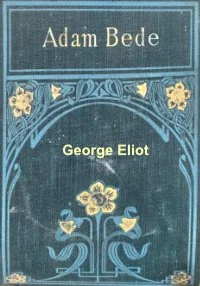
Adam Bede

By George Eliot

"Adam Bede," written by George Eliot, is a novel set in the rural community of Hayslope in 1799. The story revolves around Adam Bede, a diligent and morally upright carpenter, who is in love with Hetty Sorrel, a beautiful but superficial dairymaid. Hetty, however, is infatuated with Captain Arthur Donnithorne, the charming but irresponsible grandson of the local squire. The novel explores the complexities of their relationships and the repercussions of their actions.

Adam Bede is characterized by his integrity and strong moral principles, while Hetty's beauty and naivety lead her into a tragic situation. Arthur Donnithorne's seduction of Hetty sets off a chain of events that profoundly affect all the characters involved. Dinah Morris, a Methodist preacher and Hetty's cousin, provides spiritual and moral guidance throughout the story.

The novel is notable for its detailed depiction of rural life, rich character development, and exploration of social and ethical issues. George Eliot's writing is praised for its realism and psychological depth, making "Adam Bede" a significant work in Victorian literature. The narrative delves into themes of love, morality, and social change, offering a poignant and insightful look at human nature and society.

Adam Bede was first published in three volumes on 1 February 1859 by William Blackwood and Sons in Edinburgh and London. The novel was an immediate success, going through multiple editions within the first year. A second edition was released in March 1859, followed by a one-volume edition in 1862. The book was published anonymously at first, but George Eliot’s identity was soon revealed, further increasing public interest in the novel. This version was published by Read-Me.Org. 2025. 427p.

download free

BUY ON AMAZON. ALL PROCEEDS GO DIRECTLY TO READ-ME.ORG

KINDLE $1.99 PAPERBACK $15.99
Brother Jacob AND Scenes of Clerical Life

by George Eliot

“Brother Jacob” is a satirical short story by George Eliot that follows the ambitions of David Faux, a confectioner who seeks wealth and respectability through deception. His plans are complicated by his intellectually disabled brother, Jacob, whose presence ultimately exposes David’s hypocrisy and selfishness. The story critiques vanity and self-delusion with irony and humor.

“Scenes of Clerical Life” is Eliot’s first published work, a collection of three novellas—”The Sad Fortunes of the Reverend Amos Barton,” “Mr. Gilfil's Love-Story,” and “Janet's Repentance.” Each explores the struggles and moral dilemmas of clergymen and those around them in rural England, highlighting themes of duty, sacrifice, and redemption. These stories offer a compassionate yet realistic portrayal of human nature and the social challenges of the time.

Brother Jacob was first published in 1864 as part of The Cornhill Magazine and later included in a collection with The Lifted Veil in 1878.. Scenes of Clerical Life was originally serialized in Blackwood’s Edinburgh Magazine between January and November 1857. It was later published as a three-volume book in 1858. This collection marked George Eliot’s debut as a fiction writer. This book was published by Read-Me.Org 2025. 346p.

download FREE

BUY FROM AMAZON. ALL PROCEEDS GO DIRECTLY TO READ-ME.ORG

KINDLE $1.99 PAPERBACK $15.99
China at War: An Encyclopedia

Edited by Xiaobing Li

Historical Scope: The encyclopedia covers 4,500 years of Chinese military history, from ancient times to modern-day conflicts.

Major Conflicts: It includes detailed entries on significant wars and battles, such as the Chinese Civil War, the Korean War, and the Anti-Japanese War.

Military Figures: Prominent military leaders and strategists like Mao Zedong, Sunzi, and Genghis Khan are featured.

Strategic Concepts: The document explores Chinese military strategies, including the emphasis on secrecy, surprise, and deception in warfare.

Bloomsbury Academic, Jan 10, 2012, 605 pages

READ
Theater and Crisis: Myth, Memory, and Racial Reckoning in America, 1964-2020

By Patrice D. Rankine

Racial reckoning was a recurrent theme throughout the summer of 2020, a response to George Floyd’s murder and the unprecedented impact of COVID on marginalized groups. Theater and Crisis proposes a literary and theatrical study of how Floyd's killing could possibly happen in the aftermath of the Civil Rights era, and in the supposedly post-racial era following the election of Barack Obama. In the days and months following Floyd's death, there were nightly protests in streets across the United States and broader world. At the same time, theater performances were forced to shift online to video conferencing platforms and to find new ways to engage audiences. In each case, groups made shared meaning through storytelling and narrative, a liberatory process of myth-making and reverence that author Patrice D. Rankine calls “epiphanic encoding.”

Rather than approaching the problem of racial reckoning through history, where periodization and progress are dominant narratives, Theater and Crisis argues that myth and memory allow for better theorization about recurring events from the past, their haunting, and what these apparent ghosts ask of us. Building on the study of myth as active, processual storytelling, Rankine acknowledges that it grounds and orients groups toward significant events. Theater and Crisis aligns narratives about Emmett Till, Trayvon Martin, and George Floyd, among others, with ancient, mythic figures such as Christ, Dionysus, Oedipus, and Moses. As living and verbal visitations, these stories performed on stage encode the past through their epiphanies in the present, urging audiences toward shared meaning. 

Rankine traces the cyclical hauntings of race through the refiguring of mythic stories across the past 75 years in the plays of James Baldwin, Ntozake Shange, Antoinette Nwandu, and many more, and in response to flashpoints in US racial history, such as the 1955 lynching of Emmett Till, the upheavals of the 1960s and 1970s, the wars on drugs and crime, and the continued violence against and disenfranchisement of Black people into the twenty-first century. Theater and Crisis explores the appearance of myth on the American stage and showcases the ongoing response by the theatrical establishment to transform the stage into a space for racial reckoning. This timely book is essential reading for scholars of theater studies, classics, and American studies.
 

Ann Arbor, MI: Lever Press, 2024. 322p.

link
Read-Me.Org
The Correspondence of Jeremy Bentham, Volume 13

July 1828 to June 1832

Edited by Philip Schofield, Tim Causer, and Chris Riley

The Correspondence of Jeremy Bentham, Volume 13 contains authoritative and fully annotated texts of all known and publishable letters sent both to and from Bentham between 1 July 1828 and his death on 6 June 1832. In addition to 474 letters, the volume contains three memorandums concerning Bentham’s health shortly before his death, his Last Will and Testament, and extracts from both the Autobiography and the manuscript diaries of Bentham’s nephew George. Of the letters that have been previously published, most are drawn from the edition of The Works of Jeremy Bentham, prepared under the superintendence of Bentham’s literary executor John Bowring. A small number of letters have been reproduced from newspapers and periodicals. This volume publishes for the first time all the extant correspondence between Bentham and Daniel O’Connell, the Irish Liberator. Other new acquaintances included Charles Sinclair Cullen, barrister and law reformer, and John Tyrrell, the Real Property Commissioner. Throughout the period, Bentham maintained regular contact with old friends and connections, but he also entered into sporadic correspondence with such leading figures in government as the Duke of Wellington, Robert Peel and Henry Brougham. Further afield, Bentham corresponded, amongst others, with the Marquis de La Fayette in France, Edward Livingston in the United States of America and José del Valle in Guatemala.

London: UCL Press, 2024. 712p.

Download
Read-Me.Org
TOWER OF SECRETS: A Real Life Spy Thriller

MAY CONTAIN MARKUP

Victor Shoymov

TOWER OF SECRETS: A Real Life Spy Thriller delves into the gripping true story of a KGB agent's betrayal of his country, leading to the dismantling of an extensive Soviet spy network in the United States during the Cold War. This meticulously researched account unveils the high-stakes world of espionage, double agents, and the pursuit of justice amidst a web of lies and deception. With a riveting narrative that reads like a pulse-pounding thriller, this book offers a rare glimpse into the shadowy realm of international intelligence operations and the personal sacrifices made in the name of duty and honor.

NAVAL INSTITUTE PRESS. Annapolis, Maryland. 1993. 429p.

read
Should Media Coverage Affect Sentencing?

By Paul McGorrery

In sentencing an offender, courts take many factors into account, such as the seriousness of the offence, the offender’s prior record, their age, whether they pleaded guilty and many others. In Australia, courts do this through an approach known as instinctive synthesis, meaning they consider all the factors that can justify a sentence being more or less severe and then arrive at a final outcome. One of the factors that courts may take into account is whether the offender has already been punished in some fashion outside the criminal justice process. Known as extra-curial punishment3 (or extra judicial or natural5 punishment) this can take various forms such as visa cancellation,6 loss of chosen career, injury to the offender8 and hardship to the offender’s family. This report is concerned with just one form of extra-curial punishment: adverse media coverage, in particular, of people. The media and the courts have an important and symbiotic relationship, but sometimes their interests can diverge. The media have an interest in reporting on criminal justice matters because they are often stories of considerable interest to their audiences. In reporting on those stories, the media often concentrate their attentions ‘on the exceptional and unusual among serious crimes’, which can lead to ‘intense and often emotive media reporting’ about sentencing. This can run the risk of undermining, rather than promoting, confidence in the justice system.

Courts in turn have an interest in having their decisions reported. Confidence in the judicial arm of the criminal justice system relies on a combination of community awareness about what courts do, the transparency of their work, and the apparent fairness of their decisions, which can only be scrutinised if there is transparency and community awareness. Moreover, the sentencing purpose of general deterrence – whereby the sentencing of one offender is thought to deter other people from engaging in similar behaviour – is realistically only achievable (if at all) if the media and/or government operate as the conduit between the courts and the community. While some courts have taken the very laudable step of making most of their sentencing remarks publicly available, many people do not even have time to read media summaries, let alone original source material like sentencing remarks, especially in the social media age. So the community realistically only becomes aware of sentencing decisions through the media. The difficulty is balancing the need for fair coverage (the courts’ priority) with the need for interesting coverage (the media’s priority). Justice Harper has described the relationship as like a ‘Greek tragedy’ because ‘[e]ach is forced by its circumstances to face the other off, with neither having the flexibility necessary to reach a satisfactory working compromise’.

Malbourne: Sentencing Advisory Council (VIC), 2022. 24p.

download
The Early Modern Dutch Press in an Age of Religious Persecution: The Making of Humanitarianism

By David de Boer

For victims of persecution, attracting international awareness of their plight is often a matter of life and death. This book uncovers how in seventeenth-century Europe, persecuted minorities first learned how to use the press as a weapon to combat religious persecution. To mobilize foreign audiences, they faced an acute dilemma: how to make people care about distant suffering? This study argues that by answering this question, they laid the foundations of a humanitarian culture in Europe. The book reveals how, as consuming news became an everyday practice for many Europeans, the Dutch Republic emerged as an international hub of printed protest against religious violence. It traces how a diverse group of people, including Waldensian refugees, Huguenot ministers, Savoyard officeholders, and many others, all sought access to the Dutch printing presses to raise transnational solidarity for their cause. By examining their publicity strategies, this study deepens our understanding of how people tried to confront the specter of religious violence that had haunted them for generations.

UA Open. Oxford, UK: Oxford University Press, 2023. 225p.

download
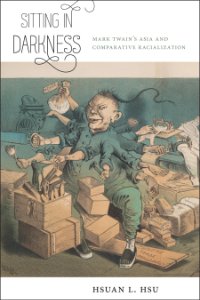
Sitting in Darkness: Mark Twain's Asia and Comparative Racialization

By Hsuan L. Hsu

Perhaps the most popular of all canonical American authors, Mark Twain is famous for creating works that satirize American formations of race and empire. While many scholars have explored Twain’s work in African Americanist contexts, his writing on Asia and Asian Americans remains largely in the shadows. In Sitting in Darkness, Hsuan Hsu examines Twain’s career-long archive of writings about United States relations with China and the Philippines. Comparing Twain’s early writings about Chinese immigrants in California and Nevada with his later fictions of slavery and anti-imperialist essays, he demonstrates that Twain’s ideas about race were not limited to white and black, but profoundly comparative as he carefully crafted assessments of racialization that drew connections between groups, including African Americans, Chinese immigrants, and a range of colonial populations. Drawing on recent legal scholarship, comparative ethnic studies, and transnational and American studies, Sitting in Darkness engages Twain’s best-known novels such as Tom Sawyer, Huckleberry Finn, and A Connecticut Yankee in King Arthur’s Court, as well as his lesser-known Chinese and trans-Pacific inflected writings, such as the allegorical tale “A Fable of the Yellow Terror” and the yellow face play Ah Sin. Sitting in Darkness reveals how within intersectional contexts of Chinese Exclusion and Jim Crow, these writings registered fluctuating connections between immigration policy, imperialist ventures, and racism.

New York: NYU Press.2015.

link
Transnational Black Dialogues: Re-Imagining Slavery in the Twenty-First Century

By Markus Nehl

Markus Nehl focuses on black authors who, from a 21st-century perspective, revisit slavery in the U.S., Ghana, South Africa, Canada and Jamaica. Nehl’s provocative readings of Toni Morrison’s »A Mercy«, Saidiya Hartman’s »Lose Your Mother«, Yvette Christiansë’s »Unconfessed«, Lawrence Hill’s »The Book of Negroes« and Marlon James’ »The Book of Night Women« delineate how these texts engage in a fruitful dialogue with African diaspora theory about the complex relation between the local and transnational and the enduring effects of slavery. Reflecting on the ethics of narration, this study is particularly attentive to the risks of representing anti-black violence and to the intricacies involved in (re-)appropriating slavery's archive.

Bielefeld, Germany: transcript Verlag, 2016. 213p.

download
5 Grams: Crack Cocaine, Rap Music, and the War on Drugs

By Dimitri A. Bogazianos

In 2010, President Barack Obama signed a law repealing one of the most controversial policies in American criminal justice history: the one hundred to one sentencing disparity between crack cocaine and powder whereby someone convicted of “simply” possessing five grams of crack—the equivalent of a few sugar packets—had been required by law to serve no less than five years in prison. In this highly original work, Dimitri A. Bogazianos draws on various sources to examine the profound symbolic consequences of America’s reliance on this punishment structure, tracing the rich cultural linkages between America’s War on Drugs, and the creative contributions of those directly affected by its destructive effects.

Focusing primarily on lyrics that emerged in 1990s New York rap, which critiqued the music industry for being corrupt, unjust, and criminal, Bogazianos shows how many rappers began drawing parallels between the “rap game” and the “crack game." He argues that the symbolism of crack in rap’s stance towards its own commercialization represents a moral debate that is far bigger than hip hop culture, highlighting the degree to which crack cocaine—although a drug long in decline—has come to represent the entire paradoxical predicament of punishment in the U.S. today.

UA Open. New York; London: NYU Press, 2011. 216p.

download
Murdering Masculinities: Fantasies of Gender and Violence in the American Crime Novel

by Gregory Forter

Though American crime novels are often derided for containing misogynistic attitudes and limiting ideas of masculinity, Greg Forter maintains that they are instead psychologically complex and sophisticated works that demand closer attention. Eschewing the synthetic methodologies of earlier work on crime fiction, Murdering Masculinities argues that the crime novel does not provide a consolidated and stable notion of masculinity. Rather, it demands that male readers take responsibility for the desires they project on to these novels.
Forter examines the narrative strategies of five novels--Hammett's The Glass Key, Cain's Serenade, Faulkner's Sanctuary, Thompson's Pop. 1280, and Himes's Blind Man with a Pistol--in conjunction with their treatment of bodily metaphors of smell, vision, and voice. In the process, Forter unearths a "generic unconscious" that reveals things Freud both discovered and sought to repress.

UA. Open. New York; London: NYU Press, 2000. 278p.

download
Romantic Outlaws, Beloved Prisons: The Unconscious Meanings of Crime and Punishment

By Martha Grace Duncan

An ex-convict struggles with his addictive yearning for prison. A law-abiding citizen broods over his pleasure in violent, illegal acts. A prison warden loses his job because he is so successful in rehabilitating criminals. These are but a few of the intriguing stories Martha Grace Duncan examines in her bold, interdisciplinary book Romantic Outlaws, Beloved Prisons.
Duncan writes: "This is a book about paradoxes and mingled yarns - about the bright sides of dark events, the silver linings of sable clouds." She portrays upright citizens who harbor a strange liking for criminal deeds, and criminals who conceive of prison in positive terms: as a nurturing mother, an academy, a matrix of spiritual rebirth, or a refuge from life's trivia. In developing her unique vision, Duncan draws on literature, history, psychoanalysis, and law. Her work reveals a nonutopian world in which criminals and non-criminals--while injuring each other in obvious ways--nonetheless live together in a symbiotic as well as an adversarial relationship, needing each other, serving each other, enriching each other's lives in profound and surprising fashion.

UA. Open. New York; London: NYU Press, 1996. 284p.

download
Old Melbourne Memories

By Rolf Boldrewood

"Old Melbourne Memories" delves into the rich history of one of Australia's most iconic cities. Through a collection of vivid photographs, personal anecdotes, and historical accounts, this book offers readers a glimpse into the past of Melbourne. From its humble beginnings to its transformation into a bustling metropolis, each page is a tribute to the city's remarkable journey. Whether you are a history enthusiast or simply curious about Melbourne's past, this book is a captivating exploration of a bygone era that will resonate with readers of all backgrounds.

Robertson, 1884, 182 pages

download
A Crooked Stick or Pollie's Probation

By Rolf Boldrewood

In A Crooked Stick or Pollie's Probation, readers are taken on a compelling journey through the trials and tribulations of Pollie as she navigates a crucial period of her life. Author X delves deep into Pollie's character, exploring her flaws, her strengths, and her transformation throughout the narrative.

Set against the backdrop of a quaint English countryside, the story follows Pollie as she grapples with personal demons, societal expectations, and the complexities of relationships. With vivid descriptions and insightful prose, Author X crafts a rich tapestry of emotions and experiences that will resonate with readers of all backgrounds.

Pollie's Probation is not just a tale of redemption and self-discovery; it is a poignant reflection on the human condition and the universal quest for belonging and purpose. As Pollie embarks on her journey of growth and introspection, readers are invited to ponder their own paths and choices, making this novel a truly thought-provoking and captivating read.

Macmillan and Company, 1895, 306 pages

download
A Sydney Side Saxon

By Rolf Boldrewood

"A Sydney Side Saxon" is a captivating tale that delves into the complexities of identity, heritage, and belonging. Set against the backdrop of multicultural Sydney, the story follows the protagonist as she navigates the challenges of straddling two worlds—the traditional expectations of her Anglo-Saxon lineage and the vibrant diversity of her Australian upbringing. As she learns to embrace her heritage while forging her own path, readers are taken on a poignant journey of self-discovery and acceptance. With richly drawn characters and evocative storytelling, this novel is a compelling exploration of cultural fusion and the universal quest for understanding one's place in the world.

Heinemann and Balestier, 1891, 96 pages

download
Acid Row

MAY CONTAIN MARKUP

Minette Walters

FROM THE COVER: 'Acid Row' is the name the beleaguered inhabitants give to their housing estate. A no-man's land of single mothers and fatherless chíldren-where angry, alienated youth control the streets. Into this battlefield comes Sophíe Morrison, a young doctor visiting a patient in Acid Row. Litle does she know that she is entering the home of a known paedophile ...and with reports circulating that a tormented child called Amy has disappeared, the vigilantes are out in force. Soon Sophie is trapped at the centre of a terrifying siege, held hostage by a violent psychopath. Whipped to a frenzy by unsubstantiated rumour, the mob unleashes its hatred. Against authority.. the law...and the pervert'. Protecting.Amy' becomes the catch-all defence for the terrible events that follow. And if murder is part of it, then so be it. But is Amy really missing?

London Allen and Unwin. 2001. 353p.

read
On Dangerous Ground

may contain markup

By Jack Higgins

FROM THE COVER: “……London 1993, and the day looms ever closer when Communist China will finally seize the much coveted island of Hong Kong, with billions at stake. British Intelligence have just discovered the existence of a document, known as the Chungking Covenant, that would extend the lease on Hong Kong for another century. Sean Dillon, once a feared IRA enforcer now working for the British, is tasked to track down the document before Mafia-based interests with billions invested in Hong Kong can use it for their own ends. Pitted against sly and ruthless adversaries, Dillon and his intelligence associates follow a deadly trail to a castle in the Highlands of Scotland, by Loch Dhu, the Place of Dark Waters, the home of an American billionaire and Matia boss. Dillon's usual clear-headed commitment to his mission is compromised by the alluring young socialite Asta Morgan. However, as the evidence of fifty years begins to unfold, the solution to the enigma comes tantalisingly close. But only one side can reap the spoils…”

Australia. Griffin. BCA. Michael Josephs. 1994. 286p.

read