Open Access Publisher and Free Library
CRIME+CRIMINOLOGY.jpeg

CRIME

Violent-Non-Violent-Cyber-Global-Organized-Environmental-Policing-Crime Prevention-Victimization

Posts in Global
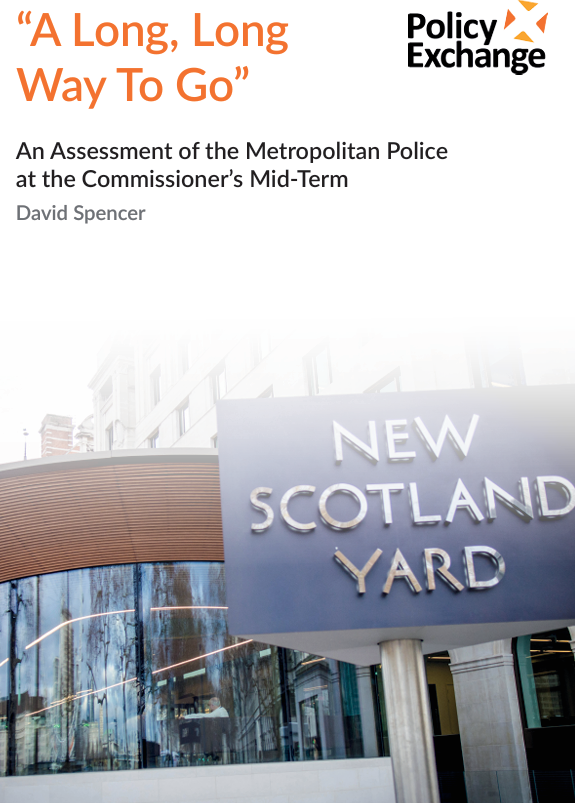
“A Long, Long Way To Go” An Assessment of the Metropolitan Police at the Commissioner’s Mid-Term 

By David Spencer

Summary of Recommendations 1. Given the very poor performance of the Metropolitan Police across a wide range of areas for an extended period – including prior to the present Commissioner’s term of office and particularly in relation to the fight against crime – the Home Secretary should become the “policing body” for the Metropolitan Police. This would remove the Mayor of London’s role in relation to oversight of policing in the capital. Shifting direct political oversight to the Home Secretary, as the minister principally responsible to Parliament for policing and crime, will enable both Government and Parliament to exercise far greater scrutiny and influence over the force’s performance in a way which has the potential to deliver the significant improvements which are required. 2. To enable the Metropolitan Police to shift the force’s principal focus to local crime fighting, the Government should transfer responsibility for the national leadership of the police counterterrorism network from the Metropolitan Police to a national Counter-Terrorism Policing body led by a Chief Constable. 3. The Chief Inspector of Constabulary should return the Metropolitan Police to the “Engage” process – more commonly known as “Special Measures”. The force was, based on performance across several areas, erroneously removed from the “Engage” process inmore commonly known as “Special Measures”. The force was, based on performance across several areas, erroneously removed from the “Engage” process in January 2025. There should be a presumption that all materials relating to the “Engage” process should be made publicly available. The current lack of transparency provides the public with little confidence that the necessary steps are being taken to deliver substantial improvements in the force’s performance. 4. The Home Secretary should order an inspection of the Metropolitan Police’s approach to protest policing using section 54 (2B) Police Act 1996. This should include consideration of both the strategic approach and operational tactics used, including what new strategies and tactics are required to more effectively deal with large-scale and widespread protests. This should consider the strategies and approaches used in other jurisdictions to determine what might be learned and adopted by the force – in particular the willingness of police chiefs to use non-human based means of “creating distance” between officers and protestors. 5. The Commissioner of the Metropolitan Police should review the performance of his most senior leaders and where individuals have been found to have failed to perform to the necessary standard, in some cases over very long periods, they should be replaced at the earliest opportunity. There should also be a substantial change in the approach to performance management for middle and senior leaders in the organisation – including being prepared to more willingly remove officers and staff who fail to deliver the necessary levels of performance, particularly in relation to fighting crime. Data should be published on every senior officer’s performance on crime-fighting throughout their leadership career. There should be a substantial increase in the transparency of the force’s Frontline Policing performance meetings, where local police commanders are questioned on their performance. This should include the publication of performance data, the publication of the meeting’s minutes and the option for members of the public to attend these meetings through online hosting. 

London: Policy Exchange, 2025. 52p.

AI in Policing: international lessons and domestic solutions

By Justice

1. Artificial intelligence (“AI”) is rapidly reshaping public services, and policing is no exception. The pace of innovation, the scale of private sector investment, and the UK Government’s explicit ambition to “mainline AI into the veins of the nation” mean that AI deployment in policing is not a distant prospect but an accelerating reality. This brings significant opportunities: enhanced investigative capability, faster processing of digital evidence, improved risk assessment, and the potential to intervene earlier to prevent harm. Yet it also carries profound risks for human rights, the rule of law, and public trust. The police occupy a uniquely powerful position in our democratic society; integrating AI into that environment without the right safeguards risks entrenching discrimination, undermining lawful decision making, and eroding communities’ confidence in policing2. This report asks a central question: what must be in place for AI in policing to be trustworthy, value for money, effective in achieving policing goals, and compliant with human rights and the fair administration of justice? To answer this, JUSTICE carried out international research, examined domestic developments, and convened stakeholders across policing, government, civil society, regulators, academia, and industry. Across this work, five lessons emerged, each of which signals not only what must be done, but the urgency of acting now while the UK remains at a crossroads.

London: Justice, 2025. 62p.

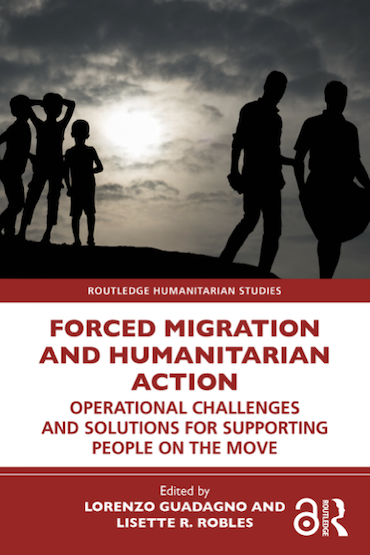
Forced Migration and Humanitarian Action: 

Operational Challenges and Solutions for Supporting People on the Move

By Guadagno, Lorenzo (editor), Robles, Lisette R. (editor)

Forced population movements are a defining feature of almost any humanitarian crisis, shaping the design, targeting, and delivery of emergency responses. This book investigates how the evolving situation of different forced migrants is accounted for and addressed in humanitarian action in order to improve their access to support and assistance. Bringing together case studies from Africa, Asia, Europe, and the Pacific, this book focuses on a diversity of operational modalities and types of assistance provided by both traditional and non-traditional humanitarian actors to address the specific needs of displaced children, women, people with disabilities and older people, as well as trafficked migrant workers. This book adopts a broad perspective on humanitarian action, acknowledging how its boundaries are challenged and expanded in forced migration contexts. Its operational and theoretical insights will be useful for a range of readers, from humanitarian and migration researchers and students to practitioners and policymakers.

London: Routledge, 2026.