Open Access Publisher and Free Library
CRIME+CRIMINOLOGY.jpeg

CRIME

Violent-Non-Violent-Cyber-Global-Organized-Environmental-Policing-Crime Prevention-Victimization

Crime and Education

By Stephen Machin, Matteo Sandi:

Research studying connections between crime and education is a prominent aspect of the big increase of publication and research interest in the economics of crime field. This work demonstrates a crime reducing impact of education, which can be interpreted as causal through leveraging research designs (e.g., based on education policy changes) that ensure the direction of causality flows from education to crime. A significant body of research also explores in detail, and in various directions, the means by which education has a crime reducing impact. This includes evidence on incapacitation versus productivity raising aspects of education, and on the quality of schooling at different stages of education, ranging from early age interventions, through primary and secondary schooling and policy changes that alter school dropout age. From this evidence base, there are education policies that have been effective crime prevention tools in many settings around the world.

Bonn, Germany: IZA – Institute of Labor Economics, 2024 59p.

The Signaling Value of Government Action: The Effect of Istanbul Convention on Female Murders

By Gunes A. Aşık, Naci Mocan:

We analyze the expressive content of government action, focusing on Istanbul Convention, an international treaty aimed at protecting women against violence, signed and ratified by 39 countries. In 2021, ten years after signing the Convention, the Turkish government withdrew from it, on the grounds that it "was hijacked by a group of people attempting to normalize homosexuality, which is incompatible with Turkey's social and family values." Although this withdrawal did not alter existing laws or law enforcement practices, women's rights advocates viewed it as a signal of tolerance for violence against women. We use two separate datasets on female murders from independent sources. Analyses, including a difference-in-difference model with male homicide data, show that the withdrawal led to an additional 70 female murders per year, primarily committed by intimate partners. The effect is more pronounced in provinces where the long-governing religious-conservative coalition parties have stronger voter support and in provinces with lower education levels. We also show that Turkey's entry into the Convention in 2011 had the opposite impact, leading to a decrease in female murders. The signing of the Convention, which acted as a normative signal against violence, and the subsequent enactment of comprehensive legislation strengthening deterrence, had distinct effects. The signaling effect of the Entry was more significant in the same provinces that reacted more strongly to the Exit: those with lower education levels, stronger support for the governing party, and the Eastern region of the country. These findings indicate that government actions are interpreted as normative signals by society.

Bonn, Germany: IZA – Institute of Labor Economics, 2024. 56p

Understanding Adult Sexual Assault Matters: Insights from Research and Practice: An Educational Resource for the Justice Sector

By Nina Hudson, Rachel Moody, Heather McKay, Rae Kaspiew

The guide presents research-based insights that challenge common stereotypes, highlighting the diverse experiences of victims and survivors and offering practical examples and approaches for professionals to implement in their practice. It is intended for use by professionals within the Australian justice sector, specifically police, lawyers, and judicial officers.

This resource aims to support a more trauma-informed, victim-centred approach within the Australian justice system, ultimately fostering a greater understanding of the complexities of sexual assault. It was developed in response to calls for improvements in the justice system's handling of sexual assault cases and draws on research from over 100 Australian and international sources.

Australian Institute of Family Studies, 2024. 83p.

A Content Analysis of Illicit Tobacco-Related Crimes Reported in Australian Media

By Isabel Meciar, Cheneal Puljević, Alice Holland, Coral Gartner

Australian survey and seizure data suggest a growing illicit tobacco market. As an illicit product, accurately tracking trends in illicit tobacco growing, manufacture, and sales is challenging. We examined trends in Australian illicit tobacco-related crimes using a content analysis of news articles.

Aims and Methods

We analyzed Australian news articles identified in the Factiva database and government press releases describing Australian illicit tobacco-related crimes reported between January 2000 and December 2023. Sources were coded for crime type, location, product type, dollar value of seized products, methods of distribution or storage, agencies involved, and other crimes involved.

Results

We identified 447 crimes reported in 389 sources. The number of illicit tobacco-related crimes reported increased between 2000 and 2023. The most common crimes were possession of illicit tobacco (n = 196/43.7%) and smuggling (n = 187/41.8%), and the most common product type was “illicit cigarettes” (n = 197/44.1%). The most common distribution/storage method reported was via residential premises (n = 98/21.9%). One-hundred and twenty incidents involved other crimes such as financial crimes involving money laundering (n = 59/13.2%). Across all included news articles, the quantity of seized products totaled 827 529 307 cigarette sticks, 76 185 cartons, 668 687 packs, 239 hectares (of land growing tobacco plants), and 2 149 000 plants of illicit tobacco between 2000 and 2023. The median value (worth; AUD) of each seizure was $1 500 000 (range $43 to $67 000 000).

Conclusions

Australian media reporting on illicit tobacco-related crimes increased over the past two decades, particularly since 2018. These findings highlight a need for improved border detection measures, investment in enforcement, and other deterrent activities.

Implications

This media analysis complements trends identified in national survey data that indicate a growing illicit tobacco market in Australia since 2013 with a marked increase since 2018. While survey data suggests that the Australian tobacco tax policy, which has included regular large tax increases since 2010, has decreased consumer demand for tobacco overall, it may have also incentivized criminal networks to supply illicit tobacco products due to it being a “low risk” and “high reward” activity. Controlling the Australian illicit tobacco market should be a policy priority.

Nicotine & Tobacco Research, 26 October 2024, 8 pages

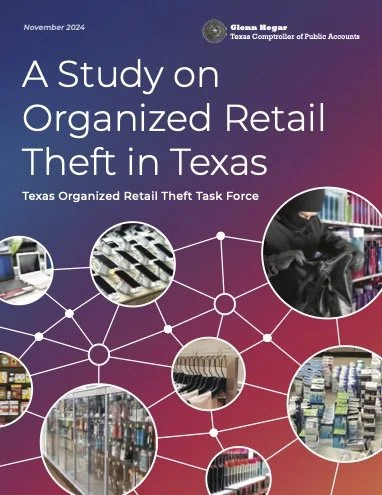
A Study on Organized Retail Theft in Texas

By The Texas Organized Retail Theft Task Force

Organized Retail Theft (ORT), the large-scale theft and reselling of merchandise, is a growing problem, according to Texas retailers. In 2023, the Texas Legislature created a special task force led by Texas Comptroller of Public Accounts Glenn Hegar to analyze and develop strategies for combatting ORT. The ORT Task Force, which includes law enforcement, retailers and policy experts, conducted research, listened to expert testimony and conducted site visits as part of its study. The following report represents the findings of the Task Force and offers recommendations for further action. Summary of Findings and Recommendations As the Task Force listened to expert testimony and Comptroller staff visited retailer sites, ORT Task Force members noted three recurrent themes: a lack of ORT data, a need for coordination among ORT stakeholders and a need for consistency in the application of ORT laws. Finding 1 Statewide data relating specifically to ORT are not collected in Texas, which makes it difficult to quantify the extent and cost of ORT, pinpoint where crimes are happening and dedicate sufficient resources to combat ORT. Retailers are reluctant to share certain proprietary data with their competitors. Recommendations • Develop a statewide repository to collect ORT data that can be aggregated and analyzed. • Work with retailers to categorize and mask their confidential data in a manner that doesn’t expose proprietary information while still allowing analysts to estimate the cost of ORT and detect trends. • If ORT trends indicate a need, consider creating an organization to combat ORT modeled after or housed under the Texas Financial Crimes Intelligence Center. Finding 2 Thefts conducted by perpetrators who target multiple types of merchandise or who operate in more than one law enforcement jurisdiction may be difficult to identify as ORT. Improved transparency, interaction and communication among all stakeholders—retailers, law enforcement and prosecutors—have yielded positive results in some cities. Recommendations • Continue support for the Texas Department of Public Safety’s Organized Retail Theft Prevention Unit and consider increasing the total number of FTEs for the unit. • Identify an existing state agency to serve as both an information clearinghouse and a facilitator to help local law enforcement departments develop and improve ORT coordination, cooperation and knowledge sharing with other jurisdictions so that potential links to related cases may be identified and shared. • San Antonio’s Businesses Against Theft Network (BAT-NET) program could serve as a model for other cities to improve communication, transparency and collaboration among stakeholders. • Establish a store walk-through program. Retailers can launch a store walk-through program inviting law enforcement agencies and prosecutors’ offices to get a better understanding of the ORT issue. This can also help foster a stronger relationship between retailers and law enforcement. • Incorporate training on ORT in new officer training classes and as part of a continuing education class for law enforcement. • One-hour presentation to new academy classes. • Quarterly and annual meeting/certification by Texas Organized Retail Crime Association (TXORCA) or similar association. Finding 3 Prosecuting ORT can be time and resource intensive, and prosecutors sometimes apply ORT charges inconsistently (e.g., charging an ORT crime as simple theft, which may take less time and be easier to prove). Prosecutors find the requirement to prove intentionality in ORT cases to be an obstacle in the pursuit of charges under the ORT statute. Other state laws may inadvertently make it difficult for ORT crimes to be prosecuted. Retailers, for example, are required by law to wait 10 days before reporting the theft of certain rental items. Although normally this provision likely would be in a consumer’s best interest, it is a barrier when the retailer becomes aware that the items are being resold before the retailer is allowed to report the theft. Recommendation • Form a committee of prosecutors to review the ORT statute’s requirements, including proof of intentionality, and other statutes that are barriers to ORT prosecution, such as the waiting period on reporting stolen rental items. The committee should seek input from retailers and law enforcement during its review. The committee will present its suggestions to the ORT Task Force before the next legislative session. • Develop training on ORT as a continuing education course, such as a one-hour presentation on the key steps for prosecuting an ORT case.

Austin: Texas Comptroller of Public Accounts 2024. 24p.

Criminal Justice Data: Organized Retail Crime

By Kristin Finklea

Retailers and retail industry advocacy groups have expressed concern about what they see as a general increase in retail crime, and more specifically an increase in organized retail crime (ORC). Reports of incidents where individuals, occasionally acting in flash mobs, storm stores to steal large amounts of items, and at times assault employees, have underscored these concerns. Some law enforcement agencies have increased resources and information sharing to counter these crimes. Additionally, some retail organizations have urged policymakers and law enforcement to take steps to educate the public and crack down on this apparent increase in retail crime, and more specifically ORC. A primary barrier to measuring ORC accurately is a lack of a consistent, widely accepted definition that can be used in a systematic and comprehensive effort to collect and report these data. Nonetheless, there is general consensus that ORC involves coordinated theft with the intent to resell for financial gain. ORC typically refers to large-scale retail theft and fraud by organized groups of professional shoplifters (or boosters). Organized crime rings resell illegally acquired merchandise via a variety of fencing operations such as flea markets, swap meets, pawn shops, and online marketplaces. ORC differs from shoplifting in that traditional shoplifters tend to steal merchandise for personal use. A number of factors contribute to the lack of comprehensive criminal justice data on ORC. At the federal level, there is currently no law prohibiting organized retail crime that could be used to help document the number of ORC incidents known to federal law enforcement, specifically. Combating retail theft has primarily been handled by state and local law enforcement under state criminal laws. While state laws prohibiting theft are the statutes that state and local law enforcement and prosecutors have often relied on to investigate and prosecute ORC, over 30 states have enacted ORC-specific laws. However, these laws differ by state and there is no centralized reporting system for ORC-related crimes. The Federal Bureau of Investigation’s Uniform Crime Reporting Program, National Incident-Based Reporting System collects data on thefts reported to state and local law enforcement, including shoplifting; however, it does not capture ORC specifically. In the absence of comprehensive data on ORC, snapshots of data from various sources may offer insight into its extent and nature. For instance, 78.1% of respondents to the National Retail Federation’s 2023 National Retail Security Survey indicated that the threat of ORC was more of a priority than it had been in the prior year. While some observers believe that ORC is a national problem, others disagree, citing anecdotal and high-profile flash mob thefts and smash-and-grabs as driving this concern. Nonetheless, there is debate over the federal government’s role in deterring ORC and sanctioning various actors that may be involved in committing or aiding these crimes. A principal underlying issue is the lack of data on the scope of ORC to inform this debate. Without these data, Congress may not be able to accurately assess the proper role of the federal government. As such, policymakers may debate various options regarding data on ORC, including how new or existing mechanisms for collecting national crime data could be used to capture these data and help inform policymakers on the prevalence and nature of this type of crime.

Washington, DC: Congressional Research Service, 2024. 11p.

First Impressions Last? Lay-Judges’ Assessments of Credible Victimhood

By Anita Heber, Tea Fredriksson

This article explores how Swedish lay-judges assess victims’ credibility in district court. Previous studies have explored how biases and emotional expressions impact credibility assessments. Adding to this, the present study analyses how lay-judges assess courtroom credibility from an intersectional perspective. Based on 24 in-depth interviews with lay-judges, the study explores three intertwined layers of credibility: appearances, narratives and emotions. The analysis concludes that these layers actualize balancing acts for both victims and the lay-judges assessing them. These layers of credibility can compound for victims, making them particularly credible in the eyes of the lay-judges, especially if and when they perform victimhood in line with expectations set by their intersectional characteristics.

The British Journal of Criminology, 2024, XX, 1–17 pages

Internet Organised Crime Threat Assessment (IOCTA) 2024

Europol; European Union. Publications Office

From the document: "This edition marks 10 years since the release of Europol's first IOCTA [Internet Organised Crime Threat Assessment]. Throughout this time, the threats posed by cybercrime have evolved dynamically in terms of volume, intensity and harm potential. The number of cybercriminals entering the market continued to grow steadily, thanks to the adoption of new technologies as well as the increasing complexity of digital infrastructures, which expands the potential attack surface. In 2023, millions of victims across the EU were attacked and exploited online on a daily basis. Small and medium businesses were increasingly popular targets for cyber-attacks, while e-merchants experienced the most digital skimming attacks. Adults were victimised through phishing, investment and romance frauds, and more and more minors were targeted by child sexual exploitation offenders and online sexual extorters. In parallel, a number of worldwide law enforcement actions shook the cybercriminal underground through continued arrests of ransomware affiliates and operators. Law enforcement also carried out coordinated disruption operations against cybercriminals' digital infrastructures. Notwithstanding the growing presence of law enforcement in the dark web, this environment continues to function as an enabler for cybercrime, allowing offenders to share knowledge, tools and services in a more concealed way. In addition, the use of cryptocurrencies in a wider variety of crime areas has become more noticeable in 2023, alongside the growing number of requests for investigative support in cryptocurrency tracing received by Europol. Cybercriminals are keen to leverage Artificial Intelligence, which is already becoming a common component in their toolbox and is very likely to see even wider application. Law enforcement agencies are expected to build a robust capacity to counter the growing threats stemming from this, both in terms of human resources and technical skills."

Europol; European Union. Publications Office . 2024. 38p.

New Frontiers: The Use of Generative Artificial Intelligence to Facilitate Trafficking in Persons

Bennett, Phil; Cucos, Radu; Winch, Ryan

From the document: "The intersection of AI and transnational crime, particularly its application in human trafficking, represents an emerging and critically important area of study. This brief has been developed with a clear objective: to equip policymakers, law enforcement agencies, and the technology sector with the insights needed to anticipate and pre-emptively address the potential implications of AI on trafficking in persons. While we respond to the early instances of the use of AI by transnational criminal organisations, such as within Southeast Asia's cyber-scam centres, a more systemic approach is required. The potential for transnational criminal organisations to significantly expand their operations using AI technologies is considerable, and with it comes the risk of exponentially increasing harm to individuals and communities worldwide. It is imperative that we act now, before the most severe impacts of AI-enabled trafficking are realised. We have a unique time-limited opportunity--and indeed, a responsibility--to plan, train, and develop policies that can mitigate these emerging threats. This report aims to concretise this discussion by outlining specific scenarios where AI and trafficking could intersect, and to initiate a dialogue on how we can prepare and respond effectively. This document is not intended to be definitive, but rather to serve as a foundation for a broader, ongoing discussion. The ideas presented here are initial steps, and it will require innovative thinking, adequate resourcing, and sustained engagement from all sectors to build upon them effectively."

Organization For Security And Co-Operation In Europe. Office Of The Special Representative And Co-Ordinator For Combating Trafficking In Human Beings; Bali Process (Forum). Regional Support Office .NOV, 2024

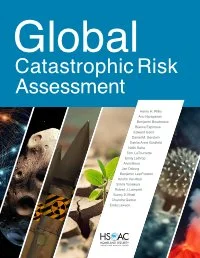
Global Catastrophic Risk Assessment

RAND CORPORATION

From the document: "Global catastrophic and existential risks hold the potential to threaten human civilization. Addressing these risks is crucial for ensuring the long-term survival and flourishing of humanity. Motivated by the gravity of these risks, Congress passed the Global Catastrophic Risk Management Act in 2022, which requires the Secretary of Homeland Security and the administrator of the Federal Emergency Management Agency to coordinate an assessment of global catastrophic risk related to a set of threats and hazards. The U.S. Department of Homeland Security Science and Technology Directorate and the Federal Emergency Management Agency requested the Homeland Security Operational Analysis Center's support in meeting this requirement. This report documents findings from our analysis." Authors include: Henry H. Willis, Anu Narayanan, Benjamin Boudreaux, Bianca Espinosa, Edward Geist, Daniel M. Gerstein, Dahlia Anne Goldfeld, Nidhi Kalra, Tom LaTourrette, Emily Lathrop, Alvin Moon, Jan Osburg, Benjamin Lee Preston, Kristin Van Abel, Emmi Yonekura, Robert J. Lempert, Sunny D. Bhatt, Chandra Garber, and Emily Lawson.

RAND CORPORATION. HOMELAND SECURITY OPERATIONAL ANALYSIS CENTER. 30 OCT, 2024.237p.

Gangsters at War: Russia's Use of Organized Crime as an Instrument of Statecraft

By GALEOTTI, MARK

From the webpage description: "'Since 2012, Russia has strategically used criminal networks to evade sanctions, conduct intelligence, and destabilize the West. Under Putin's 'mobilization state,' illegal activities--from smuggling to cyberattacks--are seen as essential tools of warfare. This report delves into the Kremlin's alarming integration of organized crime into statecraft.' Russia's transition from a 'conscription state' to a full 'mobilization state', after the 2022 invasion of Ukraine, has intensified the involvement of criminal groups in operations tied to sanctions-busting, cyber warfare, and intelligence. Organized crime networks provide Russia with access to restricted goods, such as advanced electronics for its military, and facilitate money laundering and illegal financial flows. Notably, Russian intelligence services have relied on criminal syndicates to supplement their espionage activities, including sabotage, cyberattacks, and assassinations. The report also highlights Russia's weaponization of migration, using smuggling networks to create political instability across Europe. Meanwhile, Putin's regime has blurred the lines between state and criminal actors, using them as tools to evade international sanctions and expand Russian influence globally. 'Gangsters at War' reveals how Russian-based organized crime operates as a tool of Kremlin foreign policy, focusing not just on profits but on weakening geopolitical rivals. From sanctions evasion to destabilizing societies, criminal networks have become a key element in Russia's geopolitical arsenal. The report calls for increased vigilance, international cooperation, and stronger countermeasures to address this growing threat to global stability."

GLOBAL INITIATIVE AGAINST TRANSNATIONAL ORGANIZED CRIME. November. 2024. 82p.

In their Own Right: Actions to Improve Children and Young People’s Safety from Domestic, Family and Sexual Violence

By Sophie Gillfeather-Spetere, Amy Watson

Designed for use by policymakers, practitioners and advocates, this guide synthesises findings from 20+ reports to outline key actions for consistent and effective policy responses supporting children and young people experiencing violence. It includes four principles that outline ways of working to underpin reform and eight priority areas for action.

The report finds that policies and service systems are failing to meet the needs of children and young people, particularly those with disability, Aboriginal and Torres Strait Islander children, those from culturally and linguistically diverse families and LGBTQ+. The guide calls for significant policy and practice reforms that centre children and young people’s voices, acknowledge the profound and diverse impact of violence on their lives and move away from a reactive system to one that prioritises primary prevention.

Australia's National Research Organisation for Women's Safety, 2024. 84p

The Drug Treatment Debate: Why Accessible and Voluntary Treatment Wins Out Over Forced

By Drug Policy Alliance

We all want people living with addiction to get the help they need. At the Drug Policy Alliance, we believe that everyone should have access to the substance use disorder (SUD) supports that they choose to improve their physical and mental health — and that effective services should be available when and where people are ready for them, without hurdles like cost or preconditions to get help. In short, SUD supports should be voluntary, effective, affordable, accessible, and appealing.

Unfortunately, the United States has neither prioritized on-demand care nor ensured that available SUD supports are effective or beneficial. Having failed to provide even remotely sufficient access to the kinds of health-centered approaches that research shows are most effective (e.g., medications for opioid use disorder, or MOUD, and contingency management for stimulant use disorder, or CM), some ill-informed policymakers are advocating for expanding the power of courts to force people into existing SUD services, against their will and not of their choosing. This is not entirely new. Forced treatment has been a familiar practice in criminal courts for decades — where criminal defendants have had the “choice” to opt for court-ordered SUD services or face traditional sentencing, often including incarceration

New York: Drug Policy Alliance, 2024. 32p.

How Criminal Is It to Rape a Partner According to the Justice System? Analysis of Sentences in Spain (2015–2022)

By J.M. Tamarit Sumalla, P. Romero Seseña, L. Arantegui Arràez, A. Aizpitarte

Sexual violence in an intimate relationship is a less studied phenomenon than other forms of intimate partner violence, despite data pointing to a high prevalence. Studies on how the cases are sentenced are scarce. Until recently, many laws did not allow marital rape to be punished as a crime of rape, and some studies showed a tendency for the courts to punish these cases less severely. The present study is based on an analysis of 964 rape cases of adult women in Spain. All the information was extracted from sentences of the Provincial Courts issued between 2015 and 2022. Results showed that significantly lower conviction rates and less severe penalties were imposed when the rape was committed by the intimate partner compared to other rape cases where the offenders were not partners (family members, acquaintances, or unknown strangers). The practical implications of these results in several areas are discussed.

European Journal on Criminal Policy and Research, Volume 30, pages 567–587, (2024)

Is Rio de Janeiro preparing for war? Combating organized crime versus non-international armed conflict

By Najla Nassif Palma

The idea that Rio de Janeiro has been plunged into an actual “war” against organized crime is widely discussed and is supported by an ever-increasing number of people in Brazil. Not surprisingly, such discourse has led to less protection for the civilian population, particularly in the so-called favelas, while allowing security forces to carry out operations with even greater relative impunity. This article argues that although urban violence in Rio de Janeiro is indeed a serious problem, it does not reach the threshold required to be considered a non-international armed conflict.

International Review of the Red Cross (2023), 105 (923), 795–827.

Contraband Cultures: Reframing smuggling across Latin America and the Caribbean

By Jennifer Cearns and Charles Beach

Contraband Cultures presents narratives, representations, practices and imaginaries of smuggling and extra-legal or informal circulation practices, across and between the Latin American region (including the Caribbean) and its diasporas. Countering a fetishizing and hegemonic imaginary (typically stemming from the Global North) of smuggling activity in Latin America as chaotic, lawless, violent and somehow ‘exotic’, this book reframes such activities through the lenses of kinship, political movements, economic exchange and resistance to capitalist state hegemony. The volume comprises a broad range of chapters from scholars across the social sciences and humanities, using various methodological techniques, theoretical traditions and analytic approaches to explore the efficacy and valence of ‘smuggling’ or ‘contraband’ as a lens onto modes of personhood, materiality, statehood and political (dis)connection across Latin America. This material is presented through a combination of historic documentation and contemporary ethnographic research across the region to highlight the genesis and development of these cultural practices whilst grounding them in the capitalist and colonial refashioning of the entire region from the sixteenth century to the present day.

London: UCL Press, 2024. 294p.

Online Safety and the Regulation of Gaming Platforms and Services

By Ellen Jacobs, Ella Meyer, Helena Schwertheim, Melanie Döring and Terra Rolfe

The global gaming industry is now worth more than both the film and music industries combined, with an estimated 3.2 billion gamers worldwide. As such, greater attention has paid in recent years to the online safety risks associated with gaming. This includes both gaming-specific companies and the wider ecosystem of gaming-adjacent social media platforms, particularly in the context of online hate and misogyny, extremism and radicalisation, and child safety issues (such as grooming and cyberbullying). Significant progress has been made in understanding how online harms are perpetrated in online gaming spaces. Recognising these risks, policymakers have crafted new digital and online safety regulations such as the EU’s Digital Services Act (DSA) and the UK’s Online Safety Act (UK OSA) to increasingly apply to gaming or gaming-adjacent companies. However, such regulations are still in the early stages of implementation and enforcement, and the extent to which gaming companies or services are within scope can be unclear. This policy brief provides a summary of the current evidence on the nature and extent of these risks and highlights remaining gaps and challenges to building out this evidence base. It also provides an overview of existing government approaches to enhancing online safety in gaming, including both regulatory and non-regulatory efforts, as well as industry and civil society initiatives. Special attention is given to existing regulatory frameworks in the EU (DSA, Terrorist Content Online Regulation), the UK (UK OSA) and Australia (Online Safety Act), to understand how and how far they may provide higher standards of online safety to gamers. Finally, the brief explores both existing and proposed mitigation strategies to enhance online safety in gaming. Throughout, the brief provides recommendations for governments, regulators, researchers and industry. The DPL supports collaboration through a multi-stakeholder approach to develop a better understanding of the risks posed in online gaming spaces and how best to mitigate them

Amman Berlin London Paris Washington DC: Institute for Strategic Dialogue (2024) 47p

Social Pensions and Intimate Partner Violence against Older Women

By Cristina Bellés-Obrero, Giulia La Mattina, Han Ye

The prevalence and determinants of intimate partner violence (IPV) among older women are severely understudied. This paper documents that the incidence of IPV remains high at old ages and provides the first evidence of the impact of access to income on IPV for older women. We leverage a Mexican reform that lowered the eligibility age for a non-contributory pension and a difference-in-differences approach. Women's eligibility for the pension increases their probability of being subjected to economic, psychological, and physical IPV. The estimated effects are found only among women in the short-term and are more pronounced for women who experienced family violence in childhood and those from poorer households. In contrast, we show that IPV does not increase when men become eligible for the non-contributory pension. Looking at potential mechanisms, we find suggestive evidence that men use violence as a tool to control women's resources. Additionally, women reduce paid employment after becoming eligible for the pension, which may result in more time spent at home and greater exposure to violent partners.

WORKING PAPER No IDB-WP-1640, Washington, DC: Inter-American Development Bank, Gender and Diversity Division , 2024. 74p.

Impact of pornography on young people: Survey report summary

By Our Watch

This report summarises the findings of a survey exploring young Australians' attitudes to gender, sex, relationships and pornography. It finds that early exposure to pornography can have a significant negative impact and that young people are accessing pornographic material earlier than previously reported. The report highlights measures governments can take to reduce the harmful impacts of pornography on children and young people.

The report argues that young people will continue to access all kinds of material, both in pornography and in other forms of media, to understand sex and relationships and so argues for a harm reduction approach, ensuring that young people and communities are equipped and supported to critically engage with this material.

Findings

  • The average age at which the participants have first seen porn was 13.6 years.

  • For young women, the average age is 2 years younger than it was in 2018.

  • 31% of young people are watching porn as a form of sexual education.

  • 25% of 16 to 17 year olds see porn as realistic.

  • 73% of young people (65% of men and 80% of women) agree that porn is degrading to women.

  • Access to information and education about pornography has the potential to mediate the negative impacts of pornography on young people, their wellbeing and relationships.

Key recommendations

  • Integrate information on the topic of pornography in age-appropriate and sequential ways into respectful relationships education (RRE) across school sectors.

  • Work in partnership with experts and uses co-design processes with young people to develop information and practical resources specifically for young people on pornography.

  • Partner with research organisations to collect robust nationally representative data about young people’s pornography exposure and access, to inform ongoing work and responses.

Melbourne< Our Watch, 2024. 4p.

Routine online activities and vulnerability to dating app facilitated sexual violence

By Heather Wolbers and Christopher Dowling

This study examines factors associated with dating app facilitated sexual violence (DAFSV) among a large, nationally representative sample of dating app or website users (n=9,987). Through the lens of routine activity theory, we examined the way in which respondents used dating platforms and how this was associated with experiences of DAFSV. Prolific dating platform users and those who share more information, who chat with people on different platforms or who paid for an online dating service were more likely to report experiencing DAFSV. Risk factors for DAFSV extending from the online sphere into the physical world were also explored. Findings give much needed context for experiences of DAFSV and provide direction for responses aimed at protecting individuals from harm facilitated by online dating platforms

Trends & issues in crime and criminal justice no. 704. Canberra: Australian Institute of Criminology.2024. 19p.