Open Access Publisher and Free Library
CRIME+CRIMINOLOGY.jpeg

CRIME

Violent-Non-Violent-Cyber-Global-Organized-Environmental-Policing-Crime Prevention-Victimization

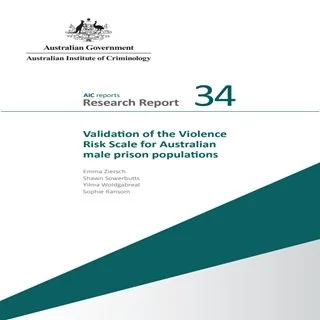
Validation of the Violence Risk Scale for Australian M ale prison populations

By Emma Ziersch, Shawn Sowerbutts, Yilma Woldgabreal, Sophie Ransom

The Violence Risk Scale (VRS) is a tool designed to assess and predict risk of future offending, inform decisions around therapeutic intervention and measure changes in violence risk as a result of treatment. This study investigated the discriminative and predictive validity of the VRS for Australian Aboriginal and non-Indigenous males convicted of violent offending in multiple jurisdictions.

The Violence Risk Scale (VRS) is a risk assessment tool designed to assess and predict risk of future offending, inform decisions around therapeutic intervention and measure changes in violence risk as a result of treatment. While the tool has been used extensively both internationally and in Australia, its applicability to our Australian population is unclear.

This study investigated the discriminative and predictive validity of the VRS for Australian Aboriginal and non-Indigenous males convicted of violent offending in multiple jurisdictions. The VRS total score had moderate discriminative accuracy for violent reoffending at five-year follow-up. However, Aboriginal males were significantly more likely to be categorized as high risk, and additional discrimination measures revealed variation in performance between Aboriginal and non-Indigenous males. Implications of the findings for correctional practice and recommendations to reduce bias in the assessment of Aboriginal offenders are discussed.

 Research Report no. 34. Canberra: Australian Institute of Criminology. 2025. 66p

download
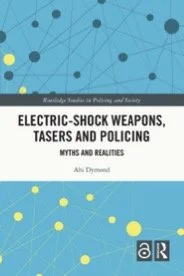
Electric-Shock Weapons, Tasers and Policing: Myths and Realities

By Abi Dymond

Building on five years of research, and drawing on criminology, science and technology studies (STS), socio-legal studies and social psychology, this book is the first non-medical book written on electric-shock weapons, of which the best well known is the TASER brand. The police’s ability to use force is one of their most crucial powers, yet one that has been relatively neglected by criminology. This book challenges some of the myths surrounding the use of these weapons and considers their human rights implications and impact on members of the public and officers alike. Drawing on STS, it also considers the role and impact of electric-shock technologies, examines the extent to which technologies and non-human agency may also play a role in shaping officer decision making and discretion, and contributes to long standing debates about police accountability. This is essential reading for policing scholars around the world, particularly those engaged with use of force, culture and accountability, as well as those engaged with Science and Technology studies.

London; New York: Routledge, 2022. 202p.

download
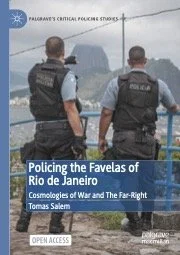
Policing the Favelas of Rio de Janeiro: Cosmologies of War and The Far-Right

By Tomas Salem

This book offers a unique look into the world of policing and the frontline of Brazil’s war on drugs. It analyzes the tensions produced by attempts to modernize Rio de Janeiro’s public security policies. Since the return of democracy in 1985, Rio's police forces have waged war against armed drug gangs based in the city’s favelas, casting the people who live in these communities as internal enemies. In preparation for the Olympics in 2016, the police sought to ‘pacify’ the favelas and their populations through the establishment of Pacifying Police Units (UPPs) in many of the city’s favela communities. Drawing on eight months of ethnographic fieldwork with the police, this book follows officers across the institutional hierarchy in their daily activities, on patrol, and during training. Tracing the genealogies of contemporary forms of policing-as-warfare through the notion of ‘colonial war’ and ‘cultural war’, it highlights the material and ideational dimensions of war as a cosmological force that shapes Brazilian social relations, subjectivities, landscapes, economies, and politics. It draws on the Deleuzian notion of ‘war machine and state dynamics’ to show how practices of elimination co-exist with attempts to transform favela territories and their people and analyzes the link between the moral universe of policing and right-wing populism in Brazil. Through rich and nuanced ethnography, it offers a critical perspective on militarized policing and 21st century forms of authoritarianism.

Cham: Palgrave Macmillan, 2024. 330p.

download
Creating a Policed Society? The Police and The Public in the Victorian West Riding, c.1840–1900

By David Taylor

Creating a Policed Society? Provides an analysis of the evolution of policing and its impact on society in the West Riding of Yorkshire during the Victorian era. Unlike many previous police histories, which have focussed on specific (mainly urban) forces, it looks at developments across a region and brings out the complex and ongoing debates about policing, the diversity of police provision and the varied impact and responses that took place. As well as drawing on earlier works devoted to specific towns, the book offers a wide-ranging approach that utilises a range of hitherto underused sources that provide important insights into the details of police experience, both individual and collective. The book is structured around three major problem areas that have a relevance beyond the bounds of the West Riding. They are: (1) the extent to which the various police forces can be seen to be efficient; (2) the extent to which the Victorian West Riding can be seen as a policed society; and (3) the extent to which the policing in the county can be described as consensual. The author argues, firstly, that, despite ongoing problems retention, discipline and ill-health, most late-Victorian forces in the West Riding satisfied their local and national masters of their efficiency and were significantly less inefficient than their mid-century counterparts. Secondly, it is argued that notwithstanding the limitations to police powers, the Victorian West Riding was recognisably a policed society (or more accurately, a collection of policed societies), not least in the eyes of the majority of the local community. Finally, despite clear demonstrations of popular hostility to the police, in towns and country, in the third quarter of the nineteenth century and the persistence of anti-police sentiments, particularly in certain districts and among certain social groups, it is argued that, by a realistic and dynamic (rather than absolutist) definition of policing by consent, the Victorian West Riding was policed more by consensus than coercion.

Huddersfield, UK: University of Huddersfield Press, 2024. 429p.

download
On Descriptive and Predictive Models for Serial Crime Analysis

By Anton Borg

Law enforcement agencies regularly collect crime scene information. There exists, however, no detailed, systematic procedure for this. The data collected is affected by the experience or current condition of law enforcement officers. Consequently, the data collected might differ vastly between crime scenes. This is especially problematic when investigating volume crimes. Law enforcement officers regularly do manual comparison on crimes based on the collected data. This is a time-consuming process; especially as the collected crime scene information might not always be comparable. The structuring of data and introduction of automatic comparison systems could benefit the investigation process. This thesis investigates descriptive and predictive models for automatic comparison of crime scene data with the purpose of aiding law enforcement investigations. The thesis first investigates predictive and descriptive methods, with a focus on data structuring, comparison, and evaluation of methods. The knowledge is then applied to the domain of crime scene analysis, with a focus on detecting serial residential burglaries. This thesis introduces a procedure for systematic collection of crime scene information. The thesis also investigates impact and relationship between crime scene characteristics and how to evaluate the descriptive model results. The results suggest that the use of descriptive and predictive models can provide feedback for crime scene analysis that allows a more effective use of law enforcement resources. Using descriptive models based on crime characteristics, including Modus Operandi, allows law enforcement agents to filter cases intelligently. Further, by estimating the link probability between cases, law enforcement agents can focus on cases with higher link likelihood. This would allow a more effective use of law enforcement resources, potentially allowing an increase in clear-up rates.

Department of Computer Science and Engineering Publisher: Blekinge Institute of Technology, SE-371 79 Karlskrona, Sweden Blekinge Institute of Technology Doctoral Dissertation Series No. 2014:12 Department of Computer Science and Engineering 221p.

download
Cybersecurity in Latvia: Forging Resilience amidst Emerging Threats

Edited by Mihails Potapovs and Kate E. Kanasta

Drawing on expertise from professionals, government officials, and academics, this book uncovers the proactive measures taken by Latvia to build resilient cybersecurity capabilities. The work offers a comprehensive exploration of Latvia’s cyber domain, structured around three overarching themes: the ecosystem, its processes, and future perspectives. In doing so, it takes readers through the intricacies of Latvia’s cybersecurity landscape and provides a nuanced understanding of its strengths, challenges, strategic considerations, and broader implications. One of the key contributions of the work lies in its exploration of Latvia’s cybersecurity strategies and resilience. By delving into the nation’s policies, collaborations, and technological advancements, this book uncovers how Latvia has proactively addressed cyber threats, emphasising the importance of tailored approaches for smaller countries in building robust cybersecurity defences. Highlighting the importance of studying cybersecurity in smaller nations, this book stresses Latvia’s contributions to global cybersecurity efforts as an EU and NATO member. The volume advocates for innovation and collaboration, emphasising their crucial role in securing a digital future for nations worldwide. This book will be of much interest to student of cybersecurity, Baltic politics, EU politics, global governance, and International Relations. The Open Access version of this book, available at http://www.taylorfrancis.com, has been made available under a Creative Commons Attribution-Non Commercial-Share Alike (CC-BY-NC-SA) 4.0 license.

London; New York: Routledge, 2025. 305p.

download
Victim/Survivors’ Views About the Causes of Sexual Offending: An Exploratory Mixed Methods Inquiry

By Kelly Richards and Michael Chataway

While much research has been undertaken on the public’s, professionals’ and perpetrators’ views about the causes of sexual offending, far less has been documented about victim/survivors’ understanding of this topic. However, victim/survivors may possess unique knowledge about the perpetration of sexual violence – including its causes – which has previously been overlooked. To address this gap, this exploratory research examined victim/survivor views via a mixed methods investigation (an online survey and semi-structured interviews with victim/survivors). It represents an advance over prior research as it differentiates victim/survivors’ views about the causes of sexual offending against children and adults. The study’s findings will be relevant to a wide range of policymakers and practitioners in the criminal justice arena. As government policies designed to prevent and respond to sexual violence are often implemented on behalf of victim/survivors, it is vital for criminal justice professionals to understand victim/survivors’ policy preferences as well as what informs these. This study makes a modest but important contribution toward this aim.

download
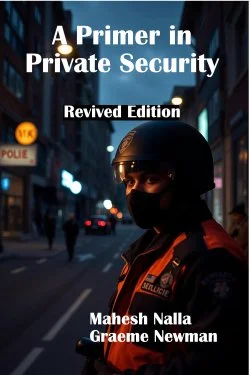
A Primer in Private Security: Revived edition

By Mahesh Nalla and Graeme Newman

When the first edition of A Primer in Private Security was published, its principal purpose was to demonstrate that private policing was not a mere auxiliary to public law enforcement but a robust and rapidly growing institution with its own organizational forms, priorities, and traditions. At that time, the Hallcrest Report had just confirmed that private security personnel outnumbered public police officers in the United States, a landmark finding that set the tone for debates about the privatization of policing .

Nearly four decades later, the central argument remains as relevant as ever, but the field itself has changed dramatically. Private security is now not only a supplement to public policing but a global, technologically sophisticated industry involved in nearly every sector of modern life. While we think that the original book still remains relevant to security today, we suggest in this preface that the reader approach the content from the point of view of four major perspectives that dominate security  (the word “private” seems old fashioned and less appropriate given that what is public and what is private have become incredibly and interwoven largely as a result of media, especially social media). 

The four perspectives are:

1.     the domestic sphere of home and family,

2.     the economic sphere of business,

3.     the public sphere of local and state government, and

4.     the international sphere of global security and climate-related risk.

Read-Me.Org Inc. New York-Philadelphia-Australia. 2025. 183p.

download free
Kindle $2.99 -- Paperback $9.99--Audible 1 credit
Examining the Reasons Why Individuals Want and Do Not Want a Career in Policing

By Weston J. Morrow, Samuel G. Vickovic, and Emilie Whitehouse

Police departments across the country have and continue to experience staffing challenges in full-time sworn officers. In an effort to address this issue, previous research has examined the motivations for becoming police officers, or why people want to become officers. An equally important question that may help with recruitment and staffing efforts among police agencies is ‘Why do people not want to become police officers?’ The current study fills this void using Qualtrics Panel data from 2,000 respondents across the United States. In doing so, this study (1) contributes to the existing body of research on reasons people choose a career in policing, (2) adds insight to the limited body of research that examines why people do not want a career in policing, and (3) provides nuance to this discussion by examining racial, ethnic, and gender variations in these outcomes. The practical and policy implications of these findings are explored within the context of previous and ongoing research to help address police staffing challenges.

download
Age, Criminal Thinking, and Disciplinary Infractions in Federal Prison Inmates: Testing a Mediation Hypothesis

By Glenn D. Walters

The intent of this study was to determine whether two features of antisocial thought process, proactive and reactive criminal thinking, mediate the age-disciplinary infractions relationship in prison inmates. Participants were 2,487 male inmates admitted to a medium security federal prison sometime between 2003 and 2010. Analyzing both total and aggressive disciplinary infraction data, it was discovered that whereas the proactive (planned, calculated, amoral) features of criminal thought process mediated the age-infractions relationship, the reactive (impulsive, irresponsible, emotional) features did not. Results from this study suggest that one way advancing age may contribute to declining disciplinary infractions in prison is that older inmates are less likely than younger inmates to employ the planned, calculated, and amoral aspects of antisocial cognition. Whether this stems from age-related decrements in antisocial cognition awaits further study using changes in criminal thinking over time.

download
Incorporating Subjectively-Derived Behavioral Responses into Traditional Tests of Criminal Decision-Making: A Research Note

By Jeff A. Bouffard, Nicole Niebuhr, and M. Lyn Exum

In the study of criminal decision-making, researchers commonly present participants with a hypothetical offending scenario and ask how likely participants would be to engage in a list of behavioral responses predetermined by the researchers. Recently, scholars have questioned the use of predetermined response sets and argued instead that participants should be allowed to self-report their own behavioral responses. Using a hypothetical assault scenario presented to separate samples of incarcerated persons and university students, the current study invited participants to evaluate a traditional, predetermined (PD) list of behavioral response options and also to report any additional subjectively-derived (SD) behaviors in which they might engage. The study then explored the added value of including the SD responses. Results indicate that in a few cases, the use of the additional SD response revealed novel behaviors not captured in the list of PD behaviors (mostly alternative forms of prosocial behaviors). Furthermore, when novel SD behaviors were reported, they generally were not the behaviors that participants indicated they would be most likely to actually engage in. Mindful of these findings, the value of SD responses in the study of criminal decision-making is discussed.

download
A People's Handbook of Surveillance New York

Summary

In this handbook, researchers from Morgan State University and the Surveillance Technology Oversight Project (S.T.O.P.) expose how New York City has become a pervasive surveillance state that tracks residents' every movement through public and private spaces without consent. Rather than enhancing public safety, this vast network of surveillance technologies threatens civil liberties, reinforces racial inequities, and undermines democratic freedoms while operating with minimal oversight or transparency.

Key Findings Include:

  • Pervasive surveillance without consent: New Yorkers are tracked from the moment they leave their homes through an extensive network of CCTV cameras, license plate readers, facial recognition systems, ShotSpotter gunshot detectors, and data collection from transit cards, bike shares, and WiFi kiosks; most without their knowledge or consent.

  • Systematic racial bias and overpolicing: Surveillance technologies are disproportionately deployed in communities of color, creating feedback loops that perpetuate overpolicing.

  • Vulnerable populations face heightened risks: Justice-involved individuals, undocumented immigrants, public housing residents, and those seeking reproductive or gender-affirming care face amplified surveillance threats that can result in re-incarceration, deportation, eviction, or prosecution for accessing legal healthcare.

  • Inaccurate and unaccountable technologies: ShotSpotter alerts result in evidence of actual gunshots only 20% of the time in NYC, yet the city renewed its $21.8 million contract. The NYPD has used facial recognition in 22,000 cases between 2017-2021 despite documented accuracy problems and racial bias.

  • Weak oversight and transparency: New York's POST Act provides limited oversight only over NYPD surveillance, with no enforcement power. Unlike other jurisdictions with comprehensive surveillance ordinances, New York lacks meaningful public input, independent oversight, or restrictions on surveillance technology procurement and use.

  • Threats to democracy and civil liberties: Surveillance of activists and protesters chills free speech and assembly. The technology enables tracking of individuals seeking abortion care, attending religious services, or engaging in political activities; fundamentally threatening democratic participation.

  • Public-private surveillance partnerships: Companies like Amazon (Ring), Cubic (OMNY), and others collect vast amounts of personal data that can be accessed by law enforcement, extending police surveillance capacity through private networks while avoiding public accountability.

In the handbook, we call for comprehensive surveillance oversight ordinances, community engagement in technology decisions, and a fundamental shift toward privacy-protective data collection practices that prioritize civil liberties over mass surveillance.

download
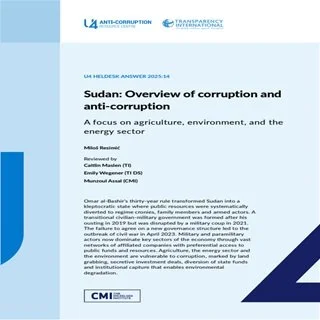
Sudan: Overview of Corruption and Anti-Corruption: A Focus on Agriculture, Environment, and the Energy Sector

By Miloš Resimić

Omar al-Bashir’s thirty-year rule transformed Sudan into a kleptocratic state where public resources were systematically diverted to regime cronies, family members and armed actors. A transitional civilian-military government was formed after his ousting in 2019 but was disrupted by a military coup in 2021. The failure to agree on a new governance structure led to the outbreak of civil war in April 2023. Military and paramilitary actors now dominate key sectors of the economy through vast networks of affiliated companies with preferential access to public funds and resources. Agriculture, the energy sector and the environment are vulnerable to corruption, marked by land grabbing, secretive investment deals, diversion of state funds and institutional capture that enables environmental degradation.

Bergen: U4 Anti-Corruption Resource Centre, Chr. Michelsen Institute. , U4 Help Desk,2025. 35p.

download
Corruption Risks in Land-Based Solutions to Climate Change: A Focus on Reforestation and Afforestation Projects

By Caitlin Maslen

“Nature-based” solutions to climate change require the acquisition of large swaths of land for reforestation, afforestation, conservation and renewable energy sources. However, corruption in the land sector is already widespread and this additional demand for land may aggravate pre-existing corruption risks, as well as causing new ones. National governments and project implementers of land-based solutions should therefore implement anti-corruption measures in projects and, most importantly, ensure that they take into account the communities (such as Indigenous Peoples) who may already live on the land.

Bergen: U4 Anti-Corruption Resource Centre, Chr. Michelsen Institute. , U4 Help Desk,, 2023. 24p.

download
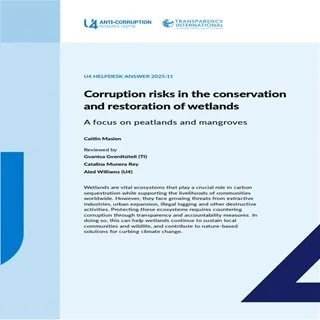
Corruption Risks in the Conservation and Restoration of Wetlands: A Focus on Peatlands and Mangroves

By Caitlin Maslen

Wetlands are vital ecosystems that play a crucial role in carbon sequestration while supporting the livelihoods of communities worldwide. However, they face growing threats from extractive industries, urban expansion, illegal logging and other destructive activities. Protecting these ecosystems requires countering corruption through transparency and accountability measures. In doing so, this can help wetlands continue to sustain local communities and wildlife, and contribute to nature-based solutions for curbing climate change.

Bergen: U4 Anti-Corruption Resource Centre, Chr. Michelsen Institute. , U4 Help Desk,2025. 31p.

download
Cuba: Corruption and Anti-Corruption

By Maria Leonor Rodriguez Prat

In Cuba, the economic crisis and resource scarcity contribute to petty corruption, while opaque institutions and military control over key economic sectors enable forms of grand corruption. Cuba’s partial financial isolation both limits and obscures illicit inflows, but select recent cases indicate a growing vulnerability to transnational money laundering. While formal anti-corruption frameworks exist in Cuba, enforcement remains highly selective and politicised, particularly in cases involving state and military elites.

Bergen: U4 Anti-Corruption Resource Centre, Chr. Michelsen Institute. , U4 Help Desk,2025, 29p.

download
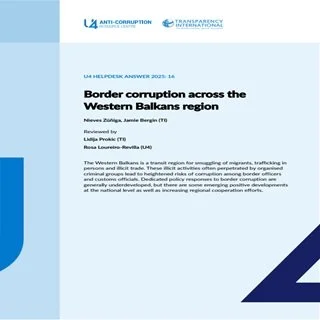
Border Corruption Across the Western Balkans Region

By Nieves Zúñiga, Jamie Bergin

The Western Balkans is a transit region for smuggling of migrants, trafficking in persons and illicit trade. These illicit activities often perpetrated by organised criminal groups lead to heightened risks of corruption among border officers and customs officials. Dedicated policy responses to border corruption are generally underdeveloped, but there are some emerging positive developments at the national level as well as increasing regional cooperation efforts.

Bergen: U4 Anti-Corruption Resource Centre, Chr. Michelsen Institute. , U4 Help Desk, 2025. 33p

download
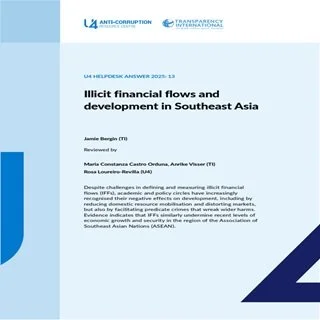
Complexities in Defining and Investigating Financial Crime, Illicit Financial Flows and Devlopment in SOutheast Asia

By Jamie Bergin

Despite challenges in defining and measuring illicit financial flows (IFFs), academic and policy circles have increasingly recognised their negative effects on development, including by reducing domestic resource mobilisation and distorting markets, but also by facilitating predicate crimes that wreak wider harms. Evidence indicates that IFFs similarly undermine recent levels of economic growth and security in the region of the Association of Southeast Asian Nations (ASEAN). 

Bergen: U4 Anti-Corruption Resource Centre, Chr. Michelsen Institute. , U4 Help Desk,2025. 58p

download
The Impact of Financial Fraud in Colorado

By Thomas Young

Financial fraud is on the rise nationally. Across all 50 states and D.C., the Federal Bureau of Investigation’s (FBI) Internet Crime report tracked 859,532 fraud claims in 2024. These claims resulted in $16.6 billion in financial loss, up 33% from 2023. A separate source, the Federal Trade Commission’s (FTC) Consumer Sentinel Network, reported 2.6 million fraud cases in 2024, of which 38% involved losing money. According to this source, citizens reported losing $12 billion to fraud, up $2 billion from 2023. This study seeks to answer the pressing question: What is the extent of financial fraud in Colorado and its impact on the lives of everyday Coloradans and the overall health of the state’s economy?

According to the Colorado Department of Public Safety, reported fraud cases summed to 75,119 from 2022 through 2024. Financial fraud is also costly, with the FTC reporting the total financial loss of financial fraud at $211 million statewide in 2024, up 314% since 2020. The FBI reported $244 million in losses from online (formally referred to as cyber-enabled) crime in Colorado, up 142% since 2020. These are just the reported figures. Unreported loss from financial fraud is higher.

The FBI reports that among all states Colorado ranks 34th best in total losses from online crime; 44th best in online crime per 100,000 citizens; 33rd best for complaints filed by individuals 60+; and 34th best for cryptocurrency losses by state. The FTC Consumer Sentinel Network figures on fraud, identity theft, and telemarketing suggests Colorado is doing slightly better than the FBI’s statistics. Colorado has the 32nd lowest rate of fraud and the 24th lowest rate of identity theft by their metrics.

In Colorado and across the nation, fraudulent financial activity is becoming increasingly sophisticated, encompassing a broad array of schemes such as identity theft, phishing, wire fraud, investment scams, and elder financial abuse. As the digital economy expands and cybercriminal tactics evolve, Coloradans face heightened risks from fraud schemes that attempt to exploit personal vulnerabilities, holes in financial systems, social media platforms, payment technologies, and personal data security. Fraudulent activities result not only in direct financial losses for individuals, businesses, and financial institutions, but they also have ripple effects throughout the state’s economy—affecting prices, consumer behavior, public safety expenditures, and overall economic productivity. 

This report presents evidence of the economic consequences of financial fraud, covering both the direct and indirect costs of fraudulent activity by examining incident data, economic modeling, and a fraud case study. By analyzing trends in fraud—including the types, methods, and demographic factors associated with its presence—it aims to provide policymakers, businesses, and consumers with actionable insights into the economic stakes of financial fraud.

Key Findings

  • For the state of Colorado, CSI estimates in 2025 the losses from financial fraud include—

  •  An estimated $375 million in direct, reported losses

  • An estimated $2.5 billion in unreported losses

  • The state’s General Fund will lose an estimated $88 million in tax revenue this year due to financial fraud.

  • CSI estimates reported fraud alone will have the following impact on Colorado’s economy in 2025:

    • A $954 million reduction in state GDP

    • A $932 million reduction in statewide personal income

    • A loss of approximately 6,628 jobs

  • Estimates on the reporting of financial fraud suggest formal reporting of financial fraud may be quite low, with one estimate putting the figure at 14%. This means that most financial fraud does not get reported to government authorities.

  • CSI estimates all financial fraud, reported and unreported, will have the following impact on Colorado’s economy in 2025:

  • A $5.1 billion reduction in state GDP ($856 per person)

  • A $3.9 billion reduction in statewide personal income ($655 per person)

  • A loss of approximately 16,374 jobs (0.5% of nonfarm jobs)

  • Financial fraud has wide-ranging economic implications. The impact is felt across consumer spending, interest rates, available loanable funds, capital investment, government spending and taxing, profit, and community trust.

  • Colorado’s incidence of financial fraud is around the middle of the states at 18th highest, at 1,260 reported incidents per 100,000 residents, lower than 17th ranked California at 1,291 and 19th ranked Mississippi at 1,221. The states with the highest incidence of financial fraud are Florida and Georgia with rates that are 72% and 67% higher than Colorado’s. 

Greenwood Village,  CO: Common Sense Institute 2025. 24p.

download
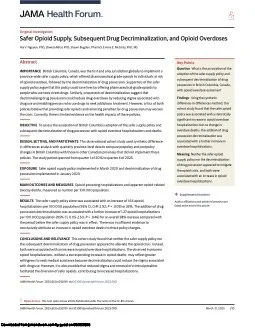
Safer Opioid Supply, Subsequent Drug Decriminalization, and Opioid Overdoses

By Hai V. Nguyen, Shweta Mital, Shawn Bugden, Pharm; et al

Importance British Columbia, Canada, was the first and only jurisdiction globally to implement a province-wide safer supply policy, which offered pharmaceutical grade opioids to individuals at risk of opioid overdose, followed by the decriminalization of drug possession. Supporters of the safer supply policy argue that this policy could save lives by offering pharmaceutical-grade opioids to people who use toxic street drugs. Similarly, proponents of decriminalization suggest that decriminalizing drug possession could reduce drug overdoses by reducing stigma associated with drug use and enabling persons who use drugs to seek addictions treatment. However, critics of both policies believe that providing safer opioids and removing penalties for drug possession may worsen the crisis. Currently, there is limited evidence on the health impacts of these policies.

Objective To assess the association of British Columbia’s adoption of the safer supply policy and subsequent decriminalization of drug possession with opioid overdose hospitalizations and deaths.

Design, Setting, and Participants This observational cohort study used synthetic difference-in-differences analysis with quarterly province-level data to compare prepolicy and postpolicy changes in British Columbia with those in other Canadian provinces that did not implement these policies. The study period spanned from quarter 1 of 2016 to quarter 4 of 2023.

Exposure Safer opioid supply policy implemented in March 2020 and decriminalization of drug possession implemented in January 2023.

Main Outcomes and Measures Opioid-poisoning hospitalizations and apparent opioid-related toxicity deaths, measured as number per 100 000 population.

Results The safer supply policy alone was associated with an increase of 1.66 opioid hospitalizations per 100 000 population (95% CI, 0.41-2.92; P = .009) or 33%. The addition of drug possession decriminalization was associated with a further increase of 1.27 opioid hospitalizations per 100 000 population (95% CI, 0.05-2.50; P = .046) for an overall 58% increase compared with the period before the safer supply policy was in effect. There was insufficient evidence to conclusively attribute an increase in opioid overdose deaths to these policy changes.

Conclusions and Relevance This cohort study found that neither the safer supply policy nor the subsequent decriminalization of drug possession appeared to alleviate the opioid crisis. Instead, both were associated with an increase in opioid overdose hospitalizations. The observed increase in opioid hospitalizations, without a corresponding increase in opioid deaths, may reflect greater willingness to seek medical assistance because decriminalization could reduce the stigma associated with drug use. However, it is also possible that reduced stigma and removal of criminal penalties facilitated the diversion of safer opioids, contributing to increased hospitalizations.

download