Open Access Free Library
Fiction+Mediajpg.jpg

FICTION and MEDIA

CRIME AND MEDIA — TWO PEAS IN A POD

Posts in fiction
Middlemarch

By George Eliot

"Middlemarch" by George Eliot is a richly woven tapestry of life in a provincial English town during the early 19th century. The novel delves into the lives, ambitions, and struggles of its diverse cast of characters, exploring themes of marriage, idealism, political reform, and the pursuit of personal fulfillment. At its heart is Dorothea Brooke, an intelligent and idealistic young woman whose aspirations for a meaningful life lead her into a complex marriage with the much older scholar, Edward Casaubon. Alongside Dorothea's story, the novel follows the fortunes of other key figures, such as the ambitious but flawed doctor Tertius Lydgate, the charming and morally ambiguous Will Ladislaw, and the steadfast yet troubled banker, Nicholas Bulstrode. Through its intricate plot and deep psychological insight, "Middlemarch" offers a profound commentary on the social and political issues of the time, while also providing timeless reflections on human nature and relationships.

• "Middlemarch" is celebrated for its intricate narrative and profound exploration of social, political, and personal themes.

• The novel features rich and complex characters, such as Dorothea Brooke and Tertius Lydgate, who reflect societal struggles and limitations.

• Eliot's work provides a detailed social and political commentary on 19th-century England, addressing issues like the Reform Bill of 1832 and the impact of industrialization.

• The themes of personal fulfillment, societal expectations, and moral integrity are timeless and resonate with readers across generations.

• Despite its length and complexity, "Middlemarch" remains relevant for its exploration of social issues, influence on modern writers, and significance in feminist literary criticism.

First published in eight installments between 1871 and 1872 by William Blackwood and Sons. This edition Read-Me.Org Inc. 2025. 690p.

The Case of Mr. Crump: Editied with an Introduction by Graeme R. Newman

Byy Ludwig Lewisohn (Author), Graeme Newman (Editor)

“The Case of Mr. Crump” by Ludwig Lewisohn is a richly detailed narrative that delves into the complex lives of Anne and Herbert Crump. The story spans multiple stages of their lives, exploring themes of love, manipulation, duty, and the pursuit of artistic integrity. Anne’s tumultuous past and manipulative nature clash with Herbert’s aspirations as a young musician, leading to a series of personal and professional struggles. Set against the backdrop of early 20th-century America, the novel portrays Herbert’s journey through marital conflicts, familial obligations, and his relentless quest for success in the music industry. The narrative is marked by intense emotional conflicts, societal pressures, and the enduring impact of past traumas on the characters’ lives. Editing of the book corrects punctuation and spelling errors and improves the overall design and layout of the book, taking care to preserve the author's style. The interior design has been improved to make the book easier to read. The new Introduction offers a detailed overview of the novel and discusses the cultural and historical significance of Lewisohn's work.

Read-Me.Org Inc. 2025.

Daniel Deronda

By George Eliot

Step into the richly woven tapestry of Victorian society with George Eliot's final and most ambitious novel, "Daniel Deronda." Published in 1876, this literary gem explores profound themes of identity, cultural heritage, and moral growth, making it a timeless classic that continues to resonate with readers today.

"Daniel Deronda" masterfully intertwines the lives of two compelling characters: Daniel Deronda and Gwendolen Harleth. Daniel, a compassionate and introspective young man of uncertain parentage, embarks on a journey of self-discovery that leads him to embrace his Jewish heritage. His quest for identity and purpose is both poignant and inspiring, reflecting the universal human search for belonging.

Gwendolen Harleth, on the other hand, is a beautiful but self-centered woman whose life takes a dramatic turn when she marries the cruel and manipulative Henleigh Grandcourt. Her journey from vanity and ambition to moral awakening and redemption is a powerful narrative of personal growth and transformation. Through Gwendolen's struggles, Eliot critiques the societal constraints placed on women and explores the possibilities of moral and personal redemption.

Eliot's writing is renowned for its deep psychological insight and realism, and "Daniel Deronda" is no exception. The novel is rich with symbolism that adds depth to its themes and character development. Water, for instance, symbolizes cleansing and rebirth, particularly in Gwendolen's storyline. Jewelry represents power, control, and submission, while stage performance reflects the theme of appearance versus reality.

"Daniel Deronda" is not just a story of individual journeys; it is also a critique of Victorian society. Eliot highlights the limitations and hypocrisies of societal conventions, particularly those related to gender and class. Her characters frequently struggle against these constraints, seeking to find their own paths and to act according to their moral convictions rather than societal expectations.

As George Eliot's final novel, "Daniel Deronda" represents the culmination of her literary career. Its innovative approach to character development and engagement with cultural and social issues have influenced countless writers and continue to inspire readers. Eliot's emphasis on empathy, integrity, and the importance of understanding individual circumstances offers valuable insights into the complexities of human behavior and ethical decision-making.

First published in 1876. William Blackwood and Sons in London released the book in eight parts from February to September of that year. This novel was the last one Eliot completed and is notable for its exploration of Victorian society and its sympathetic portrayal of Jewish proto-Zionist ideas. 591p.

Adam Bede

By George Eliot

"Adam Bede," written by George Eliot, is a novel set in the rural community of Hayslope in 1799. The story revolves around Adam Bede, a diligent and morally upright carpenter, who is in love with Hetty Sorrel, a beautiful but superficial dairymaid. Hetty, however, is infatuated with Captain Arthur Donnithorne, the charming but irresponsible grandson of the local squire. The novel explores the complexities of their relationships and the repercussions of their actions.

Adam Bede is characterized by his integrity and strong moral principles, while Hetty's beauty and naivety lead her into a tragic situation. Arthur Donnithorne's seduction of Hetty sets off a chain of events that profoundly affect all the characters involved. Dinah Morris, a Methodist preacher and Hetty's cousin, provides spiritual and moral guidance throughout the story.

The novel is notable for its detailed depiction of rural life, rich character development, and exploration of social and ethical issues. George Eliot's writing is praised for its realism and psychological depth, making "Adam Bede" a significant work in Victorian literature. The narrative delves into themes of love, morality, and social change, offering a poignant and insightful look at human nature and society.

Adam Bede was first published in three volumes on 1 February 1859 by William Blackwood and Sons in Edinburgh and London. The novel was an immediate success, going through multiple editions within the first year. A second edition was released in March 1859, followed by a one-volume edition in 1862. The book was published anonymously at first, but George Eliot’s identity was soon revealed, further increasing public interest in the novel. This version was published by Read-Me.Org. 2025. 427p.

BUY ON AMAZON. ALL PROCEEDS GO DIRECTLY TO READ-ME.ORG

Brother Jacob AND Scenes of Clerical Life

by George Eliot

“Brother Jacob” is a satirical short story by George Eliot that follows the ambitions of David Faux, a confectioner who seeks wealth and respectability through deception. His plans are complicated by his intellectually disabled brother, Jacob, whose presence ultimately exposes David’s hypocrisy and selfishness. The story critiques vanity and self-delusion with irony and humor.

“Scenes of Clerical Life” is Eliot’s first published work, a collection of three novellas—”The Sad Fortunes of the Reverend Amos Barton,” “Mr. Gilfil's Love-Story,” and “Janet's Repentance.” Each explores the struggles and moral dilemmas of clergymen and those around them in rural England, highlighting themes of duty, sacrifice, and redemption. These stories offer a compassionate yet realistic portrayal of human nature and the social challenges of the time.

Brother Jacob was first published in 1864 as part of The Cornhill Magazine and later included in a collection with The Lifted Veil in 1878.. Scenes of Clerical Life was originally serialized in Blackwood’s Edinburgh Magazine between January and November 1857. It was later published as a three-volume book in 1858. This collection marked George Eliot’s debut as a fiction writer. This book was published by Read-Me.Org 2025. 346p.

BUY FROM AMAZON. ALL PROCEEDS GO DIRECTLY TO READ-ME.ORG

Should Media Coverage Affect Sentencing?

By Paul McGorrery

In sentencing an offender, courts take many factors into account, such as the seriousness of the offence, the offender’s prior record, their age, whether they pleaded guilty and many others. In Australia, courts do this through an approach known as instinctive synthesis, meaning they consider all the factors that can justify a sentence being more or less severe and then arrive at a final outcome. One of the factors that courts may take into account is whether the offender has already been punished in some fashion outside the criminal justice process. Known as extra-curial punishment3 (or extra judicial or natural5 punishment) this can take various forms such as visa cancellation,6 loss of chosen career, injury to the offender8 and hardship to the offender’s family. This report is concerned with just one form of extra-curial punishment: adverse media coverage, in particular, of people. The media and the courts have an important and symbiotic relationship, but sometimes their interests can diverge. The media have an interest in reporting on criminal justice matters because they are often stories of considerable interest to their audiences. In reporting on those stories, the media often concentrate their attentions ‘on the exceptional and unusual among serious crimes’, which can lead to ‘intense and often emotive media reporting’ about sentencing. This can run the risk of undermining, rather than promoting, confidence in the justice system.

Courts in turn have an interest in having their decisions reported. Confidence in the judicial arm of the criminal justice system relies on a combination of community awareness about what courts do, the transparency of their work, and the apparent fairness of their decisions, which can only be scrutinised if there is transparency and community awareness. Moreover, the sentencing purpose of general deterrence – whereby the sentencing of one offender is thought to deter other people from engaging in similar behaviour – is realistically only achievable (if at all) if the media and/or government operate as the conduit between the courts and the community. While some courts have taken the very laudable step of making most of their sentencing remarks publicly available, many people do not even have time to read media summaries, let alone original source material like sentencing remarks, especially in the social media age. So the community realistically only becomes aware of sentencing decisions through the media. The difficulty is balancing the need for fair coverage (the courts’ priority) with the need for interesting coverage (the media’s priority). Justice Harper has described the relationship as like a ‘Greek tragedy’ because ‘[e]ach is forced by its circumstances to face the other off, with neither having the flexibility necessary to reach a satisfactory working compromise’.

Malbourne: Sentencing Advisory Council (VIC), 2022. 24p.

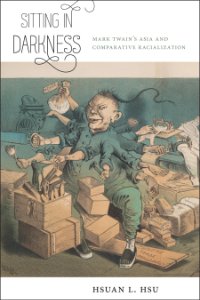
Sitting in Darkness: Mark Twain's Asia and Comparative Racialization

By Hsuan L. Hsu

Perhaps the most popular of all canonical American authors, Mark Twain is famous for creating works that satirize American formations of race and empire. While many scholars have explored Twain’s work in African Americanist contexts, his writing on Asia and Asian Americans remains largely in the shadows. In Sitting in Darkness, Hsuan Hsu examines Twain’s career-long archive of writings about United States relations with China and the Philippines. Comparing Twain’s early writings about Chinese immigrants in California and Nevada with his later fictions of slavery and anti-imperialist essays, he demonstrates that Twain’s ideas about race were not limited to white and black, but profoundly comparative as he carefully crafted assessments of racialization that drew connections between groups, including African Americans, Chinese immigrants, and a range of colonial populations. Drawing on recent legal scholarship, comparative ethnic studies, and transnational and American studies, Sitting in Darkness engages Twain’s best-known novels such as Tom Sawyer, Huckleberry Finn, and A Connecticut Yankee in King Arthur’s Court, as well as his lesser-known Chinese and trans-Pacific inflected writings, such as the allegorical tale “A Fable of the Yellow Terror” and the yellow face play Ah Sin. Sitting in Darkness reveals how within intersectional contexts of Chinese Exclusion and Jim Crow, these writings registered fluctuating connections between immigration policy, imperialist ventures, and racism.

New York: NYU Press.2015.

Murdering Masculinities: Fantasies of Gender and Violence in the American Crime Novel

by Gregory Forter

Though American crime novels are often derided for containing misogynistic attitudes and limiting ideas of masculinity, Greg Forter maintains that they are instead psychologically complex and sophisticated works that demand closer attention. Eschewing the synthetic methodologies of earlier work on crime fiction, Murdering Masculinities argues that the crime novel does not provide a consolidated and stable notion of masculinity. Rather, it demands that male readers take responsibility for the desires they project on to these novels.
Forter examines the narrative strategies of five novels--Hammett's The Glass Key, Cain's Serenade, Faulkner's Sanctuary, Thompson's Pop. 1280, and Himes's Blind Man with a Pistol--in conjunction with their treatment of bodily metaphors of smell, vision, and voice. In the process, Forter unearths a "generic unconscious" that reveals things Freud both discovered and sought to repress.

UA. Open. New York; London: NYU Press, 2000. 278p.

On Dangerous Ground

may contain markup

By Jack Higgins

FROM THE COVER: “……London 1993, and the day looms ever closer when Communist China will finally seize the much coveted island of Hong Kong, with billions at stake. British Intelligence have just discovered the existence of a document, known as the Chungking Covenant, that would extend the lease on Hong Kong for another century. Sean Dillon, once a feared IRA enforcer now working for the British, is tasked to track down the document before Mafia-based interests with billions invested in Hong Kong can use it for their own ends. Pitted against sly and ruthless adversaries, Dillon and his intelligence associates follow a deadly trail to a castle in the Highlands of Scotland, by Loch Dhu, the Place of Dark Waters, the home of an American billionaire and Matia boss. Dillon's usual clear-headed commitment to his mission is compromised by the alluring young socialite Asta Morgan. However, as the evidence of fifty years begins to unfold, the solution to the enigma comes tantalisingly close. But only one side can reap the spoils…”

Australia. Griffin. BCA. Michael Josephs. 1994. 286p.

Berlin Game

MAY CONTAIN MARKUP

By Len Deighton

FROM THE COVER: Bernard Samson had been behind a desk in Whitehall for five years when his bosses decided that he was the right man to slip into East Berlin and talk Brahms Four out of doing something disastrous. Berlin was the city he grew up in, the place he still loved like a mistress, and some of the members of the Berlin Network were men he'd known since they were streetwise Berlin schoolboys. But Samson knew there were few people he could trust, either in Berlin or at home. Too many missions had gone wrong; too many secrets had leaked. Somewhere somewhere nearer to the heart of things than he'd like to believe - there was the stink of betrayal.

As the shadows of treachery lengthen around him….

London. Hutchinson. 1983. 313p.

Following The Wake

MAY CONTAIN MARKUP

By Gemma O'Connor

In "Following The Wake," author delves into the complexities of grief and loss in a heartfelt exploration of one woman's journey to find meaning and solace after a tragic accident. The novel weaves together themes of love, redemption, and the resilience of the human spirit as the protagonist navigates through her sorrow. With lyrical prose and poignant insight, "Following The Wake" is a moving tale that will resonate with readers who have experienced loss and are searching for hope in the face of adversity.

NY. Jove books. 2004. 280p.

False Memory

MAY CONTAIN MARKUP

By Dean Koontz

FROM THE COVER: Martie Rhodes, a happily married, successful video games designer, takes an agoraphobic friend to therapy sessions twice a week. Each trip is a grim ordeal, but the experience has brought the two friends even closer together. Then, one morning, Martie experiences a brief, irrational but disquieting fear of... her shadow. When autophobia - one of the rarest and most intriguing phobias known to psychology - is diagnosed, suddenly, radically her life changes, and the future looks dark. Martie's husband, Dusty, loves her profoundly, and is desperate to understand the cause of her autophobia. But as he comes closer to the terrible truth, Dusty himsell starts showing signs of a psychological disorder even more frightening than that afflicting Martie...FALSE MEMORY is the breathtaking new thriller from the internationally bestselling author of SEIZE THE NIGHT and FEAR NOTHING.

London. Headline Book Publishing. 1999. 827p.

The Dry

JANE HARPER

FROM THE PREFACE: ” It wasn’t as though the farm hadn’t seen death before, and the blowflies didn’t discriminate. To them there was little difference between a carcass and a corpse.

The drought had left the flies spoiled for choice that summer. They sought out unblinking eyes and sticky wounds as the farmers of Kiewarra levelled their rifles at skinny livestock. No rain meant no feed. And no feed made for difficult decisions, as the tiny town shimmered under day after day of burning blue sky…”

Sydney. Pan Macmillan. 2016. 347p.

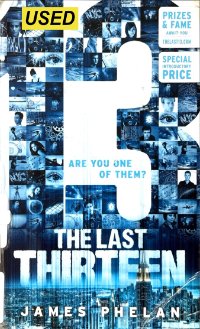
THE LAST THIRTEEN

MAY CONTAIN MARKUP

BY JAMES PHELAN

Sam is a Dreamer. One of the 13, whose dreams - and nightmares - can become real. These individuals will not only save the world, but change it forever. They are our last hope in the battle against evil. They just don't know it yet.

Sam is the first of the 13 to be uncovered. He begins his desperate mission in Vancouver, and sets off across the globe to find the other twelve Dreamers and locate the scattered artifacts needed to save the world from the ultimate evil. But will they be strong enough to outmaneuver an army of trained agents, thwart security officials at museums, libraries, government facilities, and archaeological sites, and face the terrifying figure that haunts their dreams?

The adventure continues online at www.thelast13.com, where additional content extends the storyline of each book.

Melbourne. Scholastic. 2013. 214p.

Fifty Shades of Grey

MAY CONTAIN MARKUP

By E. L. James

"Fifty Shades of Grey" by E.L. James is a controversial novel that follows the complex relationship between wealthy businessman Christian Grey and literature student Anastasia Steele. The book delves into themes of power dynamics, desire, and love as the two characters navigate their intense and at times tumultuous connection. With its explicit scenes and exploration of BDSM, "Fifty Shades of Grey" has sparked debates and captivated readers around the world since its release.

Vintage Books, 2012, 514 page

ENGLISH, AUGUST: An Indian Story

MAY CONTAIN MARKUP

By Upamanyu Chatterjee

English, August: An Indian Story is a thought-provoking novel that delves into the life and experiences of Agastya Sen, a young Indian civil servant posted in a small town. As Agastya navigates the complexities of his new surroundings, he grapples with issues of identity, culture clash, and personal growth. Through a blend of humor, introspection, and sharp social commentary, the book offers a unique insight into contemporary India and the inner world of its protagonist. A classic in Indian literature, English, August is a compelling exploration of tradition, modernity, and the quest for self-discovery.

Rupa. Faber and Faber. 1990. 305p.

Smokehouse

MAY CONTAIN MARKUP

Melissa Manning

"Smokehouse" is a gripping tale that follows the lives of three individuals brought together by a mysterious fire that engulfs a small town. As they navigate through loss, guilt, and secrets buried in the ashes, their paths intertwine in unexpected ways, revealing dark truths and igniting buried desires. Set against the backdrop of a hauntingly beautiful landscape, this novel weaves together elements of suspense, romance, and redemption, leaving readers on the edge of their seats until the final page. "Smokehouse" is a compelling exploration of human nature and the intricate ways in which our past can shape our present.

Brisbane. University of Queensland Press. 2021. 248p.

Portrait of a Lady

MAY CONTAIN MARKUP

By Henry James

"Portrait of a Lady" is a timeless classic written by Henry James that delves into the complexities of societal expectations and personal freedom in the 19th century. The novel follows the journey of Isabel Archer, a spirited and independent young American woman, as she navigates the intricacies of wealth, love, and betrayal while living in Europe. James masterfully crafts a narrative that explores the innermost thoughts and desires of his characters, making "Portrait of a Lady" a compelling exploration of self-discovery and the consequences of one's choices. This novel continues to captivate readers with its insightful commentary on the social norms of the era and the timeless question of what it means to truly be free.

Gutenberg Project. 1881. 340p.

WASHINGTON SQUARE

MAY CONTAIN MARKUP

BY HENRY JAMES

"Washington Square" by Henry James is a classic novel that delves into the complexities of relationships, wealth, and betrayal. Set in the affluent society of mid-19th century New York City, the story follows Catherine Sloper, a plain and unassuming young woman who stands to inherit a considerable fortune from her father, Dr. Austin Sloper.

Dr. Sloper, a wealthy and renowned physician, disapproves of Catherine's suitor, Morris Townsend, whom he believes to be pursuing her solely for her inheritance. As the drama unfolds, Catherine must navigate the conflicting desires of her heart and her duty to her father, leading to a poignant and powerful exploration of love, manipulation, and the consequences of one's choices.

With its keen observations of human nature and intricate character portrayals, "Washington Square" is a timeless novel that continues to captivate readers with its nuanced storytelling and profound insights into the complexities of life and relationships.

London. MacMillan. 1881. 128p.

Autopsy

MAY CONTAIN MARKUP

By Patricia Cornwell

Forensic pathologist Dr. Kay Scarpetta has come almost full circle, returning to Virginia, the state where she launched her storied career, as the chief medical examiner. Finding herself the new girl in town once again after being away for many years, she's inherited both an overbearing secretary and a legacy of neglect and potential corruption.

She and her husband, Benton Wesley, now a forensic psychologist with the U.S. Secret Service, have relocated to Old Town Alexandria, where she's headquartered five miles from the Pentagon in a post-pandemic world that's been torn apart by civil and political unrest. After just weeks on the job, she's called to a scene by railroad tracks--a woman's body has been shockingly displayed, her throat cut down to the spine--and as Scarpetta begins to follow the trail, it leads unnervingly close to her own historic neighborhood.

At the same time, a catastrophe occurs in a top secret labo-ratory in outer space, endangering at least two scientists aboard. Appointed to the highly classified Doomsday Commission that specializes in sensitive national security cases, Scarpetta is summoned to the White House and tasked with finding out exactly what happened. But even as she remotely works the first potential crime scene in space, an apparent serial killer strikes again very close to home.

This latest novel in the groundbreaking Kay Scarpetta series captivates readers with the shocking twists, high-wire tension, and forensic detail that Patricia Cornwell is famous for, proving once again why she's the world's #1 bestselling crime writer.

NY. Harper Collins. 2021. 413p