Open Access Free Library
Fiction+Mediajpg.jpg

FICTION and MEDIA

CRIME AND MEDIA — TWO PEAS IN A POD

Posts in literature
The Mill on the Floss

By George Eliot

e lives of siblings Tom and Maggie Tulliver. Their story unfolds against the backdrop of Dorlcote Mill, their family's ancestral home and livelihood. From childhood to adulthood, Tom and Maggie navigate the complexities of familial duty, societal expectations, and personal aspirations. Maggie Tulliver, with her intelligence, emotional depth, and yearning for a life beyond the provincial confines, emerges as one of literature's most compelling heroines. Her struggles against the rigid gender roles of her time and her passionate quest for self-identity resonate deeply with readers. Tom, her pragmatic and duty-bound brother, often finds himself at odds with Maggie's impulsive nature, creating a dynamic and poignant sibling relationship.

George Eliot's masterful storytelling is evident in her rich character development and psychological insight. She delves into the inner lives of her characters, offering a nuanced portrayal of their motivations and conflicts. The novel's themes of duty, loyalty, and the constraints imposed by society are explored with empathy and realism, making it a powerful critique of the social structures of the time. "The Mill on the Floss" also reflects the broader economic and social changes of the 19th century. The Tulliver family's financial troubles, brought about by Mr. Tulliver's imprudent business decisions, mirror the uncertainties faced by many during the period of industrialization. Eliot's vivid depiction of rural life and the impact of modernization adds depth to the narrative, making it relevant to contemporary readers.

This novel is not just a story of personal and familial struggles but also a meditation on the forces of fate and the resilience of the human spirit. The tragic climax, marked by a devastating flood, underscores the novel's themes of loss, redemption, and the inexorable flow of life. Immerse yourself in "The Mill on the Floss," a literary masterpiece that continues to captivate and inspire readers with its timeless exploration of human nature and society. Whether you're a long-time fan of George Eliot or discovering her work for the first time, this novel promises a rich and rewarding reading experience.

First published on April 4, 1860 by William Blackwood and Sons. This edition by Read-Me.Org Inc. 2025.. 367p.

Middlemarch

By George Eliot

"Middlemarch" by George Eliot is a richly woven tapestry of life in a provincial English town during the early 19th century. The novel delves into the lives, ambitions, and struggles of its diverse cast of characters, exploring themes of marriage, idealism, political reform, and the pursuit of personal fulfillment. At its heart is Dorothea Brooke, an intelligent and idealistic young woman whose aspirations for a meaningful life lead her into a complex marriage with the much older scholar, Edward Casaubon. Alongside Dorothea's story, the novel follows the fortunes of other key figures, such as the ambitious but flawed doctor Tertius Lydgate, the charming and morally ambiguous Will Ladislaw, and the steadfast yet troubled banker, Nicholas Bulstrode. Through its intricate plot and deep psychological insight, "Middlemarch" offers a profound commentary on the social and political issues of the time, while also providing timeless reflections on human nature and relationships.

• "Middlemarch" is celebrated for its intricate narrative and profound exploration of social, political, and personal themes.

• The novel features rich and complex characters, such as Dorothea Brooke and Tertius Lydgate, who reflect societal struggles and limitations.

• Eliot's work provides a detailed social and political commentary on 19th-century England, addressing issues like the Reform Bill of 1832 and the impact of industrialization.

• The themes of personal fulfillment, societal expectations, and moral integrity are timeless and resonate with readers across generations.

• Despite its length and complexity, "Middlemarch" remains relevant for its exploration of social issues, influence on modern writers, and significance in feminist literary criticism.

First published in eight installments between 1871 and 1872 by William Blackwood and Sons. This edition Read-Me.Org Inc. 2025. 690p.

The Case of Mr. Crump: Editied with an Introduction by Graeme R. Newman

Byy Ludwig Lewisohn (Author), Graeme Newman (Editor)

“The Case of Mr. Crump” by Ludwig Lewisohn is a richly detailed narrative that delves into the complex lives of Anne and Herbert Crump. The story spans multiple stages of their lives, exploring themes of love, manipulation, duty, and the pursuit of artistic integrity. Anne’s tumultuous past and manipulative nature clash with Herbert’s aspirations as a young musician, leading to a series of personal and professional struggles. Set against the backdrop of early 20th-century America, the novel portrays Herbert’s journey through marital conflicts, familial obligations, and his relentless quest for success in the music industry. The narrative is marked by intense emotional conflicts, societal pressures, and the enduring impact of past traumas on the characters’ lives. Editing of the book corrects punctuation and spelling errors and improves the overall design and layout of the book, taking care to preserve the author's style. The interior design has been improved to make the book easier to read. The new Introduction offers a detailed overview of the novel and discusses the cultural and historical significance of Lewisohn's work.

Read-Me.Org Inc. 2025.

Daniel Deronda

By George Eliot

Step into the richly woven tapestry of Victorian society with George Eliot's final and most ambitious novel, "Daniel Deronda." Published in 1876, this literary gem explores profound themes of identity, cultural heritage, and moral growth, making it a timeless classic that continues to resonate with readers today.

"Daniel Deronda" masterfully intertwines the lives of two compelling characters: Daniel Deronda and Gwendolen Harleth. Daniel, a compassionate and introspective young man of uncertain parentage, embarks on a journey of self-discovery that leads him to embrace his Jewish heritage. His quest for identity and purpose is both poignant and inspiring, reflecting the universal human search for belonging.

Gwendolen Harleth, on the other hand, is a beautiful but self-centered woman whose life takes a dramatic turn when she marries the cruel and manipulative Henleigh Grandcourt. Her journey from vanity and ambition to moral awakening and redemption is a powerful narrative of personal growth and transformation. Through Gwendolen's struggles, Eliot critiques the societal constraints placed on women and explores the possibilities of moral and personal redemption.

Eliot's writing is renowned for its deep psychological insight and realism, and "Daniel Deronda" is no exception. The novel is rich with symbolism that adds depth to its themes and character development. Water, for instance, symbolizes cleansing and rebirth, particularly in Gwendolen's storyline. Jewelry represents power, control, and submission, while stage performance reflects the theme of appearance versus reality.

"Daniel Deronda" is not just a story of individual journeys; it is also a critique of Victorian society. Eliot highlights the limitations and hypocrisies of societal conventions, particularly those related to gender and class. Her characters frequently struggle against these constraints, seeking to find their own paths and to act according to their moral convictions rather than societal expectations.

As George Eliot's final novel, "Daniel Deronda" represents the culmination of her literary career. Its innovative approach to character development and engagement with cultural and social issues have influenced countless writers and continue to inspire readers. Eliot's emphasis on empathy, integrity, and the importance of understanding individual circumstances offers valuable insights into the complexities of human behavior and ethical decision-making.

First published in 1876. William Blackwood and Sons in London released the book in eight parts from February to September of that year. This novel was the last one Eliot completed and is notable for its exploration of Victorian society and its sympathetic portrayal of Jewish proto-Zionist ideas. 591p.

Brother Jacob AND Scenes of Clerical Life

by George Eliot

“Brother Jacob” is a satirical short story by George Eliot that follows the ambitions of David Faux, a confectioner who seeks wealth and respectability through deception. His plans are complicated by his intellectually disabled brother, Jacob, whose presence ultimately exposes David’s hypocrisy and selfishness. The story critiques vanity and self-delusion with irony and humor.

“Scenes of Clerical Life” is Eliot’s first published work, a collection of three novellas—”The Sad Fortunes of the Reverend Amos Barton,” “Mr. Gilfil's Love-Story,” and “Janet's Repentance.” Each explores the struggles and moral dilemmas of clergymen and those around them in rural England, highlighting themes of duty, sacrifice, and redemption. These stories offer a compassionate yet realistic portrayal of human nature and the social challenges of the time.

Brother Jacob was first published in 1864 as part of The Cornhill Magazine and later included in a collection with The Lifted Veil in 1878.. Scenes of Clerical Life was originally serialized in Blackwood’s Edinburgh Magazine between January and November 1857. It was later published as a three-volume book in 1858. This collection marked George Eliot’s debut as a fiction writer. This book was published by Read-Me.Org 2025. 346p.

BUY FROM AMAZON. ALL PROCEEDS GO DIRECTLY TO READ-ME.ORG

TOWER OF SECRETS: A Real Life Spy Thriller

MAY CONTAIN MARKUP

Victor Shoymov

TOWER OF SECRETS: A Real Life Spy Thriller delves into the gripping true story of a KGB agent's betrayal of his country, leading to the dismantling of an extensive Soviet spy network in the United States during the Cold War. This meticulously researched account unveils the high-stakes world of espionage, double agents, and the pursuit of justice amidst a web of lies and deception. With a riveting narrative that reads like a pulse-pounding thriller, this book offers a rare glimpse into the shadowy realm of international intelligence operations and the personal sacrifices made in the name of duty and honor.

NAVAL INSTITUTE PRESS. Annapolis, Maryland. 1993. 429p.

Should Media Coverage Affect Sentencing?

By Paul McGorrery

In sentencing an offender, courts take many factors into account, such as the seriousness of the offence, the offender’s prior record, their age, whether they pleaded guilty and many others. In Australia, courts do this through an approach known as instinctive synthesis, meaning they consider all the factors that can justify a sentence being more or less severe and then arrive at a final outcome. One of the factors that courts may take into account is whether the offender has already been punished in some fashion outside the criminal justice process. Known as extra-curial punishment3 (or extra judicial or natural5 punishment) this can take various forms such as visa cancellation,6 loss of chosen career, injury to the offender8 and hardship to the offender’s family. This report is concerned with just one form of extra-curial punishment: adverse media coverage, in particular, of people. The media and the courts have an important and symbiotic relationship, but sometimes their interests can diverge. The media have an interest in reporting on criminal justice matters because they are often stories of considerable interest to their audiences. In reporting on those stories, the media often concentrate their attentions ‘on the exceptional and unusual among serious crimes’, which can lead to ‘intense and often emotive media reporting’ about sentencing. This can run the risk of undermining, rather than promoting, confidence in the justice system.

Courts in turn have an interest in having their decisions reported. Confidence in the judicial arm of the criminal justice system relies on a combination of community awareness about what courts do, the transparency of their work, and the apparent fairness of their decisions, which can only be scrutinised if there is transparency and community awareness. Moreover, the sentencing purpose of general deterrence – whereby the sentencing of one offender is thought to deter other people from engaging in similar behaviour – is realistically only achievable (if at all) if the media and/or government operate as the conduit between the courts and the community. While some courts have taken the very laudable step of making most of their sentencing remarks publicly available, many people do not even have time to read media summaries, let alone original source material like sentencing remarks, especially in the social media age. So the community realistically only becomes aware of sentencing decisions through the media. The difficulty is balancing the need for fair coverage (the courts’ priority) with the need for interesting coverage (the media’s priority). Justice Harper has described the relationship as like a ‘Greek tragedy’ because ‘[e]ach is forced by its circumstances to face the other off, with neither having the flexibility necessary to reach a satisfactory working compromise’.

Malbourne: Sentencing Advisory Council (VIC), 2022. 24p.

The Early Modern Dutch Press in an Age of Religious Persecution: The Making of Humanitarianism

By David de Boer

For victims of persecution, attracting international awareness of their plight is often a matter of life and death. This book uncovers how in seventeenth-century Europe, persecuted minorities first learned how to use the press as a weapon to combat religious persecution. To mobilize foreign audiences, they faced an acute dilemma: how to make people care about distant suffering? This study argues that by answering this question, they laid the foundations of a humanitarian culture in Europe. The book reveals how, as consuming news became an everyday practice for many Europeans, the Dutch Republic emerged as an international hub of printed protest against religious violence. It traces how a diverse group of people, including Waldensian refugees, Huguenot ministers, Savoyard officeholders, and many others, all sought access to the Dutch printing presses to raise transnational solidarity for their cause. By examining their publicity strategies, this study deepens our understanding of how people tried to confront the specter of religious violence that had haunted them for generations.

UA Open. Oxford, UK: Oxford University Press, 2023. 225p.

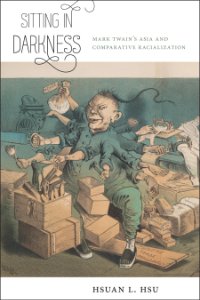
Sitting in Darkness: Mark Twain's Asia and Comparative Racialization

By Hsuan L. Hsu

Perhaps the most popular of all canonical American authors, Mark Twain is famous for creating works that satirize American formations of race and empire. While many scholars have explored Twain’s work in African Americanist contexts, his writing on Asia and Asian Americans remains largely in the shadows. In Sitting in Darkness, Hsuan Hsu examines Twain’s career-long archive of writings about United States relations with China and the Philippines. Comparing Twain’s early writings about Chinese immigrants in California and Nevada with his later fictions of slavery and anti-imperialist essays, he demonstrates that Twain’s ideas about race were not limited to white and black, but profoundly comparative as he carefully crafted assessments of racialization that drew connections between groups, including African Americans, Chinese immigrants, and a range of colonial populations. Drawing on recent legal scholarship, comparative ethnic studies, and transnational and American studies, Sitting in Darkness engages Twain’s best-known novels such as Tom Sawyer, Huckleberry Finn, and A Connecticut Yankee in King Arthur’s Court, as well as his lesser-known Chinese and trans-Pacific inflected writings, such as the allegorical tale “A Fable of the Yellow Terror” and the yellow face play Ah Sin. Sitting in Darkness reveals how within intersectional contexts of Chinese Exclusion and Jim Crow, these writings registered fluctuating connections between immigration policy, imperialist ventures, and racism.

New York: NYU Press.2015.

Murdering Masculinities: Fantasies of Gender and Violence in the American Crime Novel

by Gregory Forter

Though American crime novels are often derided for containing misogynistic attitudes and limiting ideas of masculinity, Greg Forter maintains that they are instead psychologically complex and sophisticated works that demand closer attention. Eschewing the synthetic methodologies of earlier work on crime fiction, Murdering Masculinities argues that the crime novel does not provide a consolidated and stable notion of masculinity. Rather, it demands that male readers take responsibility for the desires they project on to these novels.
Forter examines the narrative strategies of five novels--Hammett's The Glass Key, Cain's Serenade, Faulkner's Sanctuary, Thompson's Pop. 1280, and Himes's Blind Man with a Pistol--in conjunction with their treatment of bodily metaphors of smell, vision, and voice. In the process, Forter unearths a "generic unconscious" that reveals things Freud both discovered and sought to repress.

UA. Open. New York; London: NYU Press, 2000. 278p.

Old Melbourne Memories

By Rolf Boldrewood

"Old Melbourne Memories" delves into the rich history of one of Australia's most iconic cities. Through a collection of vivid photographs, personal anecdotes, and historical accounts, this book offers readers a glimpse into the past of Melbourne. From its humble beginnings to its transformation into a bustling metropolis, each page is a tribute to the city's remarkable journey. Whether you are a history enthusiast or simply curious about Melbourne's past, this book is a captivating exploration of a bygone era that will resonate with readers of all backgrounds.

Robertson, 1884, 182 pages

A Crooked Stick or Pollie's Probation

By Rolf Boldrewood

In A Crooked Stick or Pollie's Probation, readers are taken on a compelling journey through the trials and tribulations of Pollie as she navigates a crucial period of her life. Author X delves deep into Pollie's character, exploring her flaws, her strengths, and her transformation throughout the narrative.

Set against the backdrop of a quaint English countryside, the story follows Pollie as she grapples with personal demons, societal expectations, and the complexities of relationships. With vivid descriptions and insightful prose, Author X crafts a rich tapestry of emotions and experiences that will resonate with readers of all backgrounds.

Pollie's Probation is not just a tale of redemption and self-discovery; it is a poignant reflection on the human condition and the universal quest for belonging and purpose. As Pollie embarks on her journey of growth and introspection, readers are invited to ponder their own paths and choices, making this novel a truly thought-provoking and captivating read.

Macmillan and Company, 1895, 306 pages

A Sydney Side Saxon

By Rolf Boldrewood

"A Sydney Side Saxon" is a captivating tale that delves into the complexities of identity, heritage, and belonging. Set against the backdrop of multicultural Sydney, the story follows the protagonist as she navigates the challenges of straddling two worlds—the traditional expectations of her Anglo-Saxon lineage and the vibrant diversity of her Australian upbringing. As she learns to embrace her heritage while forging her own path, readers are taken on a poignant journey of self-discovery and acceptance. With richly drawn characters and evocative storytelling, this novel is a compelling exploration of cultural fusion and the universal quest for understanding one's place in the world.

Heinemann and Balestier, 1891, 96 pages

LOCKED ON

MAY CONTAIN MARKUP

TOM CLANCY WITH Mark Greaney

Privately training with special forces, he’s honing his combat skills to continue his work within the Campus, hunting down and eliminating terrorists wherever he can—even as Jack Ryan Sr. campaigns to become President of the United States again.
 
But what neither father nor son knows is that the political and personal have just become equally dangerous. A devout enemy of Jack Sr. launches a privately-funded vendetta to discredit him and connect him to a mysterious killing in his longtime ally John Clark’s past. All they have to do is catch him.
 
With Clark on the run, it’s up to Jack Jr. to stop a growing threat emerging in the Middle East, where a corrupt Pakistani general has entered into a deadly pact with a fanatical terrorist to procure four nuclear warheads they can use to blackmail any world power into submission—or face annihilation.

London. New York. MICHAEL JOSEPH, an imprint of PENGUIN BOOKS. 2011. 882p.

VELOCITY WEAPON

MAY CONTAIN MARKUP

MEGAN O’KEEFE

Sanda and Biran Greeve were siblings destined for greatness. A high-flying sergeant, Sanda has the skills to take down any enemy combatant. Biran is a savvy politician who aims to use his new political position to prevent conflict from escalating to total destruction.

However, on a routine maneuver, Sanda loses consciousness when her gunship is blown out of the sky. Instead of finding herself in friendly hands, she awakens 230 years later on a deserted enemy warship controlled by an AI who calls himself Bero. The war is lost. The star system is dead. Ada Prime and its rival Icarion have wiped each other from the universe.

Now, separated by time and space, Sanda and Biran must fight to put things right.

LONDON. LITTLE BROWN. 2010. 537p.

STRANGE HIGHWAYS

MAY CONTAIN MARKUP

Dean Koontz

In the stunning title story 'Strange Highways', a failed author returns to his hometown after many years to attend his father's funeral, only to find himself suddenly and inexplicably thrust back through time to relive a traumatic event from his past.

One rain-swept Sunday night when he was twenty years old, on his way back to college after a weekend with his family, Joey Shannon took the wrong highway - and from that moment, nothing ever went right for him again. Now, exactly twenty years later, on another rain-swept night, Joey finds himself at the same crossroads, looking down the road never taken. Which is odd. Because that road no longer exists. A superhighway replaced it nearly twenty years ago, and the old state route - which had crossed a web of perpetually burning, abandoned coal mines - was condemned as too dangerous and was torn up. But now the highway is exactly as it was on that long-ago night, and when Joey turns on to it, he begins an eerie, terrifying journey toward a truth so dark and stunning that it will change everything he believes about himself, his past, and the nature of life.

LONDON. HEADLINE BOOKS. 1995. 445p.

SILENT HONOUR

MAY CONTAIN MARKUP

Danielle Steel

Danielle Steel's 38th novel creates a powerful, moving portrayal of families divided, lives shattered, and a nation torn apart by prejudice during a shameful period in recent American history. On February 19, 1942, President Roosevelt signed Executive Order 9066, giving the military the power to remove Japanese-Americans from their communities at will. Silent Honor tells of Masao Takashimaya and his family, as they fight to stay alive amid the drama of life and death in the internment camp at Tule Lake.

Doubleday. Australia. 1996. 342p.

Run for your Life

MAY CONTAIN MARKUP

By James Patterson & Michael Ledwidge

A calculating killer who calls himself The Teacher is taking on New York City, killing the powerful and the arrogant. His message is clear: remember your manners or suffer the consequences! For some, it seems that the rich are finally getting what they deserve. For New York's elite, it is a call to terror.
Only one man can tackle such a high-profile case: Detective Mike Bennett. As time ticks down and his children fall ill, he has only hours to save New York from the greatest disaster in its history. From the world's #1 writer, discover an electrifying story of action, thrills, and heart-stopping suspense.

London. Random House. 2009. 398p.

Road Rage

MAY CONTAIN MARKUP

By Ruth Rendell

A bypass is planned in Kingsmarkham, but before the protestors make their presence felt, the badly decomposed body of a young woman is discovered. Burden thinks he knows the identity of the murderer, but Wexford is not convinced.

London. Random House. 1997. 389p.

BLIND FURY

MAY CONTAIN MARKUP

Linda La Plante

When the body of a young woman is discovered close to a highway service station, Detective Inspector Anna Travis is brought on to the team of investigators by her former lover and boss, Detective Chief Superintendent Langton. As more evidence is uncovered, the team realizes that they are contending with a triple murder investigation—and no suspect.

But then a murderer Anna helped arrest years ago makes contact from prison. Cameron Welsh insists that he can help track down the killer, but he will divulge his secrets only to Anna herself. Does he really have an insight into another criminal’s mind, or is he merely intent on getting into hers?

The team soon realizes that they are dealing with a killer whose deviousness has enabled him to commit horrific crimes, yet remain undetected for years. As the case draws to a close, Welsh’s obsession for Anna fuels a terrifying rage that will have disastrous consequences for Anna, who finds herself staring into the face of a desperate personal tragedy.

London. by Simon & Schuster. 2011. 490p.