Open Access Publisher and Free Library
Fiction+Mediajpg.jpg

FICTION and MEDIA

CRIME AND MEDIA — TWO PEAS IN A POD

Strange Case of Dr. Jekyll and Mr. Hyde: The Works of Robert Louis Stevenson Vol. V.

By R. L. Stevenson. Edited by Colin Heston

"Strange Case of Dr. Jekyll and Mr. Hyde" is a novella by Robert Louis Stevenson, first published in 1886. The story explores the duality of human nature through the character of Dr. Henry Jekyll, a respected scientist who creates a potion that transforms him into the sinister and violent Mr. Edward Hyde. As Hyde, Jekyll indulges in immoral acts without fear of social repercussions. The narrative delves into themes of identity, morality, and the struggle between good and evil within the human soul. The novella is renowned for its suspenseful and gothic atmosphere, as well as its profound psychological insights.
In addition to Jekyll and Hyde, this volume features a mix of Stevenson’s essays, short stories, and other literary works. The Swanston Edition iis known for its comprehensive and authoritative compilation of Stevenson's oeuvre, providing readers with a deep dive into his diverse literary contributions. Additional stories and writings in this volume include:.
Thrawn Janet. A short story, first published in 1881. Set in a small Scottish village, the tale revolves around the mysterious and eerie events surrounding Janet, an old woman believed to be a witch. The story is narrated by the local minister, who recounts Janet's unsettling behavior and the supernatural occurrences that follow her arrival. The narrative is steeped in gothic elements and explores themes of superstition, fear, and the clash between rationality and the supernatural.
More New Arabian Nights, The Dynamiter. A collection of linked short stories co-written by Robert Louis Stevenson and his wife, Fanny Van de Grift Stevenson. Published in 1885, the stories are set in London and revolve around the adventures of various characters entangled in plots involving dynamite and political intrigue. The collection is a sequel to Stevenson's earlier work "New Arabian Nights" and continues to employ a similar structure of interconnected tales. Themes of adventure, mystery, and social commentary are prevalent throughout the stories.
This volume has been carefully edited and redesigned by Colin Heston, renowned novelist and story writer, to make the book more comprehensible to the present-day reader.

Read-Me.Org Inc. NY-Phila.-Australia. 2025. 193p.

The New Arabian Nights: Vol.4. Works of R;L;S.

By Robert Louis Stevenson. Edited by Colin Heston

"The New Arabian Nights" by Robert Louis Stevenson is a captivating collection of short stories that showcases his talent for blending adventure, mystery, and humor. Volume 4 of his works includes these tales, which are inspired by the classic "Arabian Nights" but set in contemporary Europe.

The Suicide Club: The collection opens with "The Suicide Club," a trilogy of stories that revolve around Prince Florizel of Bohemia and his loyal companion, Colonel Geraldine. They stumble upon a secret society where members gamble with their lives, seeking an escape from their troubles through death. The stories are filled with suspense, intrigue, and Stevenson's signature wit, as the prince and the colonel navigate dangerous situations to uncover the club's dark secrets.

The Rajah's Diamond: Another notable story is "The Rajah's Diamond," which is divided into four parts. It follows the adventures of a priceless diamond and the various characters who come into possession of it. The diamond's journey leads to a series of thrilling and unexpected events, showcasing Stevenson's ability to weave complex plots and create memorable characters.

Other Stories: The volume also includes other engaging tales such as "The Pavilion on the Links," a story of love, betrayal, and revenge set against the backdrop of a remote Scottish coast, and "A Lodging for the Night," which features the infamous French poet François Villon and his escapades in medieval Paris.

"The New Arabian Nights" is a testament to Stevenson's versatility as a writer. Each story is rich with vivid descriptions, dynamic characters, and a blend of humor and suspense. Stevenson's ability to transport readers to different settings and immerse them in the adventures of his characters makes this collection a delightful and compelling read. Volume 4 of his works highlights Stevenson's skill in crafting engaging narratives that continue to captivate readers with their originality and charm.

Australia. Read-Me.Org. Inc. 2025. 197p.

The Body Snatcher

By R.L. Stevenson. Edited by Colin Heston

Volume 3 of the works of Robert Louis Stevenson is a fascinating collection that showcases his versatility as a writer. This volume includes the chilling short story "The Body Snatcher" and the insightful essays in "Familiar Studies of Men and Books."

"The Body Snatcher" is a macabre tale that delves into the dark world of grave robbing and medical ethics. Set in 19th-century Scotland, the story follows Fettes, a medical student, and his involvement with the unscrupulous Dr. Wolfe Macfarlane. The duo engages in the illegal practice of body snatching to supply cadavers for anatomical study. Stevenson's narrative is rich with suspense and horror, exploring themes of guilt, morality, and the consequences of one's actions. The story's climax is particularly haunting, leaving readers with a lingering sense of dread and contemplation about the darker aspects of human nature.

"Familiar Studies of Men and Books" is a collection of essays in which Stevenson examines the lives and works of various literary figures and thinkers. Through these essays, Stevenson offers his reflections on the personalities and contributions of individuals such as Victor Hugo, Robert Burns, and Walt Whitman. His writing is characterized by a blend of critical analysis and personal insight, revealing his deep appreciation for literature and the human condition. Stevenson’s essays are not merely biographical; they are thoughtful explorations of the impact these figures had on their respective fields and on Stevenson himself. The essays are marked by Stevenson's eloquent prose and his ability to connect with readers on an intellectual and emotional level.

Overall. Volume 3 of Stevenson's works is a testament to his literary prowess, combining the eerie and gripping narrative of "The Body Snatcher" with the reflective and scholarly essays in "Familiar Studies of Men and Books." This volume highlights Stevenson's ability to traverse different genres and themes, offering readers a rich and varied reading experience. Through his storytelling and essays, Stevenson continues to captivate and provoke thought, making this collection a valuable addition to his oeuvre.

Read-Me.Org. Australia. 2025. 185p.

Plain Living: A Bush Idyll

By Rolf Boldrewood

Plain Living: A Bush Idyll is a captivating tale that delves into the simple yet profound world of rural life. Written in exquisite detail, the novel follows the journey of Sarah, a young woman who leaves the hustle and bustle of the city to seek solace in the peaceful countryside. As she immerses herself in the beauty of nature and the warmth of community, Sarah discovers a deeper connection to the land and its inhabitants.

Through lyrical prose and vivid descriptions, the author paints a rich portrait of life in the bush, intertwining themes of love, loss, and self-discovery. Plain Living invites readers to slow down, appreciate the small moments, and find joy in the quietude of rural living. A poignant and heartfelt narrative, this book is a celebration of simple pleasures and the enduring spirit of the human heart.

Macmillan, 1898, 316 pages

Bethel and Aurora: An Experiment in Communism as Practical Christianity

By Robert J. Hendricks

A FEW families near the then struggling town of Pittsburgh, Pennsylvania, in 1844 went to the wilderness of Missouri and began building Bethel, founded upon the principle of property and labor in common. They adopted a constitution. They brought into community use money, livestock, machinery, implements and tools to the value of $30,802.75. Most came empty handed. They held to- gether under their original leader slightly more than thirty-three years. In that time they built four towns; they sent five covered wagon companies across the plains, and about a hundred members by way of Panama. They paid back in money the original amounts contributed, and they had left to divide among themselves about 23,500 acres of land and the mills, shops, stores and other personal property of three towns, worth at present day prices about three million dollars. They paid their taxes

The Press of the Pioneers: New York, 1933, 353p.

Characters of the Inquisition

By William Thomas Walsh

This book is on the Inquisition, particularly the Spanish Inquisition as opposed to the Roman Inquisition in the years following the Spanish Reconquista. Walsh delves into the Inquisition, its practice, purpose, history and personalities. The Inquisition was not a bloodthirsty BDSM fest gone wild. It was a reasoned response to infiltration of the Catholic Church by enemies of the Christian Faith who pretended to be Christians in order to pervert worship, doctrine and weaken Christendom. Anyone wishing to understand the Inquisition would to well to read Characters and learn of the heroes of the Faith, Cardinal Ximenes, Torquemada, and others who fought the good fight for Jesus Christ and his Church, After reading Characters, you will never look at the Inquisition in the same way

P. J. KENEDY & SONS: PUBLISHERS NEW YORK, 2016, 312p.

Americanized Socialism: A Yankee View of Capitalism'

By James MacKaye

Socialists differ about the philosophy and the tactics of socialism, but they agree about its program. Adherence to the program therefore is the test of a socialist. Morris Hillquit, probably the best authority on orthodox socialism in America, is fully in agreement with this position, as shown by the following quotation from an article in the Metropolitan Magazine for July, 1912:

Boni and Liverright, 1918, 199p.

Devils, Demons, Death and Damnation

By Ernst and Johanna Lehner

"Throughout history, artists have grappled with the problem of depicting clearly and forcefully the principles of evil and suffering in human existence." With this view, the Lehners have collected 214 representations, symbols, and manuscript pages of devils and death from Egyptian times to 1913. Reproductions from Dürer, Holbein, Cranach, Rembrandt and many other lesser known or unknown artists illustrate the fascinating history. The 15th, 16th, and 17th centuries are stressed.

THE DOVER PICTORIAL ARCHIVES SERIES, 1971, 191p.

Man's Fate

By Andre Malraux

Both as an artist and as a man, Andre Malraux has iden- tified himself with the revolutionary forces of our time. His novels, now internationally famous, are integrated in a deliberate pattern—the epic of revolution. The ever- recurring motif of his works is that heroism and courage ennoble man and are the means by which he will ulti- mately conquer hatred and achieve beauty and peace. Born in Paris on November 3, 1901, Malraux went to Indo-China in 1921 and from there made an archeological expedition to Cambodia and Siam. In the 1925-1927 upris- ing in China he became Commissioner of Propaganda for the revolutionary government of the South. A member of the Committee of Twelve, he was active in the Canton insurrection and participated in hand-to-hand fighting. His novel of revolutionary China, Man's Fate, won the Goncourt Prize. In t933, he flew across the Great Arabian Desert and announced the discovery of the legendary city of Sheba. Since his return to France, Malraux has allied himself with the cause of the extreme Left. His last novel, Days of Wrath, turns to the European scene and deals with the terror in Nazi Germany.

Random House, 1934, 357p.

Imperial Twilight: The Story of Karl and Zita of Hungary

By Bertita Harding

*Imperial Twilight* by Bertita Harding is a historical biography that delves into the decline of the Austro - Hungarian Empire, focusing on the personal lives and political struggles of Emperor Franz Joseph and Empress Elisabeth ("Sisi"). Harding paints a vivid portrait of the Habsburg d ynasty during its final years, capturing the grandeur and turmoil of an empire on the brink of collapse. With a rich narrative style, the book explores court intrigues, shifting alliances, and the personal tragedies that shaped the fate of one of Europe's most powerful ruling families. Harding's storytelling brings history to life, offering readers both a compelling biography and an insightful study of the forces that led to the fall of the empire.

The Bobbs-Merrill Company, 2007, 366 pages

For the Rights of Men

By Carl Carmer

We Americans are proud that the Pilgrim Fathers and the Puritans who soon followed them dared the Atlantic for the chance to worship God in their own way. Every Fourth of July, every Decoration Day, every Pioneer Picnic Day, and on the birthdays of Washington and Lincoln, our speechmakers repeat the story with a good deal of eloquent embroidery. Usually they try to give us the idea that we have had freedom of worship and the other freedoms that go with it— freedom of speech, freedom of the press, freedom of assembly— ever since. We are willing to cheer but we are not fooled. When we get down to brass tacks we know that the Pilgrims were human and likely at times to get excited and forget the very things they stood for—just like many of us.

Hinds, Hayden & Eldredge, 1947, 69 pages

Fool's Gold

By “The Senator from Alaska”

THE glittering particles of worthless mica found in the sands of the many streams in the West and Alaska deceived innumerable untrained prospectors who had gone out, full of hope and ambition, to locate Nature’s hidden stores of real gold. Posting their location notices and believing that they were rich beyond even the fondest dreams of avarice, they hastened to the nearest mining camp there to celebrate their good fortune in days and nights of riotous spending. When they had exhausted their available cash and much of the credit they had gained by telling of their discovery, they retired to sleep off the debauch. Upon awakening, they were informed by some old-timer that what they had found was nothing but worthless fools gold.

MADISON & MARSHALL, INC. 1936, 242p.

Farces: The Dictator, The Galloper

By Richard Harding Davis

Farces: The Dictator; The Galloper; Miss Civilization is a collection of three short plays written by American author Richard Harding Davis. Each play is a comedic farce that satirizes different aspects of society.The first play, The Dictator, is set in a fictional South American country and follows the bumbling attempts of an American journalist to overthrow the corrupt dictator and install a democratic government. The play pokes fun at American imperialism and the idea of spreading democracy through force.The second play, The Galloper, is set in a military camp during the Spanish-American War and follows the misadventures of a young officer who is more interested in impressing his girlfriend than in fighting the enemy. The play satirizes the military and the idea of war as a romantic adventure.The third play, Miss Civilization, is set in a small town in the American West and follows the arrival of a sophisticated New York socialite who tries to bring culture and refinement to the rough and tumble frontier. The play pokes fun at the idea of cultural superiority and the clash of cultures.Overall, Farces: The Dictator; The Galloper; Miss Civilization is a humorous and lighthearted collection that provides a snapshot of American society and culture at the turn of the 20th century.This scarce antiquarian book is a facsimile reprint of the old original and may contain some imperfections such as library marks and notations. Because we believe this work is culturally important, we have made it available as part of our commitment for protecting, preserving, and promoting the world's literature in affordable, high quality, modern editions, that are true to their original work.

CHARLES SCRIBNER'S SONS: NEW YORK 1906, 357p.

Gallantry: Ten 18th Century Tales with an Afterword

By James Branch Cabell. Introduction by Colin Heston.

This book offers a witty and insightful examination of love, honor, and human imperfection. Through his richly drawn characters and elegant prose, he creates a collection of entertaining and thought-provoking stories. The themes of romantic love and societal expectations are explored with humor and irony, making "Gallantry" a timeless work that continues to resonate with readers today. His writing stands out for its sophisticated prose, satirical edge, and intricate exploration of themes like love, honor, and human folly. His style is a unique blend of fantasy and social critique, making his works both entertaining and thought-provoking. Gallantry is a fascinating collection of comedic narratives that delve into romantic entanglements and societal interplay, set against a backdrop reminiscent of the 18th century. Gallantry is part of Cabell's larger body of work that often blends fantasy, satire, and historical fiction. The book is structured as a series of interconnected stories, each exploring different facets of love, honor, and human imperfection. Cabell's writing is known for its wit, irony, and elaborate prose, which are all evident in this collection.

Original Publication Date: 1922. Publisher: Robert M. McBride & Company. This version Read-Me.Org Inc 2025. 237p.

Tom and Maggie Tulliver

By George Eliot (author) and Colin Heston (AI assisted editor)

This book is a substory of Tom and Maggie Tulliver featured in Eliot's "The Mill on the Floss". (1860) Tom and Maggie are the children of Mr. and Mrs. Tulliver, who own and operate Dorlcote Mill near the fictional town of St. Ogg's. From an early age, the siblings exhibit starkly different temperaments and aspirations. Tom, the elder of the two, is pragmatic, responsible, and somewhat rigid in his moral outlook. He possesses a strong sense of duty and loyalty to his family but is also unforgiving and often harsh in his judgments. He takes after his father in his belief in tradition and financial security, and he grows into a young man deeply committed to restoring the family's honor after they suffer economic ruin.

Maggie, in contrast, is deeply emotional, imaginative, and intellectually curious. She is an ardent reader with a keen mind and an inclination toward philosophical reflection. However, her passionate nature and nonconformist tendencies put her at odds with the rigid expectations of her time, particularly regarding women's roles in society. Throughout the novel, Maggie struggles with her desire for personal fulfillment while also yearning for familial love and acceptance. Her deep affection for her brother is a defining aspect of her character, yet it is also a source of great pain, as Tom's strict moral code and inability to understand her inner struggles create tension and estrangement between them. George Eliot's portrayal of Tom and Maggie Tulliver is remarkable for its depth and psychological complexity. Through them, she explores the difficulties of familial duty, the limitations imposed by rigid social structures, and the yearning for personal freedom. Their story, filled with moments of tenderness, misunderstanding, and ultimate reconciliation, continues to resonate with readers, making *The Mill on the Floss* one of Eliot's most enduring and emotionally powerful works.

Read-Me.Org Inc. 2015. 80p.

Romola

By George Eliot. Introduction by Colin Heston

Step into the rich tapestry of Renaissance Florence with George Eliot's Romola, a novel that masterfully intertwines politics, religion, philosophy, and personal transformation. Originally published as a serial in The Cornhill Magazine from July 1862 to August 1863, and later in three volumes by Smith, Elder & Co., Romola stands as one of Eliot's most ambitious and intellectually rich works..

In this special edition, Colin Heston provides a compelling introduction that sets the stage for Eliot's intricate narrative. Heston's introduction delves into the historical and cultural backdrop of late 15th-century Florence, a city undergoing dramatic transformation following the death of Lorenzo de’ Medici and the rise of the Dominican friar Girolamo Savonarola. Heston highlights how Eliot's profound historical research and deep psychological insight bring to life the ideological conflicts and moral questions faced by the protagonists.

Follow the journey of Romola de’ Bardi, the daughter of a blind scholar, as she navigates personal disillusionment and societal upheaval. Raised in an environment that reveres knowledge and classical learning, Romola's path becomes entangled with Tito Melema, a charming but opportunistic Greek scholar. As Romola evolves from a passive intellectual companion to an active agent of change, she becomes a symbol of ethical steadfastness and selfless service.

Eliot's Romola engages with themes of reform, idealism, and the struggles of the human soul against the tides of history. Through Savonarola's rise and fall, Eliot examines the dangers and possibilities of ideological purity, raising questions about the balance between faith, reason, and pragmatism. The novel suggests that while individuals are often caught within the larger movements of history, personal choices and moral convictions can shape the course of one's life. Reflecting Eliot's engagement with historical materialism, moral idealism, and the complexities of human character, Romola is deeply philosophical. Heston's introduction underscores the novel's ambitious scope, feminist undertones, and philosophical depth, making it a significant achievement in historical fiction.

For those willing to immerse themselves in its complex narrative, Romola offers a rewarding exploration of human character set against one of the most fascinating periods of European history. This edition, enriched by Colin Heston's insightful introduction, invites readers to experience Eliot's remarkable ability to illuminate the past while grappling with timeless questions of morality, identity, and social responsibility.

Read-Me.Org Inc. 2025. 411p.

Silas Marner: The Weaver of Raveloe

By George Eliot. Introduction by Colin Heston.

Discover the timeless classic Silas Marner by George Eliot, a heartwarming tale of redemption and the transformative power of love. Follow the journey of Silas Marner, a reclusive weaver whose life is turned upside down when he loses his treasured gold and finds an unexpected treasure in a golden-haired child named Eppie. Set in the quaint village of Raveloe, this novel beautifully explores themes of community, isolation, and the true meaning of wealth and happiness. With richly developed characters and a compelling narrative, Silas Marner is a story that will captivate and inspire readers of all ages.

First published in 1861 by William Blackwood and Sons. This edition Read-Me.Org Inc. 2025.149p.

Adventures Of An Outlaw: Abridged, simplified and readable

By Colin Heston (Author), James Tucker (Author), Ralph Rashleigh (Contributor)

This compelling narrative offers a vivid portrayal of the convict experience in early colonial Australia. The book, first published in 1929, is attributed to James Tucker, who wrote under the pseudonym Ralph Rashleigh. This introduction by Colin Heston aims to provide an overview of the book’s themes, historical context, and its significance in Australian literature. The story is set during a tumultuous period in Australian history when the continent was used as a penal colony by the British Empire. From 1788 to 1868, over 160,000 convicts were transported to Australia, fundamentally shaping the social and cultural landscape of the emerging nation. “Adventures of an Outlaw” provides a firsthand account of this era, detailing the harsh realities faced by convicts and the brutal conditions of the penal system. James Tucker, the presumed author, was himself a convict transported to Australia for forgery. His experiences and observations lend authenticity to the narrative, making it a valuable historical document. The book offers insights into the daily lives of convicts, their interactions with authorities, and their struggles for survival and dignity in an unforgiving environment. This abridged edition simplifies the narrative and corrects the many quaint spellings and expressions while keeping the essential facts and challenging experiences that challenged Rasjleigh's resilience and determination to find freedom.

First published in 1929 by Jonathan Cape and Harrison Smith1. The memoir, attributed to the pseudonym Ralph Rashleigh, is actually the work of James Rosenberg Tucker. This abridged edition Read-Me.Org Inc. 2025. 105p.

Queer Judson

By Joseph Lincoln

Set against the picturesque backdrop of Cape Cod, this enchanting novel introduces you to Judson Green, a lovable and eccentric character whose antics and adventures are as unpredictable as the tides. Judson, with his peculiar habits and endearing personality, becomes the heart and soul of his small coastal town. His interactions with the townsfolk, each with their own unique quirks, create a tapestry of humor, warmth, and genuine human connection. As you turn the pages, you'll find yourself laughing at Judson's comical escapades, feeling the warmth of his friendships, and rooting for him as he faces life's challenges with unwavering optimism. The story beautifully captures the essence of community spirit, the importance of kindness, and the simple joys that make life meaningful.

"Queer Judson" is more than just a tale of one man's journey; it's a celebration of the human spirit, filled with rich descriptions of Cape Cod's scenic beauty and the vibrant lives of its inhabitants. This timeless classic is perfect for readers who cherish heartwarming stories and unforgettable characters.

First published in 1925 by D. Appleton and Company.. This edition Read-Me.Org Inc. 2025.

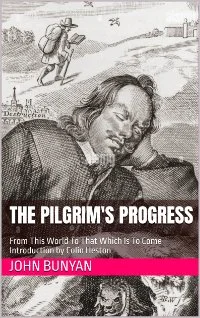
Pilgrim's Progress: From This World To That Which Is To Come

By John Bunyan. Introduction by Colin Heston Paperback

The Pilgrim’s Progress (1678) by John Bunyan is a Christian allegory that narrates the spiritual journey of a man named Christian as he seeks salvation. Leaving his home in the City of Destruction, he embarks on a perilous pilgrimage to the Celestial City, guided by faith and the teachings of the Bible. Along the way, he encounters various symbolic figures and places, such as Evangelist, who sets him on the right path; the Slough of Despond, representing despair; Vanity Fair, a place of worldly temptation; and Giant Despair, who imprisons him in Doubting Castle. The novel, written in accessible yet vivid prose, reflects Bunyan’s Puritan theology and explores themes of sin, redemption, and perseverance. Though primarily a religious work, it is also a compelling adventure story that has captivated readers for centuries. While some view its moral instruction as rigid, it remains one of the most influential and widely read books in English literature. This version contains an introduction by Colin Heston, who assesses its effect on subsequent modern-day authors, especially its religious significance, allegorical style, and theological critiques.

Read-Me.Org Inc. 2025. 133p.