
Open Access Publisher and Free Library
CRIME+CRIMINOLOGY.jpeg

CRIME

Violent-Non-Violent-Cyber-Global-Organized-Environmental-Policing-Crime Prevention-Victimization

TAKING A LIFE. With life sentences, the State of Alabama controls thousands of rehabilitated individuals long past the point of danger, until death. But why?

By Alabama Appleseed

One of Five Incarcerated Alabamians is Serving a Life Sentence

When the Alabama Department of Corrections begins filling up the most expensive prison ever built in the United States, a sprawling $1.2 billion complex in Elmore County, the prison will not come close to housing only the prisoners serving life sentences. This mega prison will have a capacity of 4,000. Yet, more than 6,520 individuals are serving sentences of life with parole, life without parole, or virtual life. Lifers alone could fill the new prison to overflowing, and approximately 15,500 people would remain housed in the violent, dilapidated, understaffed prisons that have the state spending tens of millions in legal fees fighting multiple federal lawsuits while six years of unconstitutional brutality persists.

Alabama relies on long sentences at a higher rate than most of the United States with nearly one in five prisoners serving life sentences. Nationwide, the average is one in seven. A growing body of research shows that incarcerating people for these kinds of extreme sentences is generally unnecessary for public safety because it ignores the irrefutable truth that most people age out of criminality.

Incarcerating older people, many of whom are too feeble to do harm, drains resources that could be devoted to crime prevention or solving crimes, yet laws and parole practices in Alabama have failed to adjust accordingly, as this report will show. 
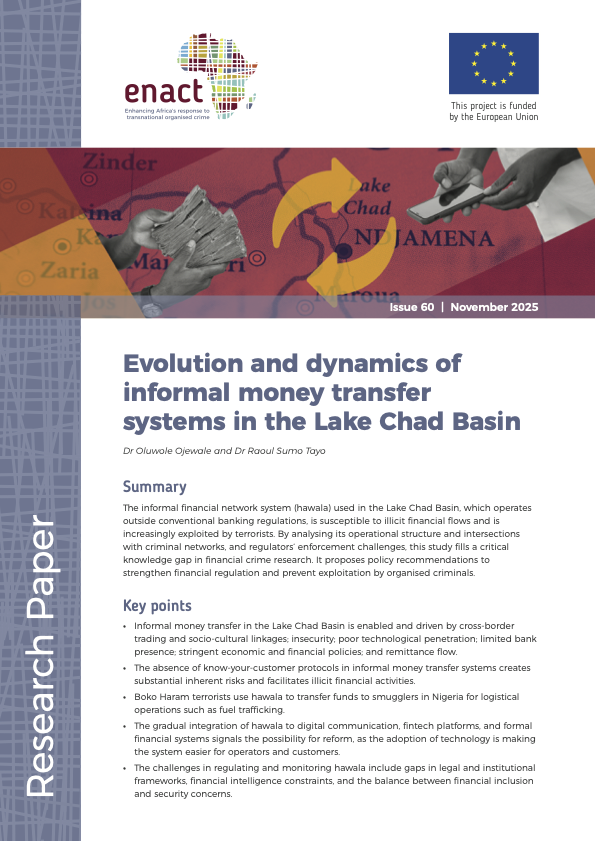
Evolution and Dynamics Of Informal Money Transfer Systems In The Lake Chad Basin

By Oluwole Ojewale and Raoul Sumo Tayo

Informal money transfer systems in the LCB facilitate trade but lack regulation, enabling terrorist financing and illicit flows despite emerging digital integration opportunities. Power for sale: the organised crime infiltration of elections in Africa.

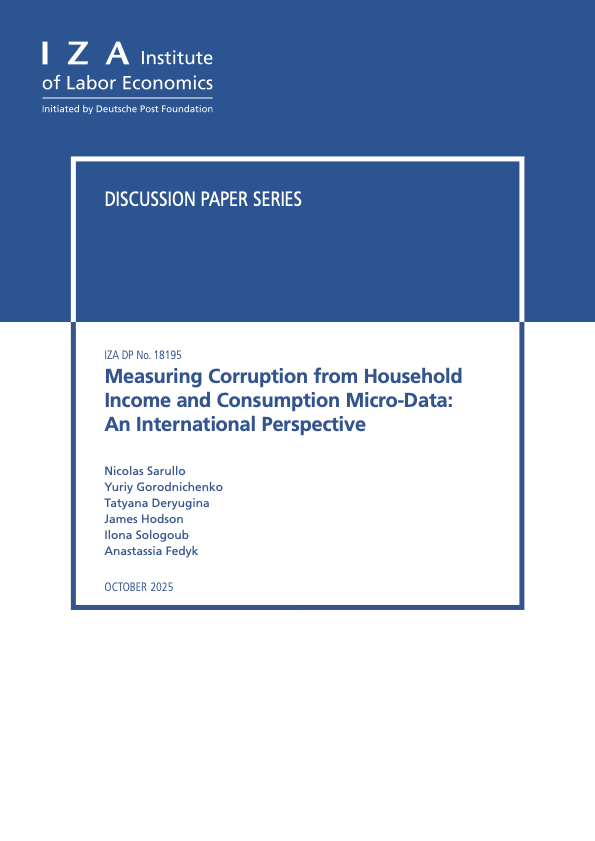
Measuring Corruption from Household Income and Consumption Micro-Data: An International Perspective

By Nicolas Sarullo .Yuriy Gorodnichenko, Tatyana Deryugina,James Hodson ,Ilona Sologoub, Anastassia Fedyk

Using household survey data on expenditures and incomes, we construct an objective measure of corruption in the public sector for a broad spectrum of countries. Specifically, we focus on the consumption-income gap for public sector workers relative to private sector workers to gauge the extent of hidden income (bribes) in the government. After validating our data and documenting properties of the consumption-income gap, we compare our measure with popular corruption perception indices. We find that i) the relationship between our measure and the alternatives is nonlinear; ii) available indices appear to be only weakly (and sometimes “wrongly”) correlated with the consumption income gap at high frequencies; iii) the available indices appear to have a low weight on the relative consumption-income gap in the public sector.

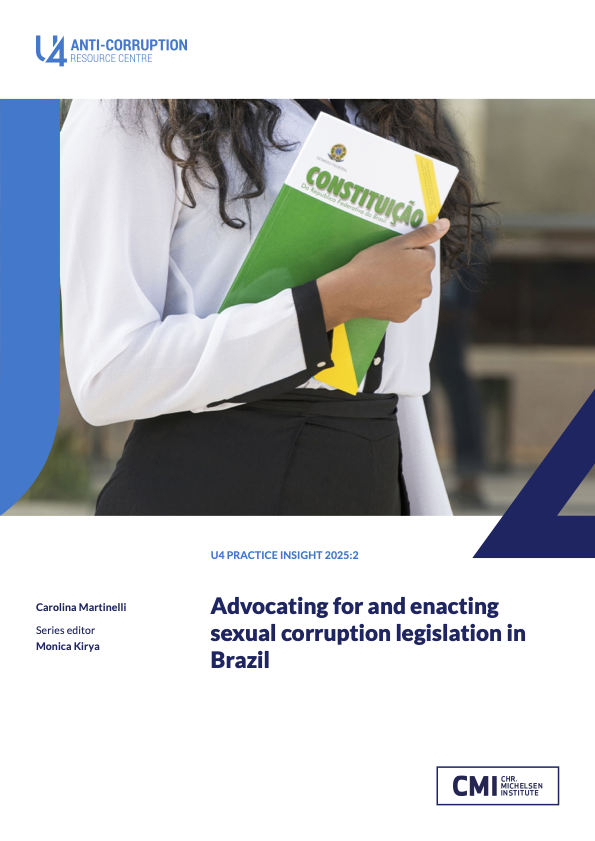
Advocating For And Enacting Sexual Corruption Legislation In Brazil

By Carolina Martinelli

Brazil may join a small but growing number of countries that have already criminalised sexual corruption through specific legal provisions. This legislative effort shows how naming, strategic framing, and cross-sector collaboration can bring invisible gendered abuses into legislative concern. It offers critical lessons on the importance of political sponsorship, data collection, and media visibility for addressing complex, underreported crimes.

Fishing For Security Taking on Illegal Fishing in Latin America

By Daniel Schaeffer

Often viewed through a myopic lens as an environmental issue or one relegated to fisheries authorities, illegal, unreported, and unregulated (IUU) fishing affects all coastal nations in the Western Hemisphere and has national security implications on the United States. A regional problem requires a regional solution and greater cooperation across agencies, private industry, and governments. Actions to address IUU fishing in Latin America have the potential to achieve greater aims of maritime security in the region. The report will frame the problem of IUU fishing by first highlighting its overall impacts globally and regionally. Food security, employment, national revenue, and other illicit activities are discussed. The report concludes with recommendations for interagency and regional coordination.

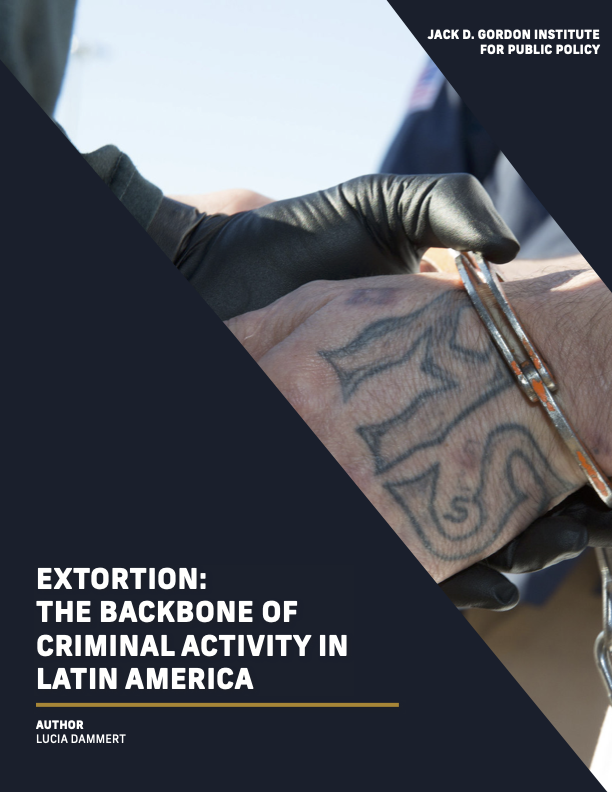
Extortion: The Backbone of Criminal Activity in Latin America

By Lucia Dammert

Extortion is a phenomenon that can be understood from various disciplines, such as economics, criminology, the political sciences, and sociology. Each of these fields of knowledge emphasizes either the system or economic models under which extortionists and victims operate, the short- or long-term relationship sought by establishing simple or complex extortion mechanisms, the political relationship between extortionists and victims, or citizens’ perceptions of the institutional framework, which can serve as a gateway for criminal groups to create ties of protection through extortion. The complexity of extortion, given the different forms it can take and the ease with which it can be confused or linked with other crimes, such as kidnapping or corruption, calls for an open discussion and the establishment of research agendas. This report sheds light on the importance of extortive practices in Latin America. It is based on qualitative research since 2019 that includes 36 interviews of academics, public officials, police, professionals, and victims of extortion in 10 countries,5 along with a review of all official public information and newspapers in five countries during 2019.6 The research also focuses on working groups and reviews official and civil society documents related to extortion as a criminal phenomenon throughout Latin America. The report is part of a long-term research project that focuses on the importance of this criminal activity, its possible links to organized crime organizations, and the policies designed to tackle its impact on businesses and citizens alike.

The report shows that extortive practices are a regionwide trend, albeit with national, specific characteristics. Although it is primarily a non-violent crime, an increasing tendency— specifically linked to practices against women—should make it a priority for the public security agenda. Furthermore, extortion could be depicted as the “perfect crime” since it is hardly reported, let alone investigated. High levels of impunity have allowed for this practice to move into criminal organizations, prisons, and street gangs; also, state officials and even business partners use extortive practices to finance their activities. There is a clear impact on democracy since corruption, fear of crime, and a general sense of freedom from punishment corroborate the idea that there is no rule of law. Efforts toward understanding extortion remain limited and need to take a central role in most national and regional public security policies. 

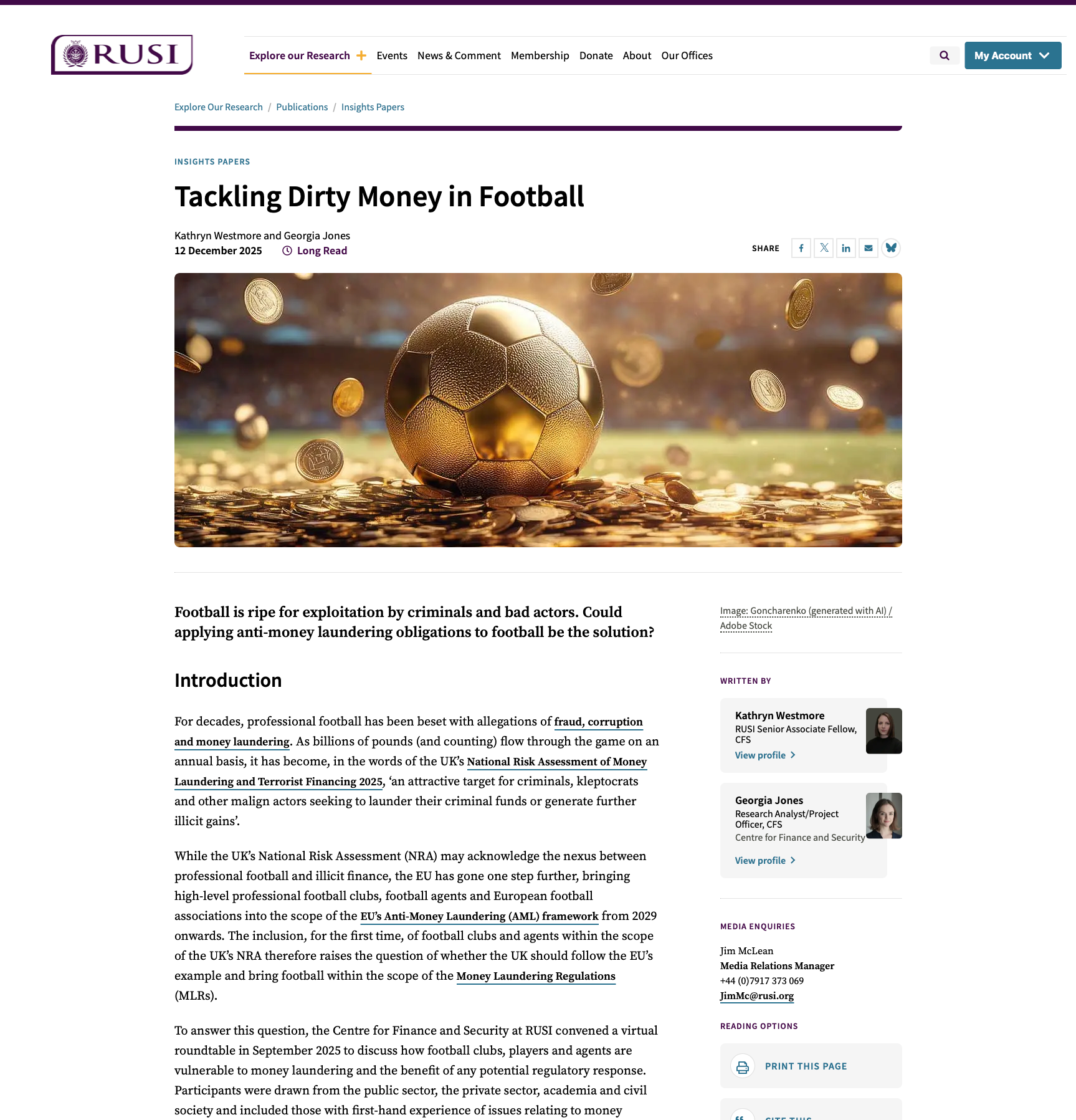
Tackling Dirty Money in Football

By Kathryn Westmore and Georgia Jones

To answer this question, the Centre for Finance and Security at RUSI convened a virtual roundtable in September 2025 to discuss how football clubs, players and agents are vulnerable to money laundering and the benefit of any potential regulatory response. Participants were drawn from the public sector, the private sector, academia and civil society and included those with first-hand experience of issues relating to money laundering, financial crime and compliance within professional sports.

Fighting Organised Crime: Recovering Illicit Assets in Chile

By Pilar Lizana , Maria Nizzero and Carlos Solar

This paper highlights the critical need for Chile to strengthen its asset-recovery frameworks to combat the growing threat of organised crime and money laundering. It provides an in-depth analysis of the structural challenges hindering Chile's ability to trace, seize and recover illicit assets, and situates these findings within the broader Latin American and global security context. The authors identify key obstacles, including limited risk understanding, weak state governance, gaps in cooperation and information sharing and deficiencies in asset recovery systems. The paper offers actionable recommendations to enhance Chile's institutional resilience and contribute to regional and international security efforts.

Key Recommendations

  • Establish a centralised asset-management office to ensure effective administration and preservation of confiscated assets.

  • Invest in training and capacity building to improve risk understanding and investigative capabilities across public and private sectors.

  • Strengthen public–private cooperation to enhance information sharing and risk mitigation strategies.

  • Increase human, financial and technological resources for agencies combating organised crime and recovering assets.

  • Update legislation to include extended confiscation and non-conviction-based confiscation mechanisms, aligning with international standards.

This paper underscores the importance of sustained reforms and international cooperation to disrupt transnational criminal networks and safeguard democratic governance in Chile and beyond.

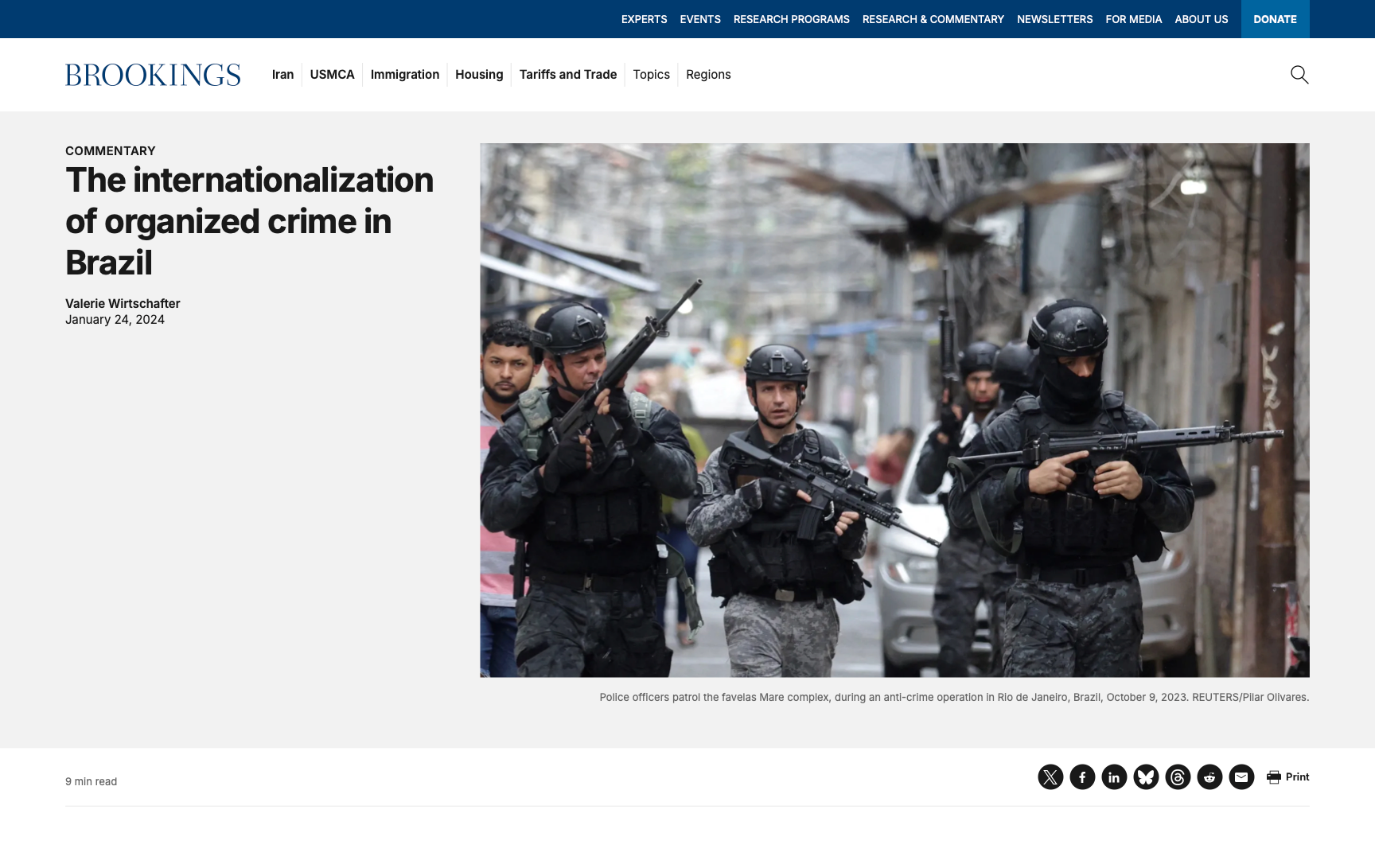
The Internationalization Of Organized Crime In Brazil

By Valerie Wirtschafter

Over the past three decades, the Primeiro Comando da Capital (PCC) has transformed from a prison gang founded in São Paulo into a transnational criminal “leviathan,” with a presence throughout South America, Africa, and Europe. In response to this growing threat, in 2021 the U.S. government cited the PCC as “the most powerful organized crime group in Brazil and among the most powerful in the world.” What can we expect from the PCC moving forward? And how might policymakers stall this international expansion?In the coming year, the PCC will likely continue to vie for dominance in strategic areas of contested control throughout Brazil and look for opportunities to consolidate gains abroad. Confrontation with rival groups, including the Comando Vermelho (CV), born in the Rio de Janeiro prisons, and its allies in areas such as the Amazon, is also likely to continue. This is particularly the case due to the region’s importance for drug smuggling

The New Art Forgers

By Katrina Geddes

The “substantial similarity” between a copyrighted work and an unauthorized derivative has formed the bedrock of copyright infringement jurisprudence since the mid-nineteenth century. Recent technological developments, however, are destabilizing these conceptual foundations. In May, the Copyright Office suggested that the use of copyrighted works to train AI models may constitute infringement even if model outputs are not “substantially similar” to model inputs if they nevertheless “dilute the market” for similar works. One month later, Judge Chhabria of the Northern District of California argued that AI outputs do not have to be “substantially similar” to copyrighted training data in order to be infringing. The plaintiff’s incentives are sufficiently harmed, Judge Chhabria argued, when the market is flooded with “similar enough” AI-generated works.

These developments should be read as early warning signs of a disturbing doctrinal shift from “substantial similarity” to a new and dubious threshold for actionable infringement: “substitutive similarity”, where the substitutability of the defendant’s work, rather than the similarity of protected expression, provides the cause of action. This novel theory of harm, if widely adopted, would impose dangerous restrictions on downstream creativity. Any new work that was “similar enough” to existing works would be treated as potentially infringing, despite the absence of substantially similar expression. This would corrupt what is essentially a question of fact – whether the defendant copied “enough” of the plaintiff’s work to constitute unlawful appropriation – with deontic considerations of the wrongfulness of free-riding.

At the same time, artists are understandably rattled by the speed and scale of AI generation. AI models can produce “new” works in the style of established artists in a matter of seconds, dramatically undercutting the market for their work. AI style mimicry makes it difficult for artists to control their personal brands and for consumers to locate authentic works by their favorite artists. Copyright is responsible for protecting artists’ creative incentives, but its legal tests were not designed to handle the scale of imitation enabled by AI.

This Article offers a way out of this jurisprudential morass. Instead of lowering the burden of proof for infringement, Congress should strengthen the attribution rights of existing creators. Low-protectionists have long advocated for attribution rights as a way of protecting authors’ interests without expanding the scope of their economic entitlements. Proper attribution allows creators to capture the full reputational benefits of their labor without stifling downstream creativity. For example, Congress could enact an AI-specific attribution right that requires the disclosure of copyrighted training data in output metadata. This would mitigate the labor-displacing effects of generative AI by directing consumers to the original creators of a popular style or aesthetic.

Generative AI places copyright jurisprudence at a critical crossroads. Indulging Judge Chhabria’s novel theory of harm would effectively inaugurate a new standard for infringement – “substitutive similarity” – that would stifle not just AI innovation but human creativity more broadly. The stakes for protecting free expression through careful guardianship of longstanding doctrine could not be higher. This Article guides readers through this critical inflection point with new terminology for the jurisprudential lexicon as well as practical proposals for reform.

Undoing Haiti’s Deadly Gang Alliance Latin America & Caribbean

By The International Crisis Group

Born of Port-au-Prince’s most powerful gangs, Viv Ansanm has raised the criminal threat overhanging Haiti’s state and civilians to alarming heights. The gang coalition announced itself to the world by besieging the Haitian capital in early 2024, triggering former Prime Minister Ariel Henry’s resignation. After consolidating its hold on much of the city, Viv Ansanm has expanded into neighbouring departments, tightened its grip on the main roads connecting Port-au-Prince to the rest of the country and mounted attacks on the airport, essentially cutting Haiti off. Gangs’ violent offensives have killed over 16,000 people since 2022. But a rising death toll and diversifying criminal portfolio, now including extortion, piracy and drug trafficking, have not stopped gangs from claiming to represent the country’s downtrodden, especially on social media. UN approval of a new foreign force to combat the gangs could shift the balance of power. But it is vital that plans are in place not just to overpower the gangs but also to persuade them to demobilise. Haitian business and political elites have relied on paramilitary forces to protect their interests since the 1950s dictatorship of Francois Duvalier, or “Papa Doc”. But in the wake of the assassination of President Jovenel Moïse in July 2021, gangs have mutated, evolving from tools in the hands of the most powerful to overlords of Haiti. Two main gang groupings – the G-9, whose most public figure was Jimmy Chérizier, alias Barbecue, and the Gpèp, under Gabriel Jean Pierre, known as “Ti Gabriel” – fought for supremacy after Moïse’s murder. Even as the two faced off, gang leaders discussed whether to strike agreements to scale down the death toll among their members and spare resources. Mediators managed to craft several pacts among local groups to divvy up coveted turf. Late in 2023, reports emerged that the country’s two main gang coalitions had merged into one platform; their first joint offensive began months later. Alongside its violent expansion, Viv Ansanm has sought to transform its public profile from that of a predatory criminal force into that of an ideological crusader. Crime bosses say their mission is to protect the poorest Haitians from rapacious elites and colonial powers that historically have oppressed this black Caribbean nation. Chérizier and other gang leaders have even announced the creation of a new political party, albeit without taking the steps needed to register it formally.While continuing to enrich themselves at the expense of Haitians rich and poor, their message has nevertheless become more overtly political: they appear intent on guaranteeing that their allies are part of the next administration, which should be formed by 7 February 2026 to replace the current transitional government. The concrete result they aspire to is a general amnesty for leaders and members. Haiti and its foreign partners are looking to beef up their ability to respond to the gangs with force. The UN Security Council has approved a new security operation, dubbed the Gang Suppression Force, to replace the Kenya-led Multinational Security Support Mission, which started up in 2024 but has never had the personnel or resources needed to check the gangs. The new force aims to incorporate 5,500 military personnel and expects to draw on reliable funding. Its mandate appears to give it more operational independence and the leeway to adopt more aggressive tactics. But until the force’s deployment, which is expected to commence around April 2026, Haiti’s authorities will have to turn to other methods. A task force, led by Haiti’s prime minister and powered by U.S. private military companies, has already used drones to hit gang members in their urban strongholds, killing over 200 people. Foreign partners are also providing training to the newly reconstituted army. Meanwhile, citizens exhausted by the threat to their neighbourhoods have established self-defence groups, provoking a brutal riposte from the gangs. A well-resourced, properly informed and expertly commanded Gang Suppression Force could help change the balance of force on the ground and push the gangs onto the back foot. Port-au-Prince and its foreign counterparts, however, must take care to mitigate the dangers of civilian casualties and violations of human rights, ensuring that robust accountability systems are in place. Once the force is up and running, the Haitian government should also overcome the coordination failures4 that have plagued previous security campaigns. In particular, the government should appoint members to the National Security Council and ask them to design a strategy that lays out each institution’s role in fighting the gangs. Even so, it remains unlikely that force alone will entirely extricate gangs from the communities they control or sever the nexus with politics that has bedevilled Haiti for over half a century. Though informal negotiations with gangs take place on a regular basis – to gain access to people in need of humanitarian aid or to keep businesses open – many Haitians oppose the idea of formal dialogue with the perpetrators of crimes they consider unforgivable. Government officials have correctly said the Haitian state cannot engage in talks from a position of weakness. But if the new multinational force and revamped Haitian security forces allow the authorities to gain the upper hand and broadcast their armed superiority, state officials should look to use dialogue as a means of convincing the gangs to cut their losses, reduce violence against civilians and, eventually, demobilise.  

Brussels: International Crisis Group, 2025. 69p.

The Evolution of Mara Salvatrucha 13 and Barrio 18: Violence, Extortion, and Drug Trafficking in the Northern Triangle of Central America"

By Pamela Ruiz

The Mara Salvatrucha 13 (mara) and Barrio 18 (pandilla) gangs have become a major concern for the governments of the Northern Triangle of Central America (Guatemala, El Salvador, and Honduras) and the United States. In recent years, government officials have attributed violence and the exodus of Central Americans to the developing capacities of gangs. The Mara Salvatrucha 13(MS-13) and Barrio 18 have been identified to strategically implement violence and extortion rackets which have led to transformations in their organizational structures and increased participation in drug trafficking. Furthermore, officials insinuate that gangs have developed capacities to confront security forces that enter gang territory with an increase in confrontations. This has resulted with Northern Triangle governments reclassifying gangs as organized crime and/or terrorist organizations; but, do these gangs meet the requirements to be classified as such? The overall purpose of this study is to examine the evolution of MS-13 and Barrio 18 in the Northern Triangle of Central America using mixed methods. Crime pattern theory provided the framework to understand the crime opportunity structures to explain the concentration of violence (homicides, extortion, and confrontations). Organized crime and gang concepts were used to evaluate gangs’ evolution with regards to their use of violence, extortion rackets,transformations in organizational structures, and roles in drug trafficking with a focus on their alliances with Los Zetas and the Sinaloa cartel (Mexican DTOs). Phase I of this study used official quantitative data to map the spatial concentration of homicides, extortions, and confrontations (gang-related crimes) at the municipality level for each country from 2007-2017. Phase II gathered qualitative data through purposive, semi-structured interviews with subject matter experts (academics, law enforcement, and NGO personnel) to obtain a more comprehensive understanding of the concentration of violence and whether gangs had evolved to organized crime organizations. Triangulation of the study data provided a more concise display of where these crimes concentrate and contributing factors to the gangs’ evolution. This study concludes illicit political economic networks between corrupt officials, narcotrafficking groups, and gangs contribute to violence and impunity in the Northern Triangle of Central America. The concentration of homicides in border municipalities was often associated with drug trafficking, homicides in urban areas were often associated with gangs, and homicides in rural areas were attributed to vengeance murders. Extortion concentrated in urban centers and was described as a crime of opportunity with various “imitators” involved. Confrontations between law enforcement personnel and gangs have led to formal accusations of extrajudicial executions. Moreover, the politicization of gangs has limited attention to address criminal activities and violence that are not associated with gangs. Therefore, this study’s findings indicate violence in the Northern Triangle of Central America can be attributed tointer-and-intra gang violence, 2) inter-and-intra narcotrafficking violence, 3) state violence and 4) non-gang related violence. Lastly, it is unquestionable MS-13 and Barrio 18 have evolved, while it is premature to classify these gangs as an organized crime group; this study puts forth categorizing gangs as “organized delinquency” to best describe their capacities.

New York: City University of New York, 2019. 193p.

Gangs, Violence, and Extortion in Northern Central America

By Pamela Ruiz

Government officials in northern Central America (Guatemala, El Salvador, and Honduras) claim the Mara Salvatrucha (MS-13) and Barrio 18 are primarily responsible for violence in their countries. These gangs have been identified to exert violence, extortion rackets, and confront security forces that enter gang-controlled communities (Seelke, 2014; Natarajan et al, 2015; International Crisis Group, 2017; Servicio Social Pasionista (SSPAS), 2017; Insight Crime and Asociación para una Sociedad mas Justa (ASJ) [Association for a more Just Society] 2016, Arce, 2015). But exactly how do gangs contribute to violence and extortion rackets in these countries? What are the differences, if any, on how the gangs commit these crimes in Guatemala, Honduras, and El Salvador? This working paper discusses the complex violence dynamics in northern Central America and argues that a chronic deficiency in data, weak rule of law, and impunity exacerbate insecurity in these countries. The Mara Salvatrucha (MS-13) and Barrio 18 originated in Los Angeles, California and are now present throughout the United States, northern Central America, Spain, and Italy (Franco, 2008; Valdez, 2009; Seelke, 2016; Valencia, 2016; Finklea, 2018; Dudley & Avalos, 2018). Barrio 18 was formed in the 1960s by mixed-race Mexican, and MS-13 was formed in latter 1980s by Salvadorans who fled the civil war (Franco, 2008; Valdez, 2009; Seelke, 2016; Wolf, 2012). Some scholars argue gang culture was exported when individuals with criminal records were deported to their country of origin, while other scholars argue voluntary migration contributed to gangs’ presence in northern Central America (Arana, 2005; Franco, 2008; Seelke, 2016; Cruz, 2010). It is imperative to clarify that a criminal removal from the United States is not synonymous,nor does it imply a perfect correlation with a gang member being removed. Nonetheless, these gangs have become major security concerns in northern Central America. This study examined the concentration of crimes often attributed exclusively to gangs (homicides, extortion, and confrontations) using administrative data from the Salvadoran National Civilian Police, Honduran Prosecutor’s Office, and Guatemalan National Civilian Police. Interviews with subject matter experts supplemented the quantitative analysis to gain further understanding of violence dynamics per country. This paper follows with a literature review on homicides, extortion, and confrontations trends in northern Central America, a methodology section, results, and a discussion.  

Kimberly Green Latin American and Caribbean Center , Florida International University,  January 2022 31p.

Weaker The Gang, Harder The Exit

By Megan Kang

This study draws on 95 interviews and observations with gang-affiliated individuals in Chicago to examine how gang structures shape disengagement and desistance from crime. During the last two decades, the city's gangs have experienced a decline in group closure, or their capacity to regulate membership and member behavior, and a blurring of boundaries between those active in a gang from all others. In the past, Chicago's gangs maintained closure and bright boundaries that made gang affiliations, norms, and territories clearly defined. Leaving these gangs required costly exit rituals that signaled an unambiguous departure while facilitating desistance. Today, with weaker gang structures and blurry boundaries, leaving a gang is no longer a distinct event. The ease of gang disengagement, however, makes desistance harder as inactive members struggle to knife off past ties and access turning points. In this uncertain landscape, desistance tactics can backfire, sending “blurred signals”—behaviors intended to create distance from former affiliates and rivals but appear as wavering commitment to supporters—that trap individuals in a liminal space between social worlds. Contrary to leading desistance theories that emphasize individual readiness, opportunity, and prosocial bonds, this study underscores how group structures critically shape pathways out of crime.

CriminologyVolume 63, Issue 4 Nov 2025 Pages687-883

Asian Gangs in the United States: A Meta-Synthesis 

By Sou Lee 

The purpose of this study is to gain a holistic understanding of the Asian gang phenomenon through the application of a meta-synthesis, which is seldom utilized within the criminal justice and criminology discipline. Noblit and Hare’s (1988) seven step guidelines for synthesizing qualitative research informed this methodology. Through this process, 15 studies were selected for synthesis. The synthesis of these studies not only identified prevalent themes across the sample, but also provided the basis for creating overarching metaphors that captured the collective experience of Asian gang members. Through the interpretive ordering of these metaphors, a line of synthesis argument was developed in which three major inferences about the Asian gang experience were made. First, regardless of ethnic and geographic differences, the experiences of Asian gangs and their members are similar. Second, although extant literature has applied different theories to explain gang membership for individual ethnic gangs (e.g. Chinese, Vietnamese), this synthesis revealed that the dominant theory for explaining the onset and persistence of Asian gangs is Vigil’s (1988) multiple marginality theory. Finally, in comparison to the broader literature, Asian gangs are more similar than they are different to non-Asian gangs because of their overlap in values.

Thesis, 2016. 127p.

Your Money or Your Life:  London’s Knife Crime, Robbery and Street Theft Epidemic 

By David Spencer

A new report from Policy Exchange demonstrates how London is in the grip of a street crime epidemic and makes seventeen recommendations to show how the Metropolitan Police, City Hall and the Government can turn the tide.  

The report shows that:

  • Knife crime in London increased by 58.5% in only three years between 2021 and 2024;

  • Only 1 in 20 robberies and 1 in 170 “theft person” crimes in the capital were solved last year.

  • 60% of the knife crimes committed in the capital were robberies – with over 81,000 mobile phones stolen in robberies and thefts last year.

  • In 2024 one small geographic area of around 20 streets in London’s West End near Oxford Circus and Regent Street had more knife crime than nearly 15% of the rest capital combined; in 2023 these streets had more knife crime than 23% of the capital combined.

  •  

 The report identifies the top 20 neighbourhoods (technically known as Lower Layer Super Output Areas or LSOAs of about 15-20 streets each) in London which had the highest levels of knife crime in 2024. One in 15 of every knife crime offence in the capital in 2024 occurred in one of these 20 neighbourhoods (908 knife crimes). In 2024 only 4% of neighbourhoods accounted for nearly a quarter of all knife crime offences in the capital (3,615 knife crimes) and 15% of neighbourhoods accounted for half of all knife crime offences (7055 knife crimes).

The report identifies that within the Metropolitan Police there are least 850 police officers currently in non-frontline posts which could be redeployed to the policing frontline to tackle knife crime, robbery and theft in the areas where criminals are most prolific. This includes police officers currently posted to the following departments: Transformation (142 officers), Human Resources (24 officers), Culture, Diversity and Inclusion (20 officers) and Digital, Data & Technology (34 officers).  

Policy Exchange rejects the suggestion that stop and search is being deployed in a “racist” way. While only 39.5% of those stopped and searched by the police are black, 43.6% of those charged with murder are black, 45.6% of non-domestic knife-crime murder victims are black and 48.6% of robbery suspects are black. 13.5% of London’s population are black. Policy Exchange asserts that it is not “racist” when the police are merely responding to the demographic breakdown of serious and violent offending in the capital.  

Policy Exchange analysis shows that the courts are taking a dangerously lax approach to the most prolific criminals. Despite already having 46 or more previous convictions, “Hyper-Prolific Offenders” are sent to prison on less than half of all occasions (44.5%) on conviction for a further indictable or either-way offence – 4,555 such criminals walked free from court in 2024. For “Super-Prolific Offenders” (those with 26 to 45 previous offences) this falls to 42.1% with 9,483 such criminals walking free from court in 2024. Despite there being mandatory sentencing provisions for repeat knife-carriers to be sent to prison over a third are not sentenced to a term of immediate custody

Preventing and mitigating fraudulent research participants in online qualitative violence and injury prevention research 

By Devon Ziminski , Esprene Liddell-Quintyn

 Recruiting participants for injury and violence-related studies can be challenging, and online data collection opportunities can expand reach, offer convenience and extend a sense of safety to potential participants who may be in unsafe situations or do not want to travel to a location due to safety concerns. While increasing accessibility for some participants, online primary data collection presents challenges around potential fraudulent participants. This methodological paper highlights the strategies for preventing and mitigating fraudulent participants in online qualitative data collection, using a recent firearm violence study in a Northeast city as an example. Purpose Using a recent data collection effort related to firearm injury as a case study, the purpose of the current methodology paper is to highlight concerns and challenges with online qualitative data collection and provide strategies for preventing, detecting and removing fraudulent participants in qualitative injury and violence prevention research.Results Various predata collection activities can promote a study design that deters fraudulent participants, and additional ‘in-the-moment’ data collection activities can flag potential suspicious participants. Strategies include prescreening participants, requiring video and answers to basic questions relevant to the study topic and confirming certain pieces of information. Conclusion Online primary data collection can increase accessibility and support the safety of participants in injury and violence research, and there are considerations around detecting and removing fraudulent participants that researchers should note. Like all methods, a balance exists between study access, aims and resources. Researchers new to online qualitative data collection can use the strategies outlined here.

Examining the Social and Psychological Impact of Deepfakes: Rapid Evidence Review

By Crest Advisory

Crest Advisory was commissioned by the Accelerated Capability Environment (ACE) on behalf of the Office of the Police Chief Scientific Adviser (OPCSA) to conduct research examining the social and psychological impacts of deepfakes on victims, with a focus on violence against women and girls (VAWG). This rapid evidence review compiles relevant literature which informed our lines of enquiry and refined the scope of our primary research and engagement, including a public attitudes survey. This document has been iterated throughout the commission to ensure it is up to date at the time of writing (July 2025) and captures relevant emerging literature. Deepfakes refer to any audio, image or video which has been digitally altered using machine learning methods. This includes fraudulent, political, or humorous content, as well as intimate images and pornography. However, in line with the focus of this commission, our evidence review focuses on deepfake violence against women and girls (VAWG). This focus reflects evidence that the vast majority of deepfake videos are sexualised in nature, with women being the disproportionate target of this abuse.

Corruption and the critical mining sector in Zambia

By Tinenenji Banda and Marja Hinfelaar

Zambia is a significant source of critical minerals including copper, cobalt, lithium, nickel and graphite. Interest in Zambia’s minerals is growing, particularly from Western countries and China. Unfortunately, due to governance weaknesses, there is ample corruption and illicit financial flows at several transaction levels in the value chain. This U4 Issue therefore identifies government interventions Zambia can use to curtail corruption considering existing political pressures.

Main points

  • Intense competition for critical mineral value chains results in an increased risk of revenue leakage due to corruption and tax evasion. Illicit financial flows (IFF) threaten Zambia’s economic development and undermine its fiscal systems.

  • Zambia has formal commitments in place, such as laws, regulatory institutions and international commitments, to battle corruption and IFFs, but the institutional architecture is fragmented and inadequately enforced. Inter-agency collaboration is required to address these challenges.

  • Through a literature review, including a law and policy review, and a stakeholder mapping exercise with 21 key informant interviews with government, civil society, academic and industry representatives, we constructed a qualitative understanding of the key risk factors for corruption and IFFs.

  • Significant factors are the lack of a transparent, coherent and disciplined mining licensing system; a non-transparent bidding process; public-private collusion across value chains; abuse of intermediaries and agents; and weak regulation in the sector.

  • Opportunities for interventions are enhanced systems for disclosure and due diligence, reform of the Mining Cadastre, support for evidence-based policymaking, support for the organisation of the artisanal mining sector, enhanced quality of civil society organisation public discourse, and enhanced collaboration in anti-corruption agencies, while keeping political pressures in mind.

The right to be free of corruption: A new frontier in anti-corruption approaches through national courts

By Naomi Roht-Arriaza

Courts in several jurisdictions have recognised corruption as a direct human rights violation, enabling broader legal standing, integrating international law and focusing on victims. Case studies, predominantly from Latin America, illustrate different legal theories used to hold officials accountable and expand access to justice in anti-corruption proceedings. Consequently, the formulation of a stand-alone right has merit despite limitations.