Open Access Publisher and Free Library
CRIMINAL JUSTICE.jpeg

CRIMINAL JUSTICE

CRIMINAL JUSTICE-CRIMINAL LAW-PROCDEDURE-SENTENCING-COURTS

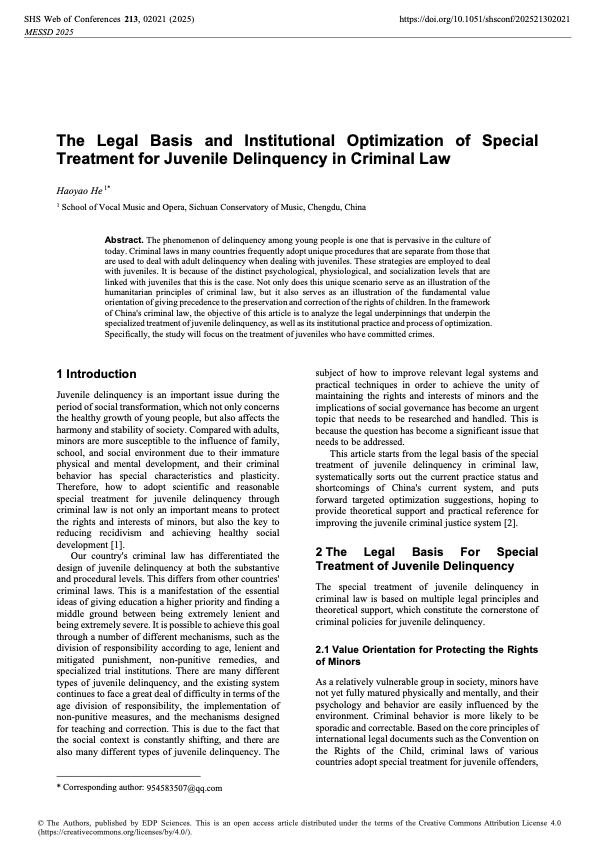
The Legal Basis and Institutional Optimization of Special Treatment for Juvenile Delinquency in Criminal Law

By Haoyao He  

 The phenomenon of delinquency among young people is one that is pervasive in the culture of today. Criminal laws in many countries frequently adopt unique procedures that are separate from those that are used to deal with adult delinquency when dealing with juveniles. These strategies are employed to deal with juveniles. It is because of the distinct psychological, physiological, and socialization levels that are linked with juveniles that this is the case. Not only does this unique scenario serve as an illustration of the humanitarian principles of criminal law, but it also serves as an illustration of the fundamental value orientation of giving precedence to the preservation and correction of the rights of children. In the framework of China's criminal law, the objective of this article is to analyze the legal underpinnings that underpin the specialized treatment of juvenile delinquency, as well as its institutional practice and process of optimization. Specifically, the study will focus on the treatment of juveniles who have committed crimes.

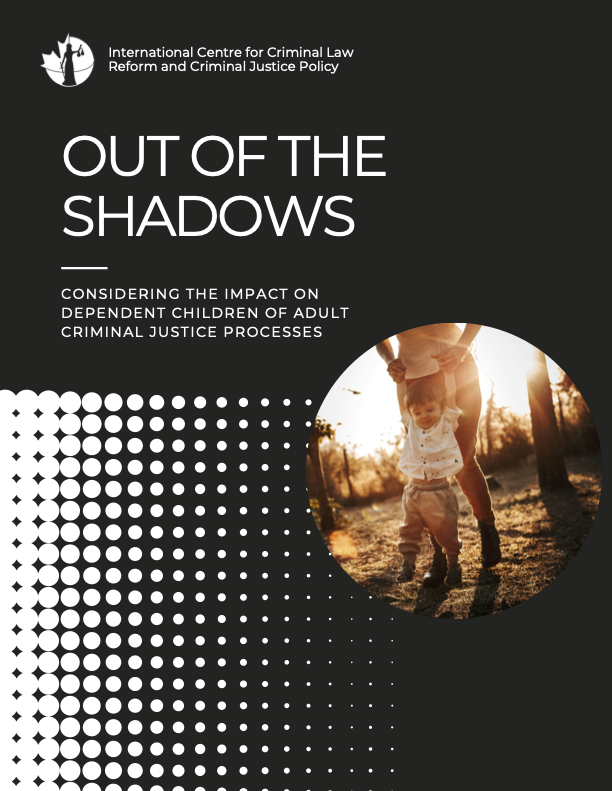
Out Of The Shadow.  Considering The Impact On Dependent Children Of Adult Criminal Justice Processes

By Allan Castle, Hayli Millar, Yvon Dandurand, Vivienne Chin, Shawn Bayes, Megan Capp, Richard Fowler, Jessica Jahn and Barbara Pickering.

What happens to children whose parents are incarcerated, remanded, or otherwise subject to the criminal justice system? Too often, the answer is: pain and distress due to separation from a parent, stigmatization, poor performance in school, social withdrawal, impoverishment, diminished life chances, health problems, and increased likelihood of the child themselves being incarcerated in adulthood. That these harms to children are unintended ‘collateral’ effects of justice decisions is immaterial. The effects are similar to those of many other more direct, adverse experiences a child may encounter. The adult criminal justice system in Canada is of course not alone in creating harmful outcomes for children, today or historically. For more than 150 years, the residential school system h caused devastating intergenerational harm to generations of Indigenous families. Provincial child welfare systems continue to be a focus of reform and devolution due to the harmful effects of past and current practices. In identifying the harms caused by institutions and systems, we must point out that harm to children is not only systemic in origin. Parental abuse or neglect driven by substance use, trauma or mental illness is common, even though many of those individual behaviours may in turn have systemic origins. Whether the harms experienced by children have systemic or individual causes, we now understand that many different actors and sectors must collaborate to protect children, as systemic and individual harms routinely overlap and multiply the damage done. For example, the trauma and loss of belonging associated with being removed from parental care due to parental incarceration may be expressed by self-harm or behavioral acting out at school. The disruption of parental incarceration can impede the delivery of routine health care, such as vaccinations. Child homelessness brings greater exposure toexploitation. Considering these overlaps, it is insufficient to act in isolation. Child advocates, Indigenous Nations and communities, non-profit services, child welfare and health authorities, educators and other systems – including the adult criminal justice system – all have a role to play in collaborating to protect children, prevent their stigmatization, and support their healthy development. The subject of this paper – the substantial impact of adult criminal justice system decisions on the dependent children of those coming before the system – has to date received little consideration by the system itself, whether in terms of research, case law, legislation, or legal principles. Moreover, there is no consensus within the system itself as to the degree of responsibility the system itself should bear in mitigating these harms. One recent superior court decision suggested that while lamentable, such child impact should be understood as an unavoidable consequence of serious criminality.  

Police Reform and the Dismantling of Legal Estrangement

By Monica C. Bell In police reform circles, many scholars and policymakers diagnose the frayed relationship between police forces and the communities they serve as a problem of illegitimacy, or the idea that people lack confidence in the police and thus are unlikely to comply or cooperate with them. The core proposal emanating from this illegitimacy diagnosis is procedural justice, a concept that emphasizes police officers’ obligation to treat people with dignity and respect, behave in a neutral, nonbiased way, exhibit an intention to help, and give them voice to express themselves and their needs, largely in the context of police stops. This Essay argues that legitimacy theory offers an incomplete diagnosis of the policing crisis, and thus de-emphasizes deeper structural, group-centered approaches to the problem of policing. The existing police regulatory regime encourages large swaths of American society to see themselves as existing within the law’s aegis but outside its protection. This Essay critiques the reliance of police decision makers on a simplified version of legitimacy and procedural justice theory. It aims to expand the predominant understanding of police mistrust among African Americans and the poor, proposing that legal estrangement offers a better lens through which scholars and policymakers can understand and respond to the current problems of policing. Legal estrangement is a theory of detachment and eventual alienation from the law’s enforcers, and it reflects the intuition among many people in poor communities of color that the law operates to exclude them from society. Building on the concepts of legal cynicism and anomie in sociology, the concept of legal estrangement provides a way of understanding the deep concerns that motivate today’s police reform movement and points toward structural approaches to reforming policing.

Prevention Beyond Deterrence

By Benjamin A. Barsky
This Article reconceptualizes preventive justice—the public safety paradigm that seeks to prevent harm before it occurs. Scholars have long documented how cities have advanced this paradigm through largely punitive measures, notably variants of broken windows policing, which posit that aggressive misdemeanor enforcement deters more serious crime. Yet in the aftermath of the 2020 George Floyd protests, and as underscored recently in City of Grants Pass v. Johnson, these measures have faced a legitimacy crisis—prompting calls for nonpunitive responses to nonviolent incidents. This Article establishes a preventive justice approach that advances health and safety without emphasizing crime deterrence. It draws on fieldwork research on alternative emergency response programs (“Alternative Responses”) that proliferated after the 2020 protests to replace police in health crises and other nonviolent incidents. Data include interviews with fifty individuals and over two hundred hours of observations in Oakland, California; Dayton, Ohio; and Madison, Wisconsin. 

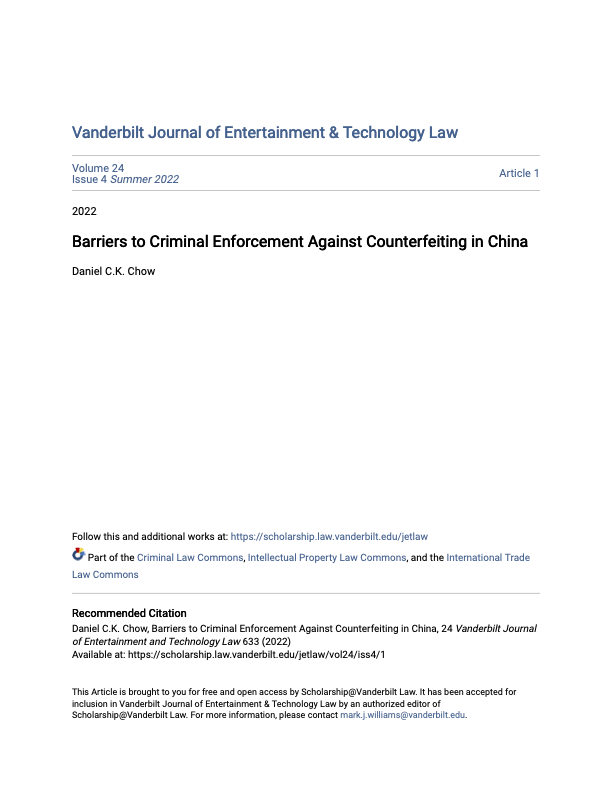
Barriers to Criminal Enforcement Against Counterfeiting in China

By Daniel C.K. Chow

Multinational companies (MNCs) with valuable trademarks in China seek criminal enforcement against counterfeiting because other available avenues of relief, such as administrative and judicial remedies, have proven to be ineffective. While MNCs prefer enforcement through China’s Police, the Public Security Bureau (PSB), many MNCs are unaware of the significant hidden dangers of using the PSB.Most MNCs will delegate enforcement of trademark rights to their Chinese subsidiaries. These subsidiaries are known to make illegal payments to the PSB that may violate the laws of the PRC as well as the United States Foreign Corrupt Practices Act (FCPA). These acts expose MNCs to draconian penalties under PRC law and the FCPA. MNCs can be unaware of these illegal practices because many MNCs organize their business structures and intellectual property (IP) management strategies in ways that shield MNCs from reviewing some of the on-the-ground actions by their Chinese subsidiaries. This Article exposes these risks, explains how some of these risks arise, and makes suggestions on how MNCs can structure their business organizations and IP management structures in China to eliminate or mitigate these risks. *

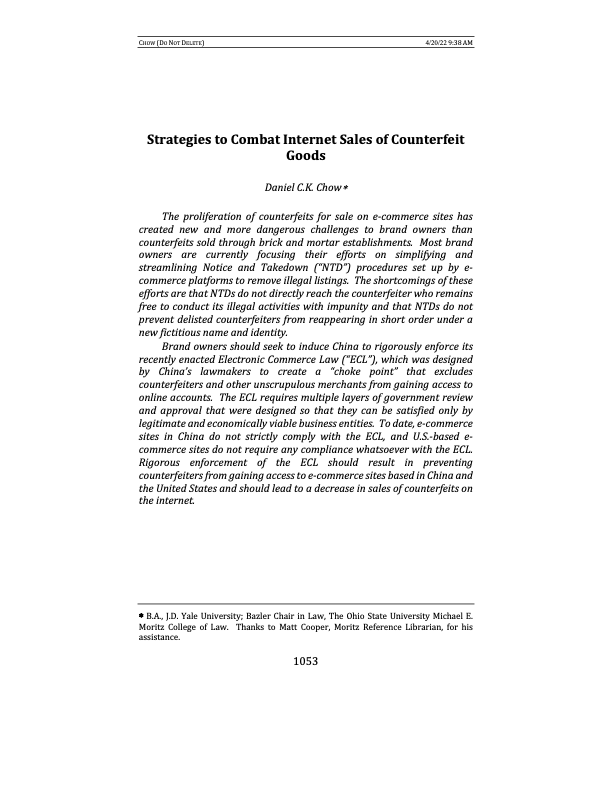
Strategies to Combat Internet Sales of Counterfeit Goods 

By Daniel C.K. Chow 

The proliferation of counterfeits for sale on e-commerce sites has created new and more dangerous challenges to brand owners than counterfeits sold through brick and mortar establishments. Most brand owners are currently focusing their efforts on simplifying and streamlining Notice and Takedown (“NTD”) procedures set up by ecommerce platforms to remove illegal listings. The shortcomings of these efforts are that NTDs do not directly reach the counterfeiter who remains free to conduct its illegal activities with impunity and that NTDs do not prevent delisted counterfeiters from reappearing in short order under a new fictitious name and identity. Brand owners should seek to induce China to rigorously enforce its recently enacted Electronic Commerce Law (“ECL”), which was designed by China’s lawmakers to create a “choke point” that excludes counterfeiters and other unscrupulous merchants from gaining access to online accounts. The ECL requires multiple layers of government review and approval that were designed so that they can be satisfied only by legitimate and economically viable business entities. To date, e-commerce sites in China do not strictly comply with the ECL, and U.S.-based ecommerce sites do not require any compliance whatsoever with the ECL. Rigorous enforcement of the ECL should result in preventing counterfeiters from gaining access to e-commerce sites based in China and the United States and should lead to a decrease in sales of counterfeits on the internet.

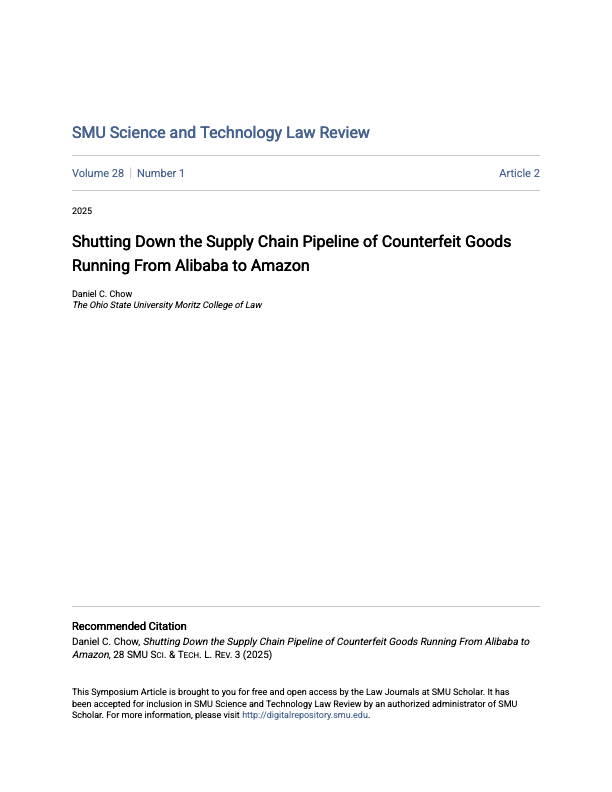
Shutting Down the Supply Chain Pipeline of Counterfeit Goods Running From Alibaba to Amazon

By Daniel C. Chow

An immense supply chain pipeline constantly funnels millions of counterfeit goods from Alibaba’s e-commerce sites in China to third party sellers who sell these goods on Amazon to U.S. consumers. Amazon has acknowledged that it has a problem with counterfeits on its e-commerce sites, but its current responses to counterfeiting are primarily performative and intended to pacify disgruntled brand owners and frustrated consumers. Amazon’s responses will likely have little or no effect on counterfeits on its websites. This Article sets forth a direct and straightforward method for shutting down or seriously disrupting this pipeline based on using China’s existing laws. This method involves using verification methods required by China’s laws to ensure that only lawful and legitimate businesses, not counterfeiters, can open online accounts on Alibaba and other Chinese e-commerce platforms. Unless these steps are taken, counterfeits sold on Amazon and other e-commerce platforms will likely continue to plague brand owners, consumers, and the general public in the United States for the foreseeable future.

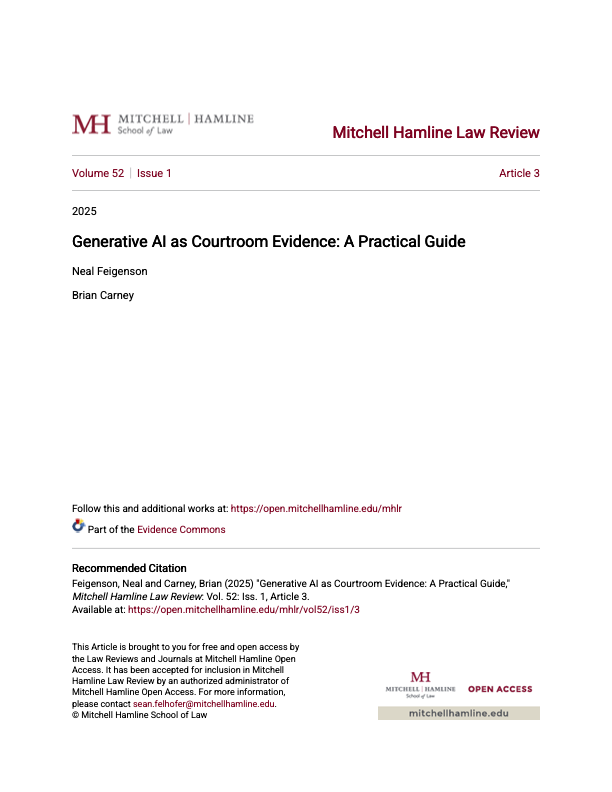
Generative AI as Courtroom Evidence: A Practical Guide

By Neal Feigenson and Brian Carney

You are the lawyer in a case in which the crucial incident was captured by dozens of smartphone, surveillance, and other cameras. Imagine your forensic video expert putting all of those videos into a generative artificial intelligence (GenAI)1 model that quickly synchronizes the audio and video streams, links relevant documents, and provides an outline for the strategy of your case—enabling you to understand exactly what happened in minutes instead of weeks and then suggesting ways to prove it at trial. The expert could also employ GenAI to enhance those videos, making relevant facts clearer by rendering blurry images more legible and inaudible conversations more intelligible, or even by creating important camera angles showing views not found in the original images. Or imagine, in a complex commercial dispute, feeding masses of documents and other data into a GenAI model that produces timelines and other visualizations of the relevant events, as well as lists of inherent contradictions in the evidence, which you could then use to prepare your arguments and illustrate your theory of the case in court. All of these tools and more will soon be available. Much has been written in the last half-dozen or so years about the prospect of images, video, and audio created with GenAI being used in court. Most of the concern has focused on deepfakes, andmassive data sources—primarily the Internet—in response to a user’s prompt.

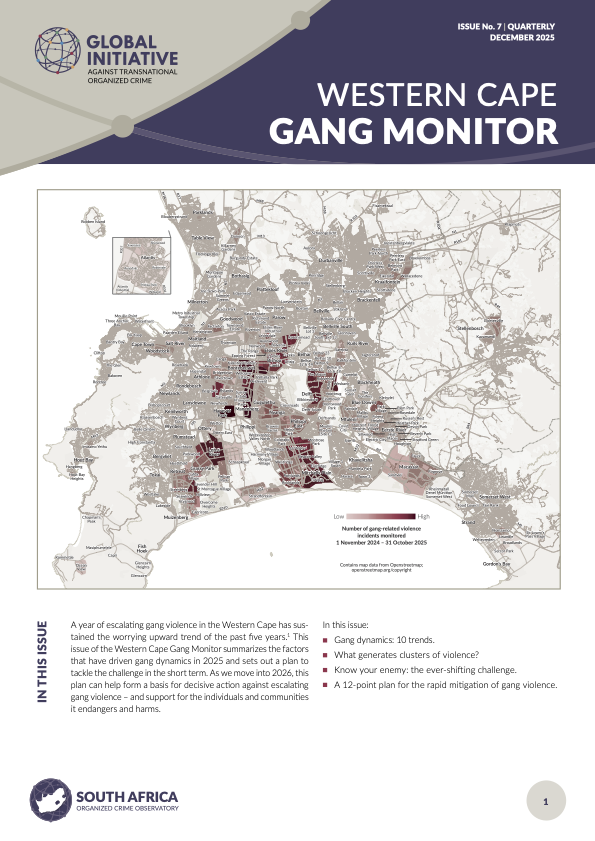
Western Cape Gang Monitor

By The Global Initiative Against Transnational Organized Crime

 Years of escalating gang violence in the Western Cape has sustained the worrying upward trend of the past five years. This issue of the Western Cape Gang Monitor summarizes the factors that have driven gang dynamics in 2025 and sets out a plan to tackle the challenge in the short term. 

 As we move into 2026, this plan can help form a basis for decisive action against escalating gang violence – and support for the individuals and communities it endangers and harms.

In this issue:

  • Gang dynamics: 10 trends.

  • What generates clusters of violence?

  • Know your enemy: the ever-shifting challenge.

  • A 12-point plan for the rapid mitigation of gang violence.

This is the seventh issue of the Global Initiative Against Transnational Organized Crime’s (GI-TOC) Western Cape Gang Monitor, an output of our South Africa Organized Crime Observatory. This series of bulletins tracks developments in Western Cape gang dynamics each quarter, to provide a concise synthesis of relevant trends to inform policymakers and civil society. This is a year-in-review issue, combining analysis published by the GI-TOC throughout the year with new research. The monitor draws on information provided by field researchers working in gang-affected communities of the Western Cape. This includes interviews with current and former gang members, civil society and members of the criminal justice system.

You In or Out?: Reflecting on Positionality in Gang Research

By Sou Lee and John Leverso 

Positionality is an important consideration when carrying out research. An effective tool for understanding this process is reflexivity—a continual dialogue that explores the interplay between our identities and how data is collected, analyzed, and interpreted. These reflexive accounts have been used in various disciplines, including criminal justice and criminology. In advancing this important practice, we offer insight into our experiences studying a hard-to-reach population: gangs. Specifically, we document how our insider and outsider identities, as well as the space between facilitated access, were used strategically and informed our interpretations of data. We conclude by encouraging reflexivity within criminology broadly and specifically among scholars who study hard-to-reach populations like street gangs.

Qualitative Criminology (QC): Vol. 13: No. 2, Article 4. 2024 

Gang Databases and Immigration Enforcement,

By Peter Honnef

On paper, gang databases look efficient and innocuous, providing law enforcement agencies with a shortcut to identify people suspected of having a connection to gang violence. But these local databases often contain inaccurate information that, when shared widely across agencies, can have life-altering consequences. The Center for Policing Equity’s (CPE) new white paper, Gang Databases and Immigration Enforcement, explores the disproportionate impact gang databases have on marginalized communities and the increased harm from immigration enforcement. By Peter Honnef

On paper, gang databases look efficient and innocuous, providing law enforcement agencies with a shortcut to identify people suspected of having a connection to gang violence. But these local databases often contain inaccurate information that, when shared widely across agencies, can have life-altering consequences. The Center for Policing Equity’s (CPE) new white paper, Gang Databases and Immigration Enforcement, explores the disproportionate impact gang databases have on marginalized communities and the increased harm from immigration enforcement. 

Center for Policing Equity, 2026. 11p.

Function Over Form in Federal Drug Sentencing

By Alison Siegler and Grant Delaune

Although the U.S. Sentencing Commission’s drug guidelines were intended to align punishment with culpability, decades of sentencing practice reveal a different reality. Outcomes are primarily driven by drug type and quantity, which have proved to be poor proxies for assessing culpability. We put forward a new approach to drug sentencing that instead focuses on a person’s function in a drug enterprise. We also propose anchoring base offense levels to pre-Guidelines sentencing data. To illustrate this model, we present a rewritten version of Guideline § 2D1.1 incorporating our proposed framework. Focusing on function rather than drug type and quantity will ensure that sentences are calibrated based on culpability and better fulfill the core purposes of punishment.

University of Chicago Law School, Public Law & Legal Theory Research Paper No. 25-38,  2025,

Improving Data Infrastructure to Reduce Firearms Violence

Editors: John K. Roman, Philip Cook

One of the great policy successes of the last decade is the increasing role of rigorous, objective, and transparent data and research in policymaking. Developing and implementing a data-driven government in which valid and reliable evidence informs solutions to our nation’s most pressing health and safety challenges is more critical than ever as those challenges are ever more complex. Nowhere is that data foundation more needed than in the realm of firearms violence. Trustworthy data is a much-needed bridge to effective policymaking that can reduce the number of firearm accidents, suicides, homicides, and assaults. In an age of intense partisanship, shared facts are the cornerstone for building a shared purpose. The shared purpose of modernizing firearms data infrastructure is to improve public safety by reducing gun violence. In the fall of 2020, Arnold Ventures, a philanthropy dedicated to maximizing opportunity and minimizing injustice, and NORC at University of Chicago, an objective nonpartisan research institution, released the Blueprint for a US Firearms Infrastructure (Roman, 2020)1 . The Blueprint is the consensus report of an expert panel of distinguished academics, trailblazing practitioners, and government leaders. It describes 17 critical reforms required to modernize how data about firearms violence of all types (intentional, accidental, and self-inflicted) are collected, integrated and disseminated. This project, which is also supported by Arnold Ventures, takes the conceptual priorities described in the Blueprint and proposes specific new steps for implementation. The first step in building a better firearms data infrastructure is to acknowledge where we currently stand. In The State of Firearm Data in 2019 (Roman, 2019)2 , the expert panel found that while there are a substantial number of data sources that collect data on firearms violence, existing datasets and data collections are limited, particularly around intentional injuries. There is some surveillance data, but health data on firearms injuries are kept separately from data on crimes, and there are few straightforward ways to link those data. Data that provide context for a shooting—where the event took place, and what the relationship was between victim and shooter—are not available alongside data on the nature of injuries. Valuable data collections have been discontinued, data are restricted by policy, important data are not collected, data are often difficult to access, and contemporary data are often not released in a timely fashion or not available outside of specialized settings. As a result, researchers face vast gaps in knowledge and are unable to leverage existing data to build the evidence base necessary to adequately answer key policy questions and inform firearms policymaking.

The Successful Gun Violence Reduction Strategy

By The National Institute for Criminal Justice Reform

The Gun Violence Reduction Strategy (GVRS) is a comprehensive method of identifying the individuals in a jurisdiction who are at the very highest risk of being involved in gun violence and employing effective interventions to intervene with those individuals and their conflicts to significantly reduce gun violence. The National Institute for Criminal Justice Reform (NICJR) works with jurisdictions to implement GVRS through data analysis, policy development, training, coaching, management support and technical assistance. NICJR helps identify people and groups at highest risk of being involved in gun violence in a specific city; trains community leaders and law enforcement to effectively communicate that risk to those individuals in a supportive manner; helps stand up, manage, and train staff for intensive community violence intervention (CVI) efforts to work with those individuals; and works with law enforcement to focus their efforts in a way that reduces their overall footprint in the community and increases their focus on the small number of people driving gun violence. When operated to scale, well managed, and coordinated, GVRS can significantly and consistently reduce gun violence citywide. GVRS is a distinct strategy that has evolved from similar models known as Ceasefire and Gun Violence Intervention. ¹ GVRS rests on two main principles: specificity and intensity: Specifically serving those at the very highest risk of being involved in gun violence soon, and intensively and frequently engaging those at the very highest risk.

Shamaya Banks
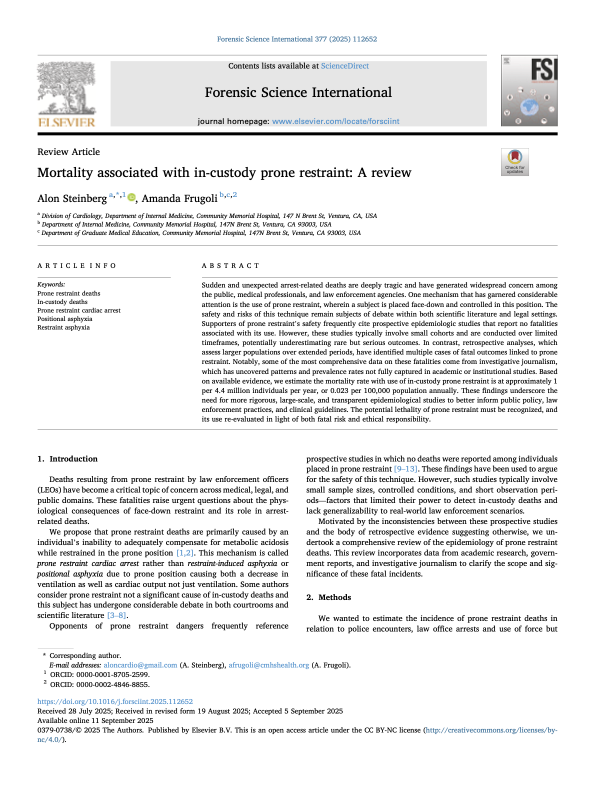
Mortality Associated with In-Custody Prone Restraint: A Review

By Alon Steinberg and Amanda Frugoli 

Sudden and unexpected arrest-related deaths are deeply tragic and have generated widespread concern among the public, medical professionals, and law enforcement agencies. One mechanism that has garnered considerable attention is the use of prone restraint, wherein a subject is placed face-down and controlled in this position. The safety and risks of this technique remain subjects of debate within both scientific literature and legal settings. Supporters of prone restraint’s safety frequently cite prospective epidemiologic studies that report no fatalities associated with its use. However, these studies typically involve small cohorts and are conducted over limited timeframes, potentially underestimating rare but serious outcomes. In contrast, retrospective analyses, which assess larger populations over extended periods, have identified multiple cases of fatal outcomes linked to prone restraint. Notably, some of the most comprehensive data on these fatalities come from investigative journalism, which has uncovered patterns and prevalence rates not fully captured in academic or institutional studies. Based on available evidence, we estimate the mortality rate with use of in-custody prone restraint is at approximately 1 per 4.4 million individuals per year, or 0.023 per 100,000 population annually. These findings underscore the need for more rigorous, large-scale, and transparent epidemiological studies to better inform public policy, law enforcement practices, and clinical guidelines. The potential lethality of prone restraint must be recognized, and its use re-evaluated in light of both fatal risk and ethical responsibility.

Mortality Classification for Deaths that Follow the Use of Non-Firearm Force by Police: A National Cross-Sectional Study (United States, 2012-2021) 

By Justin M. Feldman, Tracey Lloyd , Phillip Atiba Solomon

 Background: Mortality classification for deaths in US police custody has important consequences for epidemiologic monitoring and legal outcomes. Prior literature suggests in custody death classification is inconsistent and may not reflect non-firearm force that preceded death. Methods: We analyzed the Associated Press “Lethal Restraint” national dataset (United States, 2012-2021; N = 1,036), which included deaths following police use of non-firearm force. Our primary outcomes included whether the death investigator: (1) classified manner of death as a homicide, (2) mentioned a force-related injury/condition in the cause-of-death statement, and (3) mentioned any force. Inverse-probability-weighted logistic models estimated the association of these outcomes with death-investigator jurisdiction type, local political composition (quartile of Republican Party vote %), decedent race/ethnicity, and each agency’s prior classifications. Findings: We removed 96 deaths based on exclusion criteria. Of the remaining 940 deaths, 28.5% were classified as homicide, 16.5% had cause-of-death statements mentioning a force-related injury/condition, and 42.6% mentioned any force. In contrast, 73.9% of statements mentioned drugs. Unadjusted results showed homicide classification increased from 25.0% in 2012-2014 to 32.2% in 2018-2021. Models estimating adjusted prevalence differences (aPD) showed that, compared to medical examiner jurisdictions, coroners (aPD: -0.19; 95% CI: -0.31, - 0.06) and sheriff-coroners (a PD: -0.17; 95% CI: -0.28, -0.05) were less likely to classify deaths as homicides. Model results also showed that classifications for incidents occurring in the leastRepublican counties were most likely to reflect force across all three manner and cause outcomes. Interpretation: Non-homicide classifications and cause-of-death statements making no mention of force were widespread for US in-custody deaths. We identified novel evidence suggesting coroner and sheriff-coroner jurisdictions were especially unlikely to categorize in-custody deaths as homicides, and that incidents occurring in highly Republican counties were least likely to reflect force in the cause or manner of death. 

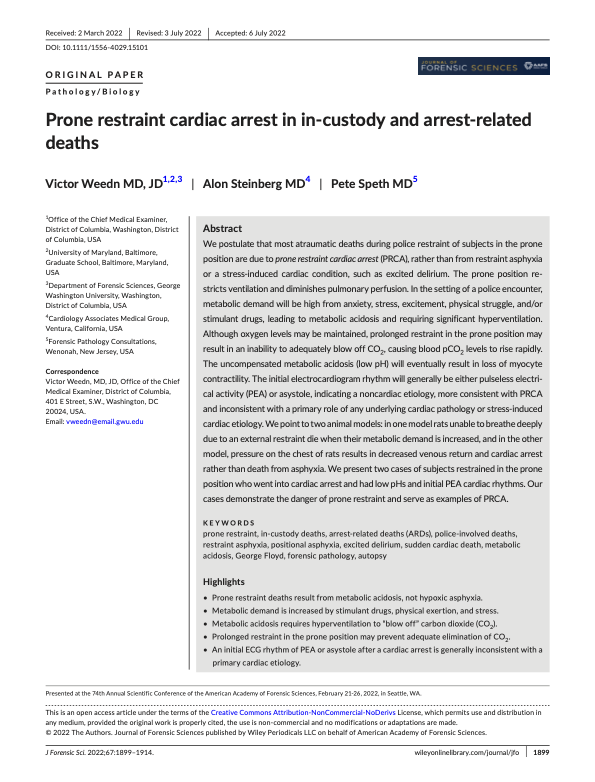
Prone restraint cardiac arrest in in‐custody and arrest‐related deaths

By Victor Weedn , Alon Steinberg , Pete Speth 

We postulate that most atraumatic deaths during police restraint of subjects in the prone position are due to prone restraint cardiac arrest (PRCA), rather than from restraint asphyxia or a stress‐induced cardiac condition, such as excited delirium. The prone position restricts ventilation and diminishes pulmonary perfusion. In the setting of a police encounter, metabolic demand will be high from anxiety, stress, excitement, physical struggle, and/or stimulant drugs, leading to metabolic acidosis and requiring significant hyperventilation. Although oxygen levels may be maintained, prolonged restraint in the prone position may result in an inability to adequately blow off CO2, causing blood pCO2 levels to rise rapidly. The uncompensated metabolic acidosis (low pH) will eventually result in loss of myocyte contractility. The initial electrocardiogram rhythm will generally be either pulseless electrical activity (PEA) or asystole, indicating a noncardiac etiology, more consistent with PRCA and inconsistent with a primary role of any underlying cardiac pathology or stress‐induced cardiac etiology. We point to two animal models: in one model rats unable to breathe deeply due to an external restraint die when their metabolic demand is increased, and in the other model, pressure on the chest of rats results in decreased venous return and cardiac arrest rather than death from asphyxia. We present two cases of subjects restrained in the prone position who went into cardiac arrest and had low pHs and initial PEA cardiac rhythms. Our cases demonstrate the danger of prone restraint and serve as examples of PRCA.

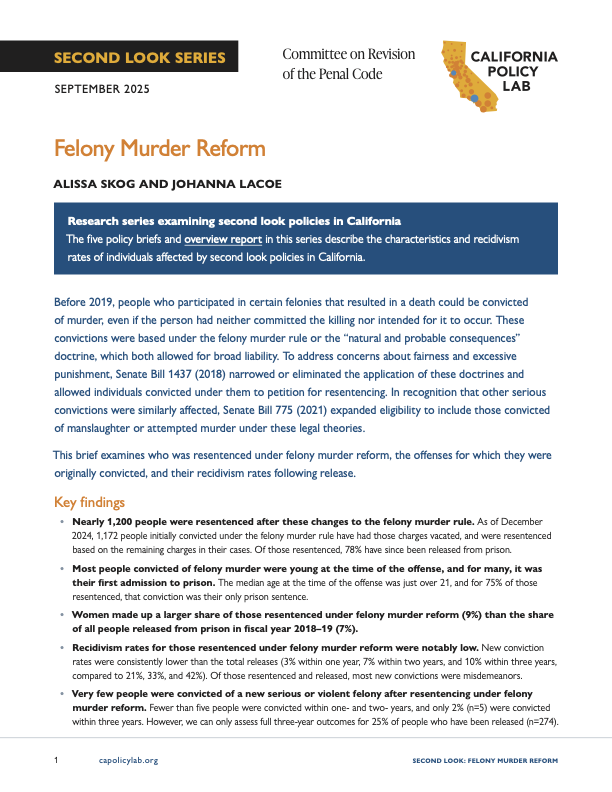
Felony Murder Reform 

By ALISSA SKOG AND JOHANNA LACOE 

Research series examining second look policies in California The five policy briefs and overview report in this series describe the characteristics and recidivism rates of individuals affected by second look policies in California. Committee on Revision of the Penal Code Before 2019, people who participated in certain felonies that resulted in a death could be convicted of murder, even if the person had neither committed the killing nor intended for it to occur. These convictions were based under the felony murder rule or the “natural and probable consequences” doctrine, which both allowed for broad liability. To address concerns about fairness and excessive punishment, Senate Bill 1437 (2018) narrowed or eliminated the application of these doctrines and allowed individuals convicted under them to petition for resentencing. In recognition that other serious convictions were similarly affected, Senate Bill 775 (2021) expanded eligibility to include those convicted of manslaughter or attempted murder under these legal theories. This brief examines who was resentenced under felony murder reform, the offenses for which they were originally convicted, and their recidivism rates following release. Key findings • Nearly 1,200 people were resentenced after these changes to the felony murder rule. As of December 2024, 1,172 people initially convicted under the felony murder rule have had those charges vacated, and were resentenced based on the remaining charges in their cases. Of those resentenced, 78% have since been released from prison. • Most people convicted of felony murder were young at the time of the offense, and for many, it was their first admission to prison. The median age at the time of the offense was just over 21, and for 75% of those resentenced, that conviction was their only prison sentence. • Women made up a larger share of those resentenced under felony murder reform (9%) than the share of all people released from prison in fiscal year 2018–19 (7%). • Recidivism rates for those resentenced under felony murder reform (9%) than the share of all people released from prison in fiscal year 2018–19 (7%). • Recidivism rates for those resentenced under felony murder reform were notably low. New conviction rates were consistently lower than the total releases (3% within one year, 7% within two years, and 10% within three years, compared to 21%, 33%, and 42%). Of those resentenced and released, most new convictions were misdemeanors. • Very few people were convicted of a new serious or violent felony after resentencing under felony murder reform. Fewer than five people were convicted within one- and two- years, and only 2% (n=5) were convicted within three years. However, we can only assess full three-year outcomes for 25% of people who have been released (n=274).

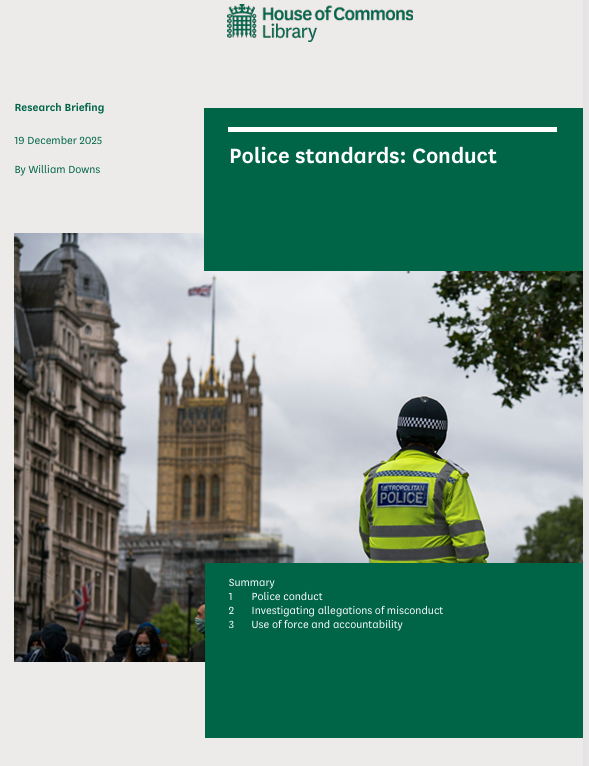
Who handles complaints against the police?

By William Downs

Who handles complaints against the police?

A member of the public can make a complaint if they are dissatisfied with the police. 

There are three crucial actors in the police complaints system:

  • Professional standards departments (PSDs) are specialist teams based within every police force in England and Wales. They are responsible for handling most complaints for their force.

  • The Independent Office for Police Conduct (IOPC) is an independent body that oversees the police complaints system. It also conducts independent investigations into some of the most serious police complaints and conduct matters.

  • Local policing bodies (either the police and crime commissioner or the deputy mayor for policing and crime, depending on the area) are responsible for monitoring their force’s complaint handling and conducting some complaint reviews.


Nonpolice Alternative Response Programs Across the United States: A National Portrait

By Anna Cook, Jon Lloyd, Fablina Sharara, Jennifer Key,

When someone is in a crisis, a police response can lead to help — or harm. Across the country, communities are trying something new: sending mental health specialists, peer specialists or other trained professionals to crisis calls instead of police through alternative response programs (ARPs). Research on ARPs has focused on case studies and standout programs like CAHOOTS in Oregon and Denver STAR, but we know relatively little about the broader trends in this growing field. Comprehensive information about where and how jurisdictions are implementing ARPs is crucial so that policymakers, funders and advocates can make better informed strategic decisions regarding public safety innovation. To address this gap, we created a novel database of 216 ARPs established since the early 1970s and operational as of 2024 to produce one of the first overviews of these programs throughout the United States. By summarizing the design, scale and geographic distribution of ARPs, we provide a broad look at the field to help inform and empower community leaders to build stronger public safety systems while reducing dependence on traditional policing. Our findings underscore critical choices in how ARPs are implemented and raise important questions about their scope, accessibility and long-term potential. As policymakers, practitioners and advocates continue to explore alternatives to police response, this report provides a foundation for understanding the current landscape and identifying paths for growth. Given current gaps in ARP implementation, future research and innovation are needed to explore how these programs can evolve to handle a higher volume and wider range of calls, understand the benefits and limitations of different call lines, and expand to meet the needs of smaller or underserved communities.

 Key findings: • Recent proliferation: Public officials and other decisionmakers established nearly 120 ARPs from 2020 through 2024, reflecting a surge in interest and political willpower following national Black Lives Matter protests. • Limited scale: Most programs serving large populations respond to fewer than five calls per 1,000 residents per year. • Narrow scope: Mental and behavioral health are a stated focus for 94% of programs; far fewer are designed to address issues like traffic safety, interpersonal conflict or homelessness. • 911 reliance: Despite their focus on mental crisis calls, only 18% of ARPs use the 988 national mental health crisis line, while 50% use 911 for dispatch. • Urban concentration: Programs are concentrated in large, racially diverse, urban areas.

West Hollywood, CA,

WeWest Hollywood, CA,West Hollywood, VThe Center for Policing Equity’s (CPE) , 2025. 23p.