Open Access Free Library
CRIMINAL JUSTICE.jpeg

CRIMINAL JUSTICE

CRIMINAL JUSTICE-CRIMINAL LAW-PROCDEDURE-SENTENCING-COURTS

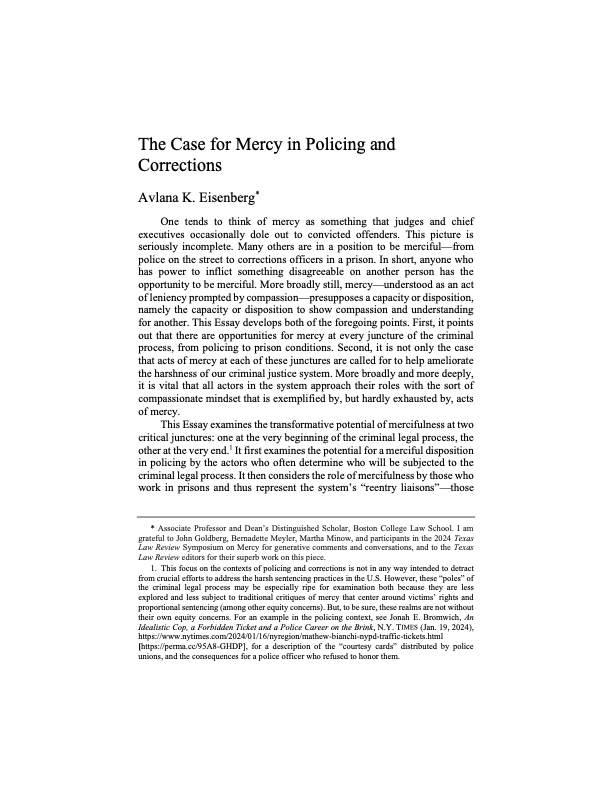
The Case for Mercy in Policing and Corrections

By Avlana Eisenberg

One tends to think of mercy as something that judges and chief executives occasionally dole out to convicted offenders. This picture is seriously incomplete. Many others are in a position to be merciful—from police on the street to corrections officers in a prison. In short, anyone who has power to inflict something disagreeable on another person has the opportunity to be merciful. More broadly still, mercy—understood as an act of leniency prompted by compassion—presupposes a capacity or disposition, namely the capacity or disposition to show compassion and understanding for another. This Essay develops both of the foregoing points. First, it points out that there are opportunities for mercy at every juncture of the criminal process, from policing to prison conditions. Second, it is not only the case that acts of mercy at each of these junctures are called for to help ameliorate the harshness of our criminal justice system. More broadly and more deeply, it is vital that all actors in the system approach their roles with the sort of compassionate mindset that is exemplified by, but hardly exhausted by, acts of mercy.

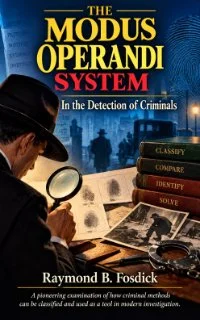
Modus Operandi System in Detection of Criminals

By Raymond D, Fosdick

The Modus Operandi System in the Detection of Criminals by Raymond B. Fosdick is a pioneering work on criminal investigation and police intelligence. Written during the early development of modern law enforcement practices, the book examines how investigators can identify, classify, and track offenders by studying their distinctive methods of operation, or modus operandi. Fosdick explains how systematic record keeping and behavioral analysis can help solve crimes, connect seemingly unrelated cases, and improve the effectiveness of police work.

Combining criminology, investigative procedure, and early criminal profiling techniques, this historical volume offers valuable insight into the evolution of detective work and forensic intelligence. It remains an important resource for students of criminal justice, law enforcement history, and the development of modern investigative methods.

Read-Me.Org Inc. New York-Philadelphia-Australia. 2026. p.11.

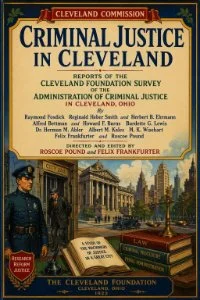
Criminal Justice in Cleveland

Criminal Justice in Cleveland was one of the most influential studies of the American criminal justice system produced during the Progressive Era. Published by The Cleveland Foundation, the volume brought together leading legal scholars, reformers, and public officials, including Raymond Fosdick, Roscoe Pound, Felix Frankfurter, and others, to examine the administration of justice in Cleveland, Ohio. The work was directed and edited by Roscoe Pound and Felix Frankfurter.

Rather than focusing solely on crime, the study investigated the entire machinery of justice, including police, prosecutors, courts, probation services, corrections, and related public institutions. The authors sought to determine how effectively these agencies worked together, where delays and inefficiencies occurred, and what reforms were needed to create a more fair, efficient, and accountable system of justice.

The survey became a landmark in empirical legal research because it relied on systematic investigation rather than anecdote or political opinion. Its findings helped shape twentieth-century reforms in policing, court administration, criminal procedure, and corrections, making it essential reading for historians, criminologists, legal scholars, and students of public administration.

Today, Criminal Justice in Cleveland remains a classic study of urban criminal justice and a foundational text in the movement to evaluate government institutions through rigorous research and evidence-based reform.

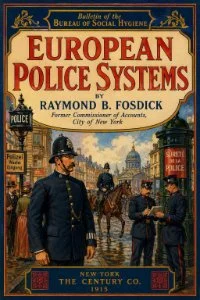
European Police Systems

By Raymond B. Fosdick

European Police Systems

Raymond B. Fosdick (1915)

Published in 1915, European Police Systems is a pioneering comparative study of law enforcement in the major nations of Europe during the early twentieth century. Based on extensive travel and firsthand investigation, Raymond B. Fosdick examined how police organizations in England, France, Germany, Austria-Hungary, Italy, Belgium, and the Netherlands were structured, governed, and employed to maintain public order.

Fosdick explores the fundamental differences between the British tradition of local policing and the more centralized police systems of Continental Europe. He analyzes police recruitment, training, discipline, detective work, administrative organization, and the relationship between police authority and civil liberty. Drawing upon interviews with police officials and direct observation of police operations, he provides a detailed portrait of the institutions responsible for public safety in some of Europe's most important cities.

Written on the eve of the First World War, the book captures a European society in transition while addressing questions that remain relevant today: How much power should the police possess? What forms of accountability are most effective? How can governments maintain order while preserving the freedoms of citizens?

Combining careful scholarship with vivid observation, European Police Systems became a landmark work in the study of policing and public administration. More than a historical record, it offers valuable insight into the origins of modern police institutions and the enduring challenges of balancing authority, efficiency, and democratic governance.

New York. Century. 1915 . p.410.

POLICING EUROPE 1915–2026: A Retelling of Fosdick's European Police Systems

by Graeme Newman (Author)

How did Europe police its cities before the First World War, and what can those systems teach us today?

In Policing Europe: A Retelling of Fosdick's Classic, criminologist and policing scholar Graeme R. Newman presents a concise, modernized edition of Raymond B. Fosdick's landmark 1915 study of European policing. Based on nearly two years of firsthand research across England, Scotland, Germany, Austria-Hungary, France, Italy, Holland, and Belgium, Fosdick's original work remains one of the most comprehensive comparative examinations of police systems ever written. [Policing_Europe Word]

Traveling through the great capitals and industrial cities of Europe on the eve of World War I, Fosdick interviewed commissioners, detectives, patrol officers, judges, and government officials to answer questions that remain deeply relevant today:

  • Should policing be controlled locally or by the national government?

  • How much authority should police possess?

  • What creates public trust in law enforcement?

  • How should police leaders be selected and trained?

  • What prevents corruption and abuse of power?

  • Which organizational structures produce effective and accountable policing?

This edition preserves Fosdick's remarkable firsthand observations while updating the language for contemporary readers. It explores the contrasting traditions of British "policing by consent" and Continental state-centered policing, compares police organizations in London, Paris, Berlin, Vienna, Budapest, and Rome, and examines detective methods, recruitment, training, leadership, forensic science, and police integrity. [Policing_Europe Word]

More than a historical document, Policing Europe offers a fascinating window into the origins of many modern debates about public safety, civil liberties, professionalization, surveillance, police accountability, and the relationship between citizens and the state. Written just before a world war transformed Europe forever, it captures a vanished world while illuminating issues that continue to shape policing in the twenty-first century. [Policing_Europe Word]

Ideal for:

  • Students of criminology and criminal justice

  • Police professionals and policymakers

  • Historians of law, government, and public administration

  • Readers interested in comparative policing and European history

  • Anyone seeking a deeper understanding of how modern police systems evolved

A century after its original publication, Fosdick's pioneering study remains essential reading for anyone interested in the enduring challenge of balancing order, authority, liberty, and public trust. [Policing_Europe Word]

Read-Me.Org Inc. New York-Philadelphia-Australia. 2026. p172.

Policing America:1920–2026:: A Modern Retelling of Fosdick's American Police Systems

by Graeme Newman (Author)

In 1920, an investigator toured seventy-two American cities and concluded that the police in every one of them were failing — not from a lack of good men, but from a century of political interference, organizational chaos, and a refusal to let any competent leader keep the job long enough to matter. A hundred years later, the argument still lands.

Raymond B. Fosdick's American Police Systems was one of the most ambitious studies of policing ever produced in the Progressive Era — a firsthand, city-by-city comparison of American departments against the professional, politically insulated forces of London, Paris, and Berlin. Fosdick found American policing outmatched at nearly every turn: murder rates that dwarfed Europe's, police chiefs who rotated out with every election, civil-service rules that protected the incompetent as readily as the honest, and city after city that tore up its own police governance and started over, never once letting a good structure — or a good leader — mature.

This edition brings that argument back, rewritten for a modern reader.

This is not a facsimile reprint. Every chapter has been surveyed against Fosdick's original text — including its extensive footnotes — and rewritten fresh, in modernized prose, at roughly a fifth of the original length. The topic structure, the argument, and the great majority of Fosdick's specific facts, cases, and comparisons survive intact; the discursive, footnote-heavy academic style of 1920 does not. Readers get the substance of a landmark study without the apparatus of a century-old monograph.
A substantial new introduction places Fosdick's argument in conversation with policing today: the persistence of American police fragmentation across eighteen thousand separate agencies, the technology Fosdick could only gesture toward (national fingerprint databases, predictive policing, body-worn cameras), the surprising afterlife of "heterogeneity" as European cities have grown as demographically diverse as the American ones Fosdick once contrasted them against, the diversity of police workforces themselves in the U.S. and U.K. today, and where Fosdick's own instincts do — and don't — anticipate contemporary arguments over the scope and funding of policing.
What's inside:
- All eleven chapters of Fosdick's original argument, modernized and condensed
- A new, extensive introduction connecting the book to policing in 2026
- The original seven city police-organization charts, reproduced as images
- Modern 5x8 trade formatting with a full table of contents
Policing America, 1920-2026 is for readers of policing history, criminal justice students, and anyone following today's debates over police reform who wants to see how far back — and how little changed — those debates actually go.
A Read-Me.Org Modern Adaptation. Modernized and edited, with an introduction, by Graeme R. Newman. Based on the 1920 original by Raymond B. Fosdick.

Read-Me.Org Inc. New York-Philadelphia-Australia. 2026. p111.

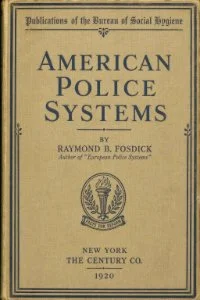
American Police Systems

By Raymond B. Fosdick

American Police Systems (1920) by Raymond B. Fosdick is a landmark study of law enforcement in the United States during the early twentieth century. Drawing on extensive research and firsthand observation, Fosdick examines the organization, responsibilities, and challenges of American police departments, comparing them with policing models in Europe. The book explores issues such as crime prevention, public order, police administration, and the evolving relationship between law enforcement and the communities they serve.

A valuable resource for historians, criminologists, and students of public administration, American Police Systems offers a fascinating snapshot of policing at a pivotal moment in American history. Its insights into reform, professionalism, and accountability remain relevant to contemporary discussions about law enforcement and public policy.

Read-Me.Org Inc. New York-Philadelphia-Australia. 2026. p.429.

Study to Assess Corporal Punishment among Working Children

Gehad Mohamed Abo El Matty Shahbo, 2Bindu Bharathi

Child abuse and neglect refers to “ any physical or mental injury, sexual abuse or exploitation, neglect or maltreatment of a child by a person who is responsible for child’s welfare, under circumstances which indicate the child’s health or welfare is harmed or threatened”(1). Physical abuse is inflicting a non-accidental physical injury upon a child. This may include burning, hitting, punching, shaking, kicking, beating, or otherwise harming a child (2). Child labor has received much international attention in recent years, as a form of child abuse that needs urgently to be brought to an end. It is perceived to hinder the rightful development of children, and particularly their education

Read-Me.Org
Specifying Kidnapping for Ransom Epidemics at the Global Level: A Matched-Case Control Design

Stephen F. Pires, Rob T. Guerette & Auzeen Shariati

Criminal groups around the world frequently rely on kidnapping for ransom (K&R) to fund and further their cause. Some case studies suggest war torn, fragile, and corrupt countries experience K&R epidemics more often. While such factors may be present in some countries experiencing K&R epidemics, it remains to be seen if these failed state factors are generalizable to all nations. To date, no research has systematically examined the conditions that might facilitate K&R epidemics. This study used a case-control design comparing countries with high rates of K&R (experimental) to countries without a K&R problem (control). Findings suggest that problem K&R countries were less secure, less peaceful, and unevenly developed in relation to social and economic indicators. Better understanding of the conditions involving K&R problems offers to improve foresight and the development of effective policy responses.

Routeledge

Read-Me.Org
Strategy-Proof Allocations with Punishment

Lining Han and Ruben Juarez

A mechanism chooses an allocation of the resource to agents based on their reported type. We discover and describe the set of incentive compatible mechanisms when a monetary punishment to agents who misreport type is possible. This class depends on the punishment function and the probability of punishment. It expands previous char- acterizations of incentive compatible mechanisms when punishment was no available. Furthermore, when the planner has the ability to select the punishment, the minimal punishment necessary to achieve incentive compatibility and the corresponding class of first-best is provided. For any punishment, optimal mechanism for the planner are introduced.

Economics and Management School, Wuhan University 2Department of Economics, University of Hawaii

Read-Me.Org
Spatial displacement and diffusion of benefits among geographically policing initiatives

Kate Bowers, Shane Johnson, Rob T. Guerette, Lucia Summers and Suzanne Poynton

One of the most common criticisms of spatially focused policing efforts (such as Problem- Oriented Policing, police ‗crackdowns‘ or hotspots policing) is that crime will simply relocate to other times and places since the ―root causes‖ of crime were not addressed. This phenomenon— called crime displacement—has important implications for many policing projects. By far, spatial displacement (movement of crime from a treatment area to an area nearby) is the form most commonly recognized. At the extreme, widespread displacement stands to undermine the effects of geographically focused policing actions. More often, however, research suggests that crime displacement is rarely total. On the other end of the displacement continuum is the phenomenon of ‗diffusion of crime control benefits‘ (a term coined by Ron Clarke and David Weisburd in 1994). Diffusion occurs when reductions of crime (or other improvements) are achieved in areas that are close to crime prevention interventions, even though those areas were not actually targeted by the intervention itself.

Read-Me.Org
SKEPTICISM ABOUT CORPORATE PUNISHMENT REVISITED

Alex Sarch

Some societies used to impose liability on inanimate objects, a practice we’d now regard as silly and confused. When we punish corporations today, are we making similar mistakes? Here I consider some important sources of philosophical skepticism about imposing criminal liability on corporations, and I argue that they admit of answers, which places punishing corporations on stronger footing than punishing inanimate objects. First, I consider the eligibility challenge, which asserts that corporations are not the right kind of thing to be punished. Second, the reductionist challenge insists that corporate culpability always reduces to individual culpability. I suggest that progress can be made in addressing these challenges by asking the right law-focused questions and attending to recent developments in criminal law theory and moral philosophy.

Read-Me.Org
Silva ad pasturam porcorum : lesné pasenie svíň na kráľovských a cirkevných majetkoch v ranostredovekej Európe

Pavol Hudáček

Slovak Academy of Sciences

Read-Me.Org
Shaping Nordic punishment Penal exceptionalism and the correctional revolution at Ringe Prison in the 1970s

Peter Fransen and Peter Scharff Smith

Introduction In 1974 the planning of a new Danish high-security prison outside of Ringe, on the island Funen, was well underway and the construction committee pulling the strings authored an internal note on the process and the future plans. Under the heading ‘Basic principles’ the committee declared that the coming prison ‘should be run with the greatest possible co-influence from officers as well as prisoners’.1 In this spirit the already appointed governor, Erik Andersen, planned to use his prison staff in a novel manner in order to create a new kind of relational work between officers and prisoners. To achieve this Andersen chose, and was granted the authority to proceed with, a radical approach in the sense that he wanted to staff his prison primarily with officers who had no previous experience working in prisons (Andersen, 1977, p. 125.). A clear and conscious attempt to break with the path dependency (as coined by Douglas North) of an otherwise very historically rooted Danish prison estate (Smith, 2003).

Read-Me.Org
Shame, Guilt, and Punishment

RAFFAELE RODOGNO

ABSTRACT. The emotions of shame and guilt have recently appeared in debates concerning legal punishment, in particular in the context of so called shaming and guilting penalties. The bulk of the discussion, however, has focussed on the justification of such penalties. The focus of this article is broader than that. My aim is to offer an analysis of the concept of legal punishment that sheds light on the possible connections between punishing practices such as shaming and guilting penalties, on the one hand, and emotions such as guilt, shame, and perhaps humiliation, on the other. I contend that this analysis enhances our understanding of the various theories of punishment that populate this part of criminal law theory and thereby sharpens the critical tools needed to assess them. My general con- clusion is that, in different ways, all of the theories we encounter in this area can benefit from paying renewed attention to the nature of the connection between the state s act of punishing and its expected or perceived emotional effect on the individual.

Read-Me.Org
Punishment

Clive R Hollin

If punishment is a likely consequence of crime, it follows that the population at large should be deterred from committing crimes in order to avoid being punished. The effectiveness of this proposition is arguably reflected in national crime rates: If punishment is seen to be done, then the crime rate should remain reasonably con- stant. However, the rate at which crimes are committed are subject to many diverse influences, such as levels of employment and demographic fluctuations; so that in the main, the national crime rate is a blunt measure of criminal justice practice. The general deterrent hypothesis has been tested using the special case of the death penalty. A pre–post effect can be calculated for countries that abolish the death penalty or, as with New Zealand, where over a period of years the death penalty is abolished, brought back, and then finally abol- ished. The complexities of the analyses, necessarily spanning long periods of time, have produced conflicting findings regarding the presence and size of any deterrent effect of capital punishment.

Read-Me.Org
Punishment and Discrimination

Kasper Lippert-Rasmussen

All kinds of punishment can be discriminatory, but for capital punishment the charge of discrimination has played a central role in arguments for its abolishment. David Baldus concluded in a study that ‘the odds of a death sentence for those who kill whites in Georgia are 4.3 times higher than the odds of a death sentence for those who kill blacks’.1 In 1987 this work was used to challenge the execution of death row prisoner, Warren McClesky, in the Supreme Court on the grounds of an ‘unfair racial bias in the administration of the death penalty in Georgia’.2 The Supreme Court dismissed the argument, but the debate about how discrimination bears on the justifiability of punishment has continued. In 1997 the American Bar Association called for a moratorium on the death penalty partly because of ‘the continuing problem of racial bias in the administration’ of it.3

Read-Me.Org
Effective crime prevention interventions for implementation by local government

Anthony Morgan Hayley Boxall Kym Lindeman Jessica Anderson

As a research organisation, the Australian Institute of Criminology (AIC) is often confronted by the challenge of how best to facilitate the transfer of research findings into effective crime prevention policies and programs. While recognition of the importance of evidence-based crime prevention continues to grow, along with the number of quality evaluations that have been conducted, simply producing and disseminating research findings is not enough to ensure that the accumulated evidence base is used to inform decision making. Instead, it is necessary to look at ways through which those working on the ground can be encouraged to make better use of the available evidence.

Read-Me.Org
Risky Facilities: Crime Concentration in Homogeneous Sets of Establishments and Facilities

By John E. Eck University of Cincinnati Ronald V. Clarke Rutgers University and Rob T. Guerette Florida International University

The fact that crime is heavily concentrated on particular people, places and things has important implications for prevention. It suggests that focusing resources where crime is concentrated will yield the greatest preventive benefits. Researchers have therefore begun to develop concepts intended to guide prevention that capture different aspects of this concen- tration. These include “repeat offenders” – who commit a disproportionate amount of total recorded crime (Spelman, 1994); “hot spots” – places with high rates of crime (Sherman et al., 1989; Weisburd et al., 1992); “crime generators” – places that are high in crime because they are exceptionally busy (Brantingham and Brantingham, 1995); crime attractors” – places that contain many suitable crime targets without adequate protection (Brantingham and Brantingham, 1995); “repeat victims” – who suffer a series of crimes in a relatively short period of time (Farrell and Pease, 1993); and “hot products” – wh

Read-Me.Org
Risk and punishment: The recent history and uncertain future of actuarial, algorithmic, and evidence based penal techniques

Robert Werth

In recent decades, risk prediction has proliferated in the penal realm. Risk instruments currently guide an array of correctional decisions—such as participation in diversion programs, the provision of correctional services, and probation and parole supervision levels—and are being increasingly utilized or considered in pretrial detention and criminal sentencing. This article reviews empirical and theoretical accounts of the proliferation and effects of risk in the penal realm and also reflects on ongoing debates about the promises and perils of risk. Risk techniques have impacted the practices, discourses, and logics of punish- ment.

Read-Me.Org