Open Access Publisher and Free Library
SOCIAL SCIENCES.jpeg

SOCIAL SCIENCES

Social sciences examine human behavior, social structures, and interactions in various settings. Fields such as sociology, psychology, anthropology, and economics study social relationships, cultural norms, and institutions. By using different research methods, social scientists seek to understand community dynamics, the effects of policies, and factors driving social change. This field is important for tackling current issues, guiding public discussions, and developing strategies for social progress and innovation.

MIR I POMIRENJE

By Zorica Kuburić, Ljiljana Ćumura, Ana Zotova

Када кажемо (некад љутито) детету: „Смири се већ једном, буди миран!“ - шта хожемо да кажемо? Кажемо и себи и детету оно што је немогуће. Мира нема, нити ће га бити јер га нема најпре у човеку, а онда и у људском друштву. А мир нам је ипак неопходан. Опет велим, нигде нема мира. Крећу се непрекидно атоми, ћели- је, неурони у људском мозгу, галаксије у космосу. Живот је вечити не- мир, али какав? Деструктиван и/или конструктиван? Бог такође не мирује, Он стално ствара, значи да је у сталном покрету, видљивом и невидљивом. Па ипак се у Библији каже да је је- дан дан у току стварања Бог наменио и себи и нама – миран дан, дан одмора. Сва жива бића једном се уморе, траже тај један дан у недељи – за предах, за сакупљање нове енергије, за нови немир.

204p.

download
GERMAN PLANS FOR THE NEXT WAR

By J. B. W. Gardiner

J. B. W. Gardiner’s German Plans for the Next War stands as a striking historical artifact and a warning. Written in the years following the First World War, this book represents not merely a record of military ambitions and strategic foresight, but also a chilling reminder of how nations, even when defeated, may never truly lay down their arms in spirit. Gardiner sought to expose what he regarded as the continuing German military mindset—a culture that, rather than abandoning war after the devastation of 1914–1918, appeared to him to be laying the intellectual and institutional groundwork for another, even greater conflict.

The book must be read in the context of its time. Published in an era when the Allied powers hoped the Versailles Treaty had secured peace, Gardiner’s research suggested otherwise. He observed that German generals, strategists, and political leaders were already imagining how to overcome the limitations imposed upon them. He highlighted the persistence of doctrines, the careful cultivation of future officers, and the intellectual determination to turn defeat into a temporary setback rather than a permanent condition. In this respect, Gardiner’s work was both a study in military planning and a diagnosis of political psychology: it warned that humiliation often breeds vengeance, and that nations denied overt military power will often channel their energies into hidden preparation.

From today’s perspective, Gardiner’s warnings seem prophetic. Barely two decades after the publication of this book, Germany under Adolf Hitler plunged Europe into the Second World War. Many of the tendencies Gardiner identified—the rejection of defeat, the cultivation of military thought despite disarmament, the hunger for revision of borders and prestige—proved to be more than passing fears. His analysis reminds us that ideologies of militarism, when not dismantled but merely suppressed, can return with renewed force.

Yet the significance of German Plans for the Next War extends beyond the German case. In 2025, Gardiner’s study forces us to ask uncomfortable questions about our own world. What happens when nations suffer defeat or humiliation but retain the intellectual, cultural, or economic drive to reassert themselves? Can peace treaties and international institutions alone guarantee stability, or must the underlying forces of militarism, nationalism, and strategic ambition be confronted directly? These questions resonate in a time of shifting global power balances, renewed territorial disputes, and technological arms races.

The book also underscores a broader lesson about vigilance. International observers in the 1920s might have dismissed Gardiner’s warnings as exaggerated, even alarmist. Many wanted to believe that the League of Nations and economic reconstruction would prevent future wars. Yet history vindicated the cautionary voice. For us today, amid conflicts in Europe, the Middle East, and Asia, Gardiner’s work suggests the danger of complacency. Strategic planning for war often takes place long before the world notices; by the time it becomes visible, it may be too late.

In revisiting Gardiner’s German Plans for the Next War, readers confront both the legacy of the First World War and a timeless warning about the persistence of military ambition. The book invites us to think critically about the conditions under which peace can be preserved, the role of foresight in international affairs, and the perennial truth that the seeds of future wars are often sown in the aftermath of present ones. Its enduring significance lies not only in its accurate anticipation of history, but in its reminder that vigilance, understanding, and courage are as necessary to preserve peace in the twenty-first century as they were in the twentieth.

download
kindle $1.99 -- paperback $6.99
Read-Me.Org
Militarism and Statecraft

By Munroe Smith. Introduction by Colin Heston.

When Munroe Smith, the American jurist and scholar of comparative constitutional law, published Militarism and Statecraft in the early twentieth century, the world stood at a threshold. The balance of power in Europe was faltering, national ambitions clashed violently with the ideals of peace and progress, and the question of whether nations could master the destructive temptations of militarism was no longer abstract. It was a pressing reality. Smith’s concern was not simply with armies and weapons, but with the deeper political psychology that drives nations toward war. He sought to expose how the logic of militarism—discipline, hierarchy, and force—could infiltrate civil government, undermining the very statecraft that was supposed to serve reason, justice, and stability.

At the time of its writing, Smith was addressing the dangers of an era when Prussian militarism, the rivalries of empires, and the failure of diplomacy threatened the international order. His work can be read as both analysis and warning: a sober reflection on how the pursuit of military superiority can distort the priorities of states, drawing them away from long-term peace toward short-term domination. For Smith, the central challenge was not only to prepare adequately for defense but also to ensure that the military ethos did not overwhelm civil society and political judgment.

The value of these reflections is not confined to Smith’s age. In 2025, more than a century later, the tension between militarism and statecraft persists, albeit in new forms. The end of the Cold War did not usher in an era of lasting peace, but rather revealed the fragility of international institutions and the persistence of rival nationalisms. Today, the global order is marked by renewed great-power competition, particularly between the United States and China, alongside Russia’s continuing assertiveness in Europe. The conflicts in Ukraine, the South China Sea, and the Middle East remind us that the balance of deterrence and diplomacy remains unstable.

Moreover, the rise of advanced technologies—autonomous weapons systems, cyberwarfare, artificial intelligence in military planning, and the militarization of outer space—has created new arenas where Smith’s questions echo with urgency. If he warned against the creeping influence of military logic on the political state, how much more should we be concerned when the logic of algorithms and machine efficiency begins to shape the most consequential decisions of war and peace? The issue is no longer only about armies marching across borders but about invisible lines of code and satellites in orbit—yet the fundamental danger is the same: that the tools of defense become ends in themselves, driving state policy rather than serving it.

Smith also recognized that militarism poses a danger to the vitality of democratic institutions. In times of insecurity, citizens may surrender too readily to centralized authority, trading liberties for promises of safety. In 2025, as societies grapple with disinformation campaigns, rising authoritarianism, and deep political polarization, Smith’s warning acquires a renewed resonance. The militarization of politics—whether through expanded security states, the rhetoric of perpetual conflict, or the invocation of national emergency—remains a challenge to civic freedom.

What Smith offers, therefore, is not a simple rejection of military power but a call for balance. Statecraft requires prudence, restraint, and a recognition of the limits of force. True security, he suggests, cannot rest on militarism alone, for unchecked military logic corrodes the very foundations of peace. In 2025, as nations navigate the double-edged sword of military innovation and the uncertainty of a multipolar world, his insights invite us to reflect on the perennial dilemma: how can we cultivate security without letting the instruments of war dominate our political imagination?

To read Militarism and Statecraft today is to encounter a voice from another century that speaks to our own. It reminds us that the dilemmas of power, security, and diplomacy are not new, even as the technologies and actors change. Smith’s work urges us to see beyond immediate crises and to measure the costs of militarism not only in battles fought, but in the subtle ways it reshapes our societies, our freedoms, and our possibilities for peace. If the twenty-first century is to avoid the mistakes of the twentieth, it will be by heeding the balance that Smith demanded: a statecraft that governs militarism, rather than a militarism that governs the state.

Read-Me.Org Inc. New York-Philadelphia-Australia. 2025. 151p.

download
kindle $2.99 -- paperback $8.99
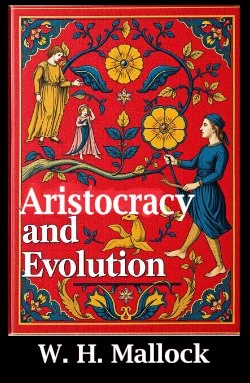
Aristocracy and Evolution: A Study of the Rights, the Origin, and the Social Functions of the Wealthier Classes

By W. H. Mallock

W. H. Mallock’s Aristocracy and Evolution: A Study of the Rights, the Origin, and the Social Functions of the Wealthier Classes stands as one of the most articulate and unapologetic defences of aristocracy produced in the late Victorian period. First published in 1898, the book emerges at a moment when Britain’s traditional ruling classes were confronting profound social and political changes: the extension of the franchise, the rise of organised labour, the spread of socialist ideas, and the increasing challenge of scientific modernity to long-standing moral and political assumptions. Mallock’s project is, at one level, a restatement of conservative principles; yet it is also an attempt to reframe aristocratic privilege in terms of contemporary scientific thought, particularly evolutionary theory. In doing so, he sought not merely to justify inequality, but to explain it as a necessary and even beneficial feature of social organisation.

Ultimately, Aristocracy and Evolution can serve both as a caution and a provocation in today’s political debates. For those wary of concentrated power, it warns that some degree of hierarchical leadership may be inescapable if societies are to function effectively. For those inclined to defend elites, it insists that legitimacy rests not on birth, wealth, or even innovation alone, but on demonstrable contributions to the public good. The intersection of these insights with the populist critique of unaccountable power yields a more demanding standard for leadership than either side often admits. Mallock’s Victorian defence of hierarchy thus becomes, in our time, a challenge to reimagine what responsible, capable, and accountable leadership might look like in an age when the very concept of authority is under strain.

That such questions remain unresolved more than a century later is a testament both to the durability of the problem and to the unsettling clarity with which Aristocracy and Evolution poses it. Whether one accepts Mallock’s conclusions or disputes them, the book demands that we consider, without sentimentality or evasion, the relationship between talent and power, and the terms on which society should entrust its future to the few who will inevitably shape it.

Read-Me.Org Inc. New York-Philadelphia-Australia. 2025. 195p.

download
kindle $2.99 -- Paperback $9.99
Read-Me.Org
Social Environment and Moral Progress :

By Alfred Wallace (Author), Colin Heston (Introduction) Format: Kindle Edition

Alfred Russel Wallace’s final major work, Social Environment and Moral Progress, is a profound reflection on human morality, society, and evolution, written at the culmination of a life devoted to scientific inquiry and humanitarian ideals.

Wallace argues that morality is an enduring and intrinsic aspect of human nature, resilient even in the face of adverse social conditions. He traces the persistence of moral truth throughout history, asserting that the "divine spark" of ethical consciousness cannot be extinguished by ignorance, poverty, or injustice . A central theme of the book is Wallace’s critique of industrial capitalism and social inequality. He condemns the Victorian era’s rapid economic growth for fostering unprecedented social immorality, where wealth accumulation came at the cost of human dignity and justice . He describes the social environment of his time as "rotten from top to bottom," emphasizing the failure of governments and elites to address widespread poverty and suffering . Wallace also challenges the misuse of evolutionary theory, particularly the ideas promoted by eugenicists and social Darwinists. He strongly opposes the notion that society should decide who is "fit" to reproduce, calling such policies morally repugnant and scientifically flawed .Instead, Wallace proposes a radical alternative rooted in cooperation and equality. He advocates for a universal basic income, believing it would empower individuals—especially women—to make reproductive choices freely and responsibly, reduce poverty, and foster a more moral and civilized society . He envisions a future where education, health, and freedom are universally accessible, allowing natural selection to operate through informed and compassionate human choices rather than brutal competition.

Wallace’s work stands as a visionary blend of evolutionary science and social reform, offering a hopeful and humanistic perspective on progress. His belief in the moral potential of humanity and the need for systemic change remains strikingly relevant today.

Read-Me.Org Inc. New York-Philadelphia-Australia. 2025. 111p.

download
kindle $1.99 -- paperback $6.99
Read-Me.Org
What is Coming? A European Forecast

By H. G. Wells. Introduction by Colin Heston

In the wake of the Great War, H.G. Wells’s What Is Coming? A European Forecast emerges not merely as a speculative treatise but as a profound intellectual reckoning with the forces that have shaped—and will continue to shape—the modern world. Written in 1916, at a time when the outcome of the war remained uncertain and its consequences unfathomable, Wells offers a sweeping analysis of the social, political, and economic transformations that the conflict has set in motion. His introduction to the future is not a prophecy in the mystical sense, but a reasoned extrapolation grounded in scientific thinking, historical precedent, and a deep understanding of human nature. Wells does not seek to predict events with precision; rather, he aims to illuminate the trajectories of thought, governance, and collective behavior that will define the post-war era.

In What Is Coming?, Wells does not offer comfort or certainty. He offers clarity, urgency, and a challenge. The future, he insists, will not be shaped by treaties or conferences alone, but by the moral and intellectual evolution of individuals and societies. The war has torn away the veils of tradition and exposed the raw materials of a new world. Whether that world will be built with wisdom or squandered in renewed conflict depends on the choices made in its aftermath. Wells invites his readers to think boldly, act generously, and prepare not just for peace, but for the responsibilities that peace entails.

Read-Me.Org Inc. New York-Philadelphia-Australia. 2025. 177p.

download
Kindle $1.99 -- Paperback $9.99
Community Organization: A Study Of Its Theory And Current Practice

By Jesse Frederick Steiner

In Community Organization, Jesse Frederick Steiner offers a pioneering exploration of how communities evolve, organize, and mobilize to meet collective needs. First published in 1925, this seminal work remains a cornerstone in the fields of sociology and social work, providing timeless insights into the dynamics of community life.

Steiner masterfully examines the interplay between economic forces, social institutions, and grassroots movements, tracing the development of key initiatives such as the playground movement, school-community centers, public health campaigns, and the rise of the American Red Cross. Through detailed case studies and philosophical reflections, he reveals how communities can transform from fragmented groups into cohesive, purpose-driven entities.

Whether you're a student of social sciences, a community leader, or simply passionate about civic engagement, Community Organization offers a rich, thoughtful framework for understanding and shaping the social fabric of our lives.

The Century Co. NY. London. 1825. 401p.

download
Online Hate Speech and Discrimination in the Age of AI

By Petra Regeni and Claudia Wallner

RUSI and the Institute for Strategic Dialogue (ISD) Germany convened a closed-door roundtable event in Berlin on 31 March 2025 to discuss online hate speech and discrimination in Europe in the age of AI. The roundtable included presentations across three sessions (corresponding with the sections of this paper) and participants from academia, civil society, advocacy groups, legal non-profit organisations and the private sector. The event provided a space to discuss online hate speech and discriminatory rhetoric – ranging from antisemitism, misogyny and anti-LGBTQI+ narratives to racism and xenophobia – as well as the implications of AI in their spread and amplification. Discussions centred around the complexities introduced by AI-generated and targeted hate speech, and explored potential responses, from regulatory measures and content moderation to educational initiatives promoting critical thinking skills. This conference report summarises key themes and points raised during the roundtable, none of which are attributable to individual participants and presenters.

Conference Report

London: Royal United Services Institute for Defence and Security Studies (RUSI), 2025, 13p.

download
Unpopular Government In The United States

By Albert Kales (Author), Colin Heston (Introduction)

Albert M. Kales’s Unpopular Government in the United States, published in 1914, is a searching and often unsettling examination of the American democratic system at a time when the country was undergoing profound political and social transformation. Kales, a legal scholar and reform advocate, wrote during the Progressive Era—a period marked by widespread concern over corruption, inefficiency, and the growing disconnect between the ideals of democracy and the realities of governance. His book is not a polemic but a carefully reasoned argument that seeks to understand why a government founded on popular sovereignty could become so alienated from the people it purports to serve. An important aspect of Kales’s reform agenda is his emphasis on civic education. He believes that a more informed electorate is essential to the health of democracy and calls for greater efforts to educate citizens about the workings of government and the responsibilities of citizenship. He also supports mechanisms such as the initiative and referendum, which allow citizens to bypass legislatures and enact laws directly, though he cautions that these tools must be used judiciously to avoid further complicating the political process.

Although Kales’s book did not become a staple of political science curricula, it has been periodically rediscovered by scholars interested in the history of democratic theory, administrative reform, and the Progressive movement. His insights into voter disengagement and the structural barriers to meaningful democratic participation have gained renewed relevance in contemporary discussions about democratic backsliding, political polarization, and the role of technocracy in modern governance. However, many of Kales’s core ideas continue to resonate in modern political systems, particularly in debates about democratic participation, judicial independence, and the role of expertise in governance.

download
kindle $1.99 -- paperback $5.99
Woman And Socialism

By August Bebel (Author), Colin Heston (Introduction)

August Bebel’s Woman and Socialism is one of the most influential and enduring works in the history of socialist and feminist thought. First published in 1879 as Die Frau und der Sozialismus, the book represents a groundbreaking synthesis of Marxist theory and the struggle for women’s emancipation. Bebel, a co-founder of the German Social Democratic Party and a leading figure in the international socialist movement, sought to demonstrate that the liberation of women was not only compatible with socialism but essential to its realization. His work remains a foundational text for understanding the intersection of class and gender oppression, and it continues to resonate in contemporary debates about equality, labor, and social justice.

Woman and Socialism is not merely a critique; it is also a vision of transformation. Bebel outlines how a socialist society would fundamentally alter the conditions of women’s lives. In such a society, he argues, the means of production would be collectively owned, and both men and women would participate equally in productive labor. The state would assume responsibility for many of the functions traditionally relegated to women—such as childcare, education, and elder care—thus freeing women from the confines of domestic servitude. Marriage would become a voluntary and egalitarian union, based on mutual affection rather than economic necessity.

Bebel’s work is notable for its breadth and depth. He addresses a wide range of issues, including education, reproductive rights, prostitution, and the role of women in political movements. He also engages with contemporary debates within the socialist movement, challenging those who viewed the “woman question” as secondary or divisive. For Bebel, the emancipation of women is not a peripheral concern but a central pillar of socialist theory and practice. He argues that a society cannot be truly free or just if half its population remains oppressed. Bebel explores a wide range of themes that connect the struggle for women’s emancipation with the broader goals of socialism.

Bebel’s introduction itself serves as both a historical overview and a political manifesto. It invites readers to reconsider the roots of gender inequality and to imagine a future in which social and economic structures support, rather than hinder, human flourishing. Bebel’s synthesis of feminism and socialism was ahead of its time, and his insistence on the inseparability of class and gender struggles remains a powerful and relevant message. His work continues to inspire activists, scholars, and readers committed to building a more equitable world.

There are a number of editions and translations each edition slightly different. For example, sometime the title is written as Woman Under Socialism. The extensive use of tables of statistics also varies form one edition to another. This edition has been reformatted, designed, abridged and annotated with an Introduction by renowned novelist and story writer Colin Heston to remove errors and other distracting content that occurred in the original edition, making the book more accessible for the present day reader.

Read-Me.Org Inc. New York-Philadelphia-Australia. 2025. 359p.

download
kindle $2.99 -- paperback $11.99
The Truth About Socialism

By Allan L. Benson (Author), Colin Heston (Introduction)

Allan L. Benson’s The Truth About Socialism is a bold and impassioned political manifesto that seeks to demystify socialism for the American public and to present it not as a foreign ideology or a utopian dream, but as a practical and necessary response to the injustices of early 20th-century capitalism. Written during a time of profound economic inequality, labor unrest, and political disillusionment, the book is both a critique of the existing capitalist order and a call to action for working-class Americans to reclaim their rightful share of the nation’s wealth and power. Benson is particularly effective in dismantling the myths and fears surrounding socialism. He anticipates the objections of his critics—those who equate socialism with tyranny, inefficiency, or the loss of individual freedom—and responds with clarity and conviction. He argues that true freedom cannot exist in a society where economic survival depends on the whims of employers and where political power is bought and sold by the wealthy. For Benson, socialism is not the enemy of liberty but its fulfillment: a system in which all people have the material security and democratic voice necessary to live freely and fully.

Benson's introduction to The Truth About Socialism sets the stage for a powerful and accessible exploration of socialist principles. It combines moral passion with analytical rigor, historical insight with political urgency. Benson’s work remains a compelling document of its time, reflecting the hopes and struggles of a generation seeking to build a more just and equitable society. It also continues to resonate today, as debates over inequality, labor rights, and the role of government in the economy remain as vital as ever.

Read-Me.Org Inc. New York-Philadelphia-Australia. 2025. 132p.

download
kindle $2.99 -- paperback $6.99
The Socialists And The War

By William English Walling (Author), Colin Heston (Introduction)

William English Walling’s The Socialists and the War: A Documentary Statement of the Position of the Socialists of All Countries; With Special Reference to Their Peace Policy is a powerful and timely compilation that captures the ideological and political turmoil that gripped the international socialist movement during the First World War. Published in 1915, at the height of the global conflict, the book serves as both a historical record and a moral inquiry into how socialist parties and leaders across nations responded to the unprecedented crisis of global warfare. Walling, a prominent American socialist and journalist, undertakes the ambitious task of documenting the fractured responses of socialist organizations to the war, revealing both the strength and the fragility of international solidarity in the face of nationalism and militarism.
The introduction to this volume sets the tone for a work that is as much about disillusionment as it is about documentation. Walling begins by acknowledging the deep betrayal felt by many socialists when the war broke out and major socialist parties—particularly in Germany, France, and Britain—chose to support their respective national war efforts. This decision, in many cases, ran counter to the long-standing commitments of the Second International, which had pledged to oppose imperialist wars and to promote working-class unity across national borders. Walling does not shy away from the painful truth: that the war exposed the limits of internationalism and revealed the powerful grip of nationalism even within movements that had long claimed to transcend it.
A central theme of the book is the tension between socialist ideals and national loyalties. Walling presents a wide array of primary documents—speeches, party resolutions, manifestos, and editorials—that illustrate how socialist leaders justified their support for or opposition to the war. Some, like the German Social Democrats, argued that they were defending their nation against aggression; others, like the Russian Bolsheviks and a minority of Western European socialists, condemned the war as a capitalist enterprise and called for revolutionary opposition. Walling’s editorial voice is present throughout, guiding the reader through these conflicting positions and offering critical commentary on their implications.
Read-Me.Org Inc. New York-Philadelphia-Australia. 2025. 523p.

download
kindle $1.99 -- paperback $11.99
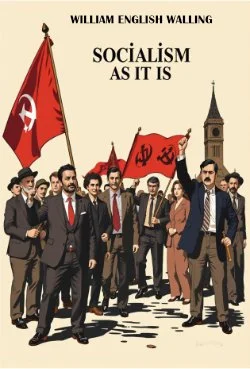
Socialism as it Is: A Survey Of The World-Wide Revolutionary Movement

By William English Walling (Author), Colin Heston (Introduction)

William English Walling’s Socialism As It Is: A Survey of the World-Wide Revolutionary Movement is a landmark work in early 20th-century political thought, offering a penetrating and pragmatic analysis of the global socialist movement at a time when it was rapidly gaining momentum. Published in 1912, the book stands apart from many contemporary treatments of socialism by refusing to rely solely on abstract theory or ideological polemic. Instead, Walling grounds his analysis in the lived realities, organizational structures, and political strategies of socialist parties and labor movements across the world. His goal is not to speculate on what socialism might become, but to examine what socialism already is—how it functions, how it evolves, and how it interacts with the broader forces of capitalism, democracy, and industrial society.
From the outset, Walling makes clear that his focus is on the practical socialism of organized movements, not the utopian visions or doctrinal purity of theorists. He critiques both the uncritical idealism of some socialist writers and the dismissive caricatures offered by opponents of socialism. Instead, he insists that socialism must be understood through its actions—through the decisions made in party congresses, the resolutions passed by labor unions, and the policies pursued by socialist representatives in parliaments and municipalities. This empirical approach allows Walling to present socialism not as a monolith, but as a dynamic and multifaceted phenomenon, shaped by national contexts, historical contingencies, and internal debates.
Ultimately, Socialism As It Is is a work of both scholarship and advocacy. Walling writes with the conviction that socialism is not only a viable political force but a necessary one, capable of addressing the deep inequalities and instabilities of modern industrial society. Yet he is also clear-eyed about the challenges the movement faces—from internal divisions to external repression, from ideological rigidity to political compromise. His introduction sets the tone for a book that is both analytical and engaged, offering readers a nuanced and grounded understanding of socialism not as a distant ideal, but as a living, evolving force in the world.

Read-Me.Org Inc. New York-Philadelphia-Australia. 2025. 361p.

download
kindle $1.99 -- paperback $11.99
Counterspeech: Multidisciplinary Perspectives on Countering Dangerous Speech

Edited by Stefanie Ullmann and Marcus Tomalin

This volume looks at the forms and functions of counterspeech as well as what determines its effectiveness and success from multidisciplinary perspectives. Counterspeech is in line with international human rights and freedom of speech, and it can be a much more powerful tool against dangerous and toxic speech than blocking and censorship. In the face of online hate speech and disinformation, counterspeech is a tremendously important and timely topic. The book uniquely brings together expertise from a variety of disciplines. It explores linguistic, ethical and legal aspects of counterspeech, looks at the functions and effectiveness of counterspeech from anthropological, practical and sociological perspectives and addresses the question of how we can use modern technological advances to make counterspeech a more instantaneous and efficient option to respond to harmful language online. The greatest benefit of counterspeech lies in the ability to reach bystanders and prevent them from becoming perpetrators themselves. This volume is an excellent opportunity to spread the word about counterspeech, its potential, importance, and future endeavors. This anthology is a great resource for scholars and students of linguistics, philosophy of language, media and communication studies, digital humanities, natural language processing, international human rights law, anthropology and sociology, and interdisciplinary research methods. It is also a valuable source of information for practitioners and anyone who wants to speak up against harmful speech.

Oxford; New York: Routledge, 2023. 225p.

download
Media and Propaganda in an Age of Disinformation

Edited by Nelson Ribeiro and Barbie Zelizer

A critical and timely collection that argues for the centrality of propaganda in discussions about the contemporary media landscape and its informational ecosystems. This book explores how “propaganda,” a foundational concept within media and communication studies, has recently been replaced by alternative terms (disinformation, misinformation, and fake news) that fail to capture the continuities and disruptions of ongoing strategic attempts to (mis)guide public opinion. Edited by Nelson Ribeiro and Barbie Zelizer, the collection highlights how these concepts must be understood as part of a long legacy of propaganda and not just as new phenomena that have emerged in the context of the digital media environment. Chapters explore the strategies and effects of propaganda through a variety of globally diverse case studies, featuring both democracies and autocratic regimes, and highlight how only by understanding propagandistic forms and strategies can we fully begin to understand how public opinion is being molded today by those who resort to deception and falsehood to gain or keep hold of power. An important resource for students and scholars of media and communication studies and those who are studying and/or researching media and propaganda, media and power, disinformation, fake news, and political communication.

Oxford, UK: New York: Routledge, 2025. 214p.

download
Corruption and Constitutionalism in Africa: Revisiting Control Measures and Strategies

By CM Fombad

This is the fourth volume in a series which is based on the Stellenbosch Annual Seminar on Constitutional Law in Africa (SASCA). The aim is to focus on an issue of critical constitutional importance to Africa in its ongoing development of governance founded on constitutionalism and democracy. And that issue is indeed critical. There can be little doubt that the endemic corruption that has spread into every aspect of social, economic, and political life is at the heart of the crisis of constitutionalism in Africa. The only surprise is that it is not until recently that the severity of the problem has attracted the attention it warrants. Most anti-corruption measures over the years have been inadequate, serving merely as symbolic gestures. The African Union’s declaration of 2018 as the ‘African anti-corruption year’, albeit belated, is an open recognition by African governments of the impact corruption will have on the continent unless urgent steps are taken. The key objective of this book is to draw attention to the problem of corruption and the need for remedial action. The complexity of the situation, with all its multi-faceted dimensions, cannot fully be explored in a single work. Nevertheless, the intention to put this matter on the agenda when it was discussed at the 2017 SASCA seminar seems to have worked in that, as noted, the African Union not only declared 2018 a year to combat corruption but also set aside 11 July of every year as an ‘Africa anti-corruption day’.

Oxford, UK; New York: Oxford University Press, 2020. 563p.

download
Diversity and Disagreement From Fundamental Biases to Ethical Interactions

By Adam Feltz and Edward T. Cokely

How should you live your life? Considering a wide range of possible per- spectives, decision theory offers a simple prescription: Just make decisions that get you more of what you should want. It’s a very straightforward recommendation. Nevertheless, it’s hard to overstate the transformative influence of decision theory and its components, including probability theory and statistics. It seems likely that nearly every living person has felt decision theory’s influence in many ways (e.g., it is an essential foundation of modern science and engineering). And with each passing day the influ- ence of decision theory seems to be accelerating thanks to increases in knowledge, connectivity, and computing power. Yet despite its growing impact, decision theory cannot tell us what decision we should make unless we know what we should want, or more precisely what we should value.

This Palgrave Macmillan imprint is published by the registered company Springer Nature

Switzerland AG. 300p.

download
Homelessness and Property Tax Freedom: An Empirical Note

By Richard J. Cebula, Department of Economics and Center for the Study of Public

Choice, George Mason University

Persistent homelessness is present across a variety of nations. These include such politically and economically diverse nations as the UK (Bramley and Fitzpatrick, 2018), US (Early, 2005; Fargo et al, 2013; Corinth and Lucas, 2018; Glynn and Fox, 2019), Spain (Cabrera and Garcia- Perez, 2020), and Australia (Cobb and Zhu, 2017). Not surprisingly, in response, there has appeared an impressive body of research literature seeking to identify factors that systemat- ically influence this phenomenon. Such studies, especially for the US, focus on a variety of explanatory variables. Among these variables, educational attainment, income, warmer cli- mate, the cost of housing/rent levels (Grimes and Chressanthis, 1997; Quigley et al, 2001) and the overall cost of living (Cebula and Alexande

Academia Letters, July 2021, 7p.

download
UNPACKING Carmine Conte STRUCTURAL AND INSTITUTIONAL RACISM IN 8 EU MEMBER STATES: Senior Legal Policy Analyst Key Issues and Policy Recommendations

By Carmine Conte

Migration Policy Group (MPG) has released a groundbreaking report that exposes the pervasive, yet often overlooked, forms of racism embedded within the structures of society across eight EU member states: Czechia, Germany, Greece, Latvia, the Netherlands, Romania, Spain, and Sweden. This research was conducted thanks to the Robert Bosch Stiftung’s support. The report reveals how structural and institutional racism systematically disadvantages specific communities, operating within social, economic, and political institutions.

Unlike overt acts of racial violence, structural racism is entrenched in sectors like housing, education, healthcare, employment, policing, and justice. It manifests through seemingly neutral policies and practices that disproportionately impact racial and ethnic groups, perpetuating inequality and marginalisation.

“Addressing structural and institutional racism is crucial for creating a more just and equitable society,” said Isabelle Chopin, Director of MPG. “This requires concerted efforts at both national and European levels to dismantle the systems that sustain racial inequality.”

MPG, a leading advocate for racial equality since the 1990s, has significantly influenced European policy, including the adoption of the Racial and Employment Equality Directives in 2000. The organisation has also provided extensive training and published significant research on racial discrimination.

The new report, part of a broader project led by MPG, offers a comparative analysis of structural racism in the eight examined countries. Despite the absence of explicit legal definitions, EU law mandates protection against racial discrimination. However, many national legal frameworks adopt a “colour-blind” approach, complicating efforts to address systemic issues.

The report highlights how structural racism disproportionately affects Roma, Black people, Muslims, and, in Sweden, the Sámi population. It also underscores challenges such as racial profiling, excessive use of force by law enforcement, and the underreporting of racism against Asians and antisemitism.

Structural racism is particularly evident in the justice system, healthcare, education, employment, and housing, with far-reaching impacts on the lives of racialised groups. The report also points to more subtle forms of racism, including online hate speech, prejudice, and denial of access to services.

While the EU’s Anti-racism Action Plan 2020-2025 acknowledges structural racism, the report notes that most countries still view racism as isolated incidents rather than a systemic problem.

MPG calls for urgent action at both national and European levels to dismantle the structures that perpetuate racial inequality and to empower historically marginalised communities.

Brussels: Migration Policy Group, 2024. 103p.

download
The legal framework to combat anti-Muslim hate in the European Union

By András Kádár

The report, authored by András Kádár and coordinated by MPG, for the European network of legal experts in gender equality and non-discrimination, reveals widespread anti-Muslim discrimination and bias, highlighting critical gaps in legal protections and enforcement. Despite existing frameworks, many Muslims and individuals perceived to be Muslim face systemic barriers and societal prejudice across key areas of life.

Key findings include:

Employment: Nearly one-third of Muslim respondents reported experiencing discrimination during their job search.

Harassment: One in four faced harassment linked to their ethnic or immigrant background.

Access to Housing and Healthcare: Half of the respondents encountered discrimination based on their names, skin colour, or physical appearance.

The report also highlights a surge in anti-Muslim hate following the October 2023 attacks, with entire communities targeted by harmful stereotypes and divisive rhetoric. Structural challenges, such as underreporting and the normalisation of bias in public discourse, further hinder progress.

The report calls on policymakers and institutions to:

Address enforcement gaps in anti-discrimination laws.

Provide robust support mechanisms for victims of discrimination.

Challenge anti-Muslim rhetoric at every level of society.

This report reinforces MPG’s commitment to advancing evidence-based strategies for equality and inclusion.

The time to act is now. Together, we can build societies where diversity is celebrated, and everyone is treated with dignity and respect.

As the European Union’s anti-racism action plan for 2020-20251 (EU anti-racism action plan) emphasises, ‘[r]acism damages society in many different ways. Most directly, it means that a large number of people living in Europe face discrimination, affecting their human dignity, their life opportunities, their prosperity and their well-being, and often also their personal safety.’2 This predicament described by the action plan is the everyday reality of many Muslims and persons perceived to be Muslims across Europe. The persistence of anti-Muslim sentiment in a number of European societies and the widespread discrimination against members of the Muslim community are strongly substantiated by sociological research. Nearly one-third of the Muslim respondents to the second European Union minorities and discrimination survey (EU-MIDIS II survey) carried out by the European Union Agency for Fundamental Rights (FRA) in 2017 indicated that they had suffered discrimination when looking for a job; one in four Muslim respondents reported harassment due to their ethnic or immigrant background, while their names, skin colour or physical appearance prompted discrimination against about half of the respondents when they were looking for housing or a job, or were receiving healthcare.3 The FRA’s 2019 fundamental rights survey showed that 32 % of the more than 28 000 respondents would feel uncomfortable about having a neighbour who is Muslim; 41 % would not feel comfortable with a family member of theirs marrying a Muslim person; and 31 % were of the view that it would be acceptable for a shop not to hire a Muslim woman who wears a headscarf because of concerns about how some customers might react.4 The 2023 Eurobarometer survey on discrimination in the European Union5 also confirmed the existence of antiMuslim bias, although it was conducted before the attack of 7 October 2023, which has resulted in a surge of anti-Muslim hate speech on the internet, and intensified racism, intolerance and discrimination against Muslim people in several European countries. As the 2023 annual report of the European Commission against Racism and Intolerance (ECRI) concludes: ‘the number of hate incidents against Muslims […] increased manifold in the aftermath of the attack. Muslims received blame for the attack and other attacks in the Middle East, based on stereotyping of whole communities and their perceived connections with the use of violence.’6 Similar trends have been reported for the purposes of the present study in countries including Austria, Belgium, Croatia, Denmark, France, Germany, the Netherlands, Lithuania, Luxembourg, Slovenia and Sweden. In this situation, joint European efforts to combat anti-Muslim hate are gaining increased importance. The European Union has not only adopted policies and commitments with a view to combating racial and/or religious hatred, including anti-Muslim hate, but has also put in place numerous legal instruments that can be used to counter different manifestations of anti-Muslim bias, including but not limited to the Framework Decision on combating certain forms of expressions of racism and xenophobia,7 the Racial Equality Directive,8 the Employment Equality Directive,9 the Victims’ Rights Directive,10 the Audiovisual Media Services Directive,11 and the Digital Services Act.12 In the EU anti-racism action plan, the European Commission encourages the Member States to ensure that they fully transpose and properly apply these pieces of EU law designed to provide protection against racism. In line with this call, this thematic report provides a comparative overview of how these legal instruments have been complied with in the 27 EU Member States, and aims to establish how and to what extent the legal framework and its practical application in the different Member States provide protection against anti-Muslim hate in three main areas: (i) non-discrimination; (i) hate crimes; and (iii) hate speech. It identifies gaps in the existing legal protections and/or their enforcement across the EU Member States and makes recommendations on mechanisms for the provision of effective protection against acts motivated by anti-Muslim hate. Important trends in anti-Muslim hate The research conducted for the purposes of this report has identified some overarching and strongly interlinked trends in anti-Muslim hate across Europe: the ‘racialisation’ of Muslims; the structural nature of anti-Muslim discrimination; the appearance of anti-Muslim hate in the political mainstream; and the enormous degree of underreporting of anti-Muslim incidents. As described in ECRI’s General Policy Recommendation No. 5 on preventing and combating anti-Muslim racism and discrimination, anti-Muslim discrimination is structural, because it ‘does not solely manifest in instances of interpersonal hostility or discrimination’, but ‘is woven into the ways our societies function, and operates through norms, routines, patterns of attitudes and behaviour that create obstacles in achieving […] effective equality’. The document also points to the ‘racialisation’ of Muslims, i.e. the process by which certain groups of society (identified by, for example, phenotype or cultural identifiers) are ascribed ‘certain […] attributes that are presented as being innate to all members’ of that group. ‘[O]nce identified or perceived as a member of a group, one is deemed as embodying characteristics based on, for instance, skin colour, ethnic or national origin or religion inherent to all members of that group. This process is […] turning a diverse set of people into an allegedly homogeneous group, whose members are presented as “Other”.’13 The main challenges in tackling anti-Muslim hatred are strongly linked to these two specific, and also interconnected, phenomena: the racialisation of Muslims paves the way to falsely presenting and stigmatising them as a homogeneous, monolithic block posing threats to European values and security, which greatly contributes to the success of populist political forces using fear, anger and anxiety as key elements of their strategy to enter the political mainstream. It also reinforces the structural nature of anti-Muslim discrimination, which in turn has a devastating impact on, among others, Muslim communities’ trust in the legal and institutional system that should be protecting them, leading almost directly to the unsettling extent of underreporting of instances of anti-Muslim hate and discrimination.

Brussels: EUROPEAN COMMISSION , 2024. 156p.

download