Open Access Free Library
CRIME+CRIMINOLOGY.jpeg

CRIME

Violent-Non-Violent-Cyber-Global-Organized-Environmental-Policing-Crime Prevention-Victimization

Posts in Homelessness
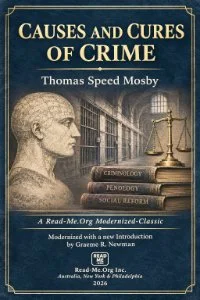
CAUSES AND CURES OF CRIME

By Thomas Mosby (Author), Graeme Newman (Introduction)

n 1913, Thomas Speed Mosby, who had served as Pardon Attorney to Missouri Governor Joseph W. Folk, set out to explain to the general reader why people commit crimes and what society should do about it. Drawing on years of reviewing convicts’ petitions for clemency, and on the leading criminologists of his day, he organized his answer like a medical textbook. Crime was a disease of the social body, to be understood through its causes, its prevention, and its cure.

Part I, Etiology, examines the “cosmic,” social, and individual factors of crime. These range from climate and season to corrupt prosecutors, sensational newspapers, poverty, alcoholism, and Lombroso’s theory of the born criminal. Part II, Prophylaxis, turns to prevention through eugenics, the sterilization laws then spreading across the states, trade education, and social reform. Part III, Therapeutics, traces the history of punishment and argues forcefully against the death penalty. It includes a remarkable state-by-state survey of American parole laws in 1912 and 1913, and closes with a program for “the new penology.”

Causes and Cures of Crime is a vivid record of American criminal justice reform before the First World War. It shows both the movement’s humane ambitions and its dangerous enthusiasms. Its photographic plates of “criminal types,” supplied by the St. Louis and Kansas City police departments, and its illustrations of anthropometric instruments show how early criminologists hoped to read criminality in the human face and body.

This Read-Me.Org Modernized-Classic edition corrects and modernizes the original text while retaining Mosby’s arguments, statistical tables, all fourteen photographic plates, and the text figures. A new introduction by Colin Heston places the book in historical context, including the later discrediting of eugenics and compulsory sterilization. Review and Discussion Questions for each chapter make the edition well suited to courses in criminology, criminal justice history, and the history of social science.

Read-Me.Org Inc. New York-Philadelphia-Australia. 2026. p.207.
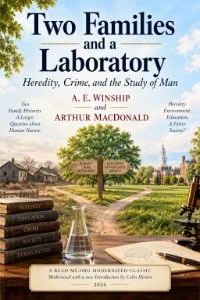
Two Families and a Laboratory: Heredity, Crime, and the Study of Man

A. E. Winship and Arthur MacDonald. Introduction nad Review Questions, Graeme Newman.

Are people born to crime and poverty, or made by their surroundings? This volume brings together two influential American works from the turn of the twentieth century that tried to answer that question.

In Jukes–Edwards: A Study in Education and Heredity (1900), educator A. E. Winship sets the infamous “Jukes” family against the descendants of the great colonial theologian Jonathan Edwards. The Jukes were the subject of Richard Dugdale’s famous study of crime and pauperism. Edwards’s descendants included college presidents, judges, physicians, senators, and a vice-president of the United States. Winship’s vivid portraits, from Sarah Edwards’s household to the troubled brilliance of Aaron Burr, make a case for the combined power of inheritance, training, and education.

In A Plan for the Study of Man (1902), Arthur MacDonald of the U.S. Bureau of Education urges Congress to establish a national laboratory for the scientific study of “the criminal, pauper, and defective classes.” He wanted it to study ordinary people as well. His wide-ranging survey covers anthropometry, measurements of schoolchildren, instruments for gauging sensitivity to heat, touch, and pain, and hypnotism and suggestion. It also takes in the Mafia and the Camorra, alcoholism, moral education, prison reform, and a detailed case history of a young murderer. His original illustrations of laboratory instruments are reproduced.

The new introduction places both works in historical context. It traces their influence on the eugenics movement, the later criticism of their methods, and their surprising anticipation of modern child development and criminological research. Spelling and wording have been modernized throughout, tables have been summarized in prose, and review and discussion questions are included. The book will interest students and general readers in criminology, sociology, education, and the history of science.

Read-Me.Org Inc. New York-Philadelphia-Australia. 2026. p.196.

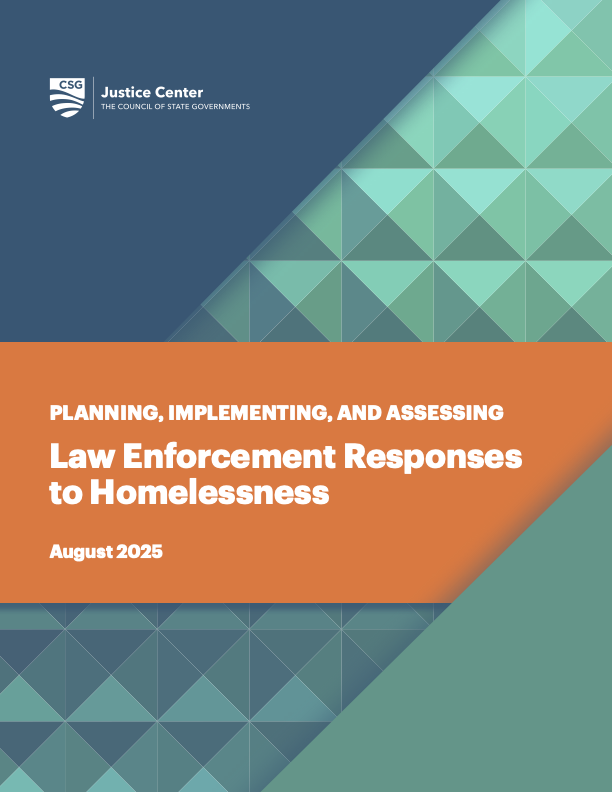
PLANNING, IMPLEMENTING, AND ASSESSING : Law Enforcement Responses to Homelessness  

By The Council of State Governments Justice Center

Homelessness is a growing crisis in America, increasing by 12% between 2022 and 2023 alone. While there are a range of ideas about how to address this issue, in many places across the country, law enforcement officers are still typically the default first responders to these kinds of community concerns. This publication details how communities can strategically plan for and assess their law enforcement homelessness response efforts, using a shared vision, a logic model, and regular assessments to determine if the response is achieving its intended goals. It also discusses the importance of expanding the knowledge base of law enforcement practices and strategies to establish a set of national standards for effective and successful homelessness responses.