Open Access Free Library
CRIMINAL JUSTICE.jpeg

CRIMINAL JUSTICE

CRIMINAL JUSTICE-CRIMINAL LAW-PROCDEDURE-SENTENCING-COURTS

How to Start (or Stop) a War on Crime: A Conceptual Cookbook

By Brandon E. Beck

Beginning in the early 1990s, the Executive Branch began an era of enforcement of federal firearms crime that was different in kind and degree from the prior seventy-five years. The federal crime policies of the 1990s and 2000s led to a significant increase both in the total number of federal firearms prosecutions and in how often mandatoryminimum statutes were charged. But later, in the 2010s and 2020s, there were times when the number of firearms prosecutions stabilized, and the number of mandatory-minimum sentences decreased. This Article seeks to use federal firearms prosecutions, in this era of enforcement, as a lens through which to create a conceptual framework for thinking about Executive Branch crime policy. Specifically, it identifies and explores five essential ingredients of any effective “war on crime.” Then, and perhaps more importantly, it identifies and explores three countervailing ingredients that have shown promise in slowing or even stopping aspects of a war on crime. Its goal is to create definitional and conceptual touchstones through which to discuss¾and critique¾federal crime policy. Aspirationally, this Article will prove helpful not only to criminal and constitutional law academia but also to policymakers and reform advocates. It also carries a unique relevance as we enter the final stretch of a presidential campaign cycle, with two candidates who likely hold contrasting views on crime policy, reform efforts, and the mission of the Department of Justice.

Determinants of Support for Extralegal Violence in Latin America and the Caribbean

By José Miguel Cruz and Gema Kloppe-Santamaría 

What are the factors behind citizen support for the use of extralegal violence in Latin America? The prevailing argument is that, in countries overwhelmed by skyrocketing levels of criminal violence, people endorse the use of extralegal violence as a way to cope with insecurity. Other scholars believe that support for extralegal violence is the result of state withdrawal and failure. Few empirical studies, however, have tested any of these arguments. In this article, using regional data from the 2012 AmericasBarometer, we examine different explanations regarding citizen support for the utilization of extralegal violence in Latin America and the Caribbean. We developed a multi-item scale that gauges support for different forms of extralegal violence across the Americas, and we hypothesize that support for extralegal violence is higher not only in countries with extreme levels of violence but especially in countries in which people distrust the political system. Results indicate that support for extralegal violence is significantly higher in societies characterized by little support for the existing political system.

Circumscribing Alaskan Law Enforcement's Access to Pretrial Electronic Monitoring Location Data

By Rosa Gibson

In Alaska, pretrial detainees comprise much of the state’s prison population. Electronic monitoring—made possible by recent bail reforms—provides a pathway to pretrial release for those who cannot afford to pay bail. Using GPS data, the Pretrial Enforcement Division can monitor the location of a releasee’s ankle monitor for supervisory purposes. But when law enforcement seeks warrantless access to that data to investigate crimes other than the one for which a releasee is awaiting trial, that intrusion raises concerns under Alaska’s constitutional right to privacy. This Note argues that the Alaska judiciary, which is best positioned to guard the privacy of pretrial releasees in this area, should treat warrantless searches of this type as per se unreasonable, absent narrow exceptions. This Note posits that a reverse location search of pretrial electronic monitoring data for general investigative purposes constitutes a “search” under both the U.S. and Alaska Constitutions. Through the contextualization of Alaska’s use of electronic monitoring, analysis of the impact of Alaska’s constitutional right to privacy on the search inquiry, and analogy to the constitutionally suspect geofence search, this Note demonstrates that requiring a warrant for this data for investigative purposes is consistent with Alaska’s search-and-seizure jurisprudence. Acknowledging the inherent tradeoffs involved in pretrial release, this Note strives to establish a workable middle ground where law enforcement can access sophisticated tools in the interest of public safety without abandoning the privacy values the Alaskan people have enshrined in their constitution.

Paying Financial Sanctions via Incarceration: A Case Study of “Sitting Out”

By  Beth Colgan and Jordan B. Wood

This Article provides a comprehensive statewide study of a practice by which courts order defendants to pay financial sanctions—fines, costs, and probation fees—by serving terms of incarceration. Though several states authorize these practices, to date, very little is known about the extent to which payment via incarceration occurs and the different ways it is employed. This Article examines the use of the practice in Nebraska, where it is colloquially referred to as “sitting out.” Our study specifically focuses on all misdemeanor cases in Nebraska county courts with judgments (an adjudication of guilt and/or sentencing) during the year 2019.

This study examines the ways in which payment via incarceration is consistent with and diverges from the archetypal “modern debtors’ prison,” in which penalties related to the nonpayment of fines are widespread, imposed against people of limited means and particularly people of color, and which carry the risk that the inherent revenue-generating qualities of financial sanctions will pervert crime policy.

We find that Nebraska’s practices are consistent with that archetype in that payment via incarceration is deeply integrated into the jurisdiction’s legal systems as evident through its widespread use. We discover that courts ordered 10,027 defendants to pay financial sanctions via incarceration in over a quarter of all misdemeanor cases in our dataset, an alarmingly high rate. Those defendants also sat out a notably high amount of financial debt—$2,105,462 in the aggregate. At $150 per day (the rate at which Nebraska credits incarceration against financial debt), the defendants in our study spent a minimum of 14,036 days in Nebraska county jails to pay off fines, costs, and probation fees.

The results of the study are also consistent with a second archetype— that in modern debtors’ prisons, people of limited means, and particularly people of color, are subjected to financial sanctions they have no meaningful ability to pay and punished for their poverty when payment is not forthcoming. Our findings illustrate that many defendants who were subjected to sitting out were convicted for offenses frequently linked to poverty and many were declared indigent by the court for the purposes of appointing counsel. Further, the cases in our database exhibit troubling racial disparities.

Other findings, however, complicate the narrative surrounding modern debtors’ prisons, especially with regard to revenue-generation incentives of government actors. On its face, sitting out appears to undermine the idea that government actors are motivated by revenue generation. Unlike systems in which the debt remains outstanding, when a defendant is ordered to sit out financial sanctions, the debt is paid off by the incarceration. This ensures that revenues are never secured, while leaving the jurisdiction to bear the expense of incarceration. To investigate this issue and track how money moves into and out of government coffers when sitting out is employed, we create an original typology of the various forms of payment via incarceration useful for studying Nebraska’s system and those in other jurisdictions. What we find is geographic diversity in the mechanisms for sitting out that carry different fiscal implications.

After presenting the study’s results, we conclude by discussing the key takeaways of our research, its limitations, and several law and policy implications that open potential avenues for future research.

The Retroactive Application of Justice: Using Prosecutorial Discretion to Correct Sentences that No Longer Serve a Valid Purpose

By Jennifer Smith and Jeremiah Bourgeois

The criminal justice system is centered around three major participants: a prosecutor, a defense attorney, and a defendant. Each plays a role in the ensuing adversarial process, and each has their own perceptual lenses and interests. The prosecutor, for instance, seeks a conviction and focuses more on evidence of guilt than on innocence. The defense attorney endeavors to bring about a verdict of not guilty or a favorable plea rather than seeking to promote public safety. As for the defendant, he often cannot perceive the factors that led to his criminality, and he has neither the insight nor the will necessary to change his life’s trajectory. After sentencing, the criminal justice system in Washington State provides very few mechanisms for any of these participants to undo the result, even after decades have passed.2A prosecutor, who “has the Jennifer Smith Jeremiah Bourgeoisresponsibility of a minister of justice and not simply that of an advocate,”  may later come to question the fairness of the sentence. However, until 2020, prosecutors lacked the power to reduce the term of confinement. A defense attorney may belatedly find mitigating evidence, but procedural rules foreclose the opportunity to have the defendant resentenced.As for a defendant who underwent an incredible transformation after a substantial period of confinement, the only hope for an early release is the unlikely possibility of a sentence commutation. The absence of an effective means to undo injustice has long been the status quo of punishment in the State of Washington.

Beyond Reasonable Doubt: Confronting the Wrongful Conviction Crisis in the State of Ohio

By Ohioans To Stop Executions

Ohio’s cap­i­tal pun­ish­ment sys­tem has come into sharp focus with the release of two reports that exam­ine four decades of the state’s death penal­ty record and draw stark­ly dif­fer­ent con­clu­sions about the future of Ohio’s death penal­ty. On March 30, Ohioans to Stop Executions (OTSE) pub­lished Beyond Reasonable Doubt: Confronting the Wrongful Conviction Crisis in the State of Ohio, doc­u­ment­ing the record of mis­takes and errors that result­ed in 12 exon­er­a­tions. “The death penal­ty in Ohio is a sys­tem defined more by its capac­i­ty for error than its pur­suit of jus­tice,” the report states, con­clud­ing, “It’s time for Ohio to end its death penal­ty.” Two days lat­er, out­go­ing Attorney General Dave Yost released his eighth and final Capital Crimes Report, call­ing the state’s years-long pause on exe­cu­tions “a mock­ery of the jus­tice sys­tem” and com­plain­ing that Ohio has pro­vid­ed death-sen­tenced pris­on­ers with “more than their fair share of due process.” AG Yost urges law­mak­ers to pass leg­is­la­tion that would allow exe­cu­tions to resume.

Beyond Reasonable Doubt cen­ters on data OTSE argues Ohioans can no longer ignore: since the state rein­stat­ed cap­i­tal pun­ish­ment in 1981, it has exe­cut­ed 56 peo­ple and exon­er­at­ed 12 oth­ers from death row — mark­ing one exon­er­a­tion for every five exe­cu­tions car­ried out. Collectively, OTSE notes that these 12 men lost 245 years of their lives to wrong­ful impris­on­ment. “It turns out that Ohio has a mas­sive wrong­ful con­vic­tion prob­lem, far worse than any­one imag­ined,” said Kevin Werner, Executive Director of OTSE. Mr. Werner added that “[a]ttempts to restart exe­cu­tions will result in the exe­cu­tions of inno­cent peo­ple, and no one wants that.”

In addi­tion to the 12 indi­vid­u­als who have been wrong­ful­ly sen­tenced to death, Beyond Reasonable Doubt iden­ti­fies an addi­tion­al 12 “shad­ow exon­er­a­tions,” or cas­es in which indi­vid­u­als faced cap­i­tal indict­ments and were sen­tenced to life in prison rather than death and were lat­er proven inno­cent. The same issues are present in both groups of 12 cas­es: pros­e­cu­to­r­i­al mis­con­duct, coerced tes­ti­mo­ny, false eye­wit­ness iden­ti­fi­ca­tions, and false or mis­lead­ing foren­sic evi­dence. “The records of the 24 men exon­er­at­ed after cap­i­tal indict­ments are no ‘suc­cess sto­ries’ of the legal sys­tem; they are indict­ments of it,” the report states. “They prove that in Ohio, the dif­fer­ence between a free man and a dead man is often noth­ing more than a lucky pub­lic records request or the per­sis­tence of postconviction counsel.”

The Prison Discovery Crisis

By James Stone

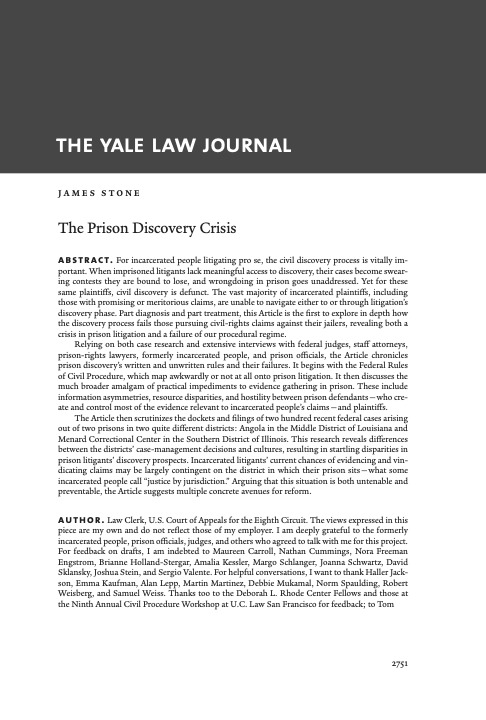
For incarcerated people litigating pro se, the civil discovery process is vitally important. When imprisoned litigants lack meaningful access to discovery, their cases become swearing contests they are bound to lose, and wrongdoing in prison goes unaddressed. Yet for these same plaintiffs, civil discovery is defunct. The vast majority of incarcerated plaintiffs, including those with promising or meritorious claims, are unable to navigate either to or through litigation’s discovery phase. Part diagnosis and part treatment, this Article is the first to explore in depth how the discovery process—as designed and implemented—fails those pursuing civil-rights claims against their jailers, betraying both a crisis in prison litigation and a failure of our procedural regime.

Relying on both case research and extensive interviews with federal judges, staff attorneys, prison rights lawyers, formerly incarcerated people, and prison officials, the Article chronicles prison discovery’s written and unwritten rules and their failures. It begins with the Federal Rules of Civil Procedure, which map awkwardly or not at all onto prison litigation. It then discusses the much broader amalgam of practical impediments to evidence gathering in prison. These include profound informational asymmetries, resource disparities, and hostility between prison defendants—who create and control much of the evidence relevant to incarcerated people’s claims—and imprisoned plaintiffs.

The Article then scrutinizes the dockets and filings of two hundred recent federal cases arising out of two different prisons in two different districts: Louisiana State Penitentiary in Louisiana and Menard Correctional Center in Illinois. The research reveals startling disparities between the districts’ case-management decisions and cultures, resulting in stark differences in prison litigants’ discovery prospects. Incarcerated litigants’ current chances of evidencing and vindicating claims may be largely contingent on the district in which their prison sits—what some incarcerated people call “justice by jurisdiction.” Arguing that this situation is both untenable and preventable, the Article suggests multiple concrete avenues for reform.

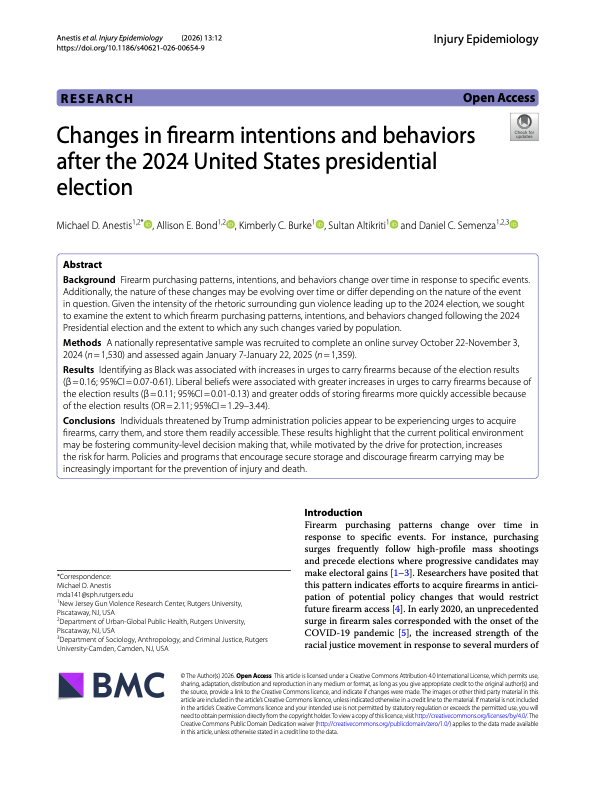
Changes in firearm intentions and behaviors after the 2024 United States presidential election

By Michael D. Anestis, Allison E. Bond, Kimberly C. Burke, Sultan Altikriti & Daniel C. Semenza 

Background

Firearm purchasing patterns, intentions, and behaviors change over time in response to specific events. Additionally, the nature of these changes may be evolving over time or differ depending on the nature of the event in question. Given the intensity of the rhetoric surrounding gun violence leading up to the 2024 election, we sought to examine the extent to which firearm purchasing patterns, intentions, and behaviors changed following the 2024 Presidential election and the extent to which any such changes varied by population.

Methods

A nationally representative sample was recruited to complete an online survey October 22-November 3, 2024 (n = 1,530) and assessed again January 7-January 22, 2025 (n = 1,359).

Results

Identifying as Black was associated with increases in urges to carry firearms because of the election results (β = 0.16; 95%CI = 0.07-0.61). Liberal beliefs were associated with greater increases in urges to carry firearms because of the election results (β = 0.11; 95%CI = 0.01-0.13) and greater odds of storing firearms more quickly accessible because of the election results (OR = 2.11; 95%CI = 1.29–3.44).

Conclusions

Individuals threatened by Trump administration policies appear to be experiencing urges to acquire firearms, carry them, and store them readily accessible. These results highlight that the current political environment may be fostering community-level decision making that, while motivated by the drive for protection, increases the risk for harm. Policies and programs that encourage secure storage and discourage firearm carrying may be increasingly important for the prevention of injury and death.

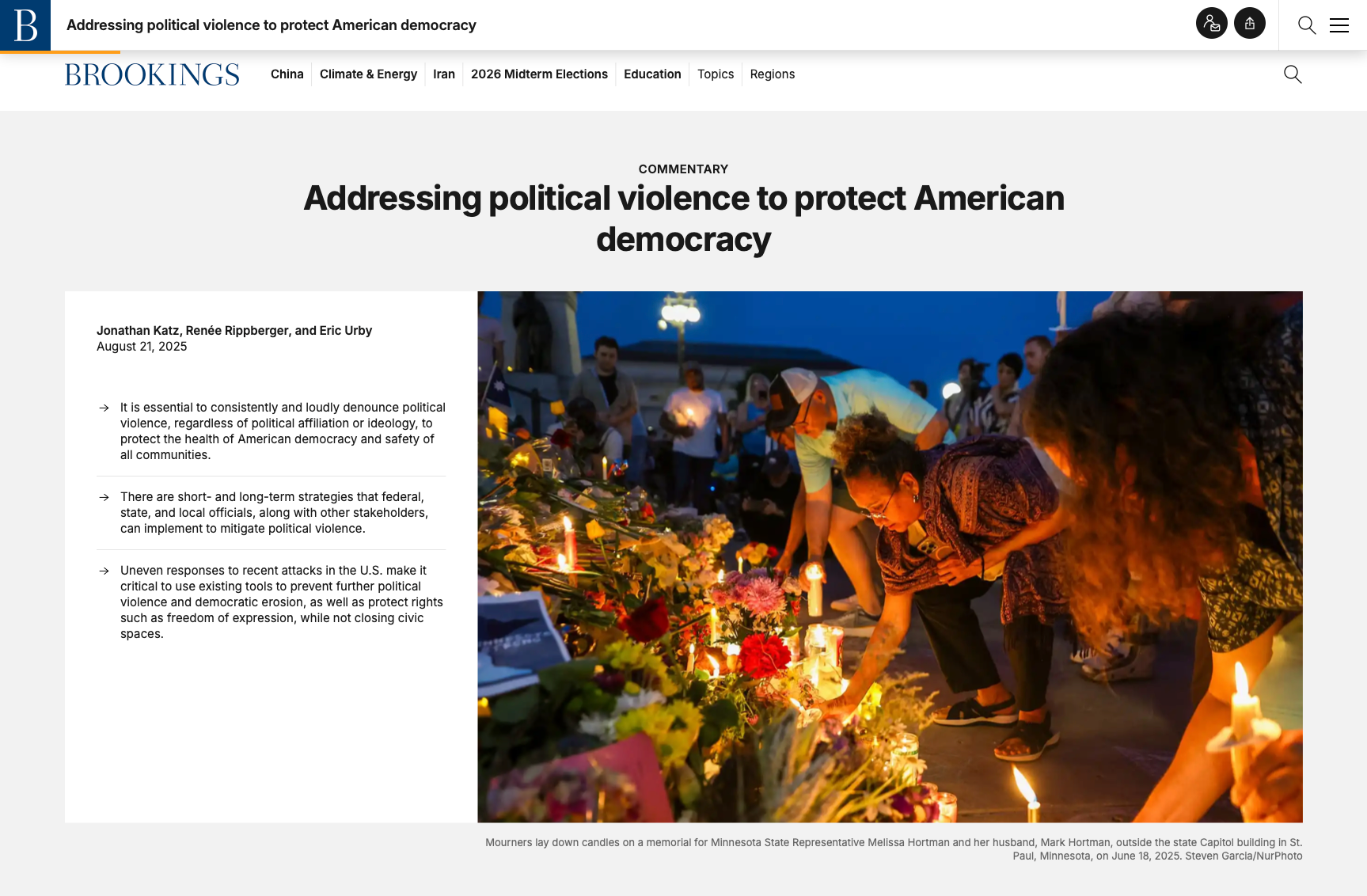
Addressing political violence to protect American democracy

By Jonathan Katz, Renée Rippberger, and Eric Urby

he assassinations of Minnesota State Representative Melissa Hortman and her husband Mark, as well as the attempted murders of Minnesota State Senator John Hoffman and his wife Yvette, are disturbing examples of the rise in political violence in the United States. Political violence includes “[t]he use of physical force, coercion, or intimidation to achieve political goals” ranging “from violent acts against individuals or groups, to state-sponsored violence, and to physical violence and intimidation used by both state and non-state actors.” To protect the health of our democracy and safety of our communities, Americans—especially political leaders—must consistently and loudly denounce such violence and take steps to address this growing threat, while remaining cautious not to restrict civic freedoms.

Politically motivated violence is a major concern for a vast majority of Americans, regardless of political identification. The impacts of political violence on a democratic society are far-reaching. In addition to the devastating effects on victims, their families, and their communities, political violence can also stifle critical forms of public engagement—such as voting, community organizing, and running for office—and chill free expression. Due to its harmful effects, and the troubling uptick following the Jan. 6, 2021 insurrection, we highlighted the urgent need to swiftly and “vigorously oppose” political violence or harassment in all forms in the Brookings Democracy Playbook 2025.

Election officials, judges, and lawmakers from across the political spectrum have faced increasing threats of political violence. There were assassination attempts against President Donald Trump in 2024 and Pennsylvania Governor Josh Shapiro in April 2025. More recently, a bomb threat was made at an Illinois hotel where several Texas lawmakers were staying—quickly followed by a second. This rise in intimidation and violence is dangerous not only for the safety of Americans, but for the health of U.S. democracy. This deeply concerning trend is linked to inflammatory rhetoric and policy by leaders and their supporters, the spread of disinformation online, and other factors. 

There are short- and long-term strategies that federal, state, and local officials—as well as other stakeholders—can implement to mitigate the risk of violence and harassment. These strategies include consistently enforcing relevant laws to address immediate threats, speaking out against agitators regardless of political affiliation, and tackling the root causes of political violence, both physical and psychological.  

Amid the federal government’s recent cuts to programs aimed at reducing violent extremism, it is especially important for subnational and nongovernmental actors to provide funding, tools, and other resources to address the risks and counter the impacts of political violence. This includes the private sector, specifically the technology industry, which can do more to redesign social media features that are exploited by hostile actors, implement high-quality standards for threat assessment, and otherwise guard against political violence. 

While implementing these strategies, it is essential that government, civil society, community leaders, and citizens at every level of society—regardless of political affiliation or ideology—cooperate to swiftly and unequivocally condemn political violence. Government and civil society leaders should champion nonviolent methods of conflict resolution and reaffirm democratic principles such as freedom of speech, assembly, and expression. 

Political leaders’ immediate reactions to the Minnesota assassinations included both appropriate and concerning responses. On the former, the U.S. Senate and House of Representatives passed bipartisan resolutions that condemned political violence and called for reconciliation of differences through civic dialogue and debate. Similar responses emerged from state legislatures and lawmakers across the country, from Georgia to Washington. In contrast, we saw troubling responses from some lawmakers and other actors.

It is extremely important to caution U.S. policymakers in this heated environment to act responsibly and not use the specter of political violence as an excuse to suppress nonviolent movements, curb freedoms of assembly and expression, encourage retaliation, or otherwise close civic spaces. Weaponizing calls for stability and peace in response to political violence is a real threat in democratic and nondemocratic countries globally

The Science of Gun Policy - A Critical Synthesis of Research Evidence on the Effects of Gun Policies in the United States

By: Rosanna Smart, Andrew R. Morral, James P. Murphy, Rupa Jose, Amanda Charbonneau, Terry L. Schell

In this report, part of RAND's Gun Policy in America initiative, researchers systematically review the scientific literature that has examined the likely effects of various gun laws. In the fifth edition of this report, the authors incorporate more-recent research in their synthesis of the available scientific data regarding the effects of 18 state firearm policies on firearm injuries and deaths, violent crime, suicides, the gun industry, defensive gun use, and other outcomes. By highlighting where scientific evidence is accumulating, the authors hope to build consensus around a shared set of facts that have been established through a transparent, nonpartisan, and impartial review process. In so doing, they also illuminate areas in which more and better information could make important contributions to establishing fair and effective gun policies.

Beyond the Jihadist Label: Understanding the ADF’s Multilayered Violence

By Kristof Titeca and Giovanni Salvaggio

This report argues that violence attributed to the Allied Democratic Forces (ADF) in eastern Democratic Republic of Congo cannot be understood through a single lens, such as jihadism, but must instead be analysed as a multilayered phenomenon in which ideological, military, political, and economic logics coexist and overlap. While the ADF’s pledge of allegiance to the Islamic State and subsequent financial and ideological links are real and consequential, an exclusive focus on jihadism obscures the group’s deep embeddedness in local and regional political economies of violence. Drawing on long-term fieldwork in eastern Congo and Uganda, the article shows how ADF violence is intertwined with taxation, trade, resource extraction, and local power struggles, and how the ADF label itself has become a franchise used by a wide range of actors to conceal or legitimise violence. It concludes that monocausal readings - including recent attempts to frame ADF violence primarily as sectarian or anti-Christian - flatten a far more complex reality and hinder a proper understanding of the drivers of violence in eastern Congo. The ADF, in other words, is not an exception to the Congolese conflict dynamics, but an extreme and particularly violent crystallisation of it.

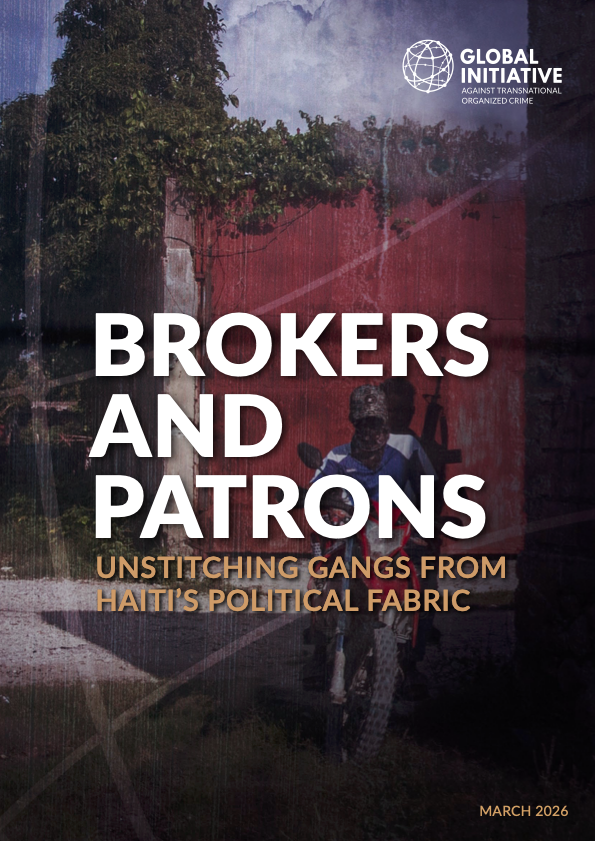
BROKERS AND PATRONS: UNSTITCHING GANGS FROM HAITI’S POLITICAL FABRIC  

By The Global Initiative Against Transnational Organized Crime.

In Haiti, 5 915 people were killed in 2025 (compared to 5 601 in 2024). The national homicide rate got to 49.8 per 100 000 people, and Port-au-Prince, which is home to about a quarter of the population, reached nearly 140 per 100 000 people, ranking it among the most violent cities in the world.

Gangs continued to expand their influence in Haiti, both through territorial control and by consolidating their role as political brokers. This latter dimension remains largely absent from national and international crisis response strategies.By failing to account for the political economy of violence, particularly the importance of addressing politico-criminal relationships, current policies risk perpetuating rather than loosening the links between armed groups and the political system, especially if the 2026 elections proceed without a more comprehensive response adapted to the complexity of the crisis.Haiti’s gangs are neither insurgents nor revolutionaries; they are embedded within circuits of political and economic power. The crisis is sustained by illicit financial flows, arms and drug trafficking, and patronage networks that protect and instrumentalize armed groups.Arrests and targeted operations may weaken certain groups, but as long as the structures that sustain criminal governance remain intact, the system will reconstitute itself. Without measures to dismantle the networks intertwining political competition and criminal governance, electoral processes risk reinforcing rather than transforming the system they are intended to renew.Haiti requires a strategy to combat organized crime that integrates public security, justice and community reconstruction. Any approach focused exclusively on force will fail if it does not address the political and economic foundations that allow violence to persist.To be effective, the Gang Suppression Force (GSF) must be paired with judicial tools capable of targeting gang support networks, particularly financial ones, and not only armed actors. This includes pursuing criminal leaders as well as their political and financial sponsors. Only by addressing the broader ecosystem of collusion can Haiti move away from a political order that is shaped by entrenched politico-criminal relationships.A long-term crisis resolution strategy must integrate justice, economic policy, security and political reform. The central question is not whether to negotiate with criminal groups, but how to articulate justice, demobilization and reintegration in a way that prevents the reproduction of violence.

FROM INDEPENDENCE TO INTERDEPENDENCY: THE EVOLUTION OF MEXICO'S STRATEGY AGAINST ORGANIZED CRIME, VIOLENCE AND SOCIAL UNREST

By Pierfrancesco Moscuzza

Over the last two decades, Mexico has experienced a substantial increase in violence and insecurity, leading to its classification as one of the world's less secure countries. While the origins of this insecurity can be traced back to Mexico's turbulent history, the current surge in violence is a more recent development, primarily stemming from a lack of regional and national coordination among government entities and their respective security agencies. This chapter seeks to delve into the complexities of the Mexican security problem, offering an exploration of its historical context. Additionally, through a comparative analysis with the Italian case, where organized crime posed a significant threat to national security, this chapter aims to propose a set of comprehensive strategies to mitigate the impact of violence and insecurity on both the population and the country's overall development.

Determinants of Support for Extralegal Violence in Latin America and the Caribbean 

By José Miguel Cruz and Gema Kloppe-Santamaría

 What are the factors behind citizen support for the use of extralegal violence in Latin America? The prevailing argument is that, in countries overwhelmed by skyrocketing levels of criminal violence, people endorse the use of extralegal violence as a way to cope with insecurity. Other scholars believe that support for extralegal violence is the result of state withdrawal and failure. Few empirical studies, however, have tested any of these arguments. In this article, using regional data from the 2012 AmericasBarometer, we examine different explanations regarding citizen support for the utilization of extralegal violence in Latin America and the Caribbean. We developed a multi-item scale that gauges support for different forms of extralegal violence across the Americas, and we hypothesize that support for extralegal violence is higher not only in countries with extreme levels of violence but especially in countries in which people distrust the political system. Results indicate that support for extralegal violence is significantly higher in societies characterized by little support for the existing political system.

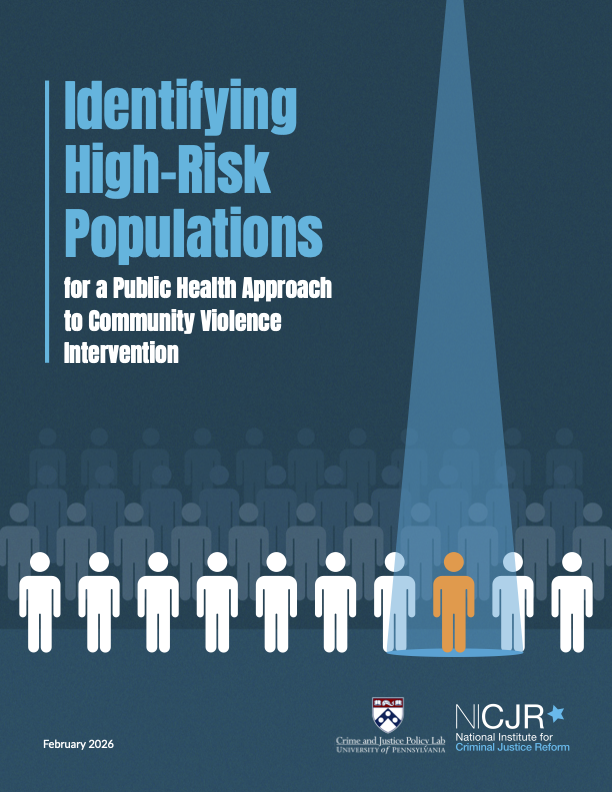
Identifying High-Risk Populations for a Public Health Approach to Community Violence Intervention

By Mikaela Rabinowitz, Vaughn Crandall, and Shantay Jackson. 

Community gun violence in US cities is both rare and highly concentrated. Decades of research and practice show that shootings cluster within a very small number of people, places, and social networks. Effective violence reduction therefore requires identifying and engaging the individuals at very high risk of being involved in gun violence in the immediate future (i.e., very high-risk individuals, or VHRI).

This new brief is designed to support jurisdictions working to implement community violence intervention approaches by improving their ability to identify VHRI. The brief provides 1) a concise synthesis of the research evidence on risk for involvement in community gun violence, and 2) guidance on how to implement structured processes to identify the people driving violence within their communities.

The Independent Inquiry into Grooming Gangs

By Alice Baxter

The government has announced that it is establishing a statutory public inquiry into grooming gangs. The inquiry begins work on 13 April 2026. Why have there been calls for an inquiry? By the early 2010s, multiple child sexual abuse scandals had prompted public concern about the state response to organised and systematic child sexual abuse. These included revelations about media personalities such as Jimmy Savile and Rolf Harris as well as about organised child sexual abuse in towns such as Rotherham, Oldham and Rochdale. In 2014 Theresa May, then Home Secretary, established a non-statutory inquiry panel into the issue. The inquiry panel was replaced by a statutory public inquiry (the Independent Inquiry into Child Sexual Abuse, or IICSA) in 2015, after the Home Secretary told the House of Commons that the panel had lost the trust of victims and survivors. IICSA took seven years to complete, making 20 recommendations in its final report in 2022. In July 2024, Oldham Council wrote to the Home Secretary requesting a public inquiry into child sexual exploitation in the local area. In October 2024, the Minister for Safeguarding and Violence Against Women and Girls, Jess Phillips, refused Oldham Council’s request (PDF). The minister wrote that it should be for Oldham Council itself to decide to commission a local inquiry, rather than for the government to intervene. This decision became the focus of considerable parliamentary and press attention in January 2025, in part driven by comments made by the US tech CEO Elon Musk on social media. Also in January 2025, the then Home Secretary, Yvette Cooper, told the House of Commons that none of IICSA’s recommendations had been implemented. The government asked Baroness Casey of Blackstock to run a “rapid audit” on gang-based exploitation and report to the government on what further work was needed. Baroness Casey reported in June 2025, recommending that the government establish both a national police operation and a national inquiry

Identifying Community Violence Intervention (CVI) Approaches: A Grey Literature Scoping Review

By Devon Ziminski , Julia P Schleimer and  Meron Girma 

Community violence interventions (CVI) encompass a range of strategies aimed at reducing community firearm violence among those most affected. While CVI is an umbrella term, specific CVI approaches across the United States differ markedly in their underlying theoretical frameworks, specific program activities, and populations served. These different CVI approaches have not been well defined or uniformly understood. Given unprecedented financial support for CVI from local, state, and federal sources in recent years, increased research attention to understanding the implementation and impacts of these programs, and growing efforts by policymakers, practitioners, and community leaders to enact CVI programs, it is important to understand how CVI is defined and characterized in applied discourse (eg, among CVI practitioners, funders, and scholars). This grey literature review aimed to synthesize how CVI practitioners, funders, and scholars commonly characterize CVI approaches and how those approaches relate to previously identified CVI theoretical frameworks. Following processes similar to a scoping review, we conducted a grey literature search to locate and synthesize information from webpages (eg, from community groups and academic organizations) and (non-peer reviewed) reports from web sources discussing CVI approaches. We identified nine main CVI approaches commonly mentioned in applied CVI discourse: 1. Violence interruption/street outreach; 2. Group violence interventions (GVI)/focused deterrence/group violence reduction strategy (GVRS); 3. Hospital-based violence intervention programs (HVIP); 4. Built environment/place-based/Crime Prevention Through Environmental Design (CPTED); 5. Behavioral science interventions/cognitive behavioral interventions; 6. Victim/trauma/survivor programs/resources; 7. Mentoring/fellowship programs; 8. School-based/related youth interventions; and 9. Diversion/deflection programs. These approaches operated at multiple intervention levels and drew on various theoretical frameworks. Findings from this scoping review provide a timely summary of how CVI is characterized in applied discourse, which can support the field in operating from a shared understanding of what constitutes CVI and, in turn, inform CVI research, practice, and policy-making.

Community gun violence in US cities is both rare and highly concentrated. Decades of research and practice show that shootings cluster within a very small number of people, places, and social networks. Effective violence reduction therefore requires identifying and engaging the individuals at very high risk of being involved in gun violence in the immediate future (i.e., very high-risk individuals, or VHRI).

This new brief is designed to support jurisdictions working to implement community violence intervention approaches by improving their ability to identify VHRI. The brief provides 1) a concise synthesis of the research evidence on risk for involvement in community gun violence, and 2) guidance on how to implement structured processes to identify the people driving violence within their communities.

Toward A Safer Louisville: Three Years of Progress in Violence Prevention

By The Louisville Office of Violence Prevention

The Louisville Metro Gun Violence Dashboard is updated daily, providing users with real-time information regarding criminal homicides and shootings [4]. Offering a broad view of gun violence, the dashboard includes information on year-to-date trends, victim demographics, and mapping visuals that use neighborhood, council districts, ZIP codes, and police districts. Since its launch, the dashboard has received approximately 100,000 views through June 30, 2025.

TOWARDS AI?: “IMAGINED FUTURES” FOR PROBATION AND ELECTRONIC MONITORING IN THE INDEPENDENT SENTENCING REVIEW

By: Mike Nellis, Emeritus Professor of Criminal and Community Justice, University of Strathclyde

Abstract

The 2025 Independent Sentencing Review (the Gauke Report) famously placed great emphasis on the use of technology in what has traditionally been called “community supervision”, to provide a way out of the capacity crisis in England and Wales’ prisons. In favours a significant expansion of electronic monitoring (EM) and markedly more punitive forms of remote regulation – dubbed “prison outside prison” in press releases. It further encourages the use of emerging forms of AI to make monitoring and supervision more efficient. In this, the Review was largely elaborating the Ministry of Justice’s own emerging view of the penal future. Its call for EM to be more integrated with the Probation Service, may have gone further, but the Review’s vision of the future Probation Service is of a punitive-surveillant agency with a rather ambiguous commitment to rehabilitation. Whether this imagined future is realised remains to be seen.

ONCE IN A GENERATION OPPORTUNITY - IMPLEMENTING THE INDEPENDENT SENTENCING REVIEW FOR WOMEN

By: The JABBS Foundation for Women and Girls – Eliza Ogden Barnsley, Dr Tom McNeil and Lizzie Humphreys

Abstract

The Independent Sentencing Review represents a once in a generation opportunity to make the criminal justice system fairer and more effective. This article suggests how several recommendations for women might be implemented, drawing on pioneering research and evidence of ‘what works’. This includes, first, the important role of gender-responsive tools, in particular the Women’s Risk Needs Assessment (WRNA), recently validated in the UK for the first time by the University of Birmingham. Adopting tools that meet these standards is essential for ensuring pre-sentence reports identify a much wider range of needs and are gender- and trauma-responsive. Through this, practitioners are better able to tailor appropriate support for women to improve wellbeing against numerous metrics, while reducing re-offending (linked to Recommendation 6.3). Secondly, it discusses lessons from the Birmingham women’s Intensive Supervision Court (ISC), with emerging evidence showing great promise through its use of the WRNA and strong partnerships with women’s centres and numerous agencies, to inform the Government’s ISC expansion (Recommendation 6.1). Thirdly, we emphasise the importance of early intervention through women’s centres (linked to Recommendation 6.2) and other integrated and multi- disciplinary support, preventing the need for sentencing altogether. Combined, this article highlights evidence and opportunities for ‘how’ we capitalise on the Independent Sentencing Review’s momentum.

Introduction

The Corston Report (2007) was pivotal in advocating for the radical change that is needed for women in the criminal justice system. At its core, it highlighted the vital need for a holistic, wrap-around approach that aligned with women’s unique needs and pathways into crime. Whilst this sentiment was largely well received and a number a great steps towards progress were made, there were several missed opportunities, both in terms of policy, and ensuring effective long-term stability (Gelsthorpe and Russell, 2018). In the wake of the Independent Sentencing Review (2025), which we believe is ambitious given the current social and political climate, it is critical such opportunities are not again missed. Whilst the review makes a number of recommendations that we believe have the potential to genuinely improve the lives of many women in the criminal justice system (CJS), careful implementation is required, learning from the existing and growing evidence of ‘what works’. This article first highlights some of the most pertinent recommendations for women in the review, outlines the key contemporary evidence before suggesting some opportunities for effective implementation.