Open Access Free Library
CRIME+CRIMINOLOGY.jpeg

CRIME

Violent-Non-Violent-Cyber-Global-Organized-Environmental-Policing-Crime Prevention-Victimization

Posts in social sciences
How Women’s Police Stations Empower Women, Widen Access to Justice and Prevent Gender Violence

By Kerry Carrington, Natacha Guala, María Victoria Puyol, and Máximo Sozzo

Women’s police stations are a distinctive innovation that emerged in postcolonial nations of the global south in the second half of the twentieth century to address violence against women. This article presents the results of a world-first study of the unique way that these stations, called Comisaría de la Mujer, prevent gender-based violence in the Province of Buenos Aires, Argentina. One in five police stations in this Province was established with a mandate of preventing gender violence. Little is currently known about how this distinctive multidisciplinary model of policing (which includes social workers, lawyers, psychologists and police) widens access to justice to prevent gender violence. This article compares the model’s virtues and limitations to traditional policing models. We conclude that specialised women’s police stations in the postcolonial societies of the global south increase access to justice, empower women to liberate themselves from the subjection of domestic violence and prevent gender violence by challenging patriarchal norms that sustain it. As a by-product, these women’s police stations also offer women in the global south a career in law enforcement—one that is based on a gender perspective. The study is framed by southern criminology, which reverses the notion that ideas, policies and theories can only travel from the anglophone world of the global north to the global south.

International Journal for Crime, Justice and Social Democracy, 9(1), pp. 42-67. 2020.

The Safety of Women and Girls in Educational Settings: A Global Overview and Suggestions for Policy Change

By Elaina Behounek

Safety in educational settings is a barrier to equality for women and girls. This article highlights four key areas that perpetuate inequality in education for women and girls, and that contribute to a worldwide lack of safety in educational settings for women and girls: cultural norms, societal norms, sexual assault and sexual harassment. All four areas form part of a social–structural condition that underpins a world in which women and girls experience violence and an economic and social inequality that contributes to their lack of safety in educational settings. Several solutions are proposed to combat this. To improve the life outcomes of women and girls, we must invest in approaches that empower and educate them in safe environments. In doing so, we must also ensure that such approaches are holistic and intersectional.

International Journal for Crime, Justice and Social Democracy, 9(1), pp. 31-41. 2020.

Protections for Marginalised Women in University Sexual Violence Policies

By Amelia Roskin-Frazee

Higher education institutions in four of the top 20 wealthiest nations globally (measured by GDP per capita) undermine gender equality by failing to address sexual violence perpetrated against women with marginalised identities. By analysing student sexual violence policies from 80 higher education institutions in Australia, Canada, the United Kingdom, and the United States, I argue that these policies fail to account for the ways that race, sexuality, class and disability shape women’s experiences of sexual violence. Further, these deficiencies counteract efforts to achieve gender equality by tacitly denying women who experience violence access to education and health care. The conclusion proposes policy alterations designed to address the complex needs of women with marginalised identities who experience violence, including implementing cultural competency training and increasing institution-sponsored health care services for sexual violence survivors.

International Journal for Crime, Justice and Social Democracy, 9(1), pp. 13-30. 2020.

Exposure to intimate partner violence and the physical and emotional abuse of children: Results from a national survey of female carers

By Heather Wolbers, Hayley Boxall and Anthony Morgan

Drawing on a large sample of female carers living in Australia (n=3,775), this study aims to document and explore children and young people’s experiences of abuse in the past 12 months. We focus on children’s exposure to intimate partner violence (IPV) perpetrated against their female carers, as well as children being the target of direct physical and emotional abuse themselves.

Overall, a significant proportion of respondents who had a child in their care during the past 12 months said that a child was exposed to IPV perpetrated against them (14.1%). One in nine said a child in their care had been the target of direct abuse perpetrated by their current or most recent former partner (11.5%). Critically, one-third of respondents who experienced IPV said a child was exposed to the violence at least once in the past 12 months (34.8%).

A number of factors were associated with an increased likelihood of children being subjected to direct abuse. These included the characteristics of respondents and their relationships, children and households. We also present evidence linking economic factors, including changes in employment, with the direct abuse of children.

Research Report no. 26. Canberra: Australian Institute of Criminology. 2023. 72p.

Sexual exploitation in Australia: Victim-survivor support needs and barriers to support provision

By Hayley Boxall, Samantha Lyneham, Christie Black and Alexandra Gannoni

Sexual exploitation can have significant short- and longer-term impacts on victim-survivors. However, there is currently a lack of research exploring the support needs of sexual exploitation victim-survivors accessing support in Australia, and barriers to support provision. To address this knowledge gap, we analysed case management records for 50 victim-survivors of sexual exploitation in Australia and conducted interviews with 12 victim-survivor caseworkers.

On average, victim-survivors required support across six domains, the most common being financial hardship, mental health, social isolation and housing and accommodation. The most crucial barriers to service provision were systemic in nature. For example, some victim‑survivors on temporary visas were ineligible for government funded medical services, affordable housing or welfare schemes, which placed significant financial burdens on victim‑survivors and support services.

These findings demonstrate that to support the recovery of victim-survivors, services need to be funded appropriately to ensure they can provide holistic wraparound interventions.

Research Report no. 29. Canberra: Australian Institute of Criminology. 2023. 51p.

Homicide in Australia 2022–23

By Hannah Miles and Samantha Bricknell

The National Homicide Monitoring Program is Australia’s only national data collection on homicide incidents, victims and offenders. This report describes 232 homicide incidents recorded by Australian state and territory police between 1 July 2022 and 30 June 2023. During this 12-month period there were 247 victims of homicide and 260 identified offenders

Statistical Report no. 46. Canberra: Australian Institute of Criminology, 2024. 49p.

A Framework for Countering Organised Crime: Strategy, Planning, and the Lessons of Irregular Warfare

By David H. Ucko and Thomas A. Marks

Organised crime is not going well. According to the 2021 Global Organized Crime index, ‘the global illicit economy simply continue[s] along the upward trajectory it has followed over the past 20 years, posing an ever-increasing threat to security, development and justice – the pillars of democracy’ (Global Initiative, 2021, p. 8). Wherever governments seek to draw the line, criminal actors find profitable ways of crossing it; wherever governments fail to deliver on human need, criminal actors capitalise on citizens’ desire or despair. As of now, more than three-quarters of the world’s population ‘live in countries with high levels of criminality, and in countries with low resilience to organized crime’ (Global Initiative, 2021, p. 12). On aggregate, the associated activity amounts to an illicit form of governance, furnishing alternative services to a wide range of clients, be they the vulnerable and weak or a covetous elite. The breadth of organised crime, its clandestine nature, and its blending of creative and destructive effects make it difficult to counter. In past SOC ACE research, we argued that the response to organised crime often shares certain pitfalls with counterterrorism, at least since 9/11 (Ucko & Marks, 2022c). Both efforts have been stymied by 1) conceptual uncertainty of the problem at hand; 2) an urge to address the scourge head on (be it violence or crime), without acknowledging its socioeconomic-political context; and, therefore, 3) unquestioned pursuit of strategies that miss the point, whose progress is difficult to measure, and which may even be counterproductive. This convergence is based on the common features of the two phenomena, which are both concerned with i) collective actors, who ii) use violence and coercion among other methods; and who have iii) corrupting, or outright destructive effects on society. Though organised crime is not consciously political in its ideological motivation, it is – like terrorism – deeply political in its origins, activities, and effects. Given the conceptual overlap, and the common pathologies that undermine response, the lessons from countering terrorism are relevant also to the countering of organised crime. Focusing on the concept of ‘irregular warfare’, our past research identified six key lessons, touching upon 1) the socio-political embeddedness of the problem, 2) the tendency to militarise the response, 3) the mirror-imaging of state assistance programmes, 4) the invaluable role of community mobilisation, 5) the dearth of strategy, and 6) the need to engage more closely with questions of political will. As argued elsewhere, these challenges point to a need for greater strategic competence both in assessing the problem of organised crime and in designing a response (Ucko & Marks, 2022c).

To generate this strategic competence, this follow-on report sets out an analytical toolkit to assist planners and policymakers with the crafting of strategy. This ‘Framework of Analysis and Action’ builds upon lessons – negative and positive – learned via years of experience with irregular warfare, defined by the Department of Defense as ‘a violent struggle among state and non-state actors for legitimacy and influence over the relevant population(s)’ (U.S. Department of Defense, 2007, p. 1).1 It is a framework that finds its origins within the U.S. National Defense University’s College of International Security Affairs (CISA), where for two decades it has been used to teach strategic planning for complex and intensely political challenges (Ucko & Marks, 2022a). The framework consists of two parts: the Strategic Estimate of the Situation (which maps the problem, explores its drivers, frames, and methods, and critiques the current response) and the Course of Action (which uses the strategic estimate to design an appropriate strategy, guided by a theory of success). The framework is in this report adapted for organised crime, to enable the mapping of relevant actors and the crafting, thereby, of a viable response. By design, the framework responds to the six key lessons identified in our earlier work. This report goes through the framework and explains its adaptation to organised crime. Appendix A provides a summation of the toolkit, a ‘user’s guide’, that will facilitate application of the framework. Testing to date suggests great potential and we look forward to sustaining a dialogue with those engaged with countering organised crime to further evolve this toolkit. Indeed, since the beginning, this framework has been a living product, enriched by theoretical application in the classroom and practical use in the field.

SOC ACE Research Paper No. 19. Birmingham, UK: University of Birmingham, 2023. 45p.

Supporting Resilience Among Environmental Defenders

By Billy Kyte | Giulia Roncon

With the aim to support individuals in building resilient communities working to prevent, counter, and limit the damage of environmental crime, this handbook documents the challenges faced by defenders working in the environmental crime field and provides guidance to support their resilience.

The first section of the handbook analyzes definitional understandings of environmental crime and explores the impacts and harms it can perpetuate. The second section assesses the risks and challenges commonly faced by environmental defenders, including an assessment of their needs, and explores emergent regional issues that may play a part in such vulnerabilities. The final section presents a repository of best practices and tools that can help stakeholders to access available resources and to mitigate the potential risks they face.

The handbook draws from consultations involving nearly 100 prominent figures from civil society and media across Africa and Asia. Whilst findings are therefore geographically specific to some extent, our work confirms that the challenges experienced by environmental defenders in these regions were replicated globally as well. Although each country and regional context is different, the handbook outlines strategies that could be broadly implemented to support the community of stakeholders dedicated to tackling environmental crime worldwide.

Geneva, SWIT: Global Initiative Against Transnational Organized Crime (GI-TOC). 2023.

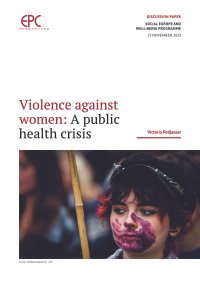
Violence against women: A public health crisis

By Victoria Pedjasaar

In the EU, a third of women over the age of 15 have experienced physical or sexual violence and over half have been sexually harassed. According to a study by the European Union Agency for Fundamental Rights (FRA), just 13% of women reported their most serious incident of non-partner violence to the authorities. Gender-based violence can occur in various situations and circumstances. According to an EU-wide survey report, 32% of perpetrators of sexual harassment in the EU come from the employment context. Although often overlooked, the majority of (workplace) violence takes place in the healthcare sector as healthcare professionals are 16 times more at risk of violence in comparison to other occupations. Violence does not only manifest in abusive behaviour toward workers on duty but can also be perpetrated on women as receivers of healthcare. High rates of violence in healthcare, brought on and exacerbated by gender stereotypes and inequality, point to dysfunctional health systems. This Paper is divided into the following chapters and provides policy recommendations on the way forward for the EU member states: 1. Gender-based violence against healthcare workers. 2. Obstetric and gynaecological violence against women. 3. Gender-based violence is a story of gender inequality. 4. Legislation and policies that protect women.

Brussels, Belgium: European Policy Centre, 2023. 12p.

Women and the Law

By Atkins, Susan and Brenda Hale, Baroness

Women And The Law is a pioneering study of the way in which the law has treated women – at work, in the family, in matters of sexuality and fertility, and in public life. Originally published in 1984, this seminal text is one that truly deserves its 'groundbreaking' moniker. Predating many key moments in contemporary feminist history, it was written before Judith Butler’s Gender Trouble; before Naomi Klein’s The Beauty Myth, with the term ‘feminist jurisprudence’ having only been coined three years earlier. It went on to inspire a legion of women lawyers and feminist legal rulings, from the Family Law Act 1996 to the legal definition of ‘violence’ (Yemshaw v. LB Hounslow 2011). This 2018 edition comes with a new foreword by Susan Atkins and provides a timely analysis of women in law forty years on, how much has changed and the work still left to do

London: University of London Press, 2018. 284p.

Shoplifting Trends: What You Need to Know

By Ernesto Lopez, Robert Boxerman and Keley CundiffEErnes

Since shortly after the onset of the COVID-19 pandemic, the Council on Criminal Justice has tracked changing rates of violent and property crime in large cities across the United States. The pandemic, as well as the social justice protests during the summer of 2020 and other factors, have altered the motives, means, and opportunities to commit crimes.

Prepared for the Council on Criminal Justice’s Crime Trends Working Group, this report focuses on trends in shoplifting, a subset of retail theft which, in turn, is a subset of overall larceny-theft. The FBI defines larceny-theft as the unlawful taking of property without force, violence, or fraud.

The report looks at shoplifting patterns from before the onset of the COVID-19 pandemic through mid-year 2023. To date, attempts to measure changes in retail theft, including organized retail theft, have relied on retail industry data5 or have been limited to one state.

The city-specific data included in this report are drawn from open-data sources from 24 cities that, over the past five years, have consistently reported specific shoplifting data. Additional data come from the U.S. Justice Department’s National Incident-Based Reporting Program (NIBRS).7 The NIBRS data include a sample of 3,812 local law enforcement agencies. The analyses examine the changing frequency of reported shoplifting, trends in other property offenses, changes in the value of stolen goods, offenses that co-occur with shoplifting, and the number of people involved in each incident.

This report does not discuss in detail shoplifting data from the National Retail Federation’s Retail Security Survey.8 The 2021 survey (data ending in 2020) was the last year the survey reported figures on the number of incidents and the value of stolen goods. Because of this change, data from the survey could not be included.

Due to a lack of available data, this report does not examine factors that could be influencing the trends. Potential factors include changes in retailers’ anti-theft measures and changes in how retailers report shoplifting to law enforcement, which could be based on their perceptions of the extent to which local police or prosecutors will apprehend suspects and pursue criminal charges. Because these data rely on reported incidents, they almost certainly undercount total shoplifting. The findings presented here should be viewed with these considerations in mind.

Washington, DC: Council on Criminal Justice, 2023. 8p.

Prevalence and predictors of requests for facilitated child sexual exploitation on online platforms

By Savannah Minihan, Melanie Burton, Mariesa Nicholas, Kylie Trengove, Sarah Napier and Rick Brown

This study examines the prevalence of requests for facilitated child sexual exploitation (CSE) online. Of 4,011 Australians surveyed, 2.8 percent had received a request for facilitated CSE in the past year. Requests for facilitated CSE were significantly higher among those who had shared a photo of or information about children publicly online. Among respondents who had shared publicly, requests for facilitated CSE were significantly higher among men, younger individuals, linguistically diverse individuals, individuals with disability, and those who had experienced other sexual or violent harms online. The results highlight the need for increased awareness of the potential harms of posting photos of and information about children publicly online, and place onus on platforms to warn users of these potential harms.

Trends & issues in crime and criminal justice no. 692. . Canberra: Australian Institute of Criminology. 2024.

Patterns in alcohol related violence: exploring recent declines in alcohol related violence in England and Wales

By Lucy Bryant

Figures from the UK Office for National Statistics (2021a) suggest that alcohol-related violence in England and Wales has been declining – both as a total figure (1,001,000 in 2009/10 to 525,000 in 2019/20) and as a proportion of all violent incidents (54% in 2009/10 to 42% in 2019/20). ■ This decline remains unexplained and generally unexamined – however, there are existing bodies of research that might offer insight into this trend. ■ This report examines possible explanations for the decline seen in alcohol-related violence – drawing on existing literature exploring: changing patterns in violence (e.g., Farrell et al. 2014), alcohol’s relationship with violence (e.g., Graham & Livingston 2011), and the measurement of violence (e.g., Reiner 2016). ■ Changing patterns in youth drinking might contribute to this violence decline. It is younger, rather than older age groups, who predominantly engage in violence in night-time economy settings (Finney 2004). Youth drinking in England has seen a recent downturn (e.g., Oldham et al. 2018), corresponding to some degree with declines in alcohol-related violence.

■ A steeper decline in alcohol-related violence relative to violence overall appears to be accounted for by shi s in alcohol-related stranger and acquaintance violence. Crime Survey for England and Wales (CSEW) data show that the proportion of stranger and acquaintance violence incidents that were alcohol related fell between 2009/10 and 2019/20, whilst the proportion of domestic violence incidents which were alcohol-related generally remained stable. ■ It is possible data artefacts such as counting errors contained in national statistics form some part of the trend investigated here. While the CSEW is a widely respected data source (Tilley & Tseloni 2016), limitations in its capturing of violent incidents have been previously identified (e.g., Walby et al. 2016). It is important to consider the impact any such data artefact might have on alcohol related violence trends – investigation of the production of these National Statistics should be undertaken to assess this.   

London: Institute of Alcohol Studies, 2023. 21p.

New Versions of Victims: Feminists Struggle with the Concept

Edited by  Sharon Lamb 

It is increasingly difficult to use the word "victim" these days without facing either ridicule for "crying victim" or criticism for supposed harshness toward those traumatized. Some deny the possibility of "recovering" repressed memories of abuse, or consider date rape an invention of whining college students. At the opposite extreme, others contend that women who experience abuse are "survivors" likely destined to be psychically wounded for life.
While the debates rage between victims' rights advocates and "backlash" authors, the contributors to New Versions of Victims collectively argue that we must move beyond these polarizations to examine the "victim" as a socially constructed term and to explore, in nuanced terms, why we see victims the way we do.
Must one have been subject to extreme or prolonged suffering to merit designation as a victim? How are we to explain rape victims who seemingly "get over" their experience with no lingering emotional scars? Resisting the reductive oversimplifications of the polemicists, the contributors to New Versions of Victims critique exaggerated claims by victim advocates about the harm of victimization while simultaneously taking on the reactionary boilerplate of writers such as Katie Roiphe and Camille Paglia and offering further strategies for countering the backlash.
Written in clear, accessible language, New Versions of Victims offers a critical analysis of popular debates about victimization that will be applicable to both practice and theory.

New York; London: NYU Press, 1999. 192p.

net.wars

By Wendy Grossman 

Who will rule cyberspace? And why should people care? Recently stories have appeared in a variety of news media, from the sensational to the staid, that portray the Internet as full of pornography, pedophilia, recipes for making bombs, lewd and lawless behavior, and copyright violators. And, for politicians eager for votes, or to people who have never strolled the electronic byways, regulating the Net seems as logical and sensible as making your kids wear seat belts. Forget freedom of speech: children can read this stuff.

From the point of view of those on the Net, mass-media's representation of pornography on the Internet grossly overestimates the amount that is actually available, and these stories are based on studies that are at best flawed and at worst fraudulent. To netizens, the panic over the electronic availability of bomb-making recipes and other potentially dangerous material is groundless: the same material is readily available in public libraries. Out on the Net, it seems outrageous that people who have never really experienced it are in a position to regulate it.

How then, should the lines be drawn in the grey area between cyberspace and the physical world? In net.wars, Wendy Grossman, a journalist who has covered the Net since 1992 for major publications such as Wired, The Guardian, and The Telegraph, assesses the battles that will define the future of this new venue. From the Church of Scientology's raids on Net users to netizens attempts to overthrow both the Communications Decency Act and the restrictions on the export of strong encryption, net.wars explains the issues and the background behind the headlines. Among the issues covered are net scams, class divisions on the net, privacy issues, the Communications Decency Act, women online, pornography, hackers and the computer underground, net criminals and sociopaths, and more.

New York; London: NYU Press, 1998. 256p.

Girlfighting: Betrayal and Rejection among Girls

BY Lyn Mikel Brown

For some time, reality TV, talk shows, soap-operas, and sitcoms have turned their spotlights on women and girls who thrive on competition and nastiness. Few fairytales lack the evil stepmother, wicked witch, or jealous sister. Even cartoons feature mean and sassy girls who only become sweet and innocent when adults appear. And recently, popular books and magazines have turned their gaze away from ways of positively influencing girls' independence and self-esteem and towards the topic of girls' meanness to other girls. What does this say about the way our culture views girlhood? How much do these portrayals affect the way girls view themselves?

In Girlfighting, psychologist and educator Lyn Mikel Brown scrutinizes the way our culture nurtures and reinforces this sort of meanness in girls. She argues that the old adage “girls will be girls”—gossipy, competitive, cliquish, backstabbing— and the idea that fighting is part of a developmental stage or a rite-of-passage, are not acceptable explanations. Instead, she asserts, girls are discouraged from expressing strong feelings and are pressured to fulfill unrealistic expectations, to be popular, and struggle to find their way in a society that still reinforces gender stereotypes and places greater value on boys. Under such pressure, in their frustration and anger, girls (often unconsciously) find it less risky to take out their fears and anxieties on other girls instead of challenging the ways boys treat them, the way the media represents them, or the way the culture at large supports sexist practices.

Girlfighting traces the changes in girls' thoughts, actions and feelings from childhood into young adulthood, providing the developmental understanding and theoretical explanation often lacking in other conversations. Through interviews with over 400 girls of diverse racial, economic, and geographic backgrounds, Brown chronicles the labyrinthine journey girls take from direct and outspoken children who like and trust other girls, to distrusting and competitive young women. She argues that this familiar pathway can and should be interrupted and provides ways to move beyond girlfighting to build girl allies and to support coalitions among girls.

By allowing the voices of girls to be heard, Brown demonstrates the complex and often contradictory realities girls face, helping us to better understand and critique the socializing forces in their lives and challenging us to rethink the messages we send them.

New York; London: NYU Press, 2003. 259p.

Why Girls Fight: Female Youth Violence in the Inner City

By Cindy D. Ness

In low-income U.S. cities, street fights between teenage girls are common. These fights take place at school, on street corners, or in parks, when one girl provokes another to the point that she must either “step up” or be labeled a “punk.” Typically, when girls engage in violence that is not strictly self-defense, they are labeled “delinquent,” their actions taken as a sign of emotional pathology. However, in Why Girls Fight, Cindy D. Ness demonstrates that in poor urban areas this kind of street fighting is seen as a normal part of girlhood and a necessary way to earn respect among peers, as well as a way for girls to attain a sense of mastery and self-esteem in a social setting where legal opportunities for achievement are not otherwise easily available.
Ness spent almost two years in west and northeast Philadelphia to get a sense of how teenage girls experience inflicting physical harm and the meanings they assign to it. While most existing work on girls’ violence deals exclusively with gangs, Ness sheds new light on the everyday street fighting of urban girls, arguing that different cultural standards associated with race and class influence the relationship that girls have to physical aggression.

New York; London: NYU Press, 2010. 198p.

When Mothers Kill: Interviews from Prison

By Michelle Oberman and Cheryl L. Meyer

Michelle Oberman and Cheryl L. Meyer don’t write for news magazines or prime-time investigative television shows, but the stories they tell hold the same fascination. When Mothers Kill is compelling. In a clear, direct fashion the authors recount what they have learned from interviewing women imprisoned for killing their children. Readers will be shocked and outraged—as much by the violence the women have endured in their own lives as by the violence they engaged in—but they will also be informed and even enlightened.
Oberman and Meyer are leading authorities on their subject. Their 2001 book, Mothers Who Kill Their Children, drew from hundreds of newspaper articles as well as from medical and social science journals to propose a comprehensive typology of maternal filicide. In that same year, driven by a desire to test their typology—and to better understand child-killing women not just as types but as individuals—Oberman and Meyer began interviewing women who had been incarcerated for the crime. After conducting lengthy, face-to-face interviews with forty prison inmates, they returned and selected eight women to speak with at even greater length. This new book begins with these stories, recounted in the matter-of-fact words of the inmates themselves.
There are collective themes that emerge from these individual accounts, including histories of relentless interpersonal violence, troubled relationships with parents (particularly with mothers), twisted notions of romantic love, and deep conflicts about motherhood. These themes structure the books overall narrative, which also includes an insightful examination of the social and institutional systems that have failed these women. Neither the mothers nor the authors offer these stories as excuses for these crimes.

New York; London: NYU Press, 2008. 208p.

After the War on Crime: Race, Democracy, and a New Reconstruction

By Mary Louise Frampton, Ian Haney Lopez, and Jonathan Simon

Since the 1970s, Americans have witnessed a pyrrhic war on crime, with sobering numbers at once chilling and cautionary. Our imprisoned population has increased five-fold, with a commensurate spike in fiscal costs that many now see as unsupportable into the future. As American society confronts a multitude of new challenges ranging from terrorism to the disappearance of middle-class jobs to global warming, the war on crime may be up for reconsideration for the first time in a generation or more. Relatively low crime rates indicate that the public mood may be swinging toward declaring victory and moving on.
However, to declare that the war is over is dangerous and inaccurate, and After the War on Crime reveals that the impact of this war reaches far beyond statistics; simply moving on is impossible. The war has been most devastating to those affected by increased rates and longer terms of incarceration, but its reach has also reshaped a sweeping range of social institutions, including law enforcement, politics, schooling, healthcare, and social welfare. The war has also profoundly altered conceptions of race and community.
It is time to consider the tasks reconstruction must tackle. To do so requires first a critical assessment of how this war has remade our society, and then creative thinking about how government, foundations, communities, and activists should respond. After the War on Crime accelerates this reassessment with original essays by a diverse, interdisciplinary group of scholars as well as policy professionals and community activists. The volume's immediate goal is to spark a fresh conversation about the war on crime and its consequences; its long-term aspiration is to develop a clear understanding of how we got here and of where we should go.

New York; London: NYU Press, 2008.256p

Ending Violence Against Women and Girls in Digital Contexts: A Blueprint to Translate Multilateral Commitments into Domestic Action

By Lisa Sharland and Ilhan Dahir  

   Women are impacted by violence in digital contexts in a variety of ways. While technology and the internet have catalyzed opportunities for men and women to engage, communicate, and further their human rights, digital space also poses a gendered risk, as abuses offline are mirrored and replicated online. Technology facilitated violence disproportionately affects women and can be used to perpetuate different types of inequality. Member states have reached agreement through multiple UN processes on the importance of enacting legislation, developing policies, creating monitoring and accountability mechanisms, and providing effective remedies for victims and survivors of violence in digital contexts. However, efforts to advance domestic implementation have been slow. Building on previous research by the Stimson Center, this paper provides a blueprint that offers ten overarching strategies for governments to consider in the development of more effective and coherent domestic policy on ending violence against women and girls (VAWG) in digital contexts. The blueprint also offers a framework for civil society to hold governments to account for the commitments they have made to end VAWG in digital contexts  

Washington, DC: Stimson Center. 2023, 44pg