

Open Access Free Library
Fiction+Mediajpg.jpg

FICTION and MEDIA

CRIME AND MEDIA — TWO PEAS IN A POD

Posts in punishment
Studies in Brown Humanity: :Being Scrawls and Smudges in Sepia, White, and Yellow

By Hugh Clifford (Author), Graeme Newman (Introduction)

Studies in Brown Humanity by Sir Hugh Clifford is a striking collection of literary sketches drawn from the author’s experiences as a British colonial administrator in the Malay Peninsula during the late nineteenth century. Blending storytelling with observation, Clifford presents a series of vivid portraits of village life, local customs, personal conflicts, and dramatic encounters shaped by the social structures of colonial Southeast Asia. The narratives explore themes of honor, betrayal, justice, and authority, often focusing on moments when traditional Malay codes of conduct collide with the legal and moral framework imposed by the British colonial state.

Although written as literary sketches rather than formal social analysis, the book provides revealing insights into the ways communities understand wrongdoing and punishment. Clifford’s stories depict acts of violence, disputes over reputation, and conflicts between individuals and authority, illustrating how social norms, kinship ties, and communal expectations shape both criminal behavior and responses to it. In this sense, the work can be read not only as colonial literature but also as an early, informal contribution to the sociological study of crime and social control.

At the same time, Studies in Brown Humanity reflects the attitudes and assumptions of its imperial context. Clifford’s interpretations are filtered through the perspective of a European observer, and the book reveals much about the intellectual climate of the British Empire at the turn of the twentieth century. For modern readers, the volume is therefore both a vivid narrative of colonial life and a historical document that illuminates how crime, justice, and cultural difference were understood within the framework of empire.

Rich in atmosphere and dramatic detail, Clifford’s work remains valuable today as a window into the complex social worlds of colonial Southeast Asia and as a reminder of how early narratives about crime and punishment were shaped by the cultural and political conditions of their time.

Read-Me.Org Inc. New York-Philadelphia-Australia. 2026. 291p.
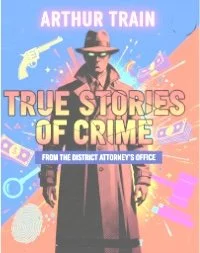
True Stories of Crime from the District Attorney’s Office

By Arthur Train. Introduction by Graeme R. Newman

The transition of the American legal system from the rough-and-tumble nineteenth century into the more structured, investigative era of the early twentieth century is nowhere more vividly captured than in Arthur Train’s True Stories of Crime from the District Attorney’s Office. As an Assistant District Attorney for New York County during a period of rapid urbanization and social upheaval, Train occupied a unique vantage point that allowed him to witness the collision of old-world criminal archetypes with the emerging complexities of modern life. This collection of narratives serves as a clinical yet deeply compelling autopsy of the era’s most notorious legal battles, offering readers a rare glimpse into the machinery of justice at a time when forensic science was in its infancy and the power of the prosecutor’s office was expanding into new, uncharted territories.

Train’s work is particularly significant for its early exploration of what would eventually be termed white-collar crime. While the public imagination of 1908 was often captured by tales of blunt violence and physical daring, Train directs his focus toward the "super-criminal"—the manipulative mastermind who utilized the administrative and financial structures of the city as their primary tools of exploitation. Through these accounts, we see the emergence of a new kind of threat that required a equally sophisticated response from the legal establishment. Train describes a landscape where economic desperation and social isolation were the primary drivers of criminal behavior, yet he also highlights the systemic vulnerabilities that allowed institutional fraud to flourish. By documenting these cases, he provides a foundation for the study of victimology, illustrating how the legal system often struggled to keep pace with the evolving ingenuity of those who sought to undermine it.

Beyond their historical and legal value, these stories possess a narrative vitality that reflects the tension between the sensationalism of early tabloid journalism and the rigorous demands of the courtroom. Train’s prose is informed by his experiences on the front lines of the District Attorney’s office, where the outcome of a trial often hinged as much on rhetorical flair and personal intuition as it did on physical evidence. In revisiting these cases today, we are invited to consider the persistent challenges of defining and delivering justice within a complex bureaucracy. Train does not shy away from the moral ambiguities of his profession, and his reflections on the nature of guilt and the limitations of the law remain strikingly relevant. This volume stands not only as a record of forgotten crimes but as an enduring meditation on the social fabric of a metropolis in flux, capturing the moment when the modern era of criminal justice truly began.

Read-Me.Org Inc. 2026. 184p.

The Inner Beams

By Afshin rad

The document The Inner Beams by Afshin Rad is a historical novel set in East Berlin during the final years of the Cold War, focusing on the brutal atmosphere created by the East German Ministry of State Security, the Stasi. The narrative combines political history with a deeply personal story, illustrating how authoritarianism corrodes ordinary lives. It opens with a preface explaining the power and reach of the Stasi, an organization that employed nearly a hundred thousand agents and twice as many informants under the chilling slogan that anyone who “thinks differently” is an enemy.

The story follows Nadia, a young, marginalized woman surviving on the fringes of society through prostitution while raising her daughter Maya. Despite her poverty, stigmatization, and abuse at the hands of neighbors and strangers, she displays resilience and a rebellious spirit. Her life becomes entangled with the violence and hypocrisy of both the state and the church. She is alternately vilified and desired, caught between accusations of being a spy and exploitation by priests who hide their own corruption.

As events unfold, Nadia becomes a victim of the Stasi’s cruelty. She is imprisoned, tortured, and left for dead, only to be saved by a compassionate old man who hides her and helps her plan to reclaim her daughter, who has been taken by Party officials. Their efforts culminate in a daring but tragic attempt to rescue the child from a powerful regime family. The old man sacrifices his life to protect Nadia, while she herself endures near-death encounters in the collapsing state.

Against the backdrop of the Berlin Wall’s fall and the chaos of 1989, Nadia’s fate is sealed in both tragedy and symbolic triumph. Though she dies violently, her memory and sacrifice become a posthumous inspiration. Her grave, once marked with disdain, is later reclaimed as a shrine to freedom, with an epitaph honoring her rebellious spirit.

The work blends history, fiction, and allegory to show how individuals—especially the marginalized and forgotten—resist oppression and become unwilling martyrs of liberty. Through Nadia’s story, the book captures the human cost of totalitarianism while leaving readers with a sense of dignity, defiance, and the enduring value of freedom.

Read-Me.Org Inc. New York-Philadelphia-Australia. 2025. 77p.

Should Media Coverage Affect Sentencing?

By Paul McGorrery

In sentencing an offender, courts take many factors into account, such as the seriousness of the offence, the offender’s prior record, their age, whether they pleaded guilty and many others. In Australia, courts do this through an approach known as instinctive synthesis, meaning they consider all the factors that can justify a sentence being more or less severe and then arrive at a final outcome. One of the factors that courts may take into account is whether the offender has already been punished in some fashion outside the criminal justice process. Known as extra-curial punishment3 (or extra judicial or natural5 punishment) this can take various forms such as visa cancellation,6 loss of chosen career, injury to the offender8 and hardship to the offender’s family. This report is concerned with just one form of extra-curial punishment: adverse media coverage, in particular, of people. The media and the courts have an important and symbiotic relationship, but sometimes their interests can diverge. The media have an interest in reporting on criminal justice matters because they are often stories of considerable interest to their audiences. In reporting on those stories, the media often concentrate their attentions ‘on the exceptional and unusual among serious crimes’, which can lead to ‘intense and often emotive media reporting’ about sentencing. This can run the risk of undermining, rather than promoting, confidence in the justice system.

Courts in turn have an interest in having their decisions reported. Confidence in the judicial arm of the criminal justice system relies on a combination of community awareness about what courts do, the transparency of their work, and the apparent fairness of their decisions, which can only be scrutinised if there is transparency and community awareness. Moreover, the sentencing purpose of general deterrence – whereby the sentencing of one offender is thought to deter other people from engaging in similar behaviour – is realistically only achievable (if at all) if the media and/or government operate as the conduit between the courts and the community. While some courts have taken the very laudable step of making most of their sentencing remarks publicly available, many people do not even have time to read media summaries, let alone original source material like sentencing remarks, especially in the social media age. So the community realistically only becomes aware of sentencing decisions through the media. The difficulty is balancing the need for fair coverage (the courts’ priority) with the need for interesting coverage (the media’s priority). Justice Harper has described the relationship as like a ‘Greek tragedy’ because ‘[e]ach is forced by its circumstances to face the other off, with neither having the flexibility necessary to reach a satisfactory working compromise’.

Malbourne: Sentencing Advisory Council (VIC), 2022. 24p.

The Early Modern Dutch Press in an Age of Religious Persecution: The Making of Humanitarianism

By David de Boer

For victims of persecution, attracting international awareness of their plight is often a matter of life and death. This book uncovers how in seventeenth-century Europe, persecuted minorities first learned how to use the press as a weapon to combat religious persecution. To mobilize foreign audiences, they faced an acute dilemma: how to make people care about distant suffering? This study argues that by answering this question, they laid the foundations of a humanitarian culture in Europe. The book reveals how, as consuming news became an everyday practice for many Europeans, the Dutch Republic emerged as an international hub of printed protest against religious violence. It traces how a diverse group of people, including Waldensian refugees, Huguenot ministers, Savoyard officeholders, and many others, all sought access to the Dutch printing presses to raise transnational solidarity for their cause. By examining their publicity strategies, this study deepens our understanding of how people tried to confront the specter of religious violence that had haunted them for generations.

UA Open. Oxford, UK: Oxford University Press, 2023. 225p.

Romantic Outlaws, Beloved Prisons: The Unconscious Meanings of Crime and Punishment

By Martha Grace Duncan

An ex-convict struggles with his addictive yearning for prison. A law-abiding citizen broods over his pleasure in violent, illegal acts. A prison warden loses his job because he is so successful in rehabilitating criminals. These are but a few of the intriguing stories Martha Grace Duncan examines in her bold, interdisciplinary book Romantic Outlaws, Beloved Prisons.
Duncan writes: "This is a book about paradoxes and mingled yarns - about the bright sides of dark events, the silver linings of sable clouds." She portrays upright citizens who harbor a strange liking for criminal deeds, and criminals who conceive of prison in positive terms: as a nurturing mother, an academy, a matrix of spiritual rebirth, or a refuge from life's trivia. In developing her unique vision, Duncan draws on literature, history, psychoanalysis, and law. Her work reveals a nonutopian world in which criminals and non-criminals--while injuring each other in obvious ways--nonetheless live together in a symbiotic as well as an adversarial relationship, needing each other, serving each other, enriching each other's lives in profound and surprising fashion.

UA. Open. New York; London: NYU Press, 1996. 284p.