
Open Access Free Library
Fiction+Mediajpg.jpg

FICTION and MEDIA

CRIME AND MEDIA — TWO PEAS IN A POD

Posts in Imperialism
The Spies And Criminals Of Edgar Wallace -Volume 3

SCOTLAND YARD AND BEYOND

By Edgar Wallace. Edited and Introduced by Graeme R. Newman

The Spies and Criminals of Edgar Wallace: Scotland Yard and More — Volume 3 brings together two exciting works by one of the most prolific and entertaining masters of crime fiction. Edgar Wallace’s stories of clever criminals, daring investigators, and ingenious plots captivated millions of readers in the early twentieth century, and they continue to deliver suspense and adventure today.

This volume features The Adventures of Heine, a lively collection of tales centered on one of Wallace’s most intriguing characters. Moving through the underworld of international intrigue and high-stakes deception, Heine encounters spies, smugglers, and master criminals in stories filled with wit, danger, and unexpected twists. Wallace’s fast-paced storytelling and sharp dialogue make each episode a memorable adventure.

Also included is the gripping novel The Girl from Scotland Yard, a thrilling story that places a determined investigator at the center of a web of mystery and crime. As secrets unfold and danger closes in, the story showcases Wallace’s remarkable ability to blend suspense, clever plotting, and dramatic tension.

Together these works reveal the rich variety of Wallace’s crime fiction—from clever short adventures to full-length mystery. Filled with secret schemes, daring investigations, and the ever-present struggle between crime and justice, Volume 3 of The Spies and Criminals of Edgar Wallace offers another exciting glimpse into the world of classic detective storytelling.

Perfect for readers who enjoy classic mysteries, Scotland Yard investigations, and the golden age of crime fiction, this collection continues the tradition of suspense and adventure that made Edgar Wallace one of the most widely read thriller writers of his time.

Read-Me.Org Inc. New York-Philadelphia-Australia. 2026. p.373..
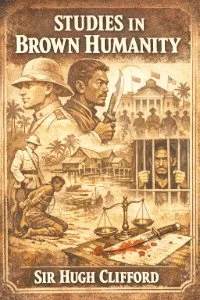
Studies in Brown Humanity: :Being Scrawls and Smudges in Sepia, White, and Yellow

By Hugh Clifford (Author), Graeme Newman (Introduction)

Studies in Brown Humanity by Sir Hugh Clifford is a striking collection of literary sketches drawn from the author’s experiences as a British colonial administrator in the Malay Peninsula during the late nineteenth century. Blending storytelling with observation, Clifford presents a series of vivid portraits of village life, local customs, personal conflicts, and dramatic encounters shaped by the social structures of colonial Southeast Asia. The narratives explore themes of honor, betrayal, justice, and authority, often focusing on moments when traditional Malay codes of conduct collide with the legal and moral framework imposed by the British colonial state.

Although written as literary sketches rather than formal social analysis, the book provides revealing insights into the ways communities understand wrongdoing and punishment. Clifford’s stories depict acts of violence, disputes over reputation, and conflicts between individuals and authority, illustrating how social norms, kinship ties, and communal expectations shape both criminal behavior and responses to it. In this sense, the work can be read not only as colonial literature but also as an early, informal contribution to the sociological study of crime and social control.

At the same time, Studies in Brown Humanity reflects the attitudes and assumptions of its imperial context. Clifford’s interpretations are filtered through the perspective of a European observer, and the book reveals much about the intellectual climate of the British Empire at the turn of the twentieth century. For modern readers, the volume is therefore both a vivid narrative of colonial life and a historical document that illuminates how crime, justice, and cultural difference were understood within the framework of empire.

Rich in atmosphere and dramatic detail, Clifford’s work remains valuable today as a window into the complex social worlds of colonial Southeast Asia and as a reminder of how early narratives about crime and punishment were shaped by the cultural and political conditions of their time.

Read-Me.Org Inc. New York-Philadelphia-Australia. 2026. 291p.

The Further Side of Silence

Sir Hugh Clifford, K. C. M. G.

The Further Side of Silence by Hugh Clifford is a collection of interrelated stories set in the Malay Peninsula during the late nineteenth century, a period when traditional Malay societies were increasingly encountering the expanding authority of the British Empire. Drawing heavily on Clifford’s own experiences as a colonial administrator in the region, the book portrays the lives, customs, conflicts, and moral dilemmas of the people who inhabited the jungles, villages, and royal courts of Malaya.

Through dramatic narratives and vivid descriptions of the tropical landscape, Clifford explores themes of loyalty, honor, justice, and power within a society shaped by ancient traditions and emerging colonial rule. His stories depict Malay chiefs, warriors, villagers, and forest peoples whose lives are entangled in political intrigue, personal rivalries, and the pressures of a changing world.

Part adventure literature and part social observation, the book offers modern readers a window into the cultural and political realities of Southeast Asia during a transformative historical moment. At the same time, it stands as an example of early twentieth-century colonial literature, reflecting both the fascination and the assumptions with which Western writers interpreted the societies they governed.

Read-Me.Org Inc. New York-Philadelphia-Australia. 2026. 198p.

The Ivory Gate

By Walter Besant. Introduction by Colin Heston.

First published in 1893, The Ivory Gate stands among the late novels of Walter Besant, a writer whose career was defined by a sustained engagement with the moral, social, and psychological pressures of modern urban life. Appearing at the close of the Victorian era, the novel reflects both Besant’s long-standing commitment to social realism and his increasing interest in the interior life of the individual—especially the fragile boundary between aspiration and illusion.
The title itself announces the book’s governing metaphor. In classical and medieval literature, the “ivory gate” is the passage through which false dreams pass into waking life, as opposed to the gate of horn, from which true dreams emerge. Besant adapts this image to late-nineteenth-century conditions, using it to explore the seductive power of unrealized hopes, romantic delusions, and social fantasies that shape—and often distort—human conduct. The novel is less concerned with overt villainy than with self-deception: the quiet, persistent capacity of individuals to misread their circumstances and to substitute imagined futures for lived realities.
For modern readers, the novel remains strikingly relevant. Its exploration of illusion, self-fashioning, and the tension between inner fantasy and external reality resonates with contemporary concerns about identity, expectation, and social pressure. While its Victorian idiom and moral framework are firmly rooted in the nineteenth century, its psychological insights anticipate later treatments of self-deception and emotional displacement.
This new edition invites readers to reconsider The Ivory Gate not simply as a period piece, but as a thoughtful and understated meditation on the human tendency to live in dreams of our own making. In tracing the quiet tragedies that arise when those dreams eclipse judgment, Besant offers a work of enduring moral seriousness—one that illuminates both the anxieties of his age and the persistent vulnerabilities of our own.

A READ-ME.ORG CLASSIC REPRINT. New York-Philadelphia-Australia. 2025. 321p.

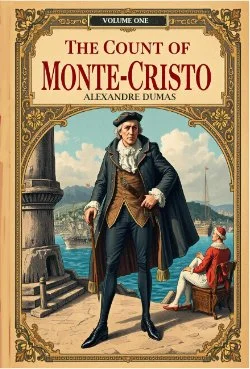
The Count Of Monte-Cristo: Volume Two


By Alexandre Dumas (Author), G. Staal (Illustrator), J.A. Beauce (Illustrator), & 2more Format: Kindle Edition

Few novels have captured the imagination of readers across generations as powerfully as The Count of Monte Cristo. First published in 1844, this sweeping tale of betrayal, revenge, and redemption is the work of Alexandre Dumas, one of France’s most celebrated literary figures. Set against the backdrop of post-Napoleonic France, the novel follows the transformation of Edmond Dantès, a young sailor whose promising future is shattered by the treachery of those he trusted. Wrongfully imprisoned in the Château d’If, Dantès emerges years later not as the man he once was, but as the enigmatic and wealthy Count of Monte Cristo—determined to exact justice on those who wronged him. At once a thrilling adventure and a profound exploration of human nature, The Count of Monte Cristodelves into themes of vengeance, justice, mercy, and the enduring power of hope. Dumas weaves a rich tapestry of characters and subplots, each contributing to the novel’s intricate moral landscape. His storytelling is both grand in scope and intimate in detail, offering readers a journey that is as emotionally resonant as it is exhilarating.
This two volume edition is based on the five volume 1888 English edition. It retains all text as in the original and includes most of the illustrations preserving the spirit and elegance of Dumas’s original edition, while making the novel accessible to contemporary readers. This version is most likely that of an anonymous translator who translated the work from the French for the publisher Chapman and Hall in 1846. There have been many translations in dozens of languages, and some in the 20th century basically rewriting the novel in modern prose and almost always considerably abridged.

Read-Me.Org Inc. New York-Philadelphia-Australia. 2025. 501 p.

The Count Of Monte-Cristo: Volume One


By Alexandre Dumas (Author), G. Staal (Illustrator), J.A. Beauce (Illustrator), & 2more Format: Kindle Edition

Few novels have captured the imagination of readers across generations as powerfully as The Count of Monte Cristo. First published in 1844, this sweeping tale of betrayal, revenge, and redemption is the work of Alexandre Dumas, one of France’s most celebrated literary figures. Set against the backdrop of post-Napoleonic France, the novel follows the transformation of Edmond Dantès, a young sailor whose promising future is shattered by the treachery of those he trusted. Wrongfully imprisoned in the Château d’If, Dantès emerges years later not as the man he once was, but as the enigmatic and wealthy Count of Monte Cristo—determined to exact justice on those who wronged him. At once a thrilling adventure and a profound exploration of human nature, The Count of Monte Cristodelves into themes of vengeance, justice, mercy, and the enduring power of hope. Dumas weaves a rich tapestry of characters and subplots, each contributing to the novel’s intricate moral landscape. His storytelling is both grand in scope and intimate in detail, offering readers a journey that is as emotionally resonant as it is exhilarating.
This two volume edition is based on the five volume 1888 English edition. It retains all text as in the original and includes most of the illustrations preserving the spirit and elegance of Dumas’s original edition, while making the novel accessible to contemporary readers. This version is most likely that of an anonymous translator who translated the work from the French for the publisher Chapman and Hall in 1846. There have been many translations in dozens of languages, and some in the 20th century basically rewriting the novel in modern prose and almost always considerably abridged.

Read-Me.Org Inc. New York-Philadelphia-Australia. 2025. 456 p.

Spitfire Parade

USED BOOK. MAY CONTAIN MARK-UP

By Captain W. E. Johns

FROPM THE COVER: “While the Battle of Britain is still at its height Squadron Leader Bigglesworth, D.S.O., D.F.C., is appointed to Number 666 Fighter Squadron. He soon finds that his new Com- mand is likely to be something of a handful, for the Squadron has been formed for the special purpose of accommodating a collection of bril- liant but unstable types whose capacities as fighter pilots are in inverse ratio to their amenity to discipline and the normal routine of a station.”

Oxford University Press. 1951. 252p.

Biggles in the Jungle

By Captain W. E. Johns

FROM THE COVER: Wherever there is trouble brewing in this much-troubled world it is safe to predict that Biggles and his companions will sooner or later be on the spot. In this story they ar- rive, quite casually, in the capitalof British Honduras, to find Car- ruthers, the resident magistrate, in a very perturbed state on account of the activities of a so-called King of the Forest--a man who has established himself somewhere in the interior and is stirring up strife among the Indians; he is suspected, moreover, of collecting chickle-an important product of the colony-and smuggling it over the border and into the United States.

Melbourne. Geoffrey Cumberlege Oxford University Press. 1951. 196p. USED BOOK. CONTAINS MARK-UP.