Open Access Free Library
CRIMINAL JUSTICE.jpeg

CRIMINAL JUSTICE

CRIMINAL JUSTICE-CRIMINAL LAW-PROCDEDURE-SENTENCING-COURTS

The Independent Inquiry into Grooming Gangs

By Alice Baxter

The government has announced that it is establishing a statutory public inquiry into grooming gangs. The inquiry begins work on 13 April 2026. Why have there been calls for an inquiry? By the early 2010s, multiple child sexual abuse scandals had prompted public concern about the state response to organised and systematic child sexual abuse. These included revelations about media personalities such as Jimmy Savile and Rolf Harris as well as about organised child sexual abuse in towns such as Rotherham, Oldham and Rochdale. In 2014 Theresa May, then Home Secretary, established a non-statutory inquiry panel into the issue. The inquiry panel was replaced by a statutory public inquiry (the Independent Inquiry into Child Sexual Abuse, or IICSA) in 2015, after the Home Secretary told the House of Commons that the panel had lost the trust of victims and survivors. IICSA took seven years to complete, making 20 recommendations in its final report in 2022. In July 2024, Oldham Council wrote to the Home Secretary requesting a public inquiry into child sexual exploitation in the local area. In October 2024, the Minister for Safeguarding and Violence Against Women and Girls, Jess Phillips, refused Oldham Council’s request (PDF). The minister wrote that it should be for Oldham Council itself to decide to commission a local inquiry, rather than for the government to intervene. This decision became the focus of considerable parliamentary and press attention in January 2025, in part driven by comments made by the US tech CEO Elon Musk on social media. Also in January 2025, the then Home Secretary, Yvette Cooper, told the House of Commons that none of IICSA’s recommendations had been implemented. The government asked Baroness Casey of Blackstock to run a “rapid audit” on gang-based exploitation and report to the government on what further work was needed. Baroness Casey reported in June 2025, recommending that the government establish both a national police operation and a national inquiry

Identifying Community Violence Intervention (CVI) Approaches: A Grey Literature Scoping Review

By Devon Ziminski , Julia P Schleimer and  Meron Girma 

Community violence interventions (CVI) encompass a range of strategies aimed at reducing community firearm violence among those most affected. While CVI is an umbrella term, specific CVI approaches across the United States differ markedly in their underlying theoretical frameworks, specific program activities, and populations served. These different CVI approaches have not been well defined or uniformly understood. Given unprecedented financial support for CVI from local, state, and federal sources in recent years, increased research attention to understanding the implementation and impacts of these programs, and growing efforts by policymakers, practitioners, and community leaders to enact CVI programs, it is important to understand how CVI is defined and characterized in applied discourse (eg, among CVI practitioners, funders, and scholars). This grey literature review aimed to synthesize how CVI practitioners, funders, and scholars commonly characterize CVI approaches and how those approaches relate to previously identified CVI theoretical frameworks. Following processes similar to a scoping review, we conducted a grey literature search to locate and synthesize information from webpages (eg, from community groups and academic organizations) and (non-peer reviewed) reports from web sources discussing CVI approaches. We identified nine main CVI approaches commonly mentioned in applied CVI discourse: 1. Violence interruption/street outreach; 2. Group violence interventions (GVI)/focused deterrence/group violence reduction strategy (GVRS); 3. Hospital-based violence intervention programs (HVIP); 4. Built environment/place-based/Crime Prevention Through Environmental Design (CPTED); 5. Behavioral science interventions/cognitive behavioral interventions; 6. Victim/trauma/survivor programs/resources; 7. Mentoring/fellowship programs; 8. School-based/related youth interventions; and 9. Diversion/deflection programs. These approaches operated at multiple intervention levels and drew on various theoretical frameworks. Findings from this scoping review provide a timely summary of how CVI is characterized in applied discourse, which can support the field in operating from a shared understanding of what constitutes CVI and, in turn, inform CVI research, practice, and policy-making.

Community gun violence in US cities is both rare and highly concentrated. Decades of research and practice show that shootings cluster within a very small number of people, places, and social networks. Effective violence reduction therefore requires identifying and engaging the individuals at very high risk of being involved in gun violence in the immediate future (i.e., very high-risk individuals, or VHRI).

This new brief is designed to support jurisdictions working to implement community violence intervention approaches by improving their ability to identify VHRI. The brief provides 1) a concise synthesis of the research evidence on risk for involvement in community gun violence, and 2) guidance on how to implement structured processes to identify the people driving violence within their communities.

Toward A Safer Louisville: Three Years of Progress in Violence Prevention

By The Louisville Office of Violence Prevention

The Louisville Metro Gun Violence Dashboard is updated daily, providing users with real-time information regarding criminal homicides and shootings [4]. Offering a broad view of gun violence, the dashboard includes information on year-to-date trends, victim demographics, and mapping visuals that use neighborhood, council districts, ZIP codes, and police districts. Since its launch, the dashboard has received approximately 100,000 views through June 30, 2025.

TOWARDS AI?: “IMAGINED FUTURES” FOR PROBATION AND ELECTRONIC MONITORING IN THE INDEPENDENT SENTENCING REVIEW

By: Mike Nellis, Emeritus Professor of Criminal and Community Justice, University of Strathclyde

Abstract

The 2025 Independent Sentencing Review (the Gauke Report) famously placed great emphasis on the use of technology in what has traditionally been called “community supervision”, to provide a way out of the capacity crisis in England and Wales’ prisons. In favours a significant expansion of electronic monitoring (EM) and markedly more punitive forms of remote regulation – dubbed “prison outside prison” in press releases. It further encourages the use of emerging forms of AI to make monitoring and supervision more efficient. In this, the Review was largely elaborating the Ministry of Justice’s own emerging view of the penal future. Its call for EM to be more integrated with the Probation Service, may have gone further, but the Review’s vision of the future Probation Service is of a punitive-surveillant agency with a rather ambiguous commitment to rehabilitation. Whether this imagined future is realised remains to be seen.

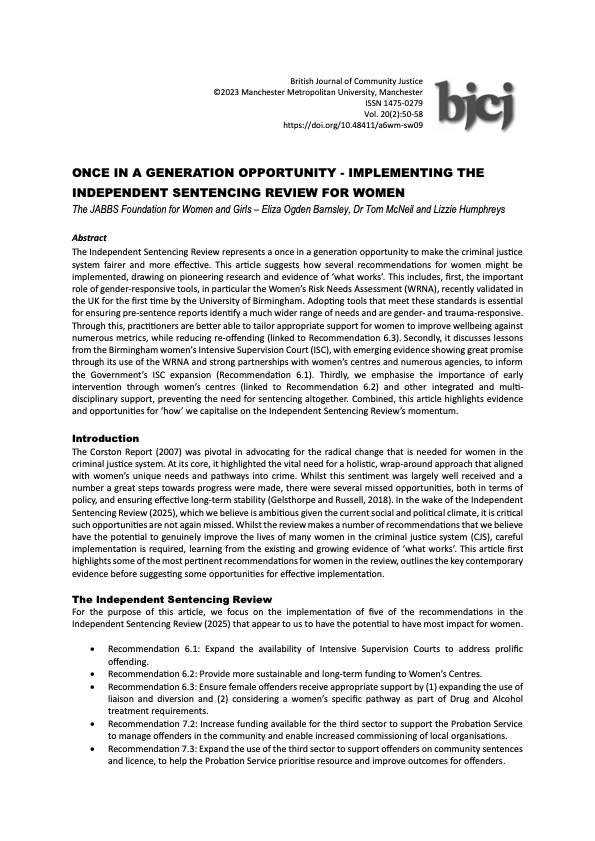
ONCE IN A GENERATION OPPORTUNITY - IMPLEMENTING THE INDEPENDENT SENTENCING REVIEW FOR WOMEN

By: The JABBS Foundation for Women and Girls – Eliza Ogden Barnsley, Dr Tom McNeil and Lizzie Humphreys

Abstract

The Independent Sentencing Review represents a once in a generation opportunity to make the criminal justice system fairer and more effective. This article suggests how several recommendations for women might be implemented, drawing on pioneering research and evidence of ‘what works’. This includes, first, the important role of gender-responsive tools, in particular the Women’s Risk Needs Assessment (WRNA), recently validated in the UK for the first time by the University of Birmingham. Adopting tools that meet these standards is essential for ensuring pre-sentence reports identify a much wider range of needs and are gender- and trauma-responsive. Through this, practitioners are better able to tailor appropriate support for women to improve wellbeing against numerous metrics, while reducing re-offending (linked to Recommendation 6.3). Secondly, it discusses lessons from the Birmingham women’s Intensive Supervision Court (ISC), with emerging evidence showing great promise through its use of the WRNA and strong partnerships with women’s centres and numerous agencies, to inform the Government’s ISC expansion (Recommendation 6.1). Thirdly, we emphasise the importance of early intervention through women’s centres (linked to Recommendation 6.2) and other integrated and multi- disciplinary support, preventing the need for sentencing altogether. Combined, this article highlights evidence and opportunities for ‘how’ we capitalise on the Independent Sentencing Review’s momentum.

Introduction

The Corston Report (2007) was pivotal in advocating for the radical change that is needed for women in the criminal justice system. At its core, it highlighted the vital need for a holistic, wrap-around approach that aligned with women’s unique needs and pathways into crime. Whilst this sentiment was largely well received and a number a great steps towards progress were made, there were several missed opportunities, both in terms of policy, and ensuring effective long-term stability (Gelsthorpe and Russell, 2018). In the wake of the Independent Sentencing Review (2025), which we believe is ambitious given the current social and political climate, it is critical such opportunities are not again missed. Whilst the review makes a number of recommendations that we believe have the potential to genuinely improve the lives of many women in the criminal justice system (CJS), careful implementation is required, learning from the existing and growing evidence of ‘what works’. This article first highlights some of the most pertinent recommendations for women in the review, outlines the key contemporary evidence before suggesting some opportunities for effective implementation.

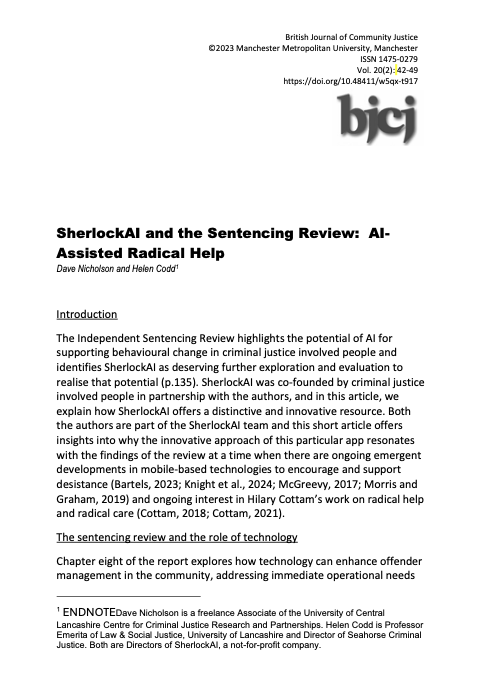
SherlockAI and the Sentencing Review: AI- Assisted Radical Help

By: Dave Nicholson and Helen Codd

The Independent Sentencing Review highlights the potential of AI for supporting behavioural change in criminal justice involved people and identifies SherlockAI as deserving further exploration and evaluation to realise that potential (p.135). SherlockAI was co-founded by criminal justice involved people in partnership with the authors, and in this article, we explain how SherlockAI offers a distinctive and innovative resource. Both the authors are part of the SherlockAI team and this short article offers insights into why the innovative approach of this particular app resonates with the findings of the review at a time when there are ongoing emergent developments in mobile-based technologies to encourage and support desistance (Bartels, 2023; Knight et al., 2024; McGreevy, 2017; Morris and Graham, 2019) and ongoing interest in Hilary Cottam’s work on radical help and radical care (Cottam, 2018; Cottam, 2021).

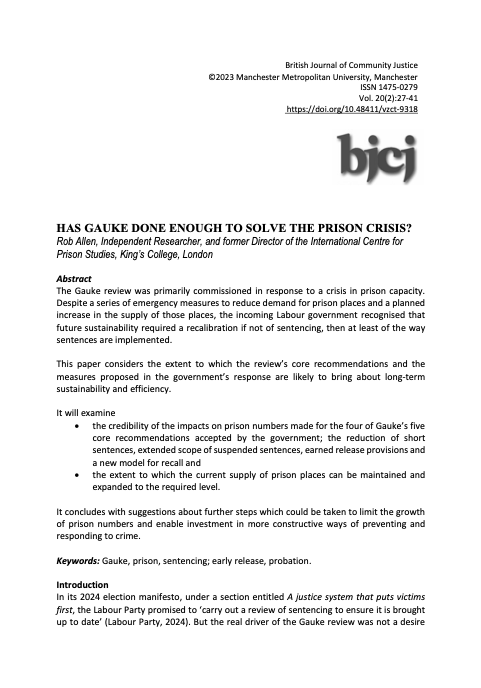
HAS GAUKE DONE ENOUGH TO SOLVE THE PRISON CRISIS?

By: Rob Allen, Independent Researcher, and former Director of the International Centre for Prison Studies, King’s College, London

Abstract

The Gauke review was primarily commissioned in response to a crisis in prison capacity. Despite a series of emergency measures to reduce demand for prison places and a planned increase in the supply of those places, the incoming Labour government recognised that future sustainability required a recalibration if not of sentencing, then at least of the way sentences are implemented.

This paper considers the extent to which the review’s core recommendations and the measures proposed in the government’s response are likely to bring about long-term sustainability and efficiency.

It will examine

  • the credibility of the impacts on prison numbers made for the four of Gauke’s five

    core recommendations accepted by the government; the reduction of short sentences, extended scope of suspended sentences, earned release provisions and a new model for recall and

  • the extent to which the current supply of prison places can be maintained and expanded to the required level.

    It concludes with suggestions about further steps which could be taken to limit the growth of prison numbers and enable investment in more constructive ways of preventing and responding to crime.

    Keywords: Gauke, prison, sentencing; early release, probation.

    Introduction

    In its 2024 election manifesto, under a section entitled A justice system that puts victims first, the Labour Party promised to ‘carry out a review of sentencing to ensure it is brought up to date’ (Labour Party, 2024). But the real driver of the Gauke review was not a desire

for modernisation but the need to address the urgent lack of custodial capacity to meet current and projected demand, something described by incoming Justice Secretary Shabana Mahmood as ‘a prison system in crisis, moments from catastrophic disaster’ (Mahmood, 2024a).

When introducing emergency early release measures to avert that disaster, Mahmood confirmed a commitment to longer-term reform and cutting reoffending, and that a forthcoming review would make sure ‘our sentencing is consistent and coherent, and that our sentences do actually work’ (Ibid).

It was only when the Independent Sentencing Review (ISR) was announced in October 2024 that its primary purpose was revealed – ‘ensuring we never run out of prison places again’ (Mahmood, 2024b). Injecting a rare dose of realism into penal policy, the Justice Secretary told MPs that despite the creation of 14,000 new prison places, ‘we cannot build our way out of this crisis. However fast we build, increasing demand will outstrip supply’.

The total adult prison population - 87,294 on 6 October 2025 - is projected to increase steadily to reach between 97,300 and 112,300 prisoners by November 2032, with a central estimate of 104,100 (MoJ, 2024b). The prison expansion programme aims to produce a usable capacity of about 99,000 by 2032 (MoJ, 2024a). To meet the clear objective of balancing supply of and demand for prison places, the ISR was advised that ‘that aiming to reduce demand by 9,500 prison places would help ensure there were sufficient places for the most serious offenders’ (ISR, 2025a).

The final report of the Gauke review, published in May 2025, proposed five core recommendations designed to reduce prison numbers to meet that requirement (ISR, 2025b). Gauke estimated that the combined effect of these would be to reduce the prison population by 9,800. His report also contained a number of other proposals that might lead to reductions in prison numbers but unlike the core recommendations the effects were not specified. Even for the core recommendations, the review provided no details about how the estimated effects had been calculated and failed to indicate over what timescale the reductions would take effect. This is important given the short period in which the demand for prison places is projected to exceed demand, perhaps as early as 2026 (PAC, 2025).

Four of Gauke’s five core recommendations have in large part been accepted by the Government and are contained in a Sentencing Bill published in July 2025 and whose Second Reading was held on 16 September 2025. The Bill’s Impact Assessment (IA) provides lower estimates for the deflationary effects of the Gauke proposals on prison numbers than did the ISR. This reflects the outright rejection of one recommendation - an ‘earned progression’ model for those serving Extended Determinate Sentences (EDS) - and modifications to others. The best estimate for prison place impacts of the Bill’s measures is 7,500 although this figure includes the impact of measures designed to reduce the use of custodial remand which did not emerge directly from the ISR (MoJ, 2025a).

Before assessing these, it is worth noting that the ISR did not consider all of the ways in which pressures on the prison population might be reduced.

First, although the ISR was intended to be a comprehensive re-evaluation of the sentencing framework, arrangements for young people under 18, wholesale reform of sentences for murder and the management of Imprisonment for Public Protection (IPP) were excluded from its scope.

Of these perhaps the most significant in terms of impact on the prison population, albeit indirectly, is the murder sentencing framework. In his preliminary report on sentencing trends, the Gauke review identified the principal cause of the increasing prison population ‘is that prison sentences have been lengthened substantially by successive governments’ (ISR, 2025b). In particular, it concluded that the introduction of statutory starting points for minimum terms for offenders convicted of murder ‘had an impact on wider sentencing and the prison population more broadly, subsequently inflating sentence lengths for other serious offences’ (ibid). Gauke’s terms of references did permit him to consider the impact of sentencing for murder on the wider sentencing framework, but other than recommending that the Law Commission should look at the minimum sentence tariffs for murder, the final report did not propose ways of limiting the effects of increasing sentence lengths for murder on other offences in order to put a brake on sentence inflation.

Indeed, more generally, Gauke’s final report and proposals shied away from addressing head on the reduction of the length of sentences imposed by the courts for example by reducing maximum penalties, or recalibrating sentencing guidelines. Nor did the review make recommendations to remove the minimum sentences for certain offences or the requirements on courts to treat previous convictions as aggravating factors, both of which have contributed to making sentences more severe. Gauke suggests that maximum and minimum penalties should be looked at, but his review itself does little to address the rampant sentence inflation which the first part of his review identified as the main cause of the capacity crisis.

Instead, the review concentrates on how prison sentences are implemented, proposing much greater use of suspension of prison terms so that they are served in the community; a structure for most prison sentences which involves shorter periods in custody; and limitations to the use of imprisonment as a response to failures to comply with post release supervision. While these may prove useful ways of reducing the numbers in prison in the short to medium term, they do not necessarily provide the basis for a proportionate, transparent, and sustainable sentencing framework suitable for a modern liberal democratic state.

This article starts by discussing each of the Gauke proposals which are designed to reduce prison numbers before addressing the overall impact they are likely to have on demand for prison. It continues with an assessment of the supply side of the equation- how more prison places are being created - before concluding with some observations about what further action might be needed to restrain the use of prison in an unpromising political climate.


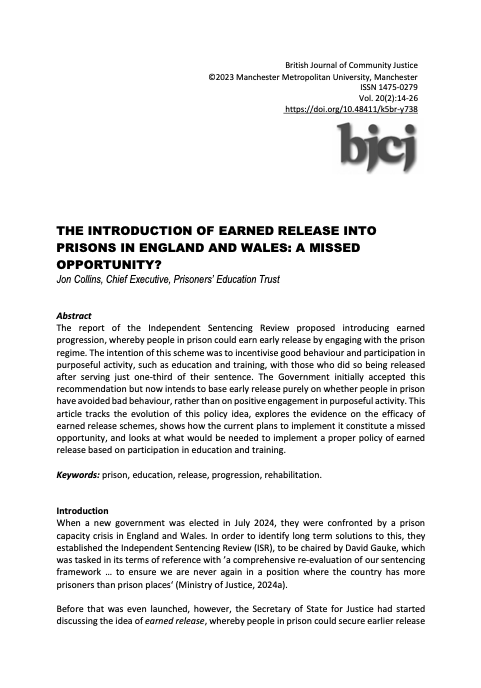
THE INTRODUCTION OF EARNED RELEASE INTO PRISONS IN ENGLAND AND WALES: A MISSED OPPORTUNITY?

When a new government was elected in July 2024, they were confronted by a prison capacity crisis in England and Wales. In order to identify long term solutions to this, they established the Independent Sentencing Review (ISR), to be chaired by David Gauke, which was tasked in its terms of reference with ’a comprehensive re-evaluation of our sentencing framework ... to ensure we are never again in a position where the country has more prisoners than prison places‘ (Ministry of Justice, 2024a).

Before that was even launched, however, the Secretary of State for Justice had started discussing the idea of earned release, whereby people in prison could secure earlier release

by participating in education, training or other positive activity. This idea quickly became arguably the most prominent element of the government’s plans for prison reform and central to the ISR.

This article will track the evolution of this policy idea, show how the current plans to implement it constitute a missed opportunity, and look at what would be needed to implement a proper policy of earned release based on participation in education and training.

WOMEN, SENTENCING, AND SYSTEMIC CHANGE: IMPLEMENTING THE REVIEW IN A GENDERED CJS

By: Phoebe Lil, Advance Charity

The publication of the Independent Sentencing Review (ISR) in May 2025 provoked a diverse range of reactions from the specialist women’s sector. For some, particularly those delivering services responding to Violence Against Women and Girls (VAWG), there was trepidation about the impact of measures designed to ease the prison capacity crisis on victim/survivors. Specialist organisations working with justice-experienced women welcomed the range of measures that would have an overall positive impact on criminalised women.

But what do the women affected by these recommendations think? This article explores several thematic ISR recommendations, subsequently accepted by the Government, in the context of women’s experiences of existing interventions. Drawing on Advance’s experience – a leading women’s charity that supports women in contact with the criminal justice system and those who have experienced, or are at risk of, domestic abuse and other forms of gender-based violence – we will examine how the recommended measures can be implemented to best meet the needs of women who have been victimised, criminalised or – as is often the case – both.

The article will begin by demonstrating how a lack of adequate victim response can result in women committing offences, including examples from Advance’s services for criminalised women. As is well documented, women who offend are much more likely than the general population to have experienced some form of abuse, domestic or other.

Drawing on insights from services and best practice by Advance and partners, we then highlight how ISR recommendations should be implemented to ensure women’s safety. Finally, we consider where gaps in recommendations remain, and where the Government must invest to deliver a truly whole-system reform of a CJS that works for women, enabling

both the successful implementation of the ISR and other government ambitions, including the Women’s Justice Board and halving VAWG in a decade.

Mapping and Profiling the Most Threatening Criminal Networks in Latin America and the Caribbean- EL PAcCTO

By Jeremy McDermott,  Steven Dudley


“Connections between European and Latin American criminal networks have surged in recent years, with drugs, gold, and human trafficking proving particularly lucrative in the European market.

The number of European citizens linked to criminal networks arrested in Latin America has increased significantly, especially in Colombia, Peru, Brazil, the Dominican Republic, and Argentina. The strengthening alliance between Latin American and European crime groups now poses a global threat.

Today’s Latin America’s major criminal networks, unlike the cartels of the 1980s, operate in a world of subcontracting. Groups, or nodes in the network, often specialize in specific roles or stages of the supply chain. If a node is targeted by law enforcement, the network can quickly adjust and reconfigure itself, ensuring efficiency and the uninterrupted flow of criminal commodities.

These networks pose a serious threat to the rule of law, subverting it by establishing social norms through violence to exercise control with different forms of criminal governance. In Latin America and the Caribbean, they pose the single biggest threat to democracy in the region, using corruption to penetrate the state, and violence where bribery fails. This means it is the primary motor for human rights abuses and homicides. Corruption, like cancer, is spreading through state institutions in many nations of the region. Additionally, these networks harm economic stability development, distorting local economies, deterring foreign investment and affecting international financing.

Studying these networks is crucial to understanding the flow of illicit goods from Latin America to Europe, and essential to crafting effective strategies to combat these structures. After an analysis of different variables such as their criminal economies, geographical distribution or state response, EL PACCTO 2.0 and InSight Crime, with the support of the European Multidisciplinary Platform Against Criminal Threats (EMPACT), particularly within the Operational Action 8.3, of the High Risk Criminal Networks EMPACT, have ranked the 28 most active or relevant high-risk criminal networks in Latin America and the Caribbean, identifying key factors about their operations that reveal potential opportunities for combating organized crime in the region. This work has direct implications for both Latin America and Europe.

The list ranges from criminal networks with thousands of members to small brokers or gangs operating in Latin American countries, Caribbean islands or in Central America. In addition, the current report has sought to identify the connections or influence that high-risk criminal networks may have in different countries. This has led to the creation of a specific file for each criminal network with a specific individual map. Likewise, an aggregate map of all the information on the 28 criminal networks has been designed to provide a global overview.”

Washington, DC: Insight Crime, 2025. 114p

Criminal Politics: An Integrated Approach to the Study of Organized Crime, Politics, and Violence

By Nicholas Barnes

Over the last decade, organized criminal violence has reached unprecedented levels and has caused as much violent death globally as direct armed conflict. Nonetheless, the study of organized crime in political science remains limited because these organizations and their violence are not viewed as political. Building on recent innovations in the study of armed conflict, I argue that organized criminal violence should no longer be segregated from related forms of organized violence and incorporated within the political violence literature. While criminal organizations do not seek to replace or break away from the state, they have increasingly engaged in the politics of the state through the accumulation of the means of violence itself. Like other non-state armed groups, they have developed variously collaborative and competitive relationships with the state that have produced heightened levels of violence in many contexts and allowed these organizations to gather significant political authority. I propose a simple conceptual typology for incorporating the study of these organizations into the political violence literature and suggest several areas of future inquiry that will illuminate the relationship between violence and politics more generally.

Perspectives on Politics. 2017;15(4):967-987.

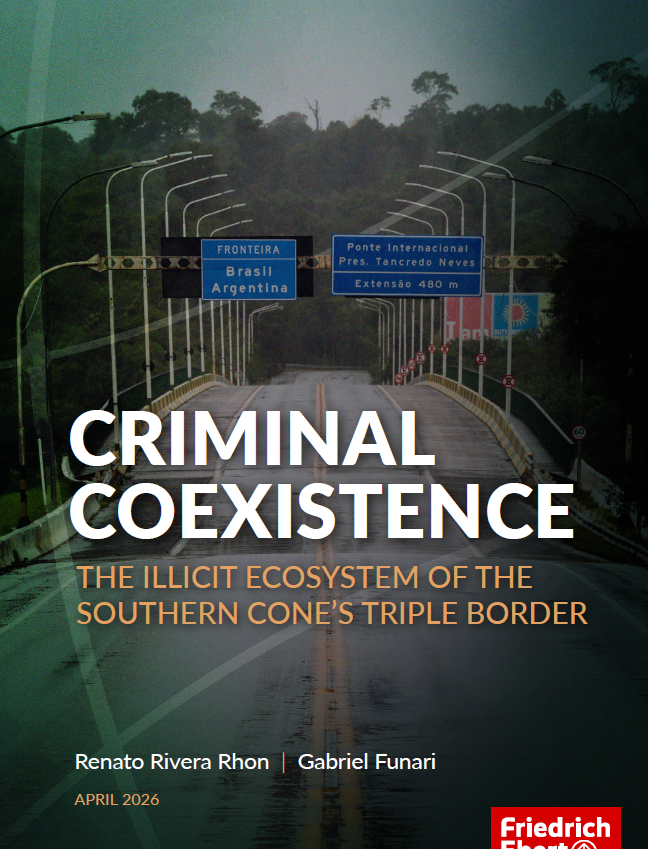
CRIMINAL COEXISTENCE.  THE ILLICIT ECOSYSTEM OF THE SOUTHERN CONE’S TRIPLE BORDER 

By Renato Rivera Rhon | Gabriel Funari

The Southern Cone tri-border area —comprising Ciudad del Este (Paraguay), Foz do Iguaçu (Brazil) and Puerto Iguazú (Argentina)— constitutes one of the most distinctive cross-border spaces in South America. Its particular geographical configuration combines densely populated urban areas with strategic riverine zones that facilitate intense cross-border circulation. More than 650,000 inhabitants coexist in an integrated social space marked by intense movement of people and one of the most heavily used commercial routes on the continent.

Within this environment of high mobility and commercial dynamism, smuggling has consolidated itself as the principal structuring axis of illicit economies. Since the creation of the free trade zone in Ciudad del Este in 1995, the region became a re-export centre for products destined mainly for the Brazilian market. Cigarettes, electronic products and alcoholic beverages enter Brazil as contraband, mobilized by local family clans and transnational illicit networks.

The report identifies a criminal ecosystem of coexistence characterized by interdependence, profitability and the historical continuity of illicit markets, sustained by commercial free movement, corruption and institutional fragility. Unlike other border areas in South America, the tri-border area presents high levels of criminal activity but low levels of violence, without armed disputes over territorial control or manifestations of criminal governance based on extortion or systematic coercion.

The report analyses the evolution of organized crime in the region, from the era of the “comboios” to the specialization of riverine routes and the “ant smuggling” model. It also examines the presence of the Primeiro Comando da Capital (PCC), which has consolidated control over clandestine ports in specific sectors of the Paraná River, without exercising generalized authority over the regional population.

Beyond smuggling, the report addresses cannabis trafficking produced in Paraguay, cocaine trafficking, arms trafficking and money laundering. Ciudad del Este emerges as a strategic financial node where commercial companies, real estate businesses, gambling houses and crypto-asset operations proliferate, facilitating the movement of illicit capital. The study also finds that the Argentinian side of the tri-border area has emerged as an increasingly prevalent smuggling hub over the past five years, generating new contraband routes and new security threats in the region.

The study is based on fieldwork and direct observation conducted in Ciudad del Este, Foz do Iguaçu and Puerto Iguazú, including interviews with members and former members of security forces, customs officials, judicial officials, academics and journalists specialized in the criminal dynamics of the tri-border area.

The Southern Cone tri-border area thus reveals a highly collaborative and adaptable criminal ecosystem, where smuggling functions as a base economy connecting flows, actors and routes used for drug trafficking, arms trafficking and other illegal goods. Its persistence is explained by its relatively non-violent character, informal regulation sustained by family clans and limited state capacities in the face of complex transnational dynamics.

Geneva: Global Initiative Against Transnational Organized Crime.. 2026. 31p.

Research review of the overarching guideline for sentencing offenders with mental disorders, developmental disorders, or neurological impairments

By 

The Sentencing Council (UK)

The Sentencing Council for England and Wales was established in April 2010 (under s118, of the Coroners and Justice Act 2009) in order to promote greater transparency and consistency in sentencing, while maintaining the independence of the judiciary. The Sentencing Council is an independent, non-departmental public body which is part of the Ministry of Justice’s (MoJ’s) family of arm’s-length bodies. The Sentencing Council has statutory duties to: • develop and issue sentencing guidelines and monitor their use • assess the effect of guidelines on sentencing practice • promote awareness among the public regarding the realities of sentencing, and publish information about sentencing practice in magistrates’ courts and the Crown Court The majority of sentencing guidelines issued by the Sentencing Council are ‘offence specific’, providing a step-by-step framework for sentencing a particular offence or group of offences. This begins with an initial assessment of seriousness where the sentencer will arrive at a sentence starting point outlined within the relevant guideline. The guideline then outlines possible aggravating and mitigating factors in relation to the offence or offender that a sentencer should consider, consideration of which may move the sentence starting point up or down. The guideline then provides guidance on a reduction for a guilty plea. The guideline may then include any other considerations that should be taken into account and finally the final sentence outcome. An example of an offence specific guideline can be seen for arson. Where there is no relevant offence specific guideline, the general guideline: overarching principles provides a sentencer with step-by-step guidance. The Sentencing Council also produces ‘overarching’ guidelines, which address specific issues that may arise across many different offences. These overarching guidelines do not typically follow the same format as offence guidelines. They instead contain guidance that can be applied across a range of offences and are expected to be used in conjunction withany relevant offence specific guidelines. The overarching guideline for sentencing offenders with mental disorder, developmental disorder, or neurological impairments, hereafter referred to as ‘the guideline’, was issued by the Sentencing Council in 2020 and is an example of an overarching guideline. It applies to all offenders aged 18 and over sentenced by courts in England and Wales. In accordance with the Sentencing Council’s statutory duties to assess the effect of guidelines on sentencing practice, the Sentencing Council has conducted a research review of this guideline. This explores sentencers’ understanding and application of the guideline. The following section outlines the details of the guideline. 

The Sentencing Council for England and Wales, 2026. 63p

Wrongful convictions in Spain: Systematic analysis of judgments from 1996 to 2022

By Nuria Sánchez , Guadalupe Blanco-Velasco , Linda M. Geven , Jaume Masip , Antonio L. Manzanero 

A comprehensive analysis of wrongful convictions in Spain was conducted. Out of 447 Supreme Court judgments made between 1996 and 2022, 243 cases involving a successful appeal made by a person claiming their innocence were examined in terms of the characteristics of wrongfully convicted individuals, the crime types, and the factors contributing to these judicial errors. An average rate of nine wrongful convictions per year was found, mostly for crimes against public safety and property, with a significant overrepresentation of foreign citizens. Legal professionals’ misconduct was identified as the main factor contributing to these wrongful convictions. The mean time between the judgment and the conviction being overturned was around 4.5 years. More than half of the cases were reopened due to evidence indicating that the alleged crime never occurred. While new evidence was the primary reason for reopening cases, only 3 % were reopened based on DNA evidence. The systematic methodology used in this research may serve as a model for future studies on wrongful convictions in other countries. To reduce wrongful convictions in Spain, several key measures must be implemented. Legal representation should be mandatory for all individuals accused of crimes, without exception. Legal professionals must receive enhanced training to minimize judicial errors. Furthermore, stricter forensic protocols should be established, and forensic experts must be properly accredited to prevent the misapplication of scientific evidence in legal proceedings. Additionally, reforms are needed to ensure that plea bargains are subject to more rigorous scrutiny, and that minor crimes are properly investigated.

Journal of Criminal Justice

Volume 103, March–April 2026,

How Fines and Fees in the Criminal Legal System Hinder Black Economic Mobility

By Aravind Boddupalli, LesLeigh D. Ford, Luisa Godinez-Puig

Criminal legal system fines and fees disproportionately impact Black households, entrenching poverty and creating significant barriers to economic mobility and wealth-building. These financial burdens, often imposed without regard to ability to pay, frequently lead to driver's license suspensions, increased debt, and incarceration, disrupting employment and housing stability. 

Urban Institute +3

Key Impacts on Black Communities:

  • Disproportionate Burden: Black households face criminal legal fines and fees at the highest rates compared to other racial groups.

  • Economic Mobility Barriers: These costs, often totaling hundreds or thousands of dollars, hinder the ability of Black families to build assets and improve their financial well-being.

  • Cycle of Debt and Punishment: Inability to pay can lead to driver's license suspensions, preventing individuals from traveling to work, as well as additional fines, interest, and jail time.

  • Family Well-being: As highlighted in this analysis by the Fines and Fees Justice Center, 57 percent of people with court debt reported food insecurity, while nearly 20 percent of those surveyed reported that they or a household member served time in jail due to an inability to pay.

  • Housing and Employment: Debt-related penalties, such as suspended licenses or a criminal record for nonpayment, make securing stable housing and employment more difficult. 

    Urban Institute +4

Washington, DC:  Urban Institute, 2026. 7p.

Staying Too Long: Michigan’s Stalled Sentencing Reform

By Kate Bryan, Rachel Schmidt, and Ashley Neufeld, with support from Nikki Miguel and Maura McNamara.

Michigan’s sentencing structure remains among the most restrictive in the nation. While many states have adopted policies that allow earned-time credits and provide opportunities for early release or resentencing, Michigan requires individuals to serve 100 percent of their minimum sentence before parole eligibility. While recent reforms, such as record clearing, medical parole, and limits to pretrial detention, have advanced progress to the state’s system, they do not target the key challenge of long lengths of stay. Today, more than 65 percent of the state’s prison population is serving a sentence of ten years or more, with limited opportunity for review or reduction. As the prison population rises for the first time in a decade, coupled with the state’s mounting budget pressures, a comprehensive examination of the state’s length of stay challenges is necessary. The goal of this brief is to serve as a baseline to begin that deeper examination. The Crime and Justice Institute, supported by Arnold Ventures, analyzed Michigan’s publicly available prison population data to understand the key trends regarding length of stay. Key findings include: Population growth: The prison population is growing after decades of decline, up 3% since 2021, with more individuals receiving additional sentences while already incarcerated. Sentences are getting longer: Average minimum terms rose 30% in the past decade, from 9.3 years (2014) to 12 years (2023). Drug offenses saw sharpest increases: Average minimum terms for drug offenses grew 33% over  the past decade. Sentencing practices exceeding statutory maximums: Data show minimum terms beyond statutory maximums for top offenses indicating the impacts of habitual offender enhancements, consecutive sentences, and additional sentencing stacking. With the urgency of a now rising population, the reinstated Sentencing Commission provides a renewed opportunity for the state to review sentencing practices. As Michigan prepares for leadership changes in 2026, the state has an opportunity to tackle its most pressing criminal justice challenge. To advance reform, Michigan must: Leverage the Sentencing Commission to produce data-driven recommendations and introduce corresponding legislation. Use corrections data to identify policies contributing to long stays, especially those related to enhancements, habitual offenders, and additional sentences imposed on already incarcerated individuals. Analyze the fiscal impact of long sentences considering recent budget volatility and an aging prison population. Reintroduce policies to reduce length of stay early in the 2026 session, backed by fiscal and public safety data.

Boston: Crime and Justice Institute, 2026. 17p.

Court Trends in Washington over the Past Two Decades

By Vasiliki Georgoulas-Sherry & Hanna Hernandez

Collecting and analyzing data is essential for understanding and evaluating the court trends in Washington in past decades — as well as, at times, demographic differences such as disparities and disproportionalities — within the criminal justice system. Gaining insight into these trends and disparities is crucial for identifying and addressing criminal trends and systemic inequities. This issue continues to draw significant attention from a wide range of sources, including local, state, and federal agencies; advocacy organizations; policymakers; researchers; scholars; and community members. Ongoing evaluation of these trends and disparities is vital for promoting fairness, ensuring accountability, and advancing equity within the justice system. To respond to these impacts, the Criminal Justice Research & Statistics Center - the Washington Statistical Analysis Center (SAC) applied for and received the 2023 State Justice Statistics (SJS) grant from the Bureau of Justice Statistics (BJS) to assess this work. Through data from the Washington State Patrol (WSP) maintains the Computerized Criminal History (CCH), this report evaluates the court trends in the U.S. over the past 25 years, and the underlying court trends and demographic differences that impact the criminal justice system.

Olympia: Washington State Statistical Analysis Center, 2025. 46p.

Racial and Ethnic Disparities in Felony Case Processing in New York State

By New York State Division of Criminal Justice Services Justice Lab

This report describes an analysis of racial and ethnic disparities in felony case processing in New York State at three processing points: arrests made in 2019, disposition of those arrests, and prison sentences imposed after convictions resulting from those arrests. 2019 was chosen as the benchmark because arrests made that year occurred prior to the implementation of landmark changes to the state’s bail, and evidence and information disclosure (discovery) laws. As a result, this analysis provides an overview of how the system functioned prior to those reforms and before the full impact of the COVID-19 pandemic, which disrupted all facets of the state’s criminal justice system.


Albany: New York State, Division of Criminal Justice Services Justice Lab.. 2025. 22p.

‘Everything is after sentencing’: The experiences of remand prisoners

By The HM Chief Inspector of Prisons (UK)

Court delays mean that prisoners are waiting an unacceptably long time for their trials. This has led to a dramatic increase in the number of prisoners stuck on remand or waiting to be sentenced, and has contributed to the ongoing capacity crisis in prisons. Many remand prisoners are held in crumbling, inner-city Victorian jails where conditions are some of the poorest in the estate. Suicide is more common among this group and in our surveys 67% say they have mental health difficulties. In many of the prisons named in this report, remand prisoners comprised a large proportion of their population, yet we found too little being done to help this particularly vulnerable group. Men and women described a lack of support in contacting family members when they first came into prison, and not enough was done for those being released from court. This report highlights some areas where prisons have begun to address the difficulties faced by these prisoners, but with the growth in this population now endemic, the prison service and individual jails must think more strategically about how they support men and women held on remand. 

London: HM Chief Inspector of Prisons, March 2026, 18p.

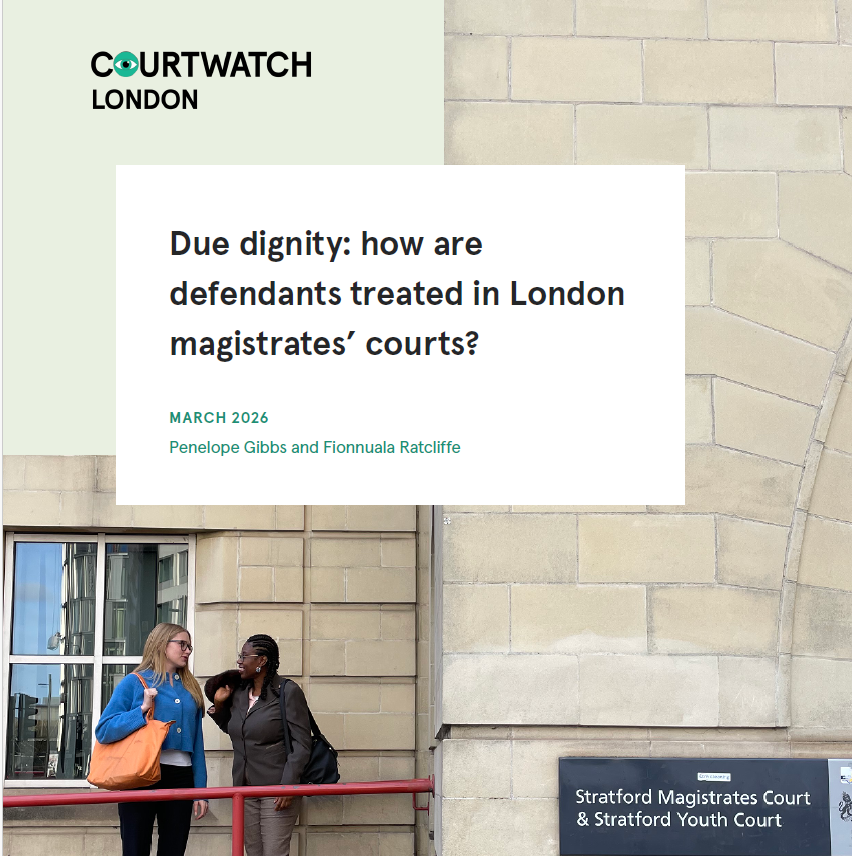
Due dignity: how are defendants treated in London magistrates’ courts?

By Fionnuala Ratcliffe and Penelope Gibbs

If they are to receive justice, defendants must be able to participate effectively in court proceedings. The principle of effective participation is at the heart of the right to a fair trial, guaranteed by Article 6 of the European Convention on Human Rights. Under Article 6, defendants’ minimum rights include the right to be informed about the nature and cause of the accusation against them; to have time and facilities to prepare their defence; to defend themselves in person or through legal assistance; to examine witnesses; and to receive free assistance from an interpreter where needed. Despite the central importance of effective participation, there are multiple aspects of everyday court practice that make it a struggle for defendants to participate actively in their case. This fifth report of the Transform Justice CourtWatch London project vividly conveys the extent and nature of these barriers to participation in London magistrates’ courts. At the most basic level, defendants often find it difficult to hear, let alone understand, what is going on at court – whether they are appearing via a shaky video link, or are physically present in the court but (as is most common) seated in the secure dock at the back of the room, behind a perspex screen. Courtroom language tends to be complex, convoluted and full of jargon: not easy for any lay person to understand, and more so for people who are anxious, tired, mentally unwell or otherwise vulnerable. For those whose first language is not English, obstacles to understanding are higher still, compounded by inadequate interpreting provision. And the large minority of defendants who are unrepresented face additional challenges as they seek to navigate the court process. Participation implies not only understanding the process, but also making oneself heard. Yet defendants’ voices are frequently silenced. Opportunities to speak during proceedings are limited, and again are impeded by the practical barriers imposed by the secure dock or remote attendance. There is an essential paradox that while criminal proceedings, at their core, are about the defendant – about what they have or have not done, and what is the appropriate penalty if they did commit the alleged offence – they are often pushed to the margins of the courtroom, more an absence than a presence.Closely linked to the theme of participation is the quality of treatment defendants receive at court. Most court professionals are conscientious and respectful. The courtwatchers observed judges, magistrates, lawyers and court staff who took time to explain proceedings; responded calmly and with compassion to displays of distress, confusion and anger; and offered extensive support to unrepresented defendants. Yet good treatment of defendants is by no means universal. Court professionals are working within an overloaded, creaking and under-resourced system. They are under pressure to complete cases quickly, in order to reduce the delays that permeate all stages of the criminal justice process. Consequences include an over-emphasis on speedy ‘processing’ of many cases and inadequate consideration of individuals’ specific circumstances and needs. And while the humanity of many court professionals shines through courtwatcher accounts, it is evident also that there are judges, magistrates, lawyers and court staff who are rude, dismissive and careless in their interactions with defendants. The treatment received by people in contact with the criminal justice system has significant repercussions. We know from existing research on procedural justice that people involved in legal processes are more likely to regard those processes – and indeed the wider justice system – as trustworthy and legitimate if they feel they have been treated with dignity and respect. Also essential to perceptions of good treatment is the experience of having a ‘voice’: that is, being acknowledged as an individual and being heard by those making the decisions. In other words, quality of treatment is integral to participation, and vice versa. The findings of the CourtWatch London project resonate with research that my colleagues and I have carried out over many years at Birkbeck’s Institute for Crime & Justice Policy Research. In our own work spanning the criminal (magistrates’, youth and Crown), family and coroners’ courts, we have repeatedly identified barriers to court users’ understanding of and engagement with legal processes. We have also seen how respectful, humane treatment can make a profound difference to people’s experience of justice. We have noted that seemingly small acts of kindness and attention can significantly enhance the sense of being supported and included; and, conversely, that professionals’ dismissive or thoughtless behaviour can be deeply damaging. What the courtwatchers have observed in magistrates’ courts across London should therefore be understood as one part of a much greater picture of how justice is delivered and experienced. There is much that can be done to strengthen participation, good treatment and fairness in court practice, and the recommendations in this report set out important steps for achieving this. 

London: Transform Justice, 2026. 41p.