Open Access Publisher and Free Library
HUMAN RIGHTS.jpeg

HUMAN RIGHTS

Human Rights-Migration-Trafficking-Slavery-History-Memoirs-Philosophy

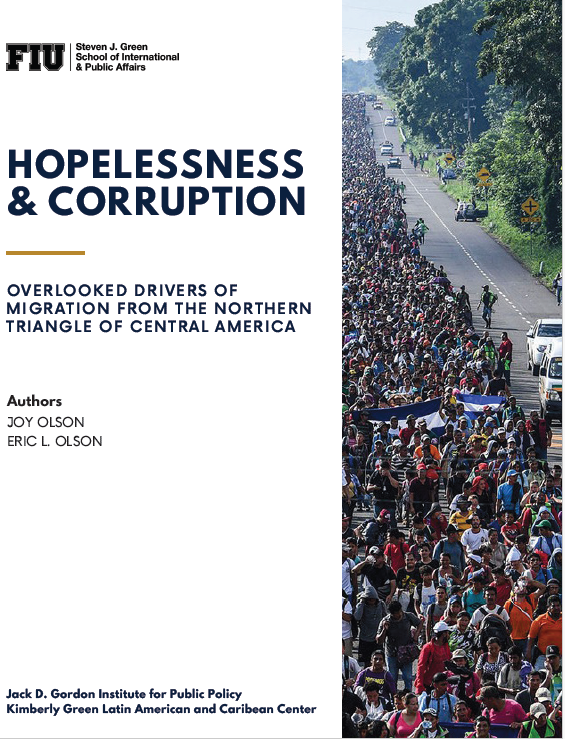
HOPELESSNESS & CORRUPTION OVERLOOKED DRIVERS OF MIGRATION FROM THE NORTHERN TRIANGLE OF CENTRAL AMERICA 

By JOY OLSON and ERIC L. OLSON

This paper analyzes the drivers of migration hypothesizing that persistent government failure driven in large part by corruption produces a sense of hopelessness among Central Americans that contributes to and propels their decision to migrate. Traditionally, corruption and its contribution to hopelessness have not been studied as drivers of migration. The authors conclude that addressing weak governance and corruption helps create a national context in which individuals can see a future in their own country. Central Americans from the Northern Triangle countries have a complex set of motivations for migration. Traditionally studied push factors include poverty, violence and natural disasters. Pull factors include economic opportunity/upward mobility, protection, and family reunification. The weight given to each factor is as varied as the number of people migrating. The intention to migrate is often based on one’s calculation of personal challenges and opportunities. Decisions are also influenced bylarger social, political, and economic factors. While it is an individual that migrates, it is their experience within their community and nation that informs their decision. Contextual factors contributing to migration include respect for human rights, governance and corruption. The State Department’s human rights reports paint a clear picture of the deplorable human rights situation in each Northern Triangle country and highlights the high level of impunity and, conversely, low expectations for justice that the majority can expect from their governments and justice systems. According to surveys of both experts and individuals, government corruption and/or the perception of corruption is widespread and endemic across the Northern Triangle. Weak governance can be the result of poor planning, lack of resources, and limited workforce capacity, but in many instances, it is also the result of corruption. While more research is needed, the thrust of the studies cited suggest that corruption can be both a direct and indirect driver of migration. The authors identify hopelessness as contributing to migration from the Northern Triangle. Since little research has been done in this area, proxies like Subjective Wellbeing (SWB) are considered. Hope, optimism, and SWB are concepts based not only on personal experience, but on one’s interaction with and perceptions of broader society. One’s experience with endemic corruption can contribute to a sense hopelessness. The authors argue that endemic corruption in Central America, and the destruction of mechanisms to control corruption, undermine peoples’ confidence in government and contribute to a lack of hope that their lives will improve. While the work done to date is insufficient to establish direct correlations. If the citizens of Central America believe that good governance and anti-corruption measures can be successful and see the results of such efforts reflected in improved healthcare, education, access to education, and justice, it could improve theirlives will improve. While the work done to date is insufficient to establish direct correlations. If the citizens of Central America believe that good governance and anti-corruption measures can be successful and see the results of such efforts reflected in improved healthcare, education, access to education, and justice, it could improve their sense of hope for the future and improve feelings of SWB thus lessening an underlying push factor from Central America. More must be done to address government corruption in the region and to learn about the relationship of hopelessness to migration.

Miami: jack D. Gordon Institute for Public Policy. Florida International University,  2021.
The Obligation To Prevent Genocide

By Patrick Butchard, Philip Loft

Genocide is a crime under international law, according to the United Nations General Assembly. The 1948 Genocide Convention, which has 153 parties requires party states to punish those responsible for genocide. The convention also requires states to prevent genocide from occurring. While it does not set out how they must do this, judgments on cases before the International Court of Justice (ICJ) have clarified some details of the obligation. What are a state’s obligations in international law? Judicial decisions from the International Court of Justice suggest that: • States are required to try to prevent genocide, but they do not breach their obligation if they fail. – They must still try even if they think their actions will not succeed

– What counts as a reasonable attempt at preventing genocide will depend on a state’s circumstances. • States must take action to prevent genocide as soon as they become aware there is a serious risk of it. • Genocide must actually occur for a state to be in breach of its obligation to prevent it. • Measures to prevent genocide might include engaging with bodies of the UN, such as the Security Council, or directly with other states. • States are unlikely to be allowed under international law to use military force against another state in an attempt to prevent genocide.

London: UK Parliament House of Commons Library, 2026. 25p.

International Abolitionist Advocacy: The Rise of Global Networks to Advance Human Rights and the Promise of the Worldwise Campaign to Abolish Capital Punishment 

By John D. Bessler

The modern international human rights movement began with the U.N. Charter and the U.N. General Assembly’s adoption of the Universal Declaration of Human Rights. Although the movement to abolish the death penalty is rooted in the Enlightenment, global advocacy to halt executions and to abolish capital punishment has accelerated exponentially in recent decades. This Article discusses the origins of global networks to advance human rights and highlights the growing international advocacy, including by nation-states and nongovernmental organizations (“NGOs”), for a worldwide moratorium on executions and to abolish capital punishment altogether. The total number of countries conducting executions in the past few decades has declined dramatically, putting retentionist states, such as China, Iran, Saudi Arabia, Iraq, North Korea, and the United States, in an increasingly isolated position in the international community. Many nations now even refuse to extradite criminal suspects without assurances that the death penalty will not be sought. With more than 90 countries having already ratified or  Covenant on Civil and Political Rights (“ICCPR”), aiming at theabolition of the death penalty, and with scores of domestic and international NGOs now actively promoting abolition, the global movement to abolish capital punishment has made significant strides and holds tremendous promise, though much more work remains to be done. This Article highlights the path forward for advocates seeking the death penalty’s abolition in law—and de facto—across the globe, with a focus on international law and classifying the use of capital prosecutions, death sentences, and executions as acts of torture and clear violations of fundamental human rights. In particular, the Article discusses advocacy efforts before the United Nations, highlights the role of NGOs in leading that effort, and advocates for the recognition of a peremptory.

 34 MINN. J. INT'L L. 1 (2025).

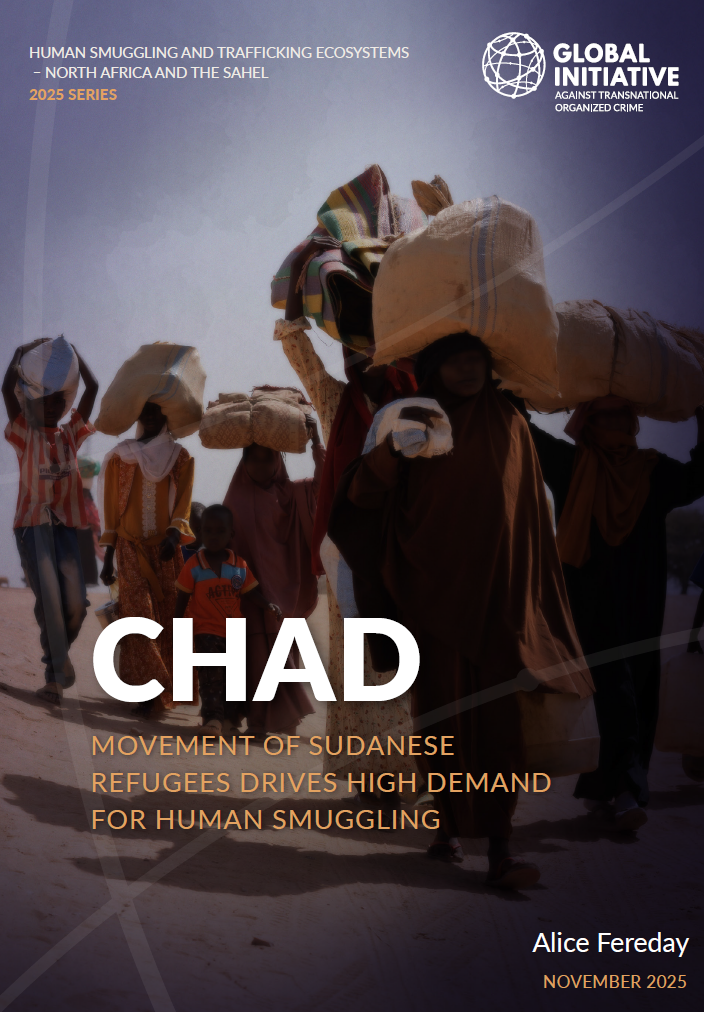
Chad: MOVEMENT OF SUDANESE REFUGEES DRIVES HIGH DEMAND FOR HUMAN SMUGGLING

By Alice Fereday

Chad’s role as a departure and transit country for northbound migration to North Africa and Europe is often overlooked, particularly in comparison to neighbouring Niger and Sudan. However, the country’s position at the crossroads of routes connecting central and eastern Africa to Libya and Niger makes it a significant transit corridor for regional migration, and its role as a bastion of relative stability in an increasingly volatile region has further increased its importance in recent years. Since 2023, the conflict in Sudan and a major influx of refugees into Chad have further shaped these mobility dynamics, making the country a major destination and transit point for Sudanese refugee displacement in the region. At the same time, Chad is navigating a fractious and contested political transition. Political violence escalated in 2024 and remains an important source of tension and political instability. The combination of these complex internal and regional dynamics, and their impact on human smuggling dynamics, make Chad a key country to monitor. A major component of human smuggling dynamics in Chad is internal movements to the country’s northern goldfields. These mobility patterns have typically been shaped by internal factors, including political instability, rebel activity and gold mining.1 This changed in 2023 with the outbreak of the conflict in Sudan and the massive influx of refugees and returnees into eastern Chad. Though northbound movements were temporarily hindered by this shift, which resulted in a relative decrease in demand for northbound travel from eastern Chad in the early months of the conflict, by the end of 2023 human smuggling had picked up again as many Sudanese began leaving refugee camps with the intention of travelling to northern Chad, Libya, Niger and Tunisia, often with the help of smugglers.2 In 2024, these movements escalated further and human smuggling between eastern and northern Chad saw significant growth, due in large part to increasing demand among Sudanese refugees for travel to northern Chad and Libya. However, the movement of Sudanese refugees through Chad also involved travel to Niger via N’Djamena or northern Chad. Northbound movements in Chad were also driven by increasing demand for travel to the Kouri Bougoudi goldfield. The flow of prospective gold miners, which began after the goldfield reopened at the end of 2022, was also facilitated by decreased restrictions on northbound travel as risks of rebel incursions in northern Chad remained contained in 2024. This encouraged the activities of passeurs, who catered to increasing demand for northbound travel, particularly from eastern Chad.Overall, Chad recorded progressively increasing movement levels in 2024 compared to previous years, presaging its emergence as an important space to watch for migrant and refugee movement, and associated protection risks. This is the latest GI-TOC monitoring report on human smuggling in Chad. It builds on a series of annual reports – issued since 2019 – which track the evolution of human smuggling in Chad and the political, security and economic dynamics that influence it

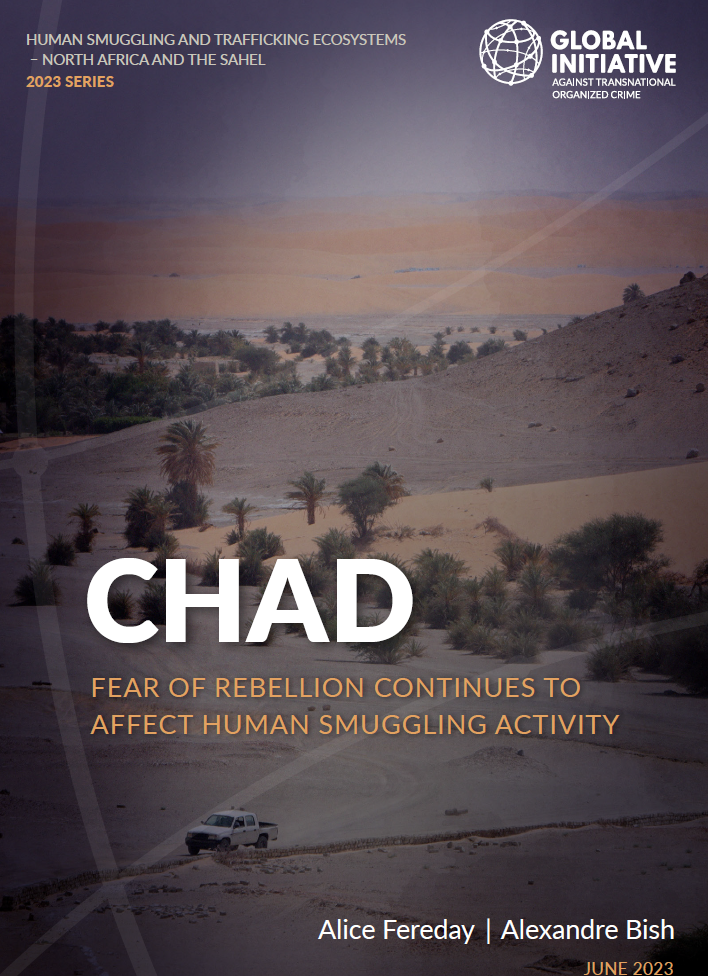
CHAD. FEAR OF REBELLION CONTINUES TO AFFECT HUMAN SMUGGLING ACTIVITY

By Alice Fereday ̵and Alexandre Bish

Human smuggling in Chad mostly involves northbound movements linking southern and eastern areas of the country to the north, in particular the gold mining areas in the Tibesti mountains, and to Libya. As a result, these dynamics are often connected to and impacted by the situation in northern Chad, where decades of political unrest, successive rebellions, intercommunity conflict, and deeply entrenched illicit economies and transnational organized crime dynamics are key factors of instability. Chadian authorities have long responded to these risks through securitization, including, in recent years, tight control over key routes and hubs, and a ban on travel to the north, further increasing demand for smuggling services among Chadians travelling to the goldfields or further afield to Libya, and in some cases, Europe. In 2022, human smuggling activity in Chad continued to be heavily affected by the political and security developments that followed the incursion led by the Front pour l’Alternance et la Concorde au Tchad (Front for change and concord in Chad – FACT) and ensuing death of President Idriss Déby, the country’s long-time leader, in April 2021. This upheaval interrupted what had been a broader rise of human smuggling from and through Chad, which, despite being illegal, had increased since 2016. This rise was in part due to the displacement of smuggling routes from Niger and Sudan, following anti-smuggling interventions in those two countries, which led to the use of Chad as a transit hub for human smuggling networks. Despite the displacement of routes, the number of migrants transiting the country still paled in comparison to the numbers that continued transiting Sudan and Niger. The most significant human smuggling itinerary in Chad remains the transport of migrants, both Chadian and foreign, to the gold mining economy along the country’s northern border with Libya. Since their discovery in 2012 and 2013, goldfields in the north have developed into major economic hubs attracting mostly poor migrants from across the region. The COVID-19 pandemic and linked travel restrictions in 2020 had little impact on movement to the goldfields. Rather, following the October 2020 ceasefire in Libya, the arrival of former mercenaries previously engaged in Libya to Kouri Bougoudi resulted in an uptick in gold mining, which in turn fuelled demand for workers. This development caused a surge in the movement of Sudanese and Chadian miners towards the goldfield since mid-2020.


A "wicked problem" - Seeking human rights-based solutions to trafficking into cyber-scam operations in South-East Asia

By the United Nations.  High Commissioner for Human Rights

UN Human Rights is calling urgent attention to the continuing and critical need for a human rights solution to a particularly “wicked problem” - the complex crisis of trafficking in persons, slavery and other serious human rights violations and abuses that are taking place in South-East Asia in the context of extensive criminal operations set up to perpetrate cyber-enabled fraud. This report centers the lived experience of victims subjected to abuses within these scam operations and who in many cases continue to suffer human rights harms after their release. Through a behavioural science and systems analysis lens, the report also seeks to understand the barriers and enablers that lead victims into these operations through fraudulent recruitment pathways. The report concludes with key messages which call on States, and where relevant other stakeholders, to ensure a human rights-based response to this multidimensional issue, placing the rights, dignity, safety, and well-being of victims of trafficking at its core including through ensuring full respect of the non-punishment principle.

Christianity Versus Slavery

by Lord Hugh Charles Clifford. (Author), Graeme R. Newman (Introduction)

In a world still grappling with the echoes of systemic inequality, Christianity Versus Slavery (1841) emerges not merely as a historical relic, but as a prescient manifesto on human dignity and the moral imperatives of justice. This collection—comprising the fiery oratory of George Thompson, the strategic appeals of Lord Clifford to the Catholics of Ireland, and the authoritative weight of centuries of Papal Briefs—challenges the modern reader to confront the persistent "complicated interests" and "rotten politics" that continue to shape global structures of exploitation. At its heart, the work champions the "Scriptural doctrine of equality," asserting that the "innate dignity of man" is an immutable truth that transcends "complexion" or state borders. This 19th-century insistence that "God has made of one blood the varied tribes of man" serves as a foundational precursor to our modern concept of universal human rights.
The book’s relevance to the modern era is perhaps most striking in its sophisticated analysis of the intersection between global exploitation and domestic economic health. Lord Clifford’s address highlights how the "ruinous, than unchristian and inhuman traffic" of slavery in the colonies was inextricably linked to the "general distress" and "awful distress" of the manufacturing interests and the "starving workman" at home. This early critique of an "equally wicked and foolish policy" that prioritized "sordid lucre" over justice prefigures modern debates regarding ethical supply chains, globalized labor rights, and the hidden human costs of consumer goods. By linking the oppression of India and Ireland to the struggle for abolition, the text invites a contemporary audience to view justice as an indivisible, global pursuit.
Furthermore, the work offers a timeless strategy for social change through the "regeneration of public sentiment". In an age often dominated by digital echo chambers and a "venal press," the book’s emphasis on the "power of truth" and "moral power" as weapons "mightier than armies" remains a potent call to action. It warns that the struggle for justice is "slow and progressive," requiring a "struggle continued through a series of years" against "deep-seated prejudices" and "long-cherished pride". Ultimately, Christianity Versus Slavery serves as a rigorous moral compass, reminding the modern era that the "spiritual nature and affinity of the races" is the only legitimate basis for a sane and just civilization.

Read-Me.Org Inc. New York-Philadelphia-Australia. 2026. 101p.

Institutions and individuals responsible for the main patterns of human rights violations and abuses and crimes perpetrated in Nicaragua since April 2018 

By The Group of Human Rights Experts on Nicaragua

A. Background 1. Pursuant to its resolution 49/3, the Human Rights Council established the Group of Human Rights Experts on Nicaragua, to investigate alleged human rights violations and abuses committed in Nicaragua since April 2018 and provide guidance on justice and accountability. In its resolution 52/2, the Council extended the mandate of the Group for a period of two years. The Group is composed of Jan-Michael Simon (Chair), Ariela Peralta Distéfano and Reed Brody. 2. The Group has previously concluded that there were reasonable grounds to believe that, since April 2018, State and non-State actors had committed serious human rights violations and abuses against an ever-growing range of real or perceived opponents and their relatives in a systematic and widespread manner. 1 The Group determined that some of those violations constituted, prima facie, the crimes against humanity of murder, imprisonment, torture, including rape and other forms of sexual violence of comparable gravity, deportation and persecution. 3. The present conference room paper, which complements the report submitted to the Human Rights Council (A/HRC/58/26), contains the detailed findings of the Group of Experts on the structure of the repressive State, chains of command and State and individual responsibilities in relation to the main patterns of violations and abuses documented since the beginning of its mandate. Ten functional diagrams illustrating the de jure and de facto connections between different State and non-State entities are available on the Group’s web page. 2 4. The present document identifies individuals whom the Group of Experts has reasonable grounds to believe are responsible for violations, abuses and crimes. A list of these names was sent to the Government of Nicaragua to give the identified individuals an opportunity to respond to the allegations made against them. The Group recalls that while the threshold of "reasonable grounds to believe" is lower than that required to establish responsibility in criminal proceedings, it is sufficient to justify the initiation of investigations (see section I(C)(3) below). While that threshold does not preclude the identification in the present conference room paper of possible individual responsibilities, determinations about individual criminal responsibility can be made only by competent judicial authorities with full respect for the right to a fair trial of the accused. 5. Despite the Council's calls upon the Government of Nicaragua to cooperate fully with the Group, including by granting it unfettered access to the whole country, the Government continues to refuse to engage with the Group. Since the beginning of its mandate, the Group has sent 17 unanswered letters to the Nicaraguan authorities requesting information. 3 On 27 February 2025, the Government of Nicaragua announced its withdrawal from the Human Rights Council and all its subsidiary mechanisms. 4 6. On 26 March 2025, the Human Rights Council decided to postpone consideration of the adoption of the outcome document of the Universal Periodic Review of Nicaragua, fourth cycle, scheduled for the 58th session of the Human Rights Council. This decision was taken as Nicaragua's positions on the recommendations received on 13 November 2024 during the Review were not received. The Human Rights Council decided to call on the Government of Review were not received. The Human Rights Council decided to call on the Government of Nicaragua to resume its cooperation and to schedule the consideration of the outcome document of the Universal Periodic Review at its 60th session.5 7. Despite the lack of cooperation and elevated security risks for victims, witnesses and others providing information, the Group was able to gather, analyse and corroborate the information and evidence necessary to establish the facts of, and prima facie responsibility for,the serious violations, abuses and crimes described in the present conference room paper.

ONLINE KNOWLEDGE AND PRACTICE OF PARENTS AND CHILDREN IN INDONESIA

By Karen Muller,  Astrid Gonzaga Dionisio, Sanghyun Park

The “Online Knowledge and Practice of Children and Parents in Indonesia: Baseline Study 2023” highlights that most children in Indonesia use the internet daily, primarily for socializing and entertainment. However, they face significant risks, including exposure to inappropriate content, cyberbullying, and online sexual exploitation and abuse. The study reveals that many children and parents lack adequate online safety education, with only 37.5% of children having received information on how to stay safe online. Additionally, 42% of children have felt uncomfortable or scared due to online experiences, and 50.3% have seen sexual images on social media.UNICEF Indonesia is actively addressing these issues by supporting the government in strengthening the legal framework for child online protection and enhancing integrated services for victim support. UNICEF empowers children, parents, and teachers to promote safe online behavior and strengthen law enforcement capabilities to detect, investigate, and prosecute cases of online child exploitation. UNICEF also focuses on generating evidence to inform policies and practices, aiming to create a safer online environment for children in Indonesia. Their efforts include co-creating campaigns with children and youth to raise awareness about online risks and engaging with businesses to promote responsible conduct for the rights and well-being of children, 202

Mental health and experiences of violence. Children, violence and vulnerability 2025 Report 3

By The Youth Endowment Fund

The Youth Endowment Fund (YEF) surveyed nearly 11,000 children aged 13–17 in England and Wales to hear directly about their experiences of violence. The findings are being shared across several reports, each exploring a different theme. This third report focuses on mental health and experiences of violence. For the first time, we asked detailed questions about mental health, including using the Strengths and Difficulties Questionnaire (SDQ), a 25-item questionnaire that measures the scale of children’s struggles. Combined with data on victimisation and perpetration, this provides an unprecedented picture of how violence and mental health are linked — and the complex ways they shape young people’s lives. Here’s what we found. Teenage children affected by serious violence face a dramatically higher risk of mental health problems. The scale of poor mental health among teenagers is alarming. More than one in four 13-17-year-olds reported high or very high levels of mental health difficulties, as measured by the SDQ — the equivalent of nearly a million teenage children struggling with their well-being. Behind this figure lie serious and often complex needs. A quarter of teenage children reported a diagnosis of at least one mental health or neurodevelopmental condition, such as depression, attention deficit hyperactivity disorder or speech and communication difficulties. A further 21% suspected they had a condition but had not been formally diagnosed — suggesting large numbers of teenage children are facing difficulties without recognition or support

Children, violence and vulnerability 2025 . Exploitation and gangs

By The Youth Endowment Fund

The Youth Endowment Fund asked nearly 11,000 children aged 13–17 across England and Wales to share their experiences of violence. The findings are set out in separate reports, each exploring a different theme. This one focuses on teenage children’s experiences of exploitation and ‘gangs’. When we asked teenage children whether they had been in a ‘gang’, we defined a ‘gang’ as: “A group of young people who think of themselves as a ‘gang’, probably with a name, who are involved in violence or other crime.” We used the word ‘gang’ because it is one that many young people recognise and use themselves, more than phrases such as group-based criminality. But we also recognise its limitations: the term oversimplifies a complex issue and can reinforce harmful stereotypes. To reflect these sensitivities, we use inverted commas when referring to ‘gangs’. At several points in this report, we share the words of James (whose name has been changed to protect his identity), who, from ages 12 to 18, was criminally exploited. His story lays bare the reality

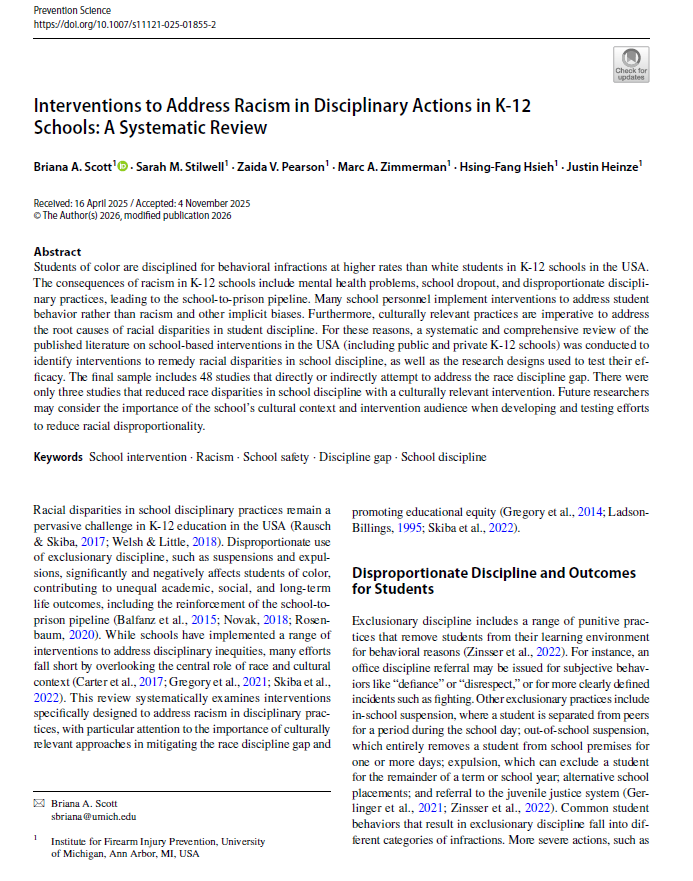
Interventions to Address Racism in Disciplinary Actions in K-12 Schools: A Systematic Review

By Briana A. Scott, Sarah M. Stilwell, Zaida V. Pearson, Marc A. Zimmerman


Students of color are disciplined for behavioral infractions at higher rates than white students in K-12 schools in the USA. The consequences of racism in K-12 schools include mental health problems, school dropout, and disproportionate disciplinary practices, leading to the school-to-prison pipeline. Many school personnel implement interventions to address student behavior rather than racism and other implicit biases. Furthermore, culturally relevant practices are imperative to address the root causes of racial disparities in student discipline. For these reasons, a systematic and comprehensive review of the published literature on school-based interventions in the USA (including public and private K-12 schools) was conducted to identify interventions to remedy racial disparities in school discipline, as well as the research designs used to test their efficacy. The final sample includes 48 studies that directly or indirectly attempt to address the race discipline gap. There were only three studies that reduced race disparities in school discipline with a culturally relevant intervention. Future researchers may consider the importance of the school’s cultural context and intervention audience when developing and testing efforts to reduce racial disproportionality

CHRISTIANITY VERSUS SLAVERY

BY HUGH CHARLES, LORD CLIFFORD.

In a world still grappling with the echoes of systemic inequality, Christianity Versus Slavery (1841) emerges not merely as a historical relic, but as a prescient manifesto on human dignity and the moral imperatives of justice. This collection—comprising the fiery oratory of George Thompson, the strategic appeals of Lord Clifford to the Catholics of Ireland, and the authoritative weight of centuries of Papal Briefs—challenges the modern reader to confront the persistent "complicated interests" and "rotten politics" that continue to shape global structures of exploitation. At its heart, the work champions the "Scriptural doctrine of equality," asserting that the "innate dignity of man" is an immutable truth that transcends "complexion" or state borders. This 19th-century insistence that "God has made of one blood the varied tribes of man" serves as a foundational precursor to our modern concept of universal human rights.

The book’s relevance to the modern era is perhaps most striking in its sophisticated analysis of the intersection between global exploitation and domestic economic health. Lord Clifford’s address highlights how the "ruinous, than unchristian and inhuman traffic" of slavery in the colonies was inextricably linked to the "general distress" and "awful distress" of the manufacturing interests and the "starving workman" at home. This early critique of an "equally wicked and foolish policy" that prioritized "sordid lucre" over justice prefigures modern debates regarding ethical supply chains, globalized labor rights, and the hidden human costs of consumer goods. By linking the oppression of India and Ireland to the struggle for abolition, the text invites a contemporary audience to view justice as an indivisible, global pursuit.

Furthermore, the work offers a timeless strategy for social change through the "regeneration of public sentiment". In an age often dominated by digital echo chambers and a "venal press," the book’s emphasis on the "power of truth" and "moral power" as weapons "mightier than armies" remains a potent call to action. It warns that the struggle for justice is "slow and progressive," requiring a "struggle continued through a series of years" against "deep-seated prejudices" and "long-cherished pride". Ultimately, Christianity Versus Slavery serves as a rigorous moral compass, reminding the modern era that the "spiritual nature and affinity of the races" is the only legitimate basis for a sane and just civilization.

Read-Me.Org Inc. New York-Philadelphia-Australia. 2026. 100p.

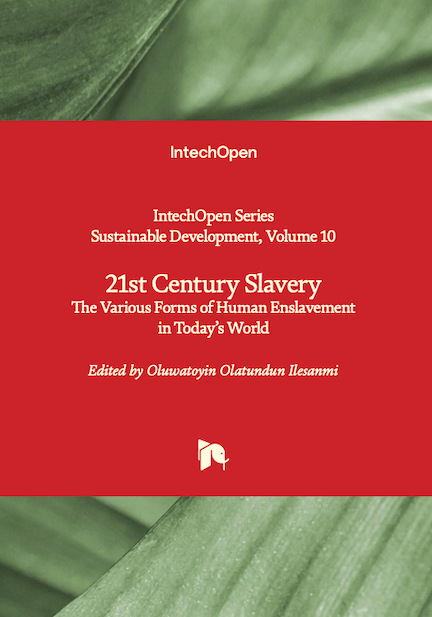
21st Century Slavery:  

The Various Forms of Human Enslavement in Today's World

By Usha Iyer-Raniga (Editor), Oluwatoyin Olatundun Ilesanmi (Editor)

More than 46 million people are currently victims of 21st-century slavery globally, most of whom are women and children. This book, 21st Century Slavery - The Various Forms of Human Enslavement in Today’s World provides a comprehensive overview of modern-day slavery, also known as contemporary slavery, neo-slavery, institutional slavery, and numerous other terms. It includes eight chapters that highlight human trafficking and explain and explore the act of recruiting, harbouring, transporting, providing, or obtaining a person for compelled labour or commercial sex acts using force, fraud, or coercion. The book discusses the recruitment, transportation, transfer, harbouring, and receipt of persons by improper means (such as force, abduction, fraud, or coercion) for an improper purpose including forced labour or sexual exploitation. It concludes that the world must not accept slavery in the 21st century. This volume is a useful resource on modern slavery for all academics interested in humanitarian and development studies across the globe and to all policymakers and governments of nations who are pushing for the elimination of all forms of slavery in their nationhood.

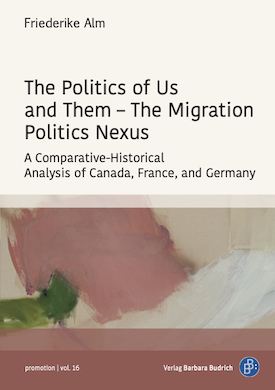
The Politics of Us and Them – The Migration Politics Nexus:

Comparative-Historical Analysis of Canada, France, and Germany

By Friederike Alm

Canada, France, and Germany share many similarities, for example, their democratic principles and constitutional commitment to human rights and equal opportunities. However, each country approaches immigration differently. Friederike Alm presents a comparative-historical analysis which sheds light on the historical trajectory of migration politics in the three countries since 1945. The author proposes a new concept for migration research, the migration politics nexus, which highlights the interconnection between immigration, citizenship, and integration politics.

Leverkusen Germany: Verlag Barbara Budrich, 2025. 

Strategies Against Human Trafficking: The Role of the Security Sector

By Cornelius Friesendorf (Ed.)

In 2000, the international community adopted the United Nations Convention against Transnational Organized Crime and the Protocol to Prevent, Suppress and Punish Trafficking in Persons, especially Women and Children. Since then, 124 countries have ratified the Protocol, and many of these have adopted legal instruments to help them in the fight against trafficking. Yet the scourge persists. Millions of people worldwide—men, women and children—continue to be exploited for their labour, for sexual purposes, for their organs. Security sector personnel are well-placed to assist in the fight against human trafficking: by identifying victims; investigating networks; disrupting operations; and prosecuting traffickers. Moreover, trafficking, like many crimes, flourishes where the rule of law is weak, such as in post-conflict situations. Restoring security based on the rule of law can reduce vulnerability to human trafficking and other types of organised crime. Strategies Against Human Trafficking: The Role of the Security Sector provides practical guidance on how practitioners in the security sector can take measures against modern-day slavery. Two points stand out. First, policy and intervention depend on evidence. Thus far, the fight against human trafficking has been handicapped by a lack of data. UNODC is working with governments and social scientists to fill this void. In 2009 we published the first Global Report on Trafficking in Persons. But the picture remains impressionistic. Security sector professionals can provide the information needed to profile victims and identify traffickers. The second major point highlighted in this study is the need for cooperation. This fight is a shared responsibility. It requires inter-agency cooperation among law enforcement personnel as well as trans-national cooperation. It also depends on effective joint work among a wide range of stakeholders, including criminal justice experts, the private sector, civil society, and concerned citizens. Disjointed efforts—however well-meaning—will have little impact on sophisticated criminal networks. This publication offers strong recommendations on how to make cooperation work. 

Vienna and Geneva, National Defence Academy and Austrian Ministry of Defence and Sports Rossauer Lände 1, 1090 Wien in co-operation with Geneva Centre for the Democratic Control of Armed Forces September 2009. 514p.   

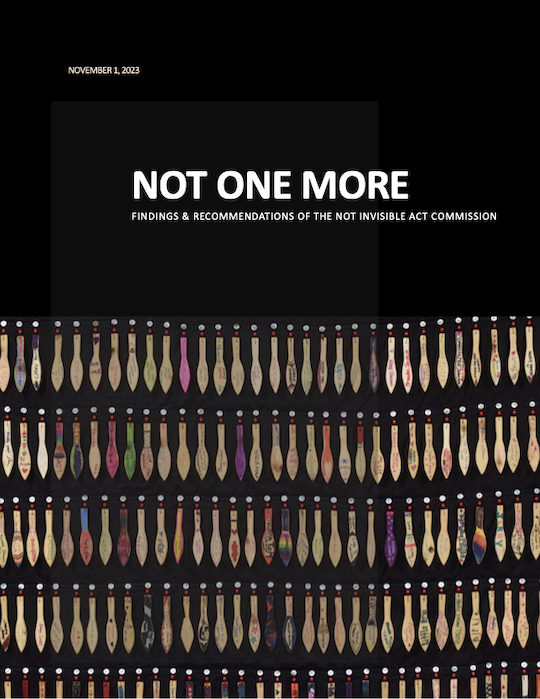
Not One More: Findings and Recommendations of the Not Invisible Act Commission

By The Not Invisible Act Commission

There is a crisis in Tribal communities. A crisis of violence, a crisis of abuse, and a crisis of abject neglect affecting Indian Women & Men, Indian Children, and Indian Elders. The federal government must act now; not tomorrow; not next week; not next month; and not next year. Once and for all, the federal government must end its systematic failure to address this crisis and react, redress, and resolve this. We call on the federal government to declare a Decade of Action & Healing to address the crisis of missing, murdered, and trafficked Indian people. -- The Not Invisible Act Commissioners _____________________________________________________________________________ With each passing day, more and more American Indian and Alaska Native (AI/AN) persons are victimized due to inadequate prevention and response to the MMIP and HT crisis. Our recommendations encompass actions that must be undertaken without delay to provide AI/AN people and communities with the same sense of safety and security that other communities in the United States take for granted. The United States government’s failure to fulfill its trust responsibilities to Tribal nations, coupled with historic policies that sought to disconnect AI/AN people from their land, language, and culture, have given rise to a public health, public safety, and justice crisis in Tribal communities. The crisis is most notably reflected in the federal government’s failure to effectively prevent and respond to the violence against AI/AN people, particularly in the context of missing, murdered, and trafficked AI/AN people. Despite the best efforts of many individuals across law enforcement (LE), the judiciary, and social services, long-standing institutional failures must be acknowledged and addressed. Calls for action and funding to address these issues have been made repeatedly.1 Although there has been a growing awareness of the high rates of missing, murdered, and trafficked AI/AN people in recent years, and several federal initiatives have been launched,2 addressing the needs in Tribal communities continues to generally be underprioritized by the federal government. Until this changes, violence against AI/AN individuals and on Indian and Alaska Village lands will persist. The Commission believes that the circumstances that have created the crisis of MMIP and HT are not intractable. In fact, to see them so is to continue the unjust past. With resolve and an appropriate investment of resources, these issues can, and must, be effectively addressed. While it is imperative that the federal government take immediate and concerted action, thescale and severity of this issue, and the need for long-term healing and justice, also demand a comprehensive and sustained response. Therefore, we call upon the federal government to declare a Decade of Action and Healing dedicated to addressing this crisis effectively for future generations. Such a declaration would underscore the urgency of the matter and signify a long-term commitment to combatting the deeply rooted issues that perpetuate continued violence against AI/AN individuals and supporting individuals and communities in their healing as they seek justice. This Decade of Action and Healing must involve partnership with Tribal communities, Tribal governments, and relevant organizations, focusing on improving safety, prevention, justice, support services, and healing for AI/AN communities through increased funding, policy reform, action-oriented programs, and training and technical assistance.

Washington, DC: U.S. Department of the Interior and the Department of Justice, 2025. 212p.

Are Trump Judges Different? Evidence from Immigration Cases

By Daniel M. Klerman

Judges appointed by President Trump are more likely to vote in favor of the government in cases challenging the second Trump administration's immigration policies. While Trump's Supreme Court nominees behave like other Republican nominees on the Court, Trump's lower court nominees are twice as likely to vote in favor of the government as nominees of other Republican presidents; in contrast, other Republican nominees to the lower courts are statistically indistinguishable from Democratic nominees. The difference between Trump nominees and other judges is driven almost entirely by judges 55 years old or younger, who may be influenced by the prospect of promotion to the Supreme Court.

 USC CLASS Research Paper No. 2522, 2025, 

The Roberts Court’s Unprecedented Abuse of Precedent – And How It Is Destroying the Judiciary’s Role in the System of Checks-and-Balances

By Bruce Ackerman

From the days of the Federalist Papers and Marbury v. Madison, the Court’s commitment to reasoned elaboration of constitutional principle has served as the justification for its role in the system of checks-and-balances. Yet the very foundations of judicial legitimacy are at stake in two cases that the Roberts Court has scheduled for expedited consideration during the early months of its 2025-26 Term. These cases deal with the continuing legitimacy of Humphrey’s Executor’s unanimous decision upholding the constitutionality of “independent agencies” – most notably, the Federal Reserve and the Federal Trade Commission. This prospect has provoked a great deal of scholarly debate over the implications of relatively recent decisions by the Roberts Court on these issues. In contrast, my essay puts these decisions in a larger framework – emphasizing the crucial role played by the President and Congress in constructing “independent agencies” during the half-century preceding Humphrey’s unanimous decision upholding their constitutionality in 1935. It demonstrates that, after the breakthrough creation of the Interstate Commerce Commission by the Cleveland Administration, every President – from Theodore Roosevelt through Woodrow Wilson through Herbert Hoover – gained Congressional support for the creation of new independent agencies self-consciously organized to restrict presidential power in order to assure the deployment of impartial and expert regulation over crucial areas of socio-economic life. Justice Sutherland’s unanimous opinion of 1935 represents the self-conscious recognition of the legitimacy of this bipartisan affirmation of the role of expertise in modern government – and should not be cast aside without a principled confrontation with its historical foundations in American constitutional development.

Yale Law School, Public Law Research Paper, 2025

Ransomware HR: Human Resources Practices and Organizational Support in the Conti Ransomware Group

By James Martin , Chad Whelan , and David Brigh
Ransomware is widely regarded as one of the most economically damaging cybercrimes. Existing criminological research has focused largely on the structure, routines, and activities of ransomware groups, or traced financial transactions to advance understanding of their associated harms. This paper explores how the Conti ransomware group employed human resources (HR)practices and other organizational supports to recruit, retain, and motivate its employees. Data is drawn from a leaked dataset containing tens of thousands of messages between employees and affiliates of Conti. We analyze this dataset through the lens of organizational support theory(OST), one of the most influential theories in the field of organization and management psychology. Our analysis shows that Conti employed a variety of HR practices to improve worker satisfaction and commitment, many of which are supported by OST research. By better understanding these practices, we aim to provide a novel, theoretically informed perspective through which the operations of ransomware groups can be better understood. The paper concludes with a discussion of how this knowledge can be used to inform the development of law enforcement strategies intended to disrupt ransomware groups

DEVIANT BEHAVIOR 2025, VOL. 46, NO. 9, 1088–1103