Open Access Publisher and Free Library
HUMAN RIGHTS.jpeg

HUMAN RIGHTS

Human Rights-Migration-Trafficking-Slavery-History-Memoirs-Philosophy

Why There is Still an Illicit Trade in Cultural Objects and What We Can Do About It

By Neil Brodie,Morag M. Kersel,Simon Mackenzie,Isber Sabrine,Emiline Smith &Donna Yates

Fifty years after the adoption of the 1970 UNESCO Convention, the illicit trade in cultural objects endures, with harmful consequences to local communities, knowledge acquisition, and archaeological landscapes and objects. In this article, we present a gap analysis to assess under-performing policy and practice. We argue that a poor understanding of how the trade is organized and operates and of how it might be regulated hinders effective policy formulation. Funding structures which encourage short-term ad hoc research and inhibit information sharing are in part responsible for some of the gaps. We conclude by suggesting how sustained theoretically informed, evidence-led collaborative analyses might help reduce or mitigate these problems, preventing another 50 years of illicit trade.

Journal of Field Archaeology 


Volume 47, 2022 - Issue 2

Legal and illegal export of cultural heritage artefacts from developing countries: Protection of cultural heritage in South Africa

By Jen Snowball, Alan Collins&Craig Bickerton

Cultural heritage is an important part of the capital of developing countries that can be leveraged for sustainable development. However, it also needs protection as the rise in the illegal trade of cultural artefacts shows. South Africa as an example of a middle-income African country that seeks to promote cultural heritage for development. As part of the attempt to preserve cultural capital, the South African Heritage Resources Agency (SAHRA) is tasked with the protection of cultural heritage that is of special cultural, historical, aesthetic or technical importance to the country, and is thus part of the “national estate”. SAHRA adjudicates applications for the permanent export of cultural artefacts, guided by national policy that defines the attributes of artefacts of national importance. There are also attempts to bypass SAHRA adjudication through illegal smuggling of important art and artefacts, which SAHRA also tracks through a database of artefacts reported stolen. This study analyses the way that SAHRA has applied the policy to make decisions about permanent export applications of cultural heritage artefacts, as well as the attributes of those artefacts reported stolen and thus lost to the national estate. Results showed that the SAHRA permit system seems to be providing effective protection for some of South Africa’s cultural heritage, but only 4% of applications were for art and artefacts representing black African cultures.

Cogent Social Sciences 

Volume 9, 2023 - Issue 1

Bandits, Urban Guerrillas, and Criminal Insurgents Crime and Resistance in Latin America By John P. Sullivan and Nathan P. Jones

his chapter covers the early history of bandits including the role of bandits in revolution (e.g., Pancho Villa), the rise of urban guerrillas (e.g., Che Guevara and the Cuban Revolution, Carlos Marighella (the Minimanual of the Urban Guerrilla)) in Brazil and the Tupamaros in Uruguay, and the transition from ideological revolt to criminal insurgency. The later transition will focus on the transition to crime by the FARC and ELN in Colombia succeeded by Bacrim in Colombia, mega-gangs in Venezuela, and by Brazilian gangs (i.e., The Commando Vermelho and Primeiro Comando da Capital), followed by the rise of criminal insurgency waged by territorial (third-generation) gangs (including maras such as MS-13 and Barrio 18 in Central America) and criminal cartels. The nexus between prison gangs and criminal gangs and the emergence of criminal enclaves (such as the Triple Frontier and Ciudad del Este) will be explored. A common thread will be a discussion of crime and social banditry (Hobsbawm) as mechanisms of revolt. Urban crime and instability and the emergence of crime wars and criminal insurgency will be discussed in context of state transition, globalization, and the rise of transnational organized crime.  

Chapter
Problems and Alternatives in the Modern Americas,  Routledge,  2021.


The organization of mortgage frauds

By Jonathan Gilbert  · Michael Levi

 This article examines the role of organised crime groups (OCGs) in the organisation and commission of mortgage and property related frauds. Whilst conventionally in criminological and policing studies, serious and organised crime has been associated with the commission of violent, gang and drug-related crimes, there is an increasing focus on the collective and facilitative role that motivated ofenders and ‘professional enablers’ like lawyers and accountants have in the commission of fnancial crimes for gain. This article utilises case studies and social network analysis (SNA) of police-defned OCGs to identify the ties criminal actors have with other ‘members’ and broader connections. It considers causal agency and the social relations that exist within the OCG that support highly organised and sophisticated operational dynamics necessary to the commission and reproduction of organised fraud. In addition to a review of the current literature, empirical data was collected from regulatory enforcement proceedings, criminal prosecution fles, trial transcripts, witness statements and interviews with law enforcement, regulators, victim-lender participants and lead members of mortgage and property fraud OCGs. SNA is used to show how members collectively share motivations to plan and co-ordinate criminal behaviour for fnancial gain, communicate and collaborate on both an ongoing enterprise and individual project basis, and how recruitment strategies, based on kinship, support resilience and the ability to reproduce organised fraud. Examining the social network of mortgage fraud OCGs, including biographies, roles, responsibilities of members, including professional enablers and straw persons and the ties and interactions between them, will assist in understanding mortgage fraud. In particular, they will show how these individual, proximal and causal factors ft within the broader, macro- crime facilitative environment in which mortgage and property related frauds are organised and are capable of being reproduced. 

Social Listening Tools in Disinformation and Online Harms Analysis 

By Tan E-Reng

SYNOPSIS Social listening tools are a vital part of the disinformation and online harms researcher's toolkit, offering both depth and breadth in the insights they provide. However, there are inherent pitfalls that come with their use. This commentary elucidates what these pitfalls are and proposes steps to mitigate them. COMMENTARY Social listening tools, which are software applications that enable end-users to gather and analyse vast amounts of user-generated content propagated online on social media platforms, are a vital component of the toolkit for analysts who study disinformation and online harms. They help analysts to develop a clearer overall understanding of the disinformation and online harms landscape, and support investigations into ongoing information operations. While these tools are undoubtedly essential for the researcher’s toolkit, there are inherent pitfalls that may arise from their use, which could have negative repercussions for national security. This commentaary aims to elucidate some of these pitfalls and offer recommendations to mitigate them 

S. Rajaratnam School of International Studies, NTU Singapore,  2025. 6p.

Sex work and the beerhall: an autoethnography from Chiredzi, Zimbabwe

By Kundai Manamere

In Zimbabwe, sex work has long been associated with immorality. This became a primary justification for the criminalisation of young women’s presence in urban areas since the colonial period. However, the legislation failed to keep women out of towns. Instead, they slowly carved a niche in urban development, especially as sex workers. Literature on sex work has consistently reflected the need for change in public attitudes towards sex work, revealing long-standing irreconcilable feminist perspectives between those who view sex workers as either victims or agents in society.This article moves away from these single-thread narratives of sex work and potray sex workers as political agents who negotiate various social, political, legal and economic circumstances to challenge the various processes that have largely relegated their voices to the margins.This article also updates debates on public attitudes to sex work. Few studies have focused on public attitudes towards sex work and factors that shape, maintain, or transform this over time. I argue for the incorporation of voices from communities where sex workers work and live, where possible. This approach moves the focus from state-centric legislative sites and debates to quotidian micro-practices in communities shedding more light on public attitudes to sex work.


Third World Quarterly, 2025.

Strengthening Frontex's mandate in border and migration management

By RADJENOVIC, Anja

Issues at stake: • Frontex, the European Border and Coast Guard Agency, is mandated to support EU Member States in managing external borders, combating cross-border crime, and managing migration, through joint operations, surveillance and data analysis. The agency also cooperates with non-EU countries through status agreements and working arrangements, and plays a key role in organising and executing migrants' returns. • The European Commission is considering a revised mandate in 2026 for Frontex to address growing geopolitical, security and migration challenges. Reforms are driven by hybrid threats, the implementation of the new pact on migration and asylum, and demands for swifter returns of individuals ineligible for asylum. • There is broad support among Member States for more flexible, informal arrangements with third countries. While Member States oppose a radical overhaul of Frontex's mandate, they prioritise operational efficiency, particularly in returns and border management, and stress maximising the current mandate's potential before considering major changes. Member States also back a new legal basis for Frontex to support returns from non-EU countries to other non-EU countries. • The European Parliament's discharge procedure has been a critical tool in scrutinising Frontex, particularly amid allegations of fundamental rights violations and pushbacks at the EU's external borders. Parliament has repeatedly warned that oversight has not kept pace with the expansion of Frontex's mandate.

Brussels: EPRS | European Parliamentary Research Service,   2026. 8p.

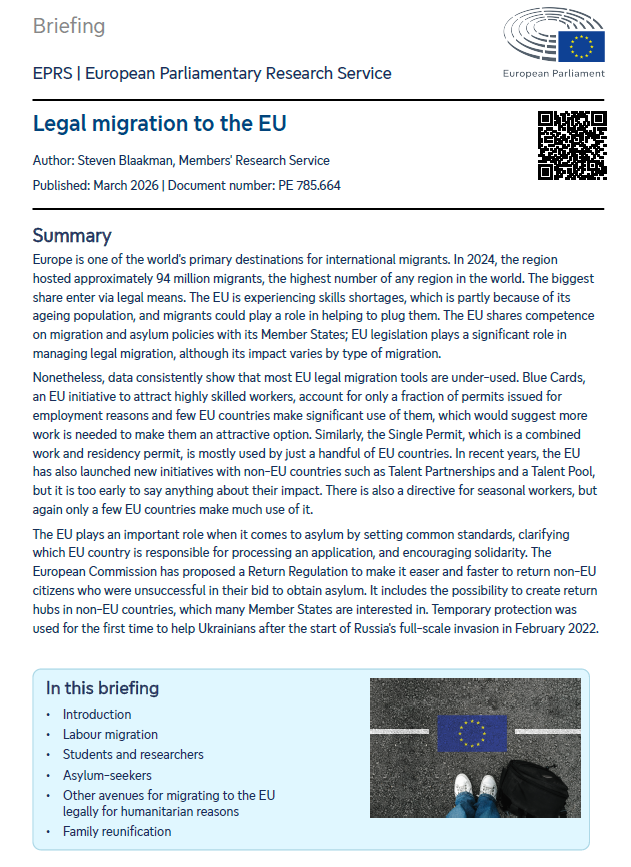
Legal migration to the EU

By BLAAKMAN , Steven

Europe is one of the world's primary destinations for international migrants. In 2024, the region hosted approximately 94 million migrants, the highest number of any region in the world. The biggest share enter via legal means. The EU is experiencing skills shortages, which is partly because of its ageing population, and migrants could play a role in helping to plug them. The EU shares competence on migration and asylum policies with its Member States; EU legislation plays a significant role in managing legal migration, although its impact varies by type of migration. Nonetheless, data consistently show that most EU legal migration tools are under-used. Blue Cards, an EU initiative to attract highly skilled workers, account for only a fraction of permits issued for employment reasons and few EU countries make significant use of them, which would suggest more work is needed to make them an attractive option. Similarly, the Single Permit, which is a combined work and residency permit, is mostly used by just a handful of EU countries. In recent years, the EU has also launched new initiatives with non-EU countries such as Talent Partnerships and a Talent Pool, but it is too early to say anything about their impact. There is also a directive for seasonal workers, but again only a few EU countries make much use of it. The EU plays an important role when it comes to asylum by setting common standards, clarifying which EU country is responsible for processing an application, and encouraging solidarity. The European Commission has proposed a Return Regulation to make it easer and faster to return non-EU citizens who were unsuccessful in their bid to obtain asylum. It includes the possibility to create return hubs in non-EU countries, which many Member States are interested in. Temporary protection was used for the first time to help Ukrainians after the start of Russia's full-scale invasion in February 2022.

Brussels: EPRS | European Parliamentary Research Service, 2026. 12p.

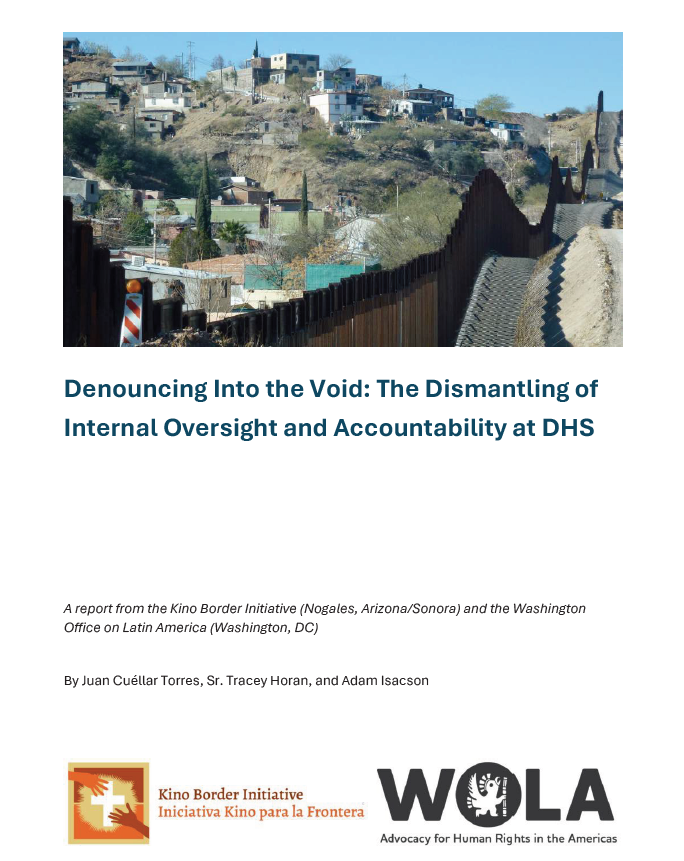
Denouncing Into the Void: The Dismantling of Internal Oversight and Accountability at DHS

By Juan Cuéllar Torres, Sr. , Tracey Horan, and Adam Isacson

One year ago, on March 21, 2025, hundreds of experienced employees overseeing the Department of Homeland Security (DHS) abruptly learned that the Trump administration was firing them. The Department’s Office of Civil Rights and Civil Liberties (CRCL), Office of the Immigration Detention Ombudsman (OIDO), and Office of the Citizenship and Immigration Services Ombudsman (CISOMB), if not abolished, were to be shrunk to their “absolutely irreducible minimum.” The “Reductions in Force” came at the same time that the new administration was launching a “mass deportation” campaign, supercharging often aggressive arrests, detentions, and repatriations while dramatically increasing the capacities of the Department’s border and migration law enforcement agencies, Customs and Border Protection (CBP), Border Patrol, and Immigration and Customs Enforcement (ICE). This report focuses mainly on the Civil Rights and Civil Liberties office and the Detention Ombudsman’s office, which most frequently oversaw the law enforcement agencies. A year later, including contract personnel, the first has seen its staff cut by 80 percent and the second by 96 percent. Litigation to undo the cuts continues in federal court. 

Even before the Trump administration took an axe to them, these offices were far too small and under-resourced to oversee a Department with about 240,000 employees. They lacked the authority to initiate investigations and to make their recommendations stick. As the Kino Border Initiative found during years of submitting abuse complaints on behalf of migrants arriving at its Nogales, Sonora shelter, a lack of transparency was a chronic problem. But since the agencies’ near-total dismantling on March 21, the experience has been far worse. Many complaint investigations have been halted. No new recommendations have been issued. The ability to submit new complaints—through web forms in English—has been truncated. Investigations now stop if the complainant is no longer in ICE custody. Case updates are almost impossible to obtain after receiving a sparse form email. In Nogales, over the past year, the Kino Border Initiative has experienced months of radio silence from offices that were more communicative in the past, followed by a wave of case-closure notices offering no indication that complaints were meaningfully investigated or that any recommendations resulted. 

This deep reduction in oversight could not come at a worse time, as regular front-page revelations of abuse and rights violations committed by DHS agencies, from the streets of Minneapolis to the cells of the U.S. detention network, make urgently clear. These times call for more oversight, more accountability, more transparency, and more embedding of democratic, rights-respecting values throughout the Department. This report, from two organizations with decades of combined experience monitoring human rights at the U.S.-Mexico border, contains a series of recommendations to guide a restoration of internal oversight capacity at DHS. While the March 2025 reductions in force must be reversed immediately, the Department can go further. Assisted by new authorities and appropriations from Congress, it can take a series of common-sense steps to uphold the dignity of victims, make repeated abuses less likely, and instill a culture that recognizes that respect for civil rights, civil liberties, privacy, and detainees’ rights is a necessary element of success in securing the homeland—never an obstacle. 

Kino Border Initiative (Nogales, Arizona/Sonora) and the Washington Office on Latin America (Washington, DC) 

2026. 30p.

Free Speech as White Privilege: Racialization, Suppression, and the Palestine Exception

By Rene Reyes

Free speech is under siege. This is not to say that all speakers and viewpoints are at equal risk—some voices receive support and protection, while others are subject to threats and suppression.  Pro-Palestinian speech falls into the latter category.  Critics argue that there has long been a “Palestine Exception” to free speech, but efforts to silence pro-Palestinian advocacy on university campuses and elsewhere have dramatically increased since Israel began its assault on Gaza in October of 2023 in response to incursions by Hamas militants.  Many supporters of Israel contend that such restrictions on pro-Palestinian advocacy are justified, and have suggested that there is a double standard between racism and antisemitism at play when universities fail to condemn at least some forms of pro-Palestinian speech. The implication seems to be that anti-Black and Brown speech would never be tolerated on campuses, and that racialized minorities have been a special favorite of legal and institutional protections against hateful expression. The problem with this argument is that it is demonstrably false.  Indeed, this Essay argues that free speech doctrines have consistently functioned to give white people the liberty to engage in hateful speech and to deny Black, Brown, and other racialized individuals the kinds of protections from fear and harm that supporters of Israel are now demanding.  In other words, the Palestine Exception to free speech is real—and it is part of a deeper legal tradition that has enshrined free speech as an element of white privilege.

Virginia Law Review ,Vol 111, June 2025.

An Examination of Public Benefit Enrollment Data in Minnesota Immigrant Households as Evidence of Public Charge Chilling Effect

By Ana Pottratz Acosta

A hallmark of the first Trump Administration was its pervasive attacks against immigrant communities. While President Trump often touts his efforts to ramp up immigration enforcement to secure the southern border, other policies aimed at limiting legal immigration to the U.S. through administrative action had a far greater impact on U.S. immigration policy during his first term. One such action, the promulgation of regulations setting forth more subjective standards to determine if an immigrant was subject to the public charge grounds of inadmissibility, led to the denial of many family-based permanent residence applications that were otherwise approvable under existing law.

In this Article, the Author will examine means tested benefit enrollment data for Minnesota immigrant households to see if this data supports existence of a chilling effect through decreased immigrant household enrollment in these programs following publication of the public charge regulations. Additionally, while several previous studies using survey data support existence of a public charge chilling effect, this Article will build on this previous work by analyzing primary enrollment data provided directly by the Minnesota Department of Human Services (MN-DHS), the agency administering these programs.

 (September 01, 2024).

Knowledge and Punishment: The Prison-industrial Complex and Epistemic Oppression

Epistemic Oppression 

By Lark Mulligan

he police murdered Alton Sterling on camera.2 They also murdered Eric Garner, Laquan McDonald, and many others; the videos of their deaths garnered millions of views.3 Information about some horrors of the criminal legal system is spreading widely, yet White mainstream media outlets frequently dismiss, erase, or demonize Black, Indegenous, and People of Color (“BIPOC”) communities who protest and organize to demand justice through the abolition of or radical changes to the policing and prison systems.4 In response to these racist atrocities and within the broader context of criminal legal reform, activists and academics frequently craft ethical arguments such as: “Solitary confinement is immoral because it inflicts psychological and physical torture” or “Incarceration is unethical because prisons are inherently violent places.”5 Many ethical arguments centeron the racist injustices and harm that affronts human dignity and agency caused by prisons and police.6 Others critique the racist and retributive ethics of “law and order” rhetoric.7 Each argument is well-supported by accessible data that can be found in numerous studies, books, articles, and media.8 However, people often erroneously dismiss these data-driven, logical, ethical reasonings as factually inaccurate, or many respond with a deeply racist ethical-legal rationale, for example: “While there may be abuses in prisons, some people need to be put in solitary or prison and deserve it because [insert classical legal rationales for punishment: deterrence, retribution, rehabilitation, etc.].”9 Ethical and legal arguments are severely limited, however, when they lack an epistemological interrogation into the power structures that determine what qualifies as “knowledge” within the ethical-social conversation. This article demonstrates why anti-prison activists’ ethical arguments generally do not receive the due credibility and weight they deserve unless they pair critical liberatory epistemic practices with material, institutional, and social transformations. Abolitionists claiming to fight the confines of carceral epistemologies cannot merely sit back and point out the already-existing logical contradictions in the criminal legal system—it is not enough. ..continued 

St. Mary’s Law Review on Race & Social Justice , v. 27(2) 2025.

Policing after Slavery: Race, Crime, and Resistance in Atlanta

By Jonathon J. Booth

This Article places the birth and growth of the Atlanta police in context by exploring the full scope of Atlanta’s criminal legal system during the four decades after the end of slavery. To do so, it analyzes the connections Atlantans made between race and crime, the adjudication and punishment of minor offenses, and the variety of Black protests against the criminal legal system. This Article is based, in part, on a variety of archival sources, including decades of arrest and prosecution data that, for the first time, allow for a quantitative assessment of the impact of the new system of policing on Atlanta’s residents.

This Article breaks new ground in four ways. First, it demonstrates that rather than simply maintaining the social relations of slavery, Atlanta’s police force responded to the challenges of freedom: it was designed to maintain White supremacy in an urban space in which residents, theoretically, had equal rights. Second, it shows that White citizens’ beliefs about the causes of crime and the connections between race and crime, which I call “lay criminology,” influenced policing strategies. Third, it adds a new layer to our understanding of the history of order-maintenance policing by showing that mass criminalization for minor offenses such as disorderly conduct began soon after emancipation. This type of policing caused a variety of harms to the city’s Black residents, forcing thousands each year to pay fines or labor for weeks on the chain gang. Fourth, it shows that the complaints of biased and brutal policing that animate contemporary police reform activism have been present for a century and a half. In the decades after emancipation, Atlanta’s Black residents, across class lines, protested the racist criminal legal system and police abuses, while envisioning a more equitable city where improved social conditions would reduce crime.

University of Colorado Law Review Volume 96 Issue 1 Article 1 2025

Criminalizing Race: How Direct And Indirect Criminalization Of Racial “Status” Constitutes Cruel And Unusual Punishment

Delphine Brisson-Burns

Abstract

Eighth Amendment Jurisprudence proscribes criminalization based on “status.” Based on United States Supreme Court case law, for the purposes of this paper, “status” is understood to mean an “ongoing state of being.” This paper argues that race is “status” and thus criminalizing people of color based on race violates the Cruel and Unusual Punishment Clause of the Eighth Amendment. Further, in the United States, racial “status” is criminalized both directly and indirectly. Racial “status” is criminalized directly by police officers’ frequent use of racial profiling to build criminal cases against people of color. On the other hand, racial status is criminalized indirectly when police officers interpret conduct that is inextricably tied to racial “status” as inherently criminal. Finally, this paper argues that recriminalization of “felons” is an unconstitutional criminalization of “status,” disproportionately harming communities of color.

Recommended Citation

Delphine Brisson-Burns, Criminalizing Race: How Direct And Indirect Criminalization Of Racial “Status” Constitutes Cruel And Unusual Punishment, 21 UC Law SF Race & Econ. Just. L.J. 71 (2024).

The Long Arc of Justice: Forging a Convention for Crimes Against Humanity

By Leila N. Sadat

This Article presents a comprehensive overview of the development, challenges, and future prospects of creating and ultimately negotiating a global treaty for crimes against humanity. It honors pioneers in the field and acknowledges the contributions of various individuals and entities to the Crimes Against Humanity Initiative the author established in 2007. It traces the historical context of atrocities such as slavery and the slave trade, linking them to the modern concept of crimes against humanity. The Article reviews the evolution of international criminal law, particularly under the Rome Statute of the International Criminal Court (ICC), emphasizing the necessity of a new treaty to fill gaps left by existing frameworks. Highlighting contemporary examples like the Syrian Civil War, it underscores the preventive power of prosecuting crimes against humanity as a move towards preventing the commission of atrocity cascades, before the descent into armed conflict and genocide. The Article describes the multi-decade effort to draft and promote a new treaty, including significant milestones, such as the adoption of the International Law Commission’s (ILC) 2019 Draft Articles, and the protracted and ultimately successful advocacy within the UN General Assembly’s Sixth (Legal) Committee to achieve a consensus resolution in 2022 that allows the process to move forward. The 2024 adoption of GA Resolution 79/122, which authorizes convening a United Nations Diplomatic Conference for crafting a comprehensive legal instrument, was a critical achievement, setting the stage for negotiations over the next several years. The Article reflects upon the enduring struggle for justice and the imperative to adopt, ratify, and enforce a new treaty, drawing historical parallels with the abolition of the transatlantic slave trade. It concludes with a call for continued dedication to ending impunity for crimes against humanity globally.


Washington University Global Studies Law Review, 2025, Vol 25, Issue 2, p302

Rethinking Preventive Detention

By Ahilan Arulanantham

When can the government imprison people without trial?  That question lurks beneath many important civil rights issues of our time, from the federal government’s plans to jail and deport millions of non-citizens under the immigration laws, to the indefinite detention of people convicted of sex offenses, to the confinement of unhoused people in major American cities, and, most recently, the plan to summarily jail and deport “alien enemies” on national security grounds.  All of these involve forms of preventive detention—that is, imprisonment without trial to protect the public.

Under current doctrine, the legality of preventive detention schemes is governed by a substantive due process framework that requires courts to balance society’s interest in safety against the detained individual’s interest in liberty.  Although litigators, judges, and scholars often disagree about how to apply that framework, they have all generally assumed that it does apply.

But that framework is a modern invention.  Prior to World War II, the law took a very different approach to evaluating imprisonment without trial: the state could not preventively detain to stop conduct that could be punished under criminal law.  That framework reflected a basic normative constraint—that preventive detention should not be used to circumvent the criminal legal system.  If the conduct the state wanted to stop could be punished, the state was required to use the criminal law, rather than displacing it with a bespoke regime lacking the criminal law’s procedural and substantive protections.

That bedrock constraint began to erode during the Japanese American mass incarceration of World War II, and then disappeared over the next several decades as the Supreme Court upheld the preventive detention of non-citizen Communist Party members and then the pretrial preventive detention of people charged with federal crimes.  Since then, state power to imprison people outside the criminal legal system has grown rapidly in new ways, as the due process balancing framework has proven malleable enough to legitimate nearly every preventive detention scheme that governments have created.  As the federal government’s recent invocation of the “Alien Enemies” Act illustrates, more may soon be on the way.

In this Article, I uncover the origins of the common law doctrinal framework governing preventive detention, and then tell the story of its downfall, describing how today’s due process balancing framework took its place.  I then draw lessons from that doctrinal history for our present moment, as scholars, policymakers, litigators, and courts seek to chart the limits of preventive detention authority in the face of new demands for expanded state power.

73 UCLA L. Rev. ___ (forthcoming), UCLA School of Law, Public Law Research Paper No. 26-07

Sleep Deprivation in Prison

By Sharon Dolovich

This Article is the first scholarly work to identify and describe the experience of sleep deprivation in prison—an experience that, although an inherent feature of prison life, has gone almost entirely unnoticed even by those legal scholars, advocates, and policymakers committed to ensuring humane carceral conditions. Drawing on original data from interviews with people who served time in prisons all over the country, it maps the multiple overlapping conditions that routinely prevent the incarcerated from getting anything close to adequate sleep. Sleep is a basic human need, as fundamental to human survival and adequate human functioning as access to food, water, and shelter. Yet this Article’s findings are unambiguous: chronic sleep deprivation is an intrinsic part of prison life, as constitutive of the carceral penalty as are crowded conditions, grossly inadequate medical care, inedible food, and the ongoing risk of physical and sexual assault. After providing a brief overview of the sleep science, the findings of which make plain the physical and psychological damage caused by insufficient sleep, the Article provides a rich sociological account of the experience of trying to sleep in prison. Drawing on the accounts of interview subjects, it identifies ten distinct causes of sleep deprivation inside: five concrete conditions (fiercely uncomfortable beds, hunger, extremes of heat and cold, noise, and excessive light) and five “meta-conditions” (fear of violence, trauma, poverty, overly intrusive rules enforcement, and daily humiliation). This Article then considers some of the normative implications of the phenomenon explored here, including what the reality of sleep deprivation in prison means for our understanding of prisons and of carceral punishment, the prospects for Eighth Amendment conditions claims grounded in sleep deprivation, and the policy challenges likely to confront efforts to address this problem.

 96 S.Cal.L. Rev. 95, UCLA School of Law, Public Law Research Paper No. 26-06

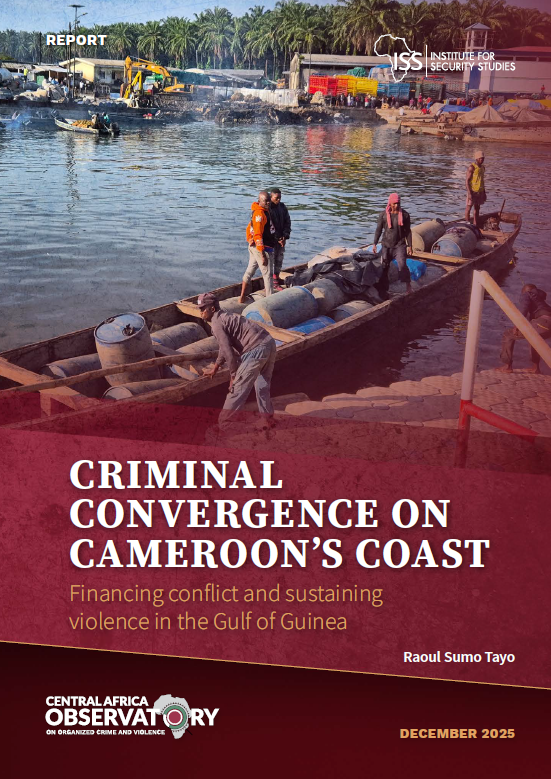
Criminal convergence on Cameroon’s coast

By Raoul Sumo Tayo

This report explores current and emerging maritime piracy trends and the associated flow of criminal activities in Cameroon.

Maritime piracy has become one of the most urgent security issues in the Gulf of Guinea, which is currently the second-most affected region worldwide. Cameroon’s coastline is at the centre of these dynamics, with attacks, shifting routes and an expanding set of criminal activities that both accompany and sustain piracy. Understanding these trends is essential to analysing how violence is maintained at sea, in mangrove areas and on land.


This report provides an overview of current and emerging patterns of maritime piracy and the cohabitant flows that reinforce it. It tracks the evolution of incidents on and off the Cameroonian coast, describing the methods used by individuals commonly referred to as pirates, including timing of attacks, routes, targets and operational tactics. While vessel boardings, attempted attacks, hijackings and kidnappings have generally decreased, illegal activities that generate alternative income have increased, particularly hostage-taking, extortion and illegal taxation. These criminal flows sustain pirate economies and strengthen their resilience when groups are not directly involved in kidnapping-for-ransom operations.

PretoriaL  Institute for Security Studies, 2025. 42p.

Measures to combat right-wing extremism in New South Wales: interim report

New South Wales. Legislative Assembly Committee on Law and Safety

An interim report for the inquiry into measures to combat right-wing extremism in New South Wales. The report considers the Crimes and Summary Offences Amendment Bill 2025 and puts forward some considerations for Parliament when debating the Bill. The Bill was introduced on 19 November 2025, following a neo-Nazi protest outside Parliament House on 8 November 2025. The event was widely condemned.

The protest shows the current laws have been failing to prevent right-wing extremists from mobilising and recruiting. Legislative change is required to address the worrying rise of right-wing extremism.

The Crimes and Summary Offences Amendment Bill 2025 is an important step in combatting right-wing extremism. The Committee has considered the Bill in the context of a broader inquiry into measures to combat right-wing extremism in New South Wales. 

The Committee strongly supports the Bill as a key measure to combat right-wing extremism in New South Wales. At the same time, the Committee acknowledges the risk of constitutional challenge to any law that may restrict the implied freedom of political communication.

Parliament of New South Wales, 2026. 21p.

Measures to prohibit slogans that incite hatred

By New South Wales. Legislative Assembly Committee on Law and Safety

Following the December 2025 Bondi terror attack, the NSW government is strengthening laws against hate speech, specifically targeting slogans like "globalize the intifada" and prohibited terrorist symbols in public. A January 2026 Parliamentary inquiry recommended legislation to ban this specific slogan and similar hate speech to combat violence, with proposals including amending the Crimes Act 1900.

NSW ParliamentNSW Parliament +3

Key Measures and Developments:

Targeted Slogans: The chant "globalize the intifada" is explicitly identified as inciting violence, with moves to prohibit it and similar hateful statements.

Legislative Action: The inquiry recommends amending the Crimes Act 1900 (specifically section 93ZAA) to further prohibit public acts that incite hatred on grounds including religion, race, and sexual orientation.

School Crackdown: Immediate, stricter conduct rules are in place across NSW schools (government, independent, and Catholic), with potential for dismissal for staff engaging in hate speech.

Symbol Prohibition: Legislation is being developed to outlaw the public display of symbols associated with proscribed terrorist organizations.

Inquiry Recommendations: The Parliamentary committee advised monitoring UK hate speech laws, ensuring new legislation is robust against constitutional challenges, and reviewing any new laws within 12 months.

Context: These actions follow the 2025 Bondi incident and focus on balancing anti-racism with existing legal frameworks.

Justice and Equity CentreJustice and Equity Centre +7

Parliament of NSW. 2026. 56p.