Open Access Publisher and Free Library
CRIME+CRIMINOLOGY.jpeg

CRIME

Violent-Non-Violent-Cyber-Global-Organized-Environmental-Policing-Crime Prevention-Victimization

Posts in Analysis
Gang Phantasmagoria: How Racialized Gang Allegations Haunt Immigration Legal Work

By Ana Muñiz

Through an analysis of interviews with Southern California attorneys, supplemented by archival materials, this article contributes to the literature on gangs, critical criminology, and Gothic tropes by examining how the ambiguous nature of gang profiling allows state actors to target racialized others in various legal and administrative venues with little evidence and few procedural protections. I conceptualize gang phantasmagoria as the constant, amorphous, unpredictable, and haunting threat of racialized gang allegations and argue that the dynamic shapes the work of legal practitioners and constitutes a state mechanism of racial terror. Specifically, first I argue that government officials deploy the specter of gangs to both portray asylum seekers as monstrous threats and justify restrictions in asylum eligibility. I then illustrate how the potential for gang phantasmagoria to upend asylum applications and trigger the deportation of their clients elicits constant low-grade anxiety for attorneys. Consequently, attorneys are forced to adopt more cautious approaches to legal work in a way that indirectly facilitates the social control of young Latinx immigrants.


Critical Criminology, olume 30, pages 159–175, (2022

  Miracle or Mirage? Gangs and Plunging Violence in El Salvador Latin America 


By The International Crisis Group

  Principal Findings : What’s new? In President Nayib Bukele’s first year in office, El Salvador has seen a sharp drop in what long were sky-high murder rates. While the public celebrates his well-known “iron fist” policies, the reasons for success might lie in quiet, informal understandings between gangs and the government. Why does it matter? It is a major feat to reduce killings by the three main gangs in one of the world’s most violent countries. But the precise causes of the decline are complex and often unclear. Recent outbreaks of gang violence and political mudslinging underline the fragility and reversibility of this achievement. What should be done? Sustaining violence reduction is key. The government should prioritise community-focused development, rehabilitation of jailed gang members and more sophisticated policing efforts, including internal checks on security forces. Should gangs keep violence down and cooperate with authorities during the pandemic, Bukele should consider opening channels for local dialogue with them.   

  After decades of harrowing gang crime, homicides have plunged in El Salvador on the watch of the new president, Nayib Bukele. Faced with the growth of the MS-13 and 18th Street gangs, previous governments resorted to “iron fist” policies to crush them, only to find these fuelled a backlash. Since his 2019 election, President Bukele, a self-styled outsider, has won huge public support by presiding over a 60 per cent fall in murders. Yet prospects that this achievement will endure are in doubt. The collapsing homicide rate may stem not only from the government’s public security policies, but also from the gangs’ own decision to curb bloodshed, possibly due to a fragile non-aggression deal with authorities. In addition, Bukele’s confrontational style, which has been exacerbated during the COVID-19 pandemic, risks entangling his security reforms in political battles. Broadly backed efforts to support affected communities, assist members wishing to leave gangs and encourage local peacebuilding are more likely to end definitively El Salvador’s cycle of violence. The Bukele administration argues that the plummeting murder rate – with daily killings now standing at their lowest rate since the end of the country’s civil war (1980- 1992) – represents the crowning achievement of a new security strategy. In theory, the government’s Territorial Control Plan couples robust law enforcement with violence prevention schemes. It has reinforced joint police and military patrols in 22 municipalities suffering high rates of crime, while toughening confinement measures in jails in a bid to sever communications between inmates and the outside world. At the same time, the government’s goal of building dozens of “cubes” – glass-walled recreational and education centres – represents the flagship effort to brighten the lives of young people growing up under gang dominion and prevent recruitment into their ranks. The precise reasons for the nationwide drop in homicides are hard to pin down. Statistical studies show that the Territorial Control Plan is most likely not the sole cause; specific local falls in murder rates do not correspond precisely to those areas where the plan has been implemented. Instead, in large part, gangs appear to have themselves decided to scale back their use of lethal violence. Unassailable control over communities, declining gang rivalry and increasingly autonomous gang leadership outside jails may explain this decision more than the Territorial Control Plan. Yet other government policies might have played a role: numerous analysts and local activists ascribe the gangs’ move to an informal understanding between them and the authorities, who have allegedly ordered security forces to dial back their clashes with these groups. A sudden killing spree attributed to MS-13 in April illustrated just how precarious the gangs’ commitment to reducing violence can be. Bukele’s reaction to the attacks, which left over 80 dead in a five-day span, reaffirmed his inclination to adopt punitive measures to force gangs into submission. Images shared around the world from inside El Salvador’s high-security jails revealed inmates huddled together or forced into shared cells without any access to daylight. Although murder rates have since fallen again, the risk remains that gangs, now short of extortion income due to lockdown measures and indignant at the government’s crackdown, will once again resort to extreme violence.  

  Crisis Group Latin America Report N°81, 8 July 2020  

Brussels: International Crisis Group, 2020. 46p.

Undoing Haiti’s Deadly Gang Alliance Latin America & Caribbean 

By The International Crisis Group

Born of Port-au-Prince’s most powerful gangs, Viv Ansanm has raised the criminal threat overhanging Haiti’s state and civilians to alarming heights. The gang coalition announced itself to the world by besieging the Haitian capital in early 2024, triggering former Prime Minister Ariel Henry’s resignation. After consolidating its hold on much of the city, Viv Ansanm has expanded into neighbouring departments, tightened its grip on the main roads connecting Port-au-Prince to the rest of the country and mounted attacks on the airport, essentially cutting Haiti off. Gangs’ violent offensives have killed over 16,000 people since 2022. But a rising death toll and diversifying criminal portfolio, now including extortion, piracy and drug trafficking, have not stopped gangs from claiming to represent the country’s downtrodden, especially on social media. UN approval of a new foreign force to combat the gangs could shift the balance of power. But it is vital that plans are in place not just to overpower the gangs but also to persuade them to demobilise. Haitian business and political elites have relied on paramilitary forces to protect their interests since the 1950s dictatorship of Francois Duvalier, or “Papa Doc”. But in the wake of the assassination of President Jovenel Moïse in July 2021, gangs have mutated, evolving from tools in the hands of the most powerful to overlords of Haiti. Two main gang groupings – the G-9, whose most public figure was Jimmy Chérizier, alias Barbecue, and the Gpèp, under Gabriel Jean Pierre, known as “Ti Gabriel” – fought for supremacy after Moïse’s murder. Even as the two faced off, gang leaders discussed whether to strike agreements to scale down the death toll among their members and spare resources. Mediators managed to craft several pacts among local groups to divvy up coveted turf. Late in 2023, reports emerged that the country’s two main gang coalitions had merged into one platform; their first joint offensive began months later replace the current transitional government. The concrete result they aspire to is a general amnesty for leaders and members. Haiti and its foreign partners are looking to beef up their ability to respond to the gangs with force. The UN Security Council has approved a new security operation, dubbed the Gang Suppression Force, to replace the Kenya-led Multinational Security Support Mission, which started up in 2024 but has never had the personnel or resources needed to check the gangs. The new force aims to incorporate 5,500 military personnel and expects to draw on reliable funding. Its mandate appears to give it more operational independence and the leeway to adopt more aggressive tactics. But until the force’s deployment, which is expected to commence around April 2026, Haiti’s authorities will have to turn to other methods. A task force, led by Haiti’s prime minister and powered by U.S. private military companies, has already used drones to hit gang members in their urban strongholds, killing over 200 people. Foreign partners are also providing training to the newly reconstituted army. Meanwhile, citizens exhausted by the threat to their neighbourhoods have established self-defence groups, provoking a brutal riposte from the gangs. Alongside its violent expansion, Viv Ansanm has sought to transform its public profile from that of a predatory criminal force into that of an ideological crusader. Crime bosses say their mission is to protect the poorest Haitians from rapacious elites and colonial powers that historically have oppressed this black Caribbean nation. Chérizier and other gang leaders have even announced the creation of a new political party, albeit without taking the steps needed to register it formally. While continuing to enrich themselves at the expense of Haitians rich and poor, their message has nevertheless become more overtly political: they appear intent on guaranteeing that their allies are part of the next administration, which should be formed by 7 February 2026 toreplace the current transitional government. The concrete result they aspire to is a general amnesty for leaders and members. Haiti and its foreign partners are looking to beef up their ability to respond to the gangs with force. The UN Security Council has approved a new security operation, dubbed the Gang Suppression Force, to replace the Kenya-led Multinational Security Support Mission, which started up in 2024 but has never had the personnel or resources needed to check the gangs. The new force aims to incorporate 5,500 military personnel and expects to draw on reliable funding. Its mandate appears to give it more operational independence and the leeway to adopt more aggressive tactics. But until the force’s deployment, which is expected to commence around April 2026, Haiti’s authorities will have to turn to other methods. A task force, led by Haiti’s prime minister and powered by U.S. private military companies, has already used drones to hit gang members in their urban strongholds, killing over 200 people. Foreign partners are also providing training to the newly reconstituted army. Meanwhile, citizens exhausted by the threat to their neighbourhoods have established self-defence groups, provoking a brutal riposte from the gangs. A well-resourced, properly informed and expertly commanded Gang Suppression Force could help change the balance of force on the ground and push the gangs onto the back foot. Port-au-Prince and its foreign counterparts, however, must take care to mitigate the dangers of civilian casualties and violations of human rights, ensuring that robust accountability systems are in place. Once the force is up and running, the Haitian government should also overcome the coordination failures that have plagued previous security campaigns. In particular, the government should appoint members to the National Security Council and ask them to design a strategy that lays out each institution’s role in fighting the gangs. Even so, it remains unlikely that force aone will entirely extricate gangs from the communities they control or sever the nexus with politics that has bedevilled Haiti for over half a century. Though informal negotiations with gangs take place on a regular basis – to gain access to people in need of humanitarian aid or to keep businesses open – many Haitians oppose the idea of formal dialogue with the perpetrators of crimes they consider unforgivable. Government officials have correctly said the Haitian state cannot engage in talks from a position of weakness. But if the new multinational force and revamped Haitian security forces allow the authorities to gain the upper hand and broadcast their armed superiority, state officials should look to use dialogue as a means of convincing the gangs to cut their losses, reduce violence against civilians and, eventually, demobilise

While that happens, the administration, with the support of donors, should expand the program that is now providing exit ramps for minors in the gangs’ ranks. In cooperation with international experts, it should also start to design a transitional justice system that provides benefits and a measure of judicial reprieve to those who disarm and cooperate with the authorities, while also guaranteeing that there will be no general impunity. It is hard to understate the damage gangs have wrought in Haiti, killing and raping thousands, creating the hemisphere’s worst humanitarian crisis and destroying the lives of millions. Understandably, many Haitians refuse to contemplate responding to the horrors they have endured with anything less than crushing retaliation. But even if the Gang Suppression Force lives up to its promise, it is hard to compute the possible cost in lives and resources of a campaign to destroy the gangs. At some stage, negotiations from a position of strength aimed at protecting civilians and disarming the gangs would serve Haiti far better as a first step on the long path to stability.


Port-au-Prince/New York/London/Brussels: International Crisis Group, 2025. 49p.

A ‘Lens of Labor’: Re-Conceptualizing Young People’s Involvement in Organized Crime

By Sally Atkinson-Sheppard

Millions of the world’s children engage in labor, often exploitative and essential to their survival. Child labor is closely related to crime; global discourse illustrates how young people are victims of forced and bonded labor and recent studies from the global South demonstrate how young people are hired as the ‘illicit laborers’ of organized crime groups. Despite this, there is a tendency to consider young people, not as laborers but as victims of trafficking or as offenders (often in relation to gangs). To address this lacuna, the article draws on data from 3 studies conducted in the global South to develop a conceptual framework suitable for understanding the intersection between labor and crime. The article develops a metaphorical ‘labor lens’, a lens which centers and prioritizes labor and instrumental drivers for crime, embedded within wider structures of illicit markets, established organized crime, state:crime collaboration and the need for children to work to survive. The article integrates economic drivers for involvement in organized crime with the moral economy, within the context of ecological frameworks of crime, embedded with wider issues of coloniality. In doing so, the article develops a new conceptual framework for considering young people’s involvement in organized crime.


  Critical Criminology (2023) 31:467–487

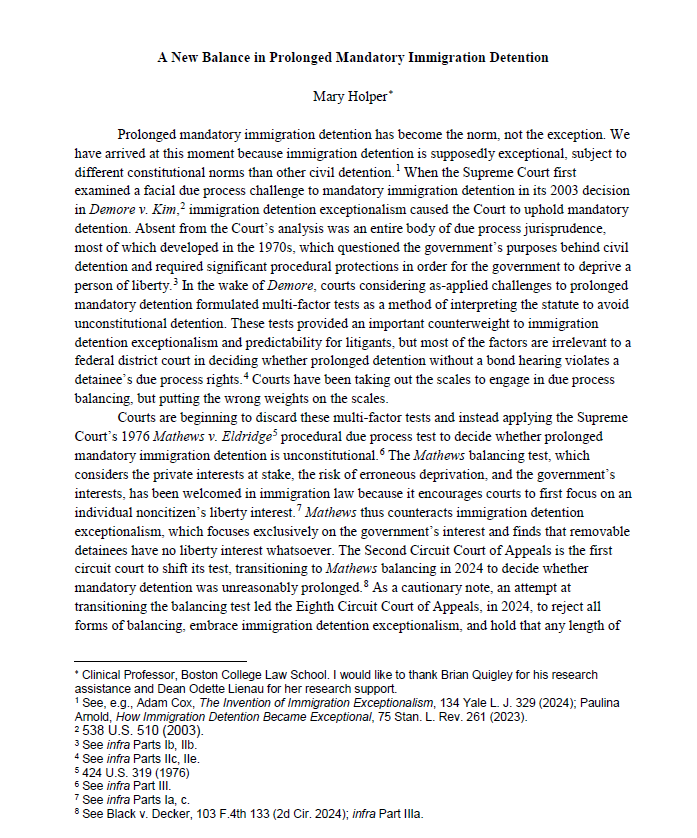
A New Balance in Prolonged Mandatory Immigration Detention

By Mary Holper

Prolonged mandatory immigration detention has become the norm, not the exception. We have arrived at this moment because immigration detention is supposedly exceptional, subject to different constitutional norms than other civil detention. When the Supreme Court first examined a facial due process challenge to mandatory immigration detention in its 2003 decision in Demore v. Kim, immigration detention exceptionalism caused the Court to uphold mandatory detention. Absent from the Court's analysis was an entire body of due process jurisprudence, most of which developed in the 1970s, which questioned the government's purposes behind civil detention and required significant procedural protections in order for the government to deprive a person of liberty. In the wake of Demore, courts considering as-applied challenges to prolonged mandatory detention formulated multi-factor tests as a method of interpreting the statute to avoid unconstitutional detention. These tests provided an important counterweight to immigration detention exceptionalism and predictability for litigants, but most of the factors are irrelevant to a federal district court in deciding whether prolonged detention without a bond hearing violates a detainee's due process rights. Courts have been taking out the scales to engage in due process balancing, but putting the wrong weights on the scales.

Courts are beginning to discard these multi-factor tests and instead applying the Supreme Court's 1976 Mathews v. Eldridge procedural due process test to decide whether prolonged mandatory immigration detention is unconstitutional. The Mathews balancing test, which considers the private interests at stake, the risk of erroneous deprivation, and the government's interests, has been welcomed in immigration law because it encourages courts to first focus on an individual noncitizen's liberty interest. Mathews thus counteracts immigration detention exceptionalism, which focuses exclusively on the government's interest and finds that removable detainees have no liberty interest whatsoever. The Second Circuit Court of Appeals is the first circuit court to shift its test, transitioning to Mathews balancing in 2024 to decide whether mandatory detention was unreasonably prolonged. As a cautionary note, an attempt at transitioning the balancing test led the Eighth Circuit Court of Appeals, in 2024, to reject all forms of balancing, embrace immigration detention exceptionalism, and hold that any length of mandatory detention is acceptable during removal proceedings. This Article argues that courts can make prolonged mandatory immigration detention exceptional by continuing the work of the Second Circuit in applying the Mathews procedural due process balancing test instead of the existing multi-factor tests.

 Boston College Law School Legal Studies Research Paper No. 662

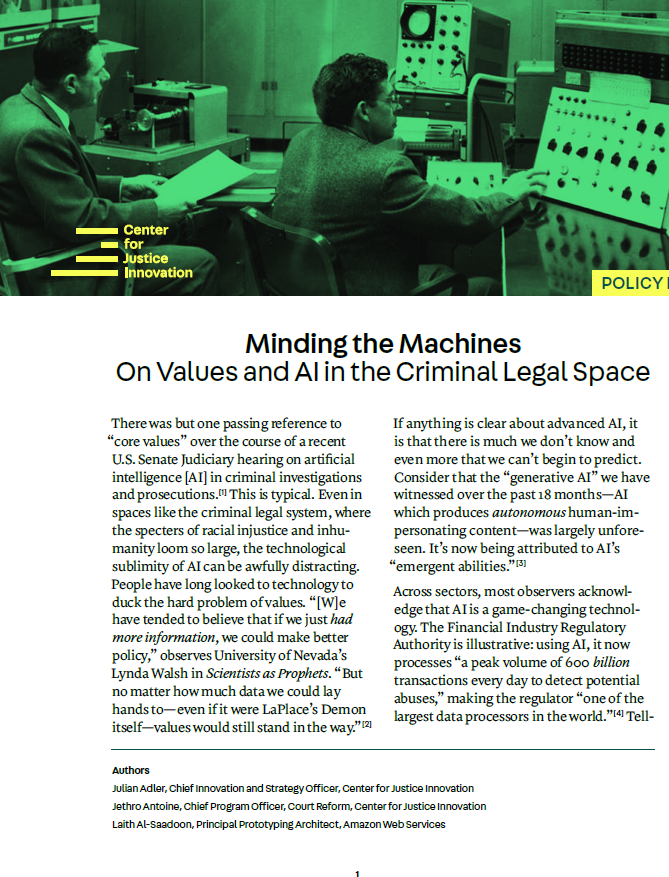
Minding the Machines: On Values and AI in the Criminal Legal Space

By Julian Adler,  Jethro Antoine, Laith Al-Saadoon

There was but one passing reference to “core values” over the course of a recent U.S. Senate Judiciary hearing on artificial intelligence [AI] in criminal investigations and prosecutions.[1] This is typical. Even in spaces like the criminal legal system, where the specters of racial injustice and inhumanity loom so large, the technological sublimity of AI can be awfully distracting. People have long looked to technology to duck the hard problem of values. “[W]e have tended to believe that if we just had more information, we could make better policy,” observes University of Nevada’s Lynda Walsh in Scientists as Prophets. “But no matter how much data we could lay hands to—even if it were LaPlace’s Demon itself—values would still stand in the way.”[2] If anything is clear about advanced AI, it is that there is much we don’t know and even more that we can’t begin to predict. Consider that the “generative AI” we have witnessed over the past 18 months—AI which produces autonomous human-impersonating content—was largely unforeseen. It’s now being attributed to AI’s “emergent abilities.”

Nwq York: Center for Justice Innovation, 2024. 8p.

Immunity on Trial: Ethiopian Courts, Chinese Corporations, and Contestations over Sovereignty

By Miriam Driessen 


Political and legal immunity are justified by the principle that certain social aims outweigh the value of imposing liability. To be exempt from the rules, however, is a privilege granted to or demanded by the powerful. The structural disparities that underpin immunity can turn it into an unjust prerogative, one that is inscribed by global inequalities.  Set against the backdrop of an extraordinary wave of litigation against Chinese corporations in Ethiopia, Immunity on Trial probes the question of immunity in everyday encounters steeped in highly asymmetrical power relations. Drawing on observations from the courthouse, interviews with litigants, judges, and court support staff, and analyses of case files, Miriam Driessen demonstrates how immunity is debated and delegitimized—or affirmed—by those who fight, exact, grant, or weigh it. From the construction site to the police station, from the registrar’s office into the courtroom, she documents tussles over immunity, unraveling the politics of dignity on which they are founded.


Oakland: : University of California Press, 2026. 

Stop-and-Frisk Policing in U.S. Cities: Patterns and Productivity

By David Abrams and Priyanka Goonetilleke

Like most locally governed activities, police stops are evaluated, if at all, using data from a single municipality. This paper aggregates data on over 8 million pedestrian and vehicle police stops from 16 U.S. cities between 2019 and 2023 to better understand how the widely used police tactic varies by place, time, and race. We find immense variation in the implementation of these policies across cities, something that has not been previously highlighted in the literature. Stop rates vary across cities by almost two orders of magnitude, well in excess of inputs like funding and size of police force vary far less, or outcomes like different measures of crime. Contraband discovery rates (hit rates) for pedestrian stops are consistently low, with gun hit rates never exceeding 10% of frisks in any city. Consistent with optimizing models of policing, hit rates rise over time as frisk rates fall substantially. However, this result is concentrated in gun contraband, and for other types - mostly drugs - hit rates do not vary much even with vast declines in frisks, suggesting police are not optimizing for other types of contraband. This supports the notion that frisks are consistent with the law, which requires they be based on suspicion that an individual is armed and dangerous. Consistent with prior work, there are substantial racial disparities in all examined cities, with Blacks frisked as much as 10 times more frequently than Whites in some locations. Taken together, these facts point to a standard practice that seemingly has no standards, given the massive variation across the country. This suggests there are potentially large gains in efficiency and fairness from sharing best practices and nationwide data collection on police stops.

U of Penn, Inst for Law & Econ Research Paper No. 26-01,


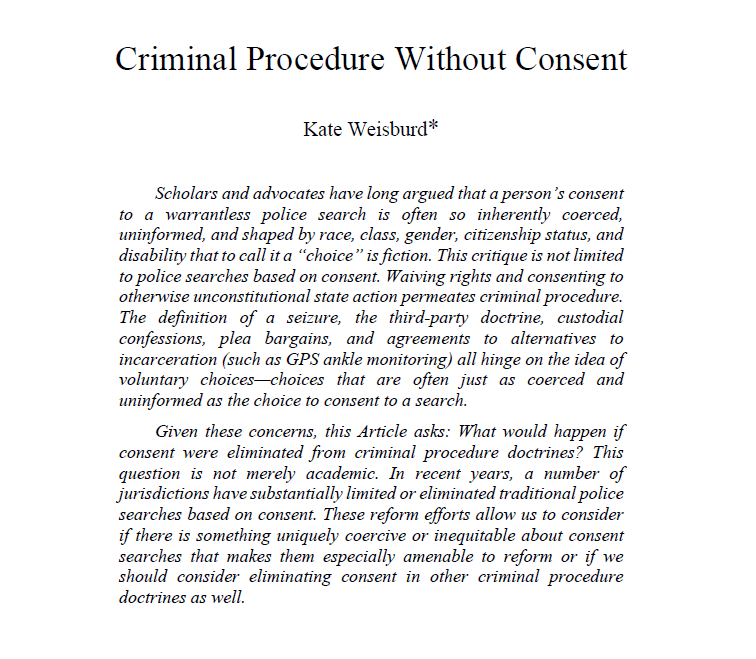
Criminal Procedure Without Consent

By Kate Weisburd


Scholars and advocates have long argued that a person's consent to a warrantless police search is often so inherently coerced, uninformed, and shaped by race, class, gender, citizenship status, and disability that to call it a "choice" is fiction. This critique is not limited to police searches based on consent. Waiving rights and consenting to otherwise unconstitutional state action permeates criminal procedure. The definition of a seizure, the third-party doctrine, custodial confessions, plea bargains, and agreements to alternatives to incarceration (such as GPS ankle monitoring) all hinge on the idea of voluntary choices-choices that are often just as coerced and uninformed as the choice to consent to a search.Given these concerns, this Article asks: What would happen if consent were eliminated from criminal procedure doctrines? This question is not merely academic. In recent years, a number of jurisdictions have substantially limited or eliminated traditional police searches based on consent. These reform efforts allow us to consider if there is something uniquely coercive or inequitable about consent searches that makes them especially amenable to reform or if we should consider eliminating consent in other criminal procedure doctrines as well.This Article takes on these questions. Drawing on both an original national survey of recent consent-search reforms and a transsubstantive analysis of consent and waiver in a range of criminal procedure doctrines, this Article analyzes the potential ramifications of eliminating (or limiting) consent. In doing so, this Article reveals the extent to which consent plays a pivotal role in upholding—and justifying—the entire operation of the criminal justice system.


.California Law Review (2025), UC Law San Francisco Research Paper Forthcoming,

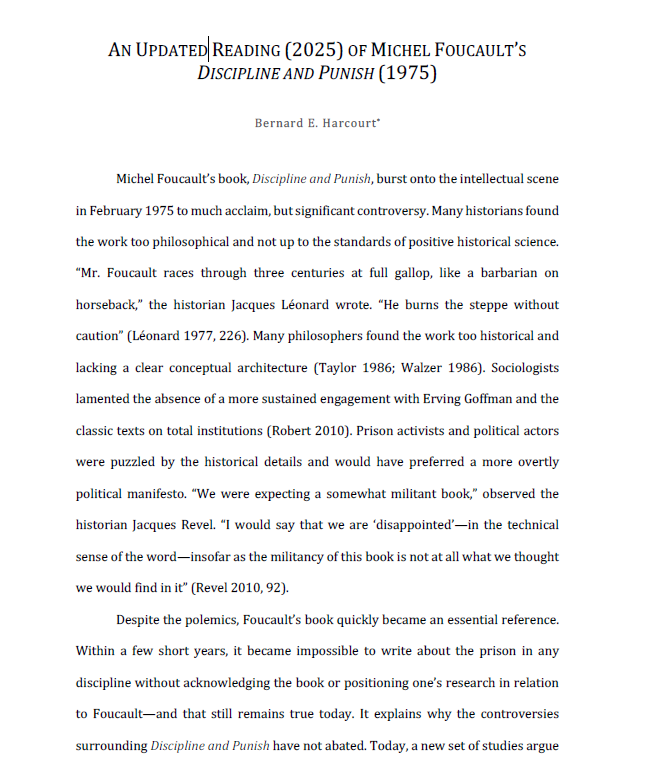
An Updated Reading (2025) of Michel Foucault's Discipline and Punish (1975)

By Bernard Harcourt


Fifty years after its publication, Discipline and Punish (1975) remains as controversial as ever. Anyone writing about the prison today, in no matter what discipline, feels obliged to position themselves vis-à-vis Michel Foucault’s book. As a result, new studies and books regularly criticize Discipline and Punish, most often for misleading the reader about the history of the prison. As Adam Gopnik recently writes in the New Yorker, scholars are “turning decisively against Foucault,” contending “that incarceration may be a facet of every hierarchical, complex society. In other words, it’s always been with us.”However, Discipline and Punish was never intended to be a history of the prison. It was instead a genealogy of a particular mode of governing in modern times—what Foucault called “disciplinary power” or “panopticism.” And rather than trace the history of the prison, the book proposed a contemporary way to understand how power circulates in society and it paved the way for the study of contemporary modes of governing.  Drawing on a wealth of new Foucault archives, public lectures, manuscripts, and historical documents that have surfaced over the past 50 years, it is possible now to identify the true import of Foucault’s book. Just as the Leviathan of Thomas Hobbes captured the turn in modern political philosophy to theories of sovereignty and representation, Discipline and Punish marked the end of modern political theory and launched a new approach to analyze relations of power in society. In this essay, I redefine the central contribution of Discipline and Punish and explore how to use Foucault’s book today—and also, how to go beyond it.


 Columbia Public Law Research Paper No. 6044574,

Non-Criminal Justice Interventions for Countering Cognitive and Behavioural Radicalisation Amongst Children and Adolescents: A Systematic Review of Effectiveness and Implementation

By James Lewis, Sarah Marsden, James Hewitt, Chloe Squires, Anna Stefaniak


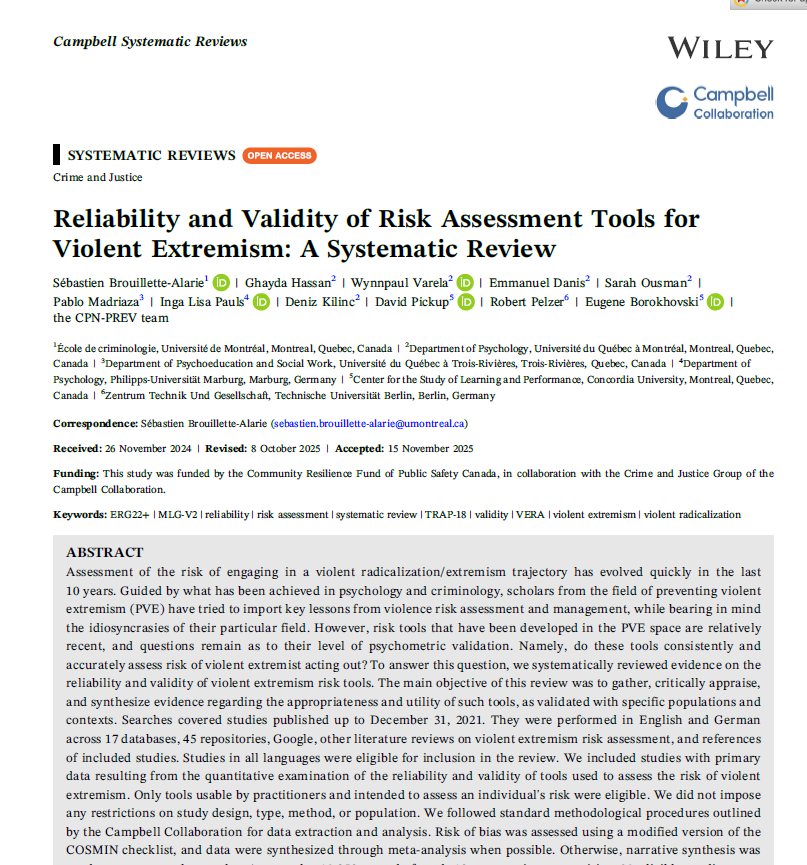
Reliability and Validity of Risk Assessment Tools for Violent Extremism: A Systematic Review


By Sébastien Brouillette-Alarie, Ghayda Hassan, Wynnpaul Varela, Emmanuel Danis, Sarah Ousman, Pablo Madriaza, Inga Lisa Pauls, Deniz Kilinc, David Pickup, Robert Pelzer, Eugene Borokhovski, the CPN-PREV team


Assessment of the risk of engaging in a violent radicalization/extremism trajectory has evolved quickly in the last 10 years. Guided by what has been achieved in psychology and criminology, scholars from the field of preventing violent extremism (PVE) have tried to import key lessons from violence risk assessment and management, while bearing in mind the idiosyncrasies of their particular field. However, risk tools that have been developed in the PVE space are relatively recent, and questions remain as to their level of psychometric validation. Namely, do these tools consistently and accurately assess risk of violent extremist acting out? To answer this question, we systematically reviewed evidence on the reliability and validity of violent extremism risk tools. The main objective of this review was to gather, critically appraise, and synthesize evidence regarding the appropriateness and utility of such tools, as validated with specific populations and contexts. Searches covered studies published up to December 31, 2021. They were performed in English and German across 17 databases, 45 repositories, Google, other literature reviews on violent extremism risk assessment, and references of included studies. Studies in all languages were eligible for inclusion in the review. We included studies with primary data resulting from the quantitative examination of the reliability and validity of tools used to assess the risk of violent extremism. Only tools usable by practitioners and intended to assess an individual's risk were eligible. We did not impose any restrictions on study design, type, method, or population. We followed standard methodological procedures outlined by the Campbell Collaboration for data extraction and analysis. Risk of bias was assessed using a modified version of the COSMIN checklist, and data were synthesized through meta-analysis when possible. Otherwise, narrative synthesis was used to aggregate the results. Among the 10,859 records found, 19 manuscripts comprising 20 eligible studies were included in the review. These studies focused on the Terrorist Radicalization Assessment Protocol (TRAP-18), the Extremism Risk Guidance Factors (ERG22+), the Multi-Level Guidelines (MLG-V2), the Identifying Vulnerable People guidance (IVP guidance), and the Violent Extremism Risk Assessment (VERA)—all structured professional judgment tools—as well as Der Screener—Islamismus, an actuarial scale. Studies mostly involved adult male participants susceptible to violent extremism (N = 1106; M = 58.21; SD = 55.14). The types of extremist ideologies endorsed by participants varied, and the same was true for ethnicity and country/continent of provenance. Encouraging results were found concerning the inter-rater agreement of scales in research contexts (kappas between 0.76 and 0.93), but one of the two studies that examined it in a field setting obtained disappointing results (kappas ranging between of 0.47 and 0.80). Content validity studies indicated that PVE risk tools adequately cover the risk factors and offending processes of individuals who go on to commit extremist violence. Construct validity analyses were few and far between, with results indicating that empirical divisions of scales did not match their conceptual divisions. The internal consistency of subscales was lackluster (Cronbach's alphas between 0.19 and 0.85), whereas full scales demonstrated acceptable internal consistency when assessed (0.80 for the ERG22+ and 0.64 for the IVP guidance). Only one study examined convergent validity, and it revealed a lack of convergence, primarily due to particularities of the scale under study (the MLG-V2). Discriminant validity analyses were exploratory in nature, but suggested that PVE risk tools might not be ideology-specific and may apply to both group and lone actors. Finally, although the TRAP-18 showed a relatively strong postdictive effect size (pooled r = 0.62 [0.35–0.77], p = 0.000), the results were highly heterogeneous (I2 = 86%), and all studies used retrospective designs, meaning the outcome was already known at the time of assessment. As such, no included study evaluated true predictive validity (i.e., the ability to forecast future violent extremist outcomes based on prospective risk assessment). This represents a significant evidence gap. Threats to validity were substantial: (a) Many studies were case studies or had very small samples, (b) nearly all samples were constituted through the triangulation of publicly available data, and (c) convenience outcome measures were often used. Although having imperfect data is better than having no data, the current state of empirical validation precludes the recommendation of one tool over another for specific populations and contexts, and calls for higher-quality validation studies for PVE risk assessment tools. Nevertheless, these tools constitute useful checklists of relevant risk and protective factors that could be taken into account by evaluators who wish to assess the risk of violent extremism and identify intervention targets.


Campbell Systematic Reviews, Volume21, Issue4

December 2025, 2025.

The curious case of vandals: Brazil’s environmental and regional policies in the Bolsonaro years

By Monika Sawicka


This paper aims to contribute to the debate on foreign policy strategies of state actors in the international system with a particular focus onpolicies pursued by far-right populist leaders. On the theoretical level,it builds on role theory and status-seeking strategies drawn from social identity theory (SIT) to offer an enhanced conceptual framework suit-able for scrutinising more radical forms of international activism. Thetheoretical points are then illustrated empirically by exposing the find-ings from content analysis of Brazilian policymakers’ speeches and their juxtaposition with the Bolsonaro government’s policies in the areas of environmental protection and regional cooperation. The author’s main claim is that President Jair Bolsonaro and his Foreign Affairs MinisterErnesto Araújo, through their rhetoric about cooperation in SouthAmerica and the Amazon and the actions undertaken by the adminis-tration in these fields, envisioned for Brazil the role of vandal. This had substantial consequences for the country’s international standing.

GEOPOLITICS, 2023, VOL. 28, NO. 2, 619–640

Keep the status quo: randomization-based security checks might reduce crime deterrence at airports

By Tamara Stotz, Angela Bearth, Signe Maria Ghelfi & Michael Siegrist

Due to the increasing number of passengers at airports, regular security checks reached their capacity limits. Thus, alternative security checks are being discussed to increase their efficiency. For example, instead of screening all passengers briefly, a randomly selected sample of passengers could be screened thoroughly. However, such randomization-based security checks could be perceived as less secure based on the assumption that fewer illegal objects would be uncovered than through regular security checks. To analyze whether this is the case, we conducted an online experiment that investigated people’s perceptions of and preference for traditional and randomization-based security checks from both the passenger and the criminal perspectives. The findings suggest that within security checks with explicitly stated equal probabilities of detecting illegal objects, passengers do not exhibit strong preferences for either the traditional or the randomization-based security checks. However, randomization-based security checks would be preferred by criminals. Thus, with regard to security, the status quo, namely traditional security checks, is still the best way to keep airports secure.

Journal of Risk Research, Volume 24, 2021 - Issue 12

SexWork.DK: a comparative study of citizenship and working hours among sex workers in Denmark

By Rasmus Munksgaard, Kim Moeller & Theresa Dyrvig Henriksen

Sex workers in Europe are increasingly of nonnational origin. The Schengen cooperation allows internal migration within the European Union, but many migrant sex workers originate from outside the EU. While sex workers are already in precarious positions, nonnationals risk deportation, dependent on their citizenship status, and may have debts to smugglers. Consequently, they may be more likely to work longer hours to increase short-term profits. Using a dataset of sex work advertisements from one Danish website (n = 2,594), we estimate the association between inferred citizenship status and a) advertised hours on shift using ordinary least squares regression, and b) the probability of advertising 24/7 availability using a linear probability model. Compared to Danish sex workers, we find migrants advertise almost twice as many hours on shift and are more likely to advertise 24/7 availability. These results shed light on the inequalities that persist between national and nonnational sex workers.

Global Crime, Volume 26, 2025 - Issue 1

Come at the king, you best not miss: criminal network adaptation after law enforcement targeting of key players

By Giulia Berlusconi

This paper investigates the impact of the targeting of key players by law enforcement on the structure, communication strategies, and activities of a drug trafficking network. Data are extracted from judicial court documents. The unique nature of the investigation – which saw a key player being arrested mid-investigation but police monitoring continuing for another year – allows to compare the network before and after targeting. This paper combines a quantitative element where network statistics and exponential random graph models are used to describe and explain structural changes over time, and a qualitative element where the content of wiretapped conversations is analysed. After law enforcement targeting, network members favoured security over efficiency, although criminal collaboration continued after the arrest of the key player. This paper contributes to the growing literature on the efficiency-security trade-off in criminal networks, and discusses policy implications for repressive policies in illegal drug markets.

Global Crime, Volume 23, 2022 - Issue 1

An exploratory study of victimisation and near misses in online shopping fraud

By Matthew Edwards,Jack Mark Whittaker, Cassandra Cross & Mark Button


The internet has revolutionised retail sales, with online shopping a common practice globally. While convenient, offenders have also embraced the opportunity to target potential victims and their shopping carts. Online shopping fraud occurs when offenders represent themselves as legitimate online sellers to gain sales from unsuspecting victims, both by impersonating genuine retailers and creating fictional retailers with non-existent products. The current article explores the victimisation and near misses of consumers to online shopping fraud. Based on survey responses of 1011 Australians, the article examines the online shopping activities of individuals as well as any victimisation or near miss experiences. The results indicate a high level of victimisation and near misses across this sample. It further examines a range of impacts experienced by these consumers and considers the implications of these results for the retail sector and prevention practices into the future.

 Global Crime26(1), 69–89.

The Dynamics of Online Wildlife Trade, Crime and Law Enforcement in Israel

By Noga Shanee, Amnon Keren, Evelyn D. Anca, Tamar Fredman, Omer Polansky & Yael Cohen Paran

There are certain biases that characterize the global efforts to tackle wildlife crime, restricting their effectiveness. Firstly, wildlife crime is considered mainly a problem of developing source countries, while the role of developed consumer countries is largely ignored. Secondly, illegal trafficking and legal wildlife trade are treated separately, while the first is considered harmful to the environment and the latter is often considered tolerable, and even a conservational tool. In this study, we use the case study of Israel, a small, developed country with a solid legal framework to control the illegal wildlife trade. For the period between 2021 and 2023 we reviewed national and international laws and regulations from different sectors relevant to wildlife law enforcement. We monitored social media, online commerce platforms and instant messaging groups in order to assess online trade, and interacted with the wildlife authorities to assess their responses. We found six overarching legal themes: (1) species permitted for trade and possession; (2) trade and possession permits; (3) health permits; (4) animal welfare laws and regulations; (5) wildlife shows; and (6) general commerce and money laundering laws. Our results demonstrate that although there is a regulatory infrastructure which allows legal wildlife trade, the vast majority of the trade violates at least some of the related laws and standards. We also found biases in the authorities’ readiness to tackle different types of wildlife crime. Therefore, this study challenges the false dichotomy between legal and illegal wildlife trade and calls for further research and improved enforcement and control of authorized wildlife trade in developed countries.

Journal of International Wildlife Law & Policy, Volume 28, 2025 - Issue 1

The state and the legalisation of illicit financial flows: trading gold in Bolivia

By Fritz Brugger, Joschka J. Proksik & Felicitas Fischer

Most research on illicit financial flows (IFFs) has focused on illicit outflows from low-income countries and the role of non-state actors in generating IFFs. Less attention has been paid to processes through which IFFs enter formal value chains – in effect being legalised before leaving the country – or the crucial role of state institutions as gatekeepers. We develop a novel explanatory approach to account for the enabling role of state institutions in the legalisation of IFFs. Building on political settlement theory, we explain the performance of institutions in regulating IFFs as a function to maintain political power. Taking the case of Bolivia, we examine how legalising illicit value flows works in practice and analyse the motives and underlying conditions that lead state institutions to permit the formal export of gold shipments that have been illicitly sourced or transferred. We find that the legalisation of IFFs accommodates the interests of powerful cooperatives dominating the gold-mining sector, which are critical to maintaining the political settlement on which the incumbent government’s power is based. By maintaining a status quo of non-enforcement, legal ambiguity, and informality, gold-mining cooperatives reap higher benefits from resource extraction at the expense of domestic revenue mobilisation.

New Political Economy, Volume 29, 2024 - Issue 4

Barriers and facilitators to methadone dispensing for opioid use disorder in community pharmacies: A scoping review

By Caroline Shubel , Mary Ava Nunnery , Grace Marley, Bayla Ostrach , Delesha M. Carpenter

Background: Methadone, an evidence-based medication for opioid use disorder (MOUD), is available through prescription at community pharmacies in countries like Canada, Australia, and the United Kingdom, but not in the United States (U.S.). The objective of this scoping review was to summarize barriers and facilitators related to dispensing methadone in community pharmacies to inform future implementation efforts in the U.S. Methods: A scoping review was conducted using PubMed, Embase, SCOPUS, and CINAHL. Original research articles related to barriers and/or facilitators around community pharmacy-based methadone dispensing were included. No search limits (year of publication, geographic boundaries) were applied to the search strategy. Two independent researchers screened all articles for eligibility, extracted data, and met to reach consensus. Data were extracted on 12 items, with a particular focus on barriers and facilitators to dispensing methadone in community pharmacies. Results: Forty-one articles were included in the review. The most common barriers to methadone dispensing were workload (n = 14), safety concerns for staff and property (n = 13), concern about patient behavior and interactions (n = 12), financial hardship (for pharmacists and patients) (n = 11), and stigma and discrimination towards patients (n = 11). The most common facilitators were pharmacist training and education (n = 14), positive pharmacist-patient relationships (n = 14), and privacy (n = 10). Conclusions: The findings from this review can be used to address barriers and incorporate known facilitators into future protocols or practice of pharmacy-based methadone dispensing. Further research is needed to identify U.S. and state-specific anticipated needs for pharmacy-based methadone dispensing

:Drug Alcohol Depend Rep. 2026 Jan 29;18:100413. doi: 10.1016/j.dadr.2026.100413. PMID: 41695144; PMCID: PMC12906019

Cannabis use within the United States: Prevalence of cannabis use by state legal status and perceptions of benefit and harm

By Andrew P. Bontemps, Elizabeth S. Hawes, Bailey E. Pridgen, William P. Wagner, Dominique Black, Karen L. Cropsey

Background:Cannabis use has increased in the United States as legalization has spread. While Δ-9 THC remains the most-used federally illegal substance, use of other psychoactive hemp-derived products (Δ-8 THC, Δ-10 THC, HHC, THC-O) has grown. The current study investigated patterns of cannabis use and perceptions of harm and benefit of cannabis across states with differing cannabis laws.


Method

Participants (N=639) were adults endorsing past-90-day cannabis use who lived in one of 15 states selected based on cannabis laws (recreational use, medical use, illegal). Participants completed self-report questionnaires endorsing types of cannabis used, methods of consuming and acquiring cannabis, and ranking of potential harm and benefit of consumption methods.


Results

The majority (N=573; 89.7% of participants) endorsed past-30-day use of Δ-9 THC, regardless of legal status. There was significantly greater use of alternate cannabis forms in states where Δ-9 THC remains illegal (past-90-day: χ2(2)=16.78, p<.001; past-30-day: χ2(2)=9.50, p=.009). Individuals from states with legal recreational cannabis most frequently purchased cannabis legally (52.0%), but high levels of non-legal purchase existed regardless of legal status (47.5%). Participants reported primarily consuming Δ-9 THC through smoking (86.1%), CBD through ingestion (50.5%), and alternative cannabis types through vaping (43.8-57.7%). Average harm rankings were lower for smoking if it was the primary method of consumption.


Conclusions

Individuals purchased and consumed cannabis regardless of legal status and legal status was not significantly associated with harm or benefit rating, controlling for demographic and use data. Individuals appear more likely to purchase through legal means, if available.


Drug and Alcohol Dependence Reports

Available online 14 March 2026, 100431