Open Access Publisher and Free Library
CRIME+CRIMINOLOGY.jpeg

CRIME

Violent-Non-Violent-Cyber-Global-Organized-Environmental-Policing-Crime Prevention-Victimization

Posts in Violence & Oppression
Organized Crime as Irregular Warfare: Strategic Lessons for Assessment and Response

David H. Ucko, Thomas A. Marks

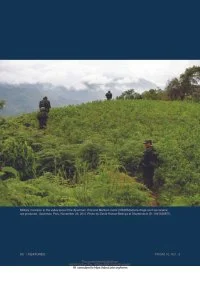
Organized crime both preys upon and caters to human need. It is corrosive and exploitative, but also empowering, and therefore pervasive. Indeed, though often out of sight, organized crime is everywhere: wherever governments draw the line, criminal actors find profitable ways of crossing it; wherever governments fail to deliver on human need, criminal actors capitalize on unmet desire or despair. For those excluded from the political economy, from patronage systems or elite bargains, organized crime can offer opportunity, possibly also protection.

PRISM, Vol. 10, No. 3 (2023), pp. 92-117 (26 pages)

A Framework for Countering Organised Crime: Strategy, Planning, and the Lessons of Irregular Warfare

By David H. Ucko and Thomas A. Marks

Organised crime is not going well. According to the 2021 Global Organized Crime index, ‘the global illicit economy simply continue[s] along the upward trajectory it has followed over the past 20 years, posing an ever-increasing threat to security, development and justice – the pillars of democracy’ (Global Initiative, 2021, p. 8). Wherever governments seek to draw the line, criminal actors find profitable ways of crossing it; wherever governments fail to deliver on human need, criminal actors capitalise on citizens’ desire or despair. As of now, more than three-quarters of the world’s population ‘live in countries with high levels of criminality, and in countries with low resilience to organized crime’ (Global Initiative, 2021, p. 12). On aggregate, the associated activity amounts to an illicit form of governance, furnishing alternative services to a wide range of clients, be they the vulnerable and weak or a covetous elite. The breadth of organised crime, its clandestine nature, and its blending of creative and destructive effects make it difficult to counter. In past SOC ACE research, we argued that the response to organised crime often shares certain pitfalls with counterterrorism, at least since 9/11 (Ucko & Marks, 2022c). Both efforts have been stymied by 1) conceptual uncertainty of the problem at hand; 2) an urge to address the scourge head on (be it violence or crime), without acknowledging its socioeconomic-political context; and, therefore, 3) unquestioned pursuit of strategies that miss the point, whose progress is difficult to measure, and which may even be counterproductive. This convergence is based on the common features of the two phenomena, which are both concerned with i) collective actors, who ii) use violence and coercion among other methods; and who have iii) corrupting, or outright destructive effects on society. Though organised crime is not consciously political in its ideological motivation, it is – like terrorism – deeply political in its origins, activities, and effects. Given the conceptual overlap, and the common pathologies that undermine response, the lessons from countering terrorism are relevant also to the countering of organised crime. Focusing on the concept of ‘irregular warfare’, our past research identified six key lessons, touching upon 1) the socio-political embeddedness of the problem, 2) the tendency to militarise the response, 3) the mirror-imaging of state assistance programmes, 4) the invaluable role of community mobilisation, 5) the dearth of strategy, and 6) the need to engage more closely with questions of political will. As argued elsewhere, these challenges point to a need for greater strategic competence both in assessing the problem of organised crime and in designing a response (Ucko & Marks, 2022c).

To generate this strategic competence, this follow-on report sets out an analytical toolkit to assist planners and policymakers with the crafting of strategy. This ‘Framework of Analysis and Action’ builds upon lessons – negative and positive – learned via years of experience with irregular warfare, defined by the Department of Defense as ‘a violent struggle among state and non-state actors for legitimacy and influence over the relevant population(s)’ (U.S. Department of Defense, 2007, p. 1).1 It is a framework that finds its origins within the U.S. National Defense University’s College of International Security Affairs (CISA), where for two decades it has been used to teach strategic planning for complex and intensely political challenges (Ucko & Marks, 2022a). The framework consists of two parts: the Strategic Estimate of the Situation (which maps the problem, explores its drivers, frames, and methods, and critiques the current response) and the Course of Action (which uses the strategic estimate to design an appropriate strategy, guided by a theory of success). The framework is in this report adapted for organised crime, to enable the mapping of relevant actors and the crafting, thereby, of a viable response. By design, the framework responds to the six key lessons identified in our earlier work. This report goes through the framework and explains its adaptation to organised crime. Appendix A provides a summation of the toolkit, a ‘user’s guide’, that will facilitate application of the framework. Testing to date suggests great potential and we look forward to sustaining a dialogue with those engaged with countering organised crime to further evolve this toolkit. Indeed, since the beginning, this framework has been a living product, enriched by theoretical application in the classroom and practical use in the field.

SOC ACE Research Paper No. 19. Birmingham, UK: University of Birmingham, 2023. 45p.

Observatory of Illicit Economies in South Eastern Europe

By Global Initiative Against Transnational Organized Crime’s Observatory of Illicit Economies in South Eastern Europe.

In this issue, we focus on three cases where criminal groups from the region have been active in recent years: the Netherlands, Ecuador and parts of Africa.

These examples illustrate the growing involvement of Balkan criminal groups in some of the world’s hotspots for illicit activity. Research for these articles is facilitated by the Global Initiative’s network of contacts with local investigative journalists, as well as close cooperation between regional observatories of illicit economies, namely South Eastern Europe, West Africa and Latin America.

As part of the GI-TOC’s analysis of the risks of firearms trafficking from Ukraine, in this issue we show that the Western Balkans remain the main source of illegal weapons in Europe. At present, weapons are still cheap and plentiful in the region, and stockpiles have been augmented by inflows from Turkey via Bulgaria, particularly of gas and alarm guns. More on this topic can be found in a forthcoming GI-TOC report on trends in arms trafficking from the Ukraine conflict.

In this issue, we also report on a major crackdown by Serbian authorities in late 2023 on increasingly violent smugglers operating along the border between Serbia and Hungary, and examine how this has displaced migration flows towards Bosnia and Herzegovina.

Risk Bulletin No. 18. Geneva, SWIT: Global Initiative Against Transnational Organized Crime, 2024. 25p.

Supporting Resilience Among Environmental Defenders

By Billy Kyte | Giulia Roncon

With the aim to support individuals in building resilient communities working to prevent, counter, and limit the damage of environmental crime, this handbook documents the challenges faced by defenders working in the environmental crime field and provides guidance to support their resilience.

The first section of the handbook analyzes definitional understandings of environmental crime and explores the impacts and harms it can perpetuate. The second section assesses the risks and challenges commonly faced by environmental defenders, including an assessment of their needs, and explores emergent regional issues that may play a part in such vulnerabilities. The final section presents a repository of best practices and tools that can help stakeholders to access available resources and to mitigate the potential risks they face.

The handbook draws from consultations involving nearly 100 prominent figures from civil society and media across Africa and Asia. Whilst findings are therefore geographically specific to some extent, our work confirms that the challenges experienced by environmental defenders in these regions were replicated globally as well. Although each country and regional context is different, the handbook outlines strategies that could be broadly implemented to support the community of stakeholders dedicated to tackling environmental crime worldwide.

Geneva, SWIT: Global Initiative Against Transnational Organized Crime (GI-TOC). 2023.

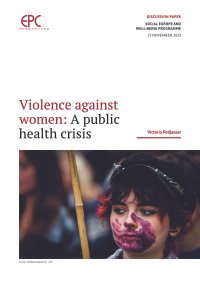
Violence against women: A public health crisis

By Victoria Pedjasaar

In the EU, a third of women over the age of 15 have experienced physical or sexual violence and over half have been sexually harassed. According to a study by the European Union Agency for Fundamental Rights (FRA), just 13% of women reported their most serious incident of non-partner violence to the authorities. Gender-based violence can occur in various situations and circumstances. According to an EU-wide survey report, 32% of perpetrators of sexual harassment in the EU come from the employment context. Although often overlooked, the majority of (workplace) violence takes place in the healthcare sector as healthcare professionals are 16 times more at risk of violence in comparison to other occupations. Violence does not only manifest in abusive behaviour toward workers on duty but can also be perpetrated on women as receivers of healthcare. High rates of violence in healthcare, brought on and exacerbated by gender stereotypes and inequality, point to dysfunctional health systems. This Paper is divided into the following chapters and provides policy recommendations on the way forward for the EU member states: 1. Gender-based violence against healthcare workers. 2. Obstetric and gynaecological violence against women. 3. Gender-based violence is a story of gender inequality. 4. Legislation and policies that protect women.

Brussels, Belgium: European Policy Centre, 2023. 12p.

The Swedish Crime Paradox. A Brief on Challenges Posed by Organised Crime in Sweden

By Amir Rotami

In this policy brief, based on published and forthcoming studies, author Amir Rostami outlines the changing nature of crime in Sweden, with a focus on organised crime, specifically lethal violence and fraud. What are the lessons learned from the Swedish crime paradox, namely the rise in organised crime, but not an equivalent rise in general crime, and what needs to be implemented to counter organised crime? The reaction to the question can be divided into two components: local and global/

European Liberal Forum Policy Paper . Brussels: European Liberal Forum, 2021. 19p.

Tipping Scales: Exposing the Growing Trade of African Pangolins into China’s Traditional Medicine Industry

By Faith Honor , Amanda Shaverand Devin Thorne

The trafficking of pangolins and their scales drives corruption, undermines the rule of law, creates public health risks, and even threatens local and regional security. Additionally, the illicit pangolin trade may have even played a role in onset of the COVID-19 pandemic.1 Critically, the trade—and all of its related challenges—appears to be growing: between 2015 and 2019, 253 tonnes2 of pangolin scales were confiscated, and the annual quantity of pangolin scales seized increased by nearly 400%. To expose the logistics of how these scales are trafficked internationally, Tipping the Scales uses publicly available seizure data and investigative case studies. The global plight of pangolins is increasingly well-known, but less understood are the opaque supply chains that enable pangolin trafficking. To trace this illicit system from consolidation hubs in West and Central Africa to China’s consumer markets, Tipping the Scales analyses 899 pangolin seizures. Drawing on C4ADS’ Wildlife Seizure Database, law enforcement partner seizure data, official government documents, corporate data, and expert interviews, the report details how traffickers nest their activities within licit systems of trade and commerce. To disrupt this trade, C4ADS identifies opportunities for intervention and capacity building.

In Section I, the report finds that pangolin scale traffickers have co-opted bushmeat supply chains and legal breeding programs for their illicit activities. Bushmeat scale trafficking supply chains are particularly prominent in Central and West Africa; 72% of African scale seizures over the last five years have come from those regions. Growing demand for pangolin meat and scales has made pangolins a dual-transaction good3 that relies on transport networks between rural areas and urban and coastal distribution hubs. Further, the report finds that pangolin breeding programs in sub-Saharan Africa obscure the lines between poaching, conservation, and science. In Section II, the report finds that bulk pangolin scale shipments often exit the continent through coastal countries in Central and West Africa. While 70% of intercontinental trafficking instances tied to Africa rely on the air transport sector, 81% of the total weight of pangolin scales are trafficked intercontinentally via the maritime transport sector. China and Hong Kong are the trade’s most prominent destinations. Since 2015, 42% of the 195 tonnes of pangolin scales seized throughout Asia originated in Africa and were seized in or bound for China or Hong Kong. In Section III, the report finds that there are more than 1,000 companies, hospitals, and other entities participating in China’s legal market for medicinal pangolin products. In this market, which allows companies to privately stockpile pangolin scales, traffickers exploit lax regulations to sell scales from Africa and Asia. Government-reported pangolin scale consumption quotas, geo-tagged company data, and seizures suggest that Guangdong and Hunan provinces have relatively high levels of exposure to both the legal pangolin market and pangolin trafficking. Based on these findings, Tipping the Scales makes 10 recommendations to increase detection of and improve enforcement against transnational criminal networks operating in Africa and Asia (see page 58).

Washington, D: C4ADS, 2020. 60p.

Stolen Amazon: The Roots of Environmental Crime in Bolivia

By Insight Crime

This present study on Bolivia was led by InSight Crime. The findings and analysis are based on one year of open-source and fieldwork investigation in the cities of La Paz and Santa Cruz, and desk research, phone, and face-to-face interviews with environmental experts, government and security officials, members of local communities, academics, and others.1 The report provides a snapshot of the complex web of actors (state and non-state) and relationships fueling environmental crime in the Bolivian Amazon. Rather than just diagnosing the issue, the study aims to raise new dialogue and intervention opportunities regarding environmental crime in the region. This study addresses long-standing issues of securing land rights to traditional communities in the Amazon, many of which currently face new forms of land grabbing and land trafficking, notably by export companies extracting natural resources. It also includes ideas for reforming and strengthening structurally weak and corruption prone public institutions in the Bolivian Amazon, notably those related to land, environmental, and security issues. Finally, the report also sheds light on the transnational and cross-border dynamics of environmental crime in Bolivia in activities such as wildlife trafficking and illegal mercury trafficking for river-gold mining and illegal logging exports. The complexity of increasingly globalized supply chains initiating in or cutting through the Bolivian Amazon call for more and stronger regional and international cooperation to dismantle environmental crime and protect the forest and its people

Washington, DC: Insight Crime, 2024. 73p.

Prevalence and predictors of requests for facilitated child sexual exploitation on online platforms

By Savannah Minihan, Melanie Burton, Mariesa Nicholas, Kylie Trengove, Sarah Napier and Rick Brown

This study examines the prevalence of requests for facilitated child sexual exploitation (CSE) online. Of 4,011 Australians surveyed, 2.8 percent had received a request for facilitated CSE in the past year. Requests for facilitated CSE were significantly higher among those who had shared a photo of or information about children publicly online. Among respondents who had shared publicly, requests for facilitated CSE were significantly higher among men, younger individuals, linguistically diverse individuals, individuals with disability, and those who had experienced other sexual or violent harms online. The results highlight the need for increased awareness of the potential harms of posting photos of and information about children publicly online, and place onus on platforms to warn users of these potential harms.

Trends & issues in crime and criminal justice no. 692. . Canberra: Australian Institute of Criminology. 2024.

Oil Theft, Energy Security and Energy Transition in Mexico

By Vlado Vivoda, Ghaleb Krame and Martin Spraggon

Oil theft refers to the exploitation of crude oil or refined petroleum products for criminal purposes. In Mexico, oil theft—referred to as huachicolero—is endemic and widespread. By framing it within the energy security and transition context, this paper offers a new perspective on the problem of oil theft in Mexico. Focusing on crude oil and refined petroleum, the paper demonstrates that Mexico’s energy security—as framed around the 4As (availability, accessibility, affordability, and acceptance)—has deteriorated over the past decade. Application of the 4As framework in the Mexican context shows that the increasing frequency of oil theft has contributed to this deterioration. The proposed solution to the energy security and oil theft problems is centred on Mexico moving from gasoline and diesel to electrification in the transportation sector. The paper demonstrates that, while transport electrification in Mexico has been lagging behind other countries, recent developments in the country point to growing momentum among the country’s political and business elites, in tandem with US partners, in support for the energy transition. Areas where further emphasis should be placed to accelerate Mexico’s energy transition in the transportation sector are identified. Finally, the feasibility of and potential limitations associated with implementing the transition are evaluated.

Resources 202312(2), 30; https://doi.org/10.3390/resources12020030

New Versions of Victims: Feminists Struggle with the Concept

Edited by  Sharon Lamb 

It is increasingly difficult to use the word "victim" these days without facing either ridicule for "crying victim" or criticism for supposed harshness toward those traumatized. Some deny the possibility of "recovering" repressed memories of abuse, or consider date rape an invention of whining college students. At the opposite extreme, others contend that women who experience abuse are "survivors" likely destined to be psychically wounded for life.
While the debates rage between victims' rights advocates and "backlash" authors, the contributors to New Versions of Victims collectively argue that we must move beyond these polarizations to examine the "victim" as a socially constructed term and to explore, in nuanced terms, why we see victims the way we do.
Must one have been subject to extreme or prolonged suffering to merit designation as a victim? How are we to explain rape victims who seemingly "get over" their experience with no lingering emotional scars? Resisting the reductive oversimplifications of the polemicists, the contributors to New Versions of Victims critique exaggerated claims by victim advocates about the harm of victimization while simultaneously taking on the reactionary boilerplate of writers such as Katie Roiphe and Camille Paglia and offering further strategies for countering the backlash.
Written in clear, accessible language, New Versions of Victims offers a critical analysis of popular debates about victimization that will be applicable to both practice and theory.

New York; London: NYU Press, 1999. 192p.

Girlfighting: Betrayal and Rejection among Girls

BY Lyn Mikel Brown

For some time, reality TV, talk shows, soap-operas, and sitcoms have turned their spotlights on women and girls who thrive on competition and nastiness. Few fairytales lack the evil stepmother, wicked witch, or jealous sister. Even cartoons feature mean and sassy girls who only become sweet and innocent when adults appear. And recently, popular books and magazines have turned their gaze away from ways of positively influencing girls' independence and self-esteem and towards the topic of girls' meanness to other girls. What does this say about the way our culture views girlhood? How much do these portrayals affect the way girls view themselves?

In Girlfighting, psychologist and educator Lyn Mikel Brown scrutinizes the way our culture nurtures and reinforces this sort of meanness in girls. She argues that the old adage “girls will be girls”—gossipy, competitive, cliquish, backstabbing— and the idea that fighting is part of a developmental stage or a rite-of-passage, are not acceptable explanations. Instead, she asserts, girls are discouraged from expressing strong feelings and are pressured to fulfill unrealistic expectations, to be popular, and struggle to find their way in a society that still reinforces gender stereotypes and places greater value on boys. Under such pressure, in their frustration and anger, girls (often unconsciously) find it less risky to take out their fears and anxieties on other girls instead of challenging the ways boys treat them, the way the media represents them, or the way the culture at large supports sexist practices.

Girlfighting traces the changes in girls' thoughts, actions and feelings from childhood into young adulthood, providing the developmental understanding and theoretical explanation often lacking in other conversations. Through interviews with over 400 girls of diverse racial, economic, and geographic backgrounds, Brown chronicles the labyrinthine journey girls take from direct and outspoken children who like and trust other girls, to distrusting and competitive young women. She argues that this familiar pathway can and should be interrupted and provides ways to move beyond girlfighting to build girl allies and to support coalitions among girls.

By allowing the voices of girls to be heard, Brown demonstrates the complex and often contradictory realities girls face, helping us to better understand and critique the socializing forces in their lives and challenging us to rethink the messages we send them.

New York; London: NYU Press, 2003. 259p.

Why Girls Fight: Female Youth Violence in the Inner City

By Cindy D. Ness

In low-income U.S. cities, street fights between teenage girls are common. These fights take place at school, on street corners, or in parks, when one girl provokes another to the point that she must either “step up” or be labeled a “punk.” Typically, when girls engage in violence that is not strictly self-defense, they are labeled “delinquent,” their actions taken as a sign of emotional pathology. However, in Why Girls Fight, Cindy D. Ness demonstrates that in poor urban areas this kind of street fighting is seen as a normal part of girlhood and a necessary way to earn respect among peers, as well as a way for girls to attain a sense of mastery and self-esteem in a social setting where legal opportunities for achievement are not otherwise easily available.
Ness spent almost two years in west and northeast Philadelphia to get a sense of how teenage girls experience inflicting physical harm and the meanings they assign to it. While most existing work on girls’ violence deals exclusively with gangs, Ness sheds new light on the everyday street fighting of urban girls, arguing that different cultural standards associated with race and class influence the relationship that girls have to physical aggression.

New York; London: NYU Press, 2010. 198p.

When Mothers Kill: Interviews from Prison

By Michelle Oberman and Cheryl L. Meyer

Michelle Oberman and Cheryl L. Meyer don’t write for news magazines or prime-time investigative television shows, but the stories they tell hold the same fascination. When Mothers Kill is compelling. In a clear, direct fashion the authors recount what they have learned from interviewing women imprisoned for killing their children. Readers will be shocked and outraged—as much by the violence the women have endured in their own lives as by the violence they engaged in—but they will also be informed and even enlightened.
Oberman and Meyer are leading authorities on their subject. Their 2001 book, Mothers Who Kill Their Children, drew from hundreds of newspaper articles as well as from medical and social science journals to propose a comprehensive typology of maternal filicide. In that same year, driven by a desire to test their typology—and to better understand child-killing women not just as types but as individuals—Oberman and Meyer began interviewing women who had been incarcerated for the crime. After conducting lengthy, face-to-face interviews with forty prison inmates, they returned and selected eight women to speak with at even greater length. This new book begins with these stories, recounted in the matter-of-fact words of the inmates themselves.
There are collective themes that emerge from these individual accounts, including histories of relentless interpersonal violence, troubled relationships with parents (particularly with mothers), twisted notions of romantic love, and deep conflicts about motherhood. These themes structure the books overall narrative, which also includes an insightful examination of the social and institutional systems that have failed these women. Neither the mothers nor the authors offer these stories as excuses for these crimes.

New York; London: NYU Press, 2008. 208p.

After the War on Crime: Race, Democracy, and a New Reconstruction

By Mary Louise Frampton, Ian Haney Lopez, and Jonathan Simon

Since the 1970s, Americans have witnessed a pyrrhic war on crime, with sobering numbers at once chilling and cautionary. Our imprisoned population has increased five-fold, with a commensurate spike in fiscal costs that many now see as unsupportable into the future. As American society confronts a multitude of new challenges ranging from terrorism to the disappearance of middle-class jobs to global warming, the war on crime may be up for reconsideration for the first time in a generation or more. Relatively low crime rates indicate that the public mood may be swinging toward declaring victory and moving on.
However, to declare that the war is over is dangerous and inaccurate, and After the War on Crime reveals that the impact of this war reaches far beyond statistics; simply moving on is impossible. The war has been most devastating to those affected by increased rates and longer terms of incarceration, but its reach has also reshaped a sweeping range of social institutions, including law enforcement, politics, schooling, healthcare, and social welfare. The war has also profoundly altered conceptions of race and community.
It is time to consider the tasks reconstruction must tackle. To do so requires first a critical assessment of how this war has remade our society, and then creative thinking about how government, foundations, communities, and activists should respond. After the War on Crime accelerates this reassessment with original essays by a diverse, interdisciplinary group of scholars as well as policy professionals and community activists. The volume's immediate goal is to spark a fresh conversation about the war on crime and its consequences; its long-term aspiration is to develop a clear understanding of how we got here and of where we should go.

New York; London: NYU Press, 2008.256p

Breaking the Devil's Pact: The Battle to Free the Teamsters from the Mob

By  James B. Jacobs and Kerry T. Cooperman

In 1988, Manhattan U.S. Attorney Rudy Giuliani brought a massive civil racketeering suit against the leadership of the International Brotherhood of Teamsters (IBT), at the time possibly the most corrupt union in the world. The lawsuit charged that the mafia had operated the IBT as a racketeering enterprise for decades, systematically violating the rights of members and furthering the interests of organized crime. On the eve of trial, the parties settled the case, and twenty years later, the trustees are still on the job.

Breaking the Devil’s Pact is an in-depth study of the U.S. v. IBT, beginning with Giuliani’s lawsuit and the politics surrounding it, and continuing with an incisive analysis of the controversial nature of the ongoing trusteeship. James B. Jacobs and Kerry T. Cooperman address the larger question of the limits of legal reform in the American labor movement and the appropriate level of government involvement.

New York; London: NYU Press, 2011. 320p.

Ending Violence Against Women and Girls in Digital Contexts: A Blueprint to Translate Multilateral Commitments into Domestic Action

By Lisa Sharland and Ilhan Dahir  

   Women are impacted by violence in digital contexts in a variety of ways. While technology and the internet have catalyzed opportunities for men and women to engage, communicate, and further their human rights, digital space also poses a gendered risk, as abuses offline are mirrored and replicated online. Technology facilitated violence disproportionately affects women and can be used to perpetuate different types of inequality. Member states have reached agreement through multiple UN processes on the importance of enacting legislation, developing policies, creating monitoring and accountability mechanisms, and providing effective remedies for victims and survivors of violence in digital contexts. However, efforts to advance domestic implementation have been slow. Building on previous research by the Stimson Center, this paper provides a blueprint that offers ten overarching strategies for governments to consider in the development of more effective and coherent domestic policy on ending violence against women and girls (VAWG) in digital contexts. The blueprint also offers a framework for civil society to hold governments to account for the commitments they have made to end VAWG in digital contexts  

Washington, DC: Stimson Center. 2023, 44pg

The Sex Offender Housing Dilemma: Community Activism, Safety, and Social Justice

By Monica Williams

The controversy surrounding community responses to housing for sexually violent predators When a South Carolina couple killed a registered sex offender and his wife after they moved into their neighborhood in 2013, the story exposed an extreme and relatively rare instance of violence against sex offenders. While media accounts would have us believe that vigilantes across the country lie in wait for predators who move into their neighborhoods, responses to sex offenders more often involve collective campaigns that direct outrage toward political and criminal justice systems. No community wants a sex offender in its midst, but instead of vigilantism, Monica Williams argues, citizens often leverage moral, political, and/or legal authority to keep these offenders out of local neighborhoods. Her book, the culmination of four years of research, 70 in-depth interviews, participant observations, and studies of numerous media sources, reveals the origins and characteristics of community responses to sexually violent predators (SVP) in the U.S. Specifically, The Sex Offender Housing Dilemma examines the placement process for released SVPs in California and the communities’ responses to those placements. Taking the reader into the center of these related issues, Monica Williams provokes debate on the role of communities in the execution of criminal justice policies, while also addressing the responsibility of government institutions to both groups of citizens. The Sex Offender Housing Dilemma is sure to promote increased civic engagement to help strengthen communities, increase public safety, and ensure government accountability.

New York; London: New York University Press, 2018. 288p.

Victims of drug facilitated sexual assault aged 13-24: a cross sectional study on the pool of users of a sexual violence relief centre in Northern Italy

By Cinzia Simonaggio, Elena Rubini, Giulia Facci, Paola Castagna, Antonella Canavese, Lorenza Scotti, and Sarah Gino

This cross-sectional study aimed to assess the association between drugs and alcohol intake and sexual abuse in adolescents, otherwise defined as Drug Facilitated Sexual Assault (DFSA). We considered the survivors who accessed care at the Centre “Soccorso Violenza Sessuale” (SVS – Sexual Violence Relief Centre) in Turin (Italy), between May 2003 and May 2022. We found that 973 patients aged 13–24 among which 228 were victims of DFSA. Epidemiological and anamnestic aspects of the episode of sexual violence were examined, with a specific focus on investigating the alcohol and/or drug intake as reported by the victim, along with the results of the toxicological analysis. the study further accounts for the variations caused by the COVID-19 pandemic on DFSA-related accesses. Our findings show that 23% of adolescents accessing care at SVS were subjected to DFSA. Six out ten adolescents knew their aggressor, at times a partner (10%) oran acquaintance (43%). In 12% of cases violence was perpetrated by a group of people (12%). Almost 90% of young victims described alcohol consumption, while 37% reported drug use at the time of the assault. Alcohol taken alone or in combination with other substances was the most detected drug in our sample throughout the period considered. Given the large use of psychoactive substances among adolescents, it is imperative to implement harm reduction strategies alongside educational activities aimed at fostering awareness about consent. Health personnel should be trained to manage the needs of victims of DFSA clinically and forensically.

International Journal of Legal Medicine. 2024, 10pg

Missing, murdered and incarcerated Indigenous women in Australia: a literature review

By Claire Bevan, Jane Lloyd, Hannah McGlade

This document presents a review of the Australian literature on missing, murdered and incarcerated Indigenous women in Australia. The review was conducted by Australia’s National Research Organisation for Women’s Safety (ANROWS) to support seven Indigenous-led communiques into missing, murdered and incarcerated Indigenous women.

The Indigenous women included in the communiques were incarcerated as a result of self-defense against violence that would have otherwise led to their disappearance or murder.

The communiques are being led by Associate Professor Hannah McGlade, member of the UN Permanent Forum on Indigenous Issues.

The purpose of the communiques is to demonstrate Australia’s obligation as a party to the Convention on the Elimination of All Forms of Discrimination against Women (CEDAW) by drawing on seven cases of Indigenous women who have disappeared, been murdered or wrongfully incarcerated in the last 3 decades (since 1997).

Sydney: Australia's National Research Organisation for Women's Safety (ANROWS), 2024.