Open Access Publisher and Free Library
CRIMINAL JUSTICE.jpeg

CRIMINAL JUSTICE

CRIMINAL JUSTICE-CRIMINAL LAW-PROCDEDURE-SENTENCING-COURTS

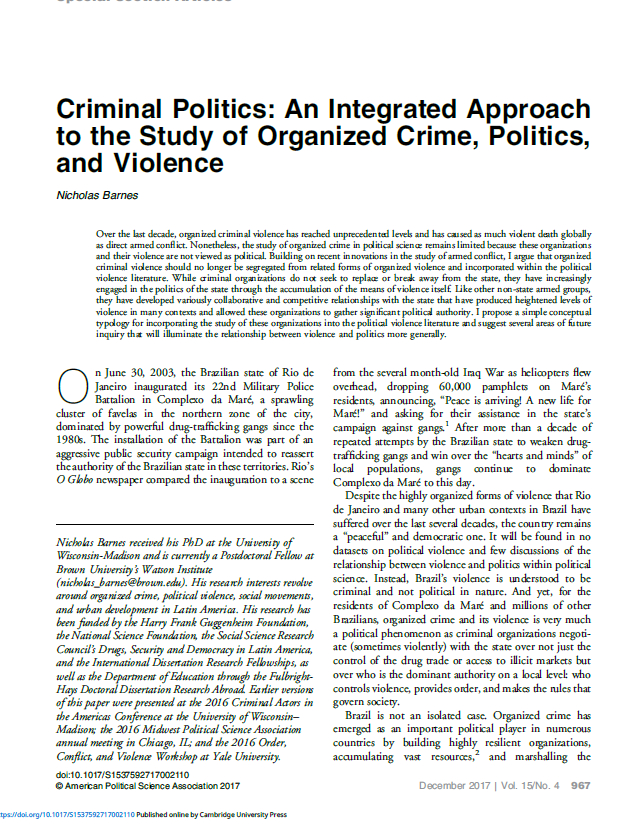
Criminal Politics: An Integrated Approach to the Study of Organized Crime, Politics, and Violence

By Nicholas Barnes

Over the last decade, organized criminal violence has reached unprecedented levels and has caused as much violent death globally as direct armed conflict. Nonetheless, the study of organized crime in political science remains limited because these organizations and their violence are not viewed as political. Building on recent innovations in the study of armed conflict, I argue that organized criminal violence should no longer be segregated from related forms of organized violence and incorporated within the political violence literature. While criminal organizations do not seek to replace or break away from the state, they have increasingly engaged in the politics of the state through the accumulation of the means of violence itself. Like other non-state armed groups, they have developed variously collaborative and competitive relationships with the state that have produced heightened levels of violence in many contexts and allowed these organizations to gather significant political authority. I propose a simple conceptual typology for incorporating the study of these organizations into the political violence literature and suggest several areas of future inquiry that will illuminate the relationship between violence and politics more generally.

Perspectives on Politics. 2017;15(4):967-987.

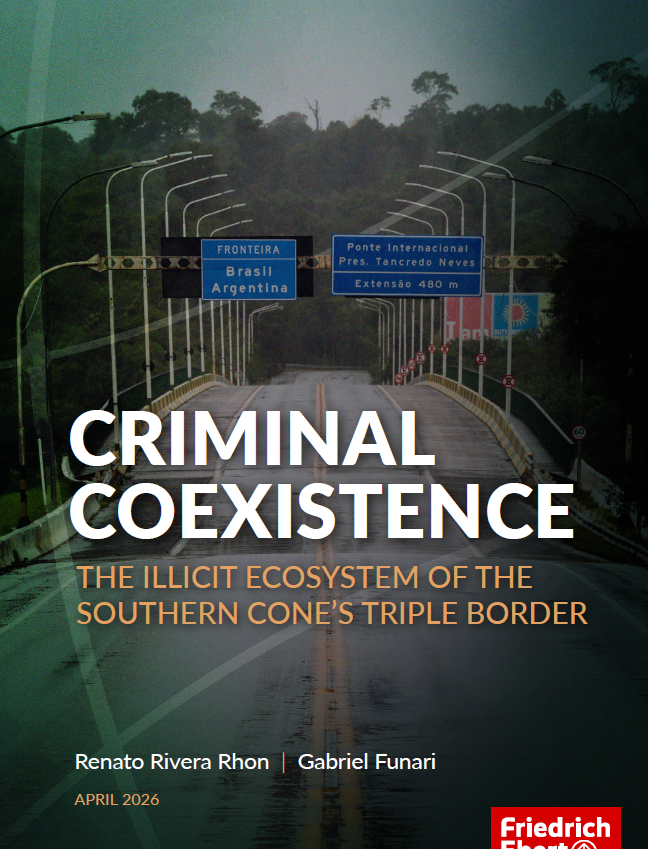
CRIMINAL COEXISTENCE.  THE ILLICIT ECOSYSTEM OF THE SOUTHERN CONE’S TRIPLE BORDER 

By Renato Rivera Rhon | Gabriel Funari

The Southern Cone tri-border area —comprising Ciudad del Este (Paraguay), Foz do Iguaçu (Brazil) and Puerto Iguazú (Argentina)— constitutes one of the most distinctive cross-border spaces in South America. Its particular geographical configuration combines densely populated urban areas with strategic riverine zones that facilitate intense cross-border circulation. More than 650,000 inhabitants coexist in an integrated social space marked by intense movement of people and one of the most heavily used commercial routes on the continent.

Within this environment of high mobility and commercial dynamism, smuggling has consolidated itself as the principal structuring axis of illicit economies. Since the creation of the free trade zone in Ciudad del Este in 1995, the region became a re-export centre for products destined mainly for the Brazilian market. Cigarettes, electronic products and alcoholic beverages enter Brazil as contraband, mobilized by local family clans and transnational illicit networks.

The report identifies a criminal ecosystem of coexistence characterized by interdependence, profitability and the historical continuity of illicit markets, sustained by commercial free movement, corruption and institutional fragility. Unlike other border areas in South America, the tri-border area presents high levels of criminal activity but low levels of violence, without armed disputes over territorial control or manifestations of criminal governance based on extortion or systematic coercion.

The report analyses the evolution of organized crime in the region, from the era of the “comboios” to the specialization of riverine routes and the “ant smuggling” model. It also examines the presence of the Primeiro Comando da Capital (PCC), which has consolidated control over clandestine ports in specific sectors of the Paraná River, without exercising generalized authority over the regional population.

Beyond smuggling, the report addresses cannabis trafficking produced in Paraguay, cocaine trafficking, arms trafficking and money laundering. Ciudad del Este emerges as a strategic financial node where commercial companies, real estate businesses, gambling houses and crypto-asset operations proliferate, facilitating the movement of illicit capital. The study also finds that the Argentinian side of the tri-border area has emerged as an increasingly prevalent smuggling hub over the past five years, generating new contraband routes and new security threats in the region.

The study is based on fieldwork and direct observation conducted in Ciudad del Este, Foz do Iguaçu and Puerto Iguazú, including interviews with members and former members of security forces, customs officials, judicial officials, academics and journalists specialized in the criminal dynamics of the tri-border area.

The Southern Cone tri-border area thus reveals a highly collaborative and adaptable criminal ecosystem, where smuggling functions as a base economy connecting flows, actors and routes used for drug trafficking, arms trafficking and other illegal goods. Its persistence is explained by its relatively non-violent character, informal regulation sustained by family clans and limited state capacities in the face of complex transnational dynamics.

Geneva: Global Initiative Against Transnational Organized Crime.. 2026. 31p.

Research review of the overarching guideline for sentencing offenders with mental disorders, developmental disorders, or neurological impairments

By 

The Sentencing Council (UK)

The Sentencing Council for England and Wales was established in April 2010 (under s118, of the Coroners and Justice Act 2009) in order to promote greater transparency and consistency in sentencing, while maintaining the independence of the judiciary. The Sentencing Council is an independent, non-departmental public body which is part of the Ministry of Justice’s (MoJ’s) family of arm’s-length bodies. The Sentencing Council has statutory duties to: • develop and issue sentencing guidelines and monitor their use • assess the effect of guidelines on sentencing practice • promote awareness among the public regarding the realities of sentencing, and publish information about sentencing practice in magistrates’ courts and the Crown Court The majority of sentencing guidelines issued by the Sentencing Council are ‘offence specific’, providing a step-by-step framework for sentencing a particular offence or group of offences. This begins with an initial assessment of seriousness where the sentencer will arrive at a sentence starting point outlined within the relevant guideline. The guideline then outlines possible aggravating and mitigating factors in relation to the offence or offender that a sentencer should consider, consideration of which may move the sentence starting point up or down. The guideline then provides guidance on a reduction for a guilty plea. The guideline may then include any other considerations that should be taken into account and finally the final sentence outcome. An example of an offence specific guideline can be seen for arson. Where there is no relevant offence specific guideline, the general guideline: overarching principles provides a sentencer with step-by-step guidance. The Sentencing Council also produces ‘overarching’ guidelines, which address specific issues that may arise across many different offences. These overarching guidelines do not typically follow the same format as offence guidelines. They instead contain guidance that can be applied across a range of offences and are expected to be used in conjunction withany relevant offence specific guidelines. The overarching guideline for sentencing offenders with mental disorder, developmental disorder, or neurological impairments, hereafter referred to as ‘the guideline’, was issued by the Sentencing Council in 2020 and is an example of an overarching guideline. It applies to all offenders aged 18 and over sentenced by courts in England and Wales. In accordance with the Sentencing Council’s statutory duties to assess the effect of guidelines on sentencing practice, the Sentencing Council has conducted a research review of this guideline. This explores sentencers’ understanding and application of the guideline. The following section outlines the details of the guideline. 

The Sentencing Council for England and Wales, 2026. 63p

Wrongful convictions in Spain: Systematic analysis of judgments from 1996 to 2022

By Nuria Sánchez , Guadalupe Blanco-Velasco , Linda M. Geven , Jaume Masip , Antonio L. Manzanero 

A comprehensive analysis of wrongful convictions in Spain was conducted. Out of 447 Supreme Court judgments made between 1996 and 2022, 243 cases involving a successful appeal made by a person claiming their innocence were examined in terms of the characteristics of wrongfully convicted individuals, the crime types, and the factors contributing to these judicial errors. An average rate of nine wrongful convictions per year was found, mostly for crimes against public safety and property, with a significant overrepresentation of foreign citizens. Legal professionals’ misconduct was identified as the main factor contributing to these wrongful convictions. The mean time between the judgment and the conviction being overturned was around 4.5 years. More than half of the cases were reopened due to evidence indicating that the alleged crime never occurred. While new evidence was the primary reason for reopening cases, only 3 % were reopened based on DNA evidence. The systematic methodology used in this research may serve as a model for future studies on wrongful convictions in other countries. To reduce wrongful convictions in Spain, several key measures must be implemented. Legal representation should be mandatory for all individuals accused of crimes, without exception. Legal professionals must receive enhanced training to minimize judicial errors. Furthermore, stricter forensic protocols should be established, and forensic experts must be properly accredited to prevent the misapplication of scientific evidence in legal proceedings. Additionally, reforms are needed to ensure that plea bargains are subject to more rigorous scrutiny, and that minor crimes are properly investigated.

Journal of Criminal Justice

Volume 103, March–April 2026,

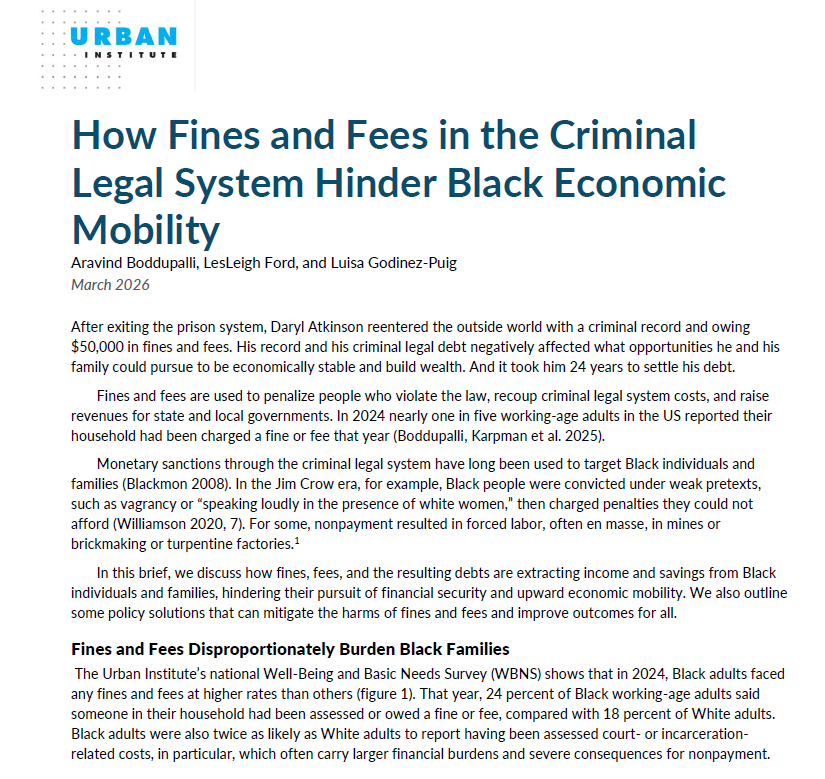
How Fines and Fees in the Criminal Legal System Hinder Black Economic Mobility

By Aravind Boddupalli, LesLeigh D. Ford, Luisa Godinez-Puig

Criminal legal system fines and fees disproportionately impact Black households, entrenching poverty and creating significant barriers to economic mobility and wealth-building. These financial burdens, often imposed without regard to ability to pay, frequently lead to driver's license suspensions, increased debt, and incarceration, disrupting employment and housing stability. 

Urban Institute +3

Key Impacts on Black Communities:

  • Disproportionate Burden: Black households face criminal legal fines and fees at the highest rates compared to other racial groups.

  • Economic Mobility Barriers: These costs, often totaling hundreds or thousands of dollars, hinder the ability of Black families to build assets and improve their financial well-being.

  • Cycle of Debt and Punishment: Inability to pay can lead to driver's license suspensions, preventing individuals from traveling to work, as well as additional fines, interest, and jail time.

  • Family Well-being: As highlighted in this analysis by the Fines and Fees Justice Center, 57 percent of people with court debt reported food insecurity, while nearly 20 percent of those surveyed reported that they or a household member served time in jail due to an inability to pay.

  • Housing and Employment: Debt-related penalties, such as suspended licenses or a criminal record for nonpayment, make securing stable housing and employment more difficult. 

    Urban Institute +4

Washington, DC:  Urban Institute, 2026. 7p.

Staying Too Long: Michigan’s Stalled Sentencing Reform

By Kate Bryan, Rachel Schmidt, and Ashley Neufeld, with support from Nikki Miguel and Maura McNamara.

Michigan’s sentencing structure remains among the most restrictive in the nation. While many states have adopted policies that allow earned-time credits and provide opportunities for early release or resentencing, Michigan requires individuals to serve 100 percent of their minimum sentence before parole eligibility. While recent reforms, such as record clearing, medical parole, and limits to pretrial detention, have advanced progress to the state’s system, they do not target the key challenge of long lengths of stay. Today, more than 65 percent of the state’s prison population is serving a sentence of ten years or more, with limited opportunity for review or reduction. As the prison population rises for the first time in a decade, coupled with the state’s mounting budget pressures, a comprehensive examination of the state’s length of stay challenges is necessary. The goal of this brief is to serve as a baseline to begin that deeper examination. The Crime and Justice Institute, supported by Arnold Ventures, analyzed Michigan’s publicly available prison population data to understand the key trends regarding length of stay. Key findings include: Population growth: The prison population is growing after decades of decline, up 3% since 2021, with more individuals receiving additional sentences while already incarcerated. Sentences are getting longer: Average minimum terms rose 30% in the past decade, from 9.3 years (2014) to 12 years (2023). Drug offenses saw sharpest increases: Average minimum terms for drug offenses grew 33% over  the past decade. Sentencing practices exceeding statutory maximums: Data show minimum terms beyond statutory maximums for top offenses indicating the impacts of habitual offender enhancements, consecutive sentences, and additional sentencing stacking. With the urgency of a now rising population, the reinstated Sentencing Commission provides a renewed opportunity for the state to review sentencing practices. As Michigan prepares for leadership changes in 2026, the state has an opportunity to tackle its most pressing criminal justice challenge. To advance reform, Michigan must: Leverage the Sentencing Commission to produce data-driven recommendations and introduce corresponding legislation. Use corrections data to identify policies contributing to long stays, especially those related to enhancements, habitual offenders, and additional sentences imposed on already incarcerated individuals. Analyze the fiscal impact of long sentences considering recent budget volatility and an aging prison population. Reintroduce policies to reduce length of stay early in the 2026 session, backed by fiscal and public safety data.

Boston: Crime and Justice Institute, 2026. 17p.

Court Trends in Washington over the Past Two Decades

By Vasiliki Georgoulas-Sherry & Hanna Hernandez

Collecting and analyzing data is essential for understanding and evaluating the court trends in Washington in past decades — as well as, at times, demographic differences such as disparities and disproportionalities — within the criminal justice system. Gaining insight into these trends and disparities is crucial for identifying and addressing criminal trends and systemic inequities. This issue continues to draw significant attention from a wide range of sources, including local, state, and federal agencies; advocacy organizations; policymakers; researchers; scholars; and community members. Ongoing evaluation of these trends and disparities is vital for promoting fairness, ensuring accountability, and advancing equity within the justice system. To respond to these impacts, the Criminal Justice Research & Statistics Center - the Washington Statistical Analysis Center (SAC) applied for and received the 2023 State Justice Statistics (SJS) grant from the Bureau of Justice Statistics (BJS) to assess this work. Through data from the Washington State Patrol (WSP) maintains the Computerized Criminal History (CCH), this report evaluates the court trends in the U.S. over the past 25 years, and the underlying court trends and demographic differences that impact the criminal justice system.

Olympia: Washington State Statistical Analysis Center, 2025. 46p.

Racial and Ethnic Disparities in Felony Case Processing in New York State

By New York State Division of Criminal Justice Services Justice Lab

This report describes an analysis of racial and ethnic disparities in felony case processing in New York State at three processing points: arrests made in 2019, disposition of those arrests, and prison sentences imposed after convictions resulting from those arrests. 2019 was chosen as the benchmark because arrests made that year occurred prior to the implementation of landmark changes to the state’s bail, and evidence and information disclosure (discovery) laws. As a result, this analysis provides an overview of how the system functioned prior to those reforms and before the full impact of the COVID-19 pandemic, which disrupted all facets of the state’s criminal justice system.


Albany: New York State, Division of Criminal Justice Services Justice Lab.. 2025. 22p.

‘Everything is after sentencing’: The experiences of remand prisoners

By The HM Chief Inspector of Prisons (UK)

Court delays mean that prisoners are waiting an unacceptably long time for their trials. This has led to a dramatic increase in the number of prisoners stuck on remand or waiting to be sentenced, and has contributed to the ongoing capacity crisis in prisons. Many remand prisoners are held in crumbling, inner-city Victorian jails where conditions are some of the poorest in the estate. Suicide is more common among this group and in our surveys 67% say they have mental health difficulties. In many of the prisons named in this report, remand prisoners comprised a large proportion of their population, yet we found too little being done to help this particularly vulnerable group. Men and women described a lack of support in contacting family members when they first came into prison, and not enough was done for those being released from court. This report highlights some areas where prisons have begun to address the difficulties faced by these prisoners, but with the growth in this population now endemic, the prison service and individual jails must think more strategically about how they support men and women held on remand. 

London: HM Chief Inspector of Prisons, March 2026, 18p.

Due dignity: how are defendants treated in London magistrates’ courts?

By Fionnuala Ratcliffe and Penelope Gibbs

If they are to receive justice, defendants must be able to participate effectively in court proceedings. The principle of effective participation is at the heart of the right to a fair trial, guaranteed by Article 6 of the European Convention on Human Rights. Under Article 6, defendants’ minimum rights include the right to be informed about the nature and cause of the accusation against them; to have time and facilities to prepare their defence; to defend themselves in person or through legal assistance; to examine witnesses; and to receive free assistance from an interpreter where needed. Despite the central importance of effective participation, there are multiple aspects of everyday court practice that make it a struggle for defendants to participate actively in their case. This fifth report of the Transform Justice CourtWatch London project vividly conveys the extent and nature of these barriers to participation in London magistrates’ courts. At the most basic level, defendants often find it difficult to hear, let alone understand, what is going on at court – whether they are appearing via a shaky video link, or are physically present in the court but (as is most common) seated in the secure dock at the back of the room, behind a perspex screen. Courtroom language tends to be complex, convoluted and full of jargon: not easy for any lay person to understand, and more so for people who are anxious, tired, mentally unwell or otherwise vulnerable. For those whose first language is not English, obstacles to understanding are higher still, compounded by inadequate interpreting provision. And the large minority of defendants who are unrepresented face additional challenges as they seek to navigate the court process. Participation implies not only understanding the process, but also making oneself heard. Yet defendants’ voices are frequently silenced. Opportunities to speak during proceedings are limited, and again are impeded by the practical barriers imposed by the secure dock or remote attendance. There is an essential paradox that while criminal proceedings, at their core, are about the defendant – about what they have or have not done, and what is the appropriate penalty if they did commit the alleged offence – they are often pushed to the margins of the courtroom, more an absence than a presence.Closely linked to the theme of participation is the quality of treatment defendants receive at court. Most court professionals are conscientious and respectful. The courtwatchers observed judges, magistrates, lawyers and court staff who took time to explain proceedings; responded calmly and with compassion to displays of distress, confusion and anger; and offered extensive support to unrepresented defendants. Yet good treatment of defendants is by no means universal. Court professionals are working within an overloaded, creaking and under-resourced system. They are under pressure to complete cases quickly, in order to reduce the delays that permeate all stages of the criminal justice process. Consequences include an over-emphasis on speedy ‘processing’ of many cases and inadequate consideration of individuals’ specific circumstances and needs. And while the humanity of many court professionals shines through courtwatcher accounts, it is evident also that there are judges, magistrates, lawyers and court staff who are rude, dismissive and careless in their interactions with defendants. The treatment received by people in contact with the criminal justice system has significant repercussions. We know from existing research on procedural justice that people involved in legal processes are more likely to regard those processes – and indeed the wider justice system – as trustworthy and legitimate if they feel they have been treated with dignity and respect. Also essential to perceptions of good treatment is the experience of having a ‘voice’: that is, being acknowledged as an individual and being heard by those making the decisions. In other words, quality of treatment is integral to participation, and vice versa. The findings of the CourtWatch London project resonate with research that my colleagues and I have carried out over many years at Birkbeck’s Institute for Crime & Justice Policy Research. In our own work spanning the criminal (magistrates’, youth and Crown), family and coroners’ courts, we have repeatedly identified barriers to court users’ understanding of and engagement with legal processes. We have also seen how respectful, humane treatment can make a profound difference to people’s experience of justice. We have noted that seemingly small acts of kindness and attention can significantly enhance the sense of being supported and included; and, conversely, that professionals’ dismissive or thoughtless behaviour can be deeply damaging. What the courtwatchers have observed in magistrates’ courts across London should therefore be understood as one part of a much greater picture of how justice is delivered and experienced. There is much that can be done to strengthen participation, good treatment and fairness in court practice, and the recommendations in this report set out important steps for achieving this. 

London: Transform Justice, 2026. 41p.

The Scam Economy: The True Cost of Online Scams and Crimes in America

By  Consumer Federation of America

Federal agencies, third parties, and other groups report on scam losses each year, but these numbers are only the tip of the iceberg in measuring the size and devastation experienced by those who are targeted. Behind these reports and big spreadsheets describing reported losses are shattered families, rent money lost, and grandmothers exploited. Newer technology is leading to a rise in these scams – in both severity and number: AI is supercharging these scams, social media platforms are enabling the spread, and data brokers facilitate targeting of victims, allowing criminals to reach consumers at massive scales while exploiting highly precise profiling to victimize vulnerable people. One of the biggest problems in fully understanding the scope of these scams is underreporting. Due to reporting fragmentation and communication, as well as the understandable devastation, embarrassment, and confusion that victims often feel, estimates on how many people report their losses to scams put it extremely low – often in the single digit percent of the actual number, according to conservative key government estimations. CFA is proud to publish this report that takes the most conservative estimate of underreporting and uses it to estimate The True Cost of Scams. While this issue is complicated to solve completely, there are significant unrealized opportunities for legislators, enforcement agencies, and industry to step up to address it.

Washington, DC: Consumer Federation of America, 2026, 31p.

A WORLD OF DECEIT MAPPING:  THE LANDSCAPE OF THE GLOBAL SCAM CENTRE PHENOMENON

By Kristina Amerhauser | Alex Goodwin

Scams and fraud have undergone a profound evolution in recent decades, becoming one of the most sophisticated, pervasive and lucrative forms of organized crime globally. According to the Global Anti-Scam Alliance, 57% of adults worldwide reported experiencing a scam in the previous 12 months. Estimates suggest that more than US$1 trillion was generated from scams and fraud in 2024 alone


Rather than focusing on individual scam typologies – such as romance, investment or impersonation scams – this report examines the scam centre as a distinct organizational unit, mapping the various forms they take, the different economic models they use, and the broader ecosystem that allows them to operate and expand. 

Around the world, these hubs of scams appear in different shapes and sizes. Some are located in apartments, hotels or villas, which offer discretion and the ability to relocate quickly – and sometimes in-built security. Many rent office space, sometimes with legal call centres as neighbours, providing camouflage for criminal activities. At the largest scale, cyber scam compounds in South East Asia host extensive workforces and structured operations with management, financial services and technical infrastructure. In some contexts, they also operate from prisons or pre-trial detention centres, where a captive workforce and collusion with officials can facilitate criminal activity. 

This new research report finds that whatever form they take, size does not always correlate to impact. Small operations can also be highly effective, and may sometimes be linked to an overarching scam network, essentially making them nodes in a dispersed scam centre. 

Despite their varied physical footprints, scam centres are enabled by six common ‘glocal’ force multipliers that allow them to operate, scale and target victims worldwide: networked groups; technology and crime-as-a-service; money; political protection; people; and geopolitics. 

Technology is a critical driver of the scam economy. It enables scammers to reach victims around the world at minimal cost and provides tools to circumvent cyber defences. Some of the tools used include deepfakes, cloned applications, fake investment platforms and instant translation, as well as the use of data that enables precise social targeting of victims. 

Illicit financial flows generated through scams are handled through a combination of money mules, cryptocurrencies, fintech tools and physical assets. These mechanisms often operate simultaneously, making it difficult and time-sensitive for law enforcement to trace illicit proceeds. 

The report also highlights the central role of people in scam centre operations. Workers may be recruited locally with promises of lucrative salaries or trafficked from abroad and forced to work in exploitative conditions. In South East Asia alone, an estimated 300 000 people have been trafficked into scam compounds. 

Looking ahead, the research identifies three major risks: displacement, diffusion and de-globalization. These dynamics may lead scam centres to become more embedded in more places, especially in areas where governance is weak. Some countries may also become linked to the scam economy not by hosting scam centres themselves but by facilitating money laundering or enabling services. 

The report concludes that tackling scam centres requires addressing the interconnected nature of their operations. Single-strand approaches may disrupt individual operations, but they will not meaningfully affect the broader environment in which scam centres thrive. 

Geneva: Global Initiative Against Transnational Organized Crime., 

, 2026. 52p.

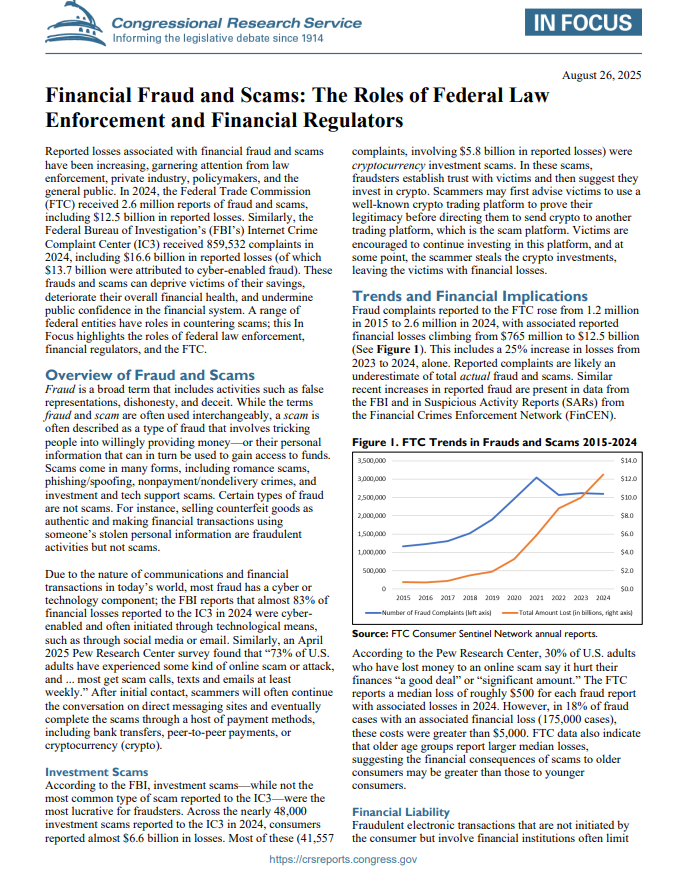
Financial Fraud and Scams: The Roles of Federal Law Enforcement and Financial Regulators

By the Federal Trade Commission

Reported losses associated with financial fraud and scams have been increasing, garnering attention from law enforcement, private industry, policymakers, and the general public. In 2024, the Federal Trade Commission (FTC) received 2.6 million reports of fraud and scams, including $12.5 billion in reported losses. Similarly, the Federal Bureau of Investigation’s (FBI’s) Internet Crime Complaint Center (IC3) received 859,532 complaints in 2024, including $16.6 billion in reported losses (of which $13.7 billion were attributed to cyber-enabled fraud). These frauds and scams can deprive victims of their savings, deteriorate their overall financial health, and undermine public confidence in the financial system. A range of federal entities have roles in countering scams; this In Focus highlights the roles of federal law enforcement, financial regulators, and the FTC.

Washington, DC: Federal Trade Commission, 2026. 3p.

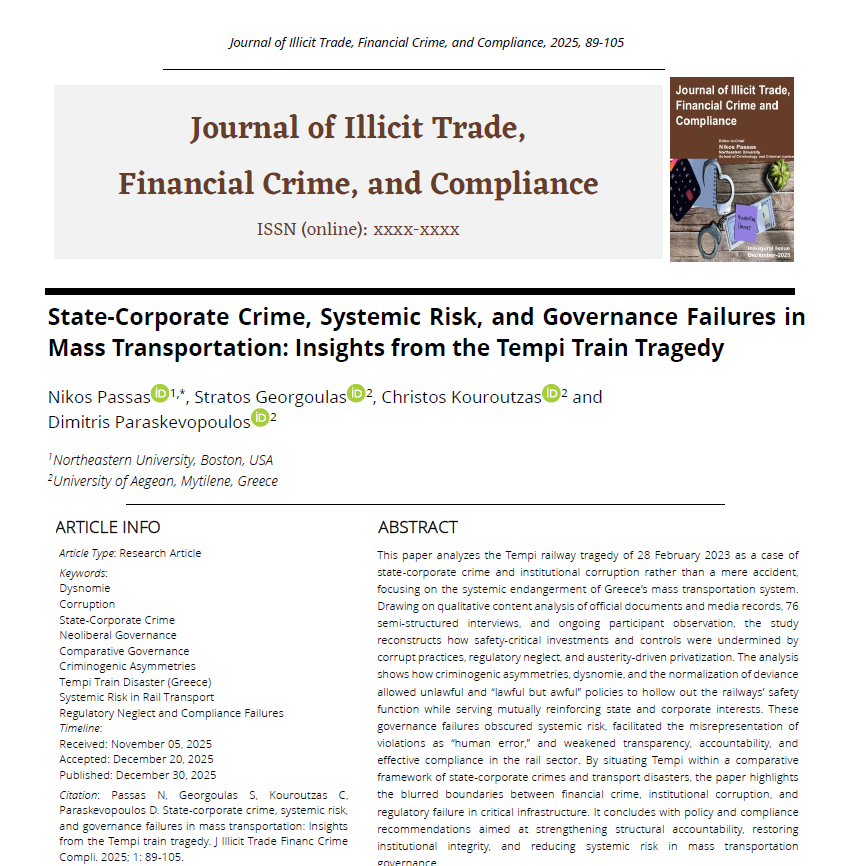
State-Corporate Crime, Systemic Risk, and Governance Failures in Mass Transportation: Insights from the Tempi Train Tragedy

By Nikos Passas, Stratos Georgoulas, Christos Kouroutzas, Dimitris Paraskevopoulos 

This paper analyzes the Tempi railway tragedy of 28 February 2023 as a case of state-corporate crime and institutional corruption rather than a mere accident, focusing on the systemic endangerment of Greece’s mass transportation system. Drawing on qualitative content analysis of official documents and media records, 76 semi-structured interviews, and ongoing participant observation, the study reconstructs how safety-critical investments and controls were undermined by corrupt practices, regulatory neglect, and austerity-driven privatization. The analysis shows how criminogenic asymmetries, dysnomie, and the normalization of deviance allowed unlawful and “lawful but awful” policies to hollow out the railways’ safety function while serving mutually reinforcing state and corporate interests. These governance failures obscured systemic risk, facilitated the misrepresentation of violations as “human error,” and weakened transparency, accountability, and effective compliance in the rail sector. By situating Tempi within a comparative framework of state-corporate crimes and transport disasters, the paper highlights the blurred boundaries between financial crime, institutional corruption, and regulatory failure in critical infrastructure. It concludes with policy and compliance recommendations aimed at strengthening structural accountability, restoring institutional integrity, and reducing systemic risk in mass transportation governance.

Journal of Illicit Trade, Financial Crime, and Compliance, vol. 1, 205.

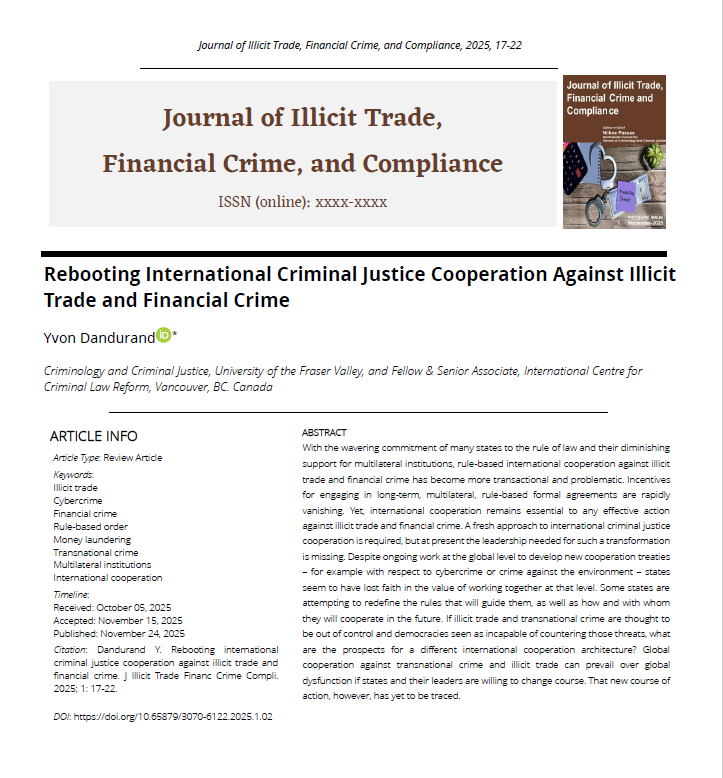
Rebooting International Criminal Justice Cooperation Against Illicit Trade and Financial Crime

By Yvon Dandurand and Megan Capp


This article examines the erosion of rule-based, multilateral international cooperation against illicit trade and financial crime amid declining state commitment to the rule of law. It argues that while global cooperation remains essential, a new framework and leadership are needed to respond effectively to transnational crime in an increasingly fragmented international order.


Journal of Illicit Trade, Financial Crime, and Compliance. 2026.  (653a23)


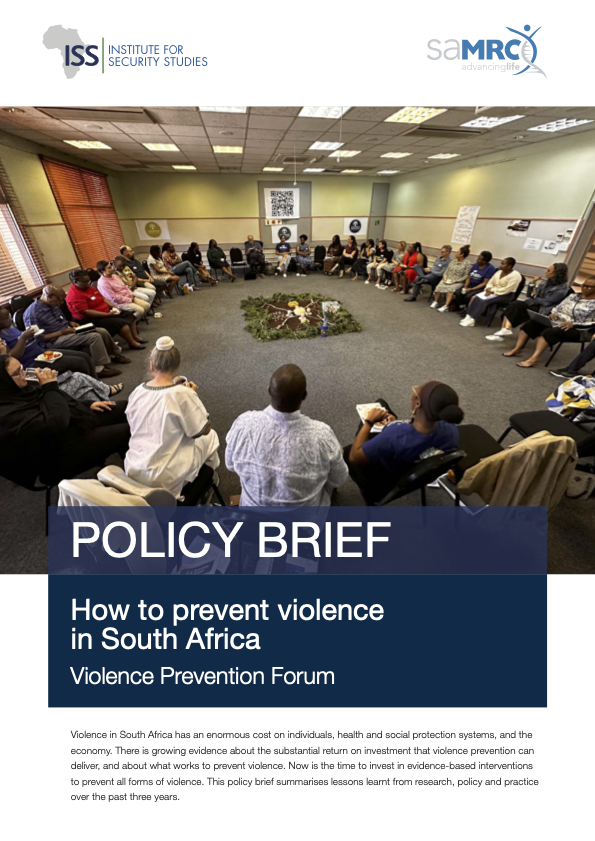
How to prevent violence in South Africa Violence Prevention Forum 

By Senzikile Bengu, Harsha Dayal, Gwen Dereymaeker, et al.

Violence in South Africa has an enormous cost on individuals, health and social protection systems, and the economy. There is growing evidence about the substantial return on investment that violence prevention can deliver, and about what works to prevent violence. Now is the time to invest in evidence-based interventions to prevent all forms of violence. This policy brief summarises lessons learnt from research, policy and practice over the past three years. Key findings Violence costs the economy, companies, and health and social systems. There is evidence for a positive return on investments when violence is prevented. This means it is cheaper to fund effective violence prevention than a criminal justice system, which reacts to violent crime. There is a growing body of research and practicebased knowledge of what works to prevent violence in South Africa. There is a strong association between violence and inequality, unemployment, food insecurity and poverty. Parenting and community-based interventions show significant effects on preventing or reducing intimate partner violence and violence against children. With regard to violence against women: The chances of getting justice for a murdered woman are low and decreasing. Police fail to make arrests despite an intimate partner or family member being involved in more than 70% of cases. Experience of trauma and poor mental health increase the chances of women students in higher education institutions being targeted for sexual violence. Circumstances that lead male students to perpetrate violence include abuse during childhood, and cultural norms equating masculinity with dominance over women. Burnout and exhaustion in frontline workers significantly hamper violence prevention efforts 

The Ambitions of History and Tradition in and Beyond the Second Amendment

By Joseph Blocher and Reva Siegel

This Article examines the ambitions of history-and-tradition review in and beyond the Second Amendment. In Bruen and Rahimi the Roberts Court rejected means-end review in favor of a historical-analogical approach, claiming to constrain the exercise of judicial discretion, and thus to promote the democratic decisions of the founders. But our examination of these cases shows that the Court has created new opportunities for judges to advance their values in considerably less transparent ways. We identify contexts in which Second Amendment doctrine enables judicial discretion, key among them that it allows judges to reason about gun rights and regulation at disparate levels of generality, extending rights protection to modern guns while requiring gun laws to resemble ancient analogues. When applied in this asymmetric fashion, the historical approach deregulates in ways that are neither acknowledged nor justified. An eight-member majority objected to this strategy in Rahimi and voted to uphold a federal gun law. Yet numerous Justices wrote separately to limit Rahimi’s reach—and, a year later, to suggest that the Court should take a case involving an assault-weapons ban to clarify the method set forth in its earlier cases.

Our close reading of the history-and-tradition (HAT) cases shows that there is a persistent gap between what the Court says and does—between the judicial constraint the Roberts Court promises and the actual decisions it delivers. Understanding this dynamic in the Second Amendment cases helps us recognize it in the First Amendment and Substantive Due Process cases as well.

We can better appreciate the Court’s reasoning in extending HAT review if we excavate the arguments advanced in the decade between Heller and Bruen for substituting the HAT approach for means-ends review. This retrospective shows us that HAT approaches exhibit the very problems imputed to means-ends review: HAT review is not grounded in original understanding and employs shifts in generality to provide judges discretion to enforce value-based understandings. We can see this dynamic unfolding inside and outside the Second Amendment context.

HAT decisions pose distinctive threats to democracy. First, Bruen has implemented HAT through judicial review with a strong presumption of unconstitutionality, a counter-majoritarian practice lacking precedent at the founding. Second, HAT review is not transparent, obscuring reasons for judicial decisions from the people and thus obstructing democratic dialogue. Third, the HAT framework encourages judges to decide the constitutionality of public safety laws on grounds that ignore the public’s most urgent reasons for enacting the laws.

This reading of the Court’s Second Amendment cases indicates that the push to adopt HAT approaches in First Amendment, Due Process, and other areas of constitutional law is likely to compound the problems it is supposed to solve, while insulating the Court’s control of the Constitution from the public governed by it.

Gun Violence in the United States 2023: Examining the Gun Suicide Epidemic

By Rose Kim,  Elizabeth Wagner,  Paul Nestadt,  Nandita Somayaji,  Josh Horwitz,  Cassandra Crifasi,

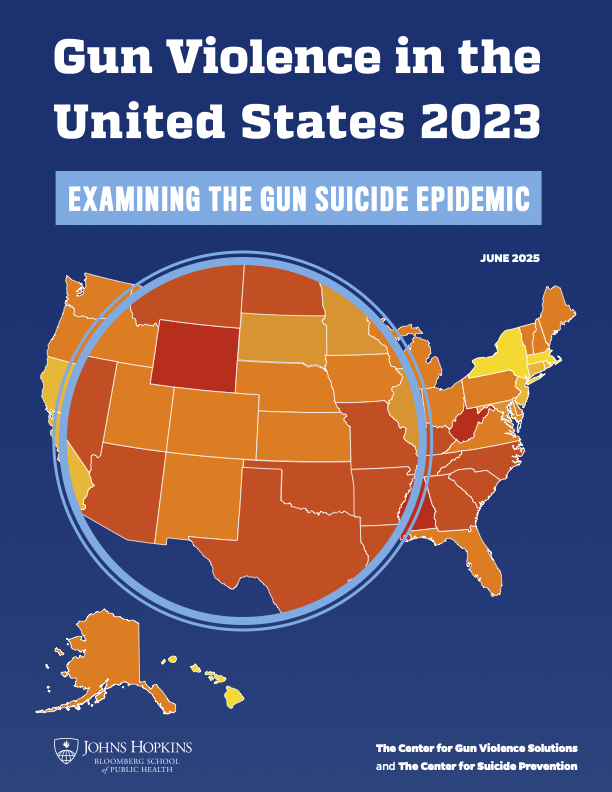
  46,728 people died from gun violence in the U.S. in 2023. Each day, an average of 128 people died from gun violence—one death every 11 minutes. Disturbingly, gun suicides reached an all-time high in both the total number of deaths and the overallrate. Overall, firearms remained the leading cause of deathfor young people 1 to 17 for the past four years, accounting for more deaths thancar crashes, overdoses, or cancers. In 2023, there were 2,566 gun deaths among young people including 118 from ages 1–4, 116 from ages 5–9, 530 from ages 10–14, and 1,802 from ages 15–17. While firearms are the leading cause of death overall for young people ages 1 to 17, they are among the leading causes, but not always the top cause, for some individual youth age groups. Gun suicides have accounted for the majority of all gun deaths each year since 1995. Gun suicides have increased in the last three years, while gun homicides have declined. In this year’s report, we examined the rise of gun suicides, their disproportionate impact on vulnerable populations, and policy recommendations to address the gun suicide epidemic. For more information on public health interventions, please see the companion piece to this report, From Crisis to Action: Public Health Recommendations for Firearm Suicide Prevention. While the burden of gun violence in the U.S. remains high, there are evidence-based, equitable solutions to save lives. These solutions are supported by most people, including gun owners.1 Despite this broad support, many policymakers have been unwilling to heed the evidence and enact policies that will save lives. Each year, it is our missionto provide policymakers and the public accurate and up-to-date data on gun fatalities and illustrate the enormous toll gun violence has on our country.This report is an update to GunViolence in the United States 2022: Examining the Burden Among Children and Teens. It uses firearm mortality data listed on death certificates that are provided to the Centers for Disease Control and Prevention (CDC) and made available through the CDC WONDER Underlying Cause of Death database.The finalized data for 2023 was made available in January 2025.2 The lag in data availability makes it challenging to understand the burden of gun violence in real time; however, understanding the magnitude of this issue, even with the time lag, is essential to inform public health interventions to reduce violence. We recognize  

Printing Violence: Urgent Policy Actions Are Needed to Combat 3D-Printed Guns

By Everytown for Gun Safety, Everytown Research and Policy

  The shooting of UnitedHealthcare CEO Brian Thompson using a homemade firearm with a 3D-printed frame and silencer marked the first time many in the general public heard about 3D-printed guns. But this was not the first instance of criminal violence with this type of firearm, and as 3D-printing technology becomes more aordable, accessible, and advanced, it will not be the last. The proliferation of 3D-printed firearms (3DPFs) has emerged as a serious and accelerating public safety challenge. The current state of 3D-printing technology allows an individual to print all or key parts of a firearm at home. Like other kinds of ghost guns, 3DPFs lack serial numbers, so law enforcement is unable to trace them back to their owner when they are recovered in a crime. Because 3DPFs are untraceable and require no background check, they are particularly attractive to gun trackers who can print dozens of firearms and avoid raising alarms. 3DPFs have been linked to violent crimes, including everything from extremist plots to shootings involving teens. And the online community that produces and beta tests these designs includes alarming extremist elements, with many designers viewing 3D printing as a means to bypass or dismantle gun laws altogether. In the United States, as regulatory pressure in recent years has significantly reduced the availability of ghost gun “kits”—a way that online retailers routinely sold easily modified building blocks of firearms—the 3D printing of frames and accessories has accelerated among those looking to manufacture their own guns. Meanwhile, in Europe, new 3DPF designs allowing people to print functioning firearms threaten to undermine the gun safety laws that have long protected the continent from the degree of gun violence in the US. Policymakers, technology firms, and civil society must act urgently to address the dangers of 3DPFs. A multipronged strategy is essential. This includes 3D-printer manufacturers and software companies developing and implementing algorithms that detect and block the printing of firearms and accessories. In concert with the 3D-printing industry, lawmakers should take steps to regulate 3D-printing technology in a manner that makes it impossible to use a 3D printer to print a gun. Public institutions like schools, libraries, and community tech labs should implement clear policies and software restrictions to block the printing of firearm components on 3D printers. Further, social media and other online platforms should significantly improve their moderation of content that promotes or distributes 3Dprinted gun blueprints or features instructions and advice for building 3DPFs.

The Dangers of Shooting First: “Stand Your Ground” Laws Are a License to Kill

By Everytown for Gun Safety, Everytown Research & Policy

For centuries, self-defense laws have given people the right to protect themselves. Shoot First laws, also known as Stand Your Ground laws, go beyond these long-standing principles, aggressively altering criminal law to shield a person who claims self-defense from being arrested, prosecuted, or convicted for using deadly force. In 2005, Florida enacted the first modern Shoot First law, an effort backed by the National Rifle Association (NRA), during a time when they were making concerted efforts to reverse declining gun sales.2 Working with the gun lobby, the American Legislative Exchange Council pushed to turn Florida’s law into a template for a national campaign.3 Now in 29 states,4 these laws change the nature of self-defense, turning everyday disputes into deadly confrontations. Far from empowering victims, Shoot First laws lower the threshold for justifiable homicide, encouraging the escalation of petty arguments and armed vigilantism. 

Although the gun lobby created these laws under the pretense of empowering and protecting victims of crime, the data overwhelmingly shows that the statutes have failed at this. Research on Shoot First laws indicates that they increase gun deaths, leading to hundreds of deaths every year that would not have occurred otherwise. These laws also consistently fail to protect vulnerable communities; in addition to increased risk of victimization in Shoot First states, convictions are unfairly skewed against people of color and women. 

In the decades since the first Shoot First law was enacted, no research shows that these laws lead to better outcomes for anyone. Shoot First was created to solve a problem that does not exist—and Americans are paying the price.