Open Access Free Library
CRIME+CRIMINOLOGY.jpeg

CRIME

Violent-Non-Violent-Cyber-Global-Organized-Environmental-Policing-Crime Prevention-Victimization

Voluntariness Women on the victim-offender spectrum in organised crime

By: Nasreen Solomons and Harsha Gihwala

Summary - The victim–offender spectrum of human trafficking is characterised by blurred lines and complex circumstances. Recognising varying degrees of voluntariness in individual cases of women along this spectrum would allow legislators and the justice system to understand the complicated contexts in which women intersect with trafficking, where culpability is not always clear-cut. States have a responsibility to develop legislation, policy and strategies that reflect this nuance and enable more effective interventions for those who fall anywhere on this spectrum.

Implementation of a Statewide Fentanyl Possession Law and Opioid-Related Overdose Deaths 

By Cole Jurecka; Joella Adams; Pranav Padmanabhan; Jason Glanz; Paul Christine; Xiaoyu Guan; Danielle Kline; Ingrid Binswanger; Joshua Barocas

In 2022, Colorado passed legislation making possession of small amounts of fentanyl, a high-potency synthetic opioid, a felony. Whether the Colorado law affected opioid overdose fatalities and whether those effects differed by racial and ethnic subgroups is unknown. OBJECTIVE To estimate the association between the change in criminal penalties for fentanyl possession with opioid-related overdose deaths (OODs) in Colorado. DESIGN, SETTING, AND POPULATION Serial cross-sectional study comparing OODs among adults (18 years) who died of an overdose and population estimates before and after Colorado House Bill (HB) 22-1326 was enacted in July 2022 (January 2018-November 2023) using autoregressive integrated moving averages (ARIMA) model time series forecasting. Monthly OOD rates per 100 000 residents were calculated using state population estimates from the American Community Survey 5-Year Data and the Colorado Department of Local Affairs State Demography Office. Overdose death rates were calculated separately by racial and ethnic group (Hispanic, non-Hispanic Black, and non-Hispanic White). Data were analyzed from January 2018 to 2023. EXPOSURE Enactment of HB 22-1326 changed the legal penalty for possession of any drug weighing 1 g to 4 g that contained any amount of fentanyl from a misdemeanor to a level-4 drug felony punishable by up to 180 days in jail and up to 2 years of probation. MAIN OUTCOME The difference between expected and observed OOD rates following the enactment of increased criminal penalties. RESULTS A total of 7099 OODs were analyzed (1798 Hispanic [25.3%], 451 Non-Hispanic Black [6.4%], and 4170 Non-Hispanic White [58.7%], 680 other [9.5%] and not included in the race and ethnicity categories). OODs increased across the study period in Colorado from 20.46 per 100 000 adults in January 2018 to 37.78 per 100 000 adults in November 2023. Among different racial and ethnic groups, the non-Hispanic Black population had the highest increase in OODs (9.3 per 100 000 in 2018 to 56.9 per 100 000 in 2023) followed by the Hispanic population. There was no difference between the observed and expect overdose deaths for the overall population following the enactment of HB 22-1326. However, there were significant increases in 4 of 13 months after policy implementation among the non-Hispanic Black population CONCLUSIONS AND RELEVANCE The results of this serial cross-sectional study suggest that increased criminal penalties for fentanyl possession did not change preexisting trends of OODs in Colorado and may have been associated with an increase in opioid overdoses in the Black population.

Preventive and Administrative Measures Against High-Risk Criminal Networks. An Оverview of Policies and Gaps at the European, National, and Local Scale.

By : Lienke Hutten, Lars Merkus, Joeri Vig

To effectively counter organised crime and high-risk criminal networks, criminal law alone often
falls short. Across the European Union, the administrative approach is increasingly recognised as
a crucial strategy to disrupt the infiltration of criminal networks in the legal economy. This study
maps both the legislative framework and practical initiatives that support the administrative approach
on organised crime drawing on contributions from six member states: Sweden, Belgium,
the Netherlands, Spain, Bulgaria, and Italy. This study maps both the legislative framework and
practical initiatives that support administrative interventions. A structured template was used to
collect country-specific information on relevant laws, the policy framework, and national and local
initiatives. In addition, EU-level strategies and directives were reviewed to assess the broader
policy context and identify shared priorities.

Findings reveal considerable diversity in the design of the legislative frameworks and initiatives.
Countries such as Italy, Belgium, and the Netherlands have developed robust and proactive
frameworks, blending preventive and repressive instruments with administrative possibilities
on the local level. Others, like Sweden, demonstrate how general administrative laws can be
creatively adapted to serve crime prevention goals. Spain and Bulgaria show more centrally arranged
administrative bodies and sector-driven efforts. These differences make it apparent that
there is no one-size-fits-all model for the administrative approach. Gaining insight into the diverse
legal and institutional frameworks across countries enables mutual learning and the identification
of promising initiatives for all member states.

Legislation and initiatives at the European level such as AML directives, procurement rules and
asset recovery reforms can serve as important enablers, though their impact heavily depends
on coordinated implementation. Overall, the administrative approach is gaining attention as an
essential component of internal security, offering flexible and preventive tools with local possibilities
to reduce the infiltration and influence of high-risk criminal networks.

BUREAU OF PRISONS:  Strategic Approach Needed to Prevent and Address Employee Misconduct

By United States Government Accountability Office

The Bureau of Prisons (BOP) has policies and procedures on employee misconduct but has not fully communicated them. In June 2024, BOP updated its Standards of Employee Conduct and provides ongoing training on these standards. However, BOP is not sharing and using feedback from employees on the training, which is inconsistent with leading practices. Doing so would better position BOP to improve the training’s design, delivery, and overall effectiveness in preventing employee misconduct. Additionally, BOP uses orientation handbooks and signs posted in facilities to inform incarcerated individuals how to report certain employee misconduct. However, the handbooks and signs discuss sexual misconduct rather than a broader range of allegations, such as contraband and physical abuse. Developing a communication strategy to fully inform incarcerated individuals about employee misconduct offenses that affect their health and safety could increase awareness about the standards BOP is trying to uphold and help ensure facility safety and employee accountability. Further, BOP has not fully incorporated data analysis and planning into how it manages employee misconduct. For example, BOP collects employee misconduct data but does not assess these data to identify trends in misconduct across more than 2 years. By developing and implementing an approach to routinely and fully assess employee misconduct data over more than 2 years, BOP could better focus its efforts to prevent and address misconduct. BOP increased staff and took other steps to reduce its employee misconduct caseload, but about 37 percent of the 12,153 cases open as of February 2025 had been unresolved for 3 years or longer. BOP’s approach to investigating and disciplining employee misconduct does not include establishing milestones or designating responsibilities to key officials. Implementing a comprehensive plan with these elements would help BOP allocate the resources necessary for investigating and disciplining employee misconduct cases, achieve desired results, and enhance safety and efficiency.

Beyond the Border: Labor Market Effects of U.S. Immigration Enforcement Policies in El Salvador

By: Christian Ambrosius Juliana Quigua Andrea Velásquez

By 2020, one in four Salvadorans lived abroad, with 88 percent residing in the United States. The remittances to GDP ratio was about 25 percent, highlighting the country’s dependence on migration. This paper examines the effects of a major U.S. immigration enforcement program—Secure Communities—on migration and labor market outcomes in El Salvador. Using a shift-share identification strategy, we find that larger exposure to the program decreases the likelihood that a household includes a migrant, consistent with increased forced returns. These effects lead to lower income among male workers, particularly low-educated, informal workers, and those in agriculture. We also document a decline in the probability of receiving remittances. The findings suggest that a closure of migration opportunities can increase labor market competition and strain local economies. Effects are most pronounced in municipalities with limited absorptive capacity, underscoring the unintended consequence s that U.S. immigration enforcement generates abroad.

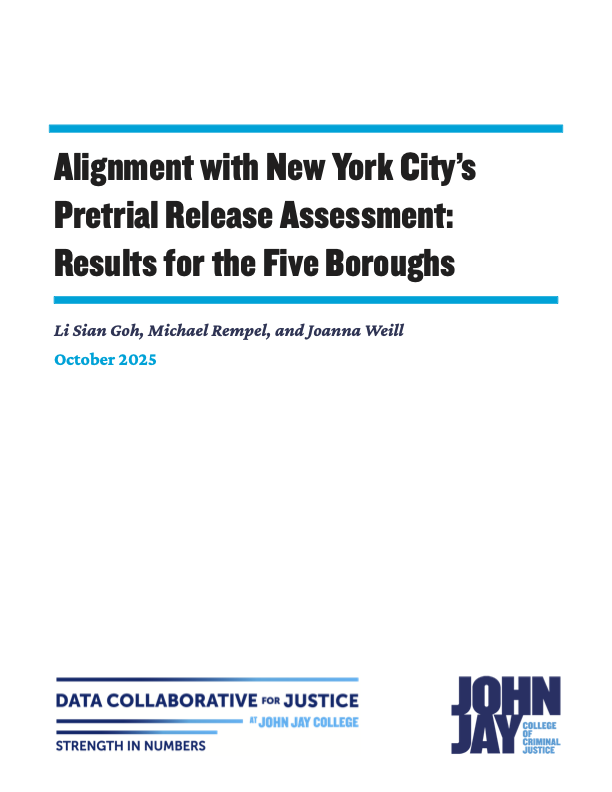
Alignment with New York City’s Pretrial Release Assessment: Results for the Five Boroughs

By Li Sian Goh, Michael Rempel, and Joanna Weill

This report examines the alignment of New York City judges’ pretrial release decisions with the recommendations of the Pretrial Release Assessment, a validated tool that calculates the likelihood people will return to court if they are released before trial. Drawing on 251,917 New York City arraignments subject to pretrial release decisions in 2021, 2022, and 2023, we looked at what the assessment recommended, how often judges followed these recommendations, and cross-borough differences over time.

Key Findings:

Most People are Recommended for Release on Recognizance (ROR): From 2021 to 2023, the Release Assessment recommended releasing people on their own recognizance (ROR) for 88% of cases, including 79% of violent felonies, 77% of nonviolent felonies, and 92% of misdemeanors. Yet judges granted ROR in only 25% of violent felonies, 42% of nonviolent felonies, and 78% of misdemeanors.The Assessment Was Consistent Across Each Race/Ethnicity: The assessment recommended 87% of Black, 88% of Hispanic, and 85% of white people for ROR. For people charged with a violent felony, the assessment recommended a statistically identical 78% of Black and Hispanic and 77% of white people for ROR.Alignment with the Release Assessment’s Recommendations: From 2021 to 2023, judges infrequently followed ROR recommendations for violent felony cases (30%), only followed such recommendations about half the time (51%) in nonviolent felony cases, while adhering at a high rate for misdemeanors (83%). Conversely, in violent felony cases that are virtually all legally eligible for bail under the State’s bail reform law, judges set bail or remand in 41% of the cases where the Release Assessment had recommended ROR.Judges Aligned with the Assessment at Racially Disparate Rates: When the assessment recommended ROR in a violent felony case, judges set it least often for Black people (26%), somewhat more for Hispanic people (32%), and most often for white people (43%). In these same cases, judges were more likely to impose bail or remand on Black (44%) than Hispanic (39%) or white people (29%). Further analysis linked these racial differences to a tendency of judges to overrate certain risk factors correlated with race/ethnicity.Overrating Certain Risk Factors: Although criminal history and living situation are already factored into the assessment’s recommendations, judges were more likely to adhere to a ROR recommendation when people had no prior warrants, no prior misdemeanor or felony convictions, and a stable abode than when one of these risk factors was present.Alignment Varied Across the City: Bronx and Brooklyn judges followed a ROR recommendation at the highest and Staten Island judges at the lowest rate. Nonviolent felonies saw especially wide borough variability. (For example, people facing a nonviolent felony charge and recommended for ROR were 1.8 times more likely to receive it in the Bronx than in Manhattan or Staten Island.)


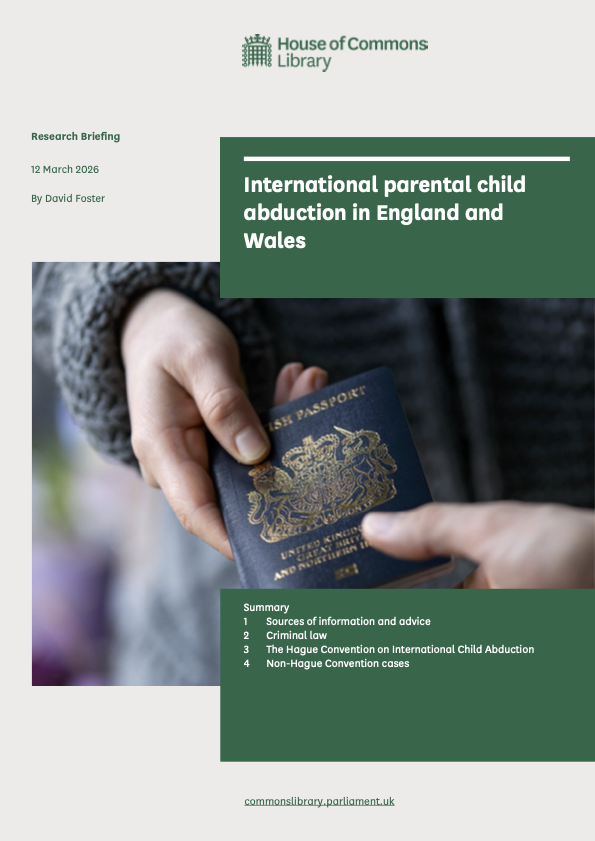
International Parental Child Abduction In England and Wales

By David Foster

This briefing provides a brief overview of international parental child abduction, including relevant provisions of the Child Abduction Act 1984 and the 1980 Hague Convention. Somebody seeking guidance on a specific case should seek specialist legal advice based on all the facts of their case. They may also seek assistance from the Foreign, Commonwealth and Development Office and the charity Reunite International. The briefing covers England and Wales unless stated otherwise – for example, the 1980 Hague Convention applies across the UK. 

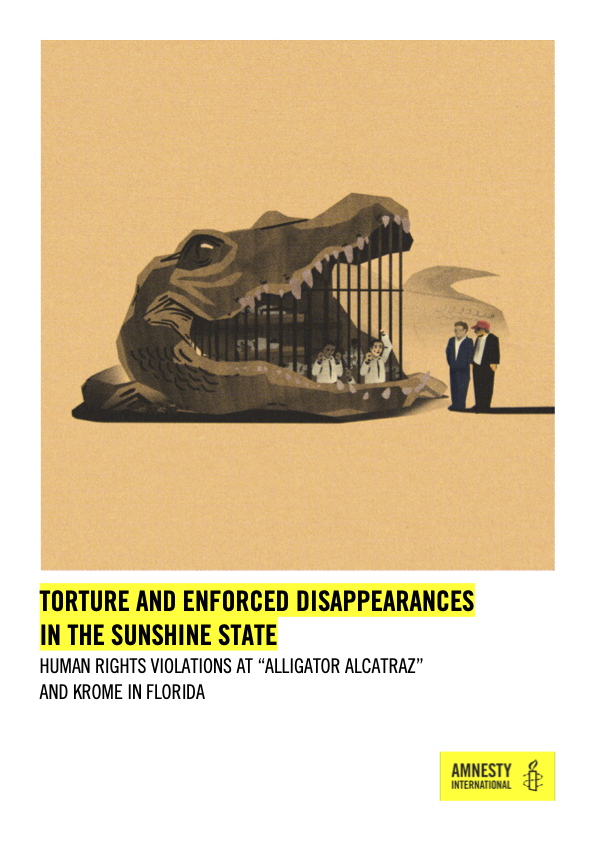
Torture And Enforced Disappearances In The Sunshine State Human Rights Violations At “Alligator Alcatraz” And Krome In Florida

By Amnesty International
This report presents Amnesty International’s findings from a research trip to southern Florida in September 2025, to document the human rights impacts of federal and state migration and asylum policies on mass detention and deportation, access to due process, and detention conditions since President Trump took office on 20 January 2025. In particular, it focuses on detention conditions at the Krome North Service Processing Center (Krome) and the Everglades Detention Facility, also known as “Alligator Alcatraz”.

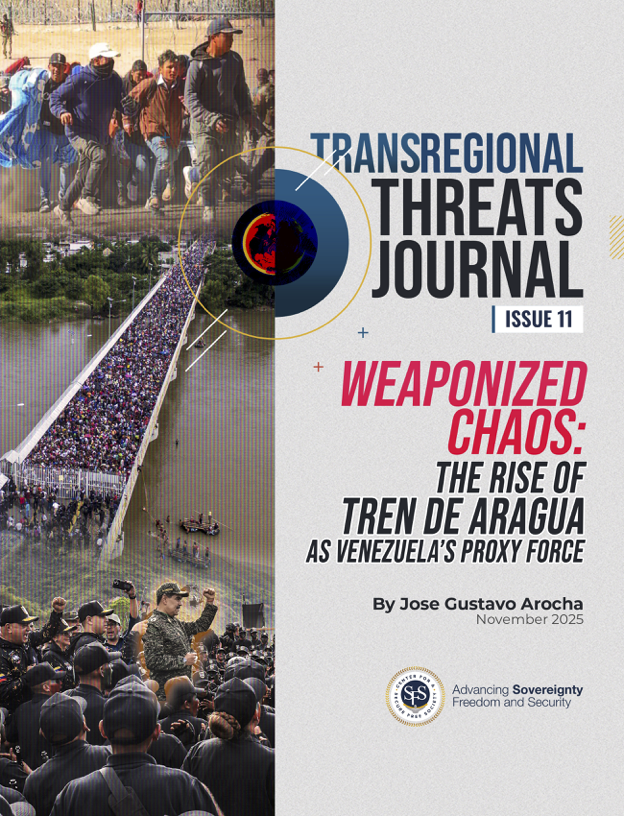
Weaponized Chaos: The Rise of Tren de Aragua as Venezuela's Proxy Force, 2014–2025

By José Gustavo Arocha

BOTTOM LINE UP FRONT: 

1 Tren de Aragua (TdA) has morphed from a prison gang into a paramilitary instrument of the Maduro regime, now active in at least eleven Latin American countries [1] and twenty-three U.S. states, [2] according to the U.S. House Oversight Committee (2025).

2 Strategic Alignment. TdA’s deliberate expansion complements Venezuela’s Guerra de Todo el Pueblo asymmetric-warfare doctrine, [3] erasing boundaries between statecraft and organized crime.

3 Elastic Network. The gang’s “insurgent archipelago” [4] of semiautonomous cells, linked through encrypted channels, makes it exceptionally resilient; when joint Peruvian-U.S. raids freed more than eighty trafficking victims in January 2025, [5] replacement cells reemerged within days. [6]

4 Weaponized Migration. By monetizing migrant flows, selling “all risk” travel packages that often devolve into debt bondage, [7] TdA offloads costs onto regional adversaries; more than 520,000 migrants transited through the Darién Gap in 2023. [8]

5 Persistent Threat. Despite terrorism designations by the United States, Argentina, Ecuador, and Trinidad and Tobago—and nearly 3,500 U.S. arrests as of August 2025, [9] TdA’s franchise model is regenerating faster than law enforcement can dismantle it.

The Changing Use of Jails in Safety and Justice Challenge Counties

By Brandon Martinez, Rebecca Tublitz, Otgonjargal Okhidoi (Otgo), Emily West

The majority of people in local jails around the country are awaiting their criminal trial, meaning they have not been convicted of the crimes that brought them in, and many of them do not pose a danger to public safety. In fact, keeping those in jail who could be better served in the community can cause long-term instability.  

Given this research, cities and counties involved in the Safety and Justice Challenge (SJC) have engaged in collaborative, multi-agency efforts to safely reduce the misuse and overuse of their local jails and increase equity across the system.  

These efforts have yielded impressive results: in these SJC cities and counties, nearly 18,000 fewer people are in jails today compared to the start of the initiative.

Built to Harm: How Women's Prisons Take Lives

By Jessica Pandian

Through foregrounding the circumstances of seven deaths in women’s prisons and highlighting issues which have persisted for decades, this report provides further evidence that the women’s prison estate is – and for decades has been – incapable of adequate reform. An analysis of the deaths reveals the key thematic issues, which fall under three categories: 1. not believing prisoners in crisis and at risk, 2. failings in prison processes, and 3. imprisonment as the default to social inequality. Lastly, the report provides a statistical analysis of deaths and self-harm in women’s prison from 2018 - 2024If we do not address the current prison crisis and reflect on its harmful impact, it is inevitable that more people will be exposed to the harms of the prison environment and die. This report is a blunt reminder to the Government to act now by committing to dismantle the women’s estate and halt all prison building.
This report exposes the successive failures of reforms, strategies and frameworks introduced in the policy around women’s prisons in England and Wales since the launch of the Ministry of Justice’s Female Offender Strategy in 2018.1 The strategy’s intended purpose was to improve lived conditions in women’s prisons and reduce the women’s prison population. 2018 also marks the year in which INQUEST published 'Still Dying on the Inside', 2 the third INQUEST publication providing unique insight into deaths in women’s prisons.

Psychotropic prescription trends in jails from 2013 to 2023: findings from the REACH database

By Amber H. Simpler, Adam P. Natoli, William Jett & Yash A. Patade 


In light of escalating concerns about the increasing number of individuals in United States' jails with mental health conditions, the current investigation sought to examine population trends in psychotropic prescription patterns in 34 jails over an 11-year epoch. Leveraging data from a largescale, multisite database derived from 1,251,837 jail detainees' electronic health records (i.e., the Repository of Electronic Archives in Correctional Healthcare, or REACH, database), General Estimating Equations (GEE) models were used to estimate population-averaged probabilities of prescriptions for any psychotropic agent and specific agent classes (e.g., antianxiety, antidepressant, antipsychotic, anticonvulsant). While GEE analysis revealed year-to-year variability, overall significant increases (i.e., > 100%) in prescription probability were observed for all agent classes from 2013 to 2023 except lithium, which declined significantly over time. Notably, the prescription probability for antipsychotic agents increased 249% during the study epoch. These findings add further evidence of the increasing mental health needs of jail populations. To better understand the increase in psychotropic prescriptions among jail detainees, additional inquiries should explore the clinical justification, therapeutic value, and impact of treatment compliance.

A Systematic Review of Substance Misuse Treatment Processes and Outcomes as Implemented in Prisons for Men in the UK

By Kim Barnett, Noor Butt, Rosie Allen, Pauline Goodlad, Anne Krayer, Adam O'Neill, et al.

Background: With a rising prison population, a substantial portion of whom are identified as substance misusers, it is important to understand the availability of treatment pathways, their successes and areas for improvement. Given the likelyimportance of national factors in criminal justice and substance use service provision, we chose to focus on one country.Aim: To review substance misuse treatment and outcomes for such treatments as implemented in British prisons for men.Methods: We conducted a mixed‐methods systematic review, searching Ovid MEDLINE, Ovid Embase, APA PsycINFO,CINAHL Plus, Sociology Collection, Web of Science Core Collection and Social Science Premium Collection between 1 January2000 and 5 June 2024. Included were empirical, peer‐reviewed studies of processes and outcomes of UK male prison‐basedsubstance misuse programmes. Primary outcomes included changes in substance use, withdrawal symptoms and experiencesof interventions, whereas secondary outcomes encompassed quality of life, locus of control and mental health. Because of studydesign heterogeneity, meta‐analysis was not possible. Analysis followed JBI methodology with a convergent synthesis.Results: Fourteen studies were included: 8 qualitative, 5 quantitative studies of which 3 were randomised control trials (RCTs)and 1 mixed‐methods study, with a combined sample of 4037 participants engaged in opioid substitute treatment (OST) and/orpsychosocial interventions. Four key themes emerged: the power of purposeful activity, strengthening support systems, bridgingpatient needs with treatment plans and, for those in opiate programmes, experiences and engagement with opioid substitutiontreatments.Conclusions: Participants articulated diverse treatment needs, highlighting the necessity of individualised and tailoredreduction or maintenance plans. Treatment requires a comprehensive approach with the aim of facilitating effective socialintegration.

Strengthening the U.S. Medicolegal Death Investigation System: Lessons from Deaths in Custody

By National Academies of Sciences, Engineering, and Medicine

The U.S. medicolegal death investigation system is responsible for investigating and providing determinations of cause and manner of death, playing a vital role in the nation's public health and criminal justice systems. Recent, high-profile deaths in custody cases have drawn widespread attention to the determinations of cause and manner of death made by forensic pathologists, medical examiners, and coroners, and questions have been raised about the scientific validity of such determinations.

Strengthening the U.S. Medicolegal Death Investigation System: Lessons from Deaths in Custody evaluates the handling of deaths in police custody by the medicolegal death investigation system and recommends actions to strengthen the nation's medicolegal death investigation system.

The curious case of vandals: Brazil’s environmental and regional policies in the Bolsonaro years

By Monika Sawicka


This paper aims to contribute to the debate on foreign policy strategies of state actors in the international system with a particular focus onpolicies pursued by far-right populist leaders. On the theoretical level,it builds on role theory and status-seeking strategies drawn from social identity theory (SIT) to offer an enhanced conceptual framework suit-able for scrutinising more radical forms of international activism. Thetheoretical points are then illustrated empirically by exposing the find-ings from content analysis of Brazilian policymakers’ speeches and their juxtaposition with the Bolsonaro government’s policies in the areas of environmental protection and regional cooperation. The author’s main claim is that President Jair Bolsonaro and his Foreign Affairs MinisterErnesto Araújo, through their rhetoric about cooperation in SouthAmerica and the Amazon and the actions undertaken by the adminis-tration in these fields, envisioned for Brazil the role of vandal. This had substantial consequences for the country’s international standing.

GEOPOLITICS, 2023, VOL. 28, NO. 2, 619–640

Keep the status quo: randomization-based security checks might reduce crime deterrence at airports

By Tamara Stotz, Angela Bearth, Signe Maria Ghelfi & Michael Siegrist

Due to the increasing number of passengers at airports, regular security checks reached their capacity limits. Thus, alternative security checks are being discussed to increase their efficiency. For example, instead of screening all passengers briefly, a randomly selected sample of passengers could be screened thoroughly. However, such randomization-based security checks could be perceived as less secure based on the assumption that fewer illegal objects would be uncovered than through regular security checks. To analyze whether this is the case, we conducted an online experiment that investigated people’s perceptions of and preference for traditional and randomization-based security checks from both the passenger and the criminal perspectives. The findings suggest that within security checks with explicitly stated equal probabilities of detecting illegal objects, passengers do not exhibit strong preferences for either the traditional or the randomization-based security checks. However, randomization-based security checks would be preferred by criminals. Thus, with regard to security, the status quo, namely traditional security checks, is still the best way to keep airports secure.

Journal of Risk Research, Volume 24, 2021 - Issue 12

SexWork.DK: a comparative study of citizenship and working hours among sex workers in Denmark

By Rasmus Munksgaard, Kim Moeller & Theresa Dyrvig Henriksen

Sex workers in Europe are increasingly of nonnational origin. The Schengen cooperation allows internal migration within the European Union, but many migrant sex workers originate from outside the EU. While sex workers are already in precarious positions, nonnationals risk deportation, dependent on their citizenship status, and may have debts to smugglers. Consequently, they may be more likely to work longer hours to increase short-term profits. Using a dataset of sex work advertisements from one Danish website (n = 2,594), we estimate the association between inferred citizenship status and a) advertised hours on shift using ordinary least squares regression, and b) the probability of advertising 24/7 availability using a linear probability model. Compared to Danish sex workers, we find migrants advertise almost twice as many hours on shift and are more likely to advertise 24/7 availability. These results shed light on the inequalities that persist between national and nonnational sex workers.

Global Crime, Volume 26, 2025 - Issue 1

Come at the king, you best not miss: criminal network adaptation after law enforcement targeting of key players

By Giulia Berlusconi

This paper investigates the impact of the targeting of key players by law enforcement on the structure, communication strategies, and activities of a drug trafficking network. Data are extracted from judicial court documents. The unique nature of the investigation – which saw a key player being arrested mid-investigation but police monitoring continuing for another year – allows to compare the network before and after targeting. This paper combines a quantitative element where network statistics and exponential random graph models are used to describe and explain structural changes over time, and a qualitative element where the content of wiretapped conversations is analysed. After law enforcement targeting, network members favoured security over efficiency, although criminal collaboration continued after the arrest of the key player. This paper contributes to the growing literature on the efficiency-security trade-off in criminal networks, and discusses policy implications for repressive policies in illegal drug markets.

Global Crime, Volume 23, 2022 - Issue 1

An exploratory study of victimisation and near misses in online shopping fraud

By Matthew Edwards,Jack Mark Whittaker, Cassandra Cross & Mark Button


The internet has revolutionised retail sales, with online shopping a common practice globally. While convenient, offenders have also embraced the opportunity to target potential victims and their shopping carts. Online shopping fraud occurs when offenders represent themselves as legitimate online sellers to gain sales from unsuspecting victims, both by impersonating genuine retailers and creating fictional retailers with non-existent products. The current article explores the victimisation and near misses of consumers to online shopping fraud. Based on survey responses of 1011 Australians, the article examines the online shopping activities of individuals as well as any victimisation or near miss experiences. The results indicate a high level of victimisation and near misses across this sample. It further examines a range of impacts experienced by these consumers and considers the implications of these results for the retail sector and prevention practices into the future.

 Global Crime26(1), 69–89.

The Dynamics of Online Wildlife Trade, Crime and Law Enforcement in Israel

By Noga Shanee, Amnon Keren, Evelyn D. Anca, Tamar Fredman, Omer Polansky & Yael Cohen Paran

There are certain biases that characterize the global efforts to tackle wildlife crime, restricting their effectiveness. Firstly, wildlife crime is considered mainly a problem of developing source countries, while the role of developed consumer countries is largely ignored. Secondly, illegal trafficking and legal wildlife trade are treated separately, while the first is considered harmful to the environment and the latter is often considered tolerable, and even a conservational tool. In this study, we use the case study of Israel, a small, developed country with a solid legal framework to control the illegal wildlife trade. For the period between 2021 and 2023 we reviewed national and international laws and regulations from different sectors relevant to wildlife law enforcement. We monitored social media, online commerce platforms and instant messaging groups in order to assess online trade, and interacted with the wildlife authorities to assess their responses. We found six overarching legal themes: (1) species permitted for trade and possession; (2) trade and possession permits; (3) health permits; (4) animal welfare laws and regulations; (5) wildlife shows; and (6) general commerce and money laundering laws. Our results demonstrate that although there is a regulatory infrastructure which allows legal wildlife trade, the vast majority of the trade violates at least some of the related laws and standards. We also found biases in the authorities’ readiness to tackle different types of wildlife crime. Therefore, this study challenges the false dichotomy between legal and illegal wildlife trade and calls for further research and improved enforcement and control of authorized wildlife trade in developed countries.

Journal of International Wildlife Law & Policy, Volume 28, 2025 - Issue 1