Open Access Free Library
Fiction+Mediajpg.jpg

FICTION and MEDIA

CRIME AND MEDIA — TWO PEAS IN A POD

Posts in short stories
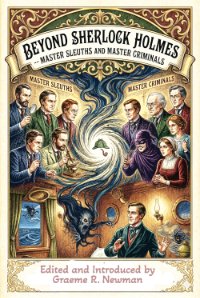
Beyond Sherlock Holmes

Edited by Graeme R. Newman

Step out of the shadow of 221B Baker Street and into the gaslit world of the "Great Detectives."

While Sherlock Holmes reigned supreme in the pages of The Strand, he was far from the only mind at work in the fog-choked streets of Victorian London. "Beyond Sherlock Holmes: The Rivals, Rogues, and Rationalists of the Golden Age" is a definitive collection of public domain masterpieces that defined the evolution of the modern thriller.

From the "ratiocination" of Edgar Allan Poe to the forensic laboratories of Dr. Thorndyke, this anthology gathers the brilliant specialists who refined, subverted, and occasionally haunted the detective genre. These are the stories that gave Holmes his fiercest competition—characters who used logic, science, and even the occult to solve the "impossible."

Inside this collection, you will discover:

  • The Forensic Pioneers: Join Dr. Thorndyke as he utilizes the first true "mobile crime lab" to solve murders through microscopic analysis.

  • The Logic Masters: Witness The Thinking Machine prove that "two and two make four" by thinking his way out of an inescapable prison cell.

  • The Shadow Detectives: Meet Max Carrados, the blind investigator whose heightened senses allow him to observe truths that even Holmes would miss.

  • The Occult Investigators: Follow Thomas Carnacki as he bridges the gap between science and the supernatural to hunt "monsters" through the lens of logic.

  • The Mastermind Villains: Face the terrifying ambition of Dr. Nikola, the Victorian "supervillain" whose global reach predates Bond villains by half a century.

  • The Gentleman Thieves: Cross the line with A.J. Raffles and Arsène Lupin, the brilliant "cracksmen" who prove that the detective’s mind is just as effective when applied to the perfect heist.

A Must-Have for Fans of Classic Mystery

Whether you are a scholar of criminology or a lover of "Victorian Shockers," this volume offers a panoramic view of an era defined by gaslight, cobblestones, and the birth of forensic science. Curated with an extensive introduction detailing the history and impact of these "Rivals of Sherlock," this book is more than a collection—it is a journey through the evolution of the human mind at work.

Stories included in this edition: THE MURDERS IN THE RUE MORGUE, Edgar Allan Poe-- THE CASE OF LAKER, ABSCONDED, Arthur Morrison-- THE CASE OF THE DIXON TORPEDO, Arthur Morrison-- THE PROBLEM OF CELL 13, Jacques Futrelle-- THE SILENT BULLET, Austin Freeman-- THE COIN OF DIONYSIUS, Ernest Bramah-- THE GATEWAY OF THE MONSTER, Wiliam Hope Hodgson-- THE RED LODGE, Russell Wakefield-- THE ADVENTURE OF THE SPECKLED BAND, Arthur Conan Doyle-- THE IDES OF MARCH, E.W.Hornung-- THE ARREST OF ARSÈNE LUPIN, Maurice Leblanc.

Read-Me.Org Inc. New York-Philadelphia-Australia. 2026. 330p.
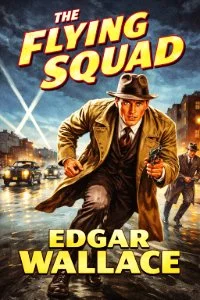
The Flying Squad

By Edgar Wallace. Edited and Introduced by Graeme R. Newman

The Flying Squad by Edgar Wallace is a fast-paced and compelling crime novel that captures the excitement of modern policing at a time when organized crime was becoming more daring and sophisticated.

At the heart of the story is the Metropolitan Police’s elite Flying Squad, a special unit created to respond swiftly to robberies and high-stakes criminal operations. When a series of bold and carefully planned crimes begins to unsettle London, the Squad is called into action. Moving quickly across the city, they pursue a network of criminals whose intelligence and audacity make them a formidable adversary.

As the investigation unfolds, secrets emerge, alliances shift, and danger lurks at every turn. Wallace’s trademark storytelling—sharp, direct, and filled with tension—drives the narrative forward with relentless energy. The novel blends action, mystery, and suspense, offering readers both the thrill of the chase and the intrigue of a cleverly constructed plot.

Written during the golden age of crime fiction, The Flying Squad reflects a turning point in detective storytelling, where teamwork, rapid response, and coordinated strategy replace the lone investigator. Wallace’s vivid depiction of London and his insight into both criminal enterprise and police procedure give the novel a sense of realism that remains engaging today.

This classic edition invites modern readers to experience one of Edgar Wallace’s most dynamic works—a gripping tale of crime, pursuit, and justice that continues to influence the thriller genre nearly a century after its first publication.

Read-Me.Org Inc. New York-Philadelphia-Australia. 2026. p.213..

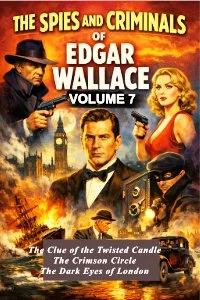
The Spies And Criminals Of Edgar Wallace -Volume 7

BEYOND SCOTLAND YARD

By Edgar Wallace. Edited and Introduced by Graeme R. Newman

The Spies and Criminals of Edgar Wallace — More Than Scotland Yard — Volume 7 brings together three of Edgar Wallace’s most gripping and atmospheric crime novels: The Clue of the Twisted Candle, The Crimson Circle, and The Dark Eyes of London. Each story reveals a different facet of Wallace’s extraordinary ability to craft suspenseful, fast-moving narratives filled with mystery, danger, and unforgettable characters.

In The Clue of the Twisted Candle, a baffling locked-room murder sets the stage for a clever and intricate investigation where appearances deceive and every clue leads deeper into uncertainty. The Crimson Circle introduces a shadowy organization operating beyond the reach of the law, weaving a tense story of blackmail, secrecy, and hidden power that keeps readers guessing until the final page. In The Dark Eyes of London, Wallace delivers one of his most chilling tales, exposing a sinister criminal scheme concealed beneath a façade of respectability, where vulnerability is exploited with ruthless precision.

Together, these novels move beyond the traditional boundaries of Scotland Yard detection and into a wider world of conspiracy, psychological tension, and hidden networks of crime. Wallace’s trademark style—swift pacing, sharp dialogue, and ingenious plotting—drives each story forward with relentless energy.

This volume offers a powerful showcase of Edgar Wallace at his most compelling, blending classic mystery with darker, more complex themes that continue to resonate with modern readers. For fans of vintage thrillers, detective fiction, and suspenseful storytelling, Volume 7 delivers three unforgettable journeys into the heart of crime and intrigue.

Read-Me.Org Inc. New York-Philadelphia-Australia. 2026. p.417..

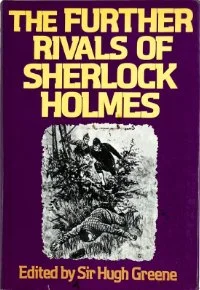
Further Rivals of Sherlock Holmes

Edited by Sir Hugh Greene

The Further Rivals of Sherlock Holmes is the third volume in Hugh Greene’s celebrated series of anthologies that revive lesser‑known detective fiction from the Victorian and Edwardian eras. First published in 1973, this collection focuses particularly on crime and mystery stories set outside London, offering a contrast to the urban investigations associated with Sherlock Holmes.

Greene gathers an eclectic mix of authors—from C. L. Pirkis to Ernest Bramah, Arthur Morrison, Fergus Hume, Jacques Futrelle, and others—presenting detectives with distinct personalities, investigative styles, and moral shades. The volume features a blend of traditional detection, espionage, psychological mystery, and even touches of the gothic. Stories include cases solved by women detectives like Dora Myrl and unusual protagonists such as Judith Lee, a young lip‑reader who cracks crime through observation and intuition.

What defines this anthology is its sense of variety and rediscovery. Greene chose stories that had been overshadowed by Conan Doyle’s dominance but which reveal the richness and diversity of early crime fiction—full of ingenuity, twisted plots, and vivid period atmosphere. Together, these tales expand the world of detective literature, showcasing that Holmes was only one among many fascinating sleuths of his time.

If you’d like, I can also summarize individual stories, compare this volume with the rest of the series, or help locate a cover image.

New York.. Pantheon. 1973. 318p.

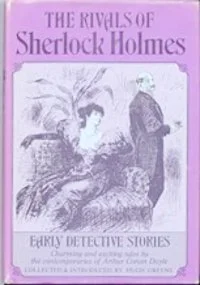
The Rivals of Sherlock Holmes

Edited by Hugh Greene

The Rivals of Sherlock Holmes is a classic anthology compiled by Hugh Greene that showcases a wide range of lesser‑known detective stories from the late Victorian and Edwardian eras. Greene sought to highlight the vibrant landscape of crime and mystery fiction that flourished alongside, and sometimes even before or beyond, Conan Doyle’s famous detective. The collection illustrates that Sherlock Holmes, while dominant today, once stood among many competing sleuths created by equally imaginative writers.

The stories Greene selected feature diverse detectives—amateur investigators, professional policemen, scientific detectives, con‑artists‑turned‑sleuths, and eccentric specialists—reflecting the creativity of the period’s crime fiction. The settings also vary widely, from London fog to rural estates, bustling streets, and exotic locales, providing a vivid panorama of the era. The anthology’s purpose is not only entertainment but also a historical reminder: Doyle was not alone in shaping detective fiction, and readers once had many “rivals” to choose from.

The cover of this edition visually underscores its period atmosphere. It depicts two men in period clothing—one standing, one lying across a cart—set against a Victorian street scene marked by signs such as “Bottle Water” and “Cork Board,” evoking the gritty, textured world these early detectives inhabited. [amazon.com]

New York.. Pantheon. 1970. 352p.

The Spies And Criminals Of Edgar Wallace -Volume 6

BEYOND SCOTLAND YARD

By Edgar Wallace. Edited and Introduced by Graeme R. Newman

THE SHADOW OF THE YARD

From the fog-bound labyrinth of a madman’s lair to the sun-drenched deception of the Riviera, Volume 6 of The Spies and Criminals of Edgar Wallace brings together three masterclasses in suspense. Here, the "King of the Thriller" pits the unassuming brilliance of Scotland Yard’s allies against the most cold-blooded predators of the jazz age.
Terror Keep
The genius of the "criminal mind" returns. J.G. Reeder—the mild-mannered investigator with the tightly furled umbrella—faces his deadliest foe: a homicidal mastermind escaped from Broadmoor and hungry for revenge. It is a race through a house of traps where death waits behind every door.
The Angel of Death
She has the face of a saint and the soul of a sociopath. Jean Briggerland is a predator who uses her beauty to mask a trail of broken lives and stolen fortunes. Can justice touch a woman who makes the law her accomplice?
The Melody of Death
A haunting tune signals a countdown to doom. Driven by a desperate secret, a man plunges into the underworld to secure a future for the woman he loves. But in Wallace’s London, every crime has a rhythm, and every rhythm has a price.
Three novels. Two legendary detectives. One master of mystery. "Whether it’s a master forger or a murderous socialite, Wallace never misses a beat."

Read-Me.Org Inc. New York-Philadelphia-Australia. 2026. p.373..

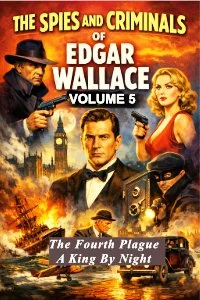
The Spies And Criminals Of Edgar Wallace -Volume 5

BEYOND SCOTLAND YARD

By Edgar Wallace. Edited and Introduced by Graeme R. Newman
Welcome to the fifth volume of The Spies and Criminals of Edgar Wallace — Beyond Scotland Yard., Volume 5. As we continue our journey through the vast, thrilling archives of the man who once had a book on every bedside table in England, we move away from the procedural confines of the Yard and into the shadowy territories of global conspiracies and nocturnal terrors. Edgar Wallace was never just a writer of "whodunnits." He was a pioneer of the "thriller" in its most visceral form—a master of the ticking clock, the hidden organization, and the villain whose reach spans continents.
The Fourth Plague (1913). One of Wallace’s most ambitious early works, The Fourth Plague introduces us to the "Red Hand," a sinister Italian secret society that holds London in a grip of terror. This isn't a mere case of theft or individual murder; the Red Hand threatens the very fabric of society with a biological ultimatum. Wallace masterfully blends the tropes of the "Yellow Peril" and Italian vendetta narratives of his era into a high-stakes race against time. It is a proto-techno-thriller that showcases Wallace’s fascination with how easily modern civilization can be brought to its knees by a dedicated few.
A King by Night (1925). Written at the height of his fame and dedicated to his close friend P.G. Wodehouse, A King by Night is a different beast entirely. When a young woman from Sacramento arrives in London searching for her missing uncle, she is swept into a nightmare involving a mysterious, legendary criminal known as "The King." Set against a backdrop of fog-drenched streets and eerie country estates, this novel highlights Wallace’s ability to create a sense of mounting dread. It is a classic example of his "terror" novels—where the villain is not just a man, but a looming, almost supernatural presence.
Why "Beyond Scotland Yard"? While the "Blue Eyed Boy" of the C.I.D. often made appearances in Wallace’s work, these stories remind us that the most dangerous criminals don't always leave a trail the police can follow. Sometimes, it takes an adventurer, a victim’s desperate relative, or a rogue investigator to venture into the places where the law fears to tread.
In Volume 5, the stakes are higher, the villains are bolder, and the mysteries are shrouded in the dark corners of the world. Turn the page, and prepare to meet the criminals who thought they were beyond the reach of justice—only to find that Edgar Wallace was waiting for them.

Read-Me.Org Inc. New York-Philadelphia-Australia. 2026. p.395..

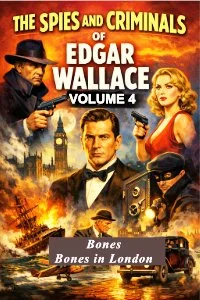
The Spies And Criminals Of Edgar Wallace -Volume 4

BEYOND SCOTLAND YARD

By Edgar Wallace. Edited and Introduced by Graeme R. Newman

The Spies and Criminals of Edgar Wallace: Scotland Yard and Beyond — Volume 4 brings readers two of Edgar Wallace’s most entertaining and unusual adventure novels: Bones and Bones in London. Blending humor, mystery, and crime with the author’s trademark pace and vivid storytelling, these stories reveal a lighter but no less thrilling side of Wallace’s imagination.

At the center of both novels is the unforgettable character Bones, a well-meaning but wildly unpredictable figure whose adventures unfold amid colonial intrigue, bureaucratic mishaps, and unexpected encounters with criminals and conspirators. In Bones, readers travel to the colorful and often chaotic world of colonial Africa, where the enthusiastic but frequently misguided Bones attempts to prove his courage and competence while stumbling into one outrageous situation after another.

In Bones in London, the action moves to the heart of the British capital. Far from the jungles and rivers of Africa, Bones finds himself navigating the complexities of metropolitan life, where his talent for attracting trouble follows him wherever he goes. What begins as a simple visit soon becomes entangled with crime, deception, and the watchful presence of Scotland Yard.

Filled with sharp dialogue, comic mishaps, and moments of genuine suspense, these two novels showcase Edgar Wallace’s remarkable range as a storyteller. Famous for his crime thrillers and detective tales, Wallace was equally skilled at creating characters whose humanity and humor shine through even in the midst of danger.

Volume 4 of The Spies and Criminals of Edgar Wallace offers readers another captivating installment in this series celebrating the work of one of the most widely read writers of the early twentieth century. For fans of classic adventure, crime fiction, and unforgettable characters, these lively stories remain as engaging and entertaining today as when they were first published.

Read-Me.Org Inc. New York-Philadelphia-Australia. 2026. p.304..

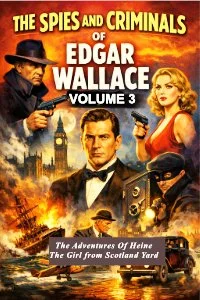
The Spies And Criminals Of Edgar Wallace -Volume 3

SCOTLAND YARD AND BEYOND

By Edgar Wallace. Edited and Introduced by Graeme R. Newman

The Spies and Criminals of Edgar Wallace: Scotland Yard and More — Volume 3 brings together two exciting works by one of the most prolific and entertaining masters of crime fiction. Edgar Wallace’s stories of clever criminals, daring investigators, and ingenious plots captivated millions of readers in the early twentieth century, and they continue to deliver suspense and adventure today.

This volume features The Adventures of Heine, a lively collection of tales centered on one of Wallace’s most intriguing characters. Moving through the underworld of international intrigue and high-stakes deception, Heine encounters spies, smugglers, and master criminals in stories filled with wit, danger, and unexpected twists. Wallace’s fast-paced storytelling and sharp dialogue make each episode a memorable adventure.

Also included is the gripping novel The Girl from Scotland Yard, a thrilling story that places a determined investigator at the center of a web of mystery and crime. As secrets unfold and danger closes in, the story showcases Wallace’s remarkable ability to blend suspense, clever plotting, and dramatic tension.

Together these works reveal the rich variety of Wallace’s crime fiction—from clever short adventures to full-length mystery. Filled with secret schemes, daring investigations, and the ever-present struggle between crime and justice, Volume 3 of The Spies and Criminals of Edgar Wallace offers another exciting glimpse into the world of classic detective storytelling.

Perfect for readers who enjoy classic mysteries, Scotland Yard investigations, and the golden age of crime fiction, this collection continues the tradition of suspense and adventure that made Edgar Wallace one of the most widely read thriller writers of his time.

Read-Me.Org Inc. New York-Philadelphia-Australia. 2026. p.373..

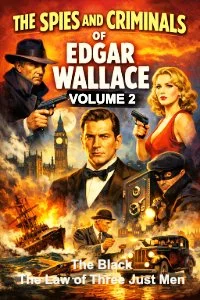
The Spies And Criminals Of Edgar Wallace -Volume 2

SCOTLAND YARD AND BEYOND

By Edgar Wallace. Edited and Introduced by Graeme R. Newman

The Spies and Criminals of Edgar Wallace — Volume 2 brings together one of Edgar Wallace’s most intriguing crime novels alongside the stories that introduced one of his most famous creations. At the center of this volume is the gripping novel The Black, a tale of mystery, intrigue, and shadowy power in which a secretive criminal force challenges the authority of the law and tests the ingenuity of those determined to bring it down. Filled with unexpected twists, daring schemes, and Wallace’s trademark rapid pacing, the novel showcases the author at the height of his storytelling powers.

Complementing the novel are the classic stories of The Law of the Three Just Men, the remarkable vigilante trio who became one of Wallace’s most celebrated inventions. Acting outside the formal machinery of government, the Three Just Men intervene when justice fails. Their warnings are precise, their judgments uncompromising, and their reach seems limitless. Governments tremble when they speak, for their word is always followed by action.

Together, The Black and the stories of The Law of the Three Just Men reveal Wallace’s extraordinary ability to create suspenseful plots and unforgettable characters. His world is one where spies, secret societies, and daring investigators move through a landscape of danger and intrigue, where justice may come from unexpected quarters, and every page brings a new surprise.

In this second volume of The Spies and Criminals of Edgar Wallace, readers are invited to rediscover the excitement, ingenuity, and narrative brilliance that made Wallace one of the most widely read thriller writers of his time—and whose stories continue to entertain audiences around the world.

Read-Me.Org Inc. New York-Philadelphia-Australia. 2026. 299p.

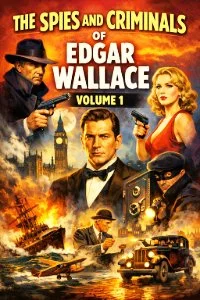
The Spies And Criminals Of Edgar Wallace -Volume 1

 SCOTLAND YARD AND BEYOND

By Edgar Wallace. Edited and introduced by Graeme R. Newman

From the shadowed streets of London to the secret worlds of spies and master criminals, Edgar Wallace delivers the kind of high-speed storytelling that made him one of the most widely read writers of his age.

The Spies and Criminals of Edgar Wallace — Volume 1 gathers a thrilling selection of Wallace’s most entertaining tales of intrigue, deception, and daring adventure. Within these pages readers encounter brilliant detectives, elusive thieves, secret societies, and dangerous conspiracies that challenge the keenest minds of Scotland Yard. Each story unfolds with Wallace’s trademark pace—swift, suspenseful, and filled with surprising twists.

A master of popular fiction, Wallace combined sharp dialogue, vivid characters, and ingenious plots to create stories that remain as gripping today as when they first captivated readers in the early twentieth century.

This exciting new edition invites modern readers to rediscover a classic voice of crime fiction and experience the suspense, wit, and adventure that made Edgar Wallace a legend of the thriller.

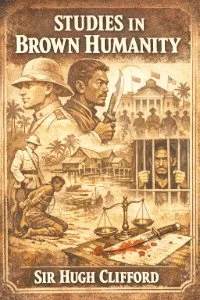
Studies in Brown Humanity: :Being Scrawls and Smudges in Sepia, White, and Yellow

By Hugh Clifford (Author), Graeme Newman (Introduction)

Studies in Brown Humanity by Sir Hugh Clifford is a striking collection of literary sketches drawn from the author’s experiences as a British colonial administrator in the Malay Peninsula during the late nineteenth century. Blending storytelling with observation, Clifford presents a series of vivid portraits of village life, local customs, personal conflicts, and dramatic encounters shaped by the social structures of colonial Southeast Asia. The narratives explore themes of honor, betrayal, justice, and authority, often focusing on moments when traditional Malay codes of conduct collide with the legal and moral framework imposed by the British colonial state.

Although written as literary sketches rather than formal social analysis, the book provides revealing insights into the ways communities understand wrongdoing and punishment. Clifford’s stories depict acts of violence, disputes over reputation, and conflicts between individuals and authority, illustrating how social norms, kinship ties, and communal expectations shape both criminal behavior and responses to it. In this sense, the work can be read not only as colonial literature but also as an early, informal contribution to the sociological study of crime and social control.

At the same time, Studies in Brown Humanity reflects the attitudes and assumptions of its imperial context. Clifford’s interpretations are filtered through the perspective of a European observer, and the book reveals much about the intellectual climate of the British Empire at the turn of the twentieth century. For modern readers, the volume is therefore both a vivid narrative of colonial life and a historical document that illuminates how crime, justice, and cultural difference were understood within the framework of empire.

Rich in atmosphere and dramatic detail, Clifford’s work remains valuable today as a window into the complex social worlds of colonial Southeast Asia and as a reminder of how early narratives about crime and punishment were shaped by the cultural and political conditions of their time.

Read-Me.Org Inc. New York-Philadelphia-Australia. 2026. 291p.

The Further Side of Silence

Sir Hugh Clifford, K. C. M. G.

The Further Side of Silence by Hugh Clifford is a collection of interrelated stories set in the Malay Peninsula during the late nineteenth century, a period when traditional Malay societies were increasingly encountering the expanding authority of the British Empire. Drawing heavily on Clifford’s own experiences as a colonial administrator in the region, the book portrays the lives, customs, conflicts, and moral dilemmas of the people who inhabited the jungles, villages, and royal courts of Malaya.

Through dramatic narratives and vivid descriptions of the tropical landscape, Clifford explores themes of loyalty, honor, justice, and power within a society shaped by ancient traditions and emerging colonial rule. His stories depict Malay chiefs, warriors, villagers, and forest peoples whose lives are entangled in political intrigue, personal rivalries, and the pressures of a changing world.

Part adventure literature and part social observation, the book offers modern readers a window into the cultural and political realities of Southeast Asia during a transformative historical moment. At the same time, it stands as an example of early twentieth-century colonial literature, reflecting both the fascination and the assumptions with which Western writers interpreted the societies they governed.

Read-Me.Org Inc. New York-Philadelphia-Australia. 2026. 198p.

The Kidnapped President. A Crime Of The Under-Seas.

By Guy Boothby. Introduction by Colin Heston

This volume brings together some of the most imaginative and high-stakes narratives from the pen of Guy Boothby, a writer who reigned as one of the most popular masters of the Victorian "shocker." At a time when the British Empire was at its zenith and the possibilities of modern technology were just beginning to fire the public imagination, Boothby crafted stories that blended geopolitical intrigue with the dark, uncharted corners of the globe.


The centerpiece of this collection, The Kidnapped President (1902), catapults the reader into a world of political conspiracy and daring maritime adventure. Set against the backdrop of a South American revolution, the story follows the audacious abduction of a head of state and the relentless pursuit that follows. Boothby’s personal history as a world traveler is evident here; his descriptions of the sea and the desperate maneuvers of those living on the edge of the law carry an authenticity that few of his contemporaries could match. It is a quintessential example of the "international thriller" before the genre had even fully formed, exploring themes of loyalty, power, and the high price of political ambition.
In A Crime of the Under-Seas (1905), Boothby pivots toward a more localized but no less intense mystery. This narrative delves into the treacherous world of pearl fishing and the cutthroat competition of the maritime trade. When a valuable discovery is marred by a calculated crime, the story becomes a tense examination of greed and the lengths to which men will go when they believe they are beyond the reach of land-based authorities. It serves as a perfect companion to the broader political scope of The Kidnapped President, focusing instead on the gritty, high-stakes reality of those who make their living on the ocean's floor.

Rounding out this edition is a selection of Boothby’s shorter fiction, which highlights his versatility as a storyteller. From eerie tales of the supernatural to sharp, punchy vignettes of colonial life, these stories demonstrate the narrative economy that made him a favorite of the era's leading magazines. Whether he is exploring a haunted family legacy or a clever piece of detective work, Boothby’s prose remains relentlessly paced, always keeping the reader’s curiosity at a fever pitch.
Together, these works offer a vivid window into the anxieties and fascinations of the early 20th century. Guy Boothby understood that his audience craved both the thrill of the unknown and the satisfaction of a justice served, and in this collection, he delivers both with his trademark energy. From the corridors of power to the depths of the sea, this volume invites you to rediscover a pioneer of the thriller genre at the height of his creative powers.

Read-Me.Org Inc. New York-Philadelphia-Australia. 2026. 200p.

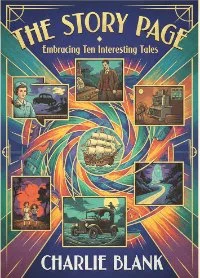
The Story Page

By Charlie Blank

The Story Page: Embracing Ten Interesting Tales is a short story anthology by Charlie Blank, published in 1933 by The O’Sullivan Publishing House in Chicago. The book is a collection of ten distinct narratives that explore themes of missed opportunities, second chances, and the dramatic twists of fate that define human lives during the early 20th century.

The collection is dedicated "Lovingly to Mother". It features the following ten stories:

1. "The Unanswered Call.. 2. His Second Chance-3. Ann-4. The Destroyer 5. The Teetotal Tar. 6. The Sequel, Unique. 7. The Phantom at the Wheel. 8. A Brush with Civilization. 9. The Crampton Kidnapping. 10. A Peep into the Hereafter.

The stories often focus on characters at emotional or moral crossroads, dealing with the consequences of their choices or the intervention of tragedy.

Thematic Overview.

“Tragedy and Irony:” In "The Unanswered Call," a nurse named Jane Merrick decides to end her eight-year relationship with a man named Jerry. She intentionally ignores his persistent phone calls to prove her resolve, only to receive a call from a hospital informing her that he was fatally struck by a car thirty minutes prior—the very period during which she refused to answer.

The Struggle for Redemption:. "His Second Chance"* follows John V. Caruthers, a man living in poverty and shame after losing his job during the Depression and embezzling money to play the stock market. The story explores his internal battle as a fugitive from justice, trying to earn enough money through a risky oil venture to make amends for his past.

Historical Context: The narratives are deeply rooted in their era, referencing the **Great Depression**, the volatility of the **Stock Exchange**, and the personal toll of financial ruin.

The prose is character-driven and often somber, highlighting the thin line between a "fresh youthfulness" and a life turned "sordid and bitter" by time and circumstance.

The O’Sullivan Publishing house. Chicago. Illinois. 1938. 229p.

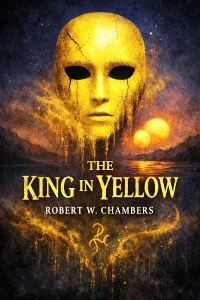
The King in Yellow

By ROBERT W. CHAMBERS. Introduction by Colin Heston

When The King in Yellow appeared in 1895, it slipped quietly into a literary world already saturated with decadence, occult enthusiasms, and the fin-de-siècle’s peculiar blend of anxiety and intoxication. Yet Robert W. Chambers’s strange mosaic of tales—united by a fictional forbidden play that unhinges those who read it—swiftly distinguished itself from its contemporaries. In the decades since, this slim volume has grown into one of the foundational works of the American weird tradition, prefiguring H. P. Lovecraft, influencing generations of modern horror writers, and unexpectedly resurfacing in the twenty-first century as a cultural touchstone.

What makes Chambers’s book so unusual is its deliberate blurring of boundaries: between reality and hallucination, sanity and delusion, art and contagion. The collection opens with “The Repairer of Reputations,” a tale set in an imagined New York of 1920—an unsettling mixture of futurism, authoritarian regulation, and manic delusion. It is here that the mysterious “King in Yellow” first exerts his influence. The narrator, a deeply unreliable figure, is convinced of his noble birthright and guided by an enigmatic “repairer” who traffics in scandal and blackmail. The narrative unfolds as a case study in self-deception, political paranoia, and the fragility of identity—yet nothing in the story is easily dismissed as mere fantasy. Reality itself buckles under the weight of the narrator’s convictions.

The Mask, perhaps the most haunting of the early tales, shifts the setting to the Latin Quarter of Paris, where art, science, and obsession converge. The grotesque beauty of Boris Yvain’s alchemical solution—capable of transforming living beings into flawless marble—creates a collision of aesthetics and mortality that typifies Chambers’s most powerful work. The story’s dreamlike quality reflects the decadent movement’s fascination with artificiality, transformation, and the erotic pull of the inanimate. Throughout, the shadow of the forbidden play hovers, never fully seen but always felt.

Other sections—“In the Court of the Dragon,” “The Yellow Sign,” and additional sketches—extend the book’s architecture of dread. Chambers never provides the text of the play itself, only its aftershocks, its “second act” whispered about as a psychic abyss from which there is no return. This structural absence is one of the book’s great innovations: The horror lies not in spectacle but in suggestion, in the void where meaning should be. The King in Yellow, the Pallid Mask, and the Lost City of Carcosa are not fully explained but instead exist as fragments of a mythology the reader assembles intuitively, as though the stories themselves are encoded with an infectious idea.

The power of The King in Yellow endures because it is not simply a collection of supernatural tales—it is a meditation on contagion: of ideas, of aesthetics, of inner instability. Chambers’s fictional play does not merely frighten; it corrodes. It reveals hidden fractures in those who encounter it and amplifies their darkest impulses. In this sense, the book mirrors its age. The 1890s were marked by the collapse of old certainties, the rise of new sciences of the mind, and an artistic fascination with decadence, degeneration, and the beautiful ruin of the self. Chambers captured that atmosphere with uncanny acuity.

Today, amidst digital conspiracies, fractured identities, and a renewed cultural fascination with alternate realities, The King in Yellow feels more relevant than ever. It invites the reader to step into a world where truth is unstable, where art is dangerous, and where the boundaries of perception are mercilessly thin. The book’s whispered mythology has become larger than the text itself, seeding later works, reappearing in unexpected media, and reminding us that the most enduring horrors are those we cannot fully see.

To open these stories is to risk a glimpse of the Yellow Sign—a symbol of beauty, madness, and forbidden knowledge. Chambers offers no assurances. He only extends an invitation to enter Carcosa, where twin suns sink over black waters and where, once the play begins, the mask cannot be removed.

Read-Me.Org Inc. New York-Philadelphia-Australia. 2026 p.209

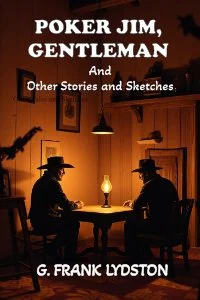
Poker Jim, Gentleman and Other Tales and Sketches

BY G. Frank Lydston. Preface by Colin Heston

The wind howls across the desolate plains of the Old West, not with the romantic whistle of a ballad, but with the coarse, biting grit of reality. In the flickering shadows of a kerosene lamp, silhouettes gather around a scarred felt table, their faces etched with the histories of desperate gambles and hard-won wisdom. This is the world of G. Frank Lydston—a world where the line between the hero and the rogue is as thin as a worn playing card and twice as fragile.

In his seminal collection, Poker Jim, Gentleman, and Other Tales and Sketches, Lydston does more than recount anecdotes; he performs a literary autopsy on the American frontier. As a physician and a keen observer of human nature, he brought a surgical precision to his storytelling, looking past the polished myths of the "Wild West" to reveal the raw, pulsing nerves of the men and women who inhabited it. He understood that the wilderness was not merely a location, but a crucible that burned away the pretenses of civilization to reveal the true metal of the soul.

The titular character, Poker Jim, serves as the ultimate paradox of this untamed wilderness. He is a man who thrives in the so-called dens of iniquity, yet he carries himself with a code of ethics more rigid and unwavering than many of the city judges who would seek to condemn him. Through Jim and a cast of vibrant, often tragic figures, Lydston explores the profound duality of man, demonstrating how a gambler can possess the heart of a saint while a self-proclaimed gentleman might harbor the soul of a thief. To Lydston, the environment was never just a backdrop; it was a character in its own right—one that tested, broke, and occasionally redeemed the human spirit.

Lydston’s prose is a unique blend of Victorian elegance and frontier ruggedness, capturing the rough dialect of the mining camp and the sophisticated musings of the scholar with equal fervor. This collection stands as a testament to an era that was rapidly vanishing even as he wrote—a transition from lawless expansion to the paved certainty of the modern age. As you turn these pages, you step into smoke-filled saloons and silent, starlit canyons to witness the birth of a national identity forged in the fires of chance. You are invited to learn the philosophy of the hand: that life, much like the game itself, is rarely about the cards you are dealt, but the courage with which you play them.

Monarch Book Co., Chicago, 1906. Read-Me.Org Inc. New York-Philadelphia-Australia. 2026. p.233.

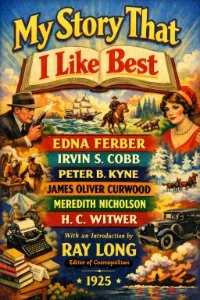
My Story That I Like Best

By EDNA FERBER, IRVIN S. COBB, PETER B. KYNE, JAMES OLIVER CURWOOD, MEREDITH NICHOLSON, and H. C. WITWER. Edited by RAY LONG. Preface by Colin Heston.

In this book, you will find a rare and intimate glimpse into the minds of some of America’s most celebrated storytellers of the early twentieth century. Edna Ferber, Irvin S. Cobb, Peter B. Kyne, James Oliver Curwood, Meredith Nicholson, and H. C. Witwer—names that graced the covers of magazines and the shelves of countless homes—come together in this unique collection to share the stories they themselves hold dearest.

Unlike anthologies chosen by editors or critics, this volume is deeply personal. Each author was invited to select the work that, in their own judgment, best represents their craft, their ideals, and their voice. These are not merely stories—they are reflections of character, ambition, and artistry, chosen by the creators themselves.

The idea behind this book is simple yet profound: who better to decide what is “best” than the writer who gave the story life? Here, you will encounter tales that stirred their authors’ hearts, stories that perhaps marked turning points in their careers, or pieces that captured the essence of their creative spirit.

As Ray Long, the distinguished editor of Cosmopolitan, notes in his introduction, this collection is more than entertainment—it is a testament to the enduring power of storytelling and the pride of authorship. It invites readers not only to enjoy these narratives but to appreciate the personal significance they hold for their creators.

So turn the page and step into a world where the voices of six remarkable writers speak directly to you, offering the stories they love best. In doing so, they reveal something more than plot and character—they reveal themselves.

NY. International Magazine Company. 1925. Read-Me.Org Inc. New York-Philadelphia-Australia. 2026. 157p.

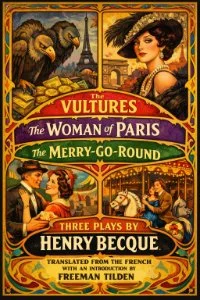
THE VULTURES==THE WOMAN OF PARIS==THE MERRY-GO-ROUND

Three Plays By Henry Becque. Translated From The French With An Introduction By Freeman Tilden. Preface by Colin Heston.

To enter the world of Henry Becque is to step into a theater stripped of its finery. As we present these three plays—”The Vultures”, “The Woman of Paris”, and “The Merry-Go-Round”—it is essential to recognize the revolutionary "brutal strength" Becque required to "knock over the idols of romance" that dominated the 19th-century stage.

Freeman Tilden’s introduction serves as a vigorous defense of Becque as the pioneer of realism. Tilden correctly identifies Becque as a "revolutionist" who flouted the "happy ending" and the rigid traditions of dramatists like Sardou. He eloquently describes Becque’s vision of a stage representing the "dramatic commonplaces of every-day life" rather than the "sentimental nonsense" of the era.

However, a modern critique of Tilden’s introduction reveals two areas where his analysis might be expanded:

First, “The Nature of the "Cruel Theatre": Tilden focuses heavily on the “structural” revolution—the five-act drama and the rejection of mystery-driven plots. While he mentions Becque’s "militant" social ideas, he arguably underplays the psychological darkness of the "cruel theatre". Becque did not just want realism; he wanted truth to go "defiantly bare," revealing a world where "vultures" (lawyers, partners, and creditors) wait for a man to die before descending on his family.

Second, “The Gender Perspective:” Tilden notes that Becque voiced "the protest of women against the prejudice that kept them from earning a decent livelihood". Yet, in his discussion of “The Woman of Paris” (“La Parisienne”), Tilden remains somewhat focused on the "naughty triangle" and the prosaic nature of adultery. A modern critique would emphasize that Becque’s women are often forced into moral compromises not by choice, but by a "bureaucratic system" that offers them only parasitism or ruin.

Despite these nuances, Tilden’s assertion remains true: Becque was the "wedge that opened the way for realism". He cleared the ground for Ibsen and the modernists by proving that a play could be "clear without being obvious" and that everyday existence held enough surprises for a master of stagecraft.

In this collection, readers will witness the "unexpectedly striking" scenes that puzzled 19th-century critics—from the savage dinner of the concierges in “The Prodigal Son” to the cold-blooded notary Bourdon in “The Vultures”. We invite you to experience the "cruel theatre" in its purest form: a mirror held up to the "marvellous dramatic commonplaces" of our own human struggle.

New York. Mitchell Kennerley. 1913. Read-Me.Org Inc. New York-Philadelphia-Australia. 2026. 267p.

Mendel Marantz

By David Freedman. Introduction by Colin Heston.

David Freedman (1898–1936) was a central figure in the literary and entertainment world of the early 20th century. While Mendel Marantz remains his most enduring prose creation, his career spanned a vast range of media, from short stories to Broadway stages and the burgeoning world of radio

Freedman began his rise to prominence in the early 1920s. Mendel Marantz first appeared as a series of popular short stories in The Pictorial Review Company between 1922 and 1924. These stories were so well-received that they were compiled into the 1926 novel. The book’s dedication to Arthur Turner Vance expresses Freedman's gratitude for "bringing humble Mendel Marantz into the salons of literature," highlighting the character's journey from a folk figure to a literary icon.

Freedman's talent for sharp, rhythmic dialogue and philosophical wit—perfected in Mendel’s "What is...?" proverbs—led him naturally toward the performing arts.

Stage Success: In the mid-1920s, he transitioned to Broadway, writing for the legendary Ziegfeld Follies. He became a lead writer for comedy icons, most notably Eddie Cantor.

The Radio King: By the 1930s, Freedman was known as the "King of Radio Writers." At the height of his career, he was reportedly writing scripts for several of the most popular shows on the air simultaneously, earning a then-staggering salary for his creative output.

Freedman's work is characterized by a unique blend of immigrant humor and universal human truth. In Mendel Marantz, he explores the tension between the "fish market" of Pitt Street and the "Fifth Avenue" of high society. The novel captures the evolution of the Marantz family over several years, following their growth from a small apartment where "seven people in three rooms" lived like "cats on a roof" to the invention of the "Pitt Street Studio Apartments de Luxe. Mendel Marantz (1926), the full novel that solidified his reputationThe story was later adapted for both the stage and the 1926 silent film The Family Upstairs.

Freedman's career was cut short by his early death in 1936, but his "What is...?" philosophy continues to offer a window into the resilient, dreaming spirit of the era.

About the novel: Meet Mendel Marantz: the philosopher of the Fifth Avenue mind living in a fifth-floor walk-up. In David Freedman’s timeless classic, we step into the bustling, heart-filled world of the Marantz family, where the rent is high, the tea is hot, and the jokes are always free At the center of it all is Mendel—a man who views work as "poison" but sees life as a "see-saw" of endless possibilities While his wife, Zelde, scrubs away the "ocean of troubles" on a washboard, Mendel is busy dreaming up the next big thing, like his revolutionary Refillable Can Company. He’s the original "idea man," a dreamer who believes that while "fools can make money," only brains can create a future.

But when the family hits a breaking point, Zelde stages a revolt that flips their world upside down. In a modern twist on roles, Mendel finds himself trading his inventions for the "charms" of 1920s housekeeping—battling flying pillows, greasy garbage, and the relentless energy of six children. It’s a hilarious and poignant look at family dynamics that feels surprisingly fresh today.

Whether he’s turning a crumbling Pitt Street tenement into a "Studio Apartment de Luxe" or navigating the high-society dreams of his daughter Sarah, Mendel meets every challenge with a sharp wit and a signature "What is...?" proverb.

Mendel Marantz isn't just a book about the old days; it’s a celebration of the dreamer in all of us, proving that no matter how tough the "journey" gets, it's always better with a joke and a cup of tea.

Read-Me.Org Inc. New York-Philadelphia-Australia. 2026. p.212.