Open Access Free Library
CRIME+CRIMINOLOGY.jpeg

CRIME

Violent-Non-Violent-Cyber-Global-Organized-Environmental-Policing-Crime Prevention-Victimization

Posts in Crime
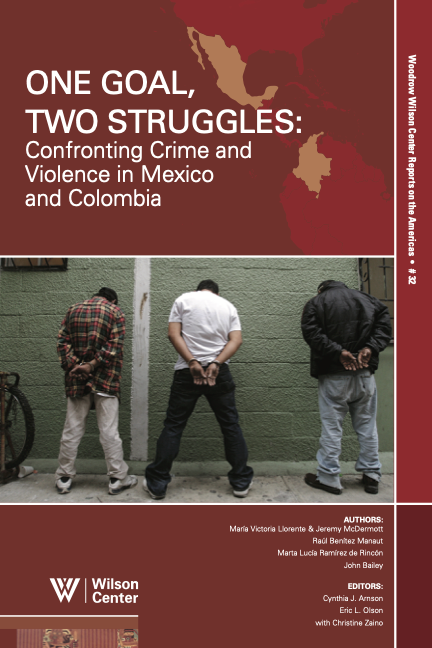
ONE GOAL, TWO STRUGGLES: Confronting Crime and Violence in Mexico and Colombia

By María Victoria Llorente and Jeremy McDermott,  Raúl Benítez Manaut , Marta Lucía Ramírez de Rincón , John Bailey

Since the mid-2000s, violence related to drug trafficking and other transnational crime has increased exponentially in Mexico. By the end of the decade the public began to seriously doubt the government’s strategy and its ability to guarantee public safety. The nature and intensity of violence in Mexico brought forth memories of the 1980s and ’90s in Colombia, when the country was besieged by the Medellín and Cali drug cartels. Over the course of more than a decade, Colombia’s security situation has improved dramatically; it has become an “exporter” of security expertise and has trained thousands of military and police personnel in Mexico, Central and South America, and the Caribbean as well as around the world. What aspects of Colombia’s strategy and tactics for fighting organized crime in its own territory offer useful lessons for Mexico? What might Colombia’s steps and missteps offer by way of example or counter-example? What is unique about each case such that comparisons are misleading? What do current security challenges in Colombia suggest about the threat posed by organized crime more generally? In One Goal, Two Struggles: Confronting Crime and Violence in Mexico and Colombia, international experts address the utility of comparing Colombia and Mexico’s experiences and strategy for combatting organized crime and violence more generally.

Pathways of post-conflict violence in Colombia

By Juan Albarracín, Juan Corredor-Garcia, Juan Pablo Milanese, Inge H. Valencia & Jonas Wolff

Violence in post-conflict settings is often attributed to a post-war boom in organized crime, facilitated by the demobilization of armed groups and the persisting weakness of the state. The article argues that this is only one pathway of post-conflict violence. A second causal pathway emerges from the challenges that peace processes can constitute for entrenched local political orders. By fostering political inclusion, the implementation of peace agreements may threaten subnational political elites that have used the context of armed conflict to ally with armed non-state actors. Violence is then used as a means to preserve such de facto authoritarian local orders. We start from the assumption that these two explanations are not exclusive or competing, but grasp different causal processes that may well both be at work behind the assassination of social leaders (líderes sociales) in Colombia since the 2016 peace agreement with the FARC guerrilla. We argue that this specific type of targeted violence can, in fact, be attributed to different, locally specific configurations that resemble the two pathways. The article combines fuzzy-set Qualitative Comparative Analysis with the case studies of the municipalities

The Effect of Permissive Gun Laws on Crime

By John J. Donohue

Substantial evidence has documented a powerful “instrumentality†effect: the more lethal the weaponry employed, the greater the likelihood that death will result from any given assault. This finding provides the foundation for the subsequent findings that a variety of measures that restrict the prevalence or limit the permissible types of lethal weaponry can lower the costs of gun violence. The literature has advanced to the point that there is a sufficient empirical basis to call for the elimination of right-to-carry laws, to reestablish bans on assault weapons and high-capacity magazines, to maintain restrictions on youthful access to guns, and to repeal stand-your-ground laws. The Supreme Court’s recent decision expanding the scope of the Second Amendment in New York State Rifle and Pistol Association v. Bruen shows a concerning disinterest in the importance of these empirical findings.

Violence and criminality: two modalities found in the context of the Colombian armed conflict 

By Yennesit Palacios Valencia and Ignacio García Marín

  Colombia is among the countries with the highest levels of violence and crime in the world, despite the peace agreements between the State and different armed groups, including the FARC. This is partly due to the fact that the Colombian case is complex and multifaceted because of the variety of participants in the armed conflict context and due to the mutation of new actors, under the modality of organized crime. Based on the above, the objective is to study the Colombian reality, contextually and diachronically, from theoretical and epistemological elements to demonstrate how violence and criminality factors intersect in the context of the armed conflict. The study concludes, among other findings, that in Colombia the ambiguity and the multiplicity of terms used to name the emerging criminal groups presents a legal problem because of their hybrid composition and regarding their treatment within or outside of the armed conflict

  Assessing the Transnational Criminal Capacity of MS-13 in the U.S. and El Salvador 

By Eric Hershberg, Edward Maguire, Steven Dudley

In October 2012, the U.S. government designated MS-13 as a transnational criminal organization (TCO), raising serious questions about the breadth of the gang’s criminal capacity. Some analysts have pointed to a steady growth and professionalization of this criminal organization, but insufficient data has hindered the formulation and implementation of policies aimed at countering this trend. Our multiyear project proposed to fill gaps in the extant literature by conducting qualitative and quantitative research designed to assess MS-13’s transnational criminal capacity. More specifically, our objectives were to: 1) conduct extensive interviews with local stakeholders, gang experts, and MS-13 members in three major metropolitan areas, including two in the U.S. and one in El Salvador; 2) analyze qualitative and quantitative data gathered through tested survey and interview instruments and from official sources, with particular attention to the following factors: type of criminal activities, organizational structure, inter- and intra-gang relationships, level of community penetration, accumulation of social capital, development and migration patterns, and recruitment strategies; 3) utilize social network analysis techniques to quantify the social reach of gang member respondents; and 4) disseminate project findings to relevant constituencies in law enforcement, policymaking circles, academe, and the general public. The purpose of our research was to provide policymakers and law enforcement officials with a comprehensive understanding of MS-13 by measuring the extent and range of the organization’s criminal activity and mapping its social networks. Our goal was to generate empirical data that could serve as a foundation upon which to shape new policies and practices. Specifically, our hope was that the data would provide insights regarding the optimal allocation of law enforcement resources, the likely movements of MS-13, and the design of intervention and suppression strategies. 

Washington DC: U..S. Department of Justice,  2019. 11p.

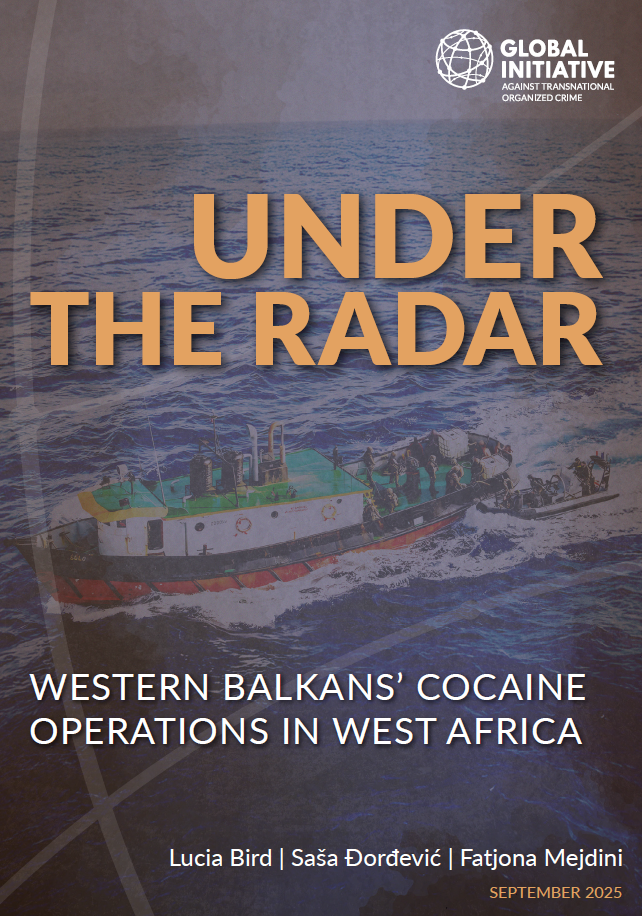
  UNDER THE RADAR.  WESTERN BALKANS’ COCAINE OPERATIONS IN WEST AFRICA 


By  Lucia Bird | Saša Đorđević | Fatjona Mejdini 

Western Balkans criminal groups, comprising both Albanian- and Slavic-speaking networks, have become dominant players in the global cocaine trade. While their influence in Europe and Latin America has been well documented, their growing role in West Africa has largely flown under the radar. Since 2019, these groups have expanded their operations in West Africa, using the region as a critical logistical, storage and redistribution hub for cocaine shipments en route to European consumption markets and beyond. This expansion has been shaped by their effective leverage of geography, governance weaknesses and infrastructure, both hard and digital. Initially limited to occasional trafficking links, the Western Balkan groups have deepened their presence across West Africa’s coastal states, including Senegal, Sierra Leone, Gambia, Guinea-Bissau and Cabo Verde. This growing focus on West Africa was driven by rising demand for cocaine in Europe, increased enforcement on direct routes to Europe and strengthened partnerships with Latin American cartels, especially Brazil’s Primeiro Comando da Capital (PCC). Western Balkan groups now operate through multiple trafficking methods in West Africa, exploiting fully containerized routes, non-containerized shipments (i.e. shipments not stored in containers, but hidden elsewhere on vessels) by other types of vessels, trans-shipments at sea and in-region containerization to conceal the cocaine’s origin. They have embedded brokers in West African countries who organize logistics, establish infrastructure and liaise with local actors. In Sierra Leone, for example, they have reportedly established companies to launder funds and warehouses to store and repackage cocaine, coordinating onward shipments through formal seaports using legitimate cargo. These brokers are key to operations and are often shared among the different groups. The groups’ structures are flexible and typically consist of small, trusted units supported by collaborators. Groups leverage local vulnerabilities to build relationships with corrupt law enforcement, port operators and security services. Particularly significant Western Balkan groups in West Africa include the Montenegrin Kavač clan and its rival, the Škaljari clan. The Kavač clan’s operations have been linked to ports in Brazil and Sierra Leone, with brokers overseeing logistics from Freetown. As we explain in this report, in some cases a single broker will work with more than one group from the Western Balkans. In parallel, Albanian-speaking groups, which have a strong presence in Spain and Brazil, have been operating through countries including Senegal and Gambia, sometimes collaborating with the Italian ‘Ndrangheta or the PCC. The example of an Albanian national who, according to Brazilian law enforcement investigations, is a major European supplier coordinating shipments through West Africa from Brazil, exemplifies the growing use of multi-tonne cocaine operations routed through the Gulf of Guinea. Looking ahead, Western Balkan groups are likely to further entrench themselves in West Africa, gradually relying less on their alliances with the ‘Ndrangheta, the PCC and other Western Balkan groups and instead investing directly in infrastructure and protection mechanisms. As in Latin America, their growing presence is likely to be accompanied by deeper corruption, potential violence and fragmentation into more autonomous cells. To address the growing role of Western Balkan criminal groups in West Africa, a coordinated response should focus on three key pillars. First, strategic cross-continental partnerships should be built with law enforcement, port authorities and international actors, underpinned by a political-economy analysis, to strengthen cooperation and to identify aligned priorities. Second, an enhanced data picture, drawing on a wider range of formal and informal sources, is needed to map trafficking routes and financial flows more effectively and to empower regional and international actors to tailor their risk assessments of specific routes, to profile criminal actors and to develop viable strategies for detection and disruption. Third, smart targeting strategies that prioritize brokers should be adopted, supported by parallel financial and criminal investigations. 

Geneva:  Global Initiative Against Transnational Organized Crime   2025. 61p.

  Miracle or Mirage? Gangs and Plunging Violence in El Salvador Latin America 


By The International Crisis Group

  Principal Findings : What’s new? In President Nayib Bukele’s first year in office, El Salvador has seen a sharp drop in what long were sky-high murder rates. While the public celebrates his well-known “iron fist” policies, the reasons for success might lie in quiet, informal understandings between gangs and the government. Why does it matter? It is a major feat to reduce killings by the three main gangs in one of the world’s most violent countries. But the precise causes of the decline are complex and often unclear. Recent outbreaks of gang violence and political mudslinging underline the fragility and reversibility of this achievement. What should be done? Sustaining violence reduction is key. The government should prioritise community-focused development, rehabilitation of jailed gang members and more sophisticated policing efforts, including internal checks on security forces. Should gangs keep violence down and cooperate with authorities during the pandemic, Bukele should consider opening channels for local dialogue with them.   

  After decades of harrowing gang crime, homicides have plunged in El Salvador on the watch of the new president, Nayib Bukele. Faced with the growth of the MS-13 and 18th Street gangs, previous governments resorted to “iron fist” policies to crush them, only to find these fuelled a backlash. Since his 2019 election, President Bukele, a self-styled outsider, has won huge public support by presiding over a 60 per cent fall in murders. Yet prospects that this achievement will endure are in doubt. The collapsing homicide rate may stem not only from the government’s public security policies, but also from the gangs’ own decision to curb bloodshed, possibly due to a fragile non-aggression deal with authorities. In addition, Bukele’s confrontational style, which has been exacerbated during the COVID-19 pandemic, risks entangling his security reforms in political battles. Broadly backed efforts to support affected communities, assist members wishing to leave gangs and encourage local peacebuilding are more likely to end definitively El Salvador’s cycle of violence. The Bukele administration argues that the plummeting murder rate – with daily killings now standing at their lowest rate since the end of the country’s civil war (1980- 1992) – represents the crowning achievement of a new security strategy. In theory, the government’s Territorial Control Plan couples robust law enforcement with violence prevention schemes. It has reinforced joint police and military patrols in 22 municipalities suffering high rates of crime, while toughening confinement measures in jails in a bid to sever communications between inmates and the outside world. At the same time, the government’s goal of building dozens of “cubes” – glass-walled recreational and education centres – represents the flagship effort to brighten the lives of young people growing up under gang dominion and prevent recruitment into their ranks. The precise reasons for the nationwide drop in homicides are hard to pin down. Statistical studies show that the Territorial Control Plan is most likely not the sole cause; specific local falls in murder rates do not correspond precisely to those areas where the plan has been implemented. Instead, in large part, gangs appear to have themselves decided to scale back their use of lethal violence. Unassailable control over communities, declining gang rivalry and increasingly autonomous gang leadership outside jails may explain this decision more than the Territorial Control Plan. Yet other government policies might have played a role: numerous analysts and local activists ascribe the gangs’ move to an informal understanding between them and the authorities, who have allegedly ordered security forces to dial back their clashes with these groups. A sudden killing spree attributed to MS-13 in April illustrated just how precarious the gangs’ commitment to reducing violence can be. Bukele’s reaction to the attacks, which left over 80 dead in a five-day span, reaffirmed his inclination to adopt punitive measures to force gangs into submission. Images shared around the world from inside El Salvador’s high-security jails revealed inmates huddled together or forced into shared cells without any access to daylight. Although murder rates have since fallen again, the risk remains that gangs, now short of extortion income due to lockdown measures and indignant at the government’s crackdown, will once again resort to extreme violence.  

  Crisis Group Latin America Report N°81, 8 July 2020  

Brussels: International Crisis Group, 2020. 46p.

RE-PUNISHED FOR THE PAST How Criminal Records Increase Prison Terms and Racial Injustice

By: Nazgol Ghandnoosh, Ph.D., Director of Research, Bobby Boxerman, Ph.D., former Extreme Sentencing Research Fellow, and Celeste Barry, former Program Associate at The Sentencing Project.

Although it is a widespread practice in the United States to increase criminal penalties for people with prior convictions, there is little evidence that this practice advances public safety.1 Research by the Robina Institute has shown that state and federal sentencing guidelines dramatically increase sentence lengths based on individuals’ prior criminal records. This effect is even more pronounced for African Americans. Given the limited public safety benefits from criminal record “enhancements” and the accompanying harms to incarcerated individuals, their families, and communities — and the steep financial costs — this further lengthening of sentences should be reconfigured.

Entering the Void: Chinese illicit networks in Mexico 

By Barbara Kelemen | Ján Slobodník

Summary ▪ Mexico’s macroeconomic stability and abundant natural resources have made the country into an attractive destination for Chinese businesses. ▪ The country still suffers from a lack of internal security, most of it stemming from the Mexican Drug War, an ongoing multilateral lowintensity conflict between the Mexican government and a large number of criminal organizations. ▪ In some of Mexico’s states, pervasive violence and instability have resulted in a power vacuum. With the government being unable to guarantee security, non-state actors such as criminal organizations and/or civilian militias seize the opportunity to establish their own rule. ▪ When foreign companies operate in such troubled areas, they inevitably run into problems caused by Mexico’s security issues. ▪ Within this trend of foreign companies operating in Mexico, some level of tacit cooperation has been observed between Chinese businesses and non-state actors. This cooperation is often an outcome of localized security vacuums that are exploited by alternative security providers, such as criminal organizations, that can fill them and provide operational safety for local businesses. ▪ A growing body of research has identified the existence of Chinese illicit networks and their involvement in the trafficking of people, narcotics, and contraband goods, as well as money laundering and illegal arms trade in Mexico. ▪ Concealed under the guise of legal commercial activity, networks of Mexican criminal organizations and their Chinese business partners exploit the dire security situation in some areas of Mexico. ▪ Despite attempts by the Chinese and the Mexican governments to regulate certain sectors that contribute to the existence of the illicit networks in Mexico, there are still substantial opportunities that are ripe for exploitation by the criminal group-legitimate business partnerships.

Contraband tobacco: Systematic profiling of cigarette packs for forensic intelligence

By: Laurie Caron, Frank Crispino, Cyril Muehlethaler 

Tobacco smuggling remains a widespread illegal activity in Canada, associated with important social and economic impacts, and often linked to organized crime. This study explores the application of forensic profiling as an intelligence tool to support the analysis of contraband cigarette production and distribution. Physical and chemical manufacturing characteristics of seized contraband cigarette packs, provided by police forces, were observed and coded using macroscopic, microscopic, and spectroscopic techniques. Multivariate statistical analyses were then conducted to compare manufacturing characteristics between packs and identify potential links. The analyses highlighted links between cigarette packs and seizures based on shared manufacturing characteristics. The results and the identified groups were also compared with seizure data provided by our collaborator. The results demonstrate the relevance of forensic profiling to formulate hypotheses regarding shared production processes or supply networks. These hypotheses provide information that contributes to understanding tobacco smuggling and aim to examine how forensic intelligence can support law enforcement and measures to prevent and disrupt this criminal activity. A preliminary optimal procedure for applying forensic profiling in operational contexts targeting contraband tobacco was finally proposed. Despite limitations in the dataset creation that were beyond our control, this study represents a starting point for applying this scientific approach to tobacco smuggling.

Huachicoleros: Criminal Cartels, Fuel Theft, and Violence in Mexico

By Nathan P. Jones and John P. Sullivan

Criminal cartels and gangs dominate the illicit economy in Mexico. These organized crime groups challenge the solvency (specifically capacity and legitimacy) of the state in Mexico. Organized crime in Mexico is involved in a range of activities including extortion, drug trafficking, human trafficking, and petroleum theft. Criminal cartels, often called drug trafficking organizations, have diversified into other illicit activities specifically petroleum theft. This paper provides an overview of the rise of a specialized organized criminal entity: huachicoleros. Huachicoleros specialize in fuel theft and like their narco counterparts use corruption and violence to protect their illicit market. The rise of Cártel de Santa Rosa Lima (CSRL) is discussed as a salient case study. The volatile mix of corruption, violence, and economic instability will be assessed, and government and national oil company (PEMEX) response is discussed

Transnational Organized Crime in Mexico and the Government's Response

By Evan Ellis

The U.S. government threats of tariffs on the Mexican government if it did not do more to control illicit fentanyl ows into the United States have cast new attention on the growing problem of transnational organized crime that has wrought violence and corruption at all levels in Mexico. This work, based on the authors research in interviews with senior Mexican security ofcials in Mexico City in March 2025, examines the evolution of transnational organized crime in the country, and the Mexican government’s response, with the support of the United States and other partners.The principal drivers of transnational organized crime dynamics in Mexico are ows of cocaine through the country, largely destined for European and Asian markets, as well as the production of fentanyl there from Chinese and other precursors, mostly oriented toward export to the United States. In addition, other illicit activities including petroleum theft (huachicol), smuggling and exploitation of migrants transiting the country, extortion and kidnapping, illegal mining and money laundering, have also fueled Mexico’s evolving illicit economy. With respect to murders and other violence in Mexico, arms, including long arms imported from the United States, arms obtained on the black market from Central American and other global wars, drones and other military products principally from the People’s Republic of China (PRC), as well as a large, welldeveloped illicit domestic industry for military vehicles and supplies all contribute to the lethality of multiple ongoing conict within the country.The organized crime dynamics in Mexico, the domestic and international groups involved, in the pattern of violence has evolved signicantly in the almost two decades since 2006 when Mexican president Felipe Calderon declared war on the drug cartels for their escalating violence and deployed federal troops into Michoacan to respond. This work analyzes of those dynamics, their evolution, and the response of the Mexican government, in conjunction with the US and other partners.

The Crime Conundrum in the Caribbean 

By Ivelaw Lloyd Griffith

High crime—especially intentional homicide—has posed a clear and present danger for the Caribbean for some time. However, soaring homicide rates across the region and the fact that many are committed using weapons from the United States have caused the matter to attract more attention in recent months, with a recent symposium in Trinidad and Tobago on the subject shining the most recent spotlight. CARICOM leaders are concerned about the growing homicide rates and the number of arms entering the region—issues raised both at the February 2023 CARICOM Summit in the Bahamas as well as at a recent special meeting on April 18 and 19 on the subject convened by Prime Minister Keith Rowley of Trinidad and Tobago, who holds the portfolio for security within the CARICOM quasi cabinet. The conference framed crime and violence as a public health crisis. Unlike at the Bahamas meeting—which featured government leaders—experts from within and outside the Caribbean were invited to the symposium to discuss options to address the issue. The Caribbean leaders declared a “war on guns to combat the illegal trade which provides the weapons that contribute significantly to crime and violence in our region causing death, disabilities and compromising the safety of our citizens” and implored the United States to support their efforts to halt illegal arms trafficking. They also lamented the disproportionate shares of their national budgets they are obligated to allocate to national security, especially to combat crime and violence while also grappling with mental and other health-related challenges spurned by the arms trafficking business.1 This report offers an analysis of the contemporary Caribbean crime landscape. Particular attention is paid to intentional homicides and murders. This is not because domestic violence, burglary, rape, larceny, money laundering, and other crimes are unimportant or have not increased in some places. Indeed, there have been troubling surges in domestic violence in Guyana, Puerto Rico, Jamaica, and elsewhere. Murder, however, commands attention here because it constitutes the “ultimate crime”—taking a life as well as having powerful economic, public security, and other consequences. Yet, the region’s crime scene is troubling not just because of the volume of murders, but also because of the heinous nature of some of the criminal acts. Thus, we first provide a portrait of the murder scene and then offer examples of some of the horrible ways in which crimes have been prosecuted. Next, we discuss the significant use of weapons, the source of the weapons, and the actionsand the actions being pursued by Caribbean and other leaders to stem the flow of arms into the region. In this respect, we focus on the crime symposium held this past April in Trinidad and Tobago. This report has taken into account a few policy considerations that might be considered as the region’s policymakers and practitioners address the perennial challenge of crime, violence, and arms trafficking.

Exploring Overlaps of Cultural Property Crime with Organised Crime in EU Policy Documents

By Patricia Faraldo Cabana

In recent years the interrelation of the trafficking of cultural property with other forms of organised crime has gained prominence in EU policies on the protection of cultural heritage. This article analyses how the EU has conceptualized and operationalized this overlap in terms of describing the phenomenon and designing countermeasures. Through a content analysis, we evaluate the articulation and use of this connection in EU policy documents published from 1993 to 2023 that include both organised crime and trafficking of cultural property or similar terms (n = 58). The analysis demonstrates conceptual and organizational deficits and a correspondingly weak foundation for EU policy. Misunderstandings related to the organised nature of trafficking of cultural property and its overlaps with other forms of organised crime, particularly the financing of terrorism, may result in misguided policies with the potential to undermine law enforcement efforts. Conversely, the addition to the list of obliged entities and persons in the anti-money laundering framework of persons trading or acting as intermediaries in the trade of works of art opens new opportunities to disrupt the illicit financial flow in the art and antiquities market.

Organized Criminal Syndicates and Governance in Mexico and Central America

By Omar García-Ponce 

Organized criminal groups (OCGs), ranging from local gangs to powerful drug cartels that operate across national boundaries, represent the single most important security threat in Mexico and Central America. A growing body of research in political science and other disciplines has examined the political and socioeconomic roots of these organizations, as well as the mechanisms underlying the production of organized criminal violence. The unprecedented wave of organized criminal violence that has been affecting the region in recent years can be traced back to political transformations and policy changes that disrupted the social and political order at the local level, redefining the organization of illicit markets, and undermining the rule of law. On these issues there is a particularly rich literature that focuses on understanding the outbreak of violence and criminal rivalry in Mexico. Several studies have emphasized the role of state-criminal group relationships as a key factor to understand the challenges that organized crime poses in terms of peacebuilding and democratic rule. Within this framework, the existing literature has identified various forms of criminal governance prevalent in Mexico and Central America, and shed light on how communities respond to crime and violence in contexts of low state capacity. Some of these responses include social mobilization, vigilantism, and support for extralegal violence. The use of violence by OCGs in electoral contexts has also received particular attention in the literature, since they often target candidates or intimidate voters, affecting political preferences and patterns of political participation. Finally, a series of studies has rigorously investigated the impact of organized criminal violence on a number of outcomes, including political attitudes and behavior, trust in institutions, and health and education, among others.

An Obscured Conflict: The role of the Mexican Armed Forces in the Fight Against Organised Crime (2001-2016

By Jan Slobodník

This study examines the militarised approach of the Mexican government in its struggle against organised crime between 2001 and 2016, focusing on the deployment of the armed forces and the implementation of the so-called kingpin strategy. It argues that the removal of cartel leaders, rather than weakening criminal networks, produced fragmentation, diversification, and militarisation within Mexico’s underworld—a process defined here as zetafication. The thesis uses the rise and evolution of Los Zetas as a case study to analyse how a criminal organisation born from army deserters introduced military tactics, hierarchical discipline, and extreme violence into organised crime, transforming the conflict’s character and the state’s response. Drawing on government reports, interviews with Mexican military officers and civilians, and contemporary scholarship, the study situates this phenomenon within Mexico’s political, legal, and socio-economic context, including the influence of U.S. security policy. It concludes that the use of the military as a policing tool produces short-term tactical gains but undermines long-term state stability, erodes public trust, and perpetuates cycles of violence.

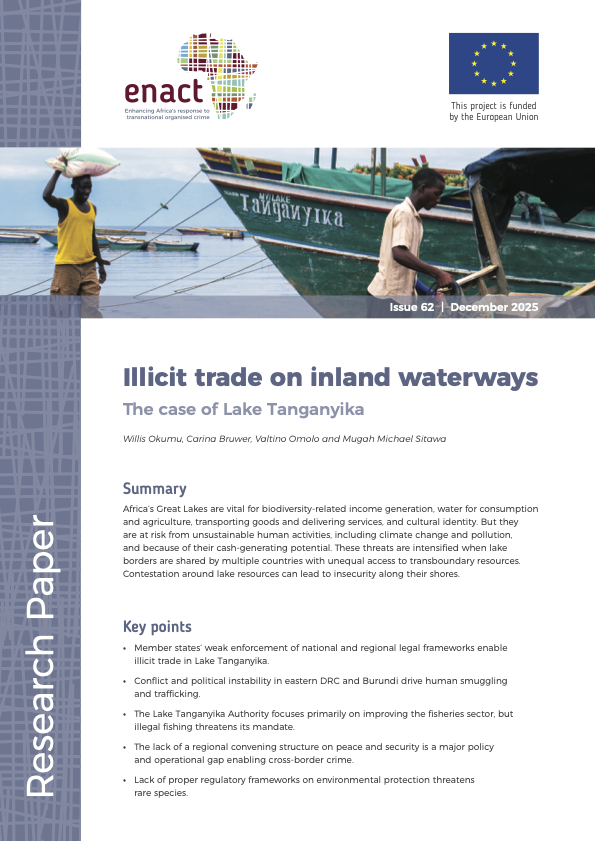
Illicit trade on inland waterways. The case of Lake Tanganyika 

By Willis Okumu, Carina Bruwer, Valtino Omolo and Mugah Michael Sitawa

Africa’s Great Lakes are vital for biodiversity-related income generation, water for consumption and agriculture, transporting goods and delivering services, and cultural identity. But they are at risk from unsustainable human activities, including climate change and pollution, and because of their cash-generating potential. These threats are intensified when lake borders are shared by multiple countries with unequal access to transboundary resources. Contestation around lake resources can lead to insecurity along their shores.

TD Bank US Money Laundering Case - Deep Dive Review & Summary 

By Financial Crime News

Background & Context: TD is the 2nd largest Bank in Canada, the 6th largest in North America and 10th largest in the USA, with globally 28 million customers, and total assets of US$1.52 trillion. TD employs around 90,000 people and is present in many financial centres around the world with retail businesses in Canada and the USA. RBC is the 5th largest in North America, with Scotiabank 9th and Bank of Montreal 10th. The TD Group had been led by CEO, Bharat Masrani who was appointed to the role in November 2014. Masrani spent all his professional life at TD in front facing leadership roles, in Canada and overseas. In 2003 he became Chief Risk Officer of TD Bank Group. Once TD entered the US market he became CEO of it’s US operations. In 2013 Masrani was appointed COO and CEO designate following the then CEO’s announced retirement. This followed the fine by the OCC against TD bank USA (for more see below). In 2018, Masrani was the highest-paid Big 5 Canada CEO with C$15.3 million in total compensation. In 2023, he took a pay cut due to U.S. regulatory issues and the bank's termination of its First Horizon acquisition, which saw his compensation drop to C$13.4 million ($9.93 million) in 2023. Masrani had championed TD Groups ambitious U.S. expansion strategy as it looks for growth opportunities outside of Canada. The C$13.4 billion (US$10 billion) First Horizon deal, which was announced in February 2022, if completed, would have given TD access to 12 states across the U.S. Southeast. It was called off in May 2023 when it’s US AML issues meant US would not be approving the transaction. Whilst Masrani has announced his early retirement he is still in post until a planned succession by insider Raymond Chun, a 30 year TD veteran and Head of Canadian Personal Banking can be finalised at next years AGM on 10 April, 2025 TD Bank USA, uses the moniker, “America's Most Convenient Bank”, and provides 10 million customers with a full range of retail, small business and commercial banking products and services at more than 1,100 convenient locations throughout the Northeast, Mid-Atlantic, Metro D.C., the Carolinas and Florida. In addition, TD Auto Finance, a division of TD Bank, N.A., offers vehicle financing and dealer commercial services. TD Bank and its subsidiaries also offer customised private banking and wealth management services through TD Wealth. TD Bank USA is headquartered in Cherry Hill, New Jersey. Total revenues in 2023 of C$51,8 billion (US$37.6 billion), up from C$46.1 billion (US$33.5 billion) in 2022, with costs of C$27.4 bullion (US$20 billion), up from C$24.3 billion (US$17.6 billion) in 2022 (non interest expenses) and net income or profit of C$15.1 billion (US$11 billion) down from C$15.4 billion (US$11.2 billion) in 2022. Increased costs in 2023 in terms of non intere

Public Opinion on Legalizing Psychedelics

By Ben Senator, Michelle Priest, Beau Kilmer

Nearly one in four U.S. adults think psilocybin “magic” mushrooms should be legal, according to a new RAND study. This level of support mirrors attitudes toward cannabis in the mid‑1990s—just before states began allowing medical use.

The study, which draws on data from the 2025 RAND Psychedelics Survey, finds that public attitudes vary greatly depending on the substance: While 23 percent of respondents support legal use of psilocybin mushrooms, only about 10 percent said the same about LSD and MDMA.

Among those who support making psilocybin use legal, 56 percent favor its use for treating mental or physical health conditions, but just 42 percent believe adults should be free to use it for any reason. And among those opposed to legalizing psilocybin, 62 percent believe it should be illegal for any reason.

The survey also asked about how legal psilocybin should be obtained: 49 percent of respondents favor supervised use in a medical facility, 28 percent support dispensary sales, and 23 percent endorse allowing adults to grow or forage for personal use.

These findings highlight the complexity of Americans' views on psychedelics, particularly psilocybin. And although it remains to be seen whether public opinion—and public policy—on psilocybin will follow a similar path as cannabis, such insights can help inform policy discussions.

The process of Transnationalization of Drug Trafficking Organisations: The case of the Mexican Cartels

By Diorella Islas

This thesis seeks to develop a better understanding of the transnational behaviour of drug trafficking organisations (DTOs) by documenting the role that Mexican DTOs had in the cocaine trafficking to Europe after 2008. This was the year when the Italian authorities announced their discoveries that there were business interaction between the Mexican DTOs and the Italian mafia groups. At the same time the Italian authorities were announcing their findings, my literature review showed a lack of analysis and documentation regarding the transnationalization of Mexican DTOs to Europe. While most of the literature focuses on the explanation of the cartels inside Mexico, my research question focused on clarifying whether or not the Mexican DTOs are expanding their cocaine trafficking activities to Europe. At this point I considered the reports of the Italian authorities that affirm that the Mexican DTOs are relevant drug trafficking intermediaries in the cocaine trafficking routes to Europe. To answer my research question, and to systematically describe the evolution of DTOs, a qualitative methods approach was deployed (Mohajan, 2018) with a case study design adapted from Yin (2003). My analysis was carried out through the use of multiple triangulation techniques that helped me to collect and study different types of data to understand the subject. I collected empirical information through 28 interviews with security personnel with experience in countering Mexican DTOs or in the cocaine routes to Europe. The information gathered from the security personnel, complemented by official reports and open source information, was useful to answer my research question and test my hypothesis. The analysis showed that despite Italian authorities’ claims and perceptions, the power of the Mexican cartels is very limited when talking about their presence and links in Europe, and resulted in four key findings. Firstly, that the perception of the Mexican DTOs as having trans-Atlantic powers is erroneous, because the evidence showed that there is no transatlantic expansion. Secondly, the analysis uncovered the internal, national and international variables that were observed to alter the evolution and behaviour of the Mexican DTOs. At the internal level, the variables included the loss of leadership and the grievances between groups. At the national level the identified variables were the democratic transitions, corruption and impunity networks. And at the international level the variables were the international drug demand, the changes in the international illicit world, the situation of governance and corruption in foreign countries and the geography of theregion where the illicit business are taking place. The third finding was that the transatlantic cocaine trafficking routes are not controlled by an specific actor, but they are horizontal structures that are highly adaptative. The final key finding refers to a methodological observation which I describe as the “paradox of referencing”; when many sources reference something that was true in the past –like the links between Mexican DTOs and Italian mafia discovered in 2008– they help to perpetuate the present perception of a past phenomenon.