Open Access Free Library
CRIME+CRIMINOLOGY.jpeg

CRIME

Violent-Non-Violent-Cyber-Global-Organized-Environmental-Policing-Crime Prevention-Victimization

Posts in Crime Trends
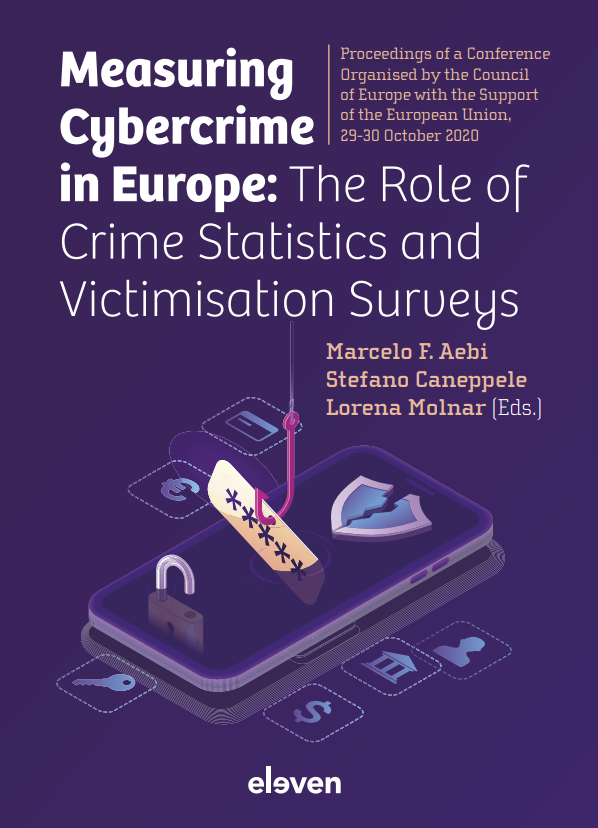
Measuring cybercrime in Europe

By Marcelo F. Aebi Stefano Caneppele Lorena Molnar (Eds.)

  Cybercrime has become part of everyday life. We live in hybrid societies, fl uctuating between the material and the virtual world, and we are hence confronted with online, offl ine and hybrid offences. However, the few victimisation surveys conducted in Europe reveal that victims of online crimes seldom report them to the police. Consequently, cybercrimes – which according to the best estimates represent between one third and more than half of all attempted and completed crimes in Europe – seldom appear in national criminal statistics. The State seems powerless to prevent them and private security companies fl ourish. During two days, experts from all over the continent gathered together in the framework of a virtual conference organized by the Council of Europe and the European Union to discuss what we know, what we do not know, and what we could do to improve our knowledge of crime in our contemporary hybrid societies, develop evidence-based criminal policies, provide assistance to crime victims, and implement realistic programs in the fi eld of crime prevention and offender treatment. This book presents their experiences, refl exions, and proposals  

The Hague: Eleven Publishing, 2022. 150p.  
Homicide in Sweden since 1990. 

Scope, trends and characteristics.

By Klara Hradilova-Selin

This study is the fourth in a series of Brå’s research reports on homicide in Sweden, based on material from the criminal justice system. The analyses build on audited data from police preliminary investigations and, in cases that have been cleared, judgments obtained from both district courts and appeal courts. The aim has been to outline trends in and characteristics of homicide cases since 1990, with a particular focus on the most recent period for which data have been collected, 2018–2021. Some analyses also include data from Brå’s statistics on confirmed cases of lethal violence for 2022 and 2023. 


Report 2024:6

Residential Burglary

By Lina Fjelkegård and Emma Patel

The number of residential burglaries has decreased sharply in recent years – between 2017 and 2023, they were basically halved. However, many people still become victims of burglary. In 2023, 10,000 residential burglaries were reported to the police, and only 4 per cent were solved. Those affected may experience the burglary as a violation of privacy, and feel unsafe at home.

For these reasons, Brå initiated this study on residential burglaries. The purpose is to provide an overall picture of the nature of residential burglaries, but also to examine the development of this crime over time, and how the police handle residential burglaries. Different methods and materials were used for this. We start from a number of preliminary investigations into residential burglaries, which Brå has coded and analysed. We have also used reporting statistics, data from police records, and interviews with police employees.

Increased Gun Violence In Sweden

By Henrik Angerbrandt, Mariana Dufort and Victor Dudas

This study examines gun violence trends in the criminal milieu since the mid-2000s, analysing how the criminal milieu has changed and what role these changes may have played in gun violence trends.

Perspectives on Identity Theft

By Megan M. McNally and Graeme R. Newman

From the cover: There has been a glaring lack of scholarly attention to the crime of identity theft, according to the editors. The chapters in this volume attempt to fill some of this gap by exploring theory and research on identity theft, as well as situational measures to prevent its occurrence.

The editors' introduction outlines several key issues related to the definition, extent and commission of identity theft. The chapter by Graeme Newman applies the opportunity perspective to the study of identity theft. Megan

McNally uses the "script" approach to examine the meaning and mechanics of identity theft in all of its forms. Henry Pontell, Gregory Brown and Anastasia Tosouni present new findings on how identity theft affects victims, based on data collected by the Identity Theft Resource Center. Heith Copes and Lynne Vieraitis describe how a sample of identity theft offenders viewed their crimes. Michael Levi recounts the evolution of identity fraud and its control in the U.K. Russell Smith presents a framework for evaluating preventive measures, particularly document-based systems, biometric technologies and identity cards. Sara Berg considers how information technology can be used within a situational crime prevention framework to fight identity theft. Robert Willison examines the use of situational crime prevention to protect sensitive personal information in the context of information systems security.

Crime Prevention Studies, volume 23. Willan Publishing. Culmcott House, Uffculme, Cullompton Devon EX 15 3AT, U.K. 2008. 195p.

Abnormal Man : Volume 2 - Bibliography

By Arthur MacDonald.

The narrative in Volume 1 asks many pointed questions: What does it mean to be “abnormal”? Who decides? And how have these judgments shaped modern science, education, and criminal justice?

First published in 1893, Arthur MacDonald’s Abnormal Man is one of the earliest American attempts to systematically study human difference through the emerging tools of psychology, anthropology, and criminology. Drawing on international research—from European criminal anthropology to American child-study movements—MacDonald sought to classify the physical, mental, and moral traits considered “aberrant” in his era. His work reflects the hopes and anxieties of a society confronting rapid industrialization, immigration, social change, and new scientific approaches to crime and mental health.

To the modern reader, Abnormal Man reveals both the ambition and the pitfalls of nineteenth-century science. Its pages contain pioneering observations about child development, deviance, and social responsibility, alongside early theories—now discredited—about heredity, physiognomy, and race. What emerges is a vivid and sometimes unsettling portrait of a culture striving to understand human variation without the benefit of modern psychology or ethical safeguards.

The Read-Me.org edition Volume 1 presents Abnormal Man as both a historical artifact and a gateway to critical reflection. It illustrates how scientific thought evolves, how cultural bias can shape research, and how early debates about abnormality laid the groundwork for contemporary approaches to mental health, special education, criminology, and social policy. To make such work, much of it controversial then as it is today, minimally believable, requires extensive documentation. The voluminous Bibliography of Abnormal Man reproduced here in Volume 2, contains all that Macdnald referred to within his detailed exposition. To some, his arguments may seem unsupported, or lacking in evidence. But he left no stone untuned as this amazing bibliographical documentation of all relative contemporary research

A foundational text at the crossroads of science and society, Abnormal Man invites readers to explore the origins of modern debates about deviance, diversity, and the boundaries of the “normal.”

Read-Me.Org Inc. New York-Philadelphia-Australia. 2025. 240p.

Soviet Criminology Update

By United Nations Interregional Crime and Justice Research Institute

Historical Context: The document outlines the evolution of Sovietcriminology through three stages: the 1920s, the 1960s "thaw," and the period of perestroika and glasnost in the 1980s.

Crime Trends: There was a significant increase in crime rates,particularly serious crimes, from the 1970s to the 1980s. The Document highlights issues like recidivism, professionalization of economic crime, and the rise in crimes among students and rural inhabitants.

Criminal Legislation: The document discusses the need for reforms inSoviet criminal law, emphasizing the importance of clear and logical legal language to reduce errors in the justice system.

Social and Psychological Factors: It explores the socio-psychological mechanisms behind criminal behavior, including the influence of social environment, personal traits, and the process of socialization.

UNICRI, 1990, 179 pages

Get a Job: Labor Markets, Economic Opportunity, and Crime

By Robert D. Crutchfield 

Are the unemployed more likely to commit crimes? Does having a job make one less likely to commit a crime? Criminologists have found that individuals who are marginalized from the labor market are more likely to commit crimes, and communities with more members who are marginal to the labor market have higher rates of crime. Yet, as Robert Crutchfield explains, contrary to popular expectations, unemployment has been found to be an inconsistent predictor of either individual criminality or collective crime rates. In Get a Job, Crutchfield offers a carefully nuanced understanding of the links among work, unemployment, and crime.

Crutchfield explains how people’s positioning in the labor market affects their participation in all kinds of crimes, from violent acts to profit-motivated offenses such as theft and drug trafficking. Crutchfield also draws on his first-hand knowledge of growing up in a poor, black neighborhood in Pittsburgh and later working on the streets as a parole officer, enabling him to develop a more complete understanding of how work and crime are related and both contribute to, and are a result of, social inequalities and disadvantage. Well-researched and informative, Get a Job tells a powerful story of one of the most troubling side effects of economic disparities in America.

New York; London: NYU Press, 2014. 303p.

After the War on Crime: Race, Democracy, and a New Reconstruction

By Mary Louise Frampton, Ian Haney Lopez, and Jonathan Simon

Since the 1970s, Americans have witnessed a pyrrhic war on crime, with sobering numbers at once chilling and cautionary. Our imprisoned population has increased five-fold, with a commensurate spike in fiscal costs that many now see as unsupportable into the future. As American society confronts a multitude of new challenges ranging from terrorism to the disappearance of middle-class jobs to global warming, the war on crime may be up for reconsideration for the first time in a generation or more. Relatively low crime rates indicate that the public mood may be swinging toward declaring victory and moving on.
However, to declare that the war is over is dangerous and inaccurate, and After the War on Crime reveals that the impact of this war reaches far beyond statistics; simply moving on is impossible. The war has been most devastating to those affected by increased rates and longer terms of incarceration, but its reach has also reshaped a sweeping range of social institutions, including law enforcement, politics, schooling, healthcare, and social welfare. The war has also profoundly altered conceptions of race and community.
It is time to consider the tasks reconstruction must tackle. To do so requires first a critical assessment of how this war has remade our society, and then creative thinking about how government, foundations, communities, and activists should respond. After the War on Crime accelerates this reassessment with original essays by a diverse, interdisciplinary group of scholars as well as policy professionals and community activists. The volume's immediate goal is to spark a fresh conversation about the war on crime and its consequences; its long-term aspiration is to develop a clear understanding of how we got here and of where we should go.

New York; London: NYU Press, 2008.256p