Open Access Publisher and Free Library
CRIME+CRIMINOLOGY.jpeg

CRIME

Violent-Non-Violent-Cyber-Global-Organized-Environmental-Policing-Crime Prevention-Victimization

Posts in diversity
Men and Rape: Theory, Research, and Prevention Programs in Higher Education

Edited by Alan D. Berkowitz

Focus on Men: The document emphasizes the responsibility of men in preventing rape and provides resources for professionals in higher education to work with college men on this issue.

Research and Theory: It reviews empirical research on college men as perpetrators of sexual assault and proposes an integrative theoretical model for rape prevention programs.

Prevention Programs: It describes a model acquaintance rape prevention program for men, including program philosophy, facilitator selection and training, content, and evaluation.

Student Perspectives: Insights from student facilitators who participated in rape prevention programs, highlighting their experiences and the impact of these programs.

Jossey-Bass, 1994, 91 pages

Human Trafficking for Sexual Exploitation at World Sporting Events

Victoria Hayes

Many members of the international community fear that world sporting events, such as the Olympics and the World Cup, create surges in human trafficking for sexual exploitation, causing women and girls to be exploited for commercial sex while the rest of the world celebrates athleticism and sport. These fears have sparked heated debate about the measures hosting countries should take to prevent human trafficking at these events and the role prostitution policies play in combating human trafficking. In the lead-up to the 2010 Olympics in Canada and the 2010 World Cup in South Africa, politicians in both countries proposed legalizing prostitution as a means of combating human trafficking at the events. This Note explores the connection between prostitution laws and sex trafficking, as well as the link between world sporting events and sex trafficking, with specific reference to preparations for the recently completed 2010 Olympics and the upcoming World Cup. Drawing on research about human trafficking at the 2004 Olympics in Athens, the 2006 World Cup in Germany, and the 2008 Olympics in Beijing, this Note argues that specific anti-trafficking efforts are more effective than prostitution policy reform in combating human trafficking. Finally, this Note critiques Canada's anti-trafficking related preparations for the 2010 Olympics and provides general recommendations for strengthening South Africa's anti-trafficking efforts before the 2010 World Cup.

85 Chi.-Kent L. Rev. 1105 (2010).

ONLINE ABUSE IN ATHLETICS: A Research Study: World Athletics Championships Budapest 23

By World Athletics

World Athletics today (22 December 2023) published findings of a study conducted during the World Athletics Championships Budapest 23 focused towards identifying and addressing abusive and threatening behaviour aimed at athletes on the X and Instagram social media platforms.

Building on the past two years of implementing greater safeguarding measures in athletics, 449,209 posts and comments were analysed between 18-28 August for abusive content in 16 different languages and additional dialects, protecting 1344 athletes with 1666 active accounts across both platforms.

This included text analysis, through searches for slurs and other phrases (including emojis) that could indicate abuse. Image recognition tools were also deployed to flag potentially offensive images. These findings were then compared to results from the previous study, conducted a year earlier at the World Athletics Championships Oregon22 (15-24 July 2022).

The research once again identified clear instances of online abuse and threats, targeting athletes competing at the World Athletics Championships Budapest 23. It detected notable examples of racist and sexualised abuse, with a selection of posts extending into potential action from law enforcement.

The study revealed:

X (formerly Twitter) was the preferred channel for abusers, accounting for almost 90% of detected abuse, a 500% relative increase compared to 2022

Racist abuse made up over one third of all abuse, an increase of 14% from 2022

Male athletes faced an increase in abuse, with the gender split of abuse being 51% targeting men and 49% targeting women

Two athletes out of 1344 monitored received 44% of all accounted abuse between them\

The levels of abuse detected during Budapest were noticeably higher when compared with the previous year’s study conducted during the World Athletics Championships Oregon22. Of the instances of racist abuse detected, the vast majority came on X. The abuse was overwhelmingly targeted at black athletes, with invocations of monkey imagery and deployment of the N-word in several spellings.

This is the third study of its kind in athletics and forms part of a research project World Athletics is conducting stretching over four years to fully understand the size, scale and gravity of online abuse athletes face during major sporting events. It is the third deployment of Threat Matrix, an initiative by data science company Signify Group, supported by sports investigations company Quest.

With a fourth study due to be carried out at the Olympic Games in Paris next year, the combined research will then encompass data from two Olympic Games as well as two World Athletics Championships, with events staged across Asia, Europe and North America.

World Athletics, 2023. 12p.

CCP's Role in the Fentanyl Crisis

UNITED STATES. CONGRESS. HOUSE. SELECT COMMITTEE ON THE STRATEGIC COMPETITION BETWEEN THE UNITED STATES AND THE CHINESE COMMUNIST PARTY

From the document: "The fentanyl crisis is one of the most horrific disasters that America has ever faced. On average, fentanyl kills over 200 Americans daily, the equivalent of a packed Boeing 737 crashing every single day. Fentanyl is the leading cause of death for Americans aged 18-45 and a leading cause in the historic drop in American life expectancy. It has led to millions more suffering from addiction and the destruction of countless families and communities. Beyond the United States, fentanyl and other mass-produced synthetic narcotics from the People's Republic of China (PRC) are devastating nations around the world. It is truly a global crisis. The PRC, under the leadership of the Chinese Communist Party (CCP), is the ultimate geographic source of the fentanyl crisis. Companies in China produce nearly all of illicit fentanyl precursors, the key ingredients that drive the global illicit fentanyl trade. The House Select Committee on the Strategic Competition between the United States and the Chinese Communist Party (Select Committee) launched an investigation to better understand the role of the CCP in the fentanyl crisis. This investigation involved delving deep into public PRC websites, analyzing PRC government documents, acquiring over 37,000 unique data points of PRC companies selling narcotics online through web scraping and data analytics, undercover communications with PRC drug trafficking companies, and consultations with experts in the public and private sectors, among other steps. [...] [T]he Select Committee found thousands of PRC companies openly selling [...] illicit materials on the Chinese internet--the most heavily surveilled country-wide network in the world. The CCP runs the most advanced techno-totalitarian state in human history that 'leave[s] criminals with nowhere to hide' and has the means to stop illicit fentanyl materials manufacturers, yet it has failed to pursue flagrant violations of its own laws."

UNITED STATES. CONGRESS. HOUSE. SELECT COMMITTEE. 16 APR, 2024. 64p.

Homeland Security Advisory Council, Combatting Online Child Sexual Exploitation and Abuse

UNITED STATES. DEPARTMENT OF HOMELAND SECURITY

From the document: "On November 14, 2023, Secretary Mayorkas tasked the HSAC [Homeland Security Advisory Council] with forming a subcommittee on Combatting Online Child Sexual Exploitation and Abuse (CSEA) to develop the DHS strategy to protect community stakeholders from incidents of CSEA, consistent with the Department's authorities. To address these findings, the subcommittee makes the following six recommendations to DHS: 1. Establish, resource, and empower an office within DHS to lead Departmental efforts to counter online CSEA and form a center within DHS to organize a whole-of-government approach to addressing online abuse and exploitation. 2. Leverage existing tools; develop and advocate for policy solutions. 3. Increase participation in the combatting of CSEA by the major platform vendors. a. Build a uniform technology platform with a public private partnership for monitoring and reporting on all investigations, past and present, open and closed. This platform would be used as the system of record for all investing agencies. b. Reframe and realign incentives to partnership through legislative actions. 4. Prioritize vicarious trauma and workplace well-being support for law enforcement, civil society employees, and other frontline staff who encounter CSEA material in their work. 5. Bolster and sustain DHS external engagement for the Know2Protect Campaign by expanding resources and outreach with the Department of Education (ED). 6. Lead engagement with economic and regulatory federal partners to increase the interdepartmental approach to combatting CSEA."

HOMELAND SECURITY ADVISORY COUNCIL. COMBATTING ONLINE CHILD SEXUAL EXPLOITATION AND ABUSE SUBCOMMITTEE. 2024. 23p.

CRIME IN NEW ZEALAND

By DEPARTMENT OF JUSTICE NEW ZEALAND

“…The study includes statistical information to the extent that it is available. The law and administrative procedures are described and where appropriate psychological and sociological factors are discussed. This factual background is essential for informed consideration of the criminal scene. Inevitably interpretations are made and a variety of opinion is offered. It was not the purpose of the Department to produce a colourless official document devoid of all contentious matter. Although there has been a measure of co-ordination, diversity of opinion and spontaneity remain. It would therefore be difficult to agree with everything that is said or suggested.”

Ministry of Justice. New Zealand. 1968. 410p.

Criminal record and employability in Ghana: A vignette experimental study

ByThomas D. Akoensi, Justice Tankebe

Using an experimental vignette design, the study inves-tigates the effects of criminal records on the hiring deci-sions of a convenience sample of 221 human resource(HR) managers in Ghana. The HR managers were ran-domly assigned to read one of four vignettes depicting job seekers of different genders and criminal records:male with and without criminal record, female with and without criminal record. The evidence shows that a criminal record reduces employment opportunities for female offenders but not for their male counter-parts. Additionally, HR managers are willing to offer interviews to job applicants, irrespective of their crim-inal records, if they expect other managers to hire ex-convicts. The implications of these findings are dis-cussed.

The Howard Journal of Crime and Justice, online first, May 2024

The political economy of illicit drug crops: forum introduction

By Frances Thomson, Patrick Meehan & Jonathan Goodhand (02 Apr 2024):

his article and the forum it introduces examine illicit drug crop (IDC) economies from agrarian perspectives. Examining IDCs as a group implies analysing how prohibition distinguishes them from other (licit) crops. We identify seven mechanisms through which prohibition shapes the agrarian political economy of IDCs and explore how these mechanisms and their effects generate distinctive patterns of development and political action amongst ‘illicit peasantries’. We also examine connections between illicit and licit crops, including how licit crop crises and illicit crop booms intertwine. We argue that IDC economies provide a bulwark for smallholders but are by no means peasant idylls.

The Journal of Peasant Studies. 2024. 39p.

Urgent and long overdue: legal reform and drug decriminalisation in Canada

By Matthew Bonn, Chelsea Cox, Marilou Gagnon. et al.

The International Guidelines on Human Rights and Drug Policy recommend that States commit to adopting a balanced, integrated, and human rights-based approach to drug policy through a set of foundational human rights principles, obligations arising from human rights standards, and obligations arising from the human rights of particular groups. Following two years of consultation with stakeholders, including people who use drugs, NGOs, legal and human rights experts, UN technical agencies and Member States, the Guidelines “do not invent new rights. Rather, they apply existing human rights law to the legal and policy context of drug control to maximise human rights protections, including in the interpretation and implementation of the drug control conventions.” In respect of the Guidelines and its obligations under UN human rights treaties, Canada must adopt stronger and more specific commitments for a human rights-based, people centered and public health approach.3 This approach must commit to the removal of criminal penalties for simple possession and a comprehensive health-based approach to drug regulation.

Ottawa, ONT: Royal Society of Canada, 2024. 52p.

The Politics of Murder: Criminal governance and targeted killings in South Africa

By Rumbi Matamba and Chwayita Thobela

Over the past decade, the GI-TOC has documented a staggering 108% increase in targeted killings in South Africa. While South Africa has long grappled with high levels of violence, as evidenced by a per capita murder rate of 45 per 100,000 in 2022/23, or approximately 70 murders a day, targeted killings have notably escalated, particularly political killings at local municipal level. Hitmen have become more daring, incidents more public and victims more high-profile. Coupled with the deficiencies in South Africa’s overburdened criminal justice system, where only about 15% of all murders are solved, the picture that emerges is one of a situation that is barely contained.

GI-TOC recorded 131 targeted killings in South Africa in 2023, just ten fewer than in 2022. The 131 cases were grouped into four categories: organized-crime related (46 cases or 35% of incidents), minibus taxi-industry related (45 incidents, or 34%), political assassinations (31 incidents, or nearly 24%) and personal assassinations (9 incidents, or nearly 7%). While every effort is made to ensure that the data is robust and accurate, this is almost certainly an undercount as the database draws on publicly available information such as press reports, media statements from affected families, court records, and media statements by the criminal justice sector.

This report is framed in the context of South Africa’s 2024 general elections. Previous analysis has shown that there are always spikes in political assassinations during election years, particularly in long-contested provinces such as KwaZulu-Natal. The 2024 elections, the sixth national election in the country’s 30 years of democracy, have been earmarked as a potential watershed moment.

Political violence and assassinations pose a very real threat to the country’s democracy. They are not an isolated phenomenon and they intersect with organized crime and criminal networks. The intertwining of criminal networks and political assassinations in South Africa underscores the urgent need for comprehensive strategies to tackle organized crime and stop targeted killings.

Geneva, SWIT: Global Initiative Against Transnational Organized Crime, 2024. 32p.

Sexual Assault Case Processing: The More Things Change, the More They Stay the Same

By Cassia Spohn

One of the goals of the United Nations Commission on the Status of Women is to end violence against women and girls in all countries. An important component of this goal is ensuring that all crimes of violence against women and girls are taken seriously by the criminal justice system and that police, prosecutors, judges and jurors respond appropriately. However, research detailing how cases of sexual assault proceed in the criminal justice system reveals that this goal remains elusive, both in the United States and elsewhere. The rape reform movement ushered in changes to traditional rape law that were designed to encourage victims to report to the police and to remove barriers to arrest and successful prosecution. However, four decades after this reform, victims are still reluctant to report sexual assaults to the police, and arrest, prosecution and conviction rates for sexual assault cases are shockingly low. Reversing these trends will require policy changes that are designed to counteract the stereotypes and myths underpinning sexual assault and sexual assault victims.

International Journal for Crime, Justice and Social Democracy, 9(1), pp. 86-94.2020.

How Women’s Police Stations Empower Women, Widen Access to Justice and Prevent Gender Violence

By Kerry Carrington, Natacha Guala, María Victoria Puyol, and Máximo Sozzo

Women’s police stations are a distinctive innovation that emerged in postcolonial nations of the global south in the second half of the twentieth century to address violence against women. This article presents the results of a world-first study of the unique way that these stations, called Comisaría de la Mujer, prevent gender-based violence in the Province of Buenos Aires, Argentina. One in five police stations in this Province was established with a mandate of preventing gender violence. Little is currently known about how this distinctive multidisciplinary model of policing (which includes social workers, lawyers, psychologists and police) widens access to justice to prevent gender violence. This article compares the model’s virtues and limitations to traditional policing models. We conclude that specialised women’s police stations in the postcolonial societies of the global south increase access to justice, empower women to liberate themselves from the subjection of domestic violence and prevent gender violence by challenging patriarchal norms that sustain it. As a by-product, these women’s police stations also offer women in the global south a career in law enforcement—one that is based on a gender perspective. The study is framed by southern criminology, which reverses the notion that ideas, policies and theories can only travel from the anglophone world of the global north to the global south.

International Journal for Crime, Justice and Social Democracy, 9(1), pp. 42-67. 2020.

The Safety of Women and Girls in Educational Settings: A Global Overview and Suggestions for Policy Change

By Elaina Behounek

Safety in educational settings is a barrier to equality for women and girls. This article highlights four key areas that perpetuate inequality in education for women and girls, and that contribute to a worldwide lack of safety in educational settings for women and girls: cultural norms, societal norms, sexual assault and sexual harassment. All four areas form part of a social–structural condition that underpins a world in which women and girls experience violence and an economic and social inequality that contributes to their lack of safety in educational settings. Several solutions are proposed to combat this. To improve the life outcomes of women and girls, we must invest in approaches that empower and educate them in safe environments. In doing so, we must also ensure that such approaches are holistic and intersectional.

International Journal for Crime, Justice and Social Democracy, 9(1), pp. 31-41. 2020.

Exposure to intimate partner violence and the physical and emotional abuse of children: Results from a national survey of female carers

By Heather Wolbers, Hayley Boxall and Anthony Morgan

Drawing on a large sample of female carers living in Australia (n=3,775), this study aims to document and explore children and young people’s experiences of abuse in the past 12 months. We focus on children’s exposure to intimate partner violence (IPV) perpetrated against their female carers, as well as children being the target of direct physical and emotional abuse themselves.

Overall, a significant proportion of respondents who had a child in their care during the past 12 months said that a child was exposed to IPV perpetrated against them (14.1%). One in nine said a child in their care had been the target of direct abuse perpetrated by their current or most recent former partner (11.5%). Critically, one-third of respondents who experienced IPV said a child was exposed to the violence at least once in the past 12 months (34.8%).

A number of factors were associated with an increased likelihood of children being subjected to direct abuse. These included the characteristics of respondents and their relationships, children and households. We also present evidence linking economic factors, including changes in employment, with the direct abuse of children.

Research Report no. 26. Canberra: Australian Institute of Criminology. 2023. 72p.

Sexual exploitation in Australia: Victim-survivor support needs and barriers to support provision

By Hayley Boxall, Samantha Lyneham, Christie Black and Alexandra Gannoni

Sexual exploitation can have significant short- and longer-term impacts on victim-survivors. However, there is currently a lack of research exploring the support needs of sexual exploitation victim-survivors accessing support in Australia, and barriers to support provision. To address this knowledge gap, we analysed case management records for 50 victim-survivors of sexual exploitation in Australia and conducted interviews with 12 victim-survivor caseworkers.

On average, victim-survivors required support across six domains, the most common being financial hardship, mental health, social isolation and housing and accommodation. The most crucial barriers to service provision were systemic in nature. For example, some victim‑survivors on temporary visas were ineligible for government funded medical services, affordable housing or welfare schemes, which placed significant financial burdens on victim‑survivors and support services.

These findings demonstrate that to support the recovery of victim-survivors, services need to be funded appropriately to ensure they can provide holistic wraparound interventions.

Research Report no. 29. Canberra: Australian Institute of Criminology. 2023. 51p.

Organized Crime as Irregular Warfare: Strategic Lessons for Assessment and Response

David H. Ucko, Thomas A. Marks

Organized crime both preys upon and caters to human need. It is corrosive and exploitative, but also empowering, and therefore pervasive. Indeed, though often out of sight, organized crime is everywhere: wherever governments draw the line, criminal actors find profitable ways of crossing it; wherever governments fail to deliver on human need, criminal actors capitalize on unmet desire or despair. For those excluded from the political economy, from patronage systems or elite bargains, organized crime can offer opportunity, possibly also protection.

PRISM, Vol. 10, No. 3 (2023), pp. 92-117 (26 pages)

A Framework for Countering Organised Crime: Strategy, Planning, and the Lessons of Irregular Warfare

By David H. Ucko and Thomas A. Marks

Organised crime is not going well. According to the 2021 Global Organized Crime index, ‘the global illicit economy simply continue[s] along the upward trajectory it has followed over the past 20 years, posing an ever-increasing threat to security, development and justice – the pillars of democracy’ (Global Initiative, 2021, p. 8). Wherever governments seek to draw the line, criminal actors find profitable ways of crossing it; wherever governments fail to deliver on human need, criminal actors capitalise on citizens’ desire or despair. As of now, more than three-quarters of the world’s population ‘live in countries with high levels of criminality, and in countries with low resilience to organized crime’ (Global Initiative, 2021, p. 12). On aggregate, the associated activity amounts to an illicit form of governance, furnishing alternative services to a wide range of clients, be they the vulnerable and weak or a covetous elite. The breadth of organised crime, its clandestine nature, and its blending of creative and destructive effects make it difficult to counter. In past SOC ACE research, we argued that the response to organised crime often shares certain pitfalls with counterterrorism, at least since 9/11 (Ucko & Marks, 2022c). Both efforts have been stymied by 1) conceptual uncertainty of the problem at hand; 2) an urge to address the scourge head on (be it violence or crime), without acknowledging its socioeconomic-political context; and, therefore, 3) unquestioned pursuit of strategies that miss the point, whose progress is difficult to measure, and which may even be counterproductive. This convergence is based on the common features of the two phenomena, which are both concerned with i) collective actors, who ii) use violence and coercion among other methods; and who have iii) corrupting, or outright destructive effects on society. Though organised crime is not consciously political in its ideological motivation, it is – like terrorism – deeply political in its origins, activities, and effects. Given the conceptual overlap, and the common pathologies that undermine response, the lessons from countering terrorism are relevant also to the countering of organised crime. Focusing on the concept of ‘irregular warfare’, our past research identified six key lessons, touching upon 1) the socio-political embeddedness of the problem, 2) the tendency to militarise the response, 3) the mirror-imaging of state assistance programmes, 4) the invaluable role of community mobilisation, 5) the dearth of strategy, and 6) the need to engage more closely with questions of political will. As argued elsewhere, these challenges point to a need for greater strategic competence both in assessing the problem of organised crime and in designing a response (Ucko & Marks, 2022c).

To generate this strategic competence, this follow-on report sets out an analytical toolkit to assist planners and policymakers with the crafting of strategy. This ‘Framework of Analysis and Action’ builds upon lessons – negative and positive – learned via years of experience with irregular warfare, defined by the Department of Defense as ‘a violent struggle among state and non-state actors for legitimacy and influence over the relevant population(s)’ (U.S. Department of Defense, 2007, p. 1).1 It is a framework that finds its origins within the U.S. National Defense University’s College of International Security Affairs (CISA), where for two decades it has been used to teach strategic planning for complex and intensely political challenges (Ucko & Marks, 2022a). The framework consists of two parts: the Strategic Estimate of the Situation (which maps the problem, explores its drivers, frames, and methods, and critiques the current response) and the Course of Action (which uses the strategic estimate to design an appropriate strategy, guided by a theory of success). The framework is in this report adapted for organised crime, to enable the mapping of relevant actors and the crafting, thereby, of a viable response. By design, the framework responds to the six key lessons identified in our earlier work. This report goes through the framework and explains its adaptation to organised crime. Appendix A provides a summation of the toolkit, a ‘user’s guide’, that will facilitate application of the framework. Testing to date suggests great potential and we look forward to sustaining a dialogue with those engaged with countering organised crime to further evolve this toolkit. Indeed, since the beginning, this framework has been a living product, enriched by theoretical application in the classroom and practical use in the field.

SOC ACE Research Paper No. 19. Birmingham, UK: University of Birmingham, 2023. 45p.

The End of Intuition-Based High-Crime Areas

By Ben Grunwald and Jeffrey Fagan

In 2000, the Supreme Court held in Illinois v. Wardlow that a suspect’s presence in a “high-crime area” is relevant in determining whether an officer has reasonable suspicion to conduct an investigative stop. Despite the importance of the decision, the Court provided no guidance about what that standard means, and over fifteen years later, we still have no idea how police officers understand and apply it in practice. This Article conducts the first empirical analysis of Wardlow by examining data on over two million investigative stops conducted by the New York Police Department from 2007 to 2012. Our results suggest that Wardlow may have been wrongly decided. Specifically, we find evidence that officers often assess whether areas are high crime using a very broad geographic lens; that they call almost every block in the city high crime; that their assessments of whether an area is high crime are nearly uncorrelated with actual crime rates; that the suspect’s race predicts whether an officer calls an area high crime as well as the actual crime rate; that the racial composition of the area and the identity of the officer are stronger predictors of whether an officer calls an area high crime than the crime rate itself; and that stops are less or as likely to result in the detection of contraband when an officer invokes high-crime area as a basis of a stop. We conclude with several policy proposals for courts, police departments, and scholars to help address these problems in the doctrine.

California Law Review 345-404 (2019

Observatory of Illicit Economies in South Eastern Europe

By Global Initiative Against Transnational Organized Crime’s Observatory of Illicit Economies in South Eastern Europe.

In this issue, we focus on three cases where criminal groups from the region have been active in recent years: the Netherlands, Ecuador and parts of Africa.

These examples illustrate the growing involvement of Balkan criminal groups in some of the world’s hotspots for illicit activity. Research for these articles is facilitated by the Global Initiative’s network of contacts with local investigative journalists, as well as close cooperation between regional observatories of illicit economies, namely South Eastern Europe, West Africa and Latin America.

As part of the GI-TOC’s analysis of the risks of firearms trafficking from Ukraine, in this issue we show that the Western Balkans remain the main source of illegal weapons in Europe. At present, weapons are still cheap and plentiful in the region, and stockpiles have been augmented by inflows from Turkey via Bulgaria, particularly of gas and alarm guns. More on this topic can be found in a forthcoming GI-TOC report on trends in arms trafficking from the Ukraine conflict.

In this issue, we also report on a major crackdown by Serbian authorities in late 2023 on increasingly violent smugglers operating along the border between Serbia and Hungary, and examine how this has displaced migration flows towards Bosnia and Herzegovina.

Risk Bulletin No. 18. Geneva, SWIT: Global Initiative Against Transnational Organized Crime, 2024. 25p.

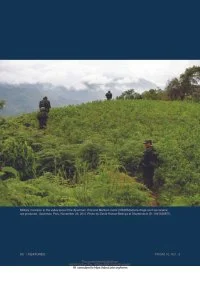
Supporting Resilience Among Environmental Defenders

By Billy Kyte | Giulia Roncon

With the aim to support individuals in building resilient communities working to prevent, counter, and limit the damage of environmental crime, this handbook documents the challenges faced by defenders working in the environmental crime field and provides guidance to support their resilience.

The first section of the handbook analyzes definitional understandings of environmental crime and explores the impacts and harms it can perpetuate. The second section assesses the risks and challenges commonly faced by environmental defenders, including an assessment of their needs, and explores emergent regional issues that may play a part in such vulnerabilities. The final section presents a repository of best practices and tools that can help stakeholders to access available resources and to mitigate the potential risks they face.

The handbook draws from consultations involving nearly 100 prominent figures from civil society and media across Africa and Asia. Whilst findings are therefore geographically specific to some extent, our work confirms that the challenges experienced by environmental defenders in these regions were replicated globally as well. Although each country and regional context is different, the handbook outlines strategies that could be broadly implemented to support the community of stakeholders dedicated to tackling environmental crime worldwide.

Geneva, SWIT: Global Initiative Against Transnational Organized Crime (GI-TOC). 2023.