Open Access Free Library
CRIME+CRIMINOLOGY.jpeg

CRIME

Violent-Non-Violent-Cyber-Global-Organized-Environmental-Policing-Crime Prevention-Victimization

Police–public trust: Toward a more complete perspective

By Richard A. Wise, Roger C. Mayer, and Scott M. Mourtguey Richard A. Wise, Roger C. Mayer, and Scott M.

Discussion of the police–public relationship focuses on the public’s lack of trust in police. Our research suggests that police trust in the public is another important factor in this relationship and that addressing trust concerns on both sides may improve it. We conducted two studies of police trust in the public. The results suggested that the more police trust the public, the more constructive risks they take in performing their jobs. Based on our results, we highlight the importance of reciprocity and attempting to simultaneously increase both police and public trust to improve their relationship. Measures developed for these studies may inform future research on police trust in the public and develop interventions to improve it.

Behavioral Science & Policy, Volume 11, Issue 2, October 2025, Pages 31-37

Read-Me.Org
Does civilian oversight impact police legitimacy?

By Kaylyn Jackson Schiff,  Daniel S. Schiff, Bryant J. Moy , Joshua McCrainc, Scott M. Mourtgos and Ian T. Adams

Does the implementation of external oversight in policing improve public perceptions of police legitimacy? Civilian review boards (CRBs) are frequently promoted as mechanisms to enhance the legitimacy of police agencies by providing independent oversight. Despite public support for CRBs, their adoption and effectiveness remain limited, raising concerns about their actual impact on procedural fairness and police legitimacy. This study assesses the role of CRBs in shaping public perceptions by examining various decision-making scenarios involving police chiefs and CRBs. Using a survey experiment fielded to 2,503 respondents, we investigate whether CRBs enhance legitimacy when they either coincide with or conflict with police chiefs’ determinations in cases of officer misconduct. Our findings suggest that while CRBs may enhance perceptions of procedural fairness for some, particularly those with negative views of police, their involvement does not generally increase legitimacy. In fact, when CRBs conflict with police chiefs, they may diminish public trust in both policing and civilian oversight and further entrench politically polarized attitudes towards policing. These results provide empirical evidence to support concerns that CRBs might not fulfill their intended role in enhancing police legitimacy, especially in cases of institutional disagreement.

PNAS Nexus, 2025, 4, pgaf267 

Read-Me.Org
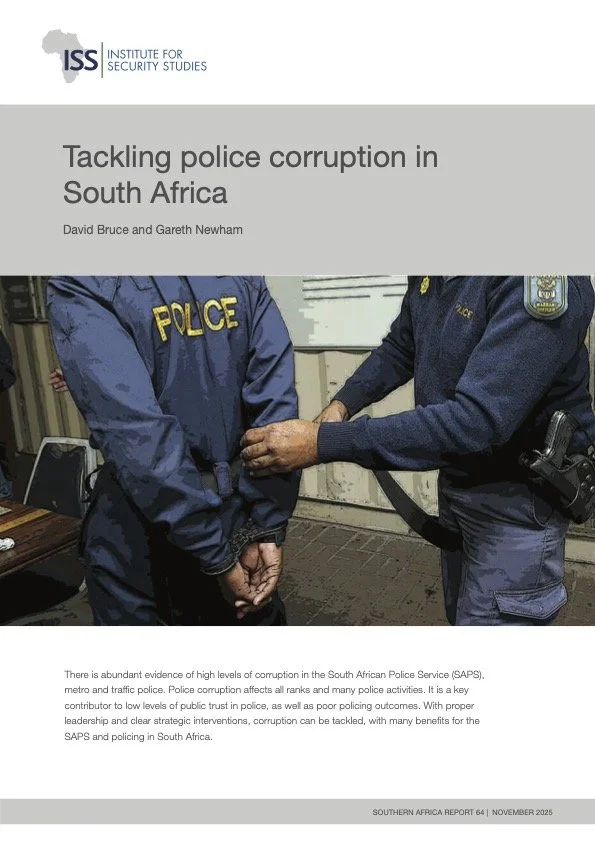
Tackling police corruption in South Africa

By David Bruce and Gareth Newham

With good leadership and clear strategy, corruption can be tackled, with many benefits for policing in South Africa.

There is abundant evidence of high levels of corruption in the South African Police Service (SAPS), metro and traffic police. Police corruption affects all ranks and many police activities. It is a key contributor to low levels of public trust in police, as well as poor policing outcomes. With proper leadership and clear strategic interventions, corruption can be tackled, with many benefits for the SAPS and policing in South Africa.

Pretoria: Institute for Security Studies, 2025. 16p.

Read-Me.Org
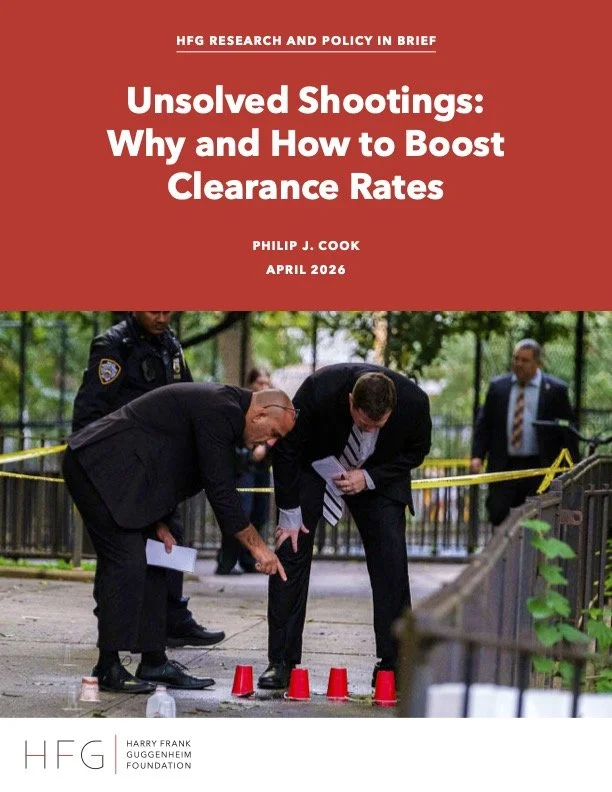
Unsolved Shootings: Why and How to Boost Clearance Rates

By Philip J. Cook

Approximately 75,000 people in the United States were shot by a criminal assailant in 2024, yet most of those shootings did not result in an arrest.

In this HFG Research and Policy in Brief, Philip J. Cook, professor emeritus at Duke University, explores the gap between the minority of shootings that are solved and those that go unsolved.

“There is a strong argument for improving police performance in investigating serious crimes of violence,” Cook writes in Unsolved Shootings: Why and How to Boost Clearance Rates. “What is at stake is public safety and the basic duty of the police to serve the public.”

Cook examines the importance of arresting and prosecuting perpetrators of serious violence, the validity of “clearance rates” as a performance indicator for police departments, and what can b, e done by police to increase the success rate for criminal investigations—citing examples from Chicago, Denver, and other cities.

New York: The Harry Frank Guggenheim Foundation, 2026. 25p.

Read-Me.Org
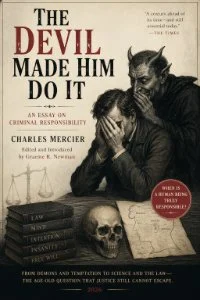
The Devil Made Him Do It

A Forgotten Classic of Criminological Thought—Reintroduced for the Twenty-First Century

Originally published in 1918 and now carefully edited and introduced by Graeme R. Newman, The Criminology of Crime and Criminals: Medical, Biological and Psychological restores Charles Mercier’s groundbreaking exploration of crime, punishment, criminal behavior, and social order.

Long before modern criminology embraced concepts such as situational crime prevention, environmental opportunity, offender decision-making, and restorative justice, Mercier argued that crime cannot be explained by biology, psychology, or environment alone. Instead, criminal behavior emerges from the interaction between human nature and circumstance, between personal disposition and criminal opportunity.

Rejecting the popular theories of his day, Mercier challenges the notion of the “born criminal” and dismisses simplistic environmental explanations of lawbreaking. His provocative and highly original analysis examines:

  • The psychological foundations of criminal conduct

  • The roles of instinct, reason, desire, self-control, and will

  • How opportunity and temptation shape criminal action

  • The classification of crimes and criminals

  • The relationship between crime, morality, and society

  • The purposes of punishment: deterrence, retaliation, reform, and reparation

  • The prevention, detection, and punishment of crime

Mercier’s central insight—that criminals are not a separate species but ordinary human beings responding differently to circumstances—remains strikingly relevant more than a century later.

Graeme R. Newman’s contemporary introduction places Mercier within the broader history of criminological thought and connects his ideas to modern developments in crime prevention and criminal justice. Together, Mercier and Newman illuminate enduring questions that continue to shape public policy and scholarly debate:

Why do people commit crimes? How should society respond? Is prevention more effective than punishment?

Part intellectual history, part criminological theory, and part social philosophy, this edition offers a fascinating window into the origins of modern criminology and the continuing struggle to understand crime and criminals.

Essential reading for students and scholars of criminology, criminal justice, sociology, psychology, legal history, and anyone interested in the causes of crime and the future of punishment.

Read-Me.Org Inc. New York-Philadelphia-Australia. 2026. 195p.

Crime, Insanity And Affliction: Three Studies in Social Pathology

by Graeme Newman (Editor), Charles Mercier (Author)

Why do people commit crime? When does mental illness diminish responsibility? Should punishment always follow wrongdoing?

More than a century before modern debates about criminal responsibility, forensic psychiatry, and the treatment of mentally ill offenders, the distinguished British physician Charles Mercier confronted these enduring questions with remarkable clarity and originality.

In Crime, Insanity and Affliction, Mercier explores the complex relationship between criminal behaviour, mental disorder, and human suffering. Rejecting simplistic explanations, he argues that crime cannot be understood apart from the biological, psychological, and social forces that shape human conduct. His examination ranges from drunkenness, epilepsy, intellectual disability, and mental illness to questions of moral responsibility, punishment, and the proper role of the criminal law.

Although written in the early twentieth century, many of Mercier's observations anticipate debates that continue today. His discussion of diminished responsibility, the treatment of mentally ill offenders, addiction, and the limits of punishment remains surprisingly relevant in an era still struggling to balance justice, compassion, and public safety.

This new Read-Me edition presents Mercier's influential work with a new editorial introduction that places his ideas within the development of modern criminology, forensic psychiatry, and criminal justice. It also examines where Mercier's conclusions have been confirmed, where later research has challenged them, and why his work continues to deserve the attention of students, scholars, and general readers alike.

More than a historical curiosity, Crime, Insanity and Affliction is a thoughtful exploration of one of society's oldest and most difficult questions: how should we judge those whose minds, circumstances, or afflictions place them beyond the ordinary boundaries of responsibility?

Read-Me.Org Inc. New York-Philadelphia-Australia. 2026. 182p.

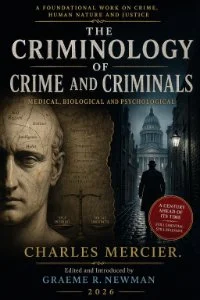
The Criminology Of Crime And Criminals: Medical, Biological And Psychological

A Forgotten Classic of Criminological Thought—Reintroduced for the Twenty-First Century

Originally published in 1918 and now carefully edited and introduced by Graeme R. Newman, The Criminology of Crime and Criminals: Medical, Biological and Psychological restores Charles Mercier’s groundbreaking exploration of crime, punishment, criminal behavior, and social order.

Long before modern criminology embraced concepts such as situational crime prevention, environmental opportunity, offender decision-making, and restorative justice, Mercier argued that crime cannot be explained by biology, psychology, or environment alone. Instead, criminal behavior emerges from the interaction between human nature and circumstance, between personal disposition and criminal opportunity.

Rejecting the popular theories of his day, Mercier challenges the notion of the “born criminal” and dismisses simplistic environmental explanations of lawbreaking. His provocative and highly original analysis examines:

  • The psychological foundations of criminal conduct

  • The roles of instinct, reason, desire, self-control, and will

  • How opportunity and temptation shape criminal action

  • The classification of crimes and criminals

  • The relationship between crime, morality, and society

  • The purposes of punishment: deterrence, retaliation, reform, and reparation

  • The prevention, detection, and punishment of crime

Mercier’s central insight—that criminals are not a separate species but ordinary human beings responding differently to circumstances—remains strikingly relevant more than a century later.

Graeme R. Newman’s contemporary introduction places Mercier within the broader history of criminological thought and connects his ideas to modern developments in crime prevention and criminal justice. Together, Mercier and Newman illuminate enduring questions that continue to shape public policy and scholarly debate:

Why do people commit crimes? How should society respond? Is prevention more effective than punishment?

Part intellectual history, part criminological theory, and part social philosophy, this edition offers a fascinating window into the origins of modern criminology and the continuing struggle to understand crime and criminals.

Essential reading for students and scholars of criminology, criminal justice, sociology, psychology, legal history, and anyone interested in the causes of crime and the future of punishment.

Read-Me.Org Inc. New York-Philadelphia-Australia. 2026. 195p.

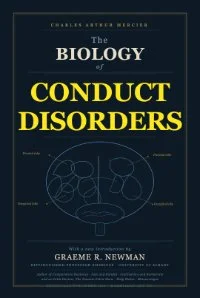
The Biology of Conduct Disorders

The book that criminology forgot — and urgently needs to remember.
Arthur M<ercier (Author). Graeme Newman (Editor and Introduction).

First published in 1918 by the University of London Press, Charles Arthur Mercier's Conduct and Its Disorders, Biologically Considered, published by Macmillan in 1911 is one of the most rigorous, most readable, and most unjustly neglected works in the history of criminological thought. Now reissued as The Biology of Conduct Disorders, with a major critical introduction by Graeme R. Newman, it arrives at a moment when the questions it raises — about criminal intent, biological disposition, the limits of punishment, and the poverty of criminological theory — are more pressing than ever.
Mercier was no armchair theorist. As medical officer of lunatic asylums, consulting physician at criminal trials, and the only systematic student of conduct as a science, he brought to the study of crime a combination of clinical experience and biological rigour that the field had not seen before and has rarely matched since. His target was the prevailing chaos of criminological thought — above all the Continental school of Lombroso, which he dismantled with surgical precision — and his method was the application of praxiology, his own science of conduct, to the specific problem of criminal action.

What Mercier argued — and why it still matters:

  • Every criminal act is the product of two factors: an internal factor (the biological constitution of the offender) and an external factor (circumstance and opportunity). Ignoring either produces not criminology but ideology.

  • The turpitude of the criminal and the gravity of the crime are entirely separate questions — and confusing them has produced centuries of unjust punishment.

  • Punishment should be calibrated to intention, not outcome: the man who intends murder and fails is more culpable than the man who kills by accident, whatever the body count.

  • Statistical criminology — mass data gathered from convicted prisoners — cannot produce a science of crime. Only the study of individual criminal action, grounded in biology, psychology, and jurisprudence together, can do that.

  • Certain acts currently outside the law (stealing the use of a thing; deliberate breach of contract) deserve criminal status; certain acts currently criminalised do not.

This new edition includes a critical introduction by Graeme R. Newman, Distinguished Professor Emeritus at the School of Criminal Justice, University at Albany, and one of the most provocative and original voices in the study of crime, deviance, and punishment. Author of Comparative Deviance: Perception and Law in Six Cultures, The Punishment Response, Just and Painful: A Case for the Corporal Punishment of Criminals, and Civilization and Barbarism: Punishing Criminals in the Twenty-First Century — and, as Colin Heston, of darkly satirical fiction including The Tommie Felon Show, Miscarriages, and Holy Water — Newman brings a unique authority to this text. Writing with the unflinching directness that earned him national television appearances and a reputation as the most uncomfortable conscience in American criminology, he traces the connections between Mercier's 1918 arguments and the debates that have defined — and divided — the field ever since.
"With the exception of logic, there is no subject on which so much nonsense has been written as this of criminality and the criminal." — Charles Arthur Mercier, 1918
Essential reading for students and scholars of criminology, criminal justice, the history of psychiatry, legal theory, and the philosophy of punishment — and for anyone who has ever wondered why, after two centuries of criminal science, we understand so little about why people commit crimes and what we should do about it.

Read-Me.Org Inc. New York-Philadelphia-Australia. 2026. 208p.

Mexico’s Fight against Transnational Organized Crime

By R. Evan Ellis

The security environment in Mexico is characterized by a dangerous fragmentation of and competition among criminal groups that pushed the nation’s homicide rate to a record high of 22.5 per 100,000 in 2017, a 27.5 percent increase over the prior year.1 The nation, whose security and prosperity strongly impacts the United States through geographic proximity and associated flows of people, money, and goods (both licit and illicit), is at a critical juncture in its fight against transnational organized crime. Since Mexican President Felipe Calderón launched the “war against the cartels” in December 2006 with the deployment of the Mexican army into the state of Michoacán, the nation’s security forces have taken down the leaders of multiple powerful criminal groups and debilitated their organizations.2 In the process, the Mexican military, police, and other security institutions have evolved their institutional structures, modified both their strategy and their doctrine, and strengthened their ability to combat transnational organized crime. Yet as with the experience of the United States in combatting terrorist groups in Iraq and Afghanistan, Mexico’s fight against the cartels, both despite and because of its successes, has created a more chaotic criminal landscape, with both a higher level of violence and a broader range of criminality.

Complicating Mexico’s security challenge is the disposition of the Trump administration to act aggressively against illegal immigration from Mexico (among other countries) into the United States, along with U.S. renegotiation and possible abandonment of the North American Free Trade Agreement. These actions increase stressors on Mexico, including the prospect of expanded deportations of immigrants to Mexico, the loss of remittance income, and impeded access by Mexican producers to the U.S. market. The Trump administration’s actions, magnified by rhetoric that many Mexicans perceive as an insult to their country and people, have combined with Mexican frustration over the persistence of violence and corruption to create the real prospect that leftist populist candidate Andrés Manuel López Obrador could win the July 2018 presidential election, potentially taking Mexico on a course of more distant political relations and decreased security cooperation with the United States and expanded engagement with extra-hemispheric rivals of the United States such as Russia and China.

This article examines Mexico’s serious and evolving security challenges, and the key initiatives and critical issues confronting the nation’s security forces. It argues that the Mexican government has made important progress against a range of criminal groups and in innovating and strengthening its own capabilities to combat such entities and associated flows of illegal goods—capabilities that deserve to be recognized, further refined, and exploited in partnership with the United States and Mexico’s other neighbors. It concludes with recommendations for U.S. policy makers regarding the importance of strong and respectful support for Mexico at the present critical juncture.

2028. 13p.

Women and Illicit Finance in Russia’s Occupation of Ukraine Orly Stern Olivia Allison

Addressing police and military involvement in serious organised crime (Research Paper 39)

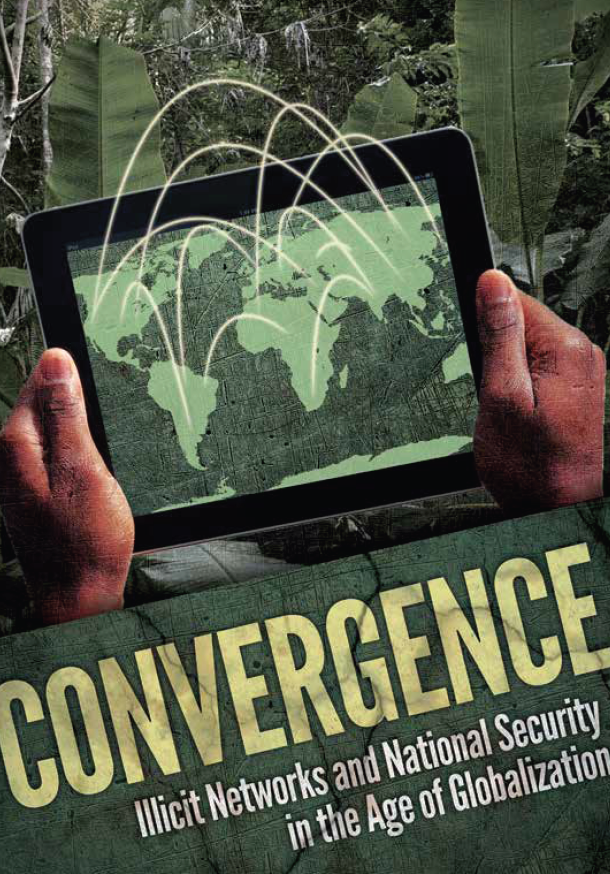
CONVERGENCE: Illicit Networks and National Security in the Age of Globalization

By Michael Miklaucic and Jacqueline Brewer

I llicit networks affect everyone in our modern, globalized world. From human trafficking in Eastern Europe to drug smuggling in East Asia, to the illicit arms trade in Africa, to terrorist cells in East Asia and insurgents in the Caucasus, transnational illicit networks have tentacles that reach everywhere. The trade in illegal narcotics is perhaps most worrisome, but of growing concern is the illicit trafficking of counterfeit items, weapons, natural resources, money, cultural property, and even people by shrewd, well-resourced, and nefarious adversaries. I have experience combating these threats personally at the tactical, operational, and strategic levels. As a young naval officer on a variety of ships, I spent a fair amount of time patrolling the global commons where transnational criminals in the guise of pirates and drug smugglers proliferate. I was in the Pentagon on 9/11 and personally experienced the global reach of modern terrorism. Later on, when I commanded U.S. Southern Command (USSOUTHCOM), one of my subordinate commands was Joint Interagency Task Force–South in Key West, Florida, a multinational and interagency/interministerial command that counters drug trafficking in the Western Hemisphere. I also experienced the pernicious effects that transnational crime has on our friends as it ranges throughout the entire Western Hemisphere. After leaving USSOUTHCOM to become commander at U.S. European Command (USEUCOM), I saw that Europe was also challenged by the same types of transnational crime. In response, I stood up the Joint/Interagency Counter Trafficking Center in Stuttgart, Germany, designed to counter transnational criminal networks in cooperation with our international partners. When I took command of USEUCOM, I also became the Supreme Allied Commander, Europe (SACEUR). As SACEUR, I command Operation Active Endeavor, which counters trafficking in the Mediterranean, and Operation Ocean Shield, which is part of the international counterpiracy efforts off the Somali coast. In addition, we have pioneered responses to cyber threats. At the Supreme Headquarters Allied Powers Europe, we have the North Atlantic Treaty Organization Computer Incident Response Center, and at USEUCOM, we are taking steps to create a subunified cyber command that will have links to both U.S. Cyber Command in the United States and USEUCOM in Germany. All of these organizations were designed to facilitate a whole-of-government approach, where all elements of national power work together in order to address emerging threats. Eventually, once societies understand the nature of the threats facing them, they will hope- fully mobilize nongovernmental assets, adopting a “whole of society” approach. When all of these elements work together, governmental and nongovernmental groups can join international regional and global groups to form a “whole of international society” approach, allowing us to close the seams that exist between nations and regions. Only then will we be able to close these illicit transnational networks. These networks have taken advantage of modern advances in communications and transportation to globalize. Narcotraffickers in the Andean Ridge, for instance, have expanded operations as far as their markets in the United States and Europe. Illegal arms merchants have expanded their operations around the world. Human smugglers have moved their slaves from underdeveloped countries to sex operations throughout the developed world. And, of course, we have all seen the global reach of modern transnational terrorism. No one is immune from this insidious threat. 


Center for Complex Operations Institute for National Strategic Studies By National Defense University Press Washington, D.C., 2013. 304p.

Paradise Lost? Ecuador’s Battle with Organised Crime

By The International Crisis Group

What’s new? Once one of South America’s safest countries, Ecuador has in under a decade become its most violent, transforming into a hub of the drug trade to Europe. President Daniel Noboa’s iron-fist approach brought murder rates down at first, but violence has since soared again and crime continues unabated.

Why does it matter? Ecuador’s authorities have declared the country to be in the grip of internal armed conflict, deploying soldiers to prisons and crime-hit communities. With no sign of violence falling, the government is set to double down on its tough approach, expanding cooperation with the U.S. military and private security contractors.

What should be done? Crackdowns send a strong message to communities and criminals alike, but alone they tend not to overwhelm drug markets. Ecuador should do more to bring state services and licit economic opportunities to crime-hit neighbourhoods while quelling the corruption in ports, prisons and the state that helps generate the crime wave.

Brussels: International Crisis Group, 2025. 52p.

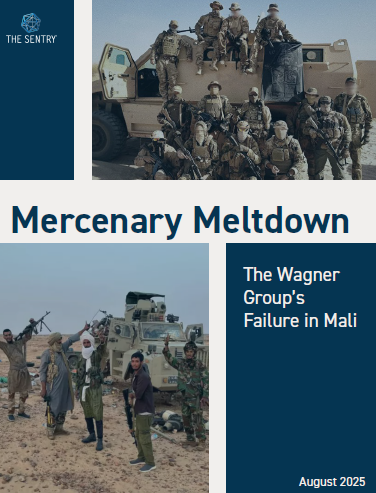
Mercenary Meltdown -The Wagner Group’s Failure in Mali

By The Sentry

The first Wagner Group fighters arrived in Bamako in January 2022 to assist the Malian military junta in its counterterrorism campaign.1 Three and a half years later, the group has announced its withdrawal from Mali to make space for Africa Corps with the statement “Mission accomplished.”2 But as the number of Wagner fighters in Mali will stay roughly the same, since many had already signed contracts with the Russian state prior to the announcement,3, 4 the group’s claim to success—and their overall strategy in Mali—merits scrutiny. Despite the Wagner Group possessing a reputation for being battle-ready and claiming occasional public triumphs in Mali, its strategy has been plagued by a series of failures.5 Wagner forces have been unable to take control of areas in the north and center of the country where armed terrorist and separatist groups are challenging the authority of the Malian state. There has been a significant increase in attacks on civilians and in civilian casualties since Wagner’s arrival in Mali, and this, in turn, has severely undermined relations between the Malian military and the Malian public. Faced with challenges such as insufficient air support, a lack of trust, and a lack of reliable information from informants, the Wagner Group has become more reactive and violent—allowing the very terrorist groups they were hired to neutralize to gain more control and increase recruitment in Mali. Wagner’s playbook in Mali has not only affected the civilian population; it has also helped perpetuate insecurity and has paved the way for the fragmentation of the Malian state. Wagner fighters have created chaos and fear within the Malian military hierarchy, forcing the Forces Armées Maliennes (Malian Armed Forces, or FAMA) to remain silent in cases of civilian abuse. In addition, the lack of order and communication within the chain of command has led to the progressive deterioration of the FAMA’s ranks. Abuses against the Malian armed forces by Wagner troops have increased, as have complaints from Malian soldiers. Within the Malian military junta itself, the varying degrees of partnership with Russian actors are contributing to a shift in power relations in Bamako, as Malian leaders regard one another with suspicion. Despite official discourse suggesting that Wagner and Russia are reliable partners in the Malian conflict, the Wagner command in Mali has demonstrated a reluctance to intervene militarily—even in cases where the capital is directly threatened—without first having assurances of financial compensation. At the outset of its Malian venture, Wagner was seeking to secure mining concessions that would likely replicate the group’s self-funding arrangements in other countries. However, the Malian junta appears unwilling to allow Wagner to control the mining sector, and Wagner’s forays into that sector have thus far been limited. Ultimately, the Wagner Group has failed in its task of eliminating terrorist groups in Mali. The Russian presence is instead creating upheaval amid the Malian military and causing rifts within the Malian junta. And as Wagner has seemingly gone unpaid for months and failed to obtain access to lucrative natural resources, its deployment in Mali has not been a worthwhile investment for any party involved. Wagner is not an infallible actor. If anything, the Malian example illustrates that the group can fail, and this should be a warning to other African clients who are considering hiring Wagner—or its more officialoffshoot, Africa Corps. At the same time, policymakers in the Global North should see Wagner’s failures as an opportunity for alternative policy approaches in the Sahel region. Key recommendations • The Office of the Prosecutor at the International Criminal Court (ICC) should open an investigation into war crimes perpetrated by Wagner troops in Mali and prosecute those responsible for human rights abuses. Alternatively, the United Nations Security Council should refer Wagner abuses in Mali to the Office of the Prosecutor at the ICC. • The government of Mali should take steps toward criminal accountability and reparations for the victims of massacres such as Moura, as well as for the abuses against and displacement of civilian populations following attacks by the Wagner Group in the north and west of the country. • The EU, the US, the UK, Canada, and Australia should investigate and, if appropriate, designate for sanctions the network of individuals and entities in Sadio Camara’s inner circle who enable, support, or benefit from Wagner’s presence in the country, as well as those involved in corruption and human rights abuses. They should coordinate sanctions to increase their impact. • International mining companies operating in Mali and foreign refineries processing Malian gold should conduct comprehensive audits of their operations to ensure that they are not conducting business with sanctioned Wagner Group entities or individuals, such as Ivan Maslov. • The Algerian government should facilitate renewed negotiations on a peace agreement between Bamako and the northern rebel groups. As the political and security landscape has changed since the 2015 agreement, which was facilitated by Algeria, including as a result of the withdrawal of the UN peacekeeping operation MINUSMA, new terms will need to be agreed.

The Sentry, 2025. 55p.

Decoding the EU’s most threatening criminal networks

By Europol

All EU Member States and 17 of Europol’s partner countries contributed data to identify the most threatening criminal networks in Europe. This resulted in a unique dataset of 821 most threatening criminal networks, with extensive information on all aspects that describe them and help assess their threat.

This mapping report is one of the key deliverables of the Belgian presidency of the Council of the European Union, which strongly encouraged the efforts of Europol in this respect. It will be an essential tool to fight organised crime going forward, which is a top EU priority, as outlined in the recent roadmap presented by the European Commission.

Publications Office of the European Union, Luxembourg, 2024. 60p.

The Darkest Shade of Green: Climate Change, Terrorist Organizations, and the Battle for Environmental Legitimacy

By Ashton Kingdon


Based on the combination of online observation, content analysis, as well as comparative and statistical analysis, this paper discusses the scale and structure of al-Qaeda’s and Islamic State’s propaganda output on the surface web. It explores qualitative and quantitative trends detectable in their propaganda between July and December 2023. This paper shows that during this period, the Islamic State released almost twice as many propaganda items on the surface web compared to al-Qaeda. Collected data indicates that the IS’s media production capability improved compared to its online crisis experienced around 2018. The recovery is, however, limited and caused primarily by efforts of the pro-IS media operatives, who are engaged in mass translation and reproduction of official releases of this violent extremist organization (VEO). Among al-Qaeda branches active on the surface web in the second half of 2023, Harakat al-Shabaab al-Mujahidin and media offices that support al-Qaeda in the Indian Subcontinent demonstrated the most remarkable capabilities in strategic communication. This paper also proves that both al-Qaeda and the Islamic State manifested significant interest in the events taking place in Africa, Central Asia, and Palestine. However, they frequently adopted opposing ways of framing them.


Studies in Conflict & Terrorism 2025.

Digital Aftershocks: Online Mobilization and Violence in the United States

By MARIANA OLAIZOLA ROSENBLAT AND LUKE BARNES


Political violence in the United States has increased in recent years and shows no signs of declining.1 This trend was underscored in September 2025 by the assassination of conservative activist Charlie Kirk at Utah Valley University. In the two weeks before and after Kirk’s killing, shooting incidents in Colorado, Minneapolis, and Dallas seized public attention.2 Executive Summary Amid growing concern about the relationship between online rhetoric and real-world violence, this report examines how violent extremist actors across the ideological spectrum use digital platforms to respond to, amplify, and exploit acts of political violence in the United States. Drawing on opensource intelligence (OSINT) gathered initially from March 24 to June 6, 2025, and then extended to include a period following Kirk’s assassination, this analysis reveals sophisticated cross-platform strategies employed by far-right, far-left, violent Islamist, and nihilistic violent extremist (NVE) actors. This report uses “violent extremist” to refer to individuals who support or commit ideologically motivated violence to further political goals, as well as those who commit violence driven by generalized hatred rather than a coherent ideology. Key Findings • Violent extremist groups systematically exploit trigger events—high-profile incidents of violence—to recruit supporters, justify their ideologies, and call for retaliatory action. • These groups employ multi-platform strategies, using mainstream sites like X for visibility and recruitment while maintaining a presence on private or semi-private platforms for coordination and more extreme content. • Far-right groups capitalized on cases like the Austin Metcalf stabbing and the Iryna Zarutska killing to advance narratives of White victimhood and justify threats against perceived enemies. • Activities of both far-left and far-right networks revealed a troubling convergence around antisemitic targeting. • Violent Islamic groups are more aggressively monitored than domestic groups espousing similar levels of violence. • Violent Islamist groups, facing stricter moderation than domestic extremists, have migrated to decentralized platforms like Rocket.Chat while disseminating symbolic propaganda elsewhere. • Nihilistic Violent Extremist (NVE) communities glorify violence across ideological lines for shock value and digital notoriety, making their threats harder to predict based on political triggers. This report aims to bring clarity to a conversation clouded by vagueness and partisanship. It first maps the domestic threat landscape, offering timely examples of online violent discourse from across the ideological spectrum targeting US individuals or institutions, and sets out a clear definitional framework for types of speech that carry legal significance under US constitutional doctrine. It closes with practical recommendations for online service providers and policymakers.


New York: NYU Stern Center for Businsss, 2025. 36p.

A comparison of political violence by left-wing, right-wing, and Islamist extremists in the United States and the world

By Katarzyna Jaskoa, Gary LaFree, James Piazzac , and Michael H. Beckerd


Although political violence has been perpetrated on behalf of a wide range of political ideologies, it is unclear whether there are systematic differences between ideologies in the use of violence to pursue a political cause. Prior research on this topic is scarce and mostly restricted to self-reported measures or less extreme forms of political aggression. Moreover, it has generally focused on respondents in Western countries and has been limited to either comparisons of the supporters of left-wing and right-wing causes or examinations of only Islamist extremism. In this research we address these gaps by comparing the use of political violence by left-wing, right-wing, and Islamist extremists in the United States and worldwide using two unique datasets that cover real-world examples of politically motivated, violent behaviors. Across both datasets, we find that radical acts perpetrated by individuals associated with left-wing causes are less likely to be violent. In the United States, we find no difference between the level of violence perpetrated by right-wing and Islamist extremists. However, differences in violence emerge on the global level, with Islamist extremists being more likely than right-wing extremists to engage in more violent acts.


Political violence in the United States has increased in recent years and shows no signs of declining.1 This trend was underscored in September 2025 by the assassination of conservative activist Charlie Kirk at Utah Valley University. In the two weeks before and after Kirk’s killing, shooting incidents in Colorado, Minneapolis, and Dallas seized public attention.2 Executive Summary Amid growing concern about the relationship between online rhetoric and real-world violence, this report examines how violent extremist actors across the ideological spectrum use digital platforms to respond to, amplify, and exploit acts of political violence in the United States. Drawing on opensource intelligence (OSINT) gathered initially from March 24 to June 6, 2025, and then extended to include a period following Kirk’s assassination, this analysis reveals sophisticated cross-platform strategies employed by far-right, far-left, violent Islamist, and nihilistic violent extremist (NVE) actors. This report uses “violent extremist” to refer to individuals who support or commit ideologically motivated violence to further political goals, as well as those who commit violence driven by generalized hatred rather than a coherent ideology. Key Findings • Violent extremist groups systematically exploit trigger events—high-profile incidents of violence—to recruit supporters, justify their ideologies, and call for retaliatory action. • These groups employ multi-platform strategies, using mainstream sites like X for visibility and recruitment while maintaining a presence on private or semi-private platforms for coordination and more extreme content. • Far-right groups capitalized on cases like the Austin Metcalf stabbing and the Iryna Zarutska killing to advance narratives of White victimhood and justify threats against perceived enemies. • Activities of both far-left and far-right networks revealed a troubling convergence around antisemitic targeting. • Violent Islamic groups are more aggressively monitored than domestic groups espousing similar levels of violence. • Violent Islamist groups, facing stricter moderation than domestic extremists, have migrated to decentralized platforms like Rocket.Chat while disseminating symbolic propaganda elsewhere. • Nihilistic Violent Extremist (NVE) communities glorify violence across ideological lines for shock value and digital notoriety, making their threats harder to predict based on political triggers. This report aims to bring clarity to a conversation clouded by vagueness and partisanship. It first maps the domestic threat landscape, offering timely examples of online violent discourse from across the ideological spectrum targeting US individuals or institutions, and sets out a clear definitional framework for types of speech that carry legal significance under US constitutional doctrine. It closes with practical recommendations for online service providers and policymakers.


PNAS 2022 Vol. 119 No. 30 e2122593119

When Minors Become Targets of Violent Extremist Groups

By Noor Huda Ismail

SYNOPSIS

The increasing susceptibility of minors to recruitment by violent extremist groups via online platforms poses a clear and present danger. Cases in Singapore and Indonesia illustrate how radicalisation exploits factors such as identity crises, wounded masculinity, and digital isolation. Emphasis on rehabilitation as opposed to punishment is critical, necessitating the involvement of families, schools, and communities to safeguard children through fostering trust and empathy.

COMMENTARY

As a father of two teenage boys, aged 16 and 14, I cannot read the news of radicalised minors without feeling alarmed and deeply concerned. The recent case in Singapore, involving a 14-year-old student, is particularly striking.


Security officials reported that the boy was influenced by a “salad bar” of extremist beliefs, including ISIS propaganda, incel subculture and those on the far-right and far-left. He is not much older than my youngest child, who, like millions of teenagers, spends hours on gaming, social media, and online communities that quietly shape their identity, sense of belonging, and moral compass.


For the unfamiliar, incel stands for “involuntary celibate”. These are mostly young men, expressing deep resentment toward women and society for their sexual frustrations. From a gender perspective, incel ideology feeds on what scholars call wounded masculinity.


Many boys today struggle with identity in a world where traditional markers of male success – financial stability, social recognition, romantic relationships – are increasingly uncertain. Online platforms amplify these feelings, creating spaces where humiliation and anger are validated, sometimes evolving into misogyny or even violence.

The past, present and future of organised crime

The 2025 Africa Organised Crime Index, published on 17 November by the ENACT project, provides an overview and analysis of the past, present and future of organised crime across the continent. In its fourth and final iteration, the 2025 Index draws on the knowledge of over 160 experts. It combines eight years of qualitative and quantitative data to provide an assessment of how organized crime and resilience have evolved in Africa. It also examines ongoing challenges, including the impact of technology and geopolitical dynamics on organized crime. The ENACT project is implemented by a consortium of the Institute for Security Studies (ISS), INTERPOL and the Global Initiative Against Transnational Organized Crime (GI-TOC).

“Eight years of data and four issues of the Africa Organised Crime Index provide a rich pool of information that gives us an unprecedented overview of illicit economies across the continent”, says Mark Shaw, Executive Director of GI-TOC. “Thanks to the ENACT research programme and our cooperation with the ISS, we have pioneered a methodology for measuring organized crime first in Africa, which has now been scaled up to a Global Organized Crime Index produced every two years”.

"This has been an innovative flagship project," says Eric Pelser, ENACT Programme Head at the ISS. "Our partnership with GI-TOC has produced in-depth analysis that goes beyond research – we've taken the recommendations emanating from the Africa Index to the highest levels of policy-making, ensuring that evidence drives action across the continent."

Key findings:

  • There has been a steady growth in criminal markets and criminal actors in Africa since 2019. 
     

  • In 2025, the most pervasive criminal markets in Africa are financial crimes, human trafficking, non-renewable resource crimes, the trade in counterfeit goods and arms trafficking. Since 2023, the two fastest-growing markets have been financial crimes and the trade in counterfeit goods, reflecting broader global patterns.
     

  • Criminal markets in Africa today show considerable diversity across the continent. East Africa stands out for its high human trafficking, arms trafficking, and human smuggling scores, which drive the continental averages. In North Africa, financial crimes and cannabis trade are the most pervasive criminal markets, placing the region second and first (respectively) in the world for these illicit economies. Non-renewable resource crimes were found to exert significant influence in Central Africa, while the cocaine trade dominates West Africa’s illicit economy. In Southern Africa, wildlife trade was found to be among the most prevalent criminal markets.   
     

  • State-embedded actors are the most prevalent type of criminal actor across the continent, with their influence in nearly half of African countries (48%) classified as “severe”. 
     

  • Foreign criminal groups pose an increasingly significant threat to the continent. Their influence in West Africa was found to be “significant to severe” in all but one country in the region. This reflects the impact of transnational cocaine trafficking as well as private military companies engaged in illicit activities.
     

  • Africa’s digital boom has provided new opportunities for criminal actors, both to expand and diversify traditionally non-digital markets and to grow new criminal markets, such as online financial fraud and ransomware. As in other regions of the world, cyber-dependent crime is increasing in many parts of Africa – particularly Kenya, South Africa and Nigeria, with four out of the five subregions witnessing a rise in this crime type.
     

  • Criminality thrives in volatile environments. States and regions where conflicts, insurgency and violent extremism persist are magnets for organized crime. Many countries in Africa that have the highest criminality scores are wracked by conflict and instability: there is a relatively high (0.59) correlation between the Fragile States Index and criminality. This phenomenon needs to be factored into peacemaking and peacebuilding.
     

  • Governance was found to have a strong impact on resilience to organized crime, with the data showing a strong (0.81) correlation between Africa’s resilience and the Democracy Index. While democratic countries are vulnerable to organized crime, they are also more resilient in their response to it. In contrast, authoritarian states tend to either embrace organized crime or suppress it with violent crackdowns.
     

  • Geopolitics has a negative impact on illicit economies, drawing on the continent’s resources and role in the global landscape. For example, the withdrawal or expulsion of some foreign powers has created a vacuum for both licit and illicit actors to fill, generating instability and the growth of illicit activity in some cases.
     

  • There has been a steady decline in resilience to organized crime in most African countries since 2019. Almost all countries in Africa (92.5%) are characterized as having low resilience to organized crime. Of these, 23 countries are affected by high criminality, creating a particularly vulnerable combination of high criminality and low resilience.
     

  • Africa’s resilience ranks among the lowest in the world, indicating insufficient capacity to respond to the criminal threats the continent faces. One key resilience measure is that ‘non-state actors’ play a vital role by supporting vulnerable communities and holding authorities to account. Civil society organizations are often at the forefront of leading social protection efforts. However, since the 2021 Index, the ‘nonstate actors’ resilience indicator has declined the most

The Evolution of Threat Networks in Latin America

By Phil Williams and Sandra Quincoses

The economic and political environments in Latin America have been advantageous for local, regional, and transnational threat networks. Specifically, technology, increased international trade and economic interdependence, heightened interest in natural resources for profit, synthetic drug production, economic disparities, corruption, impunity, and unstable political conditions have led to a complex web of opportunities that requires new, progressive ways to address criminal activities. The creativity of threat networks along with their entrepreneurial strategies have resulted in increasing power and influence. Despite efforts by the United States and some governments in Latin America to combat these networks, the everchanging global environment has worked in their favor. Indeed, some countries in Central and South America are in danger of transforming into what Jorge Chabat described as “criminally possessed states.” Furthermore, gangs in Central America, especially in Honduras where MS-13 has become more closely linked to drug trafficking, have reduced local extortion, become more aware of their nascent political power and have even engaged in rudimentary social welfare provision.

Fishing For Security. Taking on Illegal Fishing in Latin America

By Daniel Schaeffer


Often viewed through a myopic lens as an environmental issue or one relegated to fisheries authorities, illegal, unreported, and unregulated (IUU) fishing affects all coastal nations in the Western Hemisphere and has national security implications on the United States. A regional problem requires a regional solution and greater cooperation across agencies, private industry, and governments. Actions to address IUU fishing in Latin America have the potential to achieve greater aims of maritime security in the region. The report will frame the problem of IUU fishing by first highlighting its overall impacts globally and regionally. Food security, employment, national revenue, and other illicit activities are discussed. The report concludes with recommendations for interagency and regional coordination.


Miami:2021.