Open Access Publisher and Free Library
CRIME+CRIMINOLOGY.jpeg

CRIME

Violent-Non-Violent-Cyber-Global-Organized-Environmental-Policing-Crime Prevention-Victimization

Posts in Crime Trends
A ‘Lens of Labor’: Re-Conceptualizing Young People’s Involvement in Organized Crime

By Sally Atkinson-Sheppard

Millions of the world’s children engage in labor, often exploitative and essential to their survival. Child labor is closely related to crime; global discourse illustrates how young people are victims of forced and bonded labor and recent studies from the global South demonstrate how young people are hired as the ‘illicit laborers’ of organized crime groups. Despite this, there is a tendency to consider young people, not as laborers but as victims of trafficking or as offenders (often in relation to gangs). To address this lacuna, the article draws on data from 3 studies conducted in the global South to develop a conceptual framework suitable for understanding the intersection between labor and crime. The article develops a metaphorical ‘labor lens’, a lens which centers and prioritizes labor and instrumental drivers for crime, embedded within wider structures of illicit markets, established organized crime, state:crime collaboration and the need for children to work to survive. The article integrates economic drivers for involvement in organized crime with the moral economy, within the context of ecological frameworks of crime, embedded with wider issues of coloniality. In doing so, the article develops a new conceptual framework for considering young people’s involvement in organized crime.


  Critical Criminology (2023) 31:467–487
EUGENIC CRIMINOLOGY AND THE BIRTH OF PREDICTIVE ALGORITHMS IN CRIMINAL JUSTICE

By: Megan T. Stevenson and Robynn J.A. Cox

This Article tells the story of the birth of predictive algorithms in criminal justice. Known as risk assessments, these tools are widely used today to make decisions about bail, sentencing, and parole. Their roots trace back to the 1920s, when statistical prediction tools were first proposed for use in criminal justice decision-making. In this Article, we show that risk assessment found its origins in the ideas of eugenic criminology: namely, that crime is mostly caused by an inferior subclass of humanity, tainted from birth. Risk assessment was conceptualized as a way of sorting between the “normals” who were amenable to reform and the “sub-normals” who, due to their inferior genes, were not. Such “born criminals” were seen as requiring indefinite confinement within isolated penal colonies in order to protect society from crime, prevent procreation, and provide care for those in need of paternalistic guidance. We tell this story in part because it is a fascinating piece of history, marked by bigotry, bravado, and an almost fanatical optimism about mankind’s ability to engineer a perfect society. But we also tell it because the ideas and practices of eugenic criminology are not widely known. While “tainted origins” do not automatically condemn the ongoing use of risk assessment, understanding history can help identify ways that the past lives on in the present.


A New Balance in Prolonged Mandatory Immigration Detention

By Mary Holper

Prolonged mandatory immigration detention has become the norm, not the exception. We have arrived at this moment because immigration detention is supposedly exceptional, subject to different constitutional norms than other civil detention. When the Supreme Court first examined a facial due process challenge to mandatory immigration detention in its 2003 decision in Demore v. Kim, immigration detention exceptionalism caused the Court to uphold mandatory detention. Absent from the Court's analysis was an entire body of due process jurisprudence, most of which developed in the 1970s, which questioned the government's purposes behind civil detention and required significant procedural protections in order for the government to deprive a person of liberty. In the wake of Demore, courts considering as-applied challenges to prolonged mandatory detention formulated multi-factor tests as a method of interpreting the statute to avoid unconstitutional detention. These tests provided an important counterweight to immigration detention exceptionalism and predictability for litigants, but most of the factors are irrelevant to a federal district court in deciding whether prolonged detention without a bond hearing violates a detainee's due process rights. Courts have been taking out the scales to engage in due process balancing, but putting the wrong weights on the scales.

Courts are beginning to discard these multi-factor tests and instead applying the Supreme Court's 1976 Mathews v. Eldridge procedural due process test to decide whether prolonged mandatory immigration detention is unconstitutional. The Mathews balancing test, which considers the private interests at stake, the risk of erroneous deprivation, and the government's interests, has been welcomed in immigration law because it encourages courts to first focus on an individual noncitizen's liberty interest. Mathews thus counteracts immigration detention exceptionalism, which focuses exclusively on the government's interest and finds that removable detainees have no liberty interest whatsoever. The Second Circuit Court of Appeals is the first circuit court to shift its test, transitioning to Mathews balancing in 2024 to decide whether mandatory detention was unreasonably prolonged. As a cautionary note, an attempt at transitioning the balancing test led the Eighth Circuit Court of Appeals, in 2024, to reject all forms of balancing, embrace immigration detention exceptionalism, and hold that any length of mandatory detention is acceptable during removal proceedings. This Article argues that courts can make prolonged mandatory immigration detention exceptional by continuing the work of the Second Circuit in applying the Mathews procedural due process balancing test instead of the existing multi-factor tests.

 Boston College Law School Legal Studies Research Paper No. 662

Minding the Machines: On Values and AI in the Criminal Legal Space

By Julian Adler,  Jethro Antoine, Laith Al-Saadoon

There was but one passing reference to “core values” over the course of a recent U.S. Senate Judiciary hearing on artificial intelligence [AI] in criminal investigations and prosecutions.[1] This is typical. Even in spaces like the criminal legal system, where the specters of racial injustice and inhumanity loom so large, the technological sublimity of AI can be awfully distracting. People have long looked to technology to duck the hard problem of values. “[W]e have tended to believe that if we just had more information, we could make better policy,” observes University of Nevada’s Lynda Walsh in Scientists as Prophets. “But no matter how much data we could lay hands to—even if it were LaPlace’s Demon itself—values would still stand in the way.”[2] If anything is clear about advanced AI, it is that there is much we don’t know and even more that we can’t begin to predict. Consider that the “generative AI” we have witnessed over the past 18 months—AI which produces autonomous human-impersonating content—was largely unforeseen. It’s now being attributed to AI’s “emergent abilities.”

Nwq York: Center for Justice Innovation, 2024. 8p.

Stop-and-Frisk Policing in U.S. Cities: Patterns and Productivity

By David Abrams and Priyanka Goonetilleke

Like most locally governed activities, police stops are evaluated, if at all, using data from a single municipality. This paper aggregates data on over 8 million pedestrian and vehicle police stops from 16 U.S. cities between 2019 and 2023 to better understand how the widely used police tactic varies by place, time, and race. We find immense variation in the implementation of these policies across cities, something that has not been previously highlighted in the literature. Stop rates vary across cities by almost two orders of magnitude, well in excess of inputs like funding and size of police force vary far less, or outcomes like different measures of crime. Contraband discovery rates (hit rates) for pedestrian stops are consistently low, with gun hit rates never exceeding 10% of frisks in any city. Consistent with optimizing models of policing, hit rates rise over time as frisk rates fall substantially. However, this result is concentrated in gun contraband, and for other types - mostly drugs - hit rates do not vary much even with vast declines in frisks, suggesting police are not optimizing for other types of contraband. This supports the notion that frisks are consistent with the law, which requires they be based on suspicion that an individual is armed and dangerous. Consistent with prior work, there are substantial racial disparities in all examined cities, with Blacks frisked as much as 10 times more frequently than Whites in some locations. Taken together, these facts point to a standard practice that seemingly has no standards, given the massive variation across the country. This suggests there are potentially large gains in efficiency and fairness from sharing best practices and nationwide data collection on police stops.

U of Penn, Inst for Law & Econ Research Paper No. 26-01,


Criminal Procedure Without Consent

By Kate Weisburd


Scholars and advocates have long argued that a person's consent to a warrantless police search is often so inherently coerced, uninformed, and shaped by race, class, gender, citizenship status, and disability that to call it a "choice" is fiction. This critique is not limited to police searches based on consent. Waiving rights and consenting to otherwise unconstitutional state action permeates criminal procedure. The definition of a seizure, the third-party doctrine, custodial confessions, plea bargains, and agreements to alternatives to incarceration (such as GPS ankle monitoring) all hinge on the idea of voluntary choices-choices that are often just as coerced and uninformed as the choice to consent to a search.Given these concerns, this Article asks: What would happen if consent were eliminated from criminal procedure doctrines? This question is not merely academic. In recent years, a number of jurisdictions have substantially limited or eliminated traditional police searches based on consent. These reform efforts allow us to consider if there is something uniquely coercive or inequitable about consent searches that makes them especially amenable to reform or if we should consider eliminating consent in other criminal procedure doctrines as well.This Article takes on these questions. Drawing on both an original national survey of recent consent-search reforms and a transsubstantive analysis of consent and waiver in a range of criminal procedure doctrines, this Article analyzes the potential ramifications of eliminating (or limiting) consent. In doing so, this Article reveals the extent to which consent plays a pivotal role in upholding—and justifying—the entire operation of the criminal justice system.


.California Law Review (2025), UC Law San Francisco Research Paper Forthcoming,

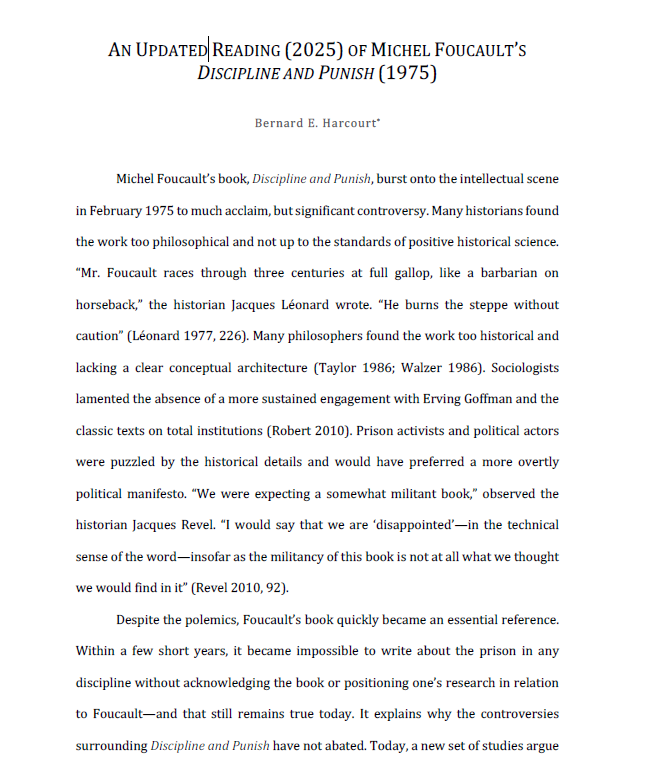
An Updated Reading (2025) of Michel Foucault's Discipline and Punish (1975)

By Bernard Harcourt


Fifty years after its publication, Discipline and Punish (1975) remains as controversial as ever. Anyone writing about the prison today, in no matter what discipline, feels obliged to position themselves vis-à-vis Michel Foucault’s book. As a result, new studies and books regularly criticize Discipline and Punish, most often for misleading the reader about the history of the prison. As Adam Gopnik recently writes in the New Yorker, scholars are “turning decisively against Foucault,” contending “that incarceration may be a facet of every hierarchical, complex society. In other words, it’s always been with us.”However, Discipline and Punish was never intended to be a history of the prison. It was instead a genealogy of a particular mode of governing in modern times—what Foucault called “disciplinary power” or “panopticism.” And rather than trace the history of the prison, the book proposed a contemporary way to understand how power circulates in society and it paved the way for the study of contemporary modes of governing.  Drawing on a wealth of new Foucault archives, public lectures, manuscripts, and historical documents that have surfaced over the past 50 years, it is possible now to identify the true import of Foucault’s book. Just as the Leviathan of Thomas Hobbes captured the turn in modern political philosophy to theories of sovereignty and representation, Discipline and Punish marked the end of modern political theory and launched a new approach to analyze relations of power in society. In this essay, I redefine the central contribution of Discipline and Punish and explore how to use Foucault’s book today—and also, how to go beyond it.


 Columbia Public Law Research Paper No. 6044574,

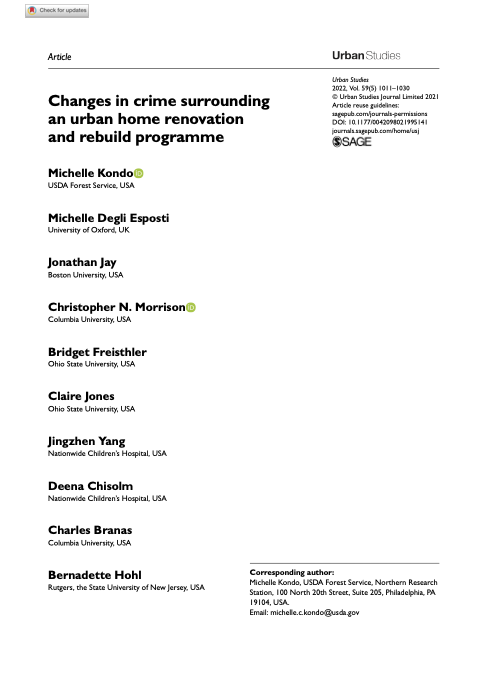
Changes In Crime Surrounding An Urban Home Renovation and Rebuild Programme

By Michelle Kondo , Michelle Degli Esposti , Jonathan Jay etc.

Neighbourhood environments are a known social determinant of health. Vacant and abandoned buildings and lots and poor or hazardous housing conditions, combined with crime and violence, can affect residents’ health and wellbeing. Nationwide Children’s Hospital and its partners launched the Healthy Homes initiative in 2008, which sought to improve nearby residents’ health and wellbeing by rejuvenating vacant and abandoned properties and increasing homeownership in the South Side neighbourhood of Columbus, Ohio. Between 2008 and mid-2019 the initiative funded 273 repairs or renovations in this neighbourhood. We conducted a ZIP-code-level comparative case study of the Healthy Homes housing interventions using synthetic control methodology to evaluate changes in crime rate in the intervention area compared with those in a synthetic control area. While findings were mixed, we found some evidence of reduced thefts in the Healthy Homes area, relative to its synthetic control. This initiative to repair, rebuild and increase ownership of housing has the potential to reduce crime rates for neighbours of the Nationwide Children’s Hospital.  


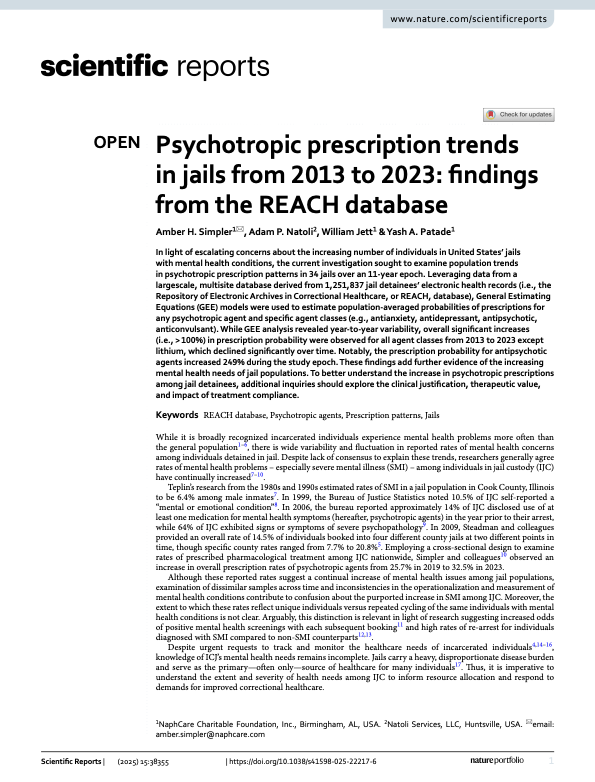
Psychotropic prescription trends in jails from 2013 to 2023: findings from the REACH database

By Amber H. Simpler, Adam P. Natoli, William Jett & Yash A. Patade 


In light of escalating concerns about the increasing number of individuals in United States' jails with mental health conditions, the current investigation sought to examine population trends in psychotropic prescription patterns in 34 jails over an 11-year epoch. Leveraging data from a largescale, multisite database derived from 1,251,837 jail detainees' electronic health records (i.e., the Repository of Electronic Archives in Correctional Healthcare, or REACH, database), General Estimating Equations (GEE) models were used to estimate population-averaged probabilities of prescriptions for any psychotropic agent and specific agent classes (e.g., antianxiety, antidepressant, antipsychotic, anticonvulsant). While GEE analysis revealed year-to-year variability, overall significant increases (i.e., > 100%) in prescription probability were observed for all agent classes from 2013 to 2023 except lithium, which declined significantly over time. Notably, the prescription probability for antipsychotic agents increased 249% during the study epoch. These findings add further evidence of the increasing mental health needs of jail populations. To better understand the increase in psychotropic prescriptions among jail detainees, additional inquiries should explore the clinical justification, therapeutic value, and impact of treatment compliance.

Keep the status quo: randomization-based security checks might reduce crime deterrence at airports

By Tamara Stotz, Angela Bearth, Signe Maria Ghelfi & Michael Siegrist

Due to the increasing number of passengers at airports, regular security checks reached their capacity limits. Thus, alternative security checks are being discussed to increase their efficiency. For example, instead of screening all passengers briefly, a randomly selected sample of passengers could be screened thoroughly. However, such randomization-based security checks could be perceived as less secure based on the assumption that fewer illegal objects would be uncovered than through regular security checks. To analyze whether this is the case, we conducted an online experiment that investigated people’s perceptions of and preference for traditional and randomization-based security checks from both the passenger and the criminal perspectives. The findings suggest that within security checks with explicitly stated equal probabilities of detecting illegal objects, passengers do not exhibit strong preferences for either the traditional or the randomization-based security checks. However, randomization-based security checks would be preferred by criminals. Thus, with regard to security, the status quo, namely traditional security checks, is still the best way to keep airports secure.

Journal of Risk Research, Volume 24, 2021 - Issue 12

SexWork.DK: a comparative study of citizenship and working hours among sex workers in Denmark

By Rasmus Munksgaard, Kim Moeller & Theresa Dyrvig Henriksen

Sex workers in Europe are increasingly of nonnational origin. The Schengen cooperation allows internal migration within the European Union, but many migrant sex workers originate from outside the EU. While sex workers are already in precarious positions, nonnationals risk deportation, dependent on their citizenship status, and may have debts to smugglers. Consequently, they may be more likely to work longer hours to increase short-term profits. Using a dataset of sex work advertisements from one Danish website (n = 2,594), we estimate the association between inferred citizenship status and a) advertised hours on shift using ordinary least squares regression, and b) the probability of advertising 24/7 availability using a linear probability model. Compared to Danish sex workers, we find migrants advertise almost twice as many hours on shift and are more likely to advertise 24/7 availability. These results shed light on the inequalities that persist between national and nonnational sex workers.

Global Crime, Volume 26, 2025 - Issue 1

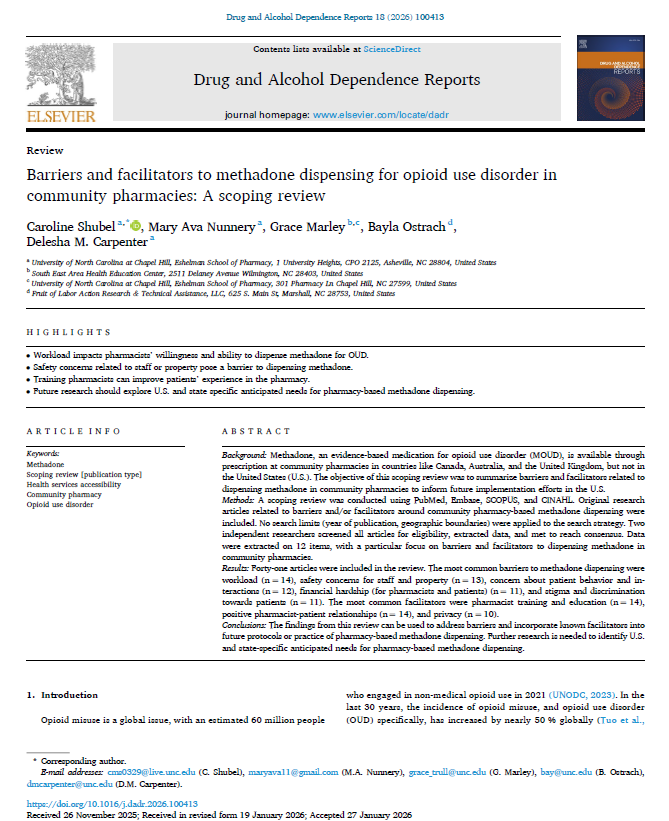
Barriers and facilitators to methadone dispensing for opioid use disorder in community pharmacies: A scoping review

By Caroline Shubel , Mary Ava Nunnery , Grace Marley, Bayla Ostrach , Delesha M. Carpenter

Background: Methadone, an evidence-based medication for opioid use disorder (MOUD), is available through prescription at community pharmacies in countries like Canada, Australia, and the United Kingdom, but not in the United States (U.S.). The objective of this scoping review was to summarize barriers and facilitators related to dispensing methadone in community pharmacies to inform future implementation efforts in the U.S. Methods: A scoping review was conducted using PubMed, Embase, SCOPUS, and CINAHL. Original research articles related to barriers and/or facilitators around community pharmacy-based methadone dispensing were included. No search limits (year of publication, geographic boundaries) were applied to the search strategy. Two independent researchers screened all articles for eligibility, extracted data, and met to reach consensus. Data were extracted on 12 items, with a particular focus on barriers and facilitators to dispensing methadone in community pharmacies. Results: Forty-one articles were included in the review. The most common barriers to methadone dispensing were workload (n = 14), safety concerns for staff and property (n = 13), concern about patient behavior and interactions (n = 12), financial hardship (for pharmacists and patients) (n = 11), and stigma and discrimination towards patients (n = 11). The most common facilitators were pharmacist training and education (n = 14), positive pharmacist-patient relationships (n = 14), and privacy (n = 10). Conclusions: The findings from this review can be used to address barriers and incorporate known facilitators into future protocols or practice of pharmacy-based methadone dispensing. Further research is needed to identify U.S. and state-specific anticipated needs for pharmacy-based methadone dispensing

:Drug Alcohol Depend Rep. 2026 Jan 29;18:100413. doi: 10.1016/j.dadr.2026.100413. PMID: 41695144; PMCID: PMC12906019

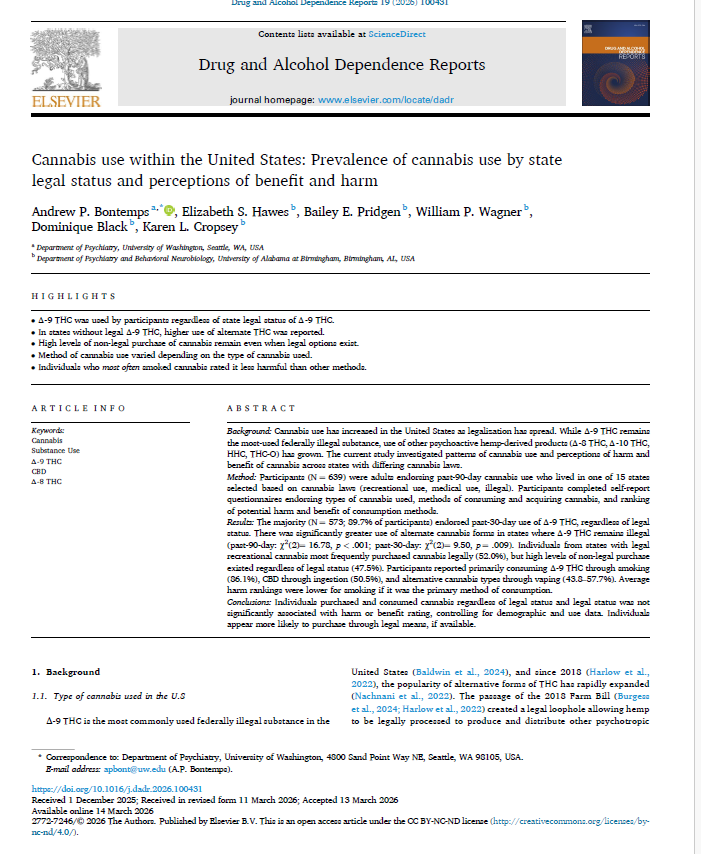
Cannabis use within the United States: Prevalence of cannabis use by state legal status and perceptions of benefit and harm

By Andrew P. Bontemps, Elizabeth S. Hawes, Bailey E. Pridgen, William P. Wagner, Dominique Black, Karen L. Cropsey

Background:Cannabis use has increased in the United States as legalization has spread. While Δ-9 THC remains the most-used federally illegal substance, use of other psychoactive hemp-derived products (Δ-8 THC, Δ-10 THC, HHC, THC-O) has grown. The current study investigated patterns of cannabis use and perceptions of harm and benefit of cannabis across states with differing cannabis laws.


Method

Participants (N=639) were adults endorsing past-90-day cannabis use who lived in one of 15 states selected based on cannabis laws (recreational use, medical use, illegal). Participants completed self-report questionnaires endorsing types of cannabis used, methods of consuming and acquiring cannabis, and ranking of potential harm and benefit of consumption methods.


Results

The majority (N=573; 89.7% of participants) endorsed past-30-day use of Δ-9 THC, regardless of legal status. There was significantly greater use of alternate cannabis forms in states where Δ-9 THC remains illegal (past-90-day: χ2(2)=16.78, p<.001; past-30-day: χ2(2)=9.50, p=.009). Individuals from states with legal recreational cannabis most frequently purchased cannabis legally (52.0%), but high levels of non-legal purchase existed regardless of legal status (47.5%). Participants reported primarily consuming Δ-9 THC through smoking (86.1%), CBD through ingestion (50.5%), and alternative cannabis types through vaping (43.8-57.7%). Average harm rankings were lower for smoking if it was the primary method of consumption.


Conclusions

Individuals purchased and consumed cannabis regardless of legal status and legal status was not significantly associated with harm or benefit rating, controlling for demographic and use data. Individuals appear more likely to purchase through legal means, if available.


Drug and Alcohol Dependence Reports

Available online 14 March 2026, 100431


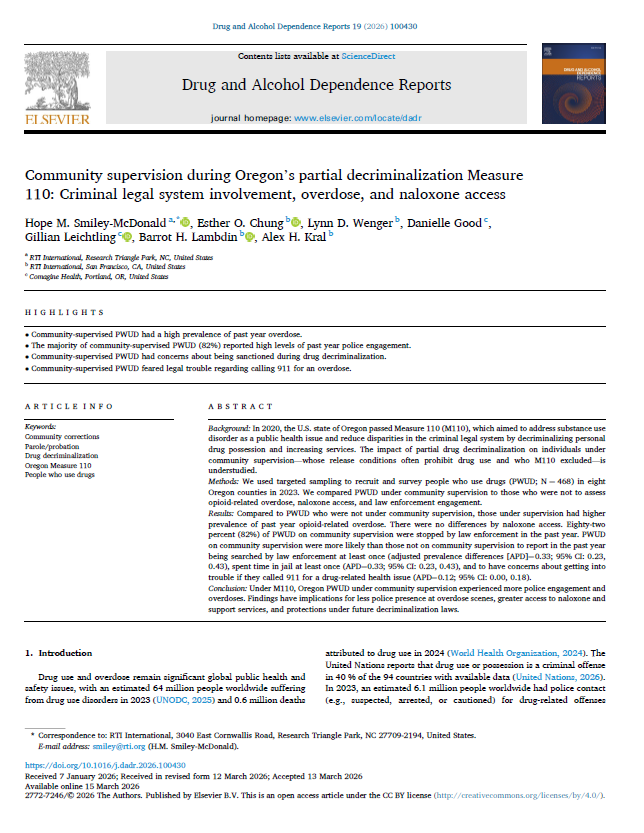
Community supervision during Oregon’s partial decriminalization Measure 110: Criminal legal system involvement, overdose, and naloxone access

Bt Hope M. Smiley-McDonald,  Esther O. Chung , Lynn D. Wenger, Danielle Good , Gillian Leichtling c, Barrot H. Lambdin , Alex H. Kral 

Background

In 2020, the U.S. state of Oregon passed Measure 110 (M110), which aimed to address substance use disorder as a public health issue and reduce disparities in the criminal legal system by decriminalizing personal drug possession and increasing services. The impact of partial drug decriminalization on individuals under community supervision—whose release conditions often prohibit drug use and who M110 excluded—is understudied.

Methods

We used targeted sampling to recruit and survey people who use drugs (PWUD; N=468) in eight Oregon counties in 2023. We compared PWUD under community supervision to those who were not to assess opioid-related overdose, naloxone access, and law enforcement engagement.

Results

Compared to PWUD who were not under community supervision, those under supervision had higher prevalence of past year opioid-related overdose. There were no differences by naloxone access. Eighty-two percent (82%) of PWUD on community supervision were stopped by law enforcement in the past year. PWUD on community supervision were more likely than those not on community supervision to report in the past year being searched by law enforcement at least once (adjusted prevalence differences [APD]=0.33; 95% CI: 0.23, 0.43), spent time in jail at least once (APD=0.33; 95% CI: 0.23, 0.43), and to have concerns about getting into trouble if they called 911 for a drug-related health problem (APD=0.12; 95% CI: 0.00, 0.18).

Conclusion

Under M110, Oregon PWUD experienced more police engagement and overdoses. Findings have implications for less police presence at overdose scenes, greater access to naloxone and support services, and protections under future decriminalization laws.

Drug and Alcohol Dependence Reports

Available online 15 March 2026, 100430

In Press, Journal Pre-proof

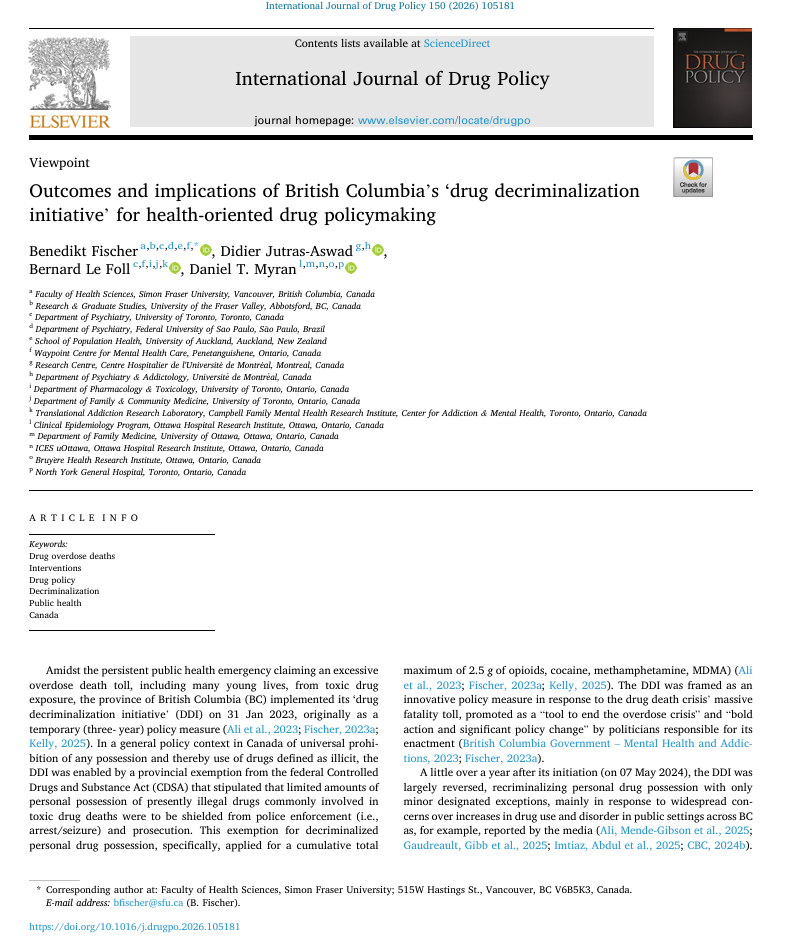
Outcomes and implications of British Columbia’s ‘drug decriminalization initiative’ for health-oriented drug policymaking

By lBenedikt Fischer,  Didier Jutras-Aswad, Bernard Le Foll, Daniel T. Myra

Highlights

The province of British Columbia (Canada) temporarily implemented a decriminalization initiative for personal drug possession/use (2023–2024) in contexts of a toxic drug death crisis.

  1. The decriminalization initiative was a priori promoted as a “tool to end the overdose crisis” and widely expected to reduce adverse health outcomes from toxic drug use.

  2. Emerging evaluation data indicate that the drug decriminalization initiative was not associated with population-level changes in drug use-related mortality (e.g., overdose deaths) or morbidity (e.g., hospitalizations).

  3. Drug use decriminalization remains an essential step to align prohibition-based drug policy frameworks with public health and human rights principles, but must be approached realistically and designed sensibly.

  4. To tangibly address toxic drug use-related harms, expanded measures are required that are effectively capable of preventing and reducing PWUDs’ exposure to and use of toxic drugs
    International Journal of Drug Policy

Volume 150, April 2026, 105181

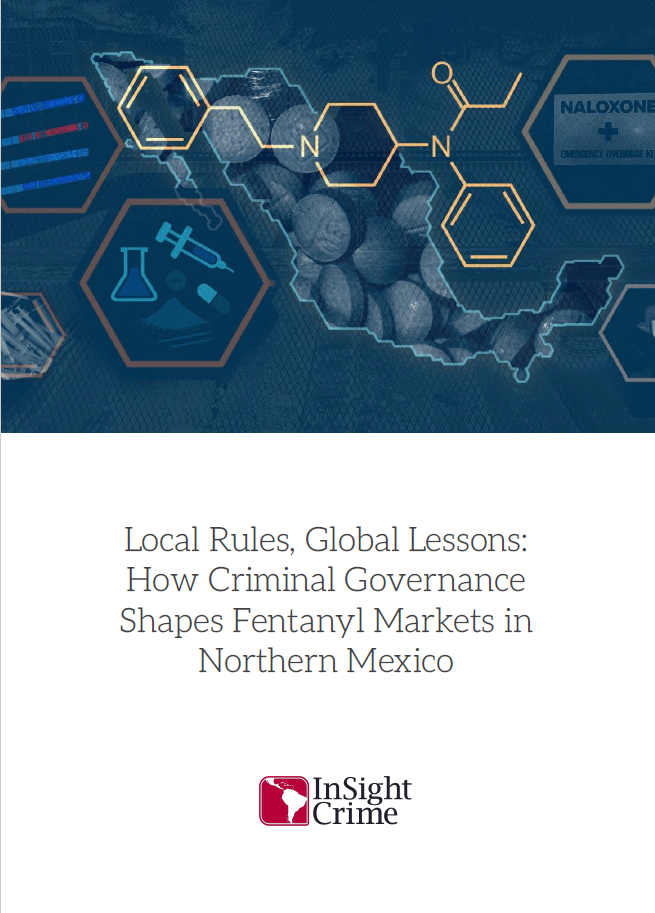
Local Rules, Global Lessons: How Criminal Governance Shapes Fentanyl Markets in Northern Mexico

By Steven Dudley, et al.


Although traditional synthetic opioid strongholds like the United States and Canada appear to be experiencing a stabilization of their illicit fentanyl market—evidenced by a historic reduction in overdose deaths 1—synthetic opioids continue to expand across the globe, creating widespread health and security concerns. Existing explanations for the rise and stabilization of these markets focus on economic incentives, supply-chain disruption, precursor controls, consumption patterns, and public-health interventions. But the role of organized crime in structuring retail distribution has been largely overlooked. The experience of Mexico’s northern border illustrates that local criminal governance can be a decisive factor in determining where and how new drug markets take root. Fentanyl, for example, has quietly reshaped drug markets in Mexico and upended some widely held assumptions of how larger criminal groups interact with these markets. As local criminal organizations became major producers and exporters of the synthetic opioid to the United States, domestic consumption also emerged in key trafficking corridors. In Tijuana and Mexicali in Baja California, Hermosillo and Nogales in Sonora, and Ciudad Juárez in Chihuahua, the transnational fentanyl economy has taken root locally, generating unprecedented public health and security pressures. This expansion, however, has been uneven, and the criminal actors who control local drug economies are far from monolithic. Across northern Mexico, fragmented local factions—sometimes linked to larger organizations, sometimes operating with considerable autonomy—determine what reaches consumers and under what conditions. Retail fentanyl markets have therefore expanded not simply in response to demand or price signals, but according to thestrategic decisions of local criminal groups. In Baja California, these groups actively promoted fentanyl sales, enabling the market to consolidate. In Sonoran cities and Ciudad Juárez, they restricted distribution, confining consumption to specific user niches.Overall, the impact on the ground has been substantial. The introduction of fentanyl triggered waves of overdose deaths and serious health effects among users. Although there are signs that the crisis may have stabilized in some areas, the risks persist, and the problem remains underestimated in official statistics, limiting the effectiveness of institutional responses that are already ill-equipped to address it. This report aims to provide a deeper understanding of this issue. It examines fentanyl consumption dynamics in the cities mentioned, traces the evolution of the market, and outlines the distribution networks that sustain it. Additionally, it analyzes the models of criminal control over local drug markets and assesses the state’s response to date. A central question running through the analysis is why fentanyl did not spread uniformly across these cities and what role local criminal structures played in that divergence.

Washington DC: Insight Crime, 2026. 66p.

America’s Incarceration Crossroads: Reversing Progress Amid Record-Low Crime Rates

By Nazgol Ghandnoosh and Sabrina Pearce

The U.S. criminal legal system stands at a crossroads. The United States remains a world leader in incarceration, locking up its citizens at a far higher rate than any other industrialized nation.

Between 1972 and 2009, the number of people imprisoned grew nearly 700%, while crime rates declined dramatically after peaking in 1991. Imprisonment levels slowly scaled back, achieving a 25% decline between 2009 and 2021. Then, the prison population has resumed its growth, according to the most recently available data. The prison population grew in 2022 and in 2023, 39 states increased their prison populations.

The COVID-19 pandemic contributed to a seismic increase in the most serious crime, homicide, which has fortunately declined to pre-pandemic levels. By 2024, homicide rates were 49% lower than their peak level in 1991. Violent and property crime rates overall have reached historic lows: 2024’s violent crime rate was 53% lower than its peak-1991 level and the property crime rate was 66% lower.

While crime rates are at historic lows, Americans deserve greater levels of community safety. A growing number of elected officials at the local, state, and federal levels have moved to overturn successful criminal justice reforms and revert to the failed playbook of mass incarceration, while the federal government has cut funding for important crime-prevention programs. Instead, policymakers should respond to crime upticks with evidence-based responses, while correcting the counterproductive, costly, and cruel responses of the past.

Excessive reliance on imprisonment in the United States is ineffective at addressing crime, diverts resources from effective public safety investments, upends family stability, contributes to trauma, and disproportionately harms communities of color. A vast body of research has established that we can advance community safety while reducing prison admissions as well as scaling back sentences for both those entering prisons and those already there

Your Money or Your Life:  London’s Knife Crime, Robbery and Street Theft Epidemic 

By David Spencer

A new report from Policy Exchange demonstrates how London is in the grip of a street crime epidemic and makes seventeen recommendations to show how the Metropolitan Police, City Hall and the Government can turn the tide.  

The report shows that:

  • Knife crime in London increased by 58.5% in only three years between 2021 and 2024;

  • Only 1 in 20 robberies and 1 in 170 “theft person” crimes in the capital were solved last year.

  • 60% of the knife crimes committed in the capital were robberies – with over 81,000 mobile phones stolen in robberies and thefts last year.

  • In 2024 one small geographic area of around 20 streets in London’s West End near Oxford Circus and Regent Street had more knife crime than nearly 15% of the rest capital combined; in 2023 these streets had more knife crime than 23% of the capital combined.

  •  

 The report identifies the top 20 neighbourhoods (technically known as Lower Layer Super Output Areas or LSOAs of about 15-20 streets each) in London which had the highest levels of knife crime in 2024. One in 15 of every knife crime offence in the capital in 2024 occurred in one of these 20 neighbourhoods (908 knife crimes). In 2024 only 4% of neighbourhoods accounted for nearly a quarter of all knife crime offences in the capital (3,615 knife crimes) and 15% of neighbourhoods accounted for half of all knife crime offences (7055 knife crimes).

The report identifies that within the Metropolitan Police there are least 850 police officers currently in non-frontline posts which could be redeployed to the policing frontline to tackle knife crime, robbery and theft in the areas where criminals are most prolific. This includes police officers currently posted to the following departments: Transformation (142 officers), Human Resources (24 officers), Culture, Diversity and Inclusion (20 officers) and Digital, Data & Technology (34 officers).  

Policy Exchange rejects the suggestion that stop and search is being deployed in a “racist” way. While only 39.5% of those stopped and searched by the police are black, 43.6% of those charged with murder are black, 45.6% of non-domestic knife-crime murder victims are black and 48.6% of robbery suspects are black. 13.5% of London’s population are black. Policy Exchange asserts that it is not “racist” when the police are merely responding to the demographic breakdown of serious and violent offending in the capital.  

Policy Exchange analysis shows that the courts are taking a dangerously lax approach to the most prolific criminals. Despite already having 46 or more previous convictions, “Hyper-Prolific Offenders” are sent to prison on less than half of all occasions (44.5%) on conviction for a further indictable or either-way offence – 4,555 such criminals walked free from court in 2024. For “Super-Prolific Offenders” (those with 26 to 45 previous offences) this falls to 42.1% with 9,483 such criminals walking free from court in 2024. Despite there being mandatory sentencing provisions for repeat knife-carriers to be sent to prison over a third are not sentenced to a term of immediate custody

Examining the Social and Psychological Impact of Deepfakes: Rapid Evidence Review

By Crest Advisory

Crest Advisory was commissioned by the Accelerated Capability Environment (ACE) on behalf of the Office of the Police Chief Scientific Adviser (OPCSA) to conduct research examining the social and psychological impacts of deepfakes on victims, with a focus on violence against women and girls (VAWG). This rapid evidence review compiles relevant literature which informed our lines of enquiry and refined the scope of our primary research and engagement, including a public attitudes survey. This document has been iterated throughout the commission to ensure it is up to date at the time of writing (July 2025) and captures relevant emerging literature. Deepfakes refer to any audio, image or video which has been digitally altered using machine learning methods. This includes fraudulent, political, or humorous content, as well as intimate images and pornography. However, in line with the focus of this commission, our evidence review focuses on deepfake violence against women and girls (VAWG). This focus reflects evidence that the vast majority of deepfake videos are sexualised in nature, with women being the disproportionate target of this abuse.

Corruption and the critical mining sector in Zambia

By Tinenenji Banda and Marja Hinfelaar

Zambia is a significant source of critical minerals including copper, cobalt, lithium, nickel and graphite. Interest in Zambia’s minerals is growing, particularly from Western countries and China. Unfortunately, due to governance weaknesses, there is ample corruption and illicit financial flows at several transaction levels in the value chain. This U4 Issue therefore identifies government interventions Zambia can use to curtail corruption considering existing political pressures.

Main points

  • Intense competition for critical mineral value chains results in an increased risk of revenue leakage due to corruption and tax evasion. Illicit financial flows (IFF) threaten Zambia’s economic development and undermine its fiscal systems.

  • Zambia has formal commitments in place, such as laws, regulatory institutions and international commitments, to battle corruption and IFFs, but the institutional architecture is fragmented and inadequately enforced. Inter-agency collaboration is required to address these challenges.

  • Through a literature review, including a law and policy review, and a stakeholder mapping exercise with 21 key informant interviews with government, civil society, academic and industry representatives, we constructed a qualitative understanding of the key risk factors for corruption and IFFs.

  • Significant factors are the lack of a transparent, coherent and disciplined mining licensing system; a non-transparent bidding process; public-private collusion across value chains; abuse of intermediaries and agents; and weak regulation in the sector.

  • Opportunities for interventions are enhanced systems for disclosure and due diligence, reform of the Mining Cadastre, support for evidence-based policymaking, support for the organisation of the artisanal mining sector, enhanced quality of civil society organisation public discourse, and enhanced collaboration in anti-corruption agencies, while keeping political pressures in mind.