Open Access Publisher and Free Library
Fiction+Mediajpg.jpg

FICTION and MEDIA

CRIME AND MEDIA — TWO PEAS IN A POD

Posts in adventure
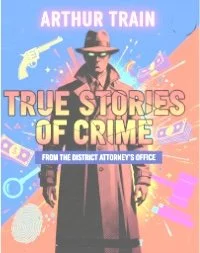
True Stories of Crime from the District Attorney’s Office

By Arthur Train. Introduction by Graeme R. Newman

The transition of the American legal system from the rough-and-tumble nineteenth century into the more structured, investigative era of the early twentieth century is nowhere more vividly captured than in Arthur Train’s True Stories of Crime from the District Attorney’s Office. As an Assistant District Attorney for New York County during a period of rapid urbanization and social upheaval, Train occupied a unique vantage point that allowed him to witness the collision of old-world criminal archetypes with the emerging complexities of modern life. This collection of narratives serves as a clinical yet deeply compelling autopsy of the era’s most notorious legal battles, offering readers a rare glimpse into the machinery of justice at a time when forensic science was in its infancy and the power of the prosecutor’s office was expanding into new, uncharted territories.

Train’s work is particularly significant for its early exploration of what would eventually be termed white-collar crime. While the public imagination of 1908 was often captured by tales of blunt violence and physical daring, Train directs his focus toward the "super-criminal"—the manipulative mastermind who utilized the administrative and financial structures of the city as their primary tools of exploitation. Through these accounts, we see the emergence of a new kind of threat that required a equally sophisticated response from the legal establishment. Train describes a landscape where economic desperation and social isolation were the primary drivers of criminal behavior, yet he also highlights the systemic vulnerabilities that allowed institutional fraud to flourish. By documenting these cases, he provides a foundation for the study of victimology, illustrating how the legal system often struggled to keep pace with the evolving ingenuity of those who sought to undermine it.

Beyond their historical and legal value, these stories possess a narrative vitality that reflects the tension between the sensationalism of early tabloid journalism and the rigorous demands of the courtroom. Train’s prose is informed by his experiences on the front lines of the District Attorney’s office, where the outcome of a trial often hinged as much on rhetorical flair and personal intuition as it did on physical evidence. In revisiting these cases today, we are invited to consider the persistent challenges of defining and delivering justice within a complex bureaucracy. Train does not shy away from the moral ambiguities of his profession, and his reflections on the nature of guilt and the limitations of the law remain strikingly relevant. This volume stands not only as a record of forgotten crimes but as an enduring meditation on the social fabric of a metropolis in flux, capturing the moment when the modern era of criminal justice truly began.

Read-Me.Org Inc. 2026. 184p.

Their Father's God

By O. E. ROLVAAG

Their Fathers’ God (1931) is the powerful conclusion to O. E. Rølvaag’s epic trilogy of the Norwegian-American immigrant experience on the South Dakota prairies. Picking up where Peder Victorious left off, the novel shifts focus from the physical struggle of settling the land to the cultural and spiritual conflicts of the second generation. The story centers on the marriage of Peder Holm, a forward-thinking Norwegian Lutheran, and Susie Doheny, a devout Irish Catholic. As they attempt to build a life together, their relationship becomes a battlefield for the "clash of heritages":

  • Religious Tension: The couple struggles with the differing demands of their faiths, particularly regarding the baptism and upbringing of their children.

  • Cultural Identity: Peder wants to assimilate and modernise, while the pressures of their respective immigrant communities pull them back toward old-world traditions.

  • Environmental Hardship: Set against a backdrop of drought, grasshopper plagues, and the harsh reality of prairie farming, the physical environment mirrors the drying up of their emotional connection.

Major Themes

  • The Melting Pot Myth: Rølvaag explores the psychological toll of assimilation, suggesting that the blending of two distinct cultures is often a painful, destructive process rather than a seamless one.

  • Succession: The book examines whether the "God of the Fathers"—the rigid traditions and beliefs of the original pioneers—can survive or thrive in a rapidly changing American landscape.

While Giants in the Earth was a sweeping adventure of pioneer survival, Their Fathers’ God is a more intimate, psychological drama. It is often cited by historians and literary critics for its realistic, unsentimental portrayal of how religious and ethnic boundaries persisted even in the "limitless" American West.

Harper & Brothers. 1931. 350 p.

The La Chance Mine Mystery

By S. Carleton. Introduction by Colin Heston.

The 1920 publication of The La Chance Mine Mystery by S. Carleton, the pseudonym for Susan Morrow Jones, represents a pivotal moment in the evolution of the North American thriller. By weaving the Victorian Gothic tradition into the rugged landscape of the Canadian wilderness, Carleton created a narrative that serves as a sophisticated precursor to modern psychological suspense. In contemporary literature, this work remains highly relevant as a masterclass in atmospheric isolation, where the "frozen North" acts not merely as a setting but as a primary antagonist. This technique mirrors modern "Environment as Character" tropes seen in current survivalist fiction, reminding readers that the primitive fear of being trapped in a vast, uncaring wilderness transcends technological advancement and remains a powerful literary hook.

From a criminological perspective, the novel offers a compelling study of frontier anomie. In the absence of formal state policing, the isolated mine becomes a vacuum where white-collar crimes like corporate fraud and title theft inevitably devolve into violence. This lack of social control forces characters into a state of informal justice, predating modern investigative frameworks through "bushcraft forensics." In an era before chemical analysis or DNA, Carleton’s characters rely on environmental reconstruction—analyzing the crust of snowdrifts or the set of a footprint—to determine the timing of a crime. This reliance on natural preservation within a crime scene provides a proto-historical look at how physical environment shapes both criminal opportunity and the subsequent forensic analysis used to untangle it.

The social dynamics of the mine also provide deep insights into early 20th-century victimology. Carleton highlights a hierarchy of vulnerability, focusing on how marginalized laborers and isolated individuals are targeted by those with institutional power. In this setting, victims are often chosen specifically because their disappearances can be conveniently blamed on the harsh climate rather than foul play. This exploration of "invisible victims" and structural exploitation resonates with modern social justice themes regarding labor and corporate overreach. By subverting the "hard-boiled" male tropes of her time, Carleton used her unique perspective as a female author to provide an emotional depth and keen eye for power imbalances that continue to inform the DNA of modern suspense and elevated horror.

Read-Me.Org Inc. New York-Philadelphia-Australia. 2026. 192p.

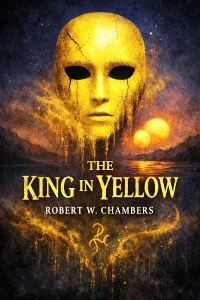
The King in Yellow

By ROBERT W. CHAMBERS. Introduction by Colin Heston

When The King in Yellow appeared in 1895, it slipped quietly into a literary world already saturated with decadence, occult enthusiasms, and the fin-de-siècle’s peculiar blend of anxiety and intoxication. Yet Robert W. Chambers’s strange mosaic of tales—united by a fictional forbidden play that unhinges those who read it—swiftly distinguished itself from its contemporaries. In the decades since, this slim volume has grown into one of the foundational works of the American weird tradition, prefiguring H. P. Lovecraft, influencing generations of modern horror writers, and unexpectedly resurfacing in the twenty-first century as a cultural touchstone.

What makes Chambers’s book so unusual is its deliberate blurring of boundaries: between reality and hallucination, sanity and delusion, art and contagion. The collection opens with “The Repairer of Reputations,” a tale set in an imagined New York of 1920—an unsettling mixture of futurism, authoritarian regulation, and manic delusion. It is here that the mysterious “King in Yellow” first exerts his influence. The narrator, a deeply unreliable figure, is convinced of his noble birthright and guided by an enigmatic “repairer” who traffics in scandal and blackmail. The narrative unfolds as a case study in self-deception, political paranoia, and the fragility of identity—yet nothing in the story is easily dismissed as mere fantasy. Reality itself buckles under the weight of the narrator’s convictions.

The Mask, perhaps the most haunting of the early tales, shifts the setting to the Latin Quarter of Paris, where art, science, and obsession converge. The grotesque beauty of Boris Yvain’s alchemical solution—capable of transforming living beings into flawless marble—creates a collision of aesthetics and mortality that typifies Chambers’s most powerful work. The story’s dreamlike quality reflects the decadent movement’s fascination with artificiality, transformation, and the erotic pull of the inanimate. Throughout, the shadow of the forbidden play hovers, never fully seen but always felt.

Other sections—“In the Court of the Dragon,” “The Yellow Sign,” and additional sketches—extend the book’s architecture of dread. Chambers never provides the text of the play itself, only its aftershocks, its “second act” whispered about as a psychic abyss from which there is no return. This structural absence is one of the book’s great innovations: The horror lies not in spectacle but in suggestion, in the void where meaning should be. The King in Yellow, the Pallid Mask, and the Lost City of Carcosa are not fully explained but instead exist as fragments of a mythology the reader assembles intuitively, as though the stories themselves are encoded with an infectious idea.

The power of The King in Yellow endures because it is not simply a collection of supernatural tales—it is a meditation on contagion: of ideas, of aesthetics, of inner instability. Chambers’s fictional play does not merely frighten; it corrodes. It reveals hidden fractures in those who encounter it and amplifies their darkest impulses. In this sense, the book mirrors its age. The 1890s were marked by the collapse of old certainties, the rise of new sciences of the mind, and an artistic fascination with decadence, degeneration, and the beautiful ruin of the self. Chambers captured that atmosphere with uncanny acuity.

Today, amidst digital conspiracies, fractured identities, and a renewed cultural fascination with alternate realities, The King in Yellow feels more relevant than ever. It invites the reader to step into a world where truth is unstable, where art is dangerous, and where the boundaries of perception are mercilessly thin. The book’s whispered mythology has become larger than the text itself, seeding later works, reappearing in unexpected media, and reminding us that the most enduring horrors are those we cannot fully see.

To open these stories is to risk a glimpse of the Yellow Sign—a symbol of beauty, madness, and forbidden knowledge. Chambers offers no assurances. He only extends an invitation to enter Carcosa, where twin suns sink over black waters and where, once the play begins, the mask cannot be removed.

Read-Me.Org Inc. New York-Philadelphia-Australia. 2026 p.209

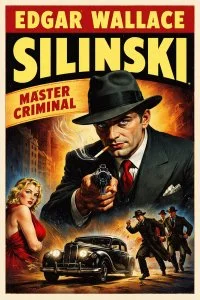
Silinski- Master Criminal

By Edgar Wallace. Introduction by Colin Heston

In Silinski – Master Criminal, Wallace constructs the titular character not as a creature of impulse, but as a precursor to the modern white-collar sociopath, defined by what can be termed "organized intellect." Unlike the flamboyant villains of Gothic tradition, Silinski’s power is derived from his mastery of systems—legal, financial, and social. He treats crime as a rigorous administrative discipline, employing a level of detachment that mirrors the very corporate structures he seeks to exploit. This intellectualization of villainy creates a chilling paradox: Silinski is most dangerous when he is at his most rational. Wallace highlights this by contrasting the frantic, reactive energy of the police with Silinski’s own glacial composure. His "mastery" is not merely a matter of successful theft, but of an informational asymmetry where he remains several steps ahead of the law by treating the world as a chessboard of predictable variables. Consequently, the tension of the novel arises not from the "whodunnit" element, but from the terrifying efficiency of a mind that has completely divorced morality from logic.
The conclusion of the narrative solidifies the "super-criminal" archetype not as a mere antagonist, but as a necessary mirror to the evolution of the modern state. By weaving together the threads of bureaucratic mastery and economic manipulation, Wallace posits that the transition of the criminal from the physical to the cerebral reflects a broader societal shift toward abstraction. Silinski represents the dark potential of the burgeoning 20th century: the realization that true power is no longer found in the strength of one's arm, but in the reach of one's influence over the systems that sustain public life. As the novel draws to its close, the resolution of the plot serves as a pyrrhic victory for the law, acknowledging that while one man may be stopped, the systemic vulnerabilities he exposed remain inherent to the fabric of global society. Ultimately, Silinski – Master Criminalstands as a definitive exploration of the modern villain, suggesting that in an age of complexity, the most profound threat to order is the very intelligence required to maintain it.

Read-Me.Org Inc. New York-Philadelphia-Australia. 2026. 188p.

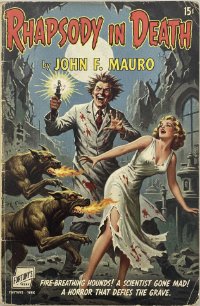
Rhapsody in Death

By John F. Mauro

Published in 1940 by the small New York firm Fortuny's, Rhapsody in Death is a quintessential example of the "weird menace" genre, characterized by its extreme and often lurid horror elements. The book gained a specific cult status due to its connection to cinema history, featuring an introduction by the legendary horror actor Bela Lugosi, who allegedly intended to star in a film version that was never produced. The story follows the villainous Professor Zoocarnivora, a classic mad scientist who embarks on a murderous rampage fueled by a deep-seated hatred for women who had rejected him.

The Professor’s reign of terror is carried out through bizarre and supernatural means, most notably a pack of fire-breathing hounds that he unleashes upon his victims. Amidst a backdrop of bats, vultures, and macabre experiments, the narrative pits the Professor against a spiritual healer named Father Theobald and a pair of young protagonists caught in the chaos. While contemporary critics often found the prose over-the-top and the plot nearly absurd, the book remains a highly sought-after collector's item today. Its rarity is compounded by the fact that its publisher went bankrupt shortly after release, leaving very few original copies in circulation.

Fortuny;s. 1941. 187p

Murder in Black and White

By David Alexander

Murder in Black and White is a classic mid-20th-century mystery novel first published in 1951. Set against a backdrop of idiosyncratic characters and gritty urban intrigue, the story follows a pair of unconventional sleuths — notably Terry R. Rooke, nicknamed “Soldier,” and his millionaire associate Tommy Twotoes — as they navigate a baffling and violent case that begins when an enigmatic albino man disrupts a funeral and opens fire on a corpse. Tasked with untangling this bizarre act, Soldier delves into a labyrinth of eccentric personalities, unexpected motives, and layers of deception.

The novel blends hard-boiled detective elements with offbeat humor and vivid characterizations, presenting a cast that ranges from a former bootlegger-turned-investigator to oddball figures encountered in the investigation. With its fast-paced narrative and richly textured scene-setting, Murder in Black and White exemplifies the energetic and sometimes quirky style of post-World War II American mystery fiction.

London. Hammond, Hammond and Co. 1954. p.211

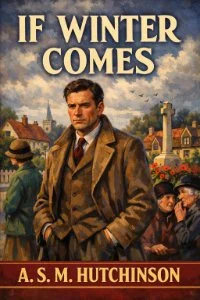
If Winter Comes

By A. S. M. Hutchinson. Introduction by Colin Heston.

When If Winter Comes appeared in 1921, it entered a literary moment marked by exhaustion, reassessment, and a profound unease about the moral and emotional consequences of the First World War. Written by A. S. M. Hutchinson, the novel achieved immediate popularity on both sides of the Atlantic, resonating with readers who recognized in its restrained drama a faithful portrait of postwar disillusionment. Today, the book stands as one of the most representative middle-class English novels of the early 1920s, combining psychological realism with a quietly devastating critique of social conformity.

At the center of If Winter Comes is Mark Sabre, a man neither heroic nor villainous, but painfully ordinary—an embodiment of the conscientious, educated Englishman caught between private integrity and public expectation. Sabre’s tragedy unfolds not through sensational events but through accumulated compromises: the erosion of affection within marriage, the pressures of respectability, and the moral cowardice of a community that prizes appearances above truth. Hutchinson’s great achievement is to dramatize these pressures with such precision that the reader comes to see how social cruelty can be enacted without overt malice, simply through silence, gossip, and moral indifference.

The novel reflects a society struggling to redefine itself after catastrophe. Although the war remains largely offstage, its psychological presence is unmistakable. Characters speak and act as if something fundamental has been broken: faith in institutions, confidence in moral authority, and trust in traditional roles. Hutchinson does not frame this as a generational revolt, as some of his modernist contemporaries did, but rather as a slow moral suffocation. The England of If Winter Comes is orderly, polite, and profoundly unforgiving—a place where deviation from accepted norms is punished less by law than by social annihilation.

Stylistically, Hutchinson occupies a middle ground between Edwardian realism and the emerging psychological novel. His prose is clear, controlled, and often deceptively simple. Sentiment is present, but carefully disciplined; emotional climaxes arise organically from character rather than authorial intrusion. This restraint partly explains the book’s enduring power. Hutchinson trusts the reader to perceive the cruelty embedded in everyday interactions and to grasp the cumulative weight of small injustices. The result is a novel that feels at once intimate and inexorable.

Equally important is Hutchinson’s treatment of marriage and masculinity. Mark Sabre is not undone by vice or ambition but by a moral rigidity that prevents him from acting decisively in his own defense. In this sense, If Winter Comes anticipates later twentieth-century explorations of male emotional paralysis. Sabre’s passivity—his belief that decency alone will protect him—proves to be a fatal misconception. Hutchinson exposes how a culture that rewards restraint and silence can become complicit in personal destruction.

Upon publication, the novel’s success was amplified by its adaptation into a widely seen stage play and later film versions, cementing its reputation as a defining postwar narrative. Yet its popularity should not obscure its seriousness. Beneath its accessible surface lies a sharp moral inquiry into responsibility, courage, and the cost of social obedience. Hutchinson does not offer easy consolation; the title itself suggests a stoic endurance rather than renewal, implying that survival may require a reckoning with loss rather than its denial.

Read today, If Winter Comes remains strikingly contemporary. Its depiction of reputational ruin, public shaming, and institutional indifference speaks to modern anxieties about social judgment and moral isolation. Hutchinson’s novel reminds us that cruelty need not be loud to be lethal, and that the gravest tragedies often occur not in moments of drama but in the long, quiet seasons of neglect. As such, this book endures not merely as a historical artifact of postwar Britain, but as a timeless study of how societies fail their most conscientious members when compassion yields to convention.

Grey Riders: The Story of The New York State Troopers

By Frederic F. Van de Water. Introduction by Graeme R. Newman

When Grey Riders appeared in 1922, Frederic F. Van de Water was already emerging as one of the most capable interpreters of American frontier mythology. A journalist, historian, and novelist, he had spent years documenting the enduring tensions between law, order, memory, and violence in the development of the Atlantic seaboard. Grey Riders stands as one of his most vivid contributions to that project: a narrative history and interpretive reconstruction of the Border Riders—Vermont and New York militiamen, irregulars, and informal vigilante bands who policed, contested, and sometimes exploited the wilderness regions between the American colonies and British Canada during the late eighteenth and early nineteenth centuries

Van de Water had a journalist’s fascination with complexity, and Grey Riders is at its strongest when it illuminates the contradictions inherent in a frontier culture that simultaneously demanded firmness of justice and tolerated the improvisational violence of irregular policing. In his account, the riders are men shaped by hardship—farmers, Loyalists, deserters, Yankee patriots, trappers, smugglers, and opportunists—who alternately defended and defied the emerging legal structures of the early United States. Their world was one where the line between protector and predator was always negotiable.

The book’s historical frame—stretching most visibly from the late Revolutionary era through the War of 1812—allows Van de Water to explore how unresolved grievances, economic scarcity, and geopolitical rivalry produced a frontier culture that did not neatly conform to the nation-state boundaries we take for granted today. The riders themselves were products of this ambiguity. While some acted as scouts and auxiliaries for the Continental Army or state militias, others drifted into banditry, smuggling, or private vengeance. Van de Water refuses to simplify this ambiguity; instead, he constructs a narrative that emphasizes how the frontier’s conditions forged men who were, by necessity, adaptable to both moral clarity and moral shade.

For the modern reader, Grey Riders also holds value as part of the broader early-twentieth-century reconsideration of American origins. The 1920s were a period of heightened nostalgia, cultural nationalism, and renewed interest in the country’s formative conflicts. Van de Water, however, avoids sentimentalism. His frontier is not a place of heroic inevitability but a zone of tension where identity, loyalty, and legitimacy are constantly renegotiated. In this respect, the book anticipates the more critical frontier historiography that would emerge later in the century.

Contemporary scholars may also find in Grey Riders an instructive account of how local communities develop security practices when state institutions are weak, distant, or contested—an issue that remains resonant in discussions of borderlands worldwide. The riders, as Van de Water portrays them, are precursors to many modern forms of irregular security actors: militias, local auxiliaries, self-appointed protectors, and armed community defense groups. Their actions demonstrate both the necessity and danger of such formations, especially when scarcity and political friction define daily life.

This new edition returns readers to a moment when questions of national boundaries, informal justice, and community resilience are central to global debate. Van de Water’s riders, moving through a grey zone of legality and identity, offer a powerful reminder that the frontier has never been a simple place—and that the forces shaping it never truly disappeared.

Read-Me.Org Inc. New York-Philadelphia-Australia. 2025. p.188.

Came a Cavalier

By Frances Parkinson Keyes

Came a Cavalier by Frances Parkinson Keyes is a sweeping historical romance set against the backdrop of two world wars. The novel explores themes of resilience, identity, and the transformative power of love. At its heart is Constance “Connie” Galt, a young woman whose life is reshaped by personal betrayal and the chaos of global conflict. Her journey begins with heartbreak, which propels her into service with the American Red Cross in France during World War I. This experience becomes a crucible for her character, forcing her to confront suffering and loss while discovering inner strength and purpose.

The story delves deeply into the theme of personal growth through adversity. Connie’s evolution from a disillusioned college student to a confident, compassionate woman mirrors the broader societal shifts of the early twentieth century. Her relationships—first with Duncan Craig, an American doctor, and later with Tristan de Fremond, a French cavalry officer—highlight the tension between security and passion, as well as the cultural contrasts between America and Europe during wartime.

Historically, the novel captures the atmosphere of wartime France with vivid detail, from the scarcity and danger of the front lines to the elegance and traditions of the French aristocracy. It reflects the impact of war on both individuals and nations, portraying how global upheaval can dismantle old social orders while creating new opportunities for connection and renewal. The narrative also touches on themes of honor and duty, embodied in Tristan’s role within the prestigious Cadre Noir, and contrasts these ideals with the pragmatic realities of survival and love in times of uncertainty.

Ultimately, Came a Cavalier is not just a romance but a meditation on courage, endurance, and the human capacity for reinvention. It situates personal drama within the grand sweep of history, offering readers both an intimate love story and a rich portrait of a world in transition.

Julian Messner, Inc. NY. 1947. Read-Me.Org Inc. New York-Philadelphia-Australia. 2025. 437p.

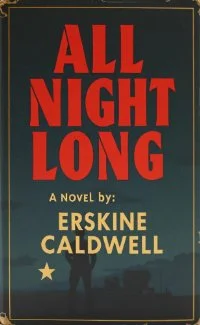
All Night Long: A Novel of Guerrilla Warfare in Russia

By Erskine Caldwell. Designed and Edited with an Introduction  by Colin Heston

When All Night Long appeared in 1942, Erskine Caldwell was already one of the most widely read—and most controversial—American novelists of his generation. Known primarily for his unsparing portrayals of poverty, violence, and moral stress in the American South, Caldwell here turned his attention outward, to a global conflict unfolding at unprecedented scale. Subtitled A Novel of Guerrilla Warfare in RussiaAll Night Long represents Caldwell’s direct literary engagement with the Second World War at the moment when its outcome remained deeply uncertain and when the Soviet Union, newly allied with the United States, had become a central symbol of resistance to fascist aggression.

Caldwell’s Russia is not a romanticized abstraction nor a detailed ethnographic portrait. Instead, it functions as a stark moral landscape shaped by occupation, deprivation, and constant threat. Villages, forests, and frozen terrain become arenas of endurance rather than scenery. The emphasis falls on night operations, secrecy, hunger, exhaustion, and the psychological toll of living in a perpetual state of danger. The title itself—All Night Long—signals this temporal and emotional register: war as an unbroken vigil, a continuous strain that erodes the boundary between action and survival.

For modern readers, the novel occupies an intriguing position in Caldwell’s body of work and in twentieth-century war literature more broadly. It stands apart from his Southern novels in geography but not in theme. As in Tobacco Road or God’s Little Acre, Caldwell examines how extreme conditions strip life down to its essentials and expose the structures—economic, political, or military—that govern human behavior. In All Night Long, the setting is international, but the underlying concerns remain consistent: power, exploitation, resilience, and the cost of endurance.

Read today, All Night Long also invites reflection on the evolving representation of guerrilla warfare itself. Long before such conflicts became a dominant feature of late-twentieth- and early-twenty-first-century military discourse, Caldwell recognized the strategic and moral complexity of irregular resistance. His novel anticipates later debates about asymmetrical warfare, civilian involvement, and the blurred lines between combatant and noncombatant—issues that continue to shape global conflicts.

Ultimately, All Night Long is less a novel about Russia per se than a novel about resistance under occupation. It captures a historical moment when global war demanded new forms of solidarity and new narrative frameworks to explain them. Caldwell’s achievement lies in his ability to translate that vast struggle into an intimate, unrelenting account of human persistence, sustained through darkness, danger, and the long hours of night.

NY.Book League of America. 1942. Read-Me.Org Inc. Australia, New York & Philadelphia. 2025. 161p.

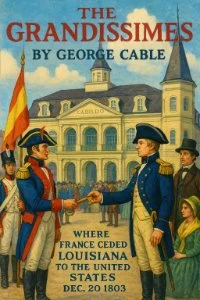
The Grandissimes: A Story of Creole Life

By George W. Cable

The Grandissimes: A Story of Creole Life stands among the most vivid and penetrating literary portraits of early New Orleans—its tangled ancestries, its hierarchies of caste and color, and its rich cultural complexity at the turn of the nineteenth century. First published in 1880, George W. Cable’s novel announced the arrival of a distinctive Southern voice: one capable of blending romance, social critique, historical reconstruction, and an almost anthropological attention to the manners and moral contradictions of Creole society.

Cable, himself native to New Orleans, wrote at a moment when the American public was only beginning to recognize the significance of Louisiana’s unique heritage. The city had passed from French to Spanish control, then back to France, then suddenly into the hands of the United States through the Louisiana Purchase. In Cable’s imagination, this swirl of sovereignties—compounded by the interwoven legacies of France, Spain, Africa, the Caribbean, and Indigenous peoples—created a society unlike any other on the continent. The Grand–issimes dramatizes this world at a moment of profound transition, when old loyalties struggled against the pressures of Americanization, and when the boundaries of race, class, and honor were both fiercely guarded and constantly transgressed.

At its center stands the old Creole family of the Grandissimes, whose branches include both the proud white aristocracy and a free man of color who bears the same name—a blood relationship that must not, in respectable society, be spoken aloud. Through this intricate family history, Cable exposes the contradictions of slavery, the moral compromises of privilege, and the tragic limitations imposed on people of mixed heritage. Yet the novel is anything but a simple moral allegory. Its pages teem with humor, local color, memorable characters, and a richly textured atmosphere that evokes the city’s architecture, dialects, festivals, and customs with unmatched fidelity.

Cable’s realism—rare among Southern writers of his generation—caused both admiration and controversy. His depictions of racial injustice were received with anger in parts of the post-Reconstruction South, and his advocacy for Black civil rights would eventually drive him to relocate to the North. Today, his work is recognized as foundational: a precursor to later explorations of New Orleans identity by Kate Chopin, Lafcadio Hearn, Lyle Saxon, and many others.

This edition of The Grandissimes invites readers to rediscover Cable’s great novel not merely as an historical document but as a living work of art. Its themes of belonging, cultural collision, and the moral weight of inherited systems remain deeply resonant. In tracing the fate of a family—and of a city—at a crossroads, Cable offers a vision both critical and compassionate, illuminating a world whose complexities still echo through the streets of New Orleans today.

Read-Me.Org Inc. New York-Philadelphia-Australia. 2025. p.248.

Dracula

By Bram Stoker

Bram Stoker's Dracula, first published in 1897, remains one of the most iconic and influential novels in the Gothic literary tradition. More than a simple horror story, Dracula is a rich tapestry of Victorian anxieties, cultural tensions, and symbolic complexity. Through its epistolary structure and vivid characters, the novel explores themes of modernity versus antiquity, sexuality and repression, imperialism, and the supernatural. It is a work that not only defined the vampire genre but also reflected the fears and fascinations of its time.

The late 19th century was a period of profound transformation in Britain. The Industrial Revolution had ushered in an age of technological innovation and scientific progress, while the British Empire stood at the height of its global influence. Yet beneath this veneer of confidence lay deep-seated anxieties about degeneration, foreign invasion, and the erosion of traditional values. Dracula captures these tensions through its central antagonist, Count Dracula, a foreign aristocrat who threatens the sanctity of British society. His arrival in England symbolizes a reverse colonization, where the East invades the West, challenging notions of cultural superiority and national security.

Stoker’s use of the epistolary format—comprising diaries, letters, newspaper articles, and ship logs—serves to ground the supernatural elements of the story in a framework of realism and documentation. This narrative technique reflects the Victorian obsession with empirical evidence and rationality, even as the characters confront a force that defies scientific explanation. The juxtaposition of modern tools such as typewriters and phonographs with ancient folklore and religious symbols underscores the novel’s central conflict between progress and the past.

One of the most compelling aspects of Dracula is its exploration of sexuality and repression. Victorian society was marked by strict moral codes, particularly regarding gender roles and sexual behavior. The novel subverts these norms through the seductive and transgressive nature of vampirism. Characters like Lucy Westenra and Mina Harker become battlegrounds for these tensions, as their encounters with Dracula blur the lines between victimhood and desire. The act of bloodsucking, laden with erotic undertones, becomes a metaphor for the loss of innocence and the threat of moral corruption.

Religion plays a crucial role in the narrative, often positioned as the ultimate defense against the vampire’s evil. Crucifixes, holy water, and sacred rites are employed alongside scientific reasoning, suggesting a synthesis of faith and logic in the fight against darkness. This duality reflects the Victorian struggle to reconcile religious belief with the rise of secularism and scientific thought.

Dracula also engages with the theme of identity and duality. Count Dracula himself embodies contradictions: he is both man and monster, aristocrat and predator, host and parasite. His ability to transform into animals and control the elements adds to his mystique and reinforces his role as a symbol of the uncanny. The characters who oppose him—Jonathan Harker, Van Helsing, Dr. Seward, and others—represent various facets of Victorian society, from legal and medical professions to religious authority, united in their mission to restore order.

The legacy of Dracula is vast and enduring. It established many of the conventions of vampire fiction and inspired countless adaptations across literature, film, and popular culture. Count Dracula has become a cultural archetype, embodying both fear and fascination. The novel’s rich symbolism and thematic depth continue to invite critical analysis, from psychoanalytic and feminist readings to postcolonial and queer interpretations.

In conclusion, Bram Stoker’s Dracula is far more than a tale of terror. It is a mirror reflecting the complexities of its time, a narrative that intertwines the rational and the irrational, the modern and the ancient, the sacred and the profane. Its enduring power lies in its ability to evoke fear while provoking thought, making it a masterpiece of Gothic literature and a cornerstone of cultural history.

Read-Me.Org Inc. New York-Philadelphia-Australia. 2025. 284p.

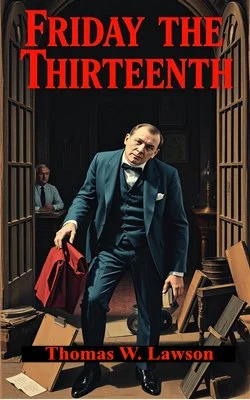
Friday, the Thirteenth

by Thomas W Lawson (Author), Colin Heston (Editor)

Friday the Thirteenth (1907) is a fast-paced financial novel by Thomas W. Lawson, a real-life financier and reformer who had firsthand experience in the volatile world of Wall Street at the turn of the twentieth century. The book tells the story of Robert Brownley, a charismatic but embittered stockbroker who decides to take revenge on the corrupt financial system that has wronged him. Choosing the superstitiously unlucky date of Friday the 13th, Brownley orchestrates a plan to deliberately crash the stock market, triggering a financial panic that ruins the wealthy elite and brings Wall Street to its knees.

Lawson uses the novel to expose the greed, manipulation, and moral bankruptcy of the financial world, offering readers both a gripping drama and a pointed critique of early twentieth-century capitalism. The book combines elements of romance, thriller, and social commentary, presenting the stock exchange as both a place of opportunity and a dangerous machine capable of destroying lives.

Today, Friday the Thirteenth is notable not only as an engaging piece of popular fiction but also as a window into public attitudes toward finance during the Progressive Era. It remains a fascinating blend of fiction and financial history, reflecting Lawson’s insider knowledge and reformist zeal.

Read-Me.Org Inc. New York-Philadelphia-Australia. 2025. 109 p.

The Count Of Monte-Cristo: Volume Two


By Alexandre Dumas (Author), G. Staal (Illustrator), J.A. Beauce (Illustrator), & 2more Format: Kindle Edition

Few novels have captured the imagination of readers across generations as powerfully as The Count of Monte Cristo. First published in 1844, this sweeping tale of betrayal, revenge, and redemption is the work of Alexandre Dumas, one of France’s most celebrated literary figures. Set against the backdrop of post-Napoleonic France, the novel follows the transformation of Edmond Dantès, a young sailor whose promising future is shattered by the treachery of those he trusted. Wrongfully imprisoned in the Château d’If, Dantès emerges years later not as the man he once was, but as the enigmatic and wealthy Count of Monte Cristo—determined to exact justice on those who wronged him. At once a thrilling adventure and a profound exploration of human nature, The Count of Monte Cristodelves into themes of vengeance, justice, mercy, and the enduring power of hope. Dumas weaves a rich tapestry of characters and subplots, each contributing to the novel’s intricate moral landscape. His storytelling is both grand in scope and intimate in detail, offering readers a journey that is as emotionally resonant as it is exhilarating.
This two volume edition is based on the five volume 1888 English edition. It retains all text as in the original and includes most of the illustrations preserving the spirit and elegance of Dumas’s original edition, while making the novel accessible to contemporary readers. This version is most likely that of an anonymous translator who translated the work from the French for the publisher Chapman and Hall in 1846. There have been many translations in dozens of languages, and some in the 20th century basically rewriting the novel in modern prose and almost always considerably abridged.

Read-Me.Org Inc. New York-Philadelphia-Australia. 2025. 501 p.

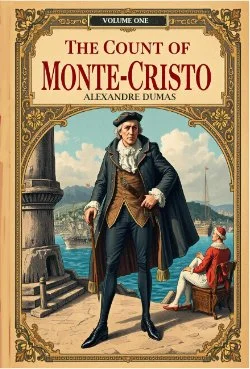
The Count Of Monte-Cristo: Volume One


By Alexandre Dumas (Author), G. Staal (Illustrator), J.A. Beauce (Illustrator), & 2more Format: Kindle Edition

Few novels have captured the imagination of readers across generations as powerfully as The Count of Monte Cristo. First published in 1844, this sweeping tale of betrayal, revenge, and redemption is the work of Alexandre Dumas, one of France’s most celebrated literary figures. Set against the backdrop of post-Napoleonic France, the novel follows the transformation of Edmond Dantès, a young sailor whose promising future is shattered by the treachery of those he trusted. Wrongfully imprisoned in the Château d’If, Dantès emerges years later not as the man he once was, but as the enigmatic and wealthy Count of Monte Cristo—determined to exact justice on those who wronged him. At once a thrilling adventure and a profound exploration of human nature, The Count of Monte Cristodelves into themes of vengeance, justice, mercy, and the enduring power of hope. Dumas weaves a rich tapestry of characters and subplots, each contributing to the novel’s intricate moral landscape. His storytelling is both grand in scope and intimate in detail, offering readers a journey that is as emotionally resonant as it is exhilarating.
This two volume edition is based on the five volume 1888 English edition. It retains all text as in the original and includes most of the illustrations preserving the spirit and elegance of Dumas’s original edition, while making the novel accessible to contemporary readers. This version is most likely that of an anonymous translator who translated the work from the French for the publisher Chapman and Hall in 1846. There have been many translations in dozens of languages, and some in the 20th century basically rewriting the novel in modern prose and almost always considerably abridged.

Read-Me.Org Inc. New York-Philadelphia-Australia. 2025. 456 p.

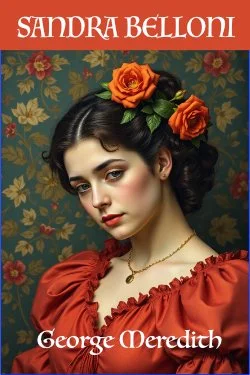
Sandra Belloni

By George Meredith. Designed and Edited with an Introduction by Colin Heston.

Sandra Belloni, first published in 1864 under the title Emilia in England, occupies a distinctive place in the literary corpus of George Meredith. It represents one of his earliest extended efforts to merge the comic novel with a more pointed social critique, a technique that would become a hallmark of his mature style. This novel, rich in subtle irony and psychological insight, grapples with the tensions between individuality and conformity, art and social convention, and the constraints of class and gender in Victorian England. At its heart, it is a narrative about a young woman of Italian descent, Emilia Belloni, whose musical gifts and unorthodox spirit clash with the expectations of the rigid English society into which she is thrust.

Meredith uses Emilia’s character not merely as a protagonist but as a symbolic figure—an embodiment of passionate sincerity, artistic freedom, and the disruptive power of the outsider. Emilia’s foreignness is not just ethnic; it is deeply cultural and emotional. Her instincts are governed by feeling and a commitment to truth, which repeatedly brings her into conflict with the carefully cultivated hypocrisies and social facades of the English middle and upper classes. Through her, Meredith examines the ways in which English society suppresses emotional authenticity in favor of propriety and self-interest.

In reading Sandra Belloni today, one encounters not only a portrait of Victorian society in all its contradictions but also an enduring exploration of the universal struggle between the self and society, between the voice that seeks to sing freely and the forces that would silence it. It is a novel that resonates beyond its historical moment, inviting readers to reflect on the costs and necessities of remaining true to oneself in the face of overwhelming pressure to conform.

Read-Me.Org Inc. New York-Philadelphia-Australia. 2025. 318p.

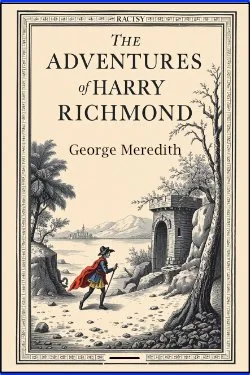
The Adventures Of Harry Richmond

By George Meredith. Designed and Edited with an Introduction by Colin Heston

The Adventures of Harry Richmond, first published in serial form between 1870 and 1871, then in full in 1871, occupies a fascinating place in the evolution of the English novel. A heady mixture of picaresque adventure, coming-of-age narrative, satire, romance, and psychological study, it is one of George Meredith’s most ambitious works. Beneath its surface as a lively and sometimes eccentric tale of a young man’s escapades lies an intricate meditation on the construction of identity, the conflict between appearance and reality, and the profound influence of family, class, and society. These themes connect the novel powerfully to concerns that dominate modern fiction.

At its core, Harry Richmond examines how identity is not simply inherited but assembled—through choice, resistance, deception, and chance. Harry Richmond is born into a web of conflicting influences: his father, Roy Richmond, is a charming but unscrupulous social climber whose life revolves around maintaining appearances and manipulating social structures; his grandfather, Squire Beltham, represents a rigid, landed English respectability that is both moralistic and emotionally cold. Caught between these poles, Harry’s life becomes a journey to define himself outside the narrow confines of these competing legacies.

Read-Me.Org Inc. New York-Philadelphia-Australia. 2025. 355p.

One of Our Conquerors


By George Meredith (Author), Colin Heston (Introduction)

At the heart of One of Our Conquerors is the story of Victor Radnor, a self-made, successful businessman who embodies the energies of commercial Victorian England. Victor is a man of formidable charm, ambition, and benevolence, yet he is ensnared in a socially precarious position due to his relationship with his beloved partner, Nataly, with whom he has lived for years as husband and wife without formal marriage. Their union, socially illegitimate though personally devoted, becomes the focal point for much of the novel’s tension. Victor’s desire to legitimize their relationship and secure a respectable position for their daughter Nesta in society serves as the narrative’s driving conflict.
Meredith, ever the ironist, does not present Victor uncritically. Victor is a man of immense energy, imagination, and generosity, but also prone to illusions—particularly about the power of charm, wealth, and personal will to override the deeper currents of social judgment. His belief that society can be bent to his personal desires reflects both the optimism of the self-made man and the hubris that often accompanies unchecked ambition. In this sense, the title One of Our Conquerors carries a double edge: it acknowledges Victor’s triumphs in commerce and his conquest of circumstances but also points to the broader critique of conquest itself—whether in business, society, or personal relationships.
One of Our Conquerors is a profound exploration of the tensions between private morality and public life, between individual will and social constraint, and between the old moral orders and the emerging complexities of modernity. It challenges readers to consider the costs of social conformity, the meaning of success, and the possibilities for human integrity in a world increasingly driven by commerce, appearance, and social performance. As with Meredith’s other major works, it is a novel whose rewards are commensurate with the patience and thoughtfulness brought to it—a work that continues to resonate with readers interested in the enduring struggles between the personal and the public, the ideal and the real.

Read-Me.Org Inc. New York-Philadelphia-Australia. 2025. 291p.

"SHAVINGS"

By Joseph C. Lincoln (Author), Colin Heston (Introduction)

In Shavings, published in 1918 at the peak of his literary success, Joseph C. Lincoln again turns his familiar eye and pen toward Cape Cod—its people, its rhythms, and its moral heart. Like much of Lincoln’s fiction, this novel offers more than light entertainment; it is a nuanced exploration of human decency, community obligation, and emotional transformation, wrapped in a quietly humorous and affectionately drawn setting.
Set in the fictional village of East Wellmouth, Shavings centers on a seemingly unremarkable character: a middle-aged man named Lemuel “Shavings” Keziah, a gentle and eccentric resident who works as a handyman and caretaker of sorts at the local ship-chandlery. What begins as a portrait of a quiet, solitary man becomes a deeper meditation on compassion, guardianship, and the power of unassuming kindness to transform lives. In this novel, Lincoln refines his formula of New England coastal fiction, combining rich local detail, deft character sketches, and moral clarity in a story that both reflects and transcends its setting.
The title Shavings is rich in metaphor. At the surface level, it refers to wood shavings—fragments trimmed away in the process of building or shaping. But on a deeper level, it suggests themes of smallness, modesty, and the overlooked. Lemuel Keziah is, like his namesake shavings, a figure that most would pass over without a second thought. He is plain, odd, physically unimposing, and considered somewhat simple by his neighbors. Yet within that uncarved block of humility lies a figure of enormous quiet integrity, and Lincoln’s triumph is in showing how such a man can become a pillar of his community and a redeemer in the lives of others.
Lincoln gives us a novel that blends humility with heart, modesty with moral insight. It is a story of redemption through quiet persistence, of fatherhood without blood, and of character tested not by fame or fortune but by the daily demands of decency. For those who cherish gentle fiction with real emotional weight, Shavings is a touchstone. It evokes a vanished New England but leaves in its place timeless lessons on love, trust, and the power of doing good without seeking reward. In Lemuel Keziah, Lincoln offers a model of quiet heroism whose relevance has only grown with time.

Read-Me.Org Inc. New York-Philadelphia-Australia. 2025. 229p.