Open Access Free Library
CRIME+CRIMINOLOGY.jpeg

CRIME

Violent-Non-Violent-Cyber-Global-Organized-Environmental-Policing-Crime Prevention-Victimization

Posts in Abuse
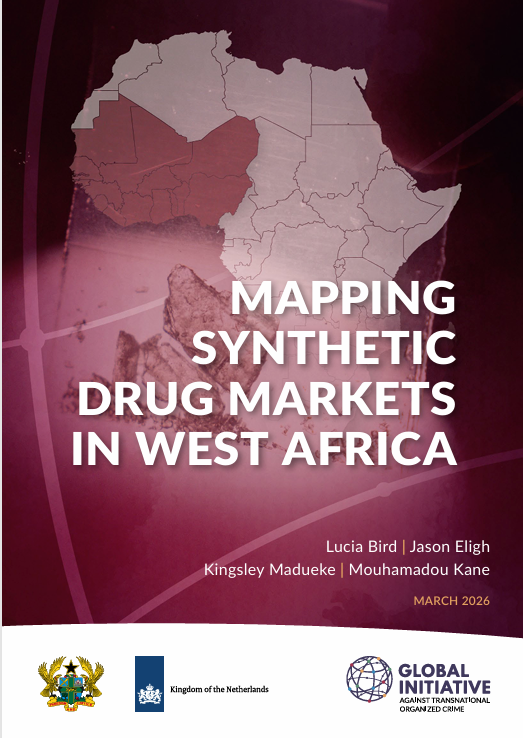
MAPPING SYNTHETIC DRUG MARKETS IN WEST AFRICA

By Lucia Bird | Jason Eligh,  Kingsley Madueke | Mouhamadou Kane

The proliferation of synthetic drugs across West Africa potentially represents one of the most urgent and complex public health and security challenges facing the region. In recent years, the illicit drug landscape has been fundamentally reshaped, moving away from traditional plant-based substances controlled by hierarchical criminal networks towards a fragmented, decentralized market for man-made psychoactive compounds. The harms driven by the synthetic drug market – overdoses, chronic health conditions, severe mental health conditions, community fragmentation – are escalating. Consumption, and consequences, are concentrated in the youth: in the worst-affected countries this poses a serious threat to future stability and economic development. The effects of synthetic drugs in parts of West Africa have become so severe that since 2024 two countries have declared states of emergency – an unprecedented response previously reserved for deadly epidemics and pandemics.1 This report examines the emergence and rapid expansion of this synthetic drug economy in West Africa, detailing how factors such as low barriers to entry, the convenience and anonymity afforded by the proliferation of online platforms and technology, and the minimal capital required for production have enabled a diverse array of new criminal actors to enter the trade. The subsequent influx of substances such as synthetic cannabinoids, nitazenes and other novel compounds of unknown composition, and the expansion of pre-existing synthetic drug markets such as methamphetamine, present a multifaceted threat that is rapidly outpacing the response capacity of regional governments. The breadth and depth of synthetic substance presence globally has grown enormously over the past decade. Increasingly, synthetic substances are being detected in local illicit drug markets that have no prior record of their presence, often being identified as contaminants of, or unknown substitutes for, other more traditional substances. Expanding use of synthetic opioids, particularly tramadol, tramadol derivatives (most prominently tapentadol) and nitazenes in West Africa, is a particularly alarming trend within this growing illicit drug marketplace. These substances, some vital to public health institutions for pain relief and palliative care purposes, have been responsible for a significant increase in drug-related morbidity and mortality worldwide. Their potency and availability pose unprecedented challenges to public health systems and law enforcement agencies alike.

The sheer diversity of substances being synthesized, the inability of existing surveillance systems to effectively identify many of them, and the challenge of interdicting and mitigating their harms significantly impairs the ability of health and security services to respond. Further, the intersection of synthetic drug markets with other illicit activities further complicates efforts to address these challenges effectively. Organized criminal networks leverage the profits generated from synthetic drug production, trafficking and distribution to fund their criminal operations and purchase protection, driving corruption. The report explores the mechanisms driving this rapid expansion in synthetic drug markets in West Africa, analyzing the critical roles of digital technology and globalized supply chains. It looks at how internet penetration across the region has facilitated growth in the online purchase of precursor chemicals and finished products, often from suppliers in Asia and Europe, which are smuggled into the region through difficult-to-monitor channels such as postal and courier services. The report discusses the profound economic incentives that make the synthetic drug trade so attractive, functioning as a ‘bridge’ market that allows new entrants to accumulate capital rapidly. By examining case studies and discussing market trends, the report illustrates how these dynamics have allowed synthetic drugs to capture a growing share of the retail market with alarming speed, potentially leading to devastating social and public health consequences.

Geneva:  Global Initiative Against Transnational Organized Crime. 2026. 47p.
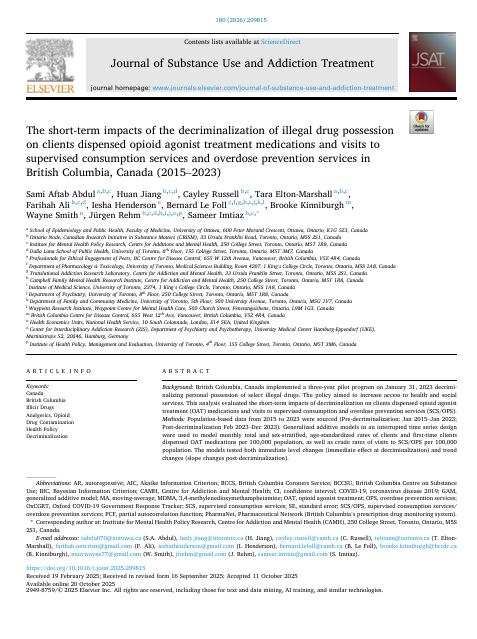
The short-term impacts of the decriminalization of illegal drug possession on clients dispensed opioid agonist treatment medications

By Sami Aftab Abdul , Huan Jiang , .Cayley Russell  , Tara Elton-Marshall ,  et al.

Background

British Columbia, Canada implemented a three-year pilot program on January 31, 2023 decriminalizing personal possession of select illegal drugs. The policy aimed to increase access to health and social services. This analysis evaluated the short-term impacts of decriminalization on clients dispensed opioid agonist treatment (OAT) medications and visits to supervised consumption and overdose prevention services (SCS/OPS).

Methods

Population-based data from 2015 to 2023 were sourced (Pre-decriminalization: Jan 2015–Jan 2023; Post-decriminalization Feb 2023–Dec 2023). Generalized additive models in an interrupted time series design were used to model monthly total and sex-stratified, age-standardized rates of clients and first-time clients dispensed OAT medications per 100,000 population, as well as crude rates of visits to SCS/OPS per 100,000 population. The models tested both immediate level changes (immediate effect at decriminalization) and trend changes (slope changes post-decriminalization).

Results

The models detected no association between decriminalization and changes in clients dispensed OAT medications (Immediate Change β [95 % CI]: −0.001 [−0.012, 0.011]; Trend Change β [95 % CI]: −0.004 [−0.011, 0.003]), first-time clients dispensed OAT medications (Immediate Change β [95 % CI]: 0.115 [−0.049, 0.279]; Trend Change β [95 % CI]: −0.006 [−0.048, 0.035]) or visits to SCS/OPS (Immediate Change β [95 % CI]: 0.048 [−0.100, 0.195]; Trend Change β [95 % CI]: 0.013 [−0.016, 0.043]). Findings for all outcomes remained consistent after stratifying by sex.

Conclusion

Decriminalization was not associated with changes in clients dispensed OAT medications, first-time clients dispensed OAT medications, or visits to SCS/OPS. These findings reflect only the initial eleven months following the implementation of the policy. Given the complexity of factors influencing service utilization, and the introduction of the second amendment which represents a significant rollback of the original exemption, longer-term evaluations are needed to more accurately assess whether decriminalization is contributing to its intended goals.

Journal of Substance Use and Addiction Treatment


Volume 180, January 2026, 209815

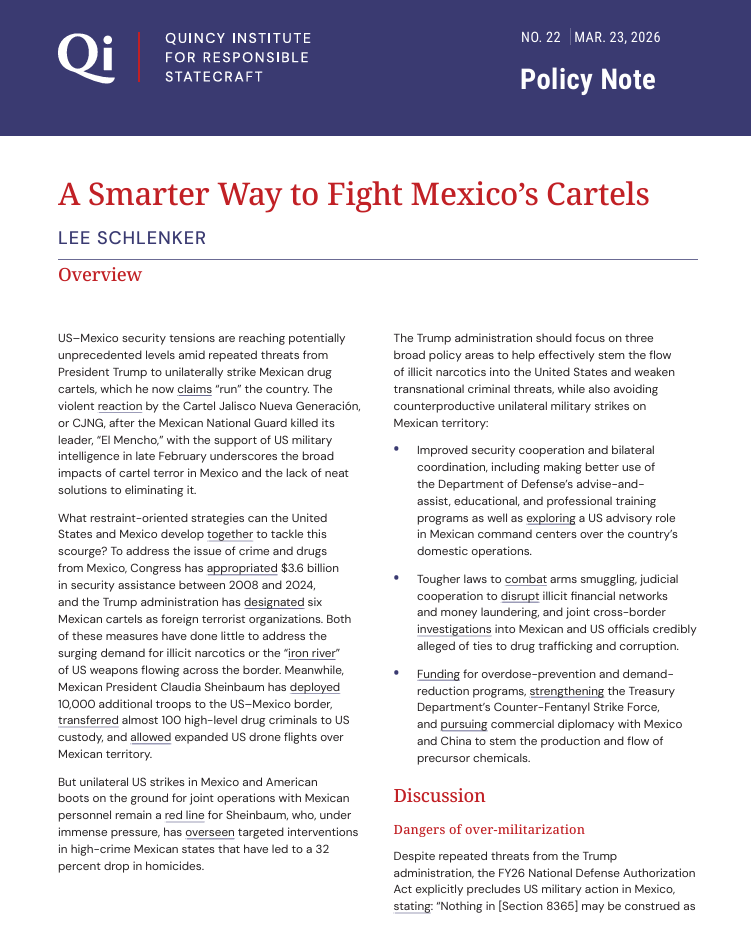
A Smarter Way to Fight Mexico’s Cartels

Lee Schlenker

US–Mexico security tensions are reaching potentially unprecedented levels amid repeated threats from President Trump to unilaterally strike Mexican drug cartels, which he now claims “run” the country. The violent reaction by the Cartel Jalisco Nueva Generación, or CJNG, after the Mexican National Guard killed its leader, “El Mencho,” with the support of US military intelligence in late February underscores the broad impacts of cartel terror in Mexico and the lack of neat solutions to eliminating it. 

What restraint-oriented strategies can the United States and Mexico develop together to tackle this scourge? To address the issue of crime and drugs from Mexico, Congress has appropriated $3.6 billion in security assistance between 2008 and 2024, and the Trump administration has designated six Mexican cartels as foreign terrorist organizations. Both of these measures have done little to address the surging demand for illicit narcotics or the “iron river” of US weapons flowing across the border. Meanwhile, Mexican President Claudia Sheinbaum has deployed 10,000 additional troops to the US–Mexico border, transferred almost 100 high-level drug criminals to US custody, and allowed expanded US drone flights over Mexican territory. 

But unilateral US strikes in Mexico and American boots on the ground for joint operations with Mexican personnel remain a red line for Sheinbaum, who, under immense pressure, has overseen targeted interventions in high-crime Mexican states that have led to a 32 percent drop in homicides. 

The Trump administration should focus on three broad policy areas to help effectively stem the flow of illicit narcotics into the United States and weaken transnational criminal threats, while also avoiding counterproductive unilateral military strikes on Mexican territory: 

  • Improved security cooperation and bilateral coordination, including making better use of the Department of Defense’s advise-and-assist, educational, and professional training programs as well as exploring a US advisory role in Mexican command centers over the country’s domestic operations. 

  • Tougher laws to combat arms smuggling, judicial cooperation to disrupt illicit financial networks and money laundering, and joint cross-border investigations into Mexican and US officials credibly alleged of ties to drug trafficking and corruption. 

  • Funding for overdose-prevention and demand-reduction programs, strengthening the Treasury Department’s Counter-Fentanyl Strike Force, and pursuing commercial diplomacy with Mexico and China to stem the production and flow of precursor chemicals. 

Washington, DC: Quincy Institute for Responsible Statecraft

2026. 6p.

Ketamine in Europe, EMPACT situation report

By the European Union Drugs Agency (EUDA);


This report was prepared within the framework of Operational Action 1.5 of the 2024/2025 EMPACT Synthetic Drugs and New Psychoactive Substances action plan, entitled ’Intelligence picture on the trafficking of ketamine in the EU.’ The action was led by Belgium and co-led by Germany and the European Union Drugs Agency (EUDA). It was initiated in response to concerns raised by several Member States regarding indications that ketamine may represent an emerging drug-related issue in Europe.

Increasing challenges related to the availability, supply, non-medical use and associated risks of ketamine have been observed at the global and EU levels. As ketamine is listed by the World Health Organization as an essential medicine and is not subject to international control, systematic reporting is not required in most jurisdictions, creating monitoring blind spots. Within this context, the operational action focused on supporting situational awareness, early identification of potential security risks and, where appropriate, suggesting possible ways forward. This report is based on information contributions from 32 countries.

Luxembourg: Publications Office of the European Union, 2026. 41p.

Protesting Against Crime and Insecurity: High-Risk Activism in Mexico's Drug War

By  Sandra J. Ley Gutiérre

When do protests against crime and insecurity take place, regardless of the risks that such mobilization may entail? This paper argues that while violence provides an initial motivation for participating in protests, social networks play a fundamental role in incentivizing citizen mobilization against insecurity. Socialization within networks helps generate solidarity and empathy among participants, while at the same time transforming emotions associated with living in a violent context into potential for action. Also, through networks, individuals share information about opportunities for collective action and change their perceptions about the effectiveness and risks of such activism. These distinct mechanisms are valuable for the activation of protest against crime across levels of violence. Supporting evidence is derived from an original dataset on protest events in reaction to violence in Mexico between 2006 and 2012. Additionally, I rely on qualitative in-depth interviews and participant observation to illustrate the role of networks in protest against crime across several Mexican states. This paper contributes to the growing literature on criminal violence and political participation.Notre Dame, IN: The Kellogg Institute for International Studies
University of Notre Dame, 2022.

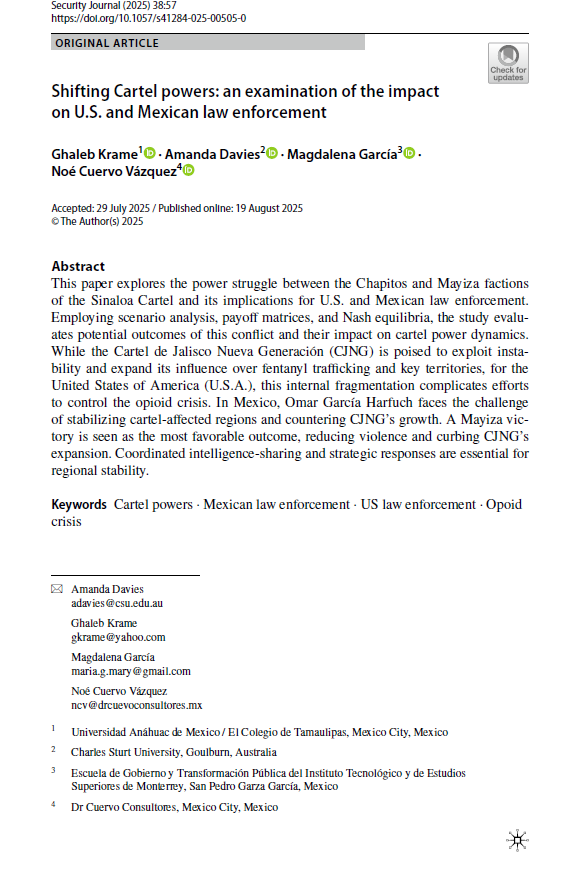
Shifting Cartel powers: an examination of the impact on U.S. and Mexican law enforcement


By: Ghaleb Krame, Amanda Davies, Magdalena García & Noé Cuervo Vázquez 

This paper explores the power struggle between the Chapitos and Mayiza factions of the Sinaloa Cartel and its implications for U.S. and Mexican law enforcement. Employing scenario analysis, payoff matrices, and Nash equilibria, the study evaluates potential outcomes of this conflict and their impact on cartel power dynamics. While the Cartel de Jalisco Nueva Generación (CJNG) is poised to exploit instability and expand its influence over fentanyl trafficking and key territories, for the United States of America (U.S.A.), this internal fragmentation complicates efforts to control the opioid crisis. In Mexico, Omar García Harfuch faces the challenge of stabilizing cartel-affected regions and countering CJNG’s growth. A Mayiza victory is seen as the most favorable outcome, reducing violence and curbing CJNG’s expansion. Coordinated intelligence-sharing and strategic responses are essential for regional stability.

Security Journal (2025) 38:57

  Nigerian mafia in Italy: the associations with the local organized crime in the migrant trafficking management

By  Maia Sacchetto

  Premising that there are more flexible forms of Nigerian crime, such as small and scattered groups not in connection with each other that operate mainly as drug dealers of small districts in the suburbs of northern Italy, this research focuses on the most structured forms of criminal organizations, those directly descended from the cultist circles born in Nigeria in the '60s and resulted in real mafia associations already in the motherland and then extended throughout Europe. The choice of this theme and this very specific category of Nigerian organized crime is based on the belief that well-structured and organized groups are more dangerous and difficult to counter for three reasons basically: the first is that it is rarer for associates to decide to betray the group to favor information to the police or intelligence. This is because of the closer ties between group members (and in this case this element takes on an even more incisive relevance since the subject is an ethnically based organized mafia in which ethniccultural ties provide the basis for interaction between associates), but also and especially because of the coercive and intimidating forces between members of mafia associations towards the ones prone to cheat on the group; the second is developed from the assumption that a more sophisticated internal structure of the association also corresponds to more elaborate modus operandi and operational strategies that allow prosecutors of illicit activities to camouflage or hide the proceeds of illicit activities; the third reason is closely related to the first and second and consists in the fact that mafia associations that are highly organized and capable of taking advantage of substantial material resources are also more likely to act in a capillary, widespread, large-scale and sprawling manner to the point of infiltrating the legal economy. As will be described in the first chapter of this research, the Black Mafia originated in Nigeria as a protest movement against constituted power and composed mainly of members of Nigeria's leading universities. Over time it expanded, heightened the violence of its manifestations, and began to move out of the realm of mere ideological rebellion by directly affecting public institutions. In a short time, the cults turned into full-fledged clans and began to act in Nigeria as the Italian mafia acts in Italy, intimidating political and economic opponents who would stand between their illicit activities and the achievement of their goals: the accumulation of wealth and power. From the outset, these associations are thus characterized by a high degree of pervasiveness in the political, social and economic structure of their country, as well as multifacetedness by dealing with a massive and varied range of illicit activities, including support in the arms trafficking of terrorist groups such as Boko Haram. With the conclusion of the Cold War, the tearing down of the Berlin Wall and restrictions in the mobility of people, and the emergence of the new globalized and interconnected world, the Black Mafia, which had already shown a remarkable predisposition to expand and sprawl, crossed its national borders. Following a progressive evolution, it has developed into a form of transnational organized crime which according to the UNODC represents the main threat to the security and political and economic stability of states (UNODC, 2006)1 . Undergoing continuous metamorphosis and adapting immediately to the changing needs of the market and globalization, it has then become increasingly sophisticated and pervasive (UNODC, 2018)2 . Out of sheer opportunism, it started allying itself with other forms of crime in order to strengthen its organization and to extend to more and more operators: drug traffickers, arms traffickers, human traffickers, up to encompassing operators that act daily in a regime of legality, all in order to increase their revenues 

 MONITORING ONLINE ILLEGAL WILDLIFE TRADE. Featuring rhino horn pills and wildlife substitutions

By The Global Initiative Against Transnational Organized CrimeGlobal Initiative Against Transnational Organized Crime,Global Initiative Against Transnational Organized Crime,

Online illegal wildlife trade (IWT) continues to expand across social media and e-commerce platforms, with 13,254 wildlife advertisements detected between April 2024 and August 2025 across Africa, the Americas, Asia and the Middle East. Our monitoring shows a persistent concentration on Facebook, which accounts for 83.8% of all detections, alongside growing activity on e-commerce and business-to-business platforms. The rise in both volume and geographic coverage underscores how sellers exploit online environments, regulatory loopholes and shifting demand to reach consumers and adapt rapidly to enforcement efforts.

Drawing on structured monitoring by ten regional data hubs, this new iteration of the Global Trend Report highlights how species, platforms and market drivers differ widely across regions. Mammals dominate detections, led by elephants, big cats and African grey parrots, and many adverts involve species listed under CITES Appendix I or II without accompanying permit information. Hubs recorded diverse tactics: Facebook Stories designed for 24-hour visibility, coded emojis in Colombia, claims of official registration in Mexico, children’s YouTube channels in South Asia that normalize protected wildlife as pets, and loopholes around legally owned lions in Thailand.

A central focus of the report is North Korea’s Angong Niuhuang Wan (ANW) pills, whose packaging explicitly lists “rhinoceros horn” as an ingredient. Open-source intelligence shows these pills are produced in Pyongyang and moved through Sinuiju and Namyang into China before circulating across markets in Japan, Hong Kong, Singapore, Malaysia, Cambodia, Thailand, Laos, Vietnam and Myanmar. Embedding small amounts of rhino horn into labelled traditional medicine significantly amplifies value and demand, while illustrating how the rhino horn trade intersects with conservation and security concerns, including sanctions evasion and illicit revenue streams linked to North Korean entities.

The report also documents how markets pivot when supply declines or regulations tighten. After all pangolin species were uplisted to CITES Appendix I in 2016, Mexican export data shows an exponential rise in pirarucu leather exports, with pirarucu now positioned as a visually similar substitute. Online markets show mislabelled and misidentified leathers, such as pirarucu sold as pangolin and vice versa, revealing laundering risks along supply chains. Traceability gaps, especially once skins are processed, make verification difficult and complicate enforcement.

Taxidermy and leatherworking form another blind spot. In Mexico, highly active social-media groups advertise mounted specimens, ivory figurines and worked products derived from rhinos, elephants, manta rays, crocodilians, jaguars, pangolins, pirarucu and primates. Adverts frequently lack documentation, rely on coded language and misspellings, and exploit enforcement priorities that remain focused on live trade rather than processed parts.

Finally, declining availability of tiger products has driven substitutions such as lion canines in Thai amulet Facebook groups and jaguar parts sourced from Latin America. Cross-border movements of lion bones and skeletons, and online offers for jaguar skins, teeth and paste show how big-cat parts circulate as substitutes, shaped by availability and legal risk.

Across all hubs and product types, the report demonstrates how online IWT can be linked to global security and sanctions evasion issues, and how it adapts through substitutions, processed wildlife products and regulatory loopholes, reinforcing the need for coordinated monitoring, enforcement and policy responses.

Geneva: Global Initiative Against Transnational Organized Crime, 2025. 35p.

  Assessing the Transnational Criminal Capacity of MS-13 in the U.S. and El Salvador 

By Eric Hershberg, Edward Maguire, Steven Dudley

In October 2012, the U.S. government designated MS-13 as a transnational criminal organization (TCO), raising serious questions about the breadth of the gang’s criminal capacity. Some analysts have pointed to a steady growth and professionalization of this criminal organization, but insufficient data has hindered the formulation and implementation of policies aimed at countering this trend. Our multiyear project proposed to fill gaps in the extant literature by conducting qualitative and quantitative research designed to assess MS-13’s transnational criminal capacity. More specifically, our objectives were to: 1) conduct extensive interviews with local stakeholders, gang experts, and MS-13 members in three major metropolitan areas, including two in the U.S. and one in El Salvador; 2) analyze qualitative and quantitative data gathered through tested survey and interview instruments and from official sources, with particular attention to the following factors: type of criminal activities, organizational structure, inter- and intra-gang relationships, level of community penetration, accumulation of social capital, development and migration patterns, and recruitment strategies; 3) utilize social network analysis techniques to quantify the social reach of gang member respondents; and 4) disseminate project findings to relevant constituencies in law enforcement, policymaking circles, academe, and the general public. The purpose of our research was to provide policymakers and law enforcement officials with a comprehensive understanding of MS-13 by measuring the extent and range of the organization’s criminal activity and mapping its social networks. Our goal was to generate empirical data that could serve as a foundation upon which to shape new policies and practices. Specifically, our hope was that the data would provide insights regarding the optimal allocation of law enforcement resources, the likely movements of MS-13, and the design of intervention and suppression strategies. 

Washington DC: U..S. Department of Justice,  2019. 11p.

A systematic evidence map of intervention evaluations to reduce gang-related violence


By : M. Richardson, M. Newman, G. Berry, C. Stansfield, A. Coombe & J. Hodgkinson

  • Objective

    To identify and map evaluations of interventions on gang violence using innovative systematic review methods to inform future research needs.

    Methods

    A previous iteration of this map (Hodgkinson et al., (2009). “Reducing gang-related crime: A systematic review of ‘comprehensive’ interventions.”) was updated in 2021/22 with inclusion of evaluations since the original searches in 2006. Innovative automatic searching and screening was used concurrently with a ‘conventional’ strategy that utilised 58 databases and other online resources. Data were presented in an online interactive evidence gap map.

    Results

    Two hundred and forty-eight evaluations were described, including 114 controlled studies, characterised as comprehensive interventions, encompassing more than one distinct type of intervention.

    Conclusion

    This suggests a substantial body of previously unidentified robust evidence on interventions that could be synthesised to inform policy and practice decision-making. Further research is needed to investigate the extent to which using automated methodologies can improve the efficiency and quality of systematic reviews.

  •  J Exp Criminol 20, 1125–1146 (2024).

Gang Homicide and the Unequal Distribution of Disadvantage: Revisiting Krivo and Peterson’s Threshold Effects 25 Years Later

By C. Proffit


Twenty-five years ago, Krivo and Peterson wrote a seminal piece on the context of disadvantage and its threshold effects. In The Structural Context of Homicide: Accounting for Racial Differences in the Process, they emphasize that extreme contexts of disadvantage may diminish the significance of certain structural conditions that contribute to higher crime rates, particularly in relation to homicide. However, remarkably few studies consider the threshold effects of disadvantage when studying homicide. Although their research primarily focuses on race groups and the varying degree of disadvantage as a crime-generating condition, the unequal distribution of disadvantage in communities may have unique effects on certain forms of violence, particularly gang homicide. This study will (1) explore how community predictors of gang homicide differ across contexts by comparing neighborhoods with extreme levels of disadvantage to those with low-moderate levels of disadvantage and (2) examine differences in this context of disadvantage between gang-related and nongang-related homicide to assess if differences emerge between these categorizations of lethal violence. Findings reaffirmed Krivo and Peterson’s conclusion. Disadvantage was associated with increases in gang homicide only in low to moderately disadvantaged areas while effects diminished in extremely disadvantaged communities.


  American Journal of Criminal Justice , July 2025

Gang Phantasmagoria: How Racialized Gang Allegations Haunt Immigration Legal Work

By Ana Muñiz

Through an analysis of interviews with Southern California attorneys, supplemented by archival materials, this article contributes to the literature on gangs, critical criminology, and Gothic tropes by examining how the ambiguous nature of gang profiling allows state actors to target racialized others in various legal and administrative venues with little evidence and few procedural protections. I conceptualize gang phantasmagoria as the constant, amorphous, unpredictable, and haunting threat of racialized gang allegations and argue that the dynamic shapes the work of legal practitioners and constitutes a state mechanism of racial terror. Specifically, first I argue that government officials deploy the specter of gangs to both portray asylum seekers as monstrous threats and justify restrictions in asylum eligibility. I then illustrate how the potential for gang phantasmagoria to upend asylum applications and trigger the deportation of their clients elicits constant low-grade anxiety for attorneys. Consequently, attorneys are forced to adopt more cautious approaches to legal work in a way that indirectly facilitates the social control of young Latinx immigrants.


Critical Criminology, olume 30, pages 159–175, (2022

  Miracle or Mirage? Gangs and Plunging Violence in El Salvador Latin America 


By The International Crisis Group

  Principal Findings : What’s new? In President Nayib Bukele’s first year in office, El Salvador has seen a sharp drop in what long were sky-high murder rates. While the public celebrates his well-known “iron fist” policies, the reasons for success might lie in quiet, informal understandings between gangs and the government. Why does it matter? It is a major feat to reduce killings by the three main gangs in one of the world’s most violent countries. But the precise causes of the decline are complex and often unclear. Recent outbreaks of gang violence and political mudslinging underline the fragility and reversibility of this achievement. What should be done? Sustaining violence reduction is key. The government should prioritise community-focused development, rehabilitation of jailed gang members and more sophisticated policing efforts, including internal checks on security forces. Should gangs keep violence down and cooperate with authorities during the pandemic, Bukele should consider opening channels for local dialogue with them.   

  After decades of harrowing gang crime, homicides have plunged in El Salvador on the watch of the new president, Nayib Bukele. Faced with the growth of the MS-13 and 18th Street gangs, previous governments resorted to “iron fist” policies to crush them, only to find these fuelled a backlash. Since his 2019 election, President Bukele, a self-styled outsider, has won huge public support by presiding over a 60 per cent fall in murders. Yet prospects that this achievement will endure are in doubt. The collapsing homicide rate may stem not only from the government’s public security policies, but also from the gangs’ own decision to curb bloodshed, possibly due to a fragile non-aggression deal with authorities. In addition, Bukele’s confrontational style, which has been exacerbated during the COVID-19 pandemic, risks entangling his security reforms in political battles. Broadly backed efforts to support affected communities, assist members wishing to leave gangs and encourage local peacebuilding are more likely to end definitively El Salvador’s cycle of violence. The Bukele administration argues that the plummeting murder rate – with daily killings now standing at their lowest rate since the end of the country’s civil war (1980- 1992) – represents the crowning achievement of a new security strategy. In theory, the government’s Territorial Control Plan couples robust law enforcement with violence prevention schemes. It has reinforced joint police and military patrols in 22 municipalities suffering high rates of crime, while toughening confinement measures in jails in a bid to sever communications between inmates and the outside world. At the same time, the government’s goal of building dozens of “cubes” – glass-walled recreational and education centres – represents the flagship effort to brighten the lives of young people growing up under gang dominion and prevent recruitment into their ranks. The precise reasons for the nationwide drop in homicides are hard to pin down. Statistical studies show that the Territorial Control Plan is most likely not the sole cause; specific local falls in murder rates do not correspond precisely to those areas where the plan has been implemented. Instead, in large part, gangs appear to have themselves decided to scale back their use of lethal violence. Unassailable control over communities, declining gang rivalry and increasingly autonomous gang leadership outside jails may explain this decision more than the Territorial Control Plan. Yet other government policies might have played a role: numerous analysts and local activists ascribe the gangs’ move to an informal understanding between them and the authorities, who have allegedly ordered security forces to dial back their clashes with these groups. A sudden killing spree attributed to MS-13 in April illustrated just how precarious the gangs’ commitment to reducing violence can be. Bukele’s reaction to the attacks, which left over 80 dead in a five-day span, reaffirmed his inclination to adopt punitive measures to force gangs into submission. Images shared around the world from inside El Salvador’s high-security jails revealed inmates huddled together or forced into shared cells without any access to daylight. Although murder rates have since fallen again, the risk remains that gangs, now short of extortion income due to lockdown measures and indignant at the government’s crackdown, will once again resort to extreme violence.  

  Crisis Group Latin America Report N°81, 8 July 2020  

Brussels: International Crisis Group, 2020. 46p.

Undoing Haiti’s Deadly Gang Alliance Latin America & Caribbean 

By The International Crisis Group

Born of Port-au-Prince’s most powerful gangs, Viv Ansanm has raised the criminal threat overhanging Haiti’s state and civilians to alarming heights. The gang coalition announced itself to the world by besieging the Haitian capital in early 2024, triggering former Prime Minister Ariel Henry’s resignation. After consolidating its hold on much of the city, Viv Ansanm has expanded into neighbouring departments, tightened its grip on the main roads connecting Port-au-Prince to the rest of the country and mounted attacks on the airport, essentially cutting Haiti off. Gangs’ violent offensives have killed over 16,000 people since 2022. But a rising death toll and diversifying criminal portfolio, now including extortion, piracy and drug trafficking, have not stopped gangs from claiming to represent the country’s downtrodden, especially on social media. UN approval of a new foreign force to combat the gangs could shift the balance of power. But it is vital that plans are in place not just to overpower the gangs but also to persuade them to demobilise. Haitian business and political elites have relied on paramilitary forces to protect their interests since the 1950s dictatorship of Francois Duvalier, or “Papa Doc”. But in the wake of the assassination of President Jovenel Moïse in July 2021, gangs have mutated, evolving from tools in the hands of the most powerful to overlords of Haiti. Two main gang groupings – the G-9, whose most public figure was Jimmy Chérizier, alias Barbecue, and the Gpèp, under Gabriel Jean Pierre, known as “Ti Gabriel” – fought for supremacy after Moïse’s murder. Even as the two faced off, gang leaders discussed whether to strike agreements to scale down the death toll among their members and spare resources. Mediators managed to craft several pacts among local groups to divvy up coveted turf. Late in 2023, reports emerged that the country’s two main gang coalitions had merged into one platform; their first joint offensive began months later replace the current transitional government. The concrete result they aspire to is a general amnesty for leaders and members. Haiti and its foreign partners are looking to beef up their ability to respond to the gangs with force. The UN Security Council has approved a new security operation, dubbed the Gang Suppression Force, to replace the Kenya-led Multinational Security Support Mission, which started up in 2024 but has never had the personnel or resources needed to check the gangs. The new force aims to incorporate 5,500 military personnel and expects to draw on reliable funding. Its mandate appears to give it more operational independence and the leeway to adopt more aggressive tactics. But until the force’s deployment, which is expected to commence around April 2026, Haiti’s authorities will have to turn to other methods. A task force, led by Haiti’s prime minister and powered by U.S. private military companies, has already used drones to hit gang members in their urban strongholds, killing over 200 people. Foreign partners are also providing training to the newly reconstituted army. Meanwhile, citizens exhausted by the threat to their neighbourhoods have established self-defence groups, provoking a brutal riposte from the gangs. Alongside its violent expansion, Viv Ansanm has sought to transform its public profile from that of a predatory criminal force into that of an ideological crusader. Crime bosses say their mission is to protect the poorest Haitians from rapacious elites and colonial powers that historically have oppressed this black Caribbean nation. Chérizier and other gang leaders have even announced the creation of a new political party, albeit without taking the steps needed to register it formally. While continuing to enrich themselves at the expense of Haitians rich and poor, their message has nevertheless become more overtly political: they appear intent on guaranteeing that their allies are part of the next administration, which should be formed by 7 February 2026 toreplace the current transitional government. The concrete result they aspire to is a general amnesty for leaders and members. Haiti and its foreign partners are looking to beef up their ability to respond to the gangs with force. The UN Security Council has approved a new security operation, dubbed the Gang Suppression Force, to replace the Kenya-led Multinational Security Support Mission, which started up in 2024 but has never had the personnel or resources needed to check the gangs. The new force aims to incorporate 5,500 military personnel and expects to draw on reliable funding. Its mandate appears to give it more operational independence and the leeway to adopt more aggressive tactics. But until the force’s deployment, which is expected to commence around April 2026, Haiti’s authorities will have to turn to other methods. A task force, led by Haiti’s prime minister and powered by U.S. private military companies, has already used drones to hit gang members in their urban strongholds, killing over 200 people. Foreign partners are also providing training to the newly reconstituted army. Meanwhile, citizens exhausted by the threat to their neighbourhoods have established self-defence groups, provoking a brutal riposte from the gangs. A well-resourced, properly informed and expertly commanded Gang Suppression Force could help change the balance of force on the ground and push the gangs onto the back foot. Port-au-Prince and its foreign counterparts, however, must take care to mitigate the dangers of civilian casualties and violations of human rights, ensuring that robust accountability systems are in place. Once the force is up and running, the Haitian government should also overcome the coordination failures that have plagued previous security campaigns. In particular, the government should appoint members to the National Security Council and ask them to design a strategy that lays out each institution’s role in fighting the gangs. Even so, it remains unlikely that force aone will entirely extricate gangs from the communities they control or sever the nexus with politics that has bedevilled Haiti for over half a century. Though informal negotiations with gangs take place on a regular basis – to gain access to people in need of humanitarian aid or to keep businesses open – many Haitians oppose the idea of formal dialogue with the perpetrators of crimes they consider unforgivable. Government officials have correctly said the Haitian state cannot engage in talks from a position of weakness. But if the new multinational force and revamped Haitian security forces allow the authorities to gain the upper hand and broadcast their armed superiority, state officials should look to use dialogue as a means of convincing the gangs to cut their losses, reduce violence against civilians and, eventually, demobilise

While that happens, the administration, with the support of donors, should expand the program that is now providing exit ramps for minors in the gangs’ ranks. In cooperation with international experts, it should also start to design a transitional justice system that provides benefits and a measure of judicial reprieve to those who disarm and cooperate with the authorities, while also guaranteeing that there will be no general impunity. It is hard to understate the damage gangs have wrought in Haiti, killing and raping thousands, creating the hemisphere’s worst humanitarian crisis and destroying the lives of millions. Understandably, many Haitians refuse to contemplate responding to the horrors they have endured with anything less than crushing retaliation. But even if the Gang Suppression Force lives up to its promise, it is hard to compute the possible cost in lives and resources of a campaign to destroy the gangs. At some stage, negotiations from a position of strength aimed at protecting civilians and disarming the gangs would serve Haiti far better as a first step on the long path to stability.


Port-au-Prince/New York/London/Brussels: International Crisis Group, 2025. 49p.

A New Balance in Prolonged Mandatory Immigration Detention

By Mary Holper

Prolonged mandatory immigration detention has become the norm, not the exception. We have arrived at this moment because immigration detention is supposedly exceptional, subject to different constitutional norms than other civil detention. When the Supreme Court first examined a facial due process challenge to mandatory immigration detention in its 2003 decision in Demore v. Kim, immigration detention exceptionalism caused the Court to uphold mandatory detention. Absent from the Court's analysis was an entire body of due process jurisprudence, most of which developed in the 1970s, which questioned the government's purposes behind civil detention and required significant procedural protections in order for the government to deprive a person of liberty. In the wake of Demore, courts considering as-applied challenges to prolonged mandatory detention formulated multi-factor tests as a method of interpreting the statute to avoid unconstitutional detention. These tests provided an important counterweight to immigration detention exceptionalism and predictability for litigants, but most of the factors are irrelevant to a federal district court in deciding whether prolonged detention without a bond hearing violates a detainee's due process rights. Courts have been taking out the scales to engage in due process balancing, but putting the wrong weights on the scales.

Courts are beginning to discard these multi-factor tests and instead applying the Supreme Court's 1976 Mathews v. Eldridge procedural due process test to decide whether prolonged mandatory immigration detention is unconstitutional. The Mathews balancing test, which considers the private interests at stake, the risk of erroneous deprivation, and the government's interests, has been welcomed in immigration law because it encourages courts to first focus on an individual noncitizen's liberty interest. Mathews thus counteracts immigration detention exceptionalism, which focuses exclusively on the government's interest and finds that removable detainees have no liberty interest whatsoever. The Second Circuit Court of Appeals is the first circuit court to shift its test, transitioning to Mathews balancing in 2024 to decide whether mandatory detention was unreasonably prolonged. As a cautionary note, an attempt at transitioning the balancing test led the Eighth Circuit Court of Appeals, in 2024, to reject all forms of balancing, embrace immigration detention exceptionalism, and hold that any length of mandatory detention is acceptable during removal proceedings. This Article argues that courts can make prolonged mandatory immigration detention exceptional by continuing the work of the Second Circuit in applying the Mathews procedural due process balancing test instead of the existing multi-factor tests.

 Boston College Law School Legal Studies Research Paper No. 662

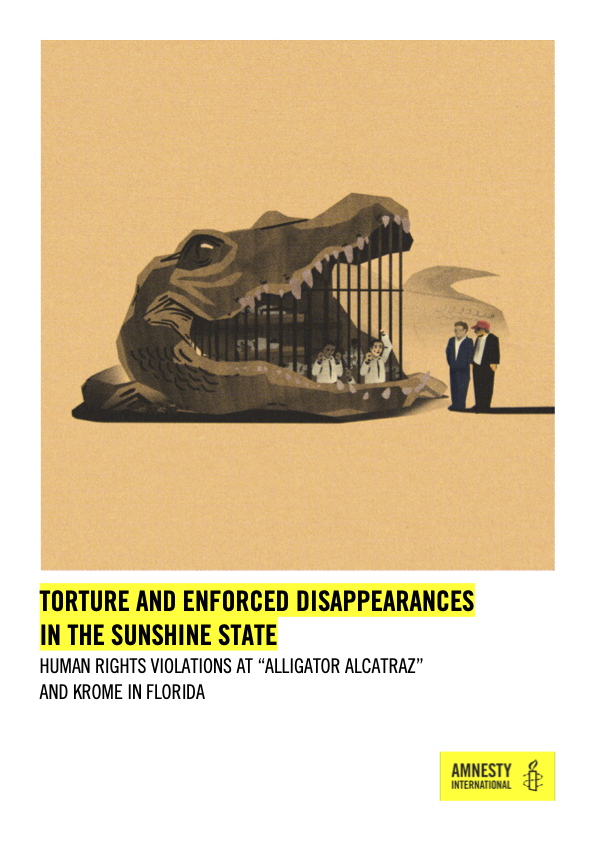
Torture And Enforced Disappearances In The Sunshine State Human Rights Violations At “Alligator Alcatraz” And Krome In Florida

By Amnesty International
This report presents Amnesty International’s findings from a research trip to southern Florida in September 2025, to document the human rights impacts of federal and state migration and asylum policies on mass detention and deportation, access to due process, and detention conditions since President Trump took office on 20 January 2025. In particular, it focuses on detention conditions at the Krome North Service Processing Center (Krome) and the Everglades Detention Facility, also known as “Alligator Alcatraz”.

Come at the king, you best not miss: criminal network adaptation after law enforcement targeting of key players

By Giulia Berlusconi

This paper investigates the impact of the targeting of key players by law enforcement on the structure, communication strategies, and activities of a drug trafficking network. Data are extracted from judicial court documents. The unique nature of the investigation – which saw a key player being arrested mid-investigation but police monitoring continuing for another year – allows to compare the network before and after targeting. This paper combines a quantitative element where network statistics and exponential random graph models are used to describe and explain structural changes over time, and a qualitative element where the content of wiretapped conversations is analysed. After law enforcement targeting, network members favoured security over efficiency, although criminal collaboration continued after the arrest of the key player. This paper contributes to the growing literature on the efficiency-security trade-off in criminal networks, and discusses policy implications for repressive policies in illegal drug markets.

Global Crime, Volume 23, 2022 - Issue 1

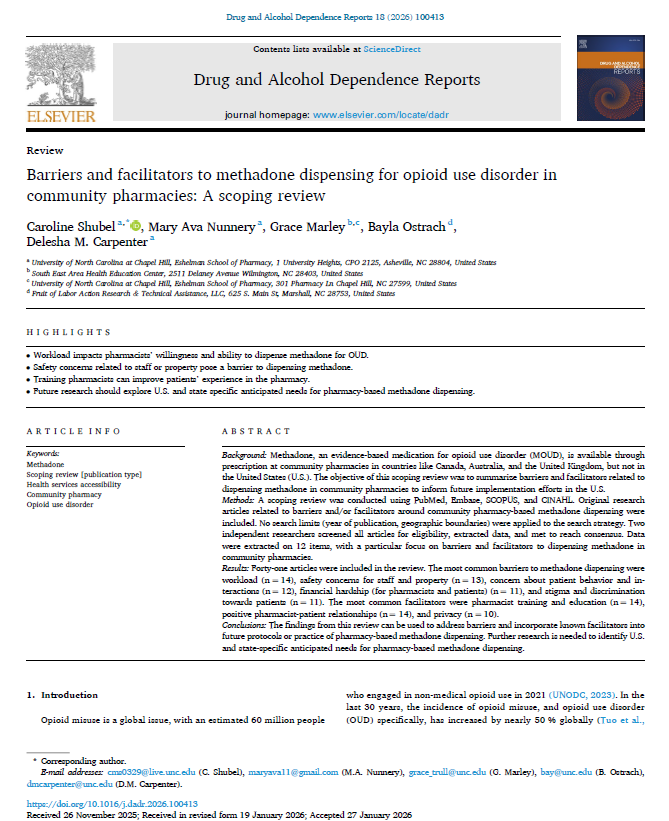
Barriers and facilitators to methadone dispensing for opioid use disorder in community pharmacies: A scoping review

By Caroline Shubel , Mary Ava Nunnery , Grace Marley, Bayla Ostrach , Delesha M. Carpenter

Background: Methadone, an evidence-based medication for opioid use disorder (MOUD), is available through prescription at community pharmacies in countries like Canada, Australia, and the United Kingdom, but not in the United States (U.S.). The objective of this scoping review was to summarize barriers and facilitators related to dispensing methadone in community pharmacies to inform future implementation efforts in the U.S. Methods: A scoping review was conducted using PubMed, Embase, SCOPUS, and CINAHL. Original research articles related to barriers and/or facilitators around community pharmacy-based methadone dispensing were included. No search limits (year of publication, geographic boundaries) were applied to the search strategy. Two independent researchers screened all articles for eligibility, extracted data, and met to reach consensus. Data were extracted on 12 items, with a particular focus on barriers and facilitators to dispensing methadone in community pharmacies. Results: Forty-one articles were included in the review. The most common barriers to methadone dispensing were workload (n = 14), safety concerns for staff and property (n = 13), concern about patient behavior and interactions (n = 12), financial hardship (for pharmacists and patients) (n = 11), and stigma and discrimination towards patients (n = 11). The most common facilitators were pharmacist training and education (n = 14), positive pharmacist-patient relationships (n = 14), and privacy (n = 10). Conclusions: The findings from this review can be used to address barriers and incorporate known facilitators into future protocols or practice of pharmacy-based methadone dispensing. Further research is needed to identify U.S. and state-specific anticipated needs for pharmacy-based methadone dispensing

:Drug Alcohol Depend Rep. 2026 Jan 29;18:100413. doi: 10.1016/j.dadr.2026.100413. PMID: 41695144; PMCID: PMC12906019

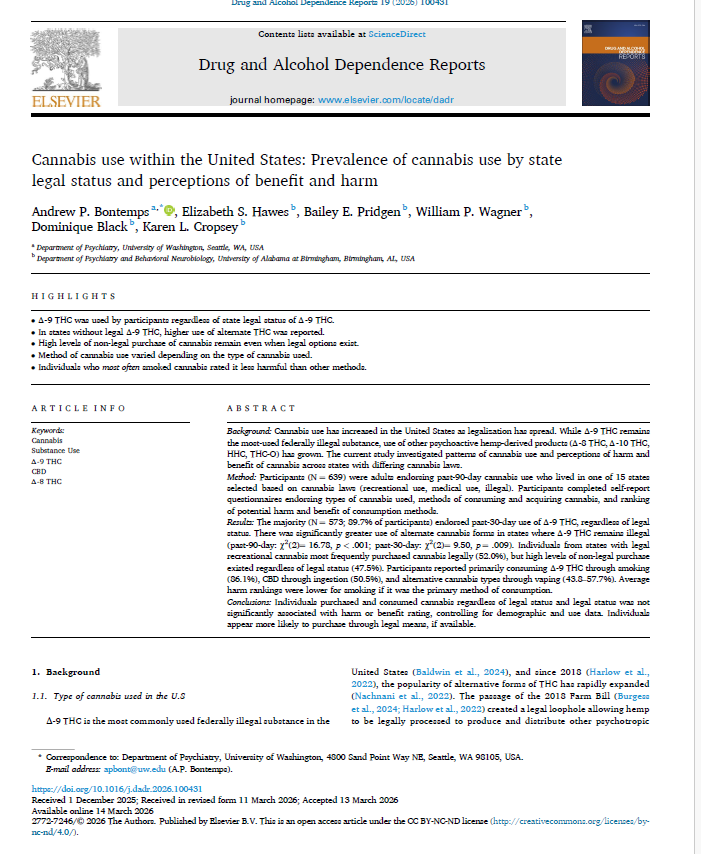
Cannabis use within the United States: Prevalence of cannabis use by state legal status and perceptions of benefit and harm

By Andrew P. Bontemps, Elizabeth S. Hawes, Bailey E. Pridgen, William P. Wagner, Dominique Black, Karen L. Cropsey

Background:Cannabis use has increased in the United States as legalization has spread. While Δ-9 THC remains the most-used federally illegal substance, use of other psychoactive hemp-derived products (Δ-8 THC, Δ-10 THC, HHC, THC-O) has grown. The current study investigated patterns of cannabis use and perceptions of harm and benefit of cannabis across states with differing cannabis laws.


Method

Participants (N=639) were adults endorsing past-90-day cannabis use who lived in one of 15 states selected based on cannabis laws (recreational use, medical use, illegal). Participants completed self-report questionnaires endorsing types of cannabis used, methods of consuming and acquiring cannabis, and ranking of potential harm and benefit of consumption methods.


Results

The majority (N=573; 89.7% of participants) endorsed past-30-day use of Δ-9 THC, regardless of legal status. There was significantly greater use of alternate cannabis forms in states where Δ-9 THC remains illegal (past-90-day: χ2(2)=16.78, p<.001; past-30-day: χ2(2)=9.50, p=.009). Individuals from states with legal recreational cannabis most frequently purchased cannabis legally (52.0%), but high levels of non-legal purchase existed regardless of legal status (47.5%). Participants reported primarily consuming Δ-9 THC through smoking (86.1%), CBD through ingestion (50.5%), and alternative cannabis types through vaping (43.8-57.7%). Average harm rankings were lower for smoking if it was the primary method of consumption.


Conclusions

Individuals purchased and consumed cannabis regardless of legal status and legal status was not significantly associated with harm or benefit rating, controlling for demographic and use data. Individuals appear more likely to purchase through legal means, if available.


Drug and Alcohol Dependence Reports

Available online 14 March 2026, 100431


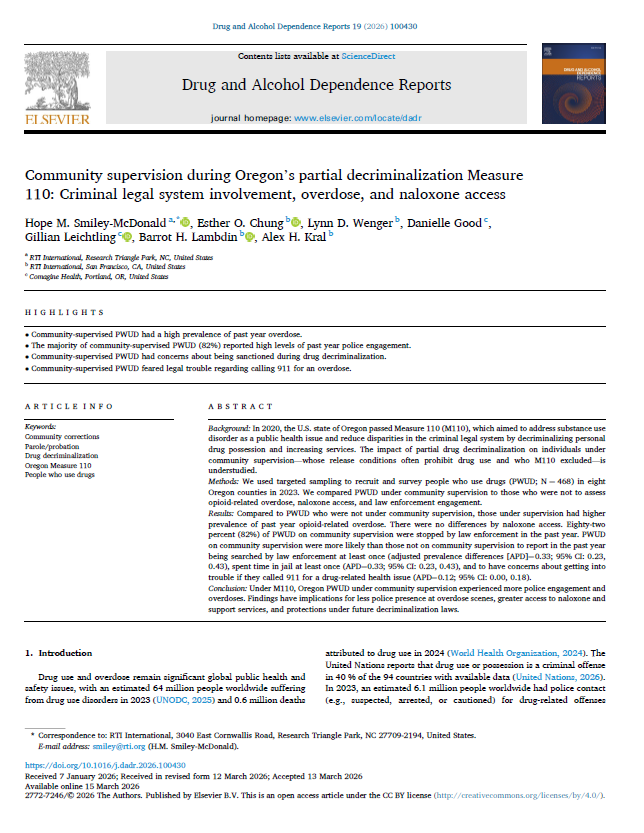
Community supervision during Oregon’s partial decriminalization Measure 110: Criminal legal system involvement, overdose, and naloxone access

Bt Hope M. Smiley-McDonald,  Esther O. Chung , Lynn D. Wenger, Danielle Good , Gillian Leichtling c, Barrot H. Lambdin , Alex H. Kral 

Background

In 2020, the U.S. state of Oregon passed Measure 110 (M110), which aimed to address substance use disorder as a public health issue and reduce disparities in the criminal legal system by decriminalizing personal drug possession and increasing services. The impact of partial drug decriminalization on individuals under community supervision—whose release conditions often prohibit drug use and who M110 excluded—is understudied.

Methods

We used targeted sampling to recruit and survey people who use drugs (PWUD; N=468) in eight Oregon counties in 2023. We compared PWUD under community supervision to those who were not to assess opioid-related overdose, naloxone access, and law enforcement engagement.

Results

Compared to PWUD who were not under community supervision, those under supervision had higher prevalence of past year opioid-related overdose. There were no differences by naloxone access. Eighty-two percent (82%) of PWUD on community supervision were stopped by law enforcement in the past year. PWUD on community supervision were more likely than those not on community supervision to report in the past year being searched by law enforcement at least once (adjusted prevalence differences [APD]=0.33; 95% CI: 0.23, 0.43), spent time in jail at least once (APD=0.33; 95% CI: 0.23, 0.43), and to have concerns about getting into trouble if they called 911 for a drug-related health problem (APD=0.12; 95% CI: 0.00, 0.18).

Conclusion

Under M110, Oregon PWUD experienced more police engagement and overdoses. Findings have implications for less police presence at overdose scenes, greater access to naloxone and support services, and protections under future decriminalization laws.

Drug and Alcohol Dependence Reports

Available online 15 March 2026, 100430

In Press, Journal Pre-proof