Open Access Free Library
CRIME+CRIMINOLOGY.jpeg

CRIME

Violent-Non-Violent-Cyber-Global-Organized-Environmental-Policing-Crime Prevention-Victimization

ENSURING THE SECURE AND SUSTAINABLE DEVELOPMENT OF THE SOCIETY: COUNTERING DRUG TRAFFICKING AT THE GLOBAL LEVEL

By Vladas Tumalavičius

The recent illegal drugs market trends are connected with the flow of new psychoactive substances also through internet resources. Consequently, the states intensified its legislative initiative in this field. In addition there is a current trend related to the use of smuggled controlled substances and new psychoactive substances, illegal cultivation of marijuana as well as the involvement our countries citizens in the trafficking of narcotic substances. The problem of drug addiction has become very topical as an ever increasing number of youth who are involved in narcotics could become a threat to each and every one of us and security of society as a whole. This case study is devoted to the study of the transformation of approaches to ensuring the safety of society and combating drug trafficking at the international level. The aim of this study is to consider the general problem of drug trafficking as a challenge to modern international security and international economics development. The object of the study is the mechanism of combating drug trafficking at the stage of sustainable development. The analytical method, the method of situational analysis, the comparative method, theoretical studies and specific legal research methods were used as methods in the study as methods used in the social sciences to study objective reality. The methodological approach of the study is constructivism and social constructivism. On the one hand, the analysis of the formation of a global regime of non-coercive solution to the problem of drug trafficking requires a constructive analysis. On the other hand, the problems of global governance are best developed today mainly by constructivism. Finally, this case study testifies to the global dominance of shadow entrepreneurs in narco-states and their participation in illegal drug trafficking bypassing the participation of state institutions and confirms the assumption put forward about the lack of implementation of measures to counter this phenomenon on the part at the state level.

Access to Science, Business, Innovation in Digital Economy ISSN 2683-1007 (Online) 2023, 4(3), 409-418
MAPPING SYNTHETIC DRUG MARKETS IN WEST AFRICA

By Lucia Bird | Jason Eligh,  Kingsley Madueke | Mouhamadou Kane

The proliferation of synthetic drugs across West Africa potentially represents one of the most urgent and complex public health and security challenges facing the region. In recent years, the illicit drug landscape has been fundamentally reshaped, moving away from traditional plant-based substances controlled by hierarchical criminal networks towards a fragmented, decentralized market for man-made psychoactive compounds. The harms driven by the synthetic drug market – overdoses, chronic health conditions, severe mental health conditions, community fragmentation – are escalating. Consumption, and consequences, are concentrated in the youth: in the worst-affected countries this poses a serious threat to future stability and economic development. The effects of synthetic drugs in parts of West Africa have become so severe that since 2024 two countries have declared states of emergency – an unprecedented response previously reserved for deadly epidemics and pandemics.1 This report examines the emergence and rapid expansion of this synthetic drug economy in West Africa, detailing how factors such as low barriers to entry, the convenience and anonymity afforded by the proliferation of online platforms and technology, and the minimal capital required for production have enabled a diverse array of new criminal actors to enter the trade. The subsequent influx of substances such as synthetic cannabinoids, nitazenes and other novel compounds of unknown composition, and the expansion of pre-existing synthetic drug markets such as methamphetamine, present a multifaceted threat that is rapidly outpacing the response capacity of regional governments. The breadth and depth of synthetic substance presence globally has grown enormously over the past decade. Increasingly, synthetic substances are being detected in local illicit drug markets that have no prior record of their presence, often being identified as contaminants of, or unknown substitutes for, other more traditional substances. Expanding use of synthetic opioids, particularly tramadol, tramadol derivatives (most prominently tapentadol) and nitazenes in West Africa, is a particularly alarming trend within this growing illicit drug marketplace. These substances, some vital to public health institutions for pain relief and palliative care purposes, have been responsible for a significant increase in drug-related morbidity and mortality worldwide. Their potency and availability pose unprecedented challenges to public health systems and law enforcement agencies alike.

The sheer diversity of substances being synthesized, the inability of existing surveillance systems to effectively identify many of them, and the challenge of interdicting and mitigating their harms significantly impairs the ability of health and security services to respond. Further, the intersection of synthetic drug markets with other illicit activities further complicates efforts to address these challenges effectively. Organized criminal networks leverage the profits generated from synthetic drug production, trafficking and distribution to fund their criminal operations and purchase protection, driving corruption. The report explores the mechanisms driving this rapid expansion in synthetic drug markets in West Africa, analyzing the critical roles of digital technology and globalized supply chains. It looks at how internet penetration across the region has facilitated growth in the online purchase of precursor chemicals and finished products, often from suppliers in Asia and Europe, which are smuggled into the region through difficult-to-monitor channels such as postal and courier services. The report discusses the profound economic incentives that make the synthetic drug trade so attractive, functioning as a ‘bridge’ market that allows new entrants to accumulate capital rapidly. By examining case studies and discussing market trends, the report illustrates how these dynamics have allowed synthetic drugs to capture a growing share of the retail market with alarming speed, potentially leading to devastating social and public health consequences.

Geneva:  Global Initiative Against Transnational Organized Crime. 2026. 47p.

The short-term impacts of the decriminalization of illegal drug possession on clients dispensed opioid agonist treatment medications

By Sami Aftab Abdul , Huan Jiang , .Cayley Russell  , Tara Elton-Marshall ,  et al.

Background

British Columbia, Canada implemented a three-year pilot program on January 31, 2023 decriminalizing personal possession of select illegal drugs. The policy aimed to increase access to health and social services. This analysis evaluated the short-term impacts of decriminalization on clients dispensed opioid agonist treatment (OAT) medications and visits to supervised consumption and overdose prevention services (SCS/OPS).

Methods

Population-based data from 2015 to 2023 were sourced (Pre-decriminalization: Jan 2015–Jan 2023; Post-decriminalization Feb 2023–Dec 2023). Generalized additive models in an interrupted time series design were used to model monthly total and sex-stratified, age-standardized rates of clients and first-time clients dispensed OAT medications per 100,000 population, as well as crude rates of visits to SCS/OPS per 100,000 population. The models tested both immediate level changes (immediate effect at decriminalization) and trend changes (slope changes post-decriminalization).

Results

The models detected no association between decriminalization and changes in clients dispensed OAT medications (Immediate Change β [95 % CI]: −0.001 [−0.012, 0.011]; Trend Change β [95 % CI]: −0.004 [−0.011, 0.003]), first-time clients dispensed OAT medications (Immediate Change β [95 % CI]: 0.115 [−0.049, 0.279]; Trend Change β [95 % CI]: −0.006 [−0.048, 0.035]) or visits to SCS/OPS (Immediate Change β [95 % CI]: 0.048 [−0.100, 0.195]; Trend Change β [95 % CI]: 0.013 [−0.016, 0.043]). Findings for all outcomes remained consistent after stratifying by sex.

Conclusion

Decriminalization was not associated with changes in clients dispensed OAT medications, first-time clients dispensed OAT medications, or visits to SCS/OPS. These findings reflect only the initial eleven months following the implementation of the policy. Given the complexity of factors influencing service utilization, and the introduction of the second amendment which represents a significant rollback of the original exemption, longer-term evaluations are needed to more accurately assess whether decriminalization is contributing to its intended goals.

Journal of Substance Use and Addiction Treatment


Volume 180, January 2026, 209815

A Smarter Way to Fight Mexico’s Cartels

Lee Schlenker

US–Mexico security tensions are reaching potentially unprecedented levels amid repeated threats from President Trump to unilaterally strike Mexican drug cartels, which he now claims “run” the country. The violent reaction by the Cartel Jalisco Nueva Generación, or CJNG, after the Mexican National Guard killed its leader, “El Mencho,” with the support of US military intelligence in late February underscores the broad impacts of cartel terror in Mexico and the lack of neat solutions to eliminating it. 

What restraint-oriented strategies can the United States and Mexico develop together to tackle this scourge? To address the issue of crime and drugs from Mexico, Congress has appropriated $3.6 billion in security assistance between 2008 and 2024, and the Trump administration has designated six Mexican cartels as foreign terrorist organizations. Both of these measures have done little to address the surging demand for illicit narcotics or the “iron river” of US weapons flowing across the border. Meanwhile, Mexican President Claudia Sheinbaum has deployed 10,000 additional troops to the US–Mexico border, transferred almost 100 high-level drug criminals to US custody, and allowed expanded US drone flights over Mexican territory. 

But unilateral US strikes in Mexico and American boots on the ground for joint operations with Mexican personnel remain a red line for Sheinbaum, who, under immense pressure, has overseen targeted interventions in high-crime Mexican states that have led to a 32 percent drop in homicides. 

The Trump administration should focus on three broad policy areas to help effectively stem the flow of illicit narcotics into the United States and weaken transnational criminal threats, while also avoiding counterproductive unilateral military strikes on Mexican territory: 

  • Improved security cooperation and bilateral coordination, including making better use of the Department of Defense’s advise-and-assist, educational, and professional training programs as well as exploring a US advisory role in Mexican command centers over the country’s domestic operations. 

  • Tougher laws to combat arms smuggling, judicial cooperation to disrupt illicit financial networks and money laundering, and joint cross-border investigations into Mexican and US officials credibly alleged of ties to drug trafficking and corruption. 

  • Funding for overdose-prevention and demand-reduction programs, strengthening the Treasury Department’s Counter-Fentanyl Strike Force, and pursuing commercial diplomacy with Mexico and China to stem the production and flow of precursor chemicals. 

Washington, DC: Quincy Institute for Responsible Statecraft

2026. 6p.

INCB Narcotic Drugs 2025 report: Persistent inequities and rising synthetic opioid threats, alongside improved global reporting

 By the United Nations: International Narcotics Control Board

Supported efforts to secure borders, strengthen trusted private sector partners and disrupt trafficking in dangerous new psychoactive substances, synthetic opioids and related chemicals by: • Exchanging, as of 2025, over 125,000 government intelligence pieces on seizures in real time, involving over 3 million trafficking signals through the IONICS suite of tools, in line with mandates in article 35, subparagraph (g), of the 1961 Convention as amended • Facilitating the action of 95 national law and regulatory enforcement agencies and six international partner organizations in Operation Zeneth, in which over 1.5 million lethal doses of nitazenes were detected and seized in 2024 • Coordinating the agencies of Kenya and Uganda in Operation African Star II, which detected 48,000 falsified, unauthorized or illicitly manufactured pharmaceutical products entering East Africa, with detection through United States law enforcement agencies, the Pulse platform of the National Association of Boards of Pharmacy, the IONICS suite of tools and the Scanning of Novel Opioids on Online Platforms (SNOOP) systems and related technologies • Providing early-warning alerts to Governments, for enforcement actions, on ketamine trafficking, MDMB-INACA and related chemicals, vaping products containing new psychoactive substances, new psychoactive substances, performance-enhancing substances and 7-hydroxymitragynine • Delivering 115 INCB GRIDS Programme expert meetings and training events increasing enforcement capabilities and access to state-of-the-art tools and technologies to over 880 agencies, thereby securing borders and strengthening the resilience of communities and businesses at risk of being targeted by drug traffickers • Coordinating operational responses through its regional technical officers posted in Abuja, Almaty (Kazakhstan), Bangkok, Cairo, Mexico City and New Delhi, and at the GRIDS Cyber-Communications Centre in Vienna.........Strengthened the knowledge and capacity of national authorities1 to implement the drug control conventions by: • Delivering training on the drug control conventions to more than 1,500 officials from 160 countries in all regions by means of five e-modules and online and in-person training • Engaging Governments, international and regional organizations, and civil society actors in an ongoing dialogue on treaty implementation in the areas of the availability of controlled substances for licit purposes, supply reduction and demand reduction • Providing countries with the knowledge and capacity to implement the international drug control conventions, including through the findings and recommendations contained in the Board’s annual report and report on precursors for 2024, which were launched globally by its members, as well as its technical publications on narcotic drugs and psychotropic substances • Participating in the regular session of the Commission on Narcotic Drugs, including in thematic discussions and in a special event to commemorate the International Day against Drug Abuse and Illicit Trafficking and launch the UNODC World Drug Report 2025, as well as in side events and an informal dialogue with the Vienna NGO Committee on Drugs held on the margins of the session, and in intersessional meetings

Vienna: UNODC, 2026. 166p.

Ketamine in Europe, EMPACT situation report

By the European Union Drugs Agency (EUDA);


This report was prepared within the framework of Operational Action 1.5 of the 2024/2025 EMPACT Synthetic Drugs and New Psychoactive Substances action plan, entitled ’Intelligence picture on the trafficking of ketamine in the EU.’ The action was led by Belgium and co-led by Germany and the European Union Drugs Agency (EUDA). It was initiated in response to concerns raised by several Member States regarding indications that ketamine may represent an emerging drug-related issue in Europe.

Increasing challenges related to the availability, supply, non-medical use and associated risks of ketamine have been observed at the global and EU levels. As ketamine is listed by the World Health Organization as an essential medicine and is not subject to international control, systematic reporting is not required in most jurisdictions, creating monitoring blind spots. Within this context, the operational action focused on supporting situational awareness, early identification of potential security risks and, where appropriate, suggesting possible ways forward. This report is based on information contributions from 32 countries.

Luxembourg: Publications Office of the European Union, 2026. 41p.

Protesting Against Crime and Insecurity: High-Risk Activism in Mexico's Drug War

By  Sandra J. Ley Gutiérre

When do protests against crime and insecurity take place, regardless of the risks that such mobilization may entail? This paper argues that while violence provides an initial motivation for participating in protests, social networks play a fundamental role in incentivizing citizen mobilization against insecurity. Socialization within networks helps generate solidarity and empathy among participants, while at the same time transforming emotions associated with living in a violent context into potential for action. Also, through networks, individuals share information about opportunities for collective action and change their perceptions about the effectiveness and risks of such activism. These distinct mechanisms are valuable for the activation of protest against crime across levels of violence. Supporting evidence is derived from an original dataset on protest events in reaction to violence in Mexico between 2006 and 2012. Additionally, I rely on qualitative in-depth interviews and participant observation to illustrate the role of networks in protest against crime across several Mexican states. This paper contributes to the growing literature on criminal violence and political participation.Notre Dame, IN: The Kellogg Institute for International Studies
University of Notre Dame, 2022.

A Rebel Playing Field: Colombian Guerrillas on the Venezuelan Border

By Bram Ebus

In the jungle along the Colombian-Venezuelan frontier, guerrillas, criminals and shadowy state elements jostle for illicit profits. Venezuela’s campaign against one armed group has raised tensions. Bogotá and Caracas should temper their war of words and work to forestall an inadvertent bilateral escalation.

A Quantitative Comparison of Mass Shooting Offenders Who Preemptively Used Social Media

By Heidi Mathis, 

The purpose of this quantitative study was to compare the characteristics of offenders who posted on social media for attention versus those who posted on social media for fame using discriminant factorial analysis (DFA). To date, there has been very little research done on social media usage with regards to mass shootings. The wealth of the research close to the study at hand has to do with not naming the offender and the media contingency effect. The current research helped close some of that gap. Researching social media usage and mass shootings showed how the variables: location, rejection, mental health history, criminal history, how weapons were obtained, how the offender(s) were apprehended, household status, education, and whether the offender killed family members relate to criminality. This was in line with the framework for this study, anomie, and strain theory. Out of 300 cases analyzed, 72 were chosen that contained all the variables being analyzed in this study. The results of this study were not significant. The variables did not significantly differentiate the mass shooting offenders who posted for attention versus those who posted for fame. This study may be used by forensic experts for positive social change by understanding social media statements made by mass shooters.

A Curse of Gold: Mining and Violence in Venezuela’s South

By The International Crisis Group

What’s new? Venezuelan government forces have raided numerous illegal gold mines in the country’s south in recent years, ostensibly to protect the environment. But the truth is that they are exploiting the mines for their own enrichment or allowing armed groups to do so in exchange for a cut of the profits.

Why does it matter? Rising gold prices have fuelled unchecked illegal mining, strengthening Venezuelan criminal enterprises, Colombian guerrilla groups and corrupt elites. The racket destroys fragile ecosystems while also triggering violence against local people and migrant workers, who have been subject to sexual abuse, child labour recruitment and even summary executions.

What should be done? Hard as it is to sway President Nicolás Maduro, foreign governments should use his proclaimed environmental concern and hunger for international legitimacy after the disputed 2024 election to press for curbs on illegal mining and the attendant violence. Buyers, particularly in the Middle East and Asia, should demand conflict-free gold.

Homicide in Victoria: female perpetrators of murder and manslaughter, 1860 to 1920 

By Victoria Nagy

Records from the Central Register of Female Prisoners permit a longitudinal analysis of ninety-five women convicted of murder and manslaughter in Victoria between 1860 and 1920. The data show the similarities and differences between the women convicted of these homicide offenses. An examination of the women’s socioeconomic profiles, occupations, ages, migrations, and victims reveals the links between their crimes and their punishment.

Longitudinal Analysis of Australian Filicide Perpetration Trends: Filicide in Victoria, 1860–1920 

By Victoria Nagy  and Georgina Rychner

The historical examination of filicide in Australia is limited and often focuses on case studies of maternal filicides. Longitudinal trends of Australian filicide offending have focused almost exclusively on the late twentieth and early twenty-first centuries. Our study aims to fill a gap in Australian criminological knowledge about filicide. Utilising prison and Supreme Court records from 1860 and 1920, we plot the extent of filicide offending by men and women in Victoria to create a more comprehensive picture of filicide perpetration. This study also tests whether identified motives and risk factors for filicide today can be applied to historical data, to make these data accessible to criminologists studying filicide in the twenty-first century

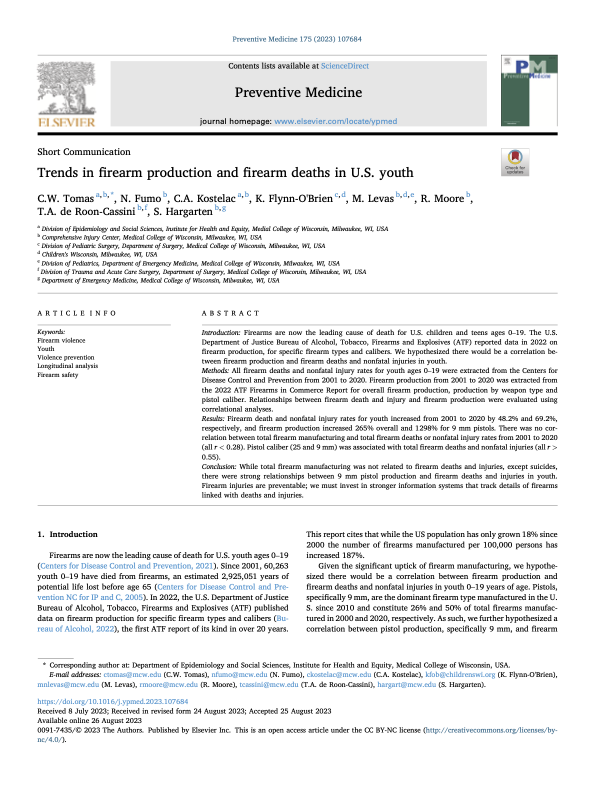
Trends in firearm production and firearm deaths in U.S. youth

By W Tomas, N Fumo, C A Kostelac, K Flynn-O'Brien, M Levas, R Moore, T A de Roon-Cassini, S Hargarten

Introduction: Firearms are now the leading cause of death for U.S. children and teens ages 0-19. The U.S. Department of Justice Bureau of Alcohol, Tobacco, Firearms and Explosives (ATF) reported data in 2022 on firearm production, for specific firearm types and calibers. We hypothesized there would be a correlation between firearm production and firearm deaths and nonfatal injuries in youth.

Methods: All firearm deaths and nonfatal injury rates for youth ages 0-19 were extracted from the Centers for Disease Control and Prevention from 2001 to 2020. Firearm production from 2001 to 2020 was extracted from the 2022 ATF Firearms in Commerce Report for overall firearm production, production by weapon type and pistol caliber. Relationships between firearm death and injury and firearm production were evaluated using correlational analyses.

Results: Firearm death and nonfatal injury rates for youth increased from 2001 to 2020 by 48.2% and 69.2%, respectively, and firearm production increased 265% overall and 1298% for 9 mm pistols. There was no correlation between total firearm manufacturing and total firearm deaths or nonfatal injury rates from 2001 to 2020 (all r < 0.28). Pistol caliber (25 and 9 mm) was associated with total firearm deaths and nonfatal injuries (all r > 0.55).

Conclusion: While total firearm manufacturing was not related to firearm deaths and injuries, except suicides, there were strong relationships between 9 mm pistol production and firearm deaths and injuries in youth. Firearm injuries are preventable; we must invest in stronger information systems that track details of firearms linked with deaths and injuries.

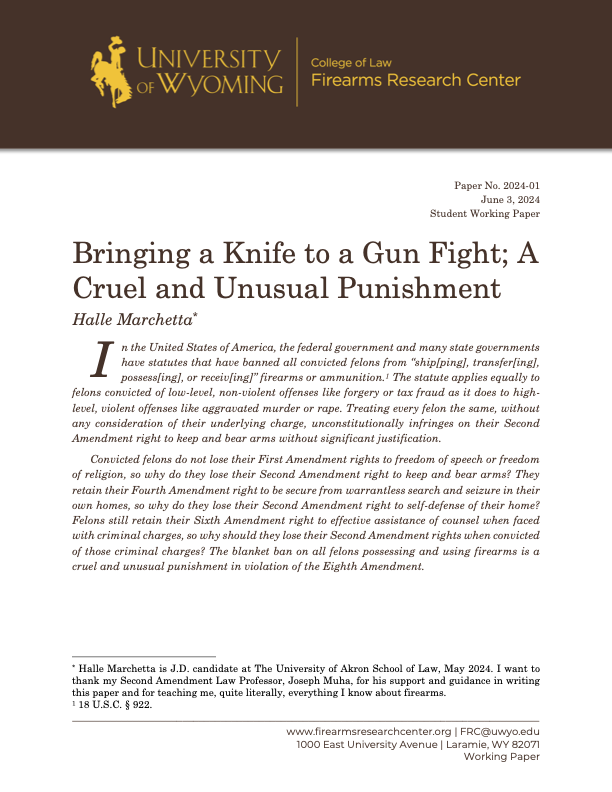
Bringing a Knife to a Gun Fight; A Cruel and Unusual Punishment

By Halle Marchetta

In the United States of America, the federal government and many state governments have statutes that have banned all convicted felons from “ship[ping], transfer[ing], possess[ing], or receiv[ing]” firearms or ammunition.1 The statute applies equally to felons convicted of low-level, non-violent offenses like forgery or tax fraud as it does to highlevel, violent offenses like aggravated murder or rape. Treating every felon the same, without any consideration of their underlying charge, unconstitutionally infringes on their Second Amendment right to keep and bear arms without significant justification. Convicted felons do not lose their First Amendment rights to freedom of speech or freedom of religion, so why do they lose their Second Amendment right to keep and bear arms? They retain their Fourth Amendment right to be secure from warrantless search and seizure in their own homes, so why do they lose their Second Amendment right to self-defense of their home? Felons still retain their Sixth Amendment right to effective assistance of counsel when faced with criminal charges, so why should they lose their Second Amendment rights when convicted of those criminal charges? The blanket ban on all felons possessing and using firearms is a cruel and unusual punishment in violation of the Eighth Amendment.

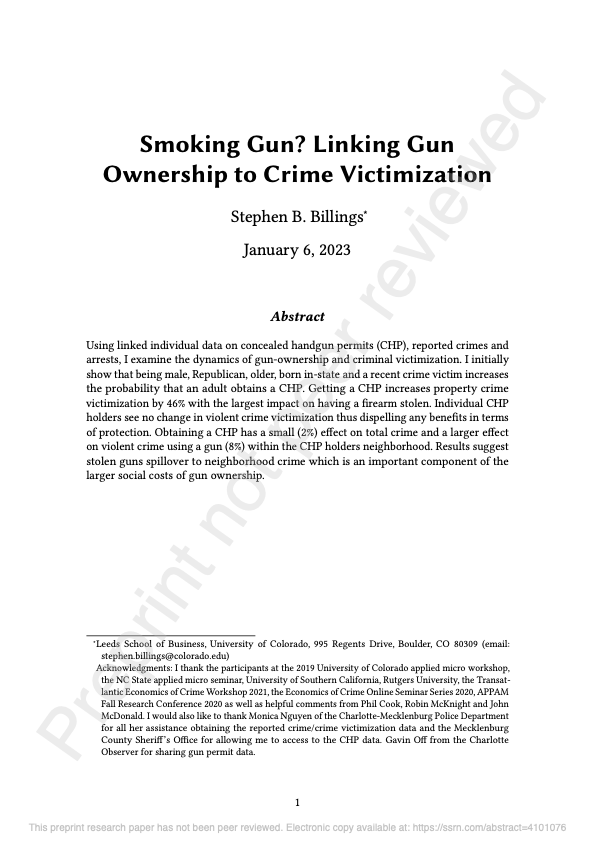
Smoking Gun? Linking Gun Ownership to Crime Victimization

By Stephen B. Billings

Using linked individual data on concealed handgun permits (CHP), reported crimes and arrests, I examine the dynamics of gun-ownership and criminal victimization. I initially show that being male, Republican, older, born in-state and a recent crime victim increases the probability that an adult obtains a CHP. Getting a CHP increases property crime victimization by 46% with the largest impact on having a firearm stolen. Individual CHP holders see no change in violent crime victimization thus dispelling any benefits in terms of protection. Obtaining a CHP has a small (2%) effect on total crime and a larger effect on violent crime using a gun (8%) within the CHP holders neighborhood. Results suggest stolen guns spillover to neighborhood crime which is an important component of the larger social costs of gun ownership.

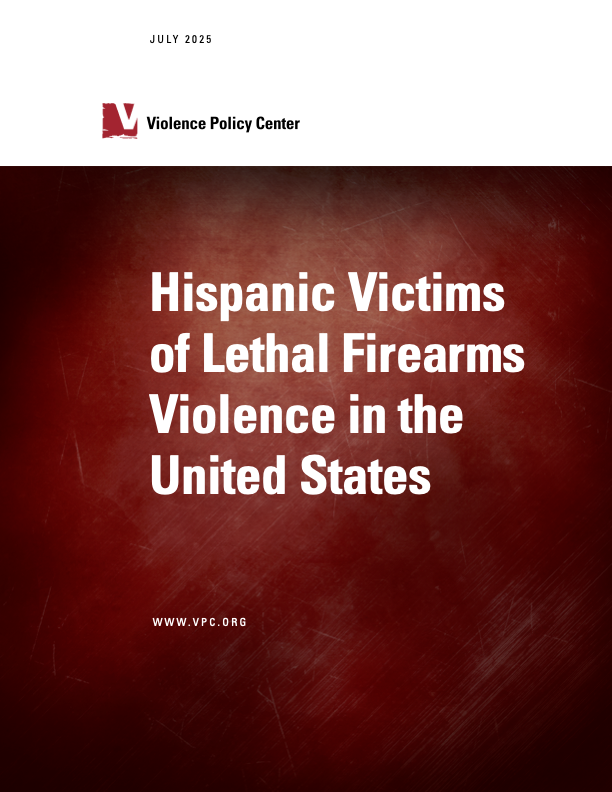
Hispanic Victims of Lethal Firearms Violence in the United States

By Terra Wiens  

  KEY FINDINGS AND RECOMMENDATIONS KEY FINDINGS ■ In 2023, more than 5,700 Hispanics were killed by guns. That year, 3,284 Hispanics died in gun homicides, 2,198 died in gun suicides, 63 died in unintentional shootings, and 202 died in other circumstances (including legal interventiona and undetermined intent). ■ More than 83,000 Hispanics were killed by guns between 2002 and 2023. During this period, 51,780 Hispanics died in gun homicides, 27,160 died in gun suicides, and 1,220 died in unintentional shootings. ■ Most Hispanic murder victims are killed with guns. In 2023, guns were used in more than three-quarters of the homicides where the victims were Hispanic. The latest data show that for homicides where the victim was Hispanic and a gun was used, 53.0 percent of these shootings involved a handgun. ■ The homicide victimization rate for Hispanics in the United States is higher than the homicide victimization rate for whites. The Hispanic homicide victimization rate in 2023 was 6.3 per 100,000. In comparison, the homicide victimization rate for whites was 2.9 per 100,000. ■ As a result of the limitations in current data collection, the total number of Hispanic victims is almost certainly higher than the reported numbers suggest. Government agencies often report data on race but not on ethnic origin. Recognizing the changing demographic landscape in the United States, it is clear that fully documenting such victimization is a crucial step in preventing it. RECOMMENDATIONS Governmental agencies that collect data on death and injury should obtain complete information on the ethnic origin of individuals in addition to their race. This will ensure complete and accurate data collection on Hispanic victims of lethal violence. ■ Individual-level ethnic origin information should be captured by all governmental agencies, regardless of department, and at all levels — local, state, and national — for all pertinent users and subjects of agency services. ■ Individual-level ethnic origin information should be self-reported and not based solely on a person’s surname or other measure. ■ All public access data and published reports issued by governmental agencies should include information on ethnic origin in addition to race. ■ The U.S. Department of Justice should issue periodic or special reports on Hispanic victimization. ■ States with a substantial proportion of Hispanic residents should issue periodic or special reports on Hispanic victimization and deaths due to all causes, including violence. Improved data collection is essential to fully understanding the scope of lethal firearms violence against Hispanics and helping develop effective measures to reduce such violence. At the same time additional efforts, both supporting current programs and activities as well as identifying new violence-reduction opportunities and approaches, should include the following: ■ Support for community-based violence intervention programs that are holistic and encourage participation by all stakeholders. ■ Educational efforts to better inform Hispanics of the risks associated with bringing a firearm into the home as measured by increased risk for homicide, suicide, and unintentional firearm deaths compared to how rarely guns are used in justifiable homicides. This is especially important in the face of current coordinated efforts by the gun industry targeting Hispanics as potential first-time gun buyers.b ■ Improved access to resources for victims and survivors of domestic violence. ■ Identification of anti-trafficking measures that could help interrupt the flow of illegal firearms into impacted communities   

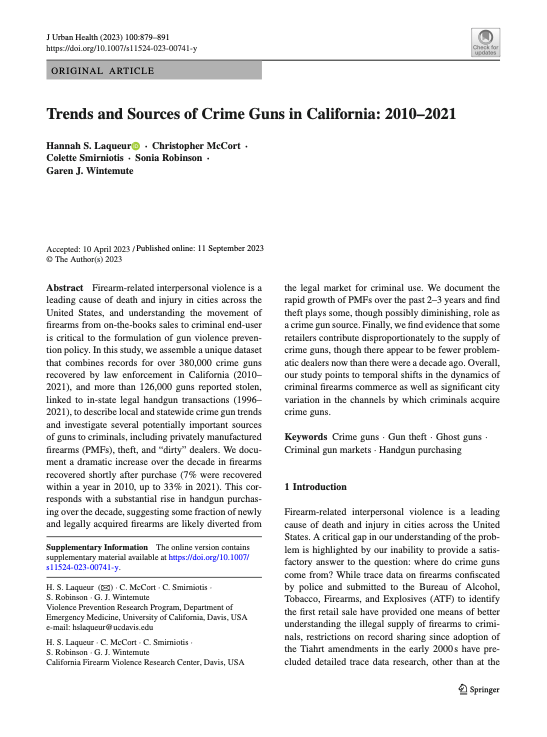
Trends and Sources of Crime Guns in California: 2010–2021

By  Hannah S. Laqueur · Christopher McCort · Colette Smirniotis · Sonia Robinson · Garen J. Wintemute

Firearm-related interpersonal violence is a leading cause of death and injury in cities across the United States, and understanding the movement of firearms from on-the-books sales to criminal end-user is critical to the formulation of gun violence prevention policy. In this study, we assemble a unique dataset that combines records for over 380,000 crime guns recovered by law enforcement in California (2010– 2021), and more than 126,000 guns reported stolen, linked to in-state legal handgun transactions (1996– 2021), to describe local and statewide crime gun trends and investigate several potentially important sources of guns to criminals, including privately manufactured firearms (PMFs), theft, and “dirty” dealers. We document a dramatic increase over the decade in firearms recovered shortly after purchase (7% were recovered within a year in 2010, up to 33% in 2021). This corresponds with a substantial rise in handgun purchasing over the decade, suggesting some fraction of newly and legally acquired firearms are likely diverted from the legal market for criminal use. We document the rapid growth of PMFs over the past 2–3 years and find theft plays some, though possibly diminishing, role as a crime gun source. Finally, we find evidence that some retailers contribute disproportionately to the supply of crime guns, though there appear to be fewer problematic dealers now than there were a decade ago. Overall, our study points to temporal shifts in the dynamics of criminal firearms commerce as well as significant city variation in the channels by which criminals acquire crime guns. 

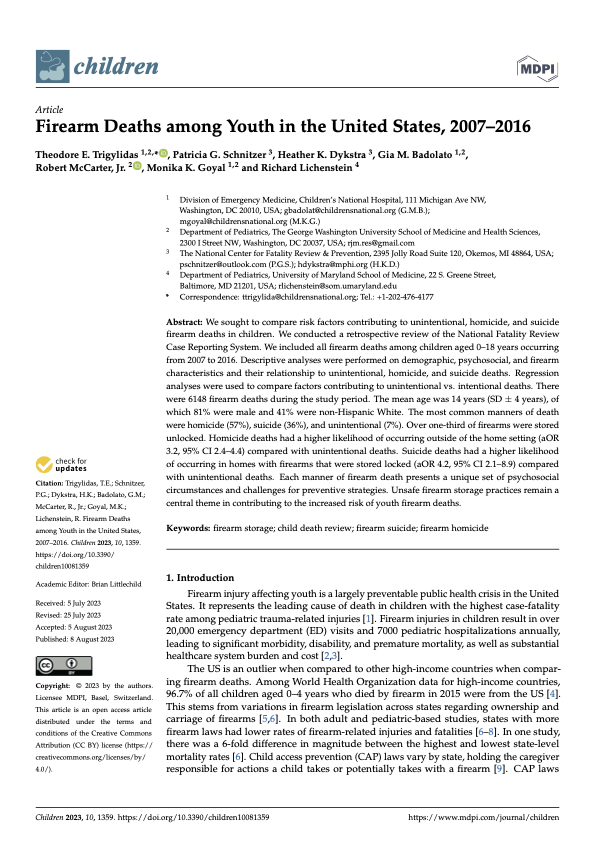
Firearm Deaths among Youth in the United States, 2007–2016

By Theodore E. Trigylidas  , Patricia G. Schnitzer  , Heather K. Dykstra  , Gia M. Badolato  , Robert McCarter, Jr. , Monika K. Goyal and Richard Lichenstein 

We sought to compare risk factors contributing to unintentional, homicide, and suicide firearm deaths in children. We conducted a retrospective review of the National Fatality Review Case Reporting System. We included all firearm deaths among children aged 0–18 years occurring from 2007 to 2016. Descriptive analyses were performed on demographic, psychosocial, and firearm characteristics and their relationship to unintentional, homicide, and suicide deaths. Regression analyses were used to compare factors contributing to unintentional vs. intentional deaths. There were 6148 firearm deaths during the study period. The mean age was 14 years (SD ± 4 years), of which 81% were male and 41% were non-Hispanic White. The most common manners of death were homicide (57%), suicide (36%), and unintentional (7%). Over one-third of firearms were stored unlocked. Homicide deaths had a higher likelihood of occurring outside of the home setting (aOR 3.2, 95% CI 2.4–4.4) compared with unintentional deaths. Suicide deaths had a higher likelihood of occurring in homes with firearms that were stored locked (aOR 4.2, 95% CI 2.1–8.9) compared with unintentional deaths. Each manner of firearm death presents a unique set of psychosocial circumstances and challenges for preventive strategies. Unsafe firearm storage practices remain a central theme in contributing to the increased risk of youth firearm deaths. 

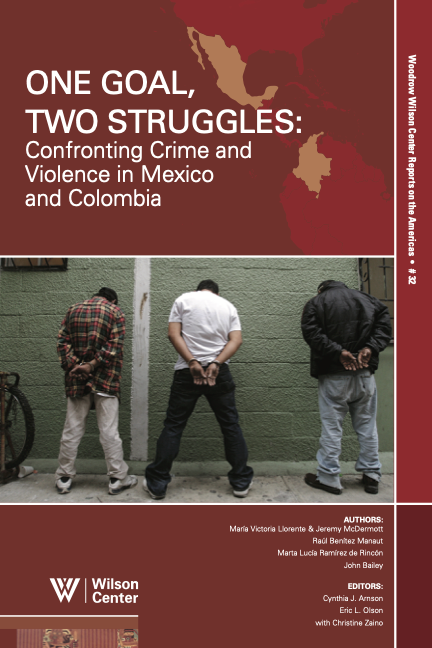
ONE GOAL, TWO STRUGGLES: Confronting Crime and Violence in Mexico and Colombia

By María Victoria Llorente and Jeremy McDermott,  Raúl Benítez Manaut , Marta Lucía Ramírez de Rincón , John Bailey

Since the mid-2000s, violence related to drug trafficking and other transnational crime has increased exponentially in Mexico. By the end of the decade the public began to seriously doubt the government’s strategy and its ability to guarantee public safety. The nature and intensity of violence in Mexico brought forth memories of the 1980s and ’90s in Colombia, when the country was besieged by the Medellín and Cali drug cartels. Over the course of more than a decade, Colombia’s security situation has improved dramatically; it has become an “exporter” of security expertise and has trained thousands of military and police personnel in Mexico, Central and South America, and the Caribbean as well as around the world. What aspects of Colombia’s strategy and tactics for fighting organized crime in its own territory offer useful lessons for Mexico? What might Colombia’s steps and missteps offer by way of example or counter-example? What is unique about each case such that comparisons are misleading? What do current security challenges in Colombia suggest about the threat posed by organized crime more generally? In One Goal, Two Struggles: Confronting Crime and Violence in Mexico and Colombia, international experts address the utility of comparing Colombia and Mexico’s experiences and strategy for combatting organized crime and violence more generally.

Pathways of post-conflict violence in Colombia

By Juan Albarracín, Juan Corredor-Garcia, Juan Pablo Milanese, Inge H. Valencia & Jonas Wolff

Violence in post-conflict settings is often attributed to a post-war boom in organized crime, facilitated by the demobilization of armed groups and the persisting weakness of the state. The article argues that this is only one pathway of post-conflict violence. A second causal pathway emerges from the challenges that peace processes can constitute for entrenched local political orders. By fostering political inclusion, the implementation of peace agreements may threaten subnational political elites that have used the context of armed conflict to ally with armed non-state actors. Violence is then used as a means to preserve such de facto authoritarian local orders. We start from the assumption that these two explanations are not exclusive or competing, but grasp different causal processes that may well both be at work behind the assassination of social leaders (líderes sociales) in Colombia since the 2016 peace agreement with the FARC guerrilla. We argue that this specific type of targeted violence can, in fact, be attributed to different, locally specific configurations that resemble the two pathways. The article combines fuzzy-set Qualitative Comparative Analysis with the case studies of the municipalities