Open Access Publisher and Free Library
CRIME+CRIMINOLOGY.jpeg

CRIME

Violent-Non-Violent-Cyber-Global-Organized-Environmental-Policing-Crime Prevention-Victimization

Measuring the Cost-Effectiveness of New Technologies in Policing: The Case of Automatic License Plate Readers (ALPR)

By Cynthia Lum, Christopher S. Koper, Hyunji Lee, Daniel S. Nagin, Lawrence Sherman

Research Question Can research discover the true cost-effectiveness of new technologies in policing, such as automatic license plate readers (ALPR)? Data We review the findings of many impact tests of introducing ALPR readers in predominantly US police agencies. Methods We place the data in the context of the two key police mandates: public safety and public confidence. We then apply the logic of linking findings specific to the new technology with the two broad mandates. Findings The effect of any technology on police outcomes depends heavily on how it is implemented in the larger context of organizational systems and culture. The effect is also conditioned by a broad body of evidence that the key mandates depend on far broader foundations than on any specific technology. Conclusions Evidence-based policing cannot be built from isolated findings, such as marginal changes in outputs or outcomes associated with new technologies. Linking new technologies to joined-up systems of targeting, testing, and tracking is required before we can ask whether the technologies are cost-effective.

Cambridge Journal of Evidence-Based Policing (2025)
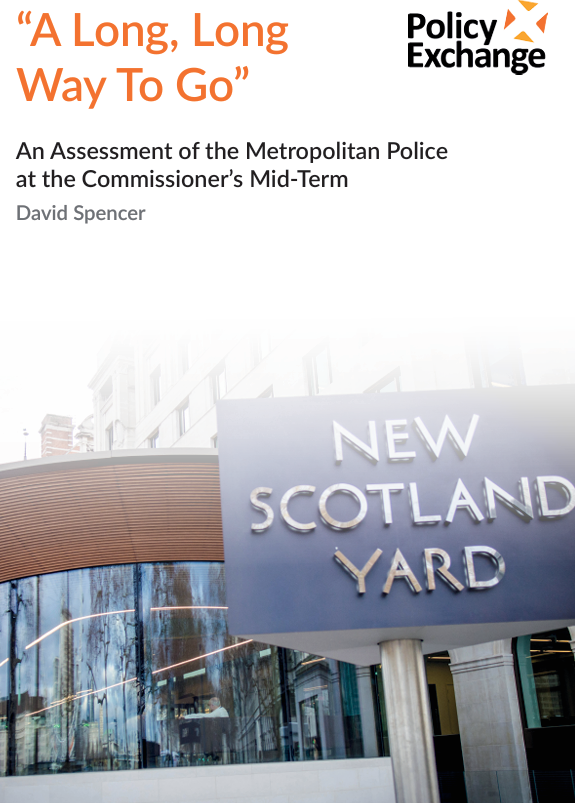
“A Long, Long Way To Go” An Assessment of the Metropolitan Police at the Commissioner’s Mid-Term 

By David Spencer

Summary of Recommendations 1. Given the very poor performance of the Metropolitan Police across a wide range of areas for an extended period – including prior to the present Commissioner’s term of office and particularly in relation to the fight against crime – the Home Secretary should become the “policing body” for the Metropolitan Police. This would remove the Mayor of London’s role in relation to oversight of policing in the capital. Shifting direct political oversight to the Home Secretary, as the minister principally responsible to Parliament for policing and crime, will enable both Government and Parliament to exercise far greater scrutiny and influence over the force’s performance in a way which has the potential to deliver the significant improvements which are required. 2. To enable the Metropolitan Police to shift the force’s principal focus to local crime fighting, the Government should transfer responsibility for the national leadership of the police counterterrorism network from the Metropolitan Police to a national Counter-Terrorism Policing body led by a Chief Constable. 3. The Chief Inspector of Constabulary should return the Metropolitan Police to the “Engage” process – more commonly known as “Special Measures”. The force was, based on performance across several areas, erroneously removed from the “Engage” process inmore commonly known as “Special Measures”. The force was, based on performance across several areas, erroneously removed from the “Engage” process in January 2025. There should be a presumption that all materials relating to the “Engage” process should be made publicly available. The current lack of transparency provides the public with little confidence that the necessary steps are being taken to deliver substantial improvements in the force’s performance. 4. The Home Secretary should order an inspection of the Metropolitan Police’s approach to protest policing using section 54 (2B) Police Act 1996. This should include consideration of both the strategic approach and operational tactics used, including what new strategies and tactics are required to more effectively deal with large-scale and widespread protests. This should consider the strategies and approaches used in other jurisdictions to determine what might be learned and adopted by the force – in particular the willingness of police chiefs to use non-human based means of “creating distance” between officers and protestors. 5. The Commissioner of the Metropolitan Police should review the performance of his most senior leaders and where individuals have been found to have failed to perform to the necessary standard, in some cases over very long periods, they should be replaced at the earliest opportunity. There should also be a substantial change in the approach to performance management for middle and senior leaders in the organisation – including being prepared to more willingly remove officers and staff who fail to deliver the necessary levels of performance, particularly in relation to fighting crime. Data should be published on every senior officer’s performance on crime-fighting throughout their leadership career. There should be a substantial increase in the transparency of the force’s Frontline Policing performance meetings, where local police commanders are questioned on their performance. This should include the publication of performance data, the publication of the meeting’s minutes and the option for members of the public to attend these meetings through online hosting. 

London: Policy Exchange, 2025. 52p.

The role of UK policing in economic growth

By Crest Advisory with RSM UK Consulting

Economic growth is the number one mission of the Government in the UK, seeking to restore stability, increase investment and reform the economy to improve productivity, prosperity, and living standards. This commitment has been made in the context of a sustained period of economic stagnation, throughout which there has been an ongoing conversation as to whether the right levers are being pulled to achieve economic growth. The Office of the Chief Scientific Adviser for the National Police Chiefs’ Council (NPCC) commissioned us to understand the role of policing as a lever - our research seeks to collate existing evidence as well as identify where there are opportunities to develop this evidence in the future. This research also falls within the wider discussion on police funding, police productivity and police reform which is particularly relevant given that the Home Office will be looking to find savings ahead of this year’s spending review as an unprotected government department, ongoing debate about the police funding formula and growing financial pressures on police forces. Science and technology has a significant role to play in police efficiency and effectiveness, but also growth. The NPCC’s Science and Technology Strategy sets a clear ambition for policing “to deliver the most science and technology led police service in the world”. Often, our understanding of policing impact is focused on implementation and public safety outcomes, but economic outcomes have the potential to shift the narrative in terms of how we define an effective and efficient police response. Our work, in partnership with RSM UK Consulting, has sought to understand the evidence between policing and economic outcomes, from which we have produced a logic model to understand these relationships (a logic model conceptualises the links between activities and key outcomes). While we have not been able to estimate the scale of impact of UK policing on economic growth, we hope this logic model can act as a framework for partners to use to further develop the evidence base around the impact of policing on economic outcomes, specifically designing evaluations with these outcomes in mind. In time, this evidence may begin to change how we understand the positive impact of policing on individuals, businesses and communities in England and Wales - with the potential for positive economic outcomes influencing future decisions on funding allocations and commitments to specific policing initiatives and operational interventions. Furthermore, growth could sit alongside efficiency and effectiveness as key metrics for success in policing.

London: Crest Advisory, 2025. 69p.

AI in Policing: international lessons and domestic solutions

By Justice

1. Artificial intelligence (“AI”) is rapidly reshaping public services, and policing is no exception. The pace of innovation, the scale of private sector investment, and the UK Government’s explicit ambition to “mainline AI into the veins of the nation” mean that AI deployment in policing is not a distant prospect but an accelerating reality. This brings significant opportunities: enhanced investigative capability, faster processing of digital evidence, improved risk assessment, and the potential to intervene earlier to prevent harm. Yet it also carries profound risks for human rights, the rule of law, and public trust. The police occupy a uniquely powerful position in our democratic society; integrating AI into that environment without the right safeguards risks entrenching discrimination, undermining lawful decision making, and eroding communities’ confidence in policing2. This report asks a central question: what must be in place for AI in policing to be trustworthy, value for money, effective in achieving policing goals, and compliant with human rights and the fair administration of justice? To answer this, JUSTICE carried out international research, examined domestic developments, and convened stakeholders across policing, government, civil society, regulators, academia, and industry. Across this work, five lessons emerged, each of which signals not only what must be done, but the urgency of acting now while the UK remains at a crossroads.

London: Justice, 2025. 62p.

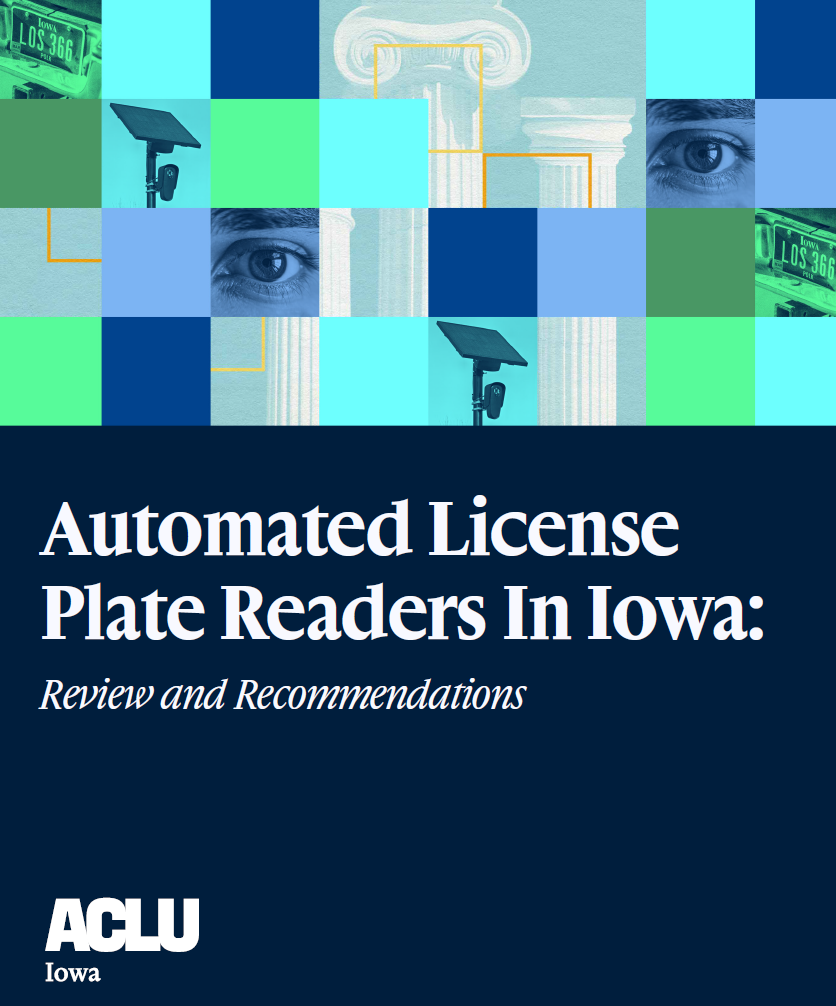
Automated License Plate Readers in Iowa: Review and Recommendations - ACLU of Iowa

By Mia Savicevic and Ethan Miner

This report is a focused look at the growing use of automated license plate readers (ALPRs) by law enforcement agencies across Iowa—a surveillance tool that poses serious risks to Iowans’ privacy and civil liberties. ALPRs are not speed cameras. They are not “red light” cameras. Instead, they are cameras used along roadways throughout Iowa that quickly take thousands of snapshots of license plates as vehicles drive by. That information can then be fed into a network of nationally shared databases that has too few privacy protections and is subject to abuse. More details about ALPRs generally can be found on the ACLU of Iowa website. Unlike other traffic cameras, ALPRs aren’t activated because you violated a law. They record you and every other person who drives by, simply to build a database of vehicle information. ALPRs can take hundreds of photos in a matter of minutes. And unlike ordinary surveillance cameras, where data is either not shared or shared in a more limited manner, the main purpose of ALPRs is to feed this information into a database. To investigate how this technology is being used, the ACLU of Iowa engaged the Technology Law Clinic at the University of Iowa College of Law to conduct independent research on the use of ALPRs in Iowa. We sent open records requests to a broad cross-section of 48 law enforcement agencies across the state, to larger towns, to smaller communities, and to Iowa’s college towns. The study was not comprehensive of all ALPRs in Iowa. Of the 48 agencies that were selected, 5 did not respond to our records request before publication: the Des Moines Police Department, the Clinton Police Department, the Fayette Police Department, the Fremont Police Department, and the Mills Police Department.While researching this project, the clinic also identified agencies (see Appendix D) that have accessed other Iowa cities’ or counties’ ALPR databases, whether they have their own ALPRs or not.

Technology Law Clinic at the University of Iowa College of Law and ACLU of Iowa, 2025. 63p.


Police Power Abolition

By Devon W. Carbado 

This Article employs the Law Review’s Discourse symposium on my book, Unreasonable: Black Lives, Police Power, and the Fourth Amendment, as a starting point to foreground and elaborate on an idea that I reference in that text: police power abolition. The Article begins by describing the central insight that motivates Unreasonable—namely, that simply limiting the frequency with which the police interact with Black people could save Black lives. If the police have fewer opportunities to stop and question Black people, they have fewer opportunities to kill us. That observation led me to think about the range of structural forces that facilitate contact between Black people and the police. Fourth Amendment law is one such force. From pedestrian checks, to traffic stops, to stops and frisks, to searches and seizures at the border, Fourth Amendment law permits the police to interact with and enact violence against Black people on the thinnest, most unreasonable of suspicions. The Article does not reprise precisely how Fourth Amendment law performs that racially subordinating work. For that, you will have to read Unreasonable and the broader body of work on which the book is based. Instead, the Article summarizes the core arguments Unreasonable propounds, links them to what I call “police power abolition,” and explains how police power abolition can provide an entry into and render more legible broader discourses about abolition. Throughout the Article, I draw on and react to the generous and generative review essays that participants in this symposium have written about the book. In the context of doing so, I explain why, notwithstanding the limitations of law as space for antiracist interventions, the legal terrain should remain a critical (though not the only or most important) site for advancing

racial justice.

UCLA School of Law, Public Law Research Paper Forthcoming

69 Pages Posted: 20 Nov 2025

Police standards: Conduct

By William Downs

Police misconduct is behaviour by a police officer that falls below the standards of professional behaviour for the police.

Cases of police misconduct can arise from concerns raised by police officers or staff, or following incidents where members of the public have been harmed by the actions of the police.

What are the laws on police misconduct?

Legislation specifies how allegations of police misconduct should be handled, though the framework is complex. In short, most allegations of police misconduct are handled in line with rules set out in the Police Act 1996 and Police (Conduct) Regulations 2020. This legislation is designed to support the police in maintaining a disciplined force. The Home Office provides statutory guidance on implementing this legislation.

London: UK Parliament, House of Commons Library, 2025. 23p. 


Police standards: Discipline 

By William Downs

Police disciplinary proceedings are brought in cases where it is agreed, following an investigation, that a police officer has a case to answer for: • misconduct (meaning a breach of the standards of professional behaviour that justifies disciplinary action of at least written), or • gross misconduct (meaning a breach of the standards of professional behaviour that is so serious to justify dismissal) A decision on whether there is a case to answer is based on whether there is sufficient evidence upon which a misconduct panel “could make a finding on the balance of probabilities” that an officer’s behaviour amounted to misconduct or gross misconduct. The Commons Library briefings Police standards: Complaints and Police Standards: Conduct explain in more detail how allegations of police wrongdoing are investigated.

London: UK Parliament. House of commons Library.. 2025. 19p.

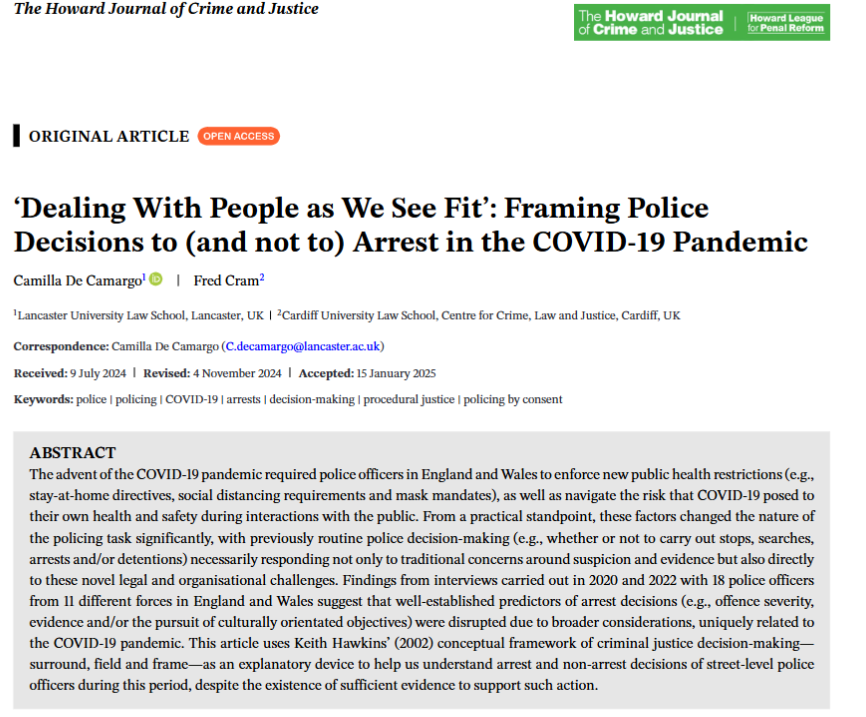
‘Dealing With People as We See Fit’: Framing Police Decisions to (and not to) Arrest in the COVID‐19 Pandemic

By Camilla De Camargo, Fred Cram

The advent of the COVID-19 pandemic required police officers in England and Wales to enforce new public health restrictions (e.g., stay-at-home directives, social distancing requirements and mask mandates), as well as navigate the risk that COVID-19 posed to their own health and safety during interactions with the public. From a practical standpoint, these factors changed the nature of the policing task significantly, with previously routine police decision-making (e.g., whether or not to carry out stops, searches, arrests and/or detentions) necessarily responding not only to traditional concerns around suspicion and evidence but also directly to these novel legal and organisational challenges. Findings from interviews carried out in 2020 and 2022 with 18 police officers from 11 different forces in England and Wales suggest that well-established predictors of arrest decisions (e.g., offence severity, evidence and/or the pursuit of culturally orientated objectives) were disrupted due to broader considerations, uniquely related to the COVID-19 pandemic. This article uses Keith Hawkins’ (2002) conceptual framework of criminal justice decision-making—surround, field and frame—as an explanatory device to help us understand arrest and non-arrest decisions of street-level police officers during this period, despite the existence of sufficient evidence to support such action.

The Howard Journal of Crime and Justice Volume 64, Issue 3 Sep 2025 Pages 277-417

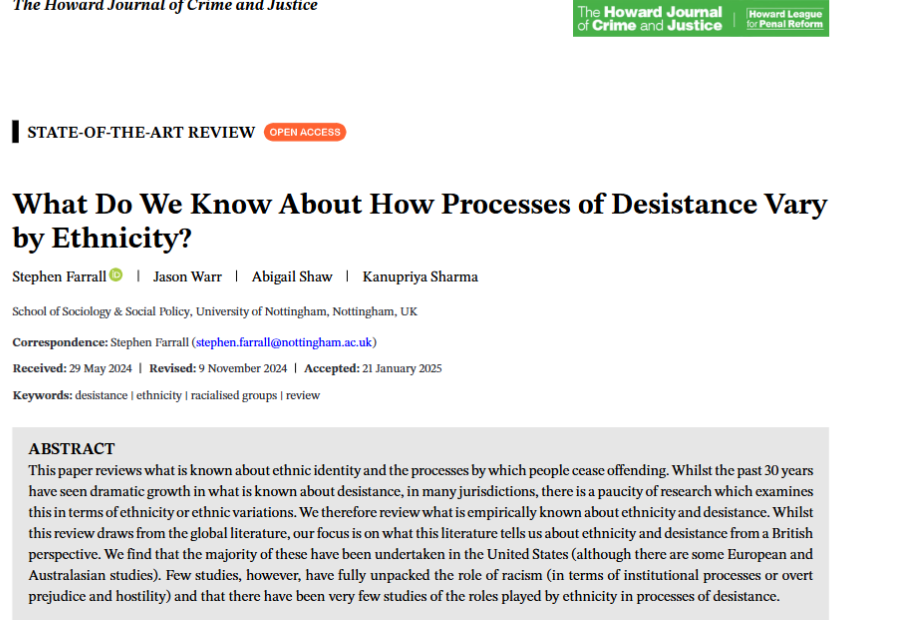
What Do We Know About How Processes of Desistance Vary by Ethnicity?

By Stephen Farrall, Jason Warr, Abigail Shaw, Kanupriya Sharma


This paper reviews what is known about ethnic identity and the processes by which people cease offending. Whilst the past 30 years have seen dramatic growth in what is known about desistance, in many jurisdictions, there is a paucity of research which examines this in terms of ethnicity or ethnic variations. We therefore review what is empirically known about ethnicity and desistance. Whilst this review draws from the global literature, our focus is on what this literature tells us about ethnicity and desistance from a British perspective. We find that the majority of these have been undertaken in the United States (although there are some European and Australasian studies). Few studies, however, have fully unpacked the role of racism (in terms of institutional processes or overt prejudice and hostility) and that there have been very few studies of the roles played by ethnicity in processes of desistance.

The Howard Journal of Crime and JusticeVolume 64, Issue 3Sep 2025

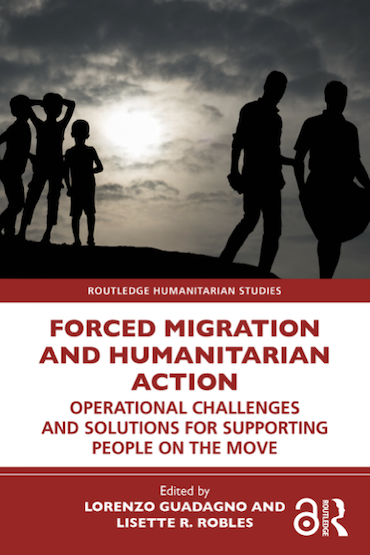
Forced Migration and Humanitarian Action: 

Operational Challenges and Solutions for Supporting People on the Move

By Guadagno, Lorenzo (editor), Robles, Lisette R. (editor)

Forced population movements are a defining feature of almost any humanitarian crisis, shaping the design, targeting, and delivery of emergency responses. This book investigates how the evolving situation of different forced migrants is accounted for and addressed in humanitarian action in order to improve their access to support and assistance. Bringing together case studies from Africa, Asia, Europe, and the Pacific, this book focuses on a diversity of operational modalities and types of assistance provided by both traditional and non-traditional humanitarian actors to address the specific needs of displaced children, women, people with disabilities and older people, as well as trafficked migrant workers. This book adopts a broad perspective on humanitarian action, acknowledging how its boundaries are challenged and expanded in forced migration contexts. Its operational and theoretical insights will be useful for a range of readers, from humanitarian and migration researchers and students to practitioners and policymakers.

London: Routledge, 2026. 

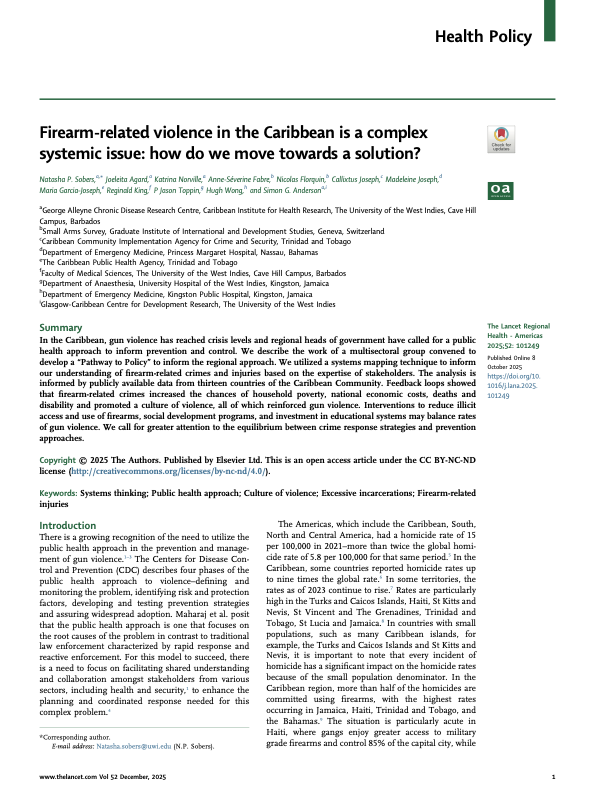
Firearm-related violence in the Caribbean is a complex systemic issue: how do we move towards a solution?

By Natasha P. Sobers, Joeleita Agard, Katrina Norville, Anne-Séverine Fabre, Nicolas Florquin, Callixtus Joseph, Madeleine Joseph, Maria Garcia-Joseph, Reginald King, Patrick Jason Toppin, Hugh Wong, Simon G. Anderson

In the Caribbean, gun violence has reached crisis levels and regional heads of government have called for a public health approach to inform prevention and control. Feedback loops resulting from work carried out under the ‘Pathway to Policy’ project showed that firearm-related crimes increased the chances of household poverty, national economic costs, deaths and disability and promoted a culture of violence, all of which reinforced gun violence. Interventions to reduce illicit access and use of firearms, social development programs, and investment in educational systems may balance rates of gun violence.

Firearm-related violence in the Caribbean is a complex systemic issue: how do we move towards a solution?—an article co-written with our project partners from the Caribbean Community Implementation Agency for Crime and Security, the Caribbean Public Health Agency, and the George Alleyne Chronic Disease Center at the University of the West Indies—discusses the work carried out by the Advisory Committee of Regional Experts, a multisectoral group convened to develop a ‘pathway to policy’ that informs a regional approach to tackling firearm violence. Using a systems mapping technique to inform our understanding of firearm-related crimes and injuries based on the expertise of stakeholders and based on analysis of publicly available data from thirteen countries within the Caribbean Community, this article calls for greater attention to the equilibrium between crime response strategies and prevention approaches.

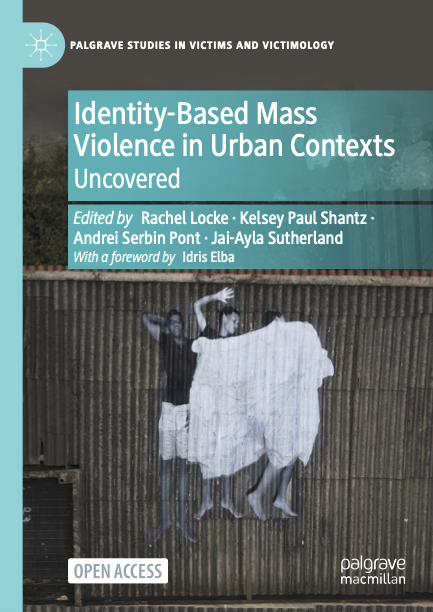
Identity-Based Mass Violence in Urban Contexts: Uncovered

By Rachel Locke, Kelsey Paul Shantz, Andrei Serbin Pont, Jai-Ayla Sutherland
This open access book represents a multiyear exploration into identity-based mass violence (IBMV) within urban contexts. It explores the complexities of structural and acute violence in cities, drawing on local solutions rooted in the fields of urban violence prevention, atrocity prevention, and peacebuilding. The authors present a multidimensional approach that addresses sexual and gender-based violence, racial and ethnic violence, gang or group-based violence, state-perpetrated violence, political violence, violence against migrants, and others. The volume investigates the outsized influence of power in shaping how violence is understood and how prevention outcomes are evaluated. The chapters span scholarship, practical guidance, and lived experience of enduring and bearing witness to IBMV. This volume speaks directly to reform-minded partners and allies in policy and practice, as well as to funders and supporters. It provides a practical foundation for collaborative, prevention-focused action and policy opportunities.
Cham: Springer Nature, 2025. 

SELECTING AND VALIDATING OUTCOME MEASURES FOR THE DOMESTIC VIOLENCE AND ABUSE CORE OUTCOME SET (DVA-COS) 

By Jenna Harewell, Elizabeth Dunk Shivi Bains, Emma Howarth, Claire Powell, Lazaros Gonidis

  Background - The domestic abuse core outcome set (DVA-COS) is an agreed set of five outcomes intended for use in evaluations of interventions or services for children and families with experience of domestic violence and abuse (DVA, hereafter referred to as domestic abuse). A COS is a minimum standard for measurement in intervention studies, the purpose of which is to overcome heterogeneity in outcome selection and measurement. The aim of a COS is to maximise the value of a body of evidence by facilitating comparison between and synthesis across studies, thus reducing research wastage. Since the development of the DVA-COS, work has been undertaken to identify, select, and validate outcome measurement instruments (OMIs) to measure the core outcomes. The Warwick– Edinburgh Mental Wellbeing Scale (WEMWBS) was previously identified as acceptable by stakeholders to capture two outcomes: child and caregiver emotional health and wellbeing. This work seeks to extend those findings by validating the measure for use with domestic abuse experienced populations. Aims Foundations, the national What Works Centre for Children & Families, commissioned two work packages to develop and integrate previous work to outline and validate OMIs for use to assess outcomes comprising the DVA-COS. Work package 1 seeks to identify three OMIs, and this report focuses on work package 2, which aimed to validate the Short WEMWBS (SWEMWBS) for use with children and young people (aged 11 to 18) who have experienced domestic abuse. The studies that make up this work package used mixed methods to examine the acceptability, content validity, structural validity, internal consistency, and measurement invariance for the scale in children and young people experiencing domestic abuse. We also report a validation study of the WEMWBS for adults with experience of domestic abuse. Methods The above aims were addressed across four individual studies: two planned and two supplementary. First, a qualitative ‘think aloud’ study assessed the acceptability of the SWEMWBS with children and young people who had experienced domestic abuse. The remaining three studies were quantitative analyses of secondary data on using the SWEMWBS and WEMWBS with children and young people and adult samples. • Study A: a qualitative think aloud study that involved interviews and a focus group to gather feedback from children and young people with domestic abuse experience on use of the SWEMWBS. • Study B: examined cross-sectional data collected by the OxWell Student Survey to validate the SWEMWBS with children and young people affected by domestic abuse. • Study C: examined anonymised longitudinal service data to validate the SWEMWBS with children and young people affected by domestic abuse. • Study D: validated the WEMWBS with adults who have experienced domestic abuse using cross-sectional data from the Adult Psychiatric Morbidity Survey (APMS). Key findings Our findings demonstrate the validity and acceptability of the SWEMWBS and WEMWBS in domestic abuse-experienced child and adult populations respectively. Study A indicated that the SWEMWBS is broadly acceptable for use with children and young people, while raising important considerations regarding respondents’ interpretation of the measure’s items as well as the emotional impact of the measure on this population. Studies B and C demonstrated robust psychometric validity2 of the SWEMWBS with children and young people affected by domestic abuse, and Study D showed robust psychometric validity of the WEMWBS with adult victims of domestic abuse. These are significant findings given the limited number of measures that have been evaluated for use with this population across practice and research contexts. Moreover, this represents an important step forward in the implementation of the DVA-COS, which we hope will help to unify outcome measurement in domestic abuse research and evaluation, as well as service monitoring. Recommendations We recommend that the SWEMWBS and WEMWBS be used to measure wellbeing in the context of evaluation studies (of any quantitative design) seeking to assess the impact of child-focused domestic abuse interventions. To enhance the acceptability of the measure to children and adults we suggest minor adaptations for use in the domestic abuse context. Finally, we recommend the development of guidelines for practitioners and researchers about how to use the tools in a ‘carefirst’ way and how to guard against the tools being used for screening or triaging, or rationing care, as well as guidance for commissioners on how to interpret and use evidence, generated by the completion of the SWEMWBS and WEMWBS, for the basis of decision making. This guidance needs to reflect the balance between the benefits of data-driven decision making and the risk of unduly narrowing the breadth of services or thwarting innovation in the sector. The OMI’s implementation (including the use of guidance) should be closely monitored and evaluated, to inform any associated refinements and to develop an in-depth understanding of the process and outcomes associated with embedding routine measurement in practice. Further work is also required to identify an alternative OMI or adapt the SWEMWBS for appropriate use with children under the age of.   11.

Foundations UK: 2025. 106p.

Assessment Of The Abuse and Dependence Potential Of New Psychoactive Substances: Synthetic Opioids

By The Laboratory and Scientific Services
United Nations Office on Drugs and Crime; 

The scientific evaluation of substances for inclusion in international and most national legislations requires an assessment of a range of chemical, pharmacological, and toxicological properties of a substance. Also, for many of the NPS that have emerged, quality comparable scientific data on these properties are either scarce or do not exist. The aim of these UNODC guidelines is to support Member States in the generation of quality scientific data on key pharmacological properties used in the scientific evaluation of substances, specifically the determination of the abuse and dependence potential of NPS. Given the continued emergence of highly potent synthetic opioids in recent years, this guideline will focus on synthetic opioids and future volumes will contain information on other groups of NPS.

Vienna: UNODC< 2025. 58p.

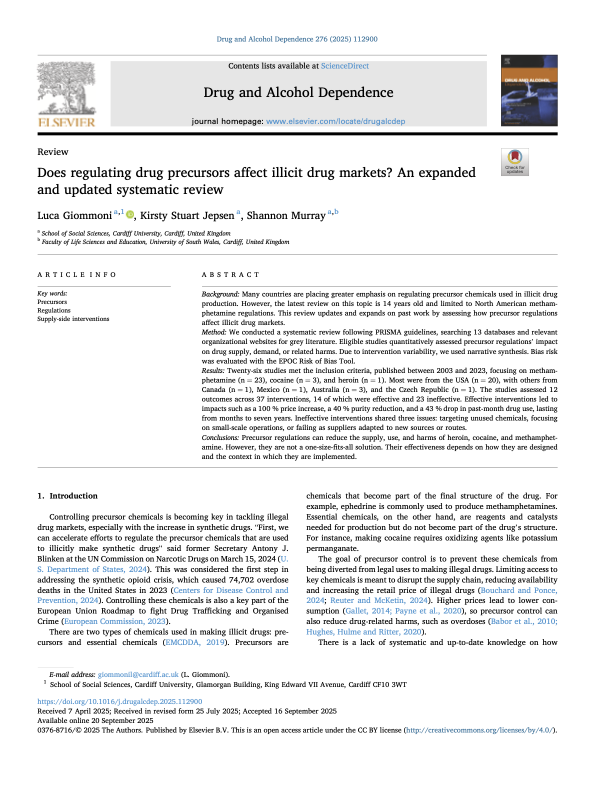
Does Regulating Drug Precursors Affect Illicit Drug Markets? An Expanded and Updated Systematic Review

By Luca Giommoni, Kirsty Stuart Jepsen, Shannon Murray

Background

Many countries are placing greater emphasis on regulating precursor chemicals used in illicit drug production. However, the latest review on this topic is 14 years old and limited to North American methamphetamine regulations. This review updates and expands on past work by assessing how precursor regulations affect illicit drug markets.

Method

We conducted a systematic review following PRISMA guidelines, searching 13 databases and relevant organizational websites for grey literature. Eligible studies quantitatively assessed precursor regulations' impact on drug supply, demand, or related harms. Due to intervention variability, we used narrative synthesis. Bias risk was evaluated with the EPOC Risk of Bias Tool.

Results

Twenty-six studies met the inclusion criteria, published between 2003 and 2023, focusing on methamphetamine (n = 23), cocaine (n = 3), and heroin (n = 1). Most were from the USA (n = 20), with others from Canada (n = 1), Mexico (n = 1), Australia (n = 3), and the Czech Republic (n = 1). The studies assessed 12 outcomes across 37 interventions, 14 of which were effective and 23 ineffective. Effective interventions led to impacts such as a 100 % price increase, a 40 % purity reduction, and a 43 % drop in past-month drug use, lasting from months to seven years. Ineffective interventions shared three issues: targeting unused chemicals, focusing on small-scale operations, or failing as suppliers adapted to new sources or routes.

Conclusions

Precursor regulations can reduce the supply, use, and harms of heroin, cocaine, and methamphetamine. However, they are not a one-size-fits-all solution. Their effectiveness depends on how they are designed and the context in which they are implemented.

Drug and Alcohol Dependence; 2025 Volume 276, 1 November 2025, 112900

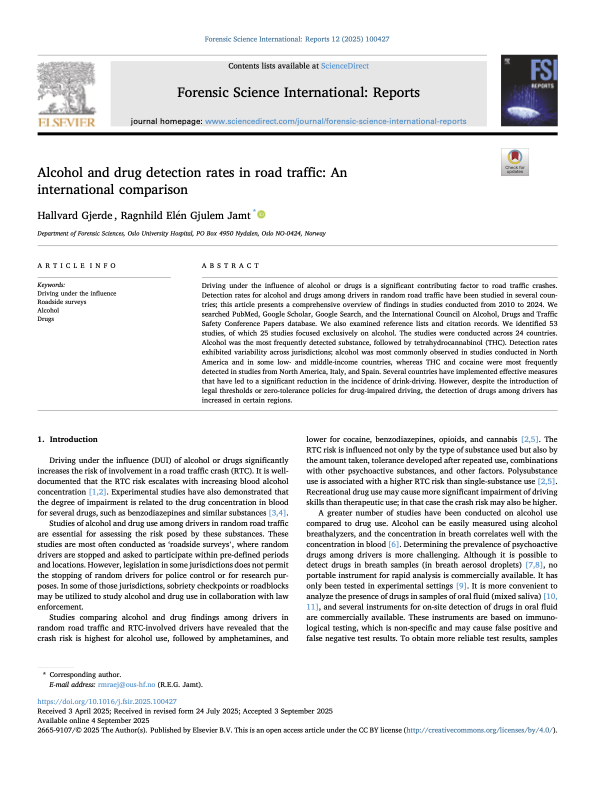
Alcohol and drug detection rates in road traffic: An international comparison

By Hallvard Gjerde, Ragnhild Elén Gjulem Jamt

Driving under the influence of alcohol or drugs is a significant contributing factor to road traffic crashes. Detection rates for alcohol and drugs among drivers in random road traffic have been studied in several countries; this article presents a comprehensive overview of findings in studies conducted from 2010 to 2024. We searched PubMed, Google Scholar, Google Search, and the International Council on Alcohol, Drugs and Traffic Safety Conference Papers database. We also examined reference lists and citation records. We identified 53 studies, of which 25 studies focused exclusively on alcohol. The studies were conducted across 24 countries. Alcohol was the most frequently detected substance, followed by tetrahydrocannabinol (THC). Detection rates exhibited variability across jurisdictions; alcohol was most commonly observed in studies conducted in North America and in some low- and middle-income countries, whereas THC and cocaine were most frequently detected in studies from North America, Italy, and Spain. Several countries have implemented effective measures that have led to a significant reduction in the incidence of drink-driving. However, despite the introduction of legal thresholds or zero-tolerance policies for drug-impaired driving, the detection of drugs among drivers has increased in certain regions.

Forensic Science International: Reports. Dec. 2025

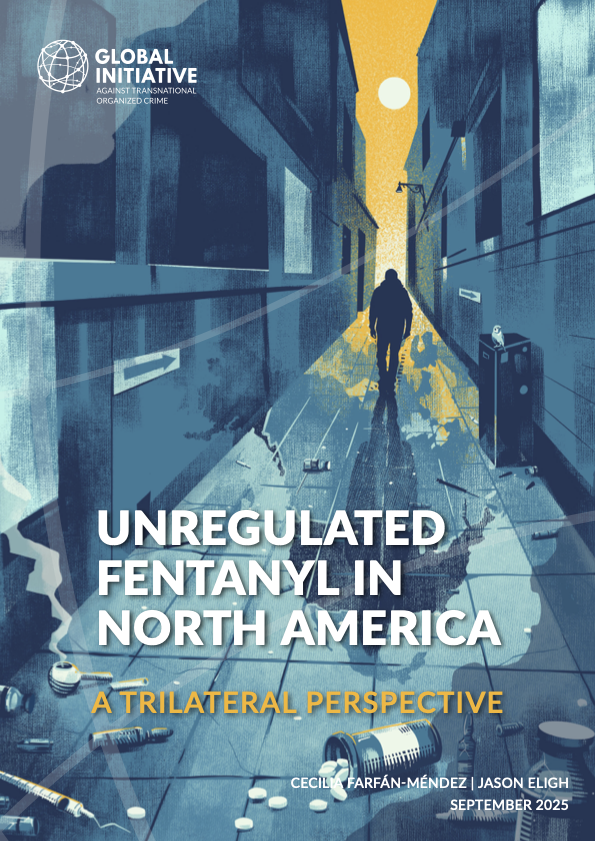
Unregulated Fentanyl in North America

By CECILIA FARFÁN-MÉNDEZ | JASON ELIGH 

More than 1.1 million people in the United States have died from opioid overdoses since 2000. In Canada, over 50,000 lives have been lost to opioid-related overdoses since 2016. Meanwhile, in Mexico, homicide—mostly committed with illegally trafficked firearms—is the leading cause of death among men aged 15 to 44. These overlapping crises reveal that the harms associated with synthetic opioids are not confined to one country but span all of North America.

This policy brief sheds light on how illicitly manufactured fentanyl (IMF) is produced and distributed within and across Mexico, the US, and Canada. The report reveals a complex and highly integrated system of production, tablet pressing, trafficking, and consumption. Far from being a product trafficked into North America, IMF is increasingly produced on its soil.nized Crime trilateral perspective

Building Barriers and Bridges. The Need for International Cooperation to Counter the Caribbean–Europe Drug Trade

By Christopher Hernandez-Roy and Rubi Bledsoe 

Drug trafficking, especially cocaine trafficking, from source countries in South America to Europe has produced alarming and lasting effects on both sides of the Atlantic. While various trafficking routes to Europe exist, transshipment through the Caribbean, including through the European territories in the region, is of growing concern. In Europe, the expanding cocaine market has brought a rise in homicides, kidnappings, and intimidation. In the city of Antwerp, for example, there were around 200 drug-related violent incidents in the past five years as competing gangs fought over control of territory. In the Caribbean, drug trafficking by organized crime has been associated with record homicide levels, corruption, democratic backsliding, and money laundering, among other pernicious effects. It has also prompted wars between gangs over the control of criminal economies, expanded illegal firearms trafficking, and exacerbated human trafficking both within the region and beyond. Shedding light on the complexity of the issue—while providing policy recommendations for increased cooperation between the United States, Europe, and Caribbean countries—is necessary as both continents seek regional and extra-regional security.

Washington, DC: CSIS, 2023. 11p.

The New Transatlantic Bonanza: Cocaine on Highway 10.

By Antonio L. Mazzitelli


The 10th Parallel marine and aerial routes linking South America and West Africa harbor a long history of trade between the two continents. More recently, these routes have become one of the preferred routes used by Latin American traffickers for shipping multi-tons of cocaine destined for the growing European market. The Parallel‘s growing importance in cocaine trafficking has made it known as cocaine ―Highway 10‖ among law enforcement. Latin American cocaine trafficking organizations, particularly the Colombian ones, have established stable bases in West Africa, controlling and developing the route. West African facilitators, Nigerians as well as an increasing number of nationals from all countries where shipments are stocked, have developed a stronger capacity for taking over a more ambitious and lucrative role in the business as transporters, partners, and final buyers. In one case (Guinea), the West African partner had already started developing his own trafficking and manufacturing capacity, reproducing the patterns that made Colombia the business model of the drug industry. In this reshaped context, of particular concern is the role played by the Colombian FARC (Fuerzas Armadas Revolucionarias de Colombia) as provider of cocaine shipments to West African cocaine entrepreneurs, as well as the impact of drug trafficking money on the financing of terrorist and rebel groups operating in the Sahel-Saharan belt. 

Miami:  Western Hemisphere Security Analysis Center. 2011. 22p.