Open Access Free Library
CRIME+CRIMINOLOGY.jpeg

CRIME

Violent-Non-Violent-Cyber-Global-Organized-Environmental-Policing-Crime Prevention-Victimization

Exploited to exploiter? Preventing the unjust criminalisation of victims of child criminal exploitation in the transition to adulthood

By The Alliance for Youth Justice

The briefing, funded by the Barrow Cadbury Trust, examines what happens as exploited children turn 18, exploring how responses across safeguarding and criminal justice fail to keep pace with ongoing risk and harm. It sets out principles and practical steps to ensure protection continues into young adulthood and to prevent the unjust criminalisation of victims.

While awareness of CCE has grown, responses for children remain inconsistent and are too often led by punishment. At 18, those weaknesses are magnified. Support frequently falls away, thresholds for help rise, and young adults are more likely to be treated as perpetrators than recognised as victims. As parliament considers the Crime and Policing Bill’s new offence of child criminal exploitation (CCE), there is a critical opportunity to improve the response for victims – but a growing risk that exploited young adults will be prosecuted as perpetrators.

The briefing is informed by an evidence review and consultation with professionals, legal practitioners, academics, civil servants, and sector experts and identifies several urgent issues:


Youth Justice by the Numbers

By Joshua Rovner

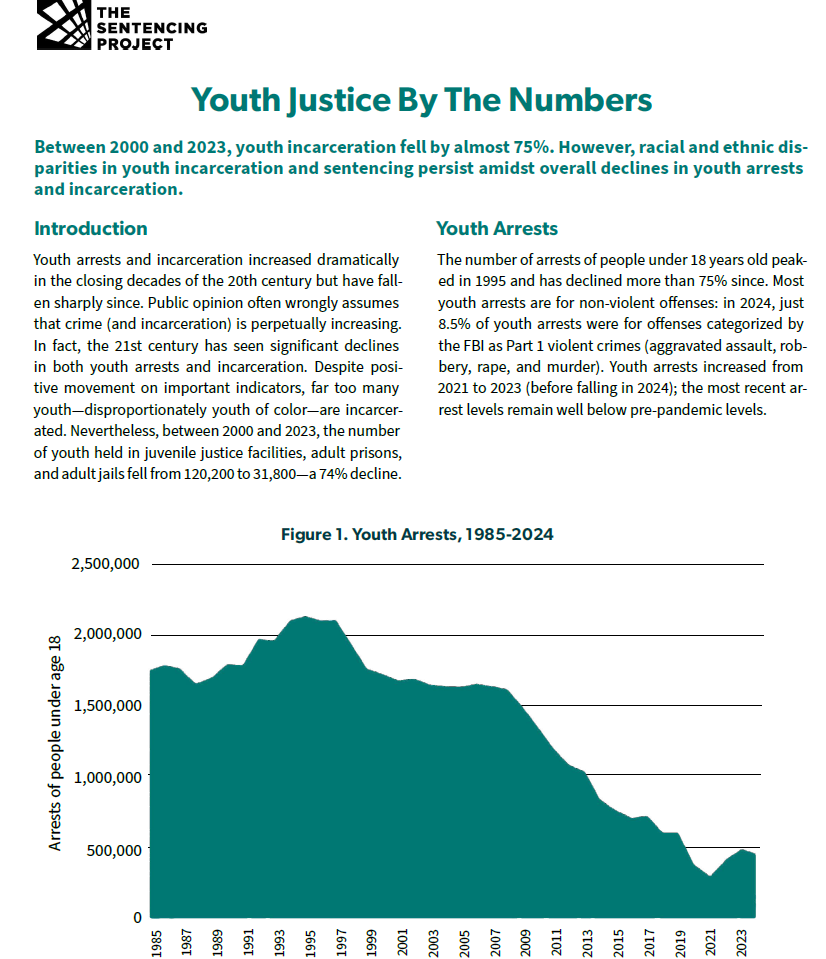
Youth arrests and incarceration increased dramatically in the closing decades of the 20th century but have fallen sharply since. Public opinion often wrongly assumes that crime (and incarceration) is perpetually increasing. In fact, the 21st century has seen significant declines in both youth arrests and incarceration. Despite positive movement on important indicators, far too many youth—disproportionately youth of color—are incarcerated. Nevertheless, between 2000 and 2023, the number of youth held in juvenile justice facilities, adult prisons, and adult jails fell from 120,200 to 31,800—a 74% decline.

Protecting Children in Online Gaming: Mitigating Risks from Organized Violence

By Galen Lamphere-England

Gaming is now the most profitable form of entertainment worldwide, with over 3.42 billion people playing some form of games, accounting for a market of $187.7 billion engaging across consoles, PCs, and mobile devices.1 Nearly nine in ten children in middle and upper-income countries play online games2 . While online multiplayer games foster social connection, creativity, and communitybuilding, they are also increasingly exploited by violent organizations, ranging from non-state armed groups in conflict-affected settings to hybrid criminal networks. These actors use gaming spaces to propagandize, groom, recruit, and organize, leveraging gaming platforms' social and technical features to target children and young players. This policy brief examines how gaming ecosystems are being exploited to socialize and recruit children to participate in organized violence and provides recommendations for policymakers, practitioners working with children, and the gaming industry to safeguard children in online gaming environments. Online gaming is neither inherently harmful nor a direct cause of violence, but its social and technical infrastructure is being exploited at scale by malign actors. 3 Indeed, as the American Psychological Association framed the issue in a 2020 resolution, “attributing violence to violent video gaming is not scientifically sound and draws attention away from other factors.”4 At the same time, specific harms are affecting children via online gaming today. To protect children and young players, industry leaders, regulators, law enforcement, and practitioners working with children must act now, establishing robust prevention, detection, and response strategies that ensure children can enjoy their right to play and their right to be protected from violence. Gaming’s prosperous future depends on ensuring its spaces remain safe, inclusive, and free from children being targeted by violent actors and organizations. This report provides a series of recommendations to help achieve that aim.

A familiar offence: how households shape juvenile reoffending

By Tobias Auer and Tom Kirchmaier

In this paper we focus on how the criminal history of a household affects juvenile reoffending. Using detailed administrative data from Greater Manchester Police for 2007-2018, we construct a matched sample of 15,548 juvenile first-time offenders. We show causally that juveniles from a household with a previous criminal record are 26.4 to 29.8 percentage points more likely to reoffend within three years, with the greatest additional risk being in the first year after the initial offence. We show that social learning, co-offending by siblings, and differential processing contribute to this effect. Our findings highlight household criminality as an important driver of criminal persistence, underscoring the need to move beyond individual-level predictors and address the criminogenic dynamics within the home.

In this paper we focus on how the criminal history of a household affects juvenile reoffending. Using detailed administrative data from Greater Manchester Police for 2007-2018, we construct a matched sample of 15,548 juvenile first-time offenders. We show causally that juveniles from a household with a previous criminal record are 26.4 to 29.8 percentage points more likely to reoffend within three years, with the greatest additional risk being in the first year after the initial offence. We show that social learning, co-offending by siblings, and differential processing contribute to this effect. Our findings highlight household criminality as an important driver of criminal persistence, underscoring the need to move beyond individual-level predictors and address the criminogenic dynamics within the home.

Automatically Charging Youth as Adults

By Olivia Naugle

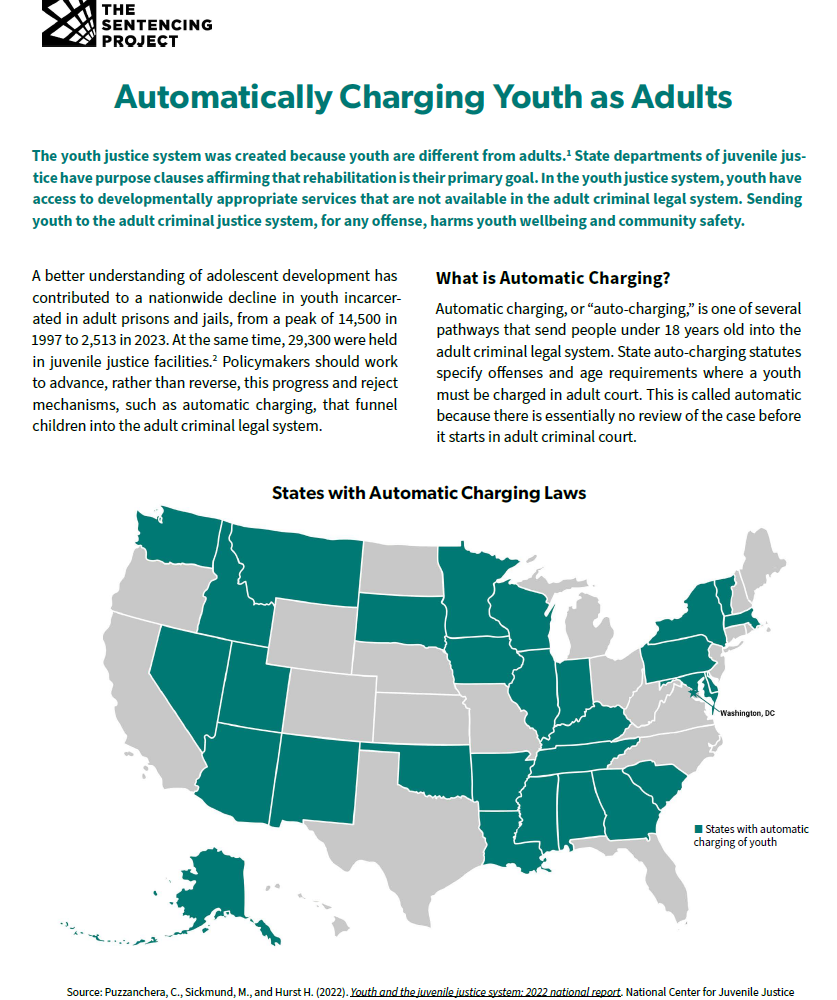
The youth justice system was created because youth are different from adults.1 State departments of juvenile justice have purpose clauses affirming that rehabilitation is their primary goal. In the youth justice system, youth have access to developmentally appropriate services that are not available in the adult criminal legal system. Sending youth to the adult criminal justice system, for any offense, harms youth wellbeing and community safety.

Understanding variation in juvenile life without parole legislation following Miller

By Leah Ouellet, Daphne M. Brydon, Laura S. Abrams, Jeffrey T. Ward, Dylan B. Jackson, Rebecca Turner, J. Z. Bennett, Reese Howard, Ashley Xu


Miller v. Alabama and Montgomery v. Louisiana restricted states’ ability to impose life without parole for youth under age 18 (henceforth JLWOP). Since Miller, 46 pieces of legislation across 34 states and the District of Columbia have altered JLWOP sentencing policies. The current study provides the first comprehensive and scientific review of this legislation. Using policy surveillance as a methodological guide, we found that a majority of statutes (N = 28) ban JLWOP sentencing, above and beyond the Supreme Court's requirement. Many statutes also extended sentencing reforms and post-conviction relief eligibility to other types of sentencing beyond JLWOP. However, all but one statute still allows either JLWOP or life with parole as a sentencing option for minors convicted of homicide crimes and requires between 15 and 40 years, at minimum, to be served before being eligible for release. Grounding our analysis in institutional theory, we argue that the relative punitivity of the JLWOP reforms enacted was associated with measures of JLWOP institutionalization across states (i.e., pre-Miller JLWOP population and pre-Miller sentencing schema), suggesting that states where JLWOP was more routinely used were more resistant to policy reform.

Policy Implications

The current study provides implications for future decarceration efforts. Findings suggest that state legislatures are willing to enact post-conviction relief measures (e.g., judicial review or “second look” measures) for individuals convicted of violent crimes to address over-incarceration, deviating from previous decarceration efforts focused on non-violent, low-level offenses. In spite of the promising window for juvenile justice reform that Miller provided, however, these reforms have taken a relatively modest, incremental approach toward altering extreme youth sentencing practices in the United States. Policy makers and advocates seeking to promote sentencing reform efforts should factor in how highly institutionalized a sentencing practice is in each state, as this might inform effective strategies for policy change.

How Mexican judicial reforms may have fueled crime: Arrest trends and trust erosion

By Catalina Amuedo-Dorantes, Marilyn Ibarra-Caton

Background

Mexico rolled out state-led criminal justice reforms between 2000 and 2017 to modernize procedures and improve rule of law. Whether these changes reduced violent crime—especially in cartel-affected areas—remains uncertain.

Aims

Estimate the impact of reform implementation on homicides and arrests, and assess mechanisms related to enforcement capacity and public cooperation with law enforcement.

Materials & Methods

We build a municipality–year panel (2000–2017) from death certificates (homicides) and administrative records (arrests). Because states adopted reforms at different times, we use difference-in-differences estimators designed for staggered adoption and heterogeneous treatment effects, with rich fixed effects and controls. To probe mechanisms, we analyze nationally representative survey measures of crime reporting, institutional trust, and perceived police/prosecutorial integrity.

Results

Reform implementation is associated with a ~25% increase in homicide rates. Over the same horizon, arrest rates fall by >50%. As homicides are less prone to underreporting than other crimes, the homicide increase is unlikely to be a reporting artifact. Survey evidence shows reduced crime reporting, declining trust in institutions, and more negative views of police and prosecutors; effects are strongest in cartel-affected regions.

Discussion

The pattern is consistent with an erosion of effective enforcement capacity at rollout: fewer arrests and lower public cooperation raise expected returns to violent crime. In high-violence settings, reforms that change procedures without parallel boosts to investigative and prosecutorial capacity—and without safeguards for witnesses—can weaken deterrence.

Conclusion

Mexico’s staggered judicial reforms coincided with higher homicides and sharply lower arrests. Successful reform in violent contexts likely requires coordinated institutional strengthening (policing, prosecution, witness protection), phased implementation with measurable benchmarks, and strategies to sustain public trust and reporting.

Drug decriminalization and policy alienation among frontline police in British Columbia: A qualitative study

By Sarah Ferencz, Alissa Greer, Amanda Butler

This qualitative study examines how frontline police officers in British Columbia experienced and adapted to Canada's first formal drug decriminalization policy 1 year after implementation. Drawing on 30 semi-structured interviews and using thematic analysis with a policy alienation and street-level bureaucracy lens, we analyzed how officers felt alienated from the policy process and coped with this experience as frontline implementers. Key themes show that frontline officers experienced processes of policy alienation in various ways: they felt that the policy was misaligned with their frontline perspectives; the Policy undermined their ability to help people in their communities; and legal ambiguity surrounding the Policy was challenging to navigate. Their coping strategies revealed that officers interpreted and executed decriminalization in divergent ways.

Policy Implications

These findings have important implications for policymakers and police leadership considering drug policy reforms. Officers’ feelings of disempowerment and policy meaninglessness, especially in contexts of legal ambiguity, may lead to inconsistent or inequitable enforcement. Strengthening communication across police ranks is critical. Middle managers may help translate reform goals, identify resource gaps, and support effective coping strategies. Legal clarity should extend beyond policy updates to help officers reconcile overlapping laws and reduce liability concerns. While there are limits to policy consultation with frontline officers within the hierarchical structure of police institutions, reform efforts should still engage with frontline officers’ working logics. Training should address harmful attitudes and misunderstandings of drug use, clarify legal boundaries, and mitigate unintended harms of enforcement. Ultimately, effective drug policy reform in a multi-jurisdictional system requires acknowledging how frontline officers interpret and shape 

 policy within institutional constraints.

Can enhanced street lighting improve public safety at scale?

By John M. MacDonald, Aaron Chalfin, Maya Moritz, Brian Wade, Alyssa K. Mendlein, Anthony A. Braga, Eugenia South

Street crimes are thought to be inBy John M. MacDonald, Aaron Chalfin, Maya Moritz, Brian Wade, Alyssa K. Mendlein, Anthony A. Braga, Eugenia South

Street crimes are thought to be influenced by changes in ambient lighting; yet, most studies have focused on small-scale interventions in limited areas. It remains unclear whether enhanced lighting can improve safety on a larger, jurisdiction-wide scale. This study examined the first 10 months of Philadelphia's citywide rollout of enhanced street lighting. Between August 2023 and May 2024, 34,374 streetlights were upgraded across 13,275 street segments, converting roughly one third of the city's street segments to new LED (light-emitting diode) fixtures that provide clearer and more even lighting. We assessed the impact of these upgrades on total crimes, violent crimes, property crimes, and nuisance crimes. Our findings reveal a 15% decline in outdoor nighttime street crimes and a 21% reduction in outdoor nighttime gun violence following the streetlight upgrades. The streetlight upgrades may have contributed to 5% of the citywide decline in Philadelphia gun violence during the study period. Qualitative data also suggest that resident perceptions of safety and neighborhood vitality improved after new streetlights were installed.

Policy Implications

Although prior research has mostly focused on small-scale implementations, our study demonstrates that improvements in street lighting can significantly reduce crime rates across large urban areas. These results support the adoption of energy-efficient LED street lighting as a crime reduction strategy for cities. Further research is needed to explore the impact of enhanced streetlight interventions on other types of crime and to determine whether the crime reduction benefits are sustained when these upgrades are implemented across the entire City of Philadelphia for an extended period


fluenced by changes in ambient lighting; yet, most studies have focused on small-scale interventions in limited areas. It remains unclear whether enhanced lighting can improve safety on a larger, jurisdiction-wide scale. This study examined the first 10 months of Philadelphia's citywide rollout of enhanced street lighting. Between August 2023 and May 2024, 34,374 streetlights were upgraded across 13,275 street segments, converting roughly one third of the city's street segments to new LED (light-emitting diode) fixtures that provide clearer and more even lighting. We assessed the impact of these upgrades on total crimes, violent crimes, property crimes, and nuisance crimes. Our findings reveal a 15% decline in outdoor nighttime street crimes and a 21% reduction in outdoor nighttime gun violence following the streetlight upgrades. The streetlight upgrades may have contributed to 5% of the citywide decline in Philadelphia gun violence during the study period. Qualitative data also suggest that resident perceptions of safety and neighborhood vitality improved after new streetlights were installed.

Policy Implications

Although prior research has mostly focused on small-scale implementations, our study demonstrates that improvements in street lighting can significantly reduce crime rates across large urban areas. These results support the adoption of energy-efficient LED street lighting as a crime reduction strategy for cities. Further research is needed to explore the impact of enhanced streetlight interventions on other types of crime and to determine whether the crime reduction benefits are sustained when these upgrades are implemented across the entire City of Philadelphia for an extended period
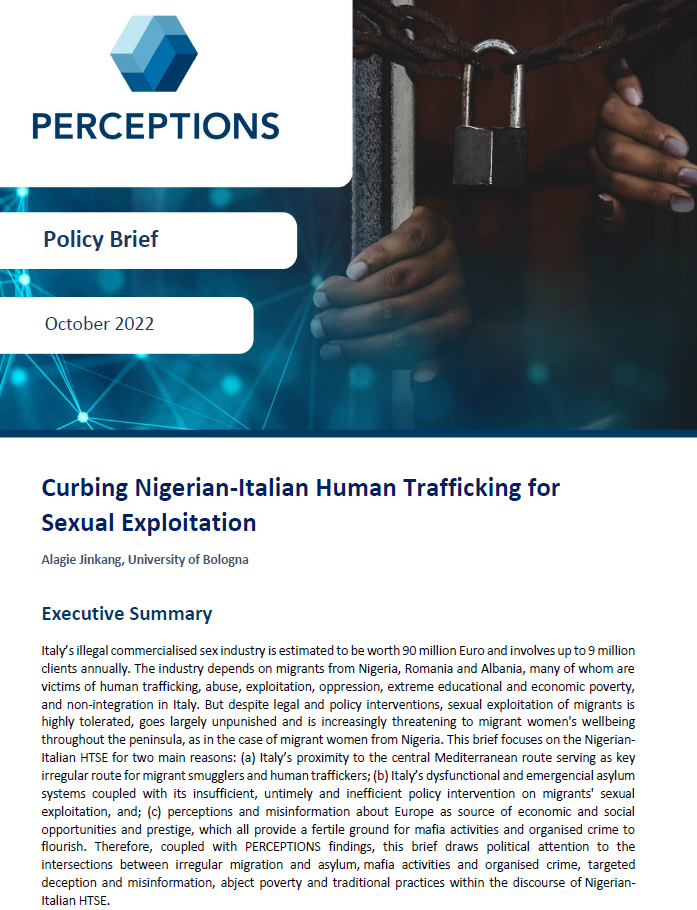
Curbing Nigerian-Italian Human Trafficking for Sexual Exploitation

By Alagie Jinkang

Italy’s illegal commercialised sex industry is estimated to be worth 90 million Euro and involves up to 9 million clients annually. The industry depends on migrants from Nigeria, Romania and Albania, many of whom are victims of human trafficking, abuse, exploitation, oppression, extreme educational and economic poverty, and non-integration in Italy. But despite legal and policy interventions, sexual exploitation of migrants is highly tolerated, goes largely unpunished and is increasingly threatening to migrant women's wellbeing throughout the peninsula, as in the case of migrant women from Nigeria. This brief focuses on the NigerianItalian HTSE for two main reasons: (a) Italy’s proximity to the central Mediterranean route serving as key irregular route for migrant smugglers and human traffickers; (b) Italy’s dysfunctional and emergencial asylum systems coupled with its insufficient, untimely and inefficient policy intervention on migrants' sexual exploitation, and; (c) perceptions and misinformation about Europe as source of economic and social opportunities and prestige, which all provide a fertile ground for mafia activities and organised crime to flourish. Therefore, coupled with PERCEPTIONS findings, this brief draws political attention to the intersections between irregular migration and asylum, mafia activities and organised crime, targeted deception and misinformation, abject poverty and traditional practices within the discourse of NigerianItalian HTSE.

Climate Chains: Mapping the Relationship between Climate, Trafficking in Persons and Building Resilience in the Philippines

By The International Organization for Migration

This report, Climate Chains: Mapping the Relationship between Climate, Trafficking in Persons and Building Resilience in the Philippines, explores the complex links between climate change, livelihood, vulnerability, migration and human trafficking in the Philippines. Commissioned by IOM under the Climate Resilience Against Trafficking and Exploitation (CREATE) project, this study forms part of a broader research focusing on Ethiopia and the Philippines – two countries facing distinct climate challenges: slow-onset droughts and sudden-onset typhoons, respectively.  

The research used a mixed-methods approach including household surveys, interviews and focus group discussions. The report puts forward a conceptual model that links climate events and trafficking through a series of intertwined steps. It identifies a causal chain where climate events disrupt livelihood, increase vulnerability and heighten migration intentions, which can lead to exploitation and trafficking. The research explores how factors linking climate and trafficking operate in the Philippines. 

This study provides critical insights and recommendations for policymakers, donors and organizations in the Philippines and internationally that are working to combat human trafficking and exploitation, while strengthening resilience to climate change

Climate Chains: Mapping the Relationship between Climate, Trafficking in Persons and Building Resilience in Ethiopia

By The International Organization for Migration

This report, Climate Chains: Mapping the Relationship between Climate, Trafficking in Persons and Building Resilience in Ethiopia, explores the complex links between climate change, livelihood, vulnerability, migration and human trafficking in Ethiopia. Commissioned by IOM under the Climate Resilience Against Trafficking and Exploitation (CREATE) project, this study forms part of a broader research focusing on Ethiopia and the Philippines – two countries facing distinct climate challenges: slow-onset droughts and sudden-onset typhoons, respectively.  

The research used a mixed-methods approach including household surveys, interviews and focus group discussions. The report puts forward a conceptual model that links climate events and trafficking through a series of intertwined steps. It identifies a causal chain where climate events disrupt livelihood, increase vulnerability and heighten migration intentions, which can lead to exploitation and trafficking. The research explores how factors linking climate and trafficking operate in Ethiopia. 

This study provides critical insights and recommendations for policymakers, donors and organizations in Ethiopia and internationally that are working to combat human trafficking and exploitation, while strengthening resilience to climate change.

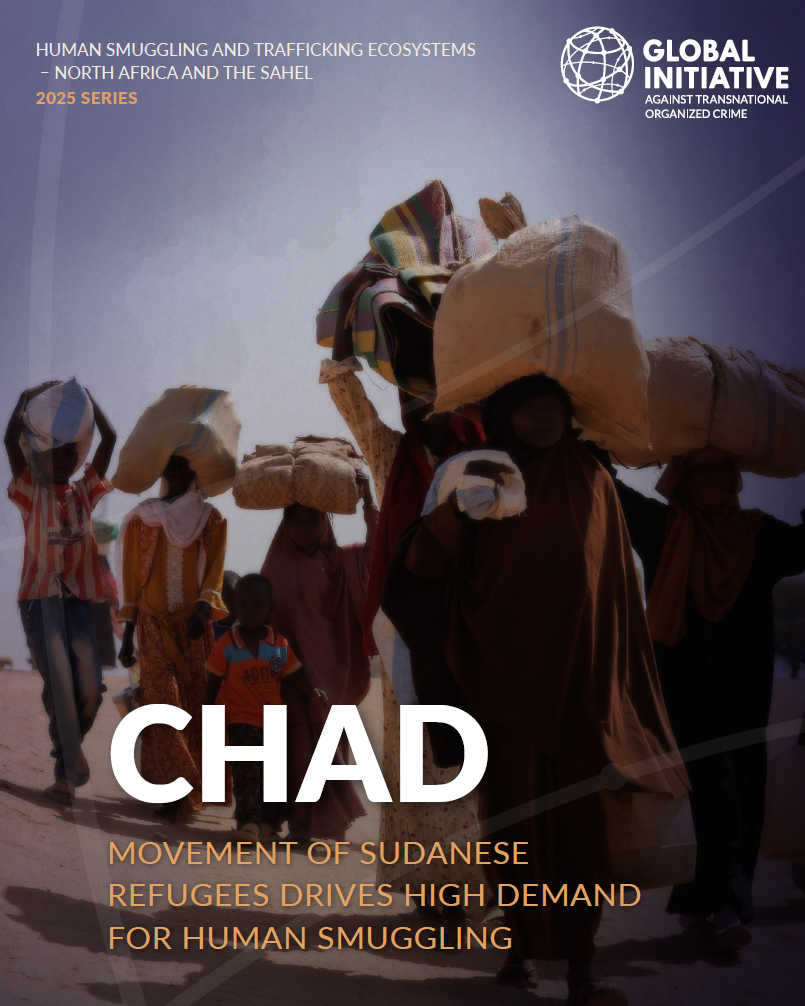
Chad-Movement-of-Sudanese-refugees-drives-high-demand-for-human-smuggling

By Alice Fereday

Chad’s role as a departure and transit country for northbound migration to North Africa and Europe is often overlooked, particularly in comparison to neighbouring Niger and Sudan. However, the country’s position at the crossroads of routes connecting central and eastern Africa to Libya and Niger makes it a significant transit corridor for regional migration, and its role as a bastion of relative stability in an increasingly volatile region has further increased its importance in recent years. Since 2023, the conflict in Sudan and a major influx of refugees into Chad have further shaped these mobility dynamics, making the country a major destination and transit point for Sudanese refugee displacement in the region. At the same time, Chad is navigating a fractious and contested political transition. Political violence escalated in 2024 and remains an important source of tension and political instability. The combination of these complex internal and regional dynamics, and their impact on human smuggling dynamics, make Chad a key country to monitor. A major component of human smuggling dynamics in Chad is internal movements to the country’s northern goldfields. These mobility patterns have typically been shaped by internal factors, including political instability, rebel activity and gold mining.1 This changed in 2023 with the outbreak of the conflict in Sudan and the massive influx of refugees and returnees into eastern Chad. Though northbound movements were temporarily hindered by this shift, which resulted iI emerged as the dominant model of migration in Libya in 2021 and remained so in 2024. Hybrid smuggling refers to the system whereby migrants initially travel to Libya through regular or semi-regular routes, such as flights into airports, and then are moved overland to coastal departure points for the sea crossing to Europe. This system is adaptable to local changes and delivers a consistently high level of attempted departures, despite some localized improvements in security. Critically, the Government of National Unity (GNU), which rules western Libya, continued to struggle with internal division and weak control over crucial areas, especially on the west coast, a key region for human smuggling stretching from the Tunisian border to the city of Zawiya. Political infighting and disputes over state resources 

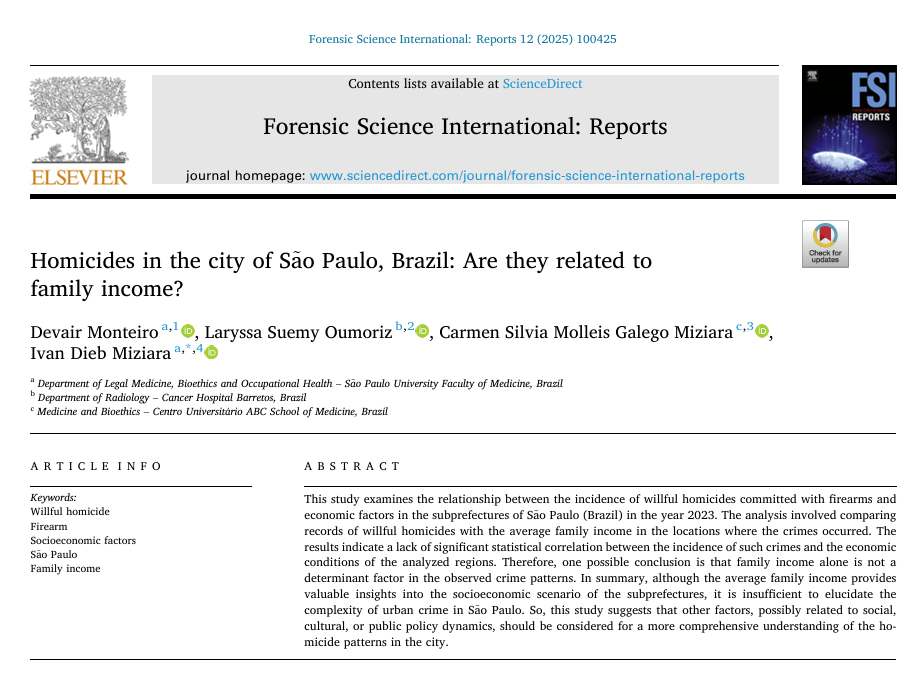
Homicides in the city of Sao ˜ Paulo, Brazil: Are they related to family income?

By Devair Monteiro, Laryssa Suemy Oumoriz , Carmen Silvia Molleis Galego Miziara , Ivan Dieb Miziara

This study examines the relationship between the incidence of willful homicides committed with firearms and economic factors in the subprefectures of São Paulo (Brazil) in the year 2023. The analysis involved comparing records of willful homicides with the average family income in the locations where the crimes occurred. The results indicate a lack of significant statistical correlation between the incidence of such crimes and the economic conditions of the analyzed regions. Therefore, one possible conclusion is that family income alone is not a determinant factor in the observed crime patterns. In summary, although the average family income provides valuable insights into the socioeconomic scenario of the subprefectures, it is insufficient to elucidate the complexity of urban crime in São Paulo. So, this study suggests that other factors, possibly related to social, cultural, or public policy dynamics, should be considered for a more comprehensive understanding of the homicide patterns in the city.

Forensic Science International: Reports, Dec. 2025

Report from the Crime Prevention Research Center.  Concealed Carry Permit Holders Across the United States: 2025

By John R. Lott, et al.

After peaking in 2022, the number of Concealed Carry Permit holders across the United States has declined for the third year in a row. The total now sits at 20.88 million, representing a 2.7% drop from last year. A major factor behind this ongoing decrease is the widespread adoption of Constitutional Carry laws. Following Louisiana’s implementation of permitless carry on July 4, 2024, 29 states now allow residents to carry without a permit. As a result, 46.8% of Americans (157.6 million) now live in Constitutional Carry States, with 67.7% of the land in the country (2.57 million square miles). Although no additional states enacted such laws this year, the broader trend remains unchanged. Unlike gun ownership surveys that may be affected by people’s unwillingness to answer personal questions, concealed handgun permit data is the only really “hard data” that we have, but it becomes a less accurate measure as more states become Constitutional Carry states.

Salt Lake City UK: Crime Prevention Research Center, 2025

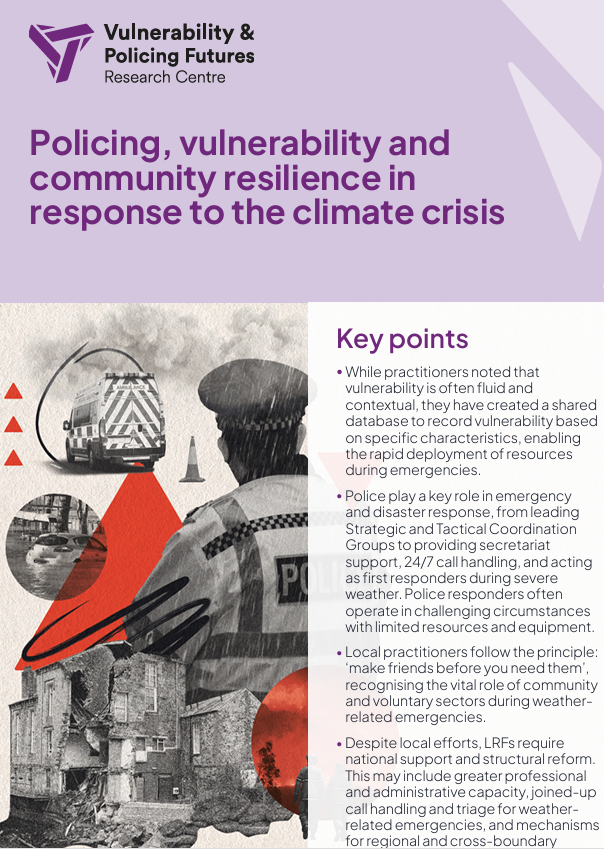
Policing, vulnerability and community resilience in response to the climate crisis

By Ali Malik

The increasing frequency and severity of extreme weather events in the UK, such as storms, flooding, heatwaves, and severe cold spells, recognised as consequences of the climate crisis, have placed significant operational and organisational pressures on police, emergency responders and local authorities. This research adopts an in-depth qualitative case study design and a temporal analogues approach, which draws on past experiences and events to develop an understanding of the present and inform future learning. Doing this provides insights into the role of the police and Local Resilience Forums (LRFs) in preparing for and responding to extreme weather eventsThe findings highlight that LRFs are essential for locally led emergency planning. However, due to resource constraints, these partnerships often rely on relational capital, negotiated agreement and goodwill. Decisive leadership, situational awareness, experience from past events and routine work were also described as key factors for effective emergency response. LRFs cannot mitigate the impacts of the climate crisis without national support. Local preparedness depends on safe homes, green spaces, reliable transport networks and affordable clean energy. The research also points to the need for greater professional, analytical, and specialist support for LRFs, along with targeted funding to resource localised efforts for preparedness, recovery, and long-term climate adaptation.


Measuring the Cost-Effectiveness of New Technologies in Policing: The Case of Automatic License Plate Readers (ALPR)

By Cynthia Lum, Christopher S. Koper, Hyunji Lee, Daniel S. Nagin, Lawrence Sherman

Research Question Can research discover the true cost-effectiveness of new technologies in policing, such as automatic license plate readers (ALPR)? Data We review the findings of many impact tests of introducing ALPR readers in predominantly US police agencies. Methods We place the data in the context of the two key police mandates: public safety and public confidence. We then apply the logic of linking findings specific to the new technology with the two broad mandates. Findings The effect of any technology on police outcomes depends heavily on how it is implemented in the larger context of organizational systems and culture. The effect is also conditioned by a broad body of evidence that the key mandates depend on far broader foundations than on any specific technology. Conclusions Evidence-based policing cannot be built from isolated findings, such as marginal changes in outputs or outcomes associated with new technologies. Linking new technologies to joined-up systems of targeting, testing, and tracking is required before we can ask whether the technologies are cost-effective.

Cambridge Journal of Evidence-Based Policing (2025)

“A Long, Long Way To Go” An Assessment of the Metropolitan Police at the Commissioner’s Mid-Term 

By David Spencer

Summary of Recommendations 1. Given the very poor performance of the Metropolitan Police across a wide range of areas for an extended period – including prior to the present Commissioner’s term of office and particularly in relation to the fight against crime – the Home Secretary should become the “policing body” for the Metropolitan Police. This would remove the Mayor of London’s role in relation to oversight of policing in the capital. Shifting direct political oversight to the Home Secretary, as the minister principally responsible to Parliament for policing and crime, will enable both Government and Parliament to exercise far greater scrutiny and influence over the force’s performance in a way which has the potential to deliver the significant improvements which are required. 2. To enable the Metropolitan Police to shift the force’s principal focus to local crime fighting, the Government should transfer responsibility for the national leadership of the police counterterrorism network from the Metropolitan Police to a national Counter-Terrorism Policing body led by a Chief Constable. 3. The Chief Inspector of Constabulary should return the Metropolitan Police to the “Engage” process – more commonly known as “Special Measures”. The force was, based on performance across several areas, erroneously removed from the “Engage” process inmore commonly known as “Special Measures”. The force was, based on performance across several areas, erroneously removed from the “Engage” process in January 2025. There should be a presumption that all materials relating to the “Engage” process should be made publicly available. The current lack of transparency provides the public with little confidence that the necessary steps are being taken to deliver substantial improvements in the force’s performance. 4. The Home Secretary should order an inspection of the Metropolitan Police’s approach to protest policing using section 54 (2B) Police Act 1996. This should include consideration of both the strategic approach and operational tactics used, including what new strategies and tactics are required to more effectively deal with large-scale and widespread protests. This should consider the strategies and approaches used in other jurisdictions to determine what might be learned and adopted by the force – in particular the willingness of police chiefs to use non-human based means of “creating distance” between officers and protestors. 5. The Commissioner of the Metropolitan Police should review the performance of his most senior leaders and where individuals have been found to have failed to perform to the necessary standard, in some cases over very long periods, they should be replaced at the earliest opportunity. There should also be a substantial change in the approach to performance management for middle and senior leaders in the organisation – including being prepared to more willingly remove officers and staff who fail to deliver the necessary levels of performance, particularly in relation to fighting crime. Data should be published on every senior officer’s performance on crime-fighting throughout their leadership career. There should be a substantial increase in the transparency of the force’s Frontline Policing performance meetings, where local police commanders are questioned on their performance. This should include the publication of performance data, the publication of the meeting’s minutes and the option for members of the public to attend these meetings through online hosting. 
London: Policy Exchange, 2025. 52p.

The role of UK policing in economic growth

By Crest Advisory with RSM UK Consulting

Economic growth is the number one mission of the Government in the UK, seeking to restore stability, increase investment and reform the economy to improve productivity, prosperity, and living standards. This commitment has been made in the context of a sustained period of economic stagnation, throughout which there has been an ongoing conversation as to whether the right levers are being pulled to achieve economic growth. The Office of the Chief Scientific Adviser for the National Police Chiefs’ Council (NPCC) commissioned us to understand the role of policing as a lever - our research seeks to collate existing evidence as well as identify where there are opportunities to develop this evidence in the future. This research also falls within the wider discussion on police funding, police productivity and police reform which is particularly relevant given that the Home Office will be looking to find savings ahead of this year’s spending review as an unprotected government department, ongoing debate about the police funding formula and growing financial pressures on police forces. Science and technology has a significant role to play in police efficiency and effectiveness, but also growth. The NPCC’s Science and Technology Strategy sets a clear ambition for policing “to deliver the most science and technology led police service in the world”. Often, our understanding of policing impact is focused on implementation and public safety outcomes, but economic outcomes have the potential to shift the narrative in terms of how we define an effective and efficient police response. Our work, in partnership with RSM UK Consulting, has sought to understand the evidence between policing and economic outcomes, from which we have produced a logic model to understand these relationships (a logic model conceptualises the links between activities and key outcomes). While we have not been able to estimate the scale of impact of UK policing on economic growth, we hope this logic model can act as a framework for partners to use to further develop the evidence base around the impact of policing on economic outcomes, specifically designing evaluations with these outcomes in mind. In time, this evidence may begin to change how we understand the positive impact of policing on individuals, businesses and communities in England and Wales - with the potential for positive economic outcomes influencing future decisions on funding allocations and commitments to specific policing initiatives and operational interventions. Furthermore, growth could sit alongside efficiency and effectiveness as key metrics for success in policing.

London: Crest Advisory, 2025. 69p.

AI in Policing: international lessons and domestic solutions

By Justice

1. Artificial intelligence (“AI”) is rapidly reshaping public services, and policing is no exception. The pace of innovation, the scale of private sector investment, and the UK Government’s explicit ambition to “mainline AI into the veins of the nation” mean that AI deployment in policing is not a distant prospect but an accelerating reality. This brings significant opportunities: enhanced investigative capability, faster processing of digital evidence, improved risk assessment, and the potential to intervene earlier to prevent harm. Yet it also carries profound risks for human rights, the rule of law, and public trust. The police occupy a uniquely powerful position in our democratic society; integrating AI into that environment without the right safeguards risks entrenching discrimination, undermining lawful decision making, and eroding communities’ confidence in policing2. This report asks a central question: what must be in place for AI in policing to be trustworthy, value for money, effective in achieving policing goals, and compliant with human rights and the fair administration of justice? To answer this, JUSTICE carried out international research, examined domestic developments, and convened stakeholders across policing, government, civil society, regulators, academia, and industry. Across this work, five lessons emerged, each of which signals not only what must be done, but the urgency of acting now while the UK remains at a crossroads.

London: Justice, 2025. 62p.