
Open Access Free Library
CRIME+CRIMINOLOGY.jpeg

CRIME

Violent-Non-Violent-Cyber-Global-Organized-Environmental-Policing-Crime Prevention-Victimization

Mental Disorder And The Criminal Law: A Reader's Guide to Sheldon Glueck’s 1925 study

by Graeme Newman (Author), Sheldon Glueck (Author)

When a court asks whether a defendant was too mentally ill to be responsible, whose knowledge should decide it: the judge's, the jury's, or the doctor's? A reader's guide to the 1925 book that first mapped the whole problem.

In 1925, a young Harvard scholar named Sheldon Glueck published Mental Disorder and the Criminal Law, a study of nearly seven hundred pages on how American courts handle the mentally ill accused. It appeared while the country was arguing over Leopold and Loeb, over rising murder rates, and over Chief Justice Taft's charge that criminal justice was a disgrace to civilization. Glueck asked how courts find out that a defendant is mentally ill, how the legal tests of insanity were made, what psychiatry actually says about the main mental disorders, and what becomes of defendants who are acquitted. His answer was that the law had cut the mind into separate compartments of knowing, feeling and willing, and that reform had to begin with the unity of the mind.

The book is long, technical and dense with footnotes. This Reader's Guide makes it accessible without replacing it. It explains the argument in plain language, supplies the legal and medical background a modern reader may lack, and shows where the reasoning is strong and where it is open to question.

INSIDE THIS GUIDE

  • A reading plan and a chapter-by-chapter map of the original

  • The pretrial-examination law of Massachusetts and what its first 113 examinations found

  • How the tests of insanity were made, from Hale and the "wild beast" to M'Naghten and the American courts

  • The argument that mental processes are a unity, and why it undercuts the old tests

  • A table of the main mental disorders of 1925 and what each meant for criminal responsibility

  • What happens to defendants acquitted by reason of insanity, and the fight over release

  • Glueck's program: neutral experts, a new jury charge, a verdict of partial responsibility, and a commission to decide treatment after conviction

  • A worked example that applies his 1925 jury charge to three imaginary defendants

  • What has changed since 1925, from Durham to the Insanity Defense Reform Act, and the eugenics assumptions the book shared with its time

  • Five common misreadings, a primer of legal terms, a glossary, an annotated reading list, an FAQ, 26 discussion questions and classroom activities

WHO IT'S FOR

Students of law, criminology, psychology, psychiatry and history; teachers and reading groups; and general readers who want to know how the insanity defense came to be the way it is.

PLEASE NOTE

This is an independent guide, not an abridgment or edition of Glueck's book. It does not reproduce the original's text and is not endorsed by the author's heirs or the original publisher. It is meant to be read alongside the original. Download the original book.

Written by Graeme R. Newman with the assistance of Claude, an AI model made by Anthropic. The AI-generated content is disclosed in accordance with Read-Me.Org policy.

Read-Me.Org Inc. New York-Philadelphia-Australia. 2026. p.64.

The Female Offender: A Reader's Guide

The Female Offender: A Reader's Guide
Graeme R. Newman and Claude

In 1895, English readers met The Female Offender, Cesare Lombroso and William Ferrero's notorious study of criminal women. For more than half a century it was the book people reached for when they wanted to know what science had to say about women who broke the law. Today its central claim lies in ruins. That claim held that the most dangerous female criminals were evolutionary throwbacks who could be recognized by their skulls, jaws, and faces. Yet the book remains one of the founding documents of criminology, and one of the most instructive.

This Reader's Guide is an independent companion to the 1895 edition. It is organized around the questions a thoughtful reader is likely to ask:

  • Who were Lombroso and Ferrero, and what was criminal anthropology?

  • What did the authors measure, and on whom?

  • Why did they find the "criminal type" so much rarer in women than in men?

  • How did they explain the born criminal, the occasional offender, hysteria, crimes of passion, suicide, and madness?

The guide follows the authors through skull measurements, photographs, and case histories. It shows how biased samples, missing comparison groups, circular definitions, and selective storytelling produced conclusions that confirmed what the authors already believed about women, race, and the poor. It also asks what, if anything, survives. The authors' observations on poverty, domestic service, coercive partners, and women's lower rates of crime anticipated later research, even when their explanations failed.

Later chapters trace the book's long influence on twentieth-century thinking about women and crime, from the Gluecks and Otto Pollak to the feminist critics of the 1970s. They also draw lessons for today's attempts to predict criminality from faces and algorithms.

The guide includes study questions, a glossary, notes on the people and cases the authors cite, and suggestions for further reading. It is written for students, teachers, and general readers in criminology, gender studies, history of science, and the history of crime and punishment.

The complete 1895 text is freely available from Read-Me.Org. Download it here.

Read-Me.Org Inc. New York-Philadelphia-Australia. 2026. p.77.

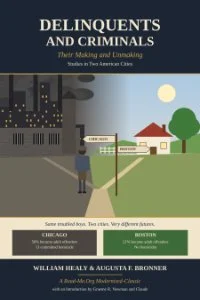
Delinquents And Criminals: Their Making and Unmaking

A Read-Me.Org Modernized-Classic. Abridged and adapted with an Introduction by Graeme R. Newman and Claude . William Healy and Augusta F. Bronner authors of the original book.

Delinquents and Criminals: Their Making and Unmaking is one of the most important and surprisingly modern works in the history of criminology. First published in 1926, pioneering researchers William Healy and Augusta F. Bronner asked a question that still challenges criminal justice systems today: What actually works in preventing young offenders from becoming adult criminals?

Drawing on the lives of hundreds of juvenile offenders tracked over many years in Chicago and Boston, the authors conducted one of America's first large-scale outcome studies of delinquency. Their findings were startling. Many young offenders who passed through courts, reform schools, and correctional institutions went on to criminal careers, while others successfully rebuilt their lives. Most striking was the discovery that similar youths experienced dramatically different outcomes depending on how their communities treated them.

This modernized edition brings Healy and Bronner's landmark study to contemporary readers in clear, accessible language while preserving the authors' original arguments, evidence, and conclusions. Their analysis challenges many popular assumptions about crime. They found little evidence that criminal careers were determined by heredity, nationality, religion, poverty alone, or innate character. Instead, they emphasized the importance of family life, peer influence, community conditions, probation, supervision, and effective intervention.

A century later, the book remains remarkably relevant. Its themes anticipate modern debates about evidence-based justice, rehabilitation, juvenile detention, parole, foster care, and crime prevention. Many policies now considered innovative were already being advocated by Healy and Bronner in the 1920s.

This abridged and modernized Read-Me.Org edition includes a new introduction, explanatory notes, and discussion questions that place the work in both its historical and contemporary context.

A fascinating classic for students, scholars, criminal justice professionals, policy makers, and anyone interested in how societies create, prevent, and respond to crime. Download the Original Book here.

Read-Me.Org Inc. New York-Philadelphia-Australia. 2026. p.74.

Crimes Against Children

by Clifford K. Dorne, with a Foreword by Graeme R. Newman

Why has American society so often treated child abuse as a family problem to be managed rather than a crime to be punished? In this pioneering study, first published in 1989 by Harrow and Heston, Clifford Dorne traces how the nation's response to child maltreatment was shaped by competing professions: social workers, physicians, psychiatrists, legislators, police, and the courts.

Dorne begins by untangling the overlapping definitions of abuse, neglect, molestation, incest, and institutional abuse. He then follows the history of child protection from the houses of refuge and child labor campaigns of the nineteenth century, through the founding of the Societies for the Prevention of Cruelty to Children and the invention of the juvenile court, to the "medicalization" of abuse after the discovery of the battered child syndrome. Later chapters examine reporting laws, child protective services, the criminal prosecution of abusers, and what criminology has learned about the causes and lasting effects of maltreatment.

Written as a blueprint for university courses, the book is notable for bringing the neglected criminal justice perspective into a field long dominated by social welfare and medicine. Graeme Newman's foreword praises it as thorough, clear, and concise. It remains a valuable record of how the modern child protection system came to be.

Read-Me.Org Inc. New York-Philadelphia-Australia. 2026. p. 267.

Crime: Its Causes and Remedies

A Lombroso Mini-Classic by Graeme R. Newman and Claude

Cesare Lombroso was one of the founders of modern criminology—and one of its most controversial figures. Best remembered for his theory of the “born criminal,” Lombroso also devoted enormous attention to the social, economic, environmental, and institutional forces that shape criminal behavior.

First published in English in 1911, Crime: Its Causes and Remedies ranges remarkably widely. Lombroso examines climate, poverty and wealth, alcohol, education, family background, heredity, age, sex, immigration, urbanization, prisons, political conditions, and criminal associations. He then turns from explanation to prevention, asking what governments and criminal justice systems can actually do about crime.

This Read-Me.Org Modernize Classic makes Lombroso’s sprawling original accessible to a new generation. The abridged and adapted edition follows the three-part structure of the original—the causes of crime, its prevention and treatment, and the application of criminal anthropology to punishment—while providing historical context and critical commentary.

Lombroso’s work contains ideas that now seem strikingly modern alongside others—including his racial theories and biological determinism—that have long been rejected. The result is not merely a historical curiosity, but a fascinating case study in the possibilities and dangers of attempting to make crime a subject of scientific measurement. The volume also considers Lombroso’s continuing relevance to contemporary questions about imprisonment, alcohol and violence, environmental influences on crime, risk prediction, and the relationship between biology and behavior.

A compact introduction to a foundational—and deeply controversial—work in the history of criminology. Download the original book here.

Read-Me.Org Inc. New York-Philadelphia-Australia. 2026. p.72.

The War Within: Mexican Drug Cartels and the Impact of the Drug Trade on Society and Governance

By Haris Mohammad

This thesis examines the origins, activities, and societal impacts of Mexican drug cartels, while assessing the effectiveness of governmental and international responses to their development and influence. This thesis examines the evolution of the cartels, starting with their collaboration with traffickers in Colombia and concluding with their supremacy in the global drug trade. The investigation elucidates the social and
political factors that have facilitated their growth. These factors include pervasive corruption, economic
disparities, and inadequate governance, all of which have fostered an environment conducive to the emergence of cartels. This thesis examines the detrimental effects of cartel involvement on Mexican
communities. These impacts include pervasive violence, societal disintegration, public health challenges stemming from substance addiction, and economic exploitation. Furthermore, it critiques the limitations of military anti-narcotics approaches, emphasizing the unintended consequences of these measures, including heightened violence and the emergence of power vacuums within the system. The research elucidates
the recruitment methods, operational tactics, and the cartels' integration into Mexican society via the use of
sociological and criminological ideas. The thesis advocates for the implementation of a comprehensive plan to counteract cartel influence. This plan must include socioeconomic transformations, government transparency, and international collaboration. This thesis aims to enhance understanding of cartel dynamics to contribute to the global battle against organized crime and to provide sustainable solutions that foster stability and justice in Mexico.

The Drug Lords of Mexico: Implications of Drug Trafficking on the Lives of Mexicans

By Riya Parashar

The shared border between Mexico and the United States plays a significant role in facilitating drug production, trafficking, and consumption. Most illicit drugs destined for the United States are either produced
in Mexico or transit through it, making the region a critical hub in the global drug trade. This strategic position
has long attracted various criminal organizations that exploit the border's extensive and often difficult-to monitor terrain to transport narcotics. In recent years, the growing involvement of organized
criminal groups in drug trafficking has emerged as one of the most pressing public concerns along the Mexico–U.S. border.

These groups have become increasingly sophisticated, employing advanced smuggling techniques and
corrupting officials to maintain their operations. While the majority of drug-related violence remains concentrated within Mexico, it has raised serious concerns among U.S. policymakers about the potential
“spillover” of violence into American border communities, threatening regional stability and public safety. This research aims to analyze drug trafficking from Mexico to the United States and to examine its impact on Mexican society. The paper begins with an overview of the Mexico–U.S. border, highlighting its geographical and political significance as a major point of transit and control. It then traces the historical development of drug trafficking in Mexico, exploring how shifts in policy, enforcement, and criminal networks have shaped the current landscape.

Following this, the study provides an examination of the current dynamics of the drug trade, including major sources, trafficking routes, and the roles of different cartels. The analysis extends to the evolving landscape of violence and organized crime in Mexico, emphasizing the social and human costs borne by Mexican citizens, such as displacement, insecurity, and economic disruption. In addition, the research explores governmental initiatives aimed at curbing drug trafficking, assessing their effectiveness and limitations amid complex political and social challenges. Finally, it examines the impact of the COVID-19 pandemic on drug trafficking networks, production, and distribution in Mexico, considering how global disruptions have contributed to a deeper understanding of the politics of drug trafficking in Mexico and its broader implications for regional security and bilateral relations. altered trafficking patterns and law enforcement responses. By addressing these dimensions, the paper seeks to contribute to a deeper understanding of the politics of drug trafficking in Mexico and its broader implications for regional security and bilateral relations.

Illegal Markets for cigarettes and e-cigarettes

By Donald Kenkela, and Grace Phillips

This paper discusses the long- standing illegal markets for cigarettes and the more recently emerged illegal markets for e- cigarettes. We identify three distinctive market fundamentals that help explain many features of the illegal markets. First, in contrast to some illegal goods, many countries have sizable legal markets for cigarettes and e-cigarettes alongside the illegal markets. In 2024, tobacco products generated almost $1 trillion in revenues; e- cigarettes generated $26 billion dollars. It is estimated that illegal markets account for about 10 percent of global cigarette consumption. Second, the illegal markets have arisen to evade high excise taxes that increase prices and regulations that restrict the availability of desirable features of legal products. The taxes and regulations have been adopted as public health measures with the goal of reducing tobacco consumption; however, these same policies drive the formation of illegal markets. Third, demand- side linkages mean that taxation, regulatory, and enforcement policies targeted at legal and illegal markets
for cigarettes will affect legal and illegal markets for e-cigarettes, and vice versa. The connection between the
markets means regulatory policy for one product can drive consumers both to the illegal market for the product and to the legal and illegal market for the other product.

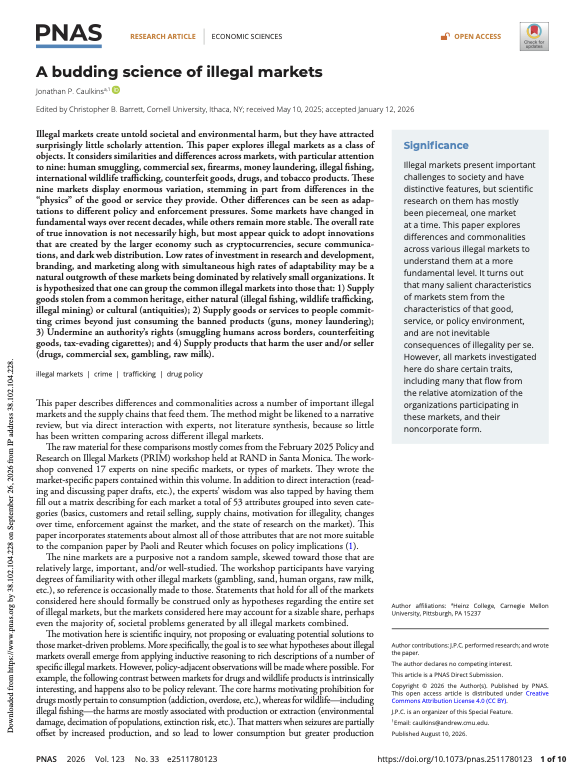
A budding science of illegal markets

By Jonathan P. Caulkins

Illegal markets create untold societal and environmental harm, but they have attracted surprisingly little scholarly attention. This paper explores illegal markets as a class of objects. It considers similarities and differences across markets, with particular attention to nine: human smuggling, commercial sex, firearms, money laundering, illegal fishing, international wildlife trafficking, counterfeit goods, drugs, and tobacco products. These nine markets display enormous variation, stemming in part from differences in the “physics” of the good or service they provide. Other differences can be seen as adaptations to different policy and enforcement pressures. Some markets have changed in fundamental ways over recent decades, while others remain more stable. The overall rate of true innovation is not necessarily high, but most appear quick to
adopt innovations that are created by the larger economy such as cryptocurrencies, secure communications, and dark web distribution. Low rates of investment in research and development, branding, and marketing along with simultaneous high rates of adaptability may be a natural outgrowth of these markets being dominated by relatively small organizations. It is hypothesized that one can group the common illegal markets into those that: 1) Supply goods stolen from a common heritage, either natural (illegal fishing,
wildlife trafficking, illegal mining) or cultural (antiquities); 2) Supply goods or services to people committing crimes beyond just consuming the banned products (guns, money laundering); 3) Undermine an authority’s rights (smuggling humans across borders, counterfeiting goods, tax-evading cigarettes); and 4) Supply products that harm the user and/or seller (drugs, commercial sex, gambling, raw milk).

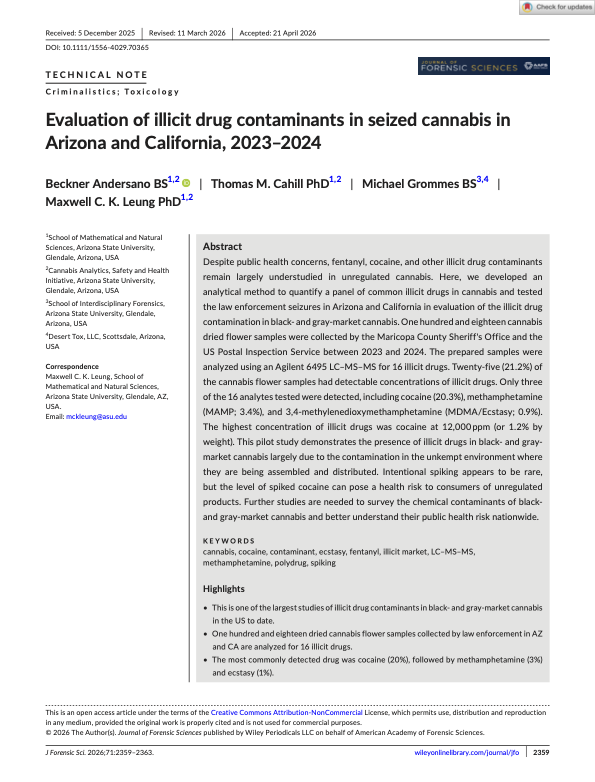
Evaluation of illicit drug contaminants in seized cannabis in Arizona and California, 2023–2024

By: Beckner Andersano , Thomas M. Cahill , Michael Grommes , Maxwell C. K. Leung

Despite public health concerns, fentanyl, cocaine, and other illicit drug contaminants remain largely understudied in unregulated cannabis. Here, we developed an analytical method to quantify a panel of common illicit drugs in cannabis and tested the law enforcement seizures in Arizona and California in evaluation of the illicit drug contamination in black- and gray-market cannabis. One hundred and eighteen
cannabisdried flower samples were collected by the Maricopa County Sheriff's Office and theUS Postal Inspection Service between 2023 and 2024. The prepared samples wereanalyzed using an Agilent 6495 LC–MS–MS for 16 illicit drugs. Twenty-five (21.2%) of the cannabis flower samples had detectable concentrations of illicit drugs. Only three of the 16 analyses tested were detected, including cocaine (20.3%), methamphetamine(MAMP; 3.4%), and 3,4-methylenedioxymethamphetamine(MDMA/Ecstasy; 0.9%) .The highest concentration of illicit drugs was cocaine at 12,000 ppm (or 1.2% byweight). This pilot study demonstrates the presence of illicit drugs in black- and gray-market cannabis largely due to the contamination in the unkempt environment where they are being assembled and distributed. Intentional spiking appears to be rare, but the level of spiked cocaine can pose a health risk to consumers of unregulated products. Further studies are needed to survey the chemical contaminants of black-and gray-market cannabis and better understand their public health risk nationwide.

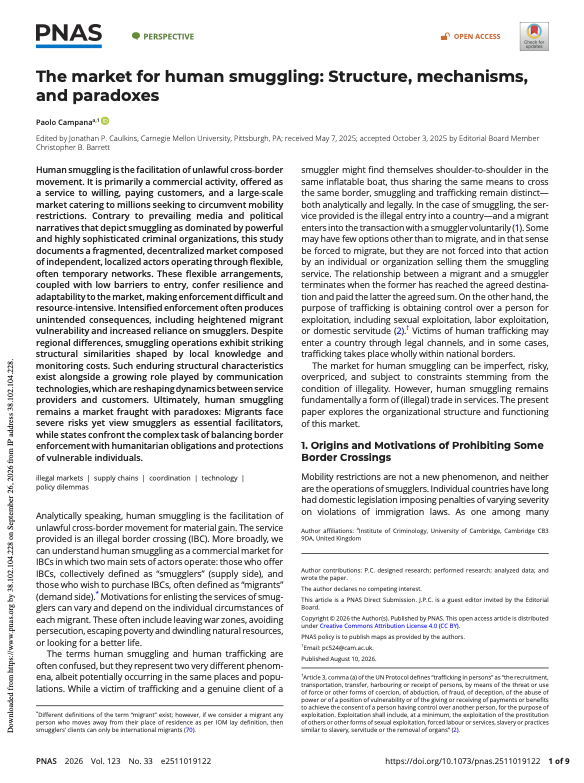
The market for human smuggling: Structure, mechanisms, and paradoxes

By Paolo Campana

Human smuggling is the facilitation of unlawful cross- border movement. It is primarily a commercial activity, offered as a service to willing, paying customers, and a large- scale market catering to millions seeking to circumvent mobility restrictions. Contrary to prevailing media and political narratives that depict smuggling as dominated by powerful and highly sophisticated criminal organizations, this study documents a fragmented, decentralized market composed of independent, localized actors operating through flexible, often temporary networks. These flexible arrangements, coupled with low barriers to entry, confer resilience and adaptability to the market, making enforcement difficult and resource- intensive. Intensified enforcement often produces unintended consequences, including heightened migrant vulnerability and increased reliance on smugglers. Despite regional differences, smuggling operations exhibit striking structural similarities shaped by local knowledge and monitoring costs. Such enduring structural characteristics exist alongside a growing role played by communication technologies, which are reshaping dynamics between service providers and customers. Ultimately, human smuggling remains a market fraught with paradoxes: Migrants face severe risks yet view smugglers as essential facilitators severe risks yet view smugglers as essential facilitators, while states confront the complex task of balancing border enforcement with humanitarian obligations and protections of vulnerable individuals.

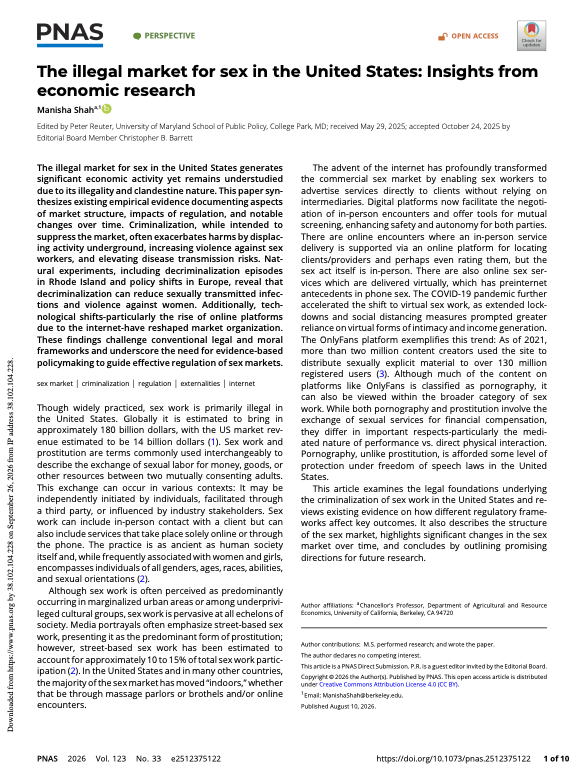
The illegal market for sex in the United States: Insights from economic research

By Manisha Shah

The illegal market for sex in the United States generates significant economic activity yet remains understudied due to its illegality and clandestine nature. This paper synthesizes existing empirical evidence
documenting aspects of market structure, impacts of regulation, and notable changes over time. Criminalization, while intended to suppress the market, often exacerbates harms by displacing activity
underground, increasing violence against sex workers, and elevating disease transmission risks. Natural experiments, including decriminalization episodes in Rhode Island and policy shifts in Europe, reveal that decriminalization can reduce sexually transmitted infections and violence against women. Additionally, technological shifts-particularly the rise of online platforms due to the internet-have reshaped market organization. These findings challenge conventional legal and moral frameworks and underscore the need for evidence-based policymaking to guide effective regulation of sex markets.

The illegal market for sex in the United States generates significant economic activity yet remains understudied due to its illegality and clandestine nature. This paper synthesizes existing empirical evidence documenting aspects of market structure, impacts of regulation, and notable changes over time. Criminalization, while intended to suppress the market, often exacerbates harms by displacing activity underground, increasing violence against sex workers, and elevating disease transmission risks. Natural experiments, including decriminalization episodes in Rhode Island and policy shifts in Europe, reveal that
decriminalization can reduce sexually transmitted infections and violence against women. Additionally, technological shifts-particularly the rise of online platforms due to the internet-have reshaped market organization. These findings challenge conventional legal and moral frameworks and underscore the need for evidence-based policymaking to guide effective regulation of sex markets.

Stability and turbulence in illegal drug markets

By Beau Kilmer

This article provides a primer on illegal drug markets, with a focus on the structure and nature of these markets and the enterprises involved. The markets for illegal drugs are large, with annual retail expenditures likely exceeding $100 billion in the United States alone. Many drugs are easy to produce, and their high value- to-weight ratios make them attractive to smugglers. Some features of illegal drug markets have been quite stable, such as the small size of retail purchases, in part because most sales are to people who use frequently and typically do not buy in bulk. Between production and consumption, most of these substances cross multiple borders—and often continents—and the mark- ups along the supply chain continue to be substantial. But there have been major changes over the past 15 y. While illegally manufactured synthetic drugs are not new, the proliferation of fentanyl and other synthetic opioids created an overdose crisis in
North America and has other countries on high alert. The internet has also made producing and accessing a wide range of drugs and their precursor chemicals easier. The emergence of cryptocurrencies has created new opportunities to hide transactions and launder the proceeds. In addition to highlighting the stability and turbulence in these markets, this article offers ideas for future research and emphasizes the need for monitoring purity-adjusted drug prices, which is critical for understanding supply changes and evaluating
interventions in these markets.

A descriptive analysis for the markets for counterfeit products

By Jay P. Kennedy

Product counterfeiting is a pervasive crime that involves the unauthorized use of a legitimate trademark, a violation of intellectual property rights. Counterfeiting is also one of many forms of global illicit trade, mirroring legitimate markets in structure and reach. Counterfeit goods span nearly every product category from luxury items and electronics to pharmaceuticals and military components, posing risks that range from consumer deception to threats to public health. The globalization of commerce and trade and the rise of e-commerce and social media have significantly expanded counterfeiters’ reach, enabling them to exploit legitimate supply chains and marketplaces and reach consumers around the world. The production and
distribution of counterfeit goods often involve sophisticated networks, including legitimate businesses and transnational criminal organizations, and are sometimes linked to human trafficking and forced labor. Despite regulatory efforts and public–private partnerships aimed at curbing counterfeiting, enforcement remains challenging due to the complexity of global supply chains and the difficulty in distinguishing counterfeit operations from legitimate ones. This article describes what product counterfeiting is and addresses how
markets for counterfeit goods represent an illicit parallel market that is in many ways intermingled with aspects of legitimate markets. The role of consumers as drivers of demand for counterfeits is addressed, and motivations for consumers’ willful purchase of counterfeit goods are explored. This article also provides exploratory insights about the supply chains for some of these products

The money laundering market: An economic analysis

By Joras Ferwerda

Criminals launder their proceeds from crime, either themselves or by paying a professional, to disguise the link between the criminal, the crime, and the proceeds. This allows the criminal to spend the proceeds more freely and lowers the chance of receiving unwanted attention from the authorities. This paper investigates the structure and dynamics of the understudied market for money laundering services. The analysis reveals that this illegal market is demand-driven and fragmented, with different forms of laundering, each requiring different steps with varying levels of risk. High search costs, specialized money launderers, and uncertainties lead to local monopolies. Demand tends to be relatively inelastic because criminals eventually need laundering services to spend their proceeds. Local monopolies, inelastic demand, and poor information flows
lead to relatively high prices for laundering. Trust issues and two-sided asymmetric information lead to a market with relationships that tend to last longer than generally expected in illegal markets.

Casting light on the workings of illegal fishing markets

By: Philippe Le Billona, Zelda Ladefoged, and U. Rashid Sumailac

About 3.5 million fishing vessels ply the world’s oceans, providing livelihoods and food for millions of people.
Sound management is key to fisheries’ sustainability, but illegal fishing, along with fishing overcapacity generally and environmental change, are putting many fisheries at risk. Illegal fishing is a globally pervasive yet unevenly distributed phenomenon, manifesting in diverse forms across both small- scale and industrial- scale fleets, the latter accounting for about 82 to 93% of the 8.4 to 15.4 million metric tons global annual illicit marine wild fish seafood trade valued at US$6.2 to 12.2 billion. The massive rise in fishing effort since 1950 has not been matched by adequate regulations and enforcement, especially for industrial scale fishing in the waters of developing countries. About two- thirds of the illicit trade by value originates from fishing grounds in West Africa (27%), East Asia (24%), and Southeast Asia (16%). Remote sensing and AI technologies are improving detection of illegal fishing, but enforcement remains an issue given its high costs and the relative ease of laundering illegal catch through transshipments at sea, poorly regulated ports, and fraudulent documentation along seafood supply chains. Illegal fishing markets require multilayered policy responses grounded in transparency, international cooperation, and socioeconomic justice. Proposed measures, ranging from mandatory electronic vessel identification and subsidy reform to artisanal fishery protections and stronger port controls, warrant further research into their implementation and effectiveness.

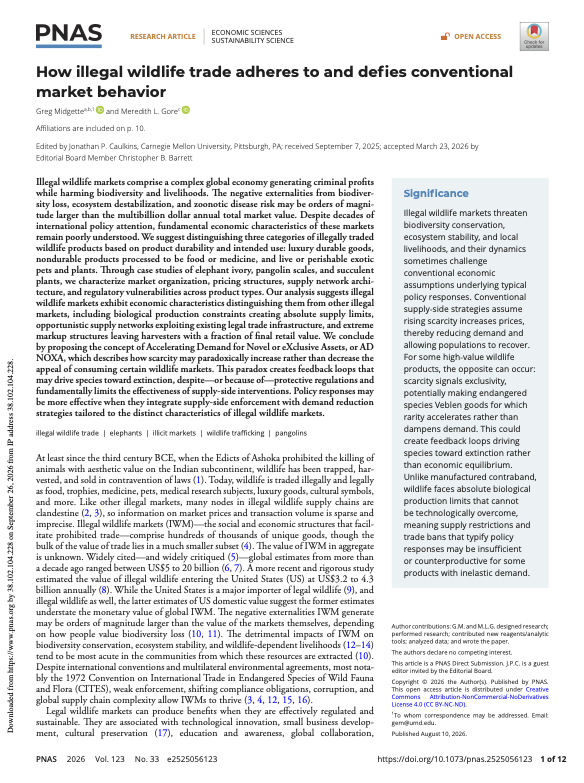
How illegal wildlife trade adheres to and defies conventional market behavior

By Greg Midgette and Meredith L. Gore

Illegal wildlife markets comprise a complex global economy generating criminal profits while harming biodiversity and livelihoods. The negative externalities from biodiversity loss, ecosystem destabilization, and zoonotic disease risk may be orders of magnitude larger than the multibillion dollar annual total market value. Despite decades of international policy attention, fundamental economic characteristics of these markets remain poorly understood. We suggest distinguishing three categories of illegally traded wildlife products
based on product durability and intended use: luxury durable goods, nondurable products processed to be food or medicine, and live or perishable exotic pets and plants. Through case studies of elephant ivory, pangolin scales, and succulent plants, we characterize market organization, pricing structures, supply network architecture, and regulatory vulnerabilities across product types. Our analysis suggests illegal wildlife markets exhibit economic characteristics distinguishing them from other illegal markets, including biological production constraints creating absolute supply limits, opportunistic supply networks exploiting existing legal trade infrastructure, and extreme markup structures leaving harvesters with a fraction of final
retail value. We conclude by proposing the concept of Accelerating Demand for Novel or eXclusive Assets, or AD NOXA, which describes how scarcity may paradoxically increase rather than decrease the appeal of
consuming certain wildlife markets. This paradox creates feedback loops that may drive species toward extinction, despite—or because of—protective regulations and fundamentally limits the effectiveness
of supply-side interventions. Policy responses may be more effective when they integrate supply-side enforcement with demand reduction strategies tailored to the distinct characteristics of illegal wildlife markets.

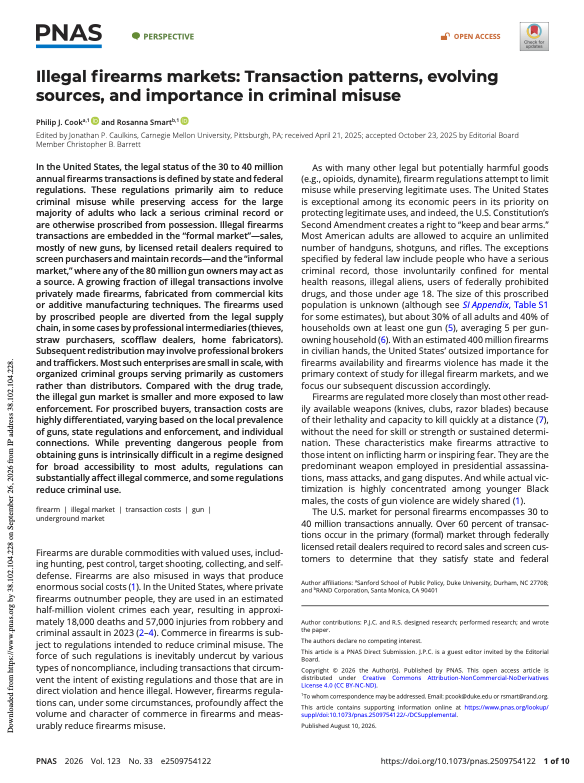
Illegal Firearms Markets. Transaction Patterns, Evolving Sources, and Importance in Criminal Misuse

By Philip J. Cook, and Rosanna Smart

In the United States, the legal status of the 30 to 40 million annual firearms transactions is defined by state and federal regulations. These regulations primarily aim to reduce criminal misuse while preserving access for the large majority of adults who lack a serious criminal record or are otherwise proscribed from possession. Illegal firearms transactions are embedded in the “formal market”—sales, mostly of new guns, by licensed retail dealers required to screen purchasers and maintain records—and the “informal market,” where any of the 80 million gun owners may act as a source. A growing fraction of illegal transactions involve privately made firearms, fabricated from commercial kits or additive manufacturing techniques. The
firearms used by proscribed people are diverted from the legal supply chain, in some cases by professional intermediaries (thieves, straw purchasers, scofflaw dealers, home fabricators). Subsequent redistribution may involve professional brokers and traffickers. Most such enterprises are small in scale, with organized criminal groups serving primarily as customers rather than distributors. Compared with the drug trade, the illegal gun market is smaller and more exposed to law enforcement. For proscribed buyers, transaction costs are highly
differentiated, varying based on the local prevalence of guns, state regulations and enforcement, and individual connections. While preventing dangerous people from obtaining guns is intrinsically difficult in a regime designed for broad accessibility to most adults, regulations can substantially affect illegal commerce, and some regulations reduce criminal use.

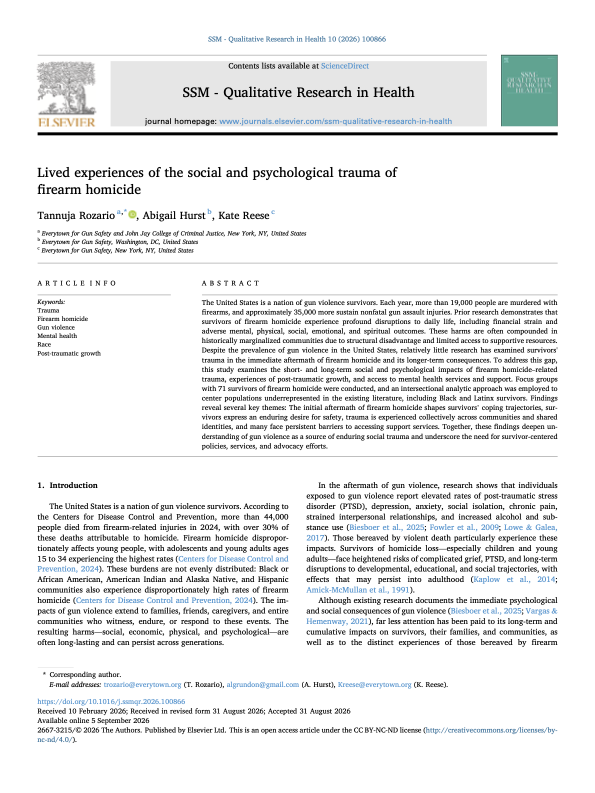
Lived experiences of the social and psychological trauma of firearm homicide

By Tannuja Rozario, Abigail Hurst and Kate Reese

The United States is a nation of gun violence survivors. Each year, more than 19,000 people are murdered with firearms, and approximately 35,000 more sustain nonfatal gun assault injuries. Prior research demonstrates that survivors of firearm homicide experience profound disruptions to daily life, including financial strain and adverse mental, physical, social, emotional, and spiritual outcomes. These harms are often compounded in historically marginalized communities due to structural disadvantage and limited access to supportive
resources. Despite the prevalence of gun violence in the United States, relatively little research has examined survivors' trauma in the immediate aftermath of firearm homicide and its longer-term consequences. To address this gap, this study examines the short- and long-term social and psycholog experiences of the social and psychological trauma of firearm homicideical impacts of firearm homicide–related trauma, experiences of post-traumatic growth, and access to mental health services and support. Focus groups with 71 survivors of firearm homicide were conducted, and an intersectional analytic approach was employed to center populations underrepresented in the existing literature, including Black and Latinx survivors.
Findings reveal several key themes: The initial aftermath of firearm homicide shapes survivors’ coping trajectories, survivors express an enduring desire for safety, trauma is experienced collectively across
communities and shared identities, and many face persistent barriers to accessing support services. Together, these findings deepen understanding of gun violence as a source of enduring social trauma
and underscore the need for survivor-centered policies, services, and advocacy efforts.

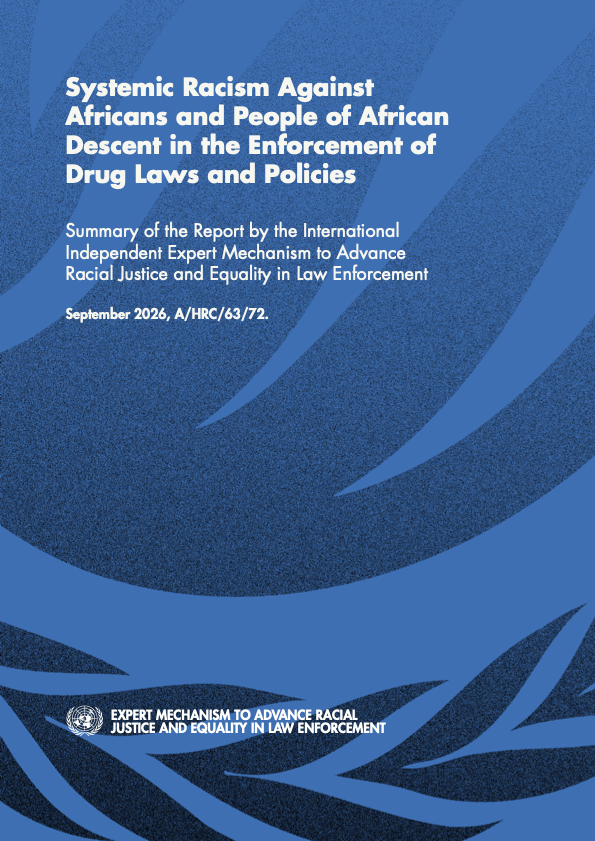
Systemic racism against Africans and people of African descent in the enforcement of drug laws and policies

By United Nations EMLER

In the present report, the International Independent Expert Mechanism to Advance Racial Justice and Equality in Law Enforcement examines how racism is embedded in drug control systems and shapes their impacts on Africans and people of African descent. It begins by exploring the root causes of racial discrimination in drug policy, including the legacies of colonialism, the racialization of drugs, the influence of militarized approaches and the “war on drugs”. The Mechanism then analyses manifestations of racial discrimination across the criminal justice system. Building on this analysis, it examines the intersection of drug policy with other grounds of discrimination, such as gender, highlighting how intersecting forms of discrimination can increase the risk of human rights violations. The Mechanism also identifies factors that exacerbate these harms and concludes by highlighting promising practices and policy approaches aimed at
addressing racial discrimination and advancing more equitable and rights-based drug policies. The present report also includes information on the activities of the Mechanism since its previous report.