Open Access Publisher and Free Library
Fiction+Mediajpg.jpg

FICTION and MEDIA

CRIME AND MEDIA — TWO PEAS IN A POD

Posts in adventure
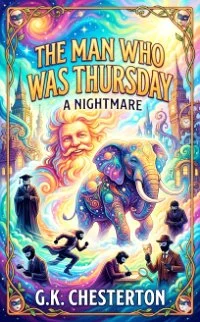
The Man Who Was Thursday-A Nightmare:

By G. K. Chesterton

In the fog-shrouded heart of Edwardian London, a secret war is being waged—not just with bombs, but with beliefs. Gabriel Syme, a poet turned undercover policeman, successfully infiltrates the dreaded Central Anarchist Council, a shadowy group of seven men named for the days of the week. Taking his seat as "Thursday," Syme prepares for a deadly game of cat and mouse, only to find himself trapped in a reality that is unraveling at the seams.

In this metaphysical "nightmare," nothing is as it seems. Beneath every mask lies another, and every conspirator hides a secret more baffling than the last. As the chase moves from the city streets to a phantasmagoric countryside, Syme must confront the ultimate enigma: the massive, jovial, and terrifying President Sunday. Is Sunday the world’s greatest destroyer, or its ultimate protector?

G.K. Chesterton’s masterpiece is a riotous, mind-bending journey that transforms a political thriller into a profound celebration of the divine paradox. Brimming with wit and wonder, it remains a timeless defense of sanity in a world that often feels like a dream.

Read-Me.Org Inc. New York-Philadelphia-Australia. 2026. 170p.

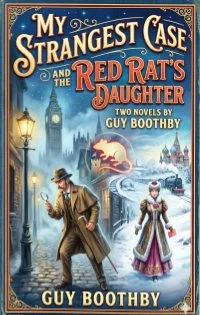
My Strangest Case & The Red Rat's Daughter


by Guy Boothby (Author), Colin Heston (Introduction)

To step into the world of Guy Boothby is to step into a whirlwind. At the turn of the 20th century, few authors could match Boothby's sheer velocity. A man who famously dictated his novels into a phonograph to keep pace with his imagination, Boothby was the architect of the "sensation novel," bridging the gap between the gothic mysteries of the past and the fast-paced thrillers of the future. This volume brings together two of his most gripping works: My Strangest Case and The Red Rat's Daughter. While different in setting, they share the quintessential Boothby hallmarks—exotic locales, high-stakes intrigue, and the relentless pursuit of justice (or survival).

The George Fairfax Mystery: My Strangest Case
In My Strangest Case, we are introduced to George Fairfax, a detective who stands in the long shadow of Sherlock Holmes but operates with a flair all his own. Originally published at the dawn of the 1900s, this story takes the reader from the high society of London to the rugged landscapes of the East. It is more than a simple whodunit; it is a globe-trotting adventure that explores the consequences of a long-hidden secret. Boothby’s talent for atmosphere ensures that the mystery feels as much a part of the environment as the characters themselves.

Intrigue in the East: The Red Rat's Daughter
The Red Rat's Daughter showcases Boothby’s obsession with the "Far East" and the political tensions of the era. Set against the backdrop of imperial Russia and the vast Siberian frontier, it is a tale of romance entangled with international conspiracy. The title itself—alluding to the mysterious "Red Rat"—promises a level of melodrama that Boothby delivers in spades. It captures a specific moment in literary history when the world felt both dangerously large and increasingly interconnected.
Why Boothby Matters Today
Reading Guy Boothby in the 21st century offers more than just nostalgia. It provides a window into the Victorian psyche:

  • The Pace: Boothby’s narrative drive is modern; he rarely lets a chapter end without a hook.

  • The Scope: He was an early pioneer of the "international thriller," refusing to keep his protagonists tethered to English soil.

  • The Style: His prose is unapologetically bold, designed to entertain the masses of the Edwardian era.

Whether you are a devotee of classic detective fiction or a newcomer to the "sensation" genre, these two novels represent a master storyteller at the height of his powers. Turn the page and prepare for a journey that spans continents and decades.

Read-Me.Org Inc. New York-Philadelphia-Australia. 2026. 350p.

Dr. NIKOLA - The Complete Saga: Volume 2


by Guy Boothby (Author), Graeme Newman (Editor), Colin Heston (Introduction)

. When the enigmatic Dr. Nikola first stepped onto the literary stage in 1895, clutching his sinister black cat Apollyon and weaving schemes that stretched from the back alleys of Shanghai to the hidden monasteries of Tibet, he didn't just capture the Victorian imagination—illegally or otherwise, he colonized it.
These volumes bring together, for the first time in a single definitive collection, the complete saga of Dr. Nikola: A Bid for Fortune, Dr. Nikola, The Lust of Hate, Dr. Nikola’s Experiment, and Farewell, Nikola. To read them in succession is to witness the birth of the modern "super-villain" and to appreciate the unique, rugged perspective Boothby brought to the crowded field of late-Victorian sensation fiction.
Born in Adelaide in 1867, Guy Newell Boothby was the son of a prominent South Australian parliamentarian. While he eventually found fame in the drawing rooms of London, his formative years were spent in the wide-open, often unforgiving landscapes of the Australian colonies.
In the 1890s, the literary world was reeling from "Sherlock-mania." While Sir Arthur Conan Doyle gave the world the ultimate champion of logic, Boothby gave it the ultimate agent of chaos. Dr. Nikola is not merely a criminal; he is a polymath, an occultist, and a man of immense physical and intellectual magnetism.
Across these five novels, we see Nikola evolve:
Volume 1:
A Bid for Fortune (1895): We are introduced to the Doctor through the eyes of Richard Hattasall. Here, Nikola is a vengeful shadow, a man whose "vendetta" drives a globe-trotting chase.
Dr. Nikola (1896): Arguably the centerpiece of the series, Boothby takes us into the forbidden heart of Tibet. It remains one of the finest examples of the "Lost World" genre, enriched by Stanley L. Wood’s iconic illustrations.
The Lust of Hate (1898): A darker, more psychological turn where Nikola manipulates a broken man’s desire for revenge.
Volume 2
Dr. Nikola’s Experiment (1899): Here, Boothby touches on the "mad scientist" tropes that would later define 20th-century sci-fi, as Nikola attempts to conquer death itself.
Farewell, Nikola (1901): The swan song of the character, providing a sense of closure to a man who lived his life in the liminal space between genius and madness.
Guy Boothby died tragically young at the age of 37, leaving behind a staggering 53 novels written in just over a decade. For years, his work languished in the shadows of more "academic" Victorian literature. However, as these works have entered the public domain, a new generation of readers—and editors—has rediscovered the sheer, unadulterated joy of his storytelling.
Boothby’s Dr. Nikola remains a vital link in the evolution of popular fiction. Without Nikola, would we have Sax Rohmer’s Fu Manchu? Would we have the sophisticated antagonists of James Bond? Probably not. By centering this edition on Boothby’s Australian roots, we acknowledge that the "King of Sensation" wasn't just a product of London’s Fleet Street, but a traveler of the world who brought the wild energy of the Antipodes to the heart of the Empire. This collection aims to preserve the thrill of the original serialization while providing the context necessary for a modern reader. As you follow the Doctor through the mist-shrouded streets of London and the sun-bleached ports of the Pacific, remember that you are in the hands of a master who knew those ports firsthand.
Welcome to the world of Dr. Nikola. Tread carefully—Apollyon is watching!

Read-Me.Org Inc. New York-Philadelphia-Australia. 2026. 292p.

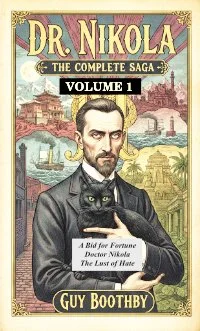
Dr. NIKOLA: The Complete Saga: Volume 1

by Guy Boothby (Author), Graeme Newman (Editor), Colin Heston (Introduction)

When the enigmatic Dr. Nikola first stepped onto the literary stage in 1895, clutching his sinister black cat Apollyon and weaving schemes that stretched from the back alleys of Shanghai to the hidden monasteries of Tibet, he didn't just capture the Victorian imagination—illegally or otherwise, he colonized it. Behind this towering figure of Gothic villainy was a prolific, whirlwind talent from the edge of the British Empire: the South Australian-born Guy Boothby.

These two volumes bring together, for the first time in a single definitive collection, the complete saga of Dr. Nikola: A Bid for Fortune, Dr. Nikola, The Lust of Hate, Dr. Nikola’s Experiment, and Farewell, Nikola. To read them in succession is to witness the birth of the modern "super-villain" and to appreciate the unique, rugged perspective Boothby brought to the crowded field of late-Victorian sensation fiction.

Born in Adelaide in 1867, Guy Newell Boothby was the son of a prominent South Australian parliamentarian. While he eventually found fame in the drawing rooms of London, his formative years were spent in the wide-open, often unforgiving landscapes of the Australian colonies. Unlike many of his contemporaries—who wrote of "The Orient" or the "South Seas" from the comfort of an English study—Boothby had the red dust of the Flinders Ranges and the salt of the Southern Ocean in his blood. In 1891, he and his brother famously crossed Australia from north to south, an arduous journey that informed the visceral, kinetic energy of his prose. This "Australian-ness" manifests in the Nikola series through a distinct lack of Victorian stuffiness; his heroes and villains alike are defined by their competence, their physical endurance, and a certain democratic grit that felt fresh to a British audience.

Guy Boothby died tragically young at the age of 37, leaving behind a staggering 53 novels written in just over a decade. For years, his work languished in the shadows of more "academic" Victorian literature. However, as these works have entered the public domain, a new generation of readers—and editors—has rediscovered the sheer, unadulterated joy of his storytelling. Boothby’s Dr. Nikola remains a vital link in the evolution of popular fiction. Without Nikola, would we have Sax Rohmer’s Fu Manchu? Would we have the sophisticated antagonists of James Bond? Probably not. By centering this edition on Boothby’s Australian roots, we acknowledge that the "King of Sensation" wasn't just a product of London’s Fleet Street, but a traveler of the world who brought the wild energy of the Antipodes to the heart of the Empire.

This collection published in two volumes aims to preserve the thrill of the original serialization while providing the context necessary for a modern reader. As you follow the Doctor through the mist-shrouded streets of London and the sun-bleached ports of the Pacific, remember that you are in the hands of a master who knew those ports firsthand.
Welcome to the world of Dr. Nikola. Tread carefully—Apollyon is watching!

Read-Me.Org Inc. New York-Philadelphia-Australia. 2026. 471p.

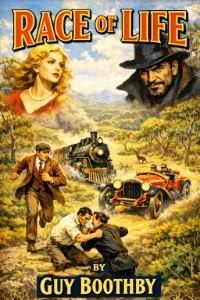
The Race of Life

By Guy Boothby. Introduction by Colin Heston.

In the unforgiving expanse of the Australian outback, where the line between fortune and ruin is as thin as a shadow on the sand, the race for survival is never-ending. Guy Boothby’s pulse-pounding tale follows the odyssey of a man driven by ambition and haunted by the specters of his past, thrust into a world where the elements are as treacherous as the men who inhabit them. From the sweat-soaked cattle runs of the bush to the high-stakes tension of the burgeoning colonial cities, this is a story of grit, reinvention, and the relentless pursuit of a legacy.

As the old world’s certainties crumble in the face of a wild, new frontier, the struggle for dominance becomes a trial of the soul. In a landscape that promises everything to the bold and nothing to the weak, can a man outrun his history, or will the "race of life" ultimately claim him? Boothby, the master of Edwardian adventure, delivers a visceral masterwork of high drama and rugged suspense that captures the raw, beating heart of a continent in the making.

Read-Me.Org Inc. New York-Philadelphia-Australia. 2026. 209p.

The Kidnapped President. A Crime Of The Under-Seas.

By Guy Boothby. Introduction by Colin Heston

This volume brings together some of the most imaginative and high-stakes narratives from the pen of Guy Boothby, a writer who reigned as one of the most popular masters of the Victorian "shocker." At a time when the British Empire was at its zenith and the possibilities of modern technology were just beginning to fire the public imagination, Boothby crafted stories that blended geopolitical intrigue with the dark, uncharted corners of the globe.


The centerpiece of this collection, The Kidnapped President (1902), catapults the reader into a world of political conspiracy and daring maritime adventure. Set against the backdrop of a South American revolution, the story follows the audacious abduction of a head of state and the relentless pursuit that follows. Boothby’s personal history as a world traveler is evident here; his descriptions of the sea and the desperate maneuvers of those living on the edge of the law carry an authenticity that few of his contemporaries could match. It is a quintessential example of the "international thriller" before the genre had even fully formed, exploring themes of loyalty, power, and the high price of political ambition.
In A Crime of the Under-Seas (1905), Boothby pivots toward a more localized but no less intense mystery. This narrative delves into the treacherous world of pearl fishing and the cutthroat competition of the maritime trade. When a valuable discovery is marred by a calculated crime, the story becomes a tense examination of greed and the lengths to which men will go when they believe they are beyond the reach of land-based authorities. It serves as a perfect companion to the broader political scope of The Kidnapped President, focusing instead on the gritty, high-stakes reality of those who make their living on the ocean's floor.

Rounding out this edition is a selection of Boothby’s shorter fiction, which highlights his versatility as a storyteller. From eerie tales of the supernatural to sharp, punchy vignettes of colonial life, these stories demonstrate the narrative economy that made him a favorite of the era's leading magazines. Whether he is exploring a haunted family legacy or a clever piece of detective work, Boothby’s prose remains relentlessly paced, always keeping the reader’s curiosity at a fever pitch.
Together, these works offer a vivid window into the anxieties and fascinations of the early 20th century. Guy Boothby understood that his audience craved both the thrill of the unknown and the satisfaction of a justice served, and in this collection, he delivers both with his trademark energy. From the corridors of power to the depths of the sea, this volume invites you to rediscover a pioneer of the thriller genre at the height of his creative powers.

Read-Me.Org Inc. New York-Philadelphia-Australia. 2026. 200p.

The Beautiful White Devil

By Guy Boothby

The Beautiful White Devil (1896) by Guy Boothby stands as one of the most vivid artifacts of the fin-de-siècle adventure boom, a moment when popular fiction fused imperial restlessness, criminal romance, and the growing public appetite for charismatic anti-heroes. Boothby, already known for his flair for exotic atmospheres and high-velocity plotting, crafted in this novel a figure who upends the moral architecture of late-Victorian adventure: a brilliant, elusive woman outlaw who commands the seas with a mixture of theatrical bravado, disciplined intelligence, and a distinctly modern sensibility about power.

The novel’s pacing is unmistakably Boothby’s—rapid, cinematic, and unembarrassed in its desire to enthrall—but what gives The Beautiful White Devil enduring interest is its central inversion. Instead of the conventional male pirate-captain or gentleman-adventurer, Boothby builds his drama around a woman whose audacity challenges the gender codes of the 1890s. She is both a product of her age and a challenge to it, exploiting the cracks in a world structured by empire, commerce, and male authority. Her crimes unsettle not simply because they are daring, but because they are executed with a level of strategic clarity usually reserved, in Victorian fiction, for men. Even today, she reads less like a stock villain and more like the prototype of the morally ambiguous mastermind—an ancestor of the elegant thief, the tactical vigilante, and the charismatic rogue.

For modern readers, this fusion of high adventure and gender subversion gives the novel a surprisingly contemporary resonance. Boothby captures the anxieties and fascinations of an empire confronting its own vulnerabilities: the fragility of control over distant seas, the shifting status of women within public life, and the ambiguity of heroism in a world where law, power, and personal justice do not always align. The tension between official authority and individual agency—especially when wielded by someone who is not expected, in the Victorian imagination, to possess it—feels strikingly current in an age that still debates the ethics of resistance, the allure of transgression, and the politics of criminality.

As a narrative artifact for a modern edition, The Beautiful White Devil is more than an adventure story; it is a window into the performative spectacle of crime at the turn of the century and a reminder of how popular fiction often anticipates social transformation before “serious” literature acknowledges it. Boothby’s tale, with its blend of romance, danger, and social provocation, remains a compelling example of how the adventure novel can reveal the shadows and ambitions of the culture that produced it.

Read-Me.Org Inc. New York-Philadelphia-Australia. 2026. 216p.

A Prince of Swindlers

By Guy Boothby

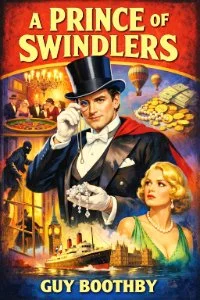
In the glittering drawing rooms and shadowed corridors of a restless empire, one man reigns supreme—not by birthright, but by brilliance. In A Prince of Swindlers, Guy Boothby introduces a criminal of rare charm and audacity, a master strategist who turns society’s vanity and greed into instruments of his art.

Elegant, daring, and always one step ahead, the “Prince” moves effortlessly among the wealthy and powerful, weaving deceptions so intricate that even his victims admire the skill with which they are undone. Yet behind the polished manners and calculated risks lies a dangerous truth: in a world obsessed with status and fortune, the greatest illusion may be respectability itself.

Fast-paced and irresistibly clever, this classic tale of high-stakes fraud and psychological intrigue remains as entertaining—and unsettling—today as when it first captivated readers.

Read-Me.Org Inc. New York-Philadelphia-Australia. 2026. 175p.

A Bid For Fortune: Dr. Nikola's Vendetta

by Guy Boothby (Author), Colin Heston (Introduction)

In the landscape of late-Victorian sensation fiction, few figures loom as large or as shadow-drenched as Dr. Nikola. Before the world had a definitive supervillain archetype, Guy Boothby introduced a mastermind who combined the cold intellect of Sherlock Holmes with the occult ambitions of a sorcerer. A Bid for Fortune, published in 1895 and often subtitled Dr. Nikola’s Vendetta, marks the debut of this iconic antagonist in a high-stakes adventure that spans the globe, moving restlessly from the dusty streets of Sydney to the high society of London and the secretive corners of the East.
The narrative follows Richard Hatteras, a rugged Australian sailor who finds himself accidentally entangled in a web of international intrigue. Hatteras is a man of action, yet he is fundamentally out of his depth when he crosses paths with the enigmatic Doctor. Nikola is not interested in mere petty theft or local power; he is obsessed with uncovering the ancient secrets of a mysterious Tibetan sect. To achieve his ends, he requires a specific Chinese stick—a relic of immense power—and he proves himself willing to manipulate, kidnap, and destroy anyone standing in his way.
Guy Boothby was a pioneer of the "Yellow Back" thrillers, and in Dr. Nikola, he created a character who fascinated readers as much as he terrified them. Accompanied by a massive, sinister black cat named Apollyon, Nikola is a master of science, hypnotism, and disguise, driven by a personal code that sits entirely outside conventional law. This work is more than a simple chase; it is a quintessential example of the "New Imperial" gothic style, blending the era's anxiety about the unknown with the thrill of global exploration.
Readers should prepare for a narrative that moves at a breakneck pace, as Boothby excels at building atmosphere through his descriptions of Nikola’s cat-like movements and calculated calm. As Hatteras attempts to protect the woman he loves while outmaneuvering a man who seems to see five steps ahead, the audience is invited into a world where the line between science and magic is dangerously thin. It is a story where the hero is constantly shadowed by a man who, as the text suggests, is just as dangerous to have as a friend as he is as an enemy.

Read-Me.Org Inc. New York-Philadelphia-Australia. 2026. 232p.

Peder Victorious

By O. E. Rølvaag (Author), Colin Heston (Introduction)

Peder Victorious by O. E. Rølvaag is a powerful continuation of the prairie saga that began with Giants in the Earth, shifting the focus from the physical hardships of pioneer settlement to the inner conflicts of the immigrant’s American-born son. Set within a Norwegian farming community in the Dakota Territory, the novel follows young Peder Holm as he comes of age amid the competing claims of ancestral faith and American ambition. Intelligent and driven, Peder embraces education and opportunity, yet his aspirations strain against the religious intensity and cultural conservatism that define his mother’s world. Rølvaag portrays with psychological depth the tension between generations, the fragility of cultural inheritance, and the cost of assimilation. The prairie remains vast and elemental, but the central struggle unfolds within the human heart, where identity, loyalty, and belief are tested. Both intimate and epic in scope, the novel offers a searching exploration of what it means to be victorious in a land that promises freedom while quietly demanding transformation.

Nearly a century after its publication, Peder Victorious by O. E. Rølvaag remains strikingly relevant in an era defined by global migration, cultural pluralism, and debates over national identity. The novel’s portrayal of second-generation tension—between inherited faith and modern ambition, communal loyalty and individual advancement—mirrors the lived experience of many contemporary families navigating assimilation in North America, Europe, and beyond. Peder’s divided consciousness anticipates what sociologists now describe as bicultural identity formation, in which success within dominant institutions can coexist with a sense of estrangement from ancestral tradition. At a time when questions of belonging, integration, and cultural continuity are again politically and socially charged, Rølvaag’s work offers a sober reminder that assimilation is not a frictionless process but a psychological and moral negotiation whose costs and gains are unevenly distributed across generations.

Read-Me.Org Inc. New York-Philadelphia-Australia. 2026. 240p.

True Stories of Crime from the District Attorney’s Office

By Arthur Train. Introduction by Graeme R. Newman

The transition of the American legal system from the rough-and-tumble nineteenth century into the more structured, investigative era of the early twentieth century is nowhere more vividly captured than in Arthur Train’s True Stories of Crime from the District Attorney’s Office. As an Assistant District Attorney for New York County during a period of rapid urbanization and social upheaval, Train occupied a unique vantage point that allowed him to witness the collision of old-world criminal archetypes with the emerging complexities of modern life. This collection of narratives serves as a clinical yet deeply compelling autopsy of the era’s most notorious legal battles, offering readers a rare glimpse into the machinery of justice at a time when forensic science was in its infancy and the power of the prosecutor’s office was expanding into new, uncharted territories.

Train’s work is particularly significant for its early exploration of what would eventually be termed white-collar crime. While the public imagination of 1908 was often captured by tales of blunt violence and physical daring, Train directs his focus toward the "super-criminal"—the manipulative mastermind who utilized the administrative and financial structures of the city as their primary tools of exploitation. Through these accounts, we see the emergence of a new kind of threat that required a equally sophisticated response from the legal establishment. Train describes a landscape where economic desperation and social isolation were the primary drivers of criminal behavior, yet he also highlights the systemic vulnerabilities that allowed institutional fraud to flourish. By documenting these cases, he provides a foundation for the study of victimology, illustrating how the legal system often struggled to keep pace with the evolving ingenuity of those who sought to undermine it.

Beyond their historical and legal value, these stories possess a narrative vitality that reflects the tension between the sensationalism of early tabloid journalism and the rigorous demands of the courtroom. Train’s prose is informed by his experiences on the front lines of the District Attorney’s office, where the outcome of a trial often hinged as much on rhetorical flair and personal intuition as it did on physical evidence. In revisiting these cases today, we are invited to consider the persistent challenges of defining and delivering justice within a complex bureaucracy. Train does not shy away from the moral ambiguities of his profession, and his reflections on the nature of guilt and the limitations of the law remain strikingly relevant. This volume stands not only as a record of forgotten crimes but as an enduring meditation on the social fabric of a metropolis in flux, capturing the moment when the modern era of criminal justice truly began.

Read-Me.Org Inc. 2026. 184p.

Their Father's God

By O. E. ROLVAAG

Their Fathers’ God (1931) is the powerful conclusion to O. E. Rølvaag’s epic trilogy of the Norwegian-American immigrant experience on the South Dakota prairies. Picking up where Peder Victorious left off, the novel shifts focus from the physical struggle of settling the land to the cultural and spiritual conflicts of the second generation. The story centers on the marriage of Peder Holm, a forward-thinking Norwegian Lutheran, and Susie Doheny, a devout Irish Catholic. As they attempt to build a life together, their relationship becomes a battlefield for the "clash of heritages":

  • Religious Tension: The couple struggles with the differing demands of their faiths, particularly regarding the baptism and upbringing of their children.

  • Cultural Identity: Peder wants to assimilate and modernise, while the pressures of their respective immigrant communities pull them back toward old-world traditions.

  • Environmental Hardship: Set against a backdrop of drought, grasshopper plagues, and the harsh reality of prairie farming, the physical environment mirrors the drying up of their emotional connection.

Major Themes

  • The Melting Pot Myth: Rølvaag explores the psychological toll of assimilation, suggesting that the blending of two distinct cultures is often a painful, destructive process rather than a seamless one.

  • Succession: The book examines whether the "God of the Fathers"—the rigid traditions and beliefs of the original pioneers—can survive or thrive in a rapidly changing American landscape.

While Giants in the Earth was a sweeping adventure of pioneer survival, Their Fathers’ God is a more intimate, psychological drama. It is often cited by historians and literary critics for its realistic, unsentimental portrayal of how religious and ethnic boundaries persisted even in the "limitless" American West.

Harper & Brothers. 1931. 350 p.

The La Chance Mine Mystery

By S. Carleton. Introduction by Colin Heston.

The 1920 publication of The La Chance Mine Mystery by S. Carleton, the pseudonym for Susan Morrow Jones, represents a pivotal moment in the evolution of the North American thriller. By weaving the Victorian Gothic tradition into the rugged landscape of the Canadian wilderness, Carleton created a narrative that serves as a sophisticated precursor to modern psychological suspense. In contemporary literature, this work remains highly relevant as a masterclass in atmospheric isolation, where the "frozen North" acts not merely as a setting but as a primary antagonist. This technique mirrors modern "Environment as Character" tropes seen in current survivalist fiction, reminding readers that the primitive fear of being trapped in a vast, uncaring wilderness transcends technological advancement and remains a powerful literary hook.

From a criminological perspective, the novel offers a compelling study of frontier anomie. In the absence of formal state policing, the isolated mine becomes a vacuum where white-collar crimes like corporate fraud and title theft inevitably devolve into violence. This lack of social control forces characters into a state of informal justice, predating modern investigative frameworks through "bushcraft forensics." In an era before chemical analysis or DNA, Carleton’s characters rely on environmental reconstruction—analyzing the crust of snowdrifts or the set of a footprint—to determine the timing of a crime. This reliance on natural preservation within a crime scene provides a proto-historical look at how physical environment shapes both criminal opportunity and the subsequent forensic analysis used to untangle it.

The social dynamics of the mine also provide deep insights into early 20th-century victimology. Carleton highlights a hierarchy of vulnerability, focusing on how marginalized laborers and isolated individuals are targeted by those with institutional power. In this setting, victims are often chosen specifically because their disappearances can be conveniently blamed on the harsh climate rather than foul play. This exploration of "invisible victims" and structural exploitation resonates with modern social justice themes regarding labor and corporate overreach. By subverting the "hard-boiled" male tropes of her time, Carleton used her unique perspective as a female author to provide an emotional depth and keen eye for power imbalances that continue to inform the DNA of modern suspense and elevated horror.

Read-Me.Org Inc. New York-Philadelphia-Australia. 2026. 192p.

The King in Yellow

By ROBERT W. CHAMBERS. Introduction by Colin Heston

When The King in Yellow appeared in 1895, it slipped quietly into a literary world already saturated with decadence, occult enthusiasms, and the fin-de-siècle’s peculiar blend of anxiety and intoxication. Yet Robert W. Chambers’s strange mosaic of tales—united by a fictional forbidden play that unhinges those who read it—swiftly distinguished itself from its contemporaries. In the decades since, this slim volume has grown into one of the foundational works of the American weird tradition, prefiguring H. P. Lovecraft, influencing generations of modern horror writers, and unexpectedly resurfacing in the twenty-first century as a cultural touchstone.

What makes Chambers’s book so unusual is its deliberate blurring of boundaries: between reality and hallucination, sanity and delusion, art and contagion. The collection opens with “The Repairer of Reputations,” a tale set in an imagined New York of 1920—an unsettling mixture of futurism, authoritarian regulation, and manic delusion. It is here that the mysterious “King in Yellow” first exerts his influence. The narrator, a deeply unreliable figure, is convinced of his noble birthright and guided by an enigmatic “repairer” who traffics in scandal and blackmail. The narrative unfolds as a case study in self-deception, political paranoia, and the fragility of identity—yet nothing in the story is easily dismissed as mere fantasy. Reality itself buckles under the weight of the narrator’s convictions.

The Mask, perhaps the most haunting of the early tales, shifts the setting to the Latin Quarter of Paris, where art, science, and obsession converge. The grotesque beauty of Boris Yvain’s alchemical solution—capable of transforming living beings into flawless marble—creates a collision of aesthetics and mortality that typifies Chambers’s most powerful work. The story’s dreamlike quality reflects the decadent movement’s fascination with artificiality, transformation, and the erotic pull of the inanimate. Throughout, the shadow of the forbidden play hovers, never fully seen but always felt.

Other sections—“In the Court of the Dragon,” “The Yellow Sign,” and additional sketches—extend the book’s architecture of dread. Chambers never provides the text of the play itself, only its aftershocks, its “second act” whispered about as a psychic abyss from which there is no return. This structural absence is one of the book’s great innovations: The horror lies not in spectacle but in suggestion, in the void where meaning should be. The King in Yellow, the Pallid Mask, and the Lost City of Carcosa are not fully explained but instead exist as fragments of a mythology the reader assembles intuitively, as though the stories themselves are encoded with an infectious idea.

The power of The King in Yellow endures because it is not simply a collection of supernatural tales—it is a meditation on contagion: of ideas, of aesthetics, of inner instability. Chambers’s fictional play does not merely frighten; it corrodes. It reveals hidden fractures in those who encounter it and amplifies their darkest impulses. In this sense, the book mirrors its age. The 1890s were marked by the collapse of old certainties, the rise of new sciences of the mind, and an artistic fascination with decadence, degeneration, and the beautiful ruin of the self. Chambers captured that atmosphere with uncanny acuity.

Today, amidst digital conspiracies, fractured identities, and a renewed cultural fascination with alternate realities, The King in Yellow feels more relevant than ever. It invites the reader to step into a world where truth is unstable, where art is dangerous, and where the boundaries of perception are mercilessly thin. The book’s whispered mythology has become larger than the text itself, seeding later works, reappearing in unexpected media, and reminding us that the most enduring horrors are those we cannot fully see.

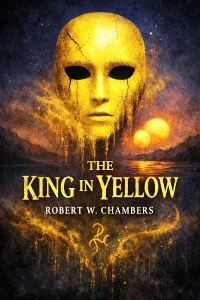
To open these stories is to risk a glimpse of the Yellow Sign—a symbol of beauty, madness, and forbidden knowledge. Chambers offers no assurances. He only extends an invitation to enter Carcosa, where twin suns sink over black waters and where, once the play begins, the mask cannot be removed.

Read-Me.Org Inc. New York-Philadelphia-Australia. 2026 p.209

Silinski- Master Criminal

By Edgar Wallace. Introduction by Colin Heston

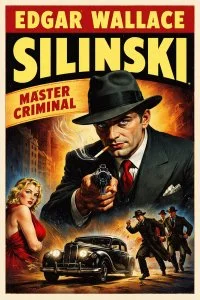
In Silinski – Master Criminal, Wallace constructs the titular character not as a creature of impulse, but as a precursor to the modern white-collar sociopath, defined by what can be termed "organized intellect." Unlike the flamboyant villains of Gothic tradition, Silinski’s power is derived from his mastery of systems—legal, financial, and social. He treats crime as a rigorous administrative discipline, employing a level of detachment that mirrors the very corporate structures he seeks to exploit. This intellectualization of villainy creates a chilling paradox: Silinski is most dangerous when he is at his most rational. Wallace highlights this by contrasting the frantic, reactive energy of the police with Silinski’s own glacial composure. His "mastery" is not merely a matter of successful theft, but of an informational asymmetry where he remains several steps ahead of the law by treating the world as a chessboard of predictable variables. Consequently, the tension of the novel arises not from the "whodunnit" element, but from the terrifying efficiency of a mind that has completely divorced morality from logic.
The conclusion of the narrative solidifies the "super-criminal" archetype not as a mere antagonist, but as a necessary mirror to the evolution of the modern state. By weaving together the threads of bureaucratic mastery and economic manipulation, Wallace posits that the transition of the criminal from the physical to the cerebral reflects a broader societal shift toward abstraction. Silinski represents the dark potential of the burgeoning 20th century: the realization that true power is no longer found in the strength of one's arm, but in the reach of one's influence over the systems that sustain public life. As the novel draws to its close, the resolution of the plot serves as a pyrrhic victory for the law, acknowledging that while one man may be stopped, the systemic vulnerabilities he exposed remain inherent to the fabric of global society. Ultimately, Silinski – Master Criminalstands as a definitive exploration of the modern villain, suggesting that in an age of complexity, the most profound threat to order is the very intelligence required to maintain it.

Read-Me.Org Inc. New York-Philadelphia-Australia. 2026. 188p.

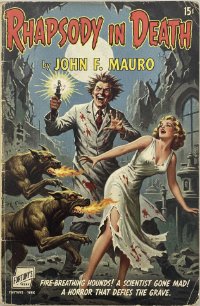
Rhapsody in Death

By John F. Mauro

Published in 1940 by the small New York firm Fortuny's, Rhapsody in Death is a quintessential example of the "weird menace" genre, characterized by its extreme and often lurid horror elements. The book gained a specific cult status due to its connection to cinema history, featuring an introduction by the legendary horror actor Bela Lugosi, who allegedly intended to star in a film version that was never produced. The story follows the villainous Professor Zoocarnivora, a classic mad scientist who embarks on a murderous rampage fueled by a deep-seated hatred for women who had rejected him.

The Professor’s reign of terror is carried out through bizarre and supernatural means, most notably a pack of fire-breathing hounds that he unleashes upon his victims. Amidst a backdrop of bats, vultures, and macabre experiments, the narrative pits the Professor against a spiritual healer named Father Theobald and a pair of young protagonists caught in the chaos. While contemporary critics often found the prose over-the-top and the plot nearly absurd, the book remains a highly sought-after collector's item today. Its rarity is compounded by the fact that its publisher went bankrupt shortly after release, leaving very few original copies in circulation.

Fortuny;s. 1941. 187p

Murder in Black and White

By David Alexander

Murder in Black and White is a classic mid-20th-century mystery novel first published in 1951. Set against a backdrop of idiosyncratic characters and gritty urban intrigue, the story follows a pair of unconventional sleuths — notably Terry R. Rooke, nicknamed “Soldier,” and his millionaire associate Tommy Twotoes — as they navigate a baffling and violent case that begins when an enigmatic albino man disrupts a funeral and opens fire on a corpse. Tasked with untangling this bizarre act, Soldier delves into a labyrinth of eccentric personalities, unexpected motives, and layers of deception.

The novel blends hard-boiled detective elements with offbeat humor and vivid characterizations, presenting a cast that ranges from a former bootlegger-turned-investigator to oddball figures encountered in the investigation. With its fast-paced narrative and richly textured scene-setting, Murder in Black and White exemplifies the energetic and sometimes quirky style of post-World War II American mystery fiction.

London. Hammond, Hammond and Co. 1954. p.211

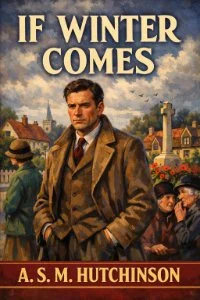
If Winter Comes

By A. S. M. Hutchinson. Introduction by Colin Heston.

When If Winter Comes appeared in 1921, it entered a literary moment marked by exhaustion, reassessment, and a profound unease about the moral and emotional consequences of the First World War. Written by A. S. M. Hutchinson, the novel achieved immediate popularity on both sides of the Atlantic, resonating with readers who recognized in its restrained drama a faithful portrait of postwar disillusionment. Today, the book stands as one of the most representative middle-class English novels of the early 1920s, combining psychological realism with a quietly devastating critique of social conformity.

At the center of If Winter Comes is Mark Sabre, a man neither heroic nor villainous, but painfully ordinary—an embodiment of the conscientious, educated Englishman caught between private integrity and public expectation. Sabre’s tragedy unfolds not through sensational events but through accumulated compromises: the erosion of affection within marriage, the pressures of respectability, and the moral cowardice of a community that prizes appearances above truth. Hutchinson’s great achievement is to dramatize these pressures with such precision that the reader comes to see how social cruelty can be enacted without overt malice, simply through silence, gossip, and moral indifference.

The novel reflects a society struggling to redefine itself after catastrophe. Although the war remains largely offstage, its psychological presence is unmistakable. Characters speak and act as if something fundamental has been broken: faith in institutions, confidence in moral authority, and trust in traditional roles. Hutchinson does not frame this as a generational revolt, as some of his modernist contemporaries did, but rather as a slow moral suffocation. The England of If Winter Comes is orderly, polite, and profoundly unforgiving—a place where deviation from accepted norms is punished less by law than by social annihilation.

Stylistically, Hutchinson occupies a middle ground between Edwardian realism and the emerging psychological novel. His prose is clear, controlled, and often deceptively simple. Sentiment is present, but carefully disciplined; emotional climaxes arise organically from character rather than authorial intrusion. This restraint partly explains the book’s enduring power. Hutchinson trusts the reader to perceive the cruelty embedded in everyday interactions and to grasp the cumulative weight of small injustices. The result is a novel that feels at once intimate and inexorable.

Equally important is Hutchinson’s treatment of marriage and masculinity. Mark Sabre is not undone by vice or ambition but by a moral rigidity that prevents him from acting decisively in his own defense. In this sense, If Winter Comes anticipates later twentieth-century explorations of male emotional paralysis. Sabre’s passivity—his belief that decency alone will protect him—proves to be a fatal misconception. Hutchinson exposes how a culture that rewards restraint and silence can become complicit in personal destruction.

Upon publication, the novel’s success was amplified by its adaptation into a widely seen stage play and later film versions, cementing its reputation as a defining postwar narrative. Yet its popularity should not obscure its seriousness. Beneath its accessible surface lies a sharp moral inquiry into responsibility, courage, and the cost of social obedience. Hutchinson does not offer easy consolation; the title itself suggests a stoic endurance rather than renewal, implying that survival may require a reckoning with loss rather than its denial.

Read today, If Winter Comes remains strikingly contemporary. Its depiction of reputational ruin, public shaming, and institutional indifference speaks to modern anxieties about social judgment and moral isolation. Hutchinson’s novel reminds us that cruelty need not be loud to be lethal, and that the gravest tragedies often occur not in moments of drama but in the long, quiet seasons of neglect. As such, this book endures not merely as a historical artifact of postwar Britain, but as a timeless study of how societies fail their most conscientious members when compassion yields to convention.

Grey Riders: The Story of The New York State Troopers

By Frederic F. Van de Water. Introduction by Graeme R. Newman

When Grey Riders appeared in 1922, Frederic F. Van de Water was already emerging as one of the most capable interpreters of American frontier mythology. A journalist, historian, and novelist, he had spent years documenting the enduring tensions between law, order, memory, and violence in the development of the Atlantic seaboard. Grey Riders stands as one of his most vivid contributions to that project: a narrative history and interpretive reconstruction of the Border Riders—Vermont and New York militiamen, irregulars, and informal vigilante bands who policed, contested, and sometimes exploited the wilderness regions between the American colonies and British Canada during the late eighteenth and early nineteenth centuries

Van de Water had a journalist’s fascination with complexity, and Grey Riders is at its strongest when it illuminates the contradictions inherent in a frontier culture that simultaneously demanded firmness of justice and tolerated the improvisational violence of irregular policing. In his account, the riders are men shaped by hardship—farmers, Loyalists, deserters, Yankee patriots, trappers, smugglers, and opportunists—who alternately defended and defied the emerging legal structures of the early United States. Their world was one where the line between protector and predator was always negotiable.

The book’s historical frame—stretching most visibly from the late Revolutionary era through the War of 1812—allows Van de Water to explore how unresolved grievances, economic scarcity, and geopolitical rivalry produced a frontier culture that did not neatly conform to the nation-state boundaries we take for granted today. The riders themselves were products of this ambiguity. While some acted as scouts and auxiliaries for the Continental Army or state militias, others drifted into banditry, smuggling, or private vengeance. Van de Water refuses to simplify this ambiguity; instead, he constructs a narrative that emphasizes how the frontier’s conditions forged men who were, by necessity, adaptable to both moral clarity and moral shade.

For the modern reader, Grey Riders also holds value as part of the broader early-twentieth-century reconsideration of American origins. The 1920s were a period of heightened nostalgia, cultural nationalism, and renewed interest in the country’s formative conflicts. Van de Water, however, avoids sentimentalism. His frontier is not a place of heroic inevitability but a zone of tension where identity, loyalty, and legitimacy are constantly renegotiated. In this respect, the book anticipates the more critical frontier historiography that would emerge later in the century.

Contemporary scholars may also find in Grey Riders an instructive account of how local communities develop security practices when state institutions are weak, distant, or contested—an issue that remains resonant in discussions of borderlands worldwide. The riders, as Van de Water portrays them, are precursors to many modern forms of irregular security actors: militias, local auxiliaries, self-appointed protectors, and armed community defense groups. Their actions demonstrate both the necessity and danger of such formations, especially when scarcity and political friction define daily life.

This new edition returns readers to a moment when questions of national boundaries, informal justice, and community resilience are central to global debate. Van de Water’s riders, moving through a grey zone of legality and identity, offer a powerful reminder that the frontier has never been a simple place—and that the forces shaping it never truly disappeared.

Read-Me.Org Inc. New York-Philadelphia-Australia. 2025. p.188.

Came a Cavalier

By Frances Parkinson Keyes

Came a Cavalier by Frances Parkinson Keyes is a sweeping historical romance set against the backdrop of two world wars. The novel explores themes of resilience, identity, and the transformative power of love. At its heart is Constance “Connie” Galt, a young woman whose life is reshaped by personal betrayal and the chaos of global conflict. Her journey begins with heartbreak, which propels her into service with the American Red Cross in France during World War I. This experience becomes a crucible for her character, forcing her to confront suffering and loss while discovering inner strength and purpose.

The story delves deeply into the theme of personal growth through adversity. Connie’s evolution from a disillusioned college student to a confident, compassionate woman mirrors the broader societal shifts of the early twentieth century. Her relationships—first with Duncan Craig, an American doctor, and later with Tristan de Fremond, a French cavalry officer—highlight the tension between security and passion, as well as the cultural contrasts between America and Europe during wartime.

Historically, the novel captures the atmosphere of wartime France with vivid detail, from the scarcity and danger of the front lines to the elegance and traditions of the French aristocracy. It reflects the impact of war on both individuals and nations, portraying how global upheaval can dismantle old social orders while creating new opportunities for connection and renewal. The narrative also touches on themes of honor and duty, embodied in Tristan’s role within the prestigious Cadre Noir, and contrasts these ideals with the pragmatic realities of survival and love in times of uncertainty.

Ultimately, Came a Cavalier is not just a romance but a meditation on courage, endurance, and the human capacity for reinvention. It situates personal drama within the grand sweep of history, offering readers both an intimate love story and a rich portrait of a world in transition.

Julian Messner, Inc. NY. 1947. Read-Me.Org Inc. New York-Philadelphia-Australia. 2025. 437p.