Open Access Publisher and Free Library
CRIME+CRIMINOLOGY.jpeg

CRIME

Violent-Non-Violent-Cyber-Global-Organized-Environmental-Policing-Crime Prevention-Victimization

Rikers Island and Mental Health: Pathways Toward Community-Based Diversion and Jail Population Reduction

By

María Fernanda Rodríguez, Nicolás Espejo Yaksic

The IBA assumed the challenge of contributing to a profound and urgent transformation, under the conviction that protecting the rights of children is not only a legal and ethical obligation, but also an essential investment in strengthening the rule of law.

As such, this report highlights existing challenges as well as good practices and proposes a roadmap to advance toward a child-centered justice system, as part of the commitment to leave no one behind within the framework of the 2030 Agenda.

Likewise, the report seeks to be a tool for articulation. A meeting point for governments, the judiciary, ombudsmen, prosecutors, civil society, academia, international organizations, but most importantly, for the voices of children and adolescents.

The preparation of this report involved participants from the justice ecosystem across the region. In line with this collective effort, the report includes a detailed analysis of the drafting process of the Ibero-American Common Rules on Restorative Juvenile Criminal Justice, led by the main justice networks and regional bodies.

The report is divided up into the following sections:

Section 1–Regional Context

Section 2–Access to Justice and the Development Agenda: People-Centered and Child-Centered Justice

Section 3–Principles of Child-Centered Justice: Progress in the Region

Section 4–Vision and Regional Agenda


THE MUSLIM BROTHERHOOD’S STRATEGIC ENTRYISM INTO THE UNITED STATES: A SYSTEMIC ANALYSIS

By The Institute for the Study of Global Antisemitism and Policy (ISGAP)

This study investigates the Muslim Brotherhood’s strategy of “civilizational struggle” (jihad) in Western society, with a specific focus on the United States. By analyzing primary documents, including the “Explanatory Memorandum” (1991) and “The Project” (1982), along with comparative historical analysis, it traces the development of the Brotherhood’s doctrine of tamkeen (institutional entrenchment) from its theoretical roots in early twentieth-century Egypt to its more advanced practical application in the United States. The study identifies and thoroughly analyzes four strategic domains of influence: policy impact through government entryism and coalition-building; manipulation of the legal framework via lawfare and the redefinition of core concepts; institutional infiltration across educational and civil society organizations; and the establishment of narrative control through media influence and discourse shaping. Multiple detailed case studies within each domain show how Brotherhoodaligned groups have executed these strategies across different countries and historical periods. The analysis in this study, supported by extensive documentary evidence and organizational network assessments, demonstrates that the Muslim Brotherhood’s long-term strategy is a deliberate, multigenerational effort that closely aligns with its founders’ vision of gradually transforming Western society from within, primarily through nonviolent means. Ideologically speaking, it is also fundamentally opposed to Western democratic values and governance systems. This study offers an important assessment of the key strategic objectives of Islamist extremism and ideological entryism within democratic systems by the Muslim Brotherhood, as well as the intersection of Islamist extremism with religious identity politics that exploit democratic principles, multicultural respect for diversity, and transnational movements in an era of globalization and information warfare. The study concludes with an assessment of the challenges faced by policymakers, security professionals, and civil society leaders who aim to protect democratic values while respecting religious freedoms. In a nutshell, it states that effective responses need to balance security concerns with civil liberties, differentiate between genuine religious practice and ideological extremism, and create more sophisticated frameworks for understanding and addressing radical Islamism.

The study of culture, law, and crisis

By Matthew Clair

Abstract: This paper reviews cultural sociological approaches to the study of law and how they may be applied to future research on law-related social crises. As the world faces myriad social crises, such as rising authoritarianism and police violence, the study of culture and the law has become an even more urgent intellectual and practical endeavor. Over the last decade, five concepts have dominated the cultural study of law: rules, norms, frames, cultural capital, and legal consciousness. While past research has provided generative insight, future research would benefit from more precise considerations of rules and norms in this unsettled moment. Moreover, future research could leverage the five cultural concepts to sharpen understandings of inequality and social control in understudied legal organizations, along understudied axes of social stratification, and with respect to the infusion of new technologies into the legal system.

Maritime Security in the Southern Philippines: Building Upon Gains Amid Evolving Threats

By John Bradford and Aaron Jed Rabena

Key Takeaways

The maritime security situation in the southern Philippines and neighbouring areas of Malaysia and Indonesia has greatly improved in recent years, thanks to coordinated government action.

The threats from terrorism and kidnapping have been reduced, but other forms of maritime criminal activity have become even more prominent, with smuggling and human trafficking emerging as the foremost concerns.

The Philippines, its neighbours, and its partners should leverage the positive momentum to build upon the gains, rather than shifting resources away.

The Bangsamoro peace process in the southern Philippines has travelled a rocky road in the decade since the agreement was signed between the national government and the area’s largest armed group, the Moro Islamic Liberation Front (MILF), in 2014. In October 2025, a series of court cases that derailed the first elections in the Bangsamoro Autonomous Region in Muslim Mindanao presented the latest bump – possibly a very consequential one. However, in the same decade, the maritime security situation has significantly improved in this area’s seas, which, as a matter of geography, history, and culture, are directly linked to the larger Philippines–Malaysia–Indonesia tri-border area (TBA).

A decade ago, the waters around the TBA were awash with banditry. The kidnapping of mariners and coastal residents was one of the most lucrative forms of crime. When eleven kidnapping incidents (nine successful) were documented over a nine-month period during 2016, alarm bells rang in the shipping community.

The cresting waves of maritime violence prompted Indonesia, Malaysia and the Philippines to begin coordinating air and maritime patrols under the auspices of the 2017 Trilateral Cooperative Arrangement. Since then, the Philippine government has arrested hundreds of suspects and engaged in clashes with members of maritime-savvy armed organisations, while also focusing on the region’s economic development. There have been no incidents of kidnapping at sea since January 2020.

Given the range of intense challenges the three nations face – especially in the maritime domain – it is both natural and appropriate that they may reorient resources towards other priorities. However, it would be a mistake to rest on their laurels. While the violence may have lessened, the TBA waters are still plagued by crime. It would be wiser to continue building on this success rather than easing the pressure, thereby allowing the criminals to reconstitute. 


Property and Violent Crime Rates in Colorado’s Largest Cities

By D.J. Summers

in the past five years, Colorado’s largest cities have had very different experiences of crime.

Colorado’s violent and property crime rates rose sharply in the early 2020s, prompting varying responses from leaders at state and local levels. Some have been more successful than others, according to the most recently available Colorado Bureau of Investigation data.

CSI analyzed the violent and property crime trends of Colorado’s ten largest cities: Denver, Colorado Springs, Aurora, Fort Collins, Lakewood, Thornton, Arvada, Westminster, Pueblo, and Centennial. These ten cities represent just under half the state’s total population, with a combined population of roughly 2.3 million residents. CSI analyzed the average violent and property crime rates per 100,000 people through the first two quarters of each year between 2016 and 2025. Pueblo’s police data is not current and could not be included in the analysis.

Property and violent crime cost the state $27 billion in economic losses in 2022 between the tangible and intangible effects of reported and unreported crime. It is imperative that public leaders continually examine and understand which policies best address crime rates.

Key Findings

Denver’s violent crime rate is the highest among Colorado’s largest cities, with 235 violent crimes per 100,000 people.

 Aurora’s is second highest, with 203 violent crimes per 100,000 people.

Aurora’s violent crime has remained beneath Denver’s for three years, breaking the trend of the late 2010s and early 2020s in which Aurora’s rates were higher.

Only Colorado Springs saw an increase in the violent crime rate between 2022 and 2025.

Among the largest cities, Aurora saw the sharpest decrease in violent crime rate.

Aurora saw the second highest decrease in violent crime rate, with a 36% decrease.

Denver has the highest property crime rate of Colorado’s largest cities, with 1,122 property crimes per 100,000 people.

Lakewood has the second highest rate, with 1,099 per 100,000 people.

Aurora and Centennial had the sharpest decreases in property crime rate since 2021, at 56%, 49%, and 44%, respectively. 


The Romantic Psychopath? Investigating How Psychopathic Traits and Stalking Victimization Apply to the Context of Romantic Relationships

By Lia Collins,Calli Tzani,Maria Ioannou,Thomas James Vaughan Wiliams,David Lester,Lucas Rogers


While researchers have previously been interested in investigating and understanding psychopathy, much of this research has focussed on criminal psychopaths, and the area of non-criminal psychopathy has remained largely under-researched, particularly surrounding romantic relationships. The present study explored how the traits of psychopathy impact romantic relationships between a psychopathic individual and a non-psychopathic partner and also explored the links between psychopathic traits and stalking victimization in the context of romantic relationships. A sample of 78 participants completed questionnaire with questions about both themselves and their partners, including the Risk Identification Checklist for Stalking Cases (VS-DASH-2009) scales that they filled out with their partners. Analyses revealed that participants who scored higher on Machiavellianism tended to rate their partners as exhibiting more psychopathic traits, although the direction of this relationship remains unclear. Additionally, there are no significant differences between gender and VS-DASH scores.


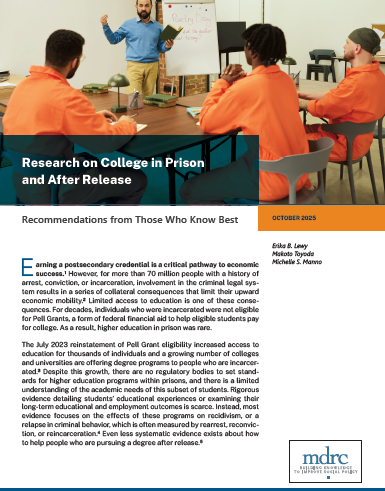
Research on College in Prison and After Release

By Ericka B Lewy, et al.

Earning a postsecondary credential is a critical pathway to economic success. However, for more than 70 million people with a history of arrest, conviction, or incarceration, involvement in the criminal legal sys­tem results in a series of collateral consequences that limit their upward economic mobility. Limited access to education is one of these conse­quences. For decades, individuals who were incarcerated were not eligible for Pell Grants, a form of federal financial aid to help eligible students pay for college. As a result, higher education in prison was rare.

The July 2023 reinstatement of Pell Grant eligibility increased access to education for thousands of individuals, and a growing number of colleges and universities are offering degree programs to people who are incarcer­ated. Despite this growth, there are no regulatory bodies to set stand­ards for higher education programs within prisons, and there is a limited understanding of the academic needs of this subset of students. Rigorous evidence detailing students’ educational experiences or examining their long-term educational and employment outcomes is scarce. Instead, most evidence focuses on the effects of these programs on recidivism, or a relapse in criminal behavior, which is often measured by rearrest, reconvic­tion, or reincarceration. Even less systematic evidence exists about how to help people who are pursuing a degree after release.

Within this context, MDRC drew on existing research to identify opportunities to build more evi­dence about best practices to assist students who are pursuing higher education in prison and after release. To inform a research agenda that would be useful to program practitioners, policymakers, researchers, and students, the research team had several dozen conversations with college pro­gram staff members, college administrators, academic researchers, state officials, people working to assist individuals while incarcerated or who have recently been released, and students.

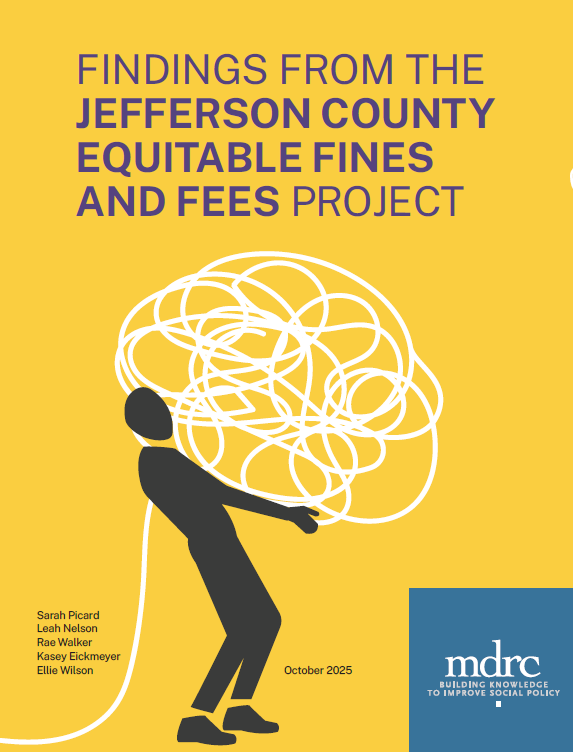
Findings from the Jefferson County Equitable Fines and Fees Project

By Sarah Picard, Leah Nelson, Rae Walker, Kasey Eickmeyer, and Ellie Wilson

Every year, courts across the United States impose millions of dollars in fines, fees, and restitution on people convicted of traffic violations, misdemeanors, and felonies. Collectively, monetary sanctions and other criminal justice fees are referred to as legal financial obligations or simply court debt. Ostensibly, court debt is intended to sanction offenders, recover the costs of running a court system, raise revenue, and compensate victims of crime. In most jurisdictions, however, court debt is assessed without considering an individual’s ability to pay, and much of what is owed goes uncollected. Estimates suggest that there are approximately $27.6 billion in outstanding obligations. In addition to being an unreliable source of revenue, court debt can have severe and long-standing consequences for those who owe, exposing them to increasing debt, future incarceration related to unpaid debt, and the suspension of voting rights, among other collateral consequences. In jurisdictions across the country, court debt also has a disproportionate effect on the economically disadvantaged, as well as Black and Latino individuals and communities. Many of the equity and collateral consequences described above hold true for court debt assessment and collection in Jefferson County and across Alabama, as documented in a 2018 survey with over 800 Alabama residents who owed court debt. This research attracted the attention of judges in the Tenth Circuit Court in Jefferson County (home to Birmingham) who worked with Leah Nelson, lead researcher on the 2018 survey, and MDRC to develop the Jefferson County Equitable Fines and Fees (JEFF) Project, a multidisciplinary study of the scope and consequences of court debt in the county. With funding from Arnold Ventures, the JEFF Project began in 2022. The findings in this report reflect multiple lines of inquiry, including descriptive and inferential analyses of five years of case-level court data, in-depth interviews with court practitioners, and focus group discussions with individuals who have direct experience with court debt in Jefferson County. Taken together, these analyses point to a system that is neither effective in generating revenue for the court, nor fair, given its outsized impact on Black and indigent people living in poor communities. Over the five years of the study, just under half of the individuals who owed court debt paid in full, with many seeing their debt burden grow over time. The research team also isolated some of the major factors that contribute to debt growth, which include race and economic disadvantage, in addition to factors related to how debt is collected, most notably the practice of assessing a 30 percent late fee on those who do not submit a payment within 90 days. Both court practitioners and individuals who are directly affected viewed the current system as broken, with the latter describing serious financial, emotional, and collateral consequences. Findings from the JEFF Project have already prompted the reconsideration of current practices in Jefferson County, including a pilot project to reduce debt burdens and encourage payments, and the creation of a statewide task force that will examine fines and fees across Alabama. Finally, given that Jefferson County is home to a midsized  city situated in a fiscally and socially conservative state, its social and geographic characteristics make it a useful reference for many cities and counties looking to make changes in their fines and fees systems.

Entering the Void: Chinese illicit networks in Mexico

By Barbara Kelemen | Ján Slobodník

This CEIAS paper aims to shed light on cooperation between Chinese businesses and Mexican criminal groups. It specifically analyzes cases related to drug trafficking and the exploitation of natural resources in three states in Mexico. The topic is particularly relevant for countries in Latin America that have been expanding their commercial ties with China. This research suggests that the lack of state supervision in some of these countries could allow alternative structures—such as criminal groups and Chinese organized networks—to thrive and fill the security and economic void if not regulated properly.

Summary

Mexico’s macroeconomic stability and abundant natural resources have made the country into an attractive destination for Chinese businesses.

The country still suffers from a lack of internal security, most of it stemming from the Mexican Drug War, an ongoing multilateral low-intensity conflict between the Mexican government and a large number of criminal organizations.

In some of Mexico’s states, pervasive violence and instability have resulted in a power vacuum. With the government being unable to guarantee security, non-state actors such as criminal organizations and/or civilian militias seize the opportunity to establish their own rule.

When foreign companies operate in such troubled areas, they inevitably run into problems caused by Mexico’s security issues.

Within this trend of foreign companies operating in Mexico, some level of tacit cooperation has been observed between Chinese businesses and non-state actors. This cooperation is often an outcome of localized security vacuums that are exploited by alternative security providers, such as criminal organizations, that can fill them and provide operational safety for local businesses.

A growing body of research has identified the existence of Chinese illicit networks and their involvement in the trafficking of people, narcotics, and contraband goods, as well as money laundering and illegal arms trade in Mexico.

Concealed under the guise of legal commercial activity, networks of Mexican criminal organizations and their Chinese business partners exploit the dire security situation in some areas of Mexico.

Despite attempts by the Chinese and the Mexican governments to regulate certain sectors that contribute to the existence of the illicit networks in Mexico, there are still substantial opportunities that are ripe for exploitation by the criminal group-legitimate business partnerships

Cross-cultural service learning in a juvenile correctional school: a qualitative analysis of international medical students’ reflections

By Hsiang-Chin Hsu & Tzu-Ching Sung 

This study investigates the impact of a service-learning activity on the personal and professional development of 28 international medical students at I-Shou University, focusing on their participation in a service-learning project at a juvenile correctional school in Taiwan. Through the collection and thematic analysis of written reflections, four key themes were identified: cultural competence, empathy development, medical professionalism, and personal and professional growth. The service-learning experience significantly enhanced students’ cultural competence by exposing them to cross-cultural challenges, deepening their understanding of the social determinants of health, and reinforcing the importance of communication skills in overcoming language and cultural barriers. This is particularly relevant in diverse healthcare settings where effective communication is essential for patient-centered care. A notable outcome of the activity was the development of empathy, as students reflected on the emotional needs of the juveniles they encountered, highlighting the critical role of non-judgmental, compassionate care in healthcare practice. Furthermore, the experience fostered medical professionalism by confronting students with ethical dilemmas, such as equitable access to healthcare for marginalized populations, thus emphasizing the responsibility of future physicians to advocate for social justice and address healthcare disparities. Personal and professional growth emerged as another significant outcome, with students reporting increased self-awareness and emotional intelligence. The service-learning activity challenged their preconceived notions about marginalized populations, enabling them to recognize and mitigate personal biases, ultimately contributing to more compassionate and ethical patient care. Overall, the study underscores the transformative role of service-learning in medical education, fostering cultural competence, empathy, ethical awareness, and social responsibility—qualities essential for preparing socially responsible physicians to navigate healthcare. These findings collectively bridge theory and practice, illustrating how transformative learning and professional identity formation manifest through experiential service-learning. Accordingly, this study emphasizes integrating service-learning into medical education curricula to bridge theory and practice and equip students for ethical, cultural, and professional challenges. Future research should explore its long-term impact on professional development and broader curricular integration.

Recidivism, Service Characteristics, and Changes in Risk and Protective Scores in Juvenile Probation

By D. Michael Applegarth, JoAnn S. Lee

This study examines changes in risk and protective factors among youth on probation (N=6,997) and how services received relate to these changes and subsequent recidivism. Using standardized risk assessments at intake and exit, logistic regression models assessed changes in risk and protective subscales, the relationship between specific services and observed changes, and associations with rearrest and reconviction. Overall, youth showed reduced risk and increased protective scores during probation. Increases in treatment, restitution, and assessments were linked to risk reductions, while treatment, assessments, and skill-building services were associated with gains in protective factors. Notably, more treatment services corresponded with increased risk in the school domain. Youth of color were less likely to experience a decrease in risk and an increase in protective scores. Increases in protective school scores and treatment services were linked to lower odds of rearrest and reconviction. In comparison, more monitoring services and increased legal history were associated with higher odds of recidivism. Findings highlight the potential of rehabilitative services to support youth success and suggest compliance based approaches, such as increased monitoring, may undermine outcomes. The study underscores the need for equitable, developmentally appropriate, and supportive interventions in juvenile probation.


Birthright Citizenship and Youth Crime

By Leander Andres, Stefan Bauernschuster, Gordon B. Dahl, Helmut Rainer, Simone Schüller

This paper studies the impact of birthright citizenship on youth crime. We leverage a reform which automatically granted birthright citizenship to eligible immigrant children born in Germany after January 1, 2000 and administrative crime data from three federal states. Immigrant youth who acquired citizenship at birth are substantially less likely to engage in criminal activity, with estimates indicating a 70% reduction. These results are particularly relevant in light of ongoing debates in the U.S. about abolishing birthright citizenship. Our findings suggest that inclusive citizenship policies can reduce crime and its associated costs, which in turn could strengthen social cohesion.

Parental Child Abductions to Third Countries

By Marilyn FREEMAN

Cross-border parental child abductions in the EU are governed by The 1980 Hague Convention on the Civil Aspects of International Child Abduction and (except for Denmark) the Brussels II-ter Regulation. Countries outside of the EU may or may not be Contracting States to ‘the Convention’, but will not be bound by Brussels II-ter. Research has found that the often negative, long-lasting impact of abduction may continue throughout the lifecycle of those who have been abducted. It may also affect future generations of society. This means that every effort to deter abduction should be made. Where that is not possible, the 1980 Hague Child Abduction Convention should be nurtured to support its application in contemporary society. Specialist mediation should be encouraged in relation to international child abduction generally, and specifically in relation to Third Countries which are not Contracting States to ‘the Convention’. This study was commissioned by the European Parliament’s Policy Department for Citizens’ Rights and Constitutional Affairs at the request of the JURI Committee.

Nobody ever spoke to me like that before.” Improving Interactions Within the Justice System. Recommended practices from national clinical experts convened by the NYC Mayor’s

Nobody ever spoke to me like that before.” Improving Interactions Within the Justice System. Recommended practices from national clinical experts convened by the NYC Mayor’s Office of Criminal Justice & Center for Justice Innovation

By The New York City Mayor's Office of Criminal Justice

Most people who are arrested in New York City are not rearrested while they wait for a decision about the outcome of their case. However, a small group are rearrested at substantially elevated rates. And despite their clear need for supportive services, most of this group never receive intensive mental health, emotional health, or behavioral health interventions at any point during their time in the justice system. Instead, most interactions people experience as they journey through the justice system are limited to a series of brief mandated encounters—check-ins, needs assessments, reminders, hearings. Despite their brevity, these encounters represent key intervention points1 with the potential to change individuals’ future well-being and behavior, either negatively or positively, through inevitable influences on their emotional and psychological well-being. As New York City grapples with how to adequately serve people at highest need and highest risk of justice involvement, the New York City Mayor’s Office of Criminal Justice and the Center for Justice Innovation convened a national roundtable of clinical experts in Manhattan on October 12, 2023. Participants were asked to distill their expertise and apply it to the range of processes that practitioners most frequently navigate within the criminal court system context. The goal was to identify key opportunities for making these processes as therapeutic and impactful as possible under the constraints of system-based practice—in New York City and across the country. This roundtable focused on the interactions most system-involved people actually have on a daily basis. Specifically, intake screenings, routine monitoring appointments, and other brief mandated interventions are critical opportunities for providing trauma-informed care, which recognizes and responds to the high rates of trauma that people involved in the justice system experience.2 Often, this trauma is experienced both prior to3 and as a result of their involvement in the system.4 Making use of these opportunities could go a long way toward increasing court appearances, reducing rearrests, and increasing engagement in longer-term supportive and therapeutic services. As the city continues to wrestle with the twin challenges of reducing crime and incarceration and improving behavioral health care in the city, this roundtable could not come at a more critical moment. The roundtable sought to connect overall principles to concrete practices. While practitioners often refer to principles such as being trauma-informed, meeting people where they’re at, strengths based, and non-judgmental, what does that actually look like in practice? And how can staff reconcile these most effectively with accountability? What specific words or actions generate increased engagement and connection with people who do not trust systems of any kind, much less the justice system? This brief provides a list of concrete recommendations for providers, distilled from the roundtable discussion. It should be noted that none of these recommendations should be taken as conclusive or unequivocally endorsed by the Mayor’s Office of Criminal Justice. Instead, MOCJ is providing a summary of the recommendations provided by experts based on their experiences in the field.

Exploited to exploiter? Preventing the unjust criminalisation of victims of child criminal exploitation in the transition to adulthood

By The Alliance for Youth Justice

The briefing, funded by the Barrow Cadbury Trust, examines what happens as exploited children turn 18, exploring how responses across safeguarding and criminal justice fail to keep pace with ongoing risk and harm. It sets out principles and practical steps to ensure protection continues into young adulthood and to prevent the unjust criminalisation of victims.

While awareness of CCE has grown, responses for children remain inconsistent and are too often led by punishment. At 18, those weaknesses are magnified. Support frequently falls away, thresholds for help rise, and young adults are more likely to be treated as perpetrators than recognised as victims. As parliament considers the Crime and Policing Bill’s new offence of child criminal exploitation (CCE), there is a critical opportunity to improve the response for victims – but a growing risk that exploited young adults will be prosecuted as perpetrators.

The briefing is informed by an evidence review and consultation with professionals, legal practitioners, academics, civil servants, and sector experts and identifies several urgent issues:


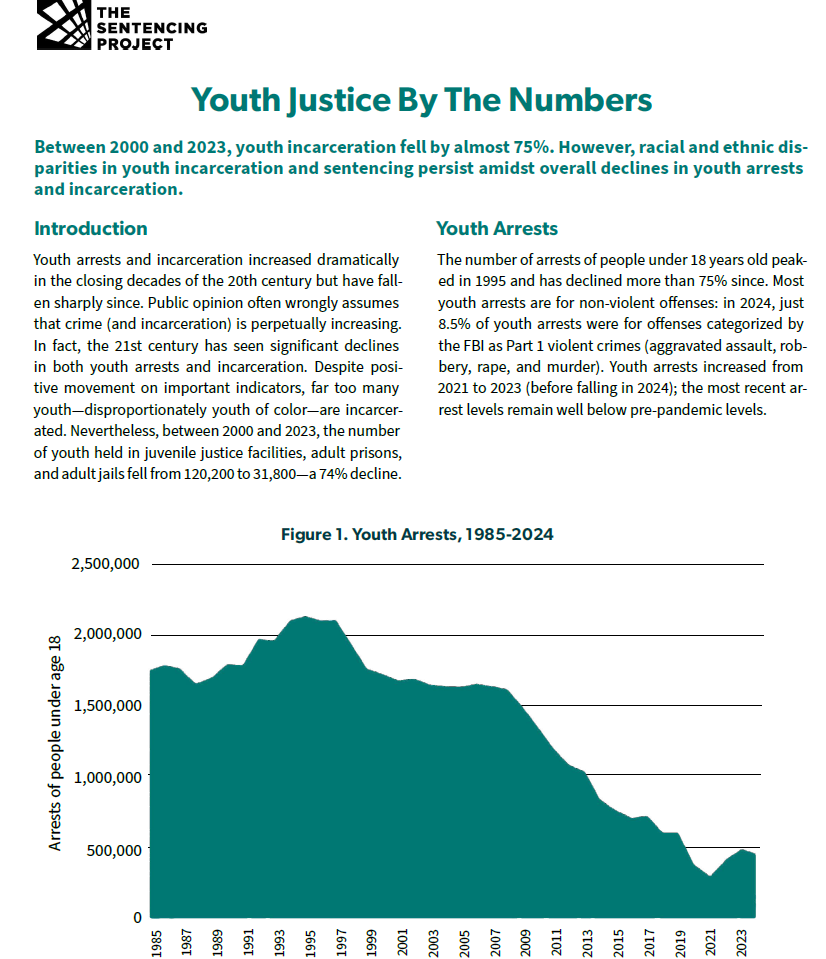
Youth Justice by the Numbers

By Joshua Rovner

Youth arrests and incarceration increased dramatically in the closing decades of the 20th century but have fallen sharply since. Public opinion often wrongly assumes that crime (and incarceration) is perpetually increasing. In fact, the 21st century has seen significant declines in both youth arrests and incarceration. Despite positive movement on important indicators, far too many youth—disproportionately youth of color—are incarcerated. Nevertheless, between 2000 and 2023, the number of youth held in juvenile justice facilities, adult prisons, and adult jails fell from 120,200 to 31,800—a 74% decline.

Protecting Children in Online Gaming: Mitigating Risks from Organized Violence

By Galen Lamphere-England

Gaming is now the most profitable form of entertainment worldwide, with over 3.42 billion people playing some form of games, accounting for a market of $187.7 billion engaging across consoles, PCs, and mobile devices.1 Nearly nine in ten children in middle and upper-income countries play online games2 . While online multiplayer games foster social connection, creativity, and communitybuilding, they are also increasingly exploited by violent organizations, ranging from non-state armed groups in conflict-affected settings to hybrid criminal networks. These actors use gaming spaces to propagandize, groom, recruit, and organize, leveraging gaming platforms' social and technical features to target children and young players. This policy brief examines how gaming ecosystems are being exploited to socialize and recruit children to participate in organized violence and provides recommendations for policymakers, practitioners working with children, and the gaming industry to safeguard children in online gaming environments. Online gaming is neither inherently harmful nor a direct cause of violence, but its social and technical infrastructure is being exploited at scale by malign actors. 3 Indeed, as the American Psychological Association framed the issue in a 2020 resolution, “attributing violence to violent video gaming is not scientifically sound and draws attention away from other factors.”4 At the same time, specific harms are affecting children via online gaming today. To protect children and young players, industry leaders, regulators, law enforcement, and practitioners working with children must act now, establishing robust prevention, detection, and response strategies that ensure children can enjoy their right to play and their right to be protected from violence. Gaming’s prosperous future depends on ensuring its spaces remain safe, inclusive, and free from children being targeted by violent actors and organizations. This report provides a series of recommendations to help achieve that aim.

A familiar offence: how households shape juvenile reoffending

By Tobias Auer and Tom Kirchmaier

In this paper we focus on how the criminal history of a household affects juvenile reoffending. Using detailed administrative data from Greater Manchester Police for 2007-2018, we construct a matched sample of 15,548 juvenile first-time offenders. We show causally that juveniles from a household with a previous criminal record are 26.4 to 29.8 percentage points more likely to reoffend within three years, with the greatest additional risk being in the first year after the initial offence. We show that social learning, co-offending by siblings, and differential processing contribute to this effect. Our findings highlight household criminality as an important driver of criminal persistence, underscoring the need to move beyond individual-level predictors and address the criminogenic dynamics within the home.

In this paper we focus on how the criminal history of a household affects juvenile reoffending. Using detailed administrative data from Greater Manchester Police for 2007-2018, we construct a matched sample of 15,548 juvenile first-time offenders. We show causally that juveniles from a household with a previous criminal record are 26.4 to 29.8 percentage points more likely to reoffend within three years, with the greatest additional risk being in the first year after the initial offence. We show that social learning, co-offending by siblings, and differential processing contribute to this effect. Our findings highlight household criminality as an important driver of criminal persistence, underscoring the need to move beyond individual-level predictors and address the criminogenic dynamics within the home.

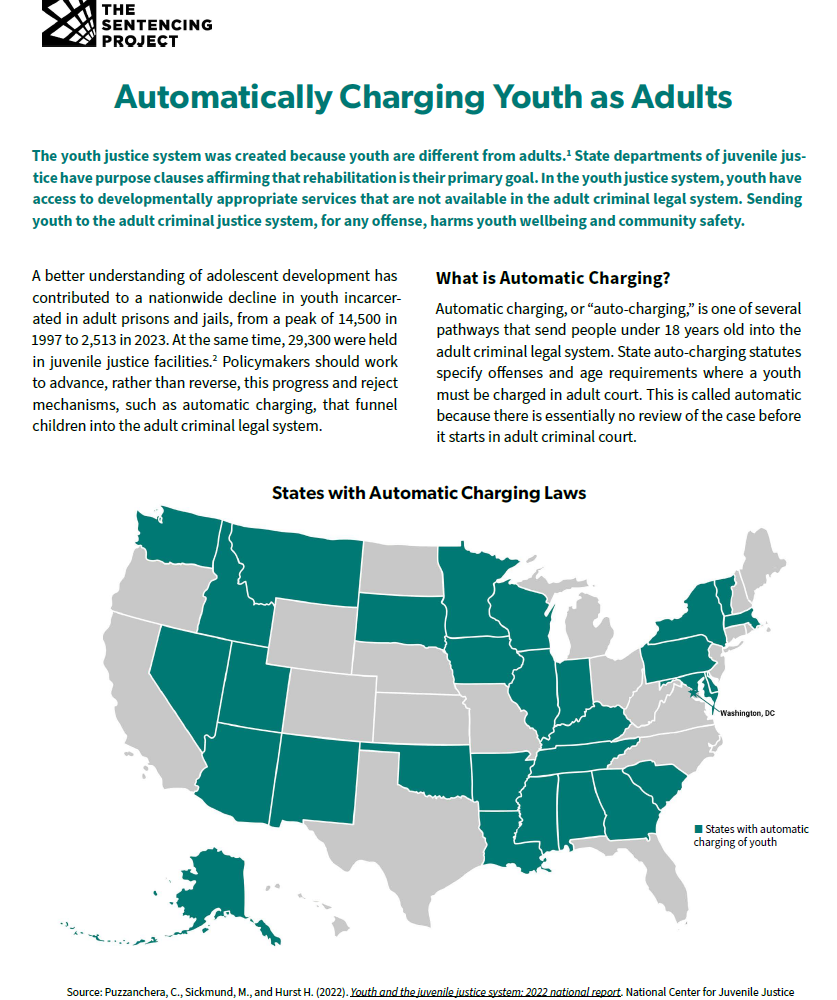
Automatically Charging Youth as Adults

By Olivia Naugle

The youth justice system was created because youth are different from adults.1 State departments of juvenile justice have purpose clauses affirming that rehabilitation is their primary goal. In the youth justice system, youth have access to developmentally appropriate services that are not available in the adult criminal legal system. Sending youth to the adult criminal justice system, for any offense, harms youth wellbeing and community safety.

Understanding variation in juvenile life without parole legislation following Miller

By Leah Ouellet, Daphne M. Brydon, Laura S. Abrams, Jeffrey T. Ward, Dylan B. Jackson, Rebecca Turner, J. Z. Bennett, Reese Howard, Ashley Xu


Miller v. Alabama and Montgomery v. Louisiana restricted states’ ability to impose life without parole for youth under age 18 (henceforth JLWOP). Since Miller, 46 pieces of legislation across 34 states and the District of Columbia have altered JLWOP sentencing policies. The current study provides the first comprehensive and scientific review of this legislation. Using policy surveillance as a methodological guide, we found that a majority of statutes (N = 28) ban JLWOP sentencing, above and beyond the Supreme Court's requirement. Many statutes also extended sentencing reforms and post-conviction relief eligibility to other types of sentencing beyond JLWOP. However, all but one statute still allows either JLWOP or life with parole as a sentencing option for minors convicted of homicide crimes and requires between 15 and 40 years, at minimum, to be served before being eligible for release. Grounding our analysis in institutional theory, we argue that the relative punitivity of the JLWOP reforms enacted was associated with measures of JLWOP institutionalization across states (i.e., pre-Miller JLWOP population and pre-Miller sentencing schema), suggesting that states where JLWOP was more routinely used were more resistant to policy reform.

Policy Implications

The current study provides implications for future decarceration efforts. Findings suggest that state legislatures are willing to enact post-conviction relief measures (e.g., judicial review or “second look” measures) for individuals convicted of violent crimes to address over-incarceration, deviating from previous decarceration efforts focused on non-violent, low-level offenses. In spite of the promising window for juvenile justice reform that Miller provided, however, these reforms have taken a relatively modest, incremental approach toward altering extreme youth sentencing practices in the United States. Policy makers and advocates seeking to promote sentencing reform efforts should factor in how highly institutionalized a sentencing practice is in each state, as this might inform effective strategies for policy change.