Open Access Publisher and Free Library
CRIME+CRIMINOLOGY.jpeg

CRIME

Violent-Non-Violent-Cyber-Global-Organized-Environmental-Policing-Crime Prevention-Victimization

Posts in Crime Trends
Birthright Citizenship and Youth Crime

By Leander Andres, Stefan Bauernschuster, Gordon B. Dahl, Helmut Rainer, Simone Schüller

This paper studies the impact of birthright citizenship on youth crime. We leverage a reform which automatically granted birthright citizenship to eligible immigrant children born in Germany after January 1, 2000 and administrative crime data from three federal states. Immigrant youth who acquired citizenship at birth are substantially less likely to engage in criminal activity, with estimates indicating a 70% reduction. These results are particularly relevant in light of ongoing debates in the U.S. about abolishing birthright citizenship. Our findings suggest that inclusive citizenship policies can reduce crime and its associated costs, which in turn could strengthen social cohesion.
Exploited to exploiter? Preventing the unjust criminalisation of victims of child criminal exploitation in the transition to adulthood

By The Alliance for Youth Justice

The briefing, funded by the Barrow Cadbury Trust, examines what happens as exploited children turn 18, exploring how responses across safeguarding and criminal justice fail to keep pace with ongoing risk and harm. It sets out principles and practical steps to ensure protection continues into young adulthood and to prevent the unjust criminalisation of victims.

While awareness of CCE has grown, responses for children remain inconsistent and are too often led by punishment. At 18, those weaknesses are magnified. Support frequently falls away, thresholds for help rise, and young adults are more likely to be treated as perpetrators than recognised as victims. As parliament considers the Crime and Policing Bill’s new offence of child criminal exploitation (CCE), there is a critical opportunity to improve the response for victims – but a growing risk that exploited young adults will be prosecuted as perpetrators.

The briefing is informed by an evidence review and consultation with professionals, legal practitioners, academics, civil servants, and sector experts and identifies several urgent issues:


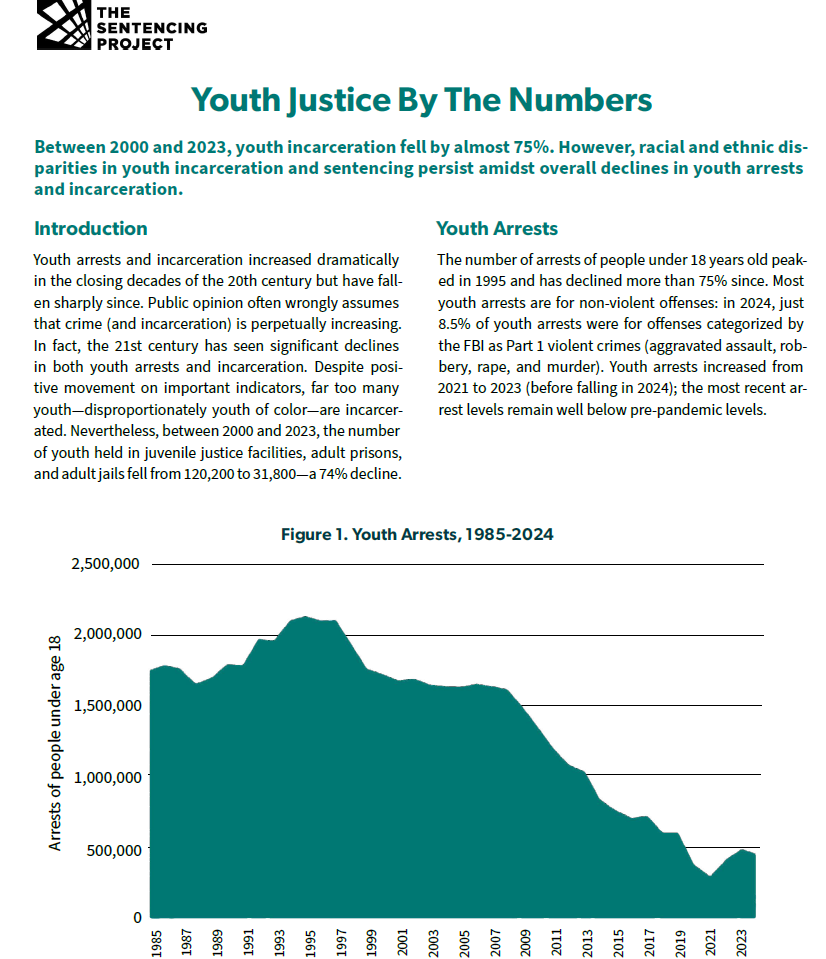
Youth Justice by the Numbers

By Joshua Rovner

Youth arrests and incarceration increased dramatically in the closing decades of the 20th century but have fallen sharply since. Public opinion often wrongly assumes that crime (and incarceration) is perpetually increasing. In fact, the 21st century has seen significant declines in both youth arrests and incarceration. Despite positive movement on important indicators, far too many youth—disproportionately youth of color—are incarcerated. Nevertheless, between 2000 and 2023, the number of youth held in juvenile justice facilities, adult prisons, and adult jails fell from 120,200 to 31,800—a 74% decline.

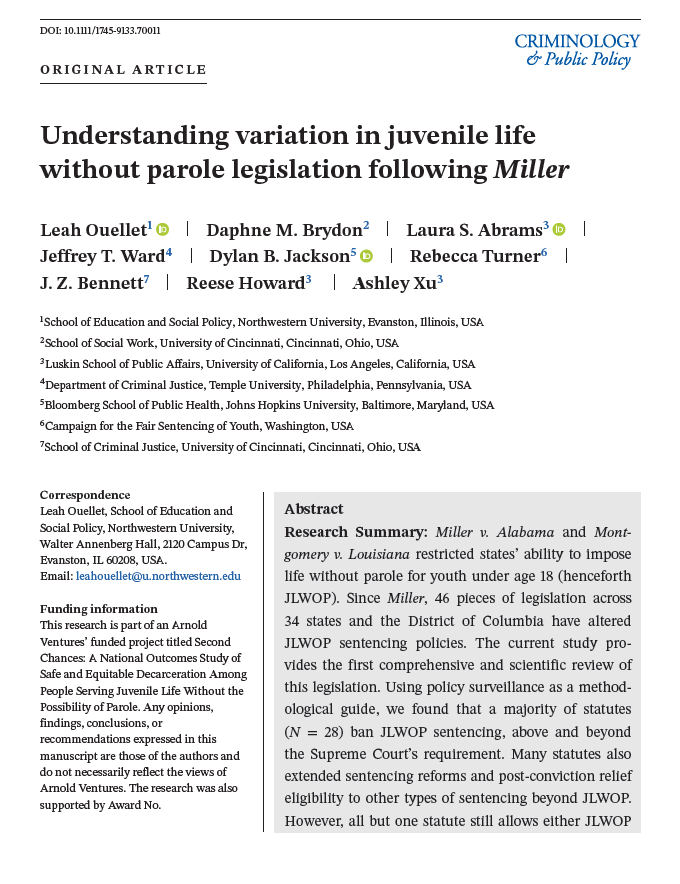
Understanding variation in juvenile life without parole legislation following Miller

By Leah Ouellet, Daphne M. Brydon, Laura S. Abrams, Jeffrey T. Ward, Dylan B. Jackson, Rebecca Turner, J. Z. Bennett, Reese Howard, Ashley Xu


Miller v. Alabama and Montgomery v. Louisiana restricted states’ ability to impose life without parole for youth under age 18 (henceforth JLWOP). Since Miller, 46 pieces of legislation across 34 states and the District of Columbia have altered JLWOP sentencing policies. The current study provides the first comprehensive and scientific review of this legislation. Using policy surveillance as a methodological guide, we found that a majority of statutes (N = 28) ban JLWOP sentencing, above and beyond the Supreme Court's requirement. Many statutes also extended sentencing reforms and post-conviction relief eligibility to other types of sentencing beyond JLWOP. However, all but one statute still allows either JLWOP or life with parole as a sentencing option for minors convicted of homicide crimes and requires between 15 and 40 years, at minimum, to be served before being eligible for release. Grounding our analysis in institutional theory, we argue that the relative punitivity of the JLWOP reforms enacted was associated with measures of JLWOP institutionalization across states (i.e., pre-Miller JLWOP population and pre-Miller sentencing schema), suggesting that states where JLWOP was more routinely used were more resistant to policy reform.

Policy Implications

The current study provides implications for future decarceration efforts. Findings suggest that state legislatures are willing to enact post-conviction relief measures (e.g., judicial review or “second look” measures) for individuals convicted of violent crimes to address over-incarceration, deviating from previous decarceration efforts focused on non-violent, low-level offenses. In spite of the promising window for juvenile justice reform that Miller provided, however, these reforms have taken a relatively modest, incremental approach toward altering extreme youth sentencing practices in the United States. Policy makers and advocates seeking to promote sentencing reform efforts should factor in how highly institutionalized a sentencing practice is in each state, as this might inform effective strategies for policy change.

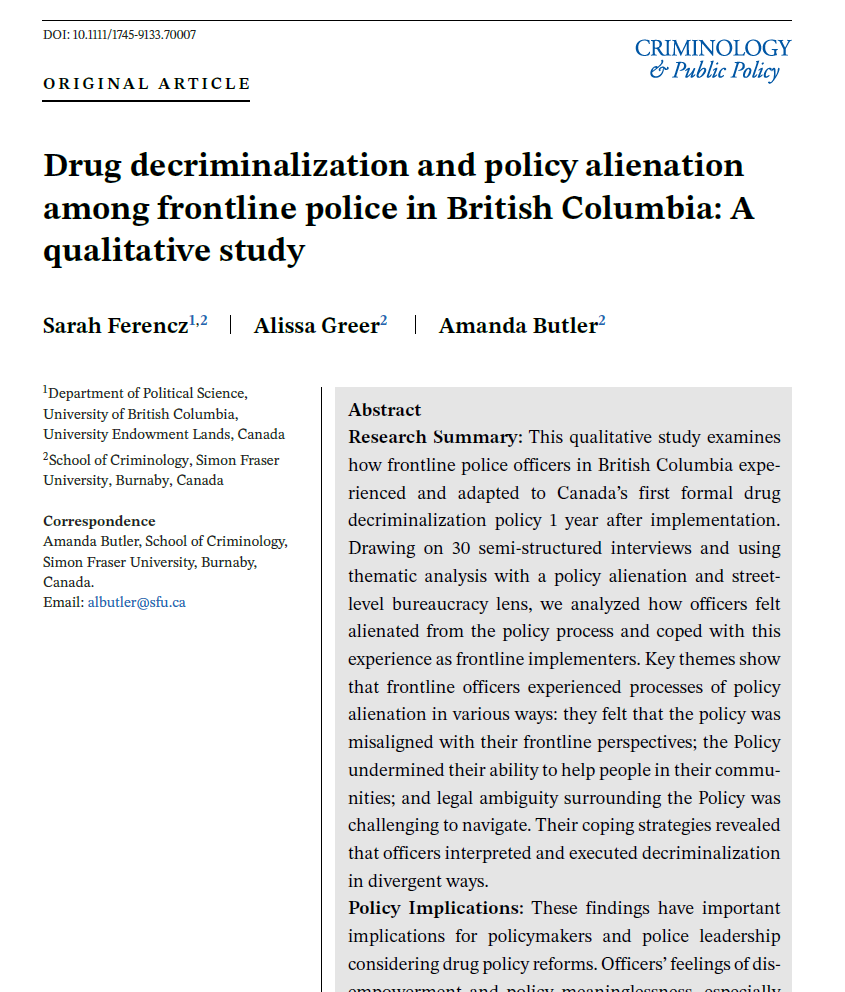
Drug decriminalization and policy alienation among frontline police in British Columbia: A qualitative study

By Sarah Ferencz, Alissa Greer, Amanda Butler

This qualitative study examines how frontline police officers in British Columbia experienced and adapted to Canada's first formal drug decriminalization policy 1 year after implementation. Drawing on 30 semi-structured interviews and using thematic analysis with a policy alienation and street-level bureaucracy lens, we analyzed how officers felt alienated from the policy process and coped with this experience as frontline implementers. Key themes show that frontline officers experienced processes of policy alienation in various ways: they felt that the policy was misaligned with their frontline perspectives; the Policy undermined their ability to help people in their communities; and legal ambiguity surrounding the Policy was challenging to navigate. Their coping strategies revealed that officers interpreted and executed decriminalization in divergent ways.

Policy Implications

These findings have important implications for policymakers and police leadership considering drug policy reforms. Officers’ feelings of disempowerment and policy meaninglessness, especially in contexts of legal ambiguity, may lead to inconsistent or inequitable enforcement. Strengthening communication across police ranks is critical. Middle managers may help translate reform goals, identify resource gaps, and support effective coping strategies. Legal clarity should extend beyond policy updates to help officers reconcile overlapping laws and reduce liability concerns. While there are limits to policy consultation with frontline officers within the hierarchical structure of police institutions, reform efforts should still engage with frontline officers’ working logics. Training should address harmful attitudes and misunderstandings of drug use, clarify legal boundaries, and mitigate unintended harms of enforcement. Ultimately, effective drug policy reform in a multi-jurisdictional system requires acknowledging how frontline officers interpret and shape 

 policy within institutional constraints.

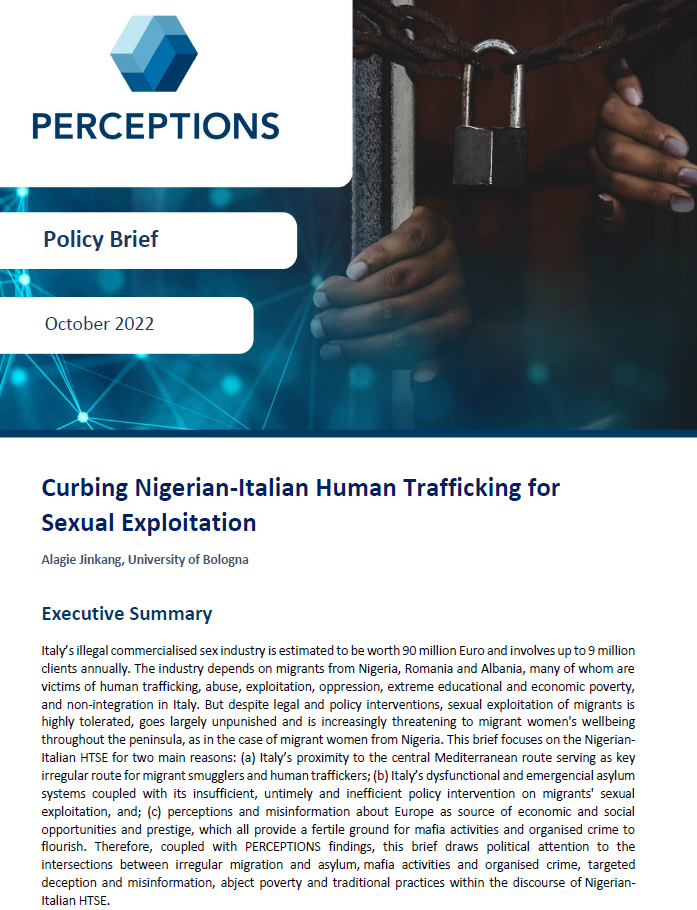
Curbing Nigerian-Italian Human Trafficking for Sexual Exploitation

By Alagie Jinkang

Italy’s illegal commercialised sex industry is estimated to be worth 90 million Euro and involves up to 9 million clients annually. The industry depends on migrants from Nigeria, Romania and Albania, many of whom are victims of human trafficking, abuse, exploitation, oppression, extreme educational and economic poverty, and non-integration in Italy. But despite legal and policy interventions, sexual exploitation of migrants is highly tolerated, goes largely unpunished and is increasingly threatening to migrant women's wellbeing throughout the peninsula, as in the case of migrant women from Nigeria. This brief focuses on the NigerianItalian HTSE for two main reasons: (a) Italy’s proximity to the central Mediterranean route serving as key irregular route for migrant smugglers and human traffickers; (b) Italy’s dysfunctional and emergencial asylum systems coupled with its insufficient, untimely and inefficient policy intervention on migrants' sexual exploitation, and; (c) perceptions and misinformation about Europe as source of economic and social opportunities and prestige, which all provide a fertile ground for mafia activities and organised crime to flourish. Therefore, coupled with PERCEPTIONS findings, this brief draws political attention to the intersections between irregular migration and asylum, mafia activities and organised crime, targeted deception and misinformation, abject poverty and traditional practices within the discourse of NigerianItalian HTSE.

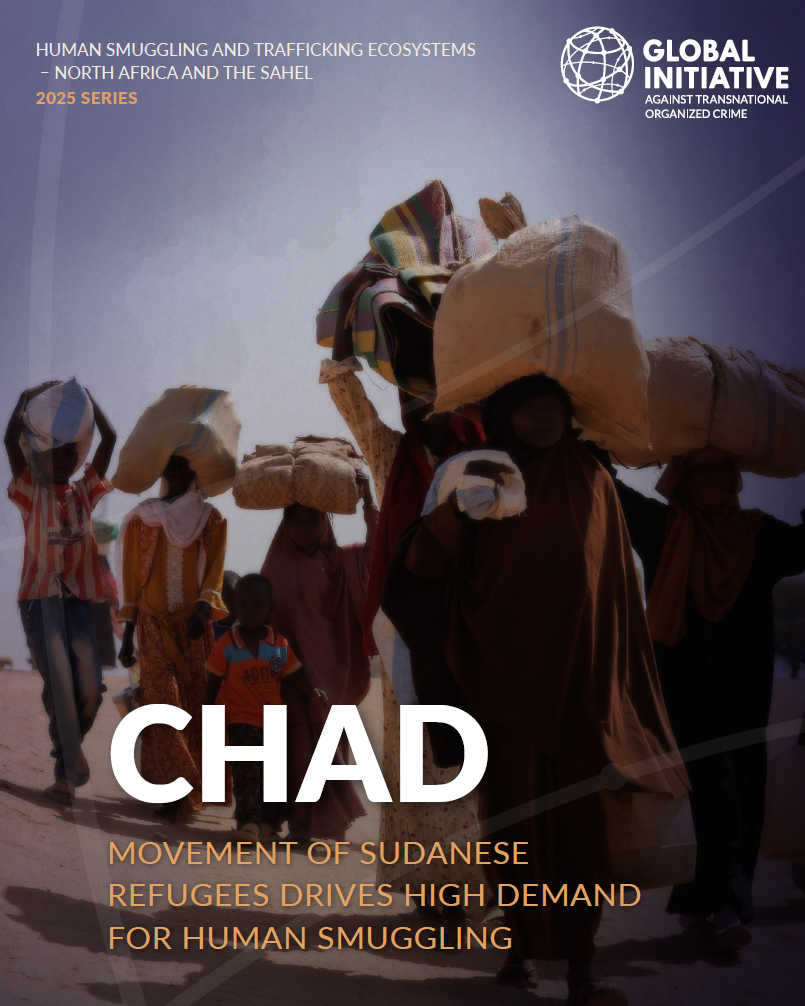
Chad-Movement-of-Sudanese-refugees-drives-high-demand-for-human-smuggling

By Alice Fereday

Chad’s role as a departure and transit country for northbound migration to North Africa and Europe is often overlooked, particularly in comparison to neighbouring Niger and Sudan. However, the country’s position at the crossroads of routes connecting central and eastern Africa to Libya and Niger makes it a significant transit corridor for regional migration, and its role as a bastion of relative stability in an increasingly volatile region has further increased its importance in recent years. Since 2023, the conflict in Sudan and a major influx of refugees into Chad have further shaped these mobility dynamics, making the country a major destination and transit point for Sudanese refugee displacement in the region. At the same time, Chad is navigating a fractious and contested political transition. Political violence escalated in 2024 and remains an important source of tension and political instability. The combination of these complex internal and regional dynamics, and their impact on human smuggling dynamics, make Chad a key country to monitor. A major component of human smuggling dynamics in Chad is internal movements to the country’s northern goldfields. These mobility patterns have typically been shaped by internal factors, including political instability, rebel activity and gold mining.1 This changed in 2023 with the outbreak of the conflict in Sudan and the massive influx of refugees and returnees into eastern Chad. Though northbound movements were temporarily hindered by this shift, which resulted iI emerged as the dominant model of migration in Libya in 2021 and remained so in 2024. Hybrid smuggling refers to the system whereby migrants initially travel to Libya through regular or semi-regular routes, such as flights into airports, and then are moved overland to coastal departure points for the sea crossing to Europe. This system is adaptable to local changes and delivers a consistently high level of attempted departures, despite some localized improvements in security. Critically, the Government of National Unity (GNU), which rules western Libya, continued to struggle with internal division and weak control over crucial areas, especially on the west coast, a key region for human smuggling stretching from the Tunisian border to the city of Zawiya. Political infighting and disputes over state resources 

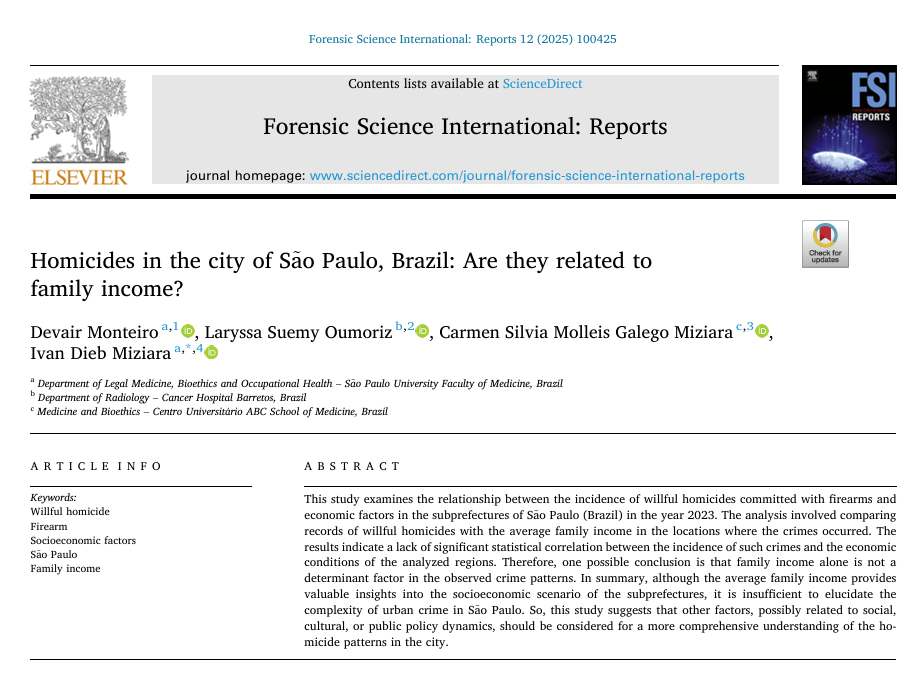
Homicides in the city of Sao ˜ Paulo, Brazil: Are they related to family income?

By Devair Monteiro, Laryssa Suemy Oumoriz , Carmen Silvia Molleis Galego Miziara , Ivan Dieb Miziara

This study examines the relationship between the incidence of willful homicides committed with firearms and economic factors in the subprefectures of São Paulo (Brazil) in the year 2023. The analysis involved comparing records of willful homicides with the average family income in the locations where the crimes occurred. The results indicate a lack of significant statistical correlation between the incidence of such crimes and the economic conditions of the analyzed regions. Therefore, one possible conclusion is that family income alone is not a determinant factor in the observed crime patterns. In summary, although the average family income provides valuable insights into the socioeconomic scenario of the subprefectures, it is insufficient to elucidate the complexity of urban crime in São Paulo. So, this study suggests that other factors, possibly related to social, cultural, or public policy dynamics, should be considered for a more comprehensive understanding of the homicide patterns in the city.

Forensic Science International: Reports, Dec. 2025

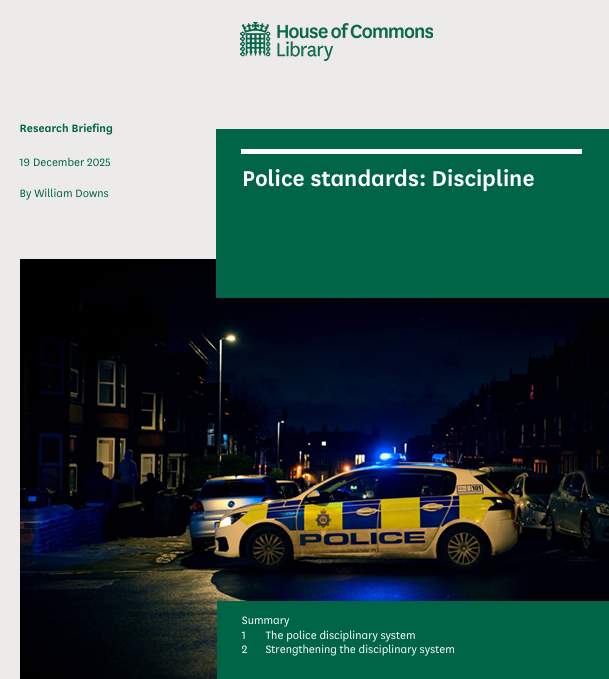
Police standards: Discipline 

By William Downs

Police disciplinary proceedings are brought in cases where it is agreed, following an investigation, that a police officer has a case to answer for: • misconduct (meaning a breach of the standards of professional behaviour that justifies disciplinary action of at least written), or • gross misconduct (meaning a breach of the standards of professional behaviour that is so serious to justify dismissal) A decision on whether there is a case to answer is based on whether there is sufficient evidence upon which a misconduct panel “could make a finding on the balance of probabilities” that an officer’s behaviour amounted to misconduct or gross misconduct. The Commons Library briefings Police standards: Complaints and Police Standards: Conduct explain in more detail how allegations of police wrongdoing are investigated.

London: UK Parliament. House of commons Library.. 2025. 19p.

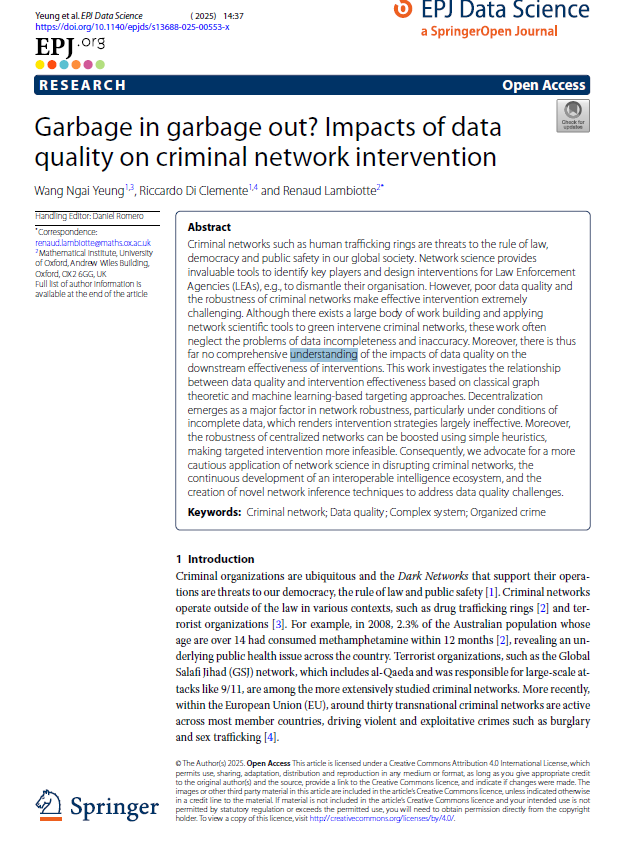
Garbage in garbage out? Impacts of data quality on criminal network intervention

By Wang Ngai Yeung, Riccardo Di Clemente & Renaud Lambiotte

Criminal networks such as human trafficking rings are threats to the rule of law, democracy and public safety in our global society. Network science provides invaluable tools to identify key players and design interventions for Law Enforcement Agencies (LEAs), e.g., to dismantle their organisation. However, poor data quality and the robustness of criminal networks make effective intervention extremely challenging. Although there exists a large body of work building and applying network scientific tools to green intervene criminal networks, these work often neglect the problems of data incompleteness and inaccuracy. Moreover, there is thus far no comprehensive understanding of the impacts of data quality on the downstream effectiveness of interventions. This work investigates the relationship between data quality and intervention effectiveness based on classical graph theoretic and machine learning-based targeting approaches. Decentralization emerges as a major factor in network robustness, particularly under conditions of incomplete data, which renders intervention strategies largely ineffective. Moreover, the robustness of centralized networks can be boosted using simple heuristics, making targeted intervention more infeasible. Consequently, we advocate for a more cautious application of network science in disrupting criminal networks, the continuous development of an interoperable intelligence ecosystem, and the creation of novel network inference techniques to address data quality challenges.

 EPJ Data Sci. 14, 37 (2025)

Artificial Intelligence, Cybersecurity, and National Security:

By Richard Danzig

In this paper, the author warns national security decisionmakers that to accomplish their missions they urgently need to better prepare for the impact of artificial intelligence (AI) on cybersecurity. He analyzes the present failings of the U.S. government in this respect, highlights the consequences of these failings, and makes recommendations for correcting them. He offers this effort as a case study and draws from it ten propositions relevant to those who are more broadly concerned with how AI, other technologies, and human decisions are intertwined and co-evolving.

Santa Monica, CA: RAND, 2025.

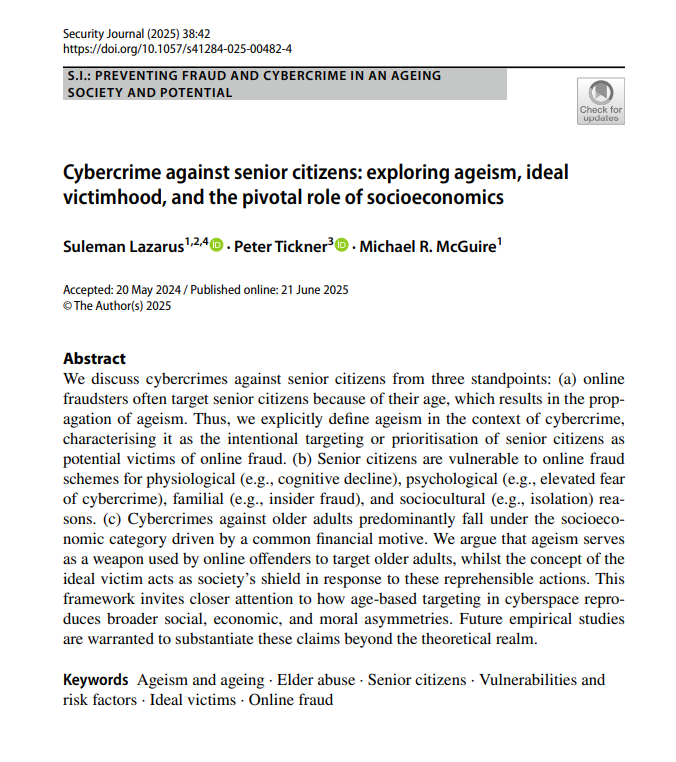
 Cybercrime against senior citizens: exploring ageism, ideal victimhood, and the pivotal role of socioeconomics

By Suleman Lazarus  · Peter Tickner  · Michael R. McGuire1

 We discuss cybercrimes against senior citizens from three standpoints: (a) online fraudsters often target senior citizens because of their age, which results in the propagation of ageism. Thus, we explicitly defne ageism in the context of cybercrime, characterising it as the intentional targeting or prioritisation of senior citizens as potential victims of online fraud. (b) Senior citizens are vulnerable to online fraud schemes for physiological (e.g., cognitive decline), psychological (e.g., elevated fear of cybercrime), familial (e.g., insider fraud), and sociocultural (e.g., isolation) reasons. (c) Cybercrimes against older adults predominantly fall under the socioeconomic category driven by a common fnancial motive. We argue that ageism serves as a weapon used by online offenders to target older adults, whilst the concept of the ideal victim acts as society’s shield in response to these reprehensible actions. This framework invites closer attention to how age-based targeting in cyberspace reproduces broader social, economic, and moral asymmetries.  Future empirical studies are warranted to substantiate these claims beyond the theoretical realm.

Security Journal (2025) 38:42 

Crash (exploit) and burn: Securing the offensive cyber supply chain to counter China in cyberspace,

By Winnona DeSombre Bernsen

If the United States wants to increasingly use offensive cyber operations internationally, does it have the supply chain and acquisition capabilities to back it up—especially if its adversary is the People’s Republic of China? 

 The Cyber Statecraft Initiative’s new report from CSI nonresident fellow Winnona DeSombre Bernsen, Crash (exploit) and burn: Securing the offensive cyber supply chain to counter China in cyberspace,  is the first to conduct a comparative study within the international offensive cyber supply chain, comparing the United States’ fragmented, risk-averse acquisition model with China’s outsourced and funnel-like approach.

 Strategic competition between the United States and China has long played out in cyberspace, where offensive cyber capabilities, like zero-day vulnerabilities, are a strategic resource. Since 2016, China has been turning the zero-day marketplace in East Asia into a funnel of offensive cyber capabilities for its military and intelligence services, both to ensure it can break into the most secure Western technologies and to deny the United States from obtaining similar capabilities from the region. If the United States wishes to compete in cyberspace, it must compete against China to secure its offensive cyber supply chain.

Washington, DC: Atlantic Council, 2025. 44p

Cybercrime Classification and Measurement

By Hal S. Stern and Daniel L. Cork, Editors

Cybercrime poses serious threats and financial costs to individuals and businesses in the United States and worldwide. Reports of data breaches and ransomware attacks on governments and businesses have become common, as have incidents against individuals (e.g., identity theft, online stalking, and harassment). Concern over cybercrime has increased as the internet has become a ubiquitous part of modern life. However, comprehensive, consistent, and reliable data and metrics on cybercrime still do not exist - a consequence of a shortage of vital information resulting from the decentralized nature of relevant data collection at the national level.

Cybercrime Classification and Measurement addresses the absence credible cybercrime data and metrics. This report provides a taxonomy for the Federal Bureau of Investigation for the purpose of measuring different types of cybercrime, including both cyber-enabled and cyber-dependent crimes faced by individuals and businesses, and considers the needs for its periodic revision. This report was mandated by the 2022 Better Cybercrime Metrics Act (BCMA).

Washington, DC: The National Academies Press., 2025. 160p.

Extended editorial: preventing fraud and cybercrime in an ageing society

By Mark Button  · Vasileios Karagiannopoulos  · Julak Lee  · Joon Bae Suh  · Jeyong Jung

Introduction The nature of crime has been changing globally with technological and other societal developments fuelling a growth in fraud and cybercrime (Button and Cross 2017). The diversity and rapid evolution of a broad range of scams has led to millions across the globe becoming victims of fraud (Federal Trade Commission 2019; ONS 2023a, 2023b). A common belief often promoted in policy circles and some research is that older adults are more vulnerable to fraud (James et al. 2014). This is not so clear cut, however, as in terms of victimisation, the middle aged have been most at risk (see Fig. 1 later). This is changing and there is evidence older adults (65+) are fast becoming the one of the most at risk categories and that they also tend to lose much more than other age groups (see Table 1 later). Indeed, there are a variety of trends fuelling a potential explosion in fraud and cybercrime among older adults unless serious action is taken to reduce the risks that we will shortly explore. It is for this reason we conceived this special edition and the research project that underpins it. To set the context for this edition, it is important to examine the factors fuelling the growth in fraud and cybercrime victimisation among older age groups. We will do this using data from the UK and South Korea. The reason for the selection of these countries is simple. The funding for the project stimulating this edition came from ESRC funding aimed at developing relationships with these two countries 

  Security Journal (2025) 38:40

Cyber‑enabled imposter scams against older adults in the United States

By Lauren R. Shapiro 

This paper evaluated three cyber-enabled imposter scams against older adults using Lifestyle Routine Activity Theory. The frst section examined the motivated ofender’s tools for manipulating older adult targets (social engineering and persuasion) and explained how Artifcial Intelligence could increase exposure and susceptibility of imposter victims. The next section focused on the suitable victim by examining how heuristics and impaired cognitive, physical, and psychosocial abilities contributed to the older adult target’s susceptibility to imposter scam by interfering with the process of rational decision-making. The third section examined ways in which capable guardians, in the form of agencies and laws, protected and helped older adult targets from imposter scams. Recommendations regarding the creation of educational programs that teach older adults how to be safer online (i.e., less suitable victims) through evaluating risks, identifying potential imposter scams, and becoming efcient self-advocators were provided.   

  Security Journal (2025) 38:43

Fear of fraud amongst older adults: a hidden epidemic? 

By Mark Button  · David Shepherd  · Chloe Hawkins  · Jacki Tapley

This paper explores older adults who are largely over 75 and their experience of fraud, based upon research with the clients of a UK charity working with this age group. The researchers used a postal questionnaire yielding almost 2000 responses, supplemented with interviews with clients and key staf. The research found higher rates of fraud victimisation than national rates for this age group as well regular attempted frauds, largely through the telephone. The experience of fraud and attempted fraud has a devastating impact on some of the lives of older adults, causing fear, anxiety, and related issues, which afects their quality of life. This is the frst study to illustrate that fear of fraud is a major problem amongst older adults, particularly females living alone.  

Security Journal (2025) 38:44

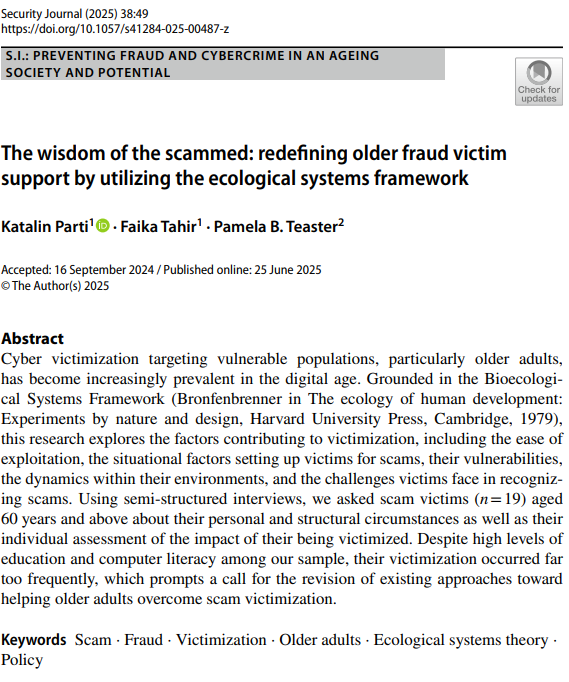
The wisdom of the scammed: redefning older fraud victim support by utilizing the ecological systems framework

By Katalin Parti  · Faika Tahir  · Pamela B. Teaster 

Cyber victimization targeting vulnerable populations, particularly older adults, has become increasingly prevalent in the digital age. Grounded in the Bioecological Systems Framework (Bronfenbrenner in The ecology of human development: Experiments by nature and design, Harvard University Press, Cambridge, 1979), this research explores the factors contributing to victimization, including the ease of exploitation, the situational factors setting up victims for scams, their vulnerabilities, the dynamics within their environments, and the challenges victims face in recognizing scams. Using semi-structured interviews, we asked scam victims (n=19) aged 60 years and above about their personal and structural circumstances as well as their individual assessment of the impact of their being victimized. Despite high levels of education and computer literacy among our sample, their victimization occurred far too frequently, which prompts a call for the revision of existing approaches toward helping older adults overcome scam victimization.  

  Security Journal (2025) 38:49

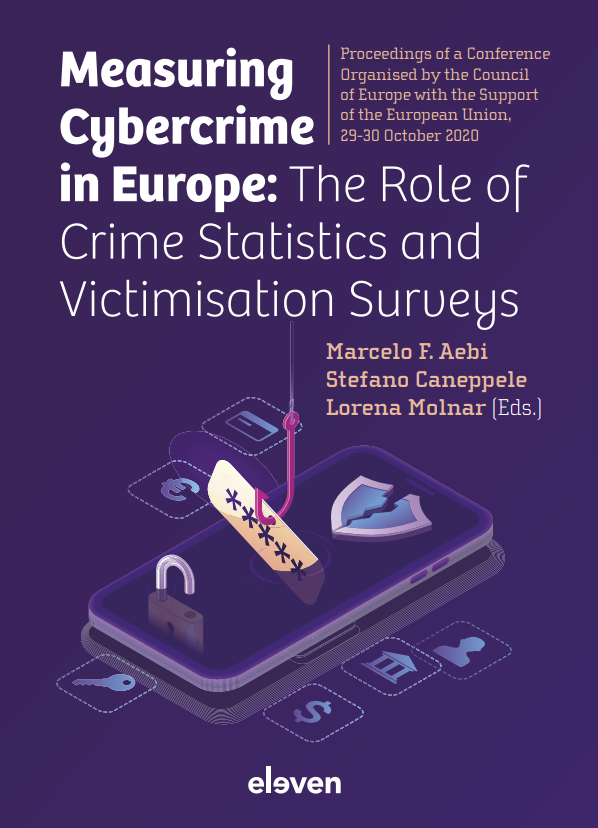
Measuring cybercrime in Europe

By Marcelo F. Aebi Stefano Caneppele Lorena Molnar (Eds.)

  Cybercrime has become part of everyday life. We live in hybrid societies, fl uctuating between the material and the virtual world, and we are hence confronted with online, offl ine and hybrid offences. However, the few victimisation surveys conducted in Europe reveal that victims of online crimes seldom report them to the police. Consequently, cybercrimes – which according to the best estimates represent between one third and more than half of all attempted and completed crimes in Europe – seldom appear in national criminal statistics. The State seems powerless to prevent them and private security companies fl ourish. During two days, experts from all over the continent gathered together in the framework of a virtual conference organized by the Council of Europe and the European Union to discuss what we know, what we do not know, and what we could do to improve our knowledge of crime in our contemporary hybrid societies, develop evidence-based criminal policies, provide assistance to crime victims, and implement realistic programs in the fi eld of crime prevention and offender treatment. This book presents their experiences, refl exions, and proposals  

The Hague: Eleven Publishing, 2022. 150p.  

Homicide in Sweden since 1990. 

Scope, trends and characteristics.

By Klara Hradilova-Selin

This study is the fourth in a series of Brå’s research reports on homicide in Sweden, based on material from the criminal justice system. The analyses build on audited data from police preliminary investigations and, in cases that have been cleared, judgments obtained from both district courts and appeal courts. The aim has been to outline trends in and characteristics of homicide cases since 1990, with a particular focus on the most recent period for which data have been collected, 2018–2021. Some analyses also include data from Brå’s statistics on confirmed cases of lethal violence for 2022 and 2023. 


Report 2024:6