Open Access Free Library
CRIME+CRIMINOLOGY.jpeg

CRIME

Violent-Non-Violent-Cyber-Global-Organized-Environmental-Policing-Crime Prevention-Victimization

Posts in Law Enforcement
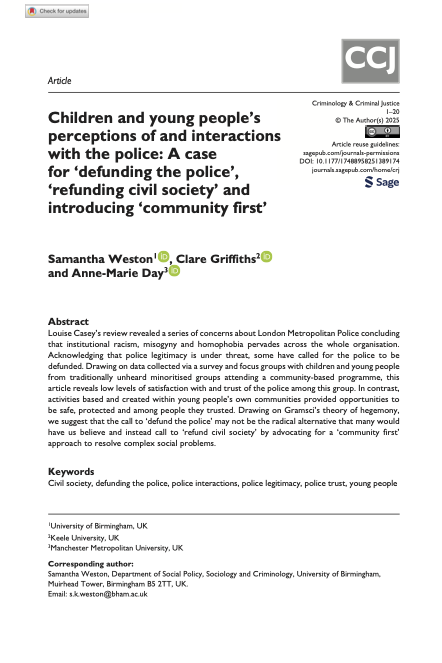
Children and young people’s perceptions of and interactions with the police: A case for ‘defunding the police’, ‘refunding civil society’ and introducing ‘community first’

By Samantha Weston, Clare Griffiths and Anne-Marie Day 

Louise Casey’s review revealed a series of concerns about London Metropolitan Police concluding that institutional racism, misogyny and homophobia pervades across the whole organisation. Acknowledging that police legitimacy is under threat, some have called for the police to be defunded. Drawing on data collected via a survey and focus groups with children and young people from traditionally unheard minoritised groups attending a community-based programme, this article reveals low levels of satisfaction with and trust of the police among this group. In contrast, activities based and created within young people’s own communities provided opportunities to be safe, protected and among people they trusted. Drawing on Gramsci’s theory of hegemony, we suggest that the call to ‘defund the police’ may not be the radical alternative that many would have us believe and instead call to ‘refund civil society’ by advocating for a ‘community first’ approach to resolve complex social problems.

Adopting a Systems Approach to Police Staffing

By Jeremy M. Wilson and Clifford A. Grammich

This publication illustrates elements of the police staffing challenge and explores how they form a broader ecosystem that agencies should consider when assessing staffing issues, contemplating goals and strategies, and implementing solutions. It presents a six-step approach for police workforce planning and managing workload demand and addresses planning for three common staffing scenarios.

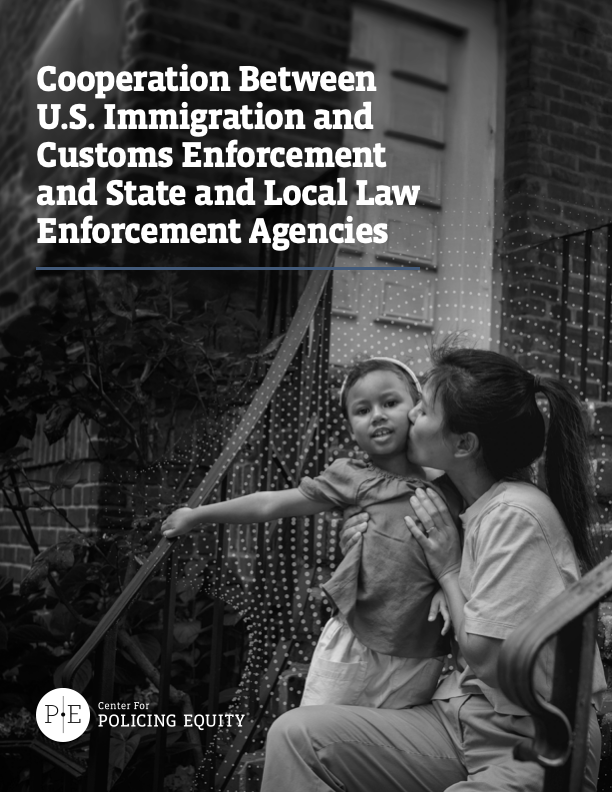
Cooperation Between U.S. Immigration and Customs Enforcement and State and Local Law Enforcement Agencies,

By Rashad James

For community advocates, policymakers, and law enforcement agencies (LEAs) interested in exploring alternatives, this document outlines how federal immigration authorities can—and cannot—compel state and local LEAs to cooperate. It also proposes four strategies that state and local jurisdictions can adopt to resist the growing push for a uniform law enforcement system under executive authority. Specifically, jurisdictions can 1) name the actions currently underway; 2) claim their moral vision through proactive legislation; 3) restrain the use of local funding for immigration enforcement; and 4) reframe these initiatives as measures that strengthen public safety. Community members and elected leaders are encouraged to share this document as a pathway toward a more just and equitable future. 

Examining the Impact of Integrating Communications, Assessment, and Tactics (ICAT) De-escalation Training for the Louisville Metro Police Department: Initial Findings

By Robin S. Engel, Nicholas Corsaro, Gabrielle T. Isaza, Hannah D. McManus, University of Cincinnati

In recent months, law enforcement officers have been faced with an unprecedented set of circumstances, navigating major social unrest in communities amid a pandemic and economic crisis. Acknowledging the dangers to both the community and officers, efforts have intensified to identify “solutions” to reduce the frequency and severity of violent encounters between police and the public. Calls for the adoption of “de-escalation” policies and training – widely endorsed by policy makers, policing experts, and the public – have been especially strong, and recent statistics on law enforcement practices suggest the field has responded (Engel et al., 2020b). For example, in a 2019 national survey of 155 large police departments in the United States, nearly all responding agencies indicated they offered some form of de-escalation training to officers in their agency (CBS, 2019). Although the implementation of de-escalation training is often encouraged, the effects of this training on police officers and their interactions with the public has not been systematically evaluated (Engel et al., 2020a). For this reason, the impact of de-escalation training on the frequency and severity of officers’ use of force and the subsequent injuries to citizens and officers is not well understood. It was within this context that the Louisville (KY) Metro Police Department (LMPD) stepped forward to both deliver and participate in the evaluation of a deescalation training. Specifically, the LMPD introduced the Police Executive Research Forum’s (PERF) Integrating Communications, Assessment, and Tactics (ICAT) training program to instruct officers in de-escalation tactics and critical thinking skills for the management of potentially volatile police-citizen encounters. Seeking to understand the effectiveness of this training, the LMPD partnered with the International Association of Chiefs of Police/University of Cincinnati Center for Police Research and Policy (IACP/UC Center) to conduct an independent, external evaluation of the effects of the ICAT training on their agency. This report documents the methodology and findings of the evaluation of ICAT training implemented within the LMPD. This study represents one of the first large-scale, methodologically rigorous evaluations of a well-known de-escalation training for police. Specifically, this study uses a multi-method approach, relying upon two distinct survey designs (i.e., repeated measure survey design, cross-sectional survey design) to assess the impact of training on the perceptions and self-reported experiences of officers and first-line supervisors, and a stepped-wedge randomized control trial design to examine training effects on officers’ behaviors and changes in the outcomes of police-citizen encounters. This seminal study is the first randomized control trial to demonstrate a significant reduction in officer use of force following de-escalation training implementation.

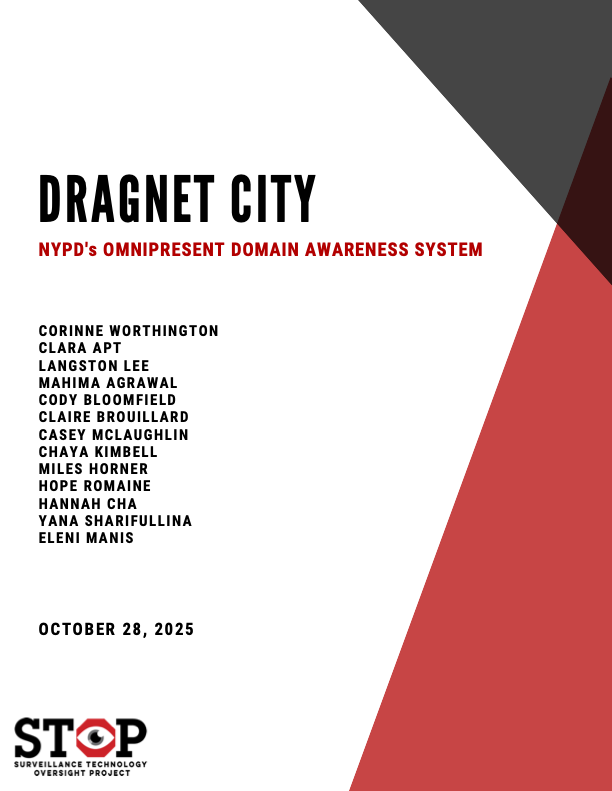
Dragnet City: NYPD's OMNIPRESENT DOMAIN AWARENESS SYSTEM

By Corinne Worthington, et al.

In this report, S.T.O.P. details the NYPD Domain Awareness System’s unparalleled invasion of New Yorkers’ privacy rights. Formed through a public-private partnership with Microsoft, the DAS is an opaque surveillance command center that collects data from tens of thousands of camera feeds, license plate readers, radiological sensors, and other spyware for real-time, warrantless surveillance of New Yorkers across the city. The report uses the NYPD’s own public statements to detail the scope of surveillance systems that monitor New Yorkers every day.

Key Findings Include:

  • The New York City Police Department’s Domain Awareness System (“DAS”) links citywide camera networks, license plate readers, drone and helicopter feeds, ShotSpotter gunshot alerts, 911 and 311 call records, and countless police records, law enforcement databases, and data streams into a single surveillance network.

  •  Part sensor network, part search engine, the DAS is the backbone of the NYPD’s surveillance program. Every NYPD officer has unfettered access to DAS data on their smartphone, allowing them to use and misuse this information for nearly any purpose.

  • DAS surveillance drives discriminatory stops and arrests of BIPOC and Muslim New Yorkers by giving officers access to illegal and prejudicial information.

  •  The NYPD has expanded the DAS rapidly without oversight and ignored court-mandated reforms.

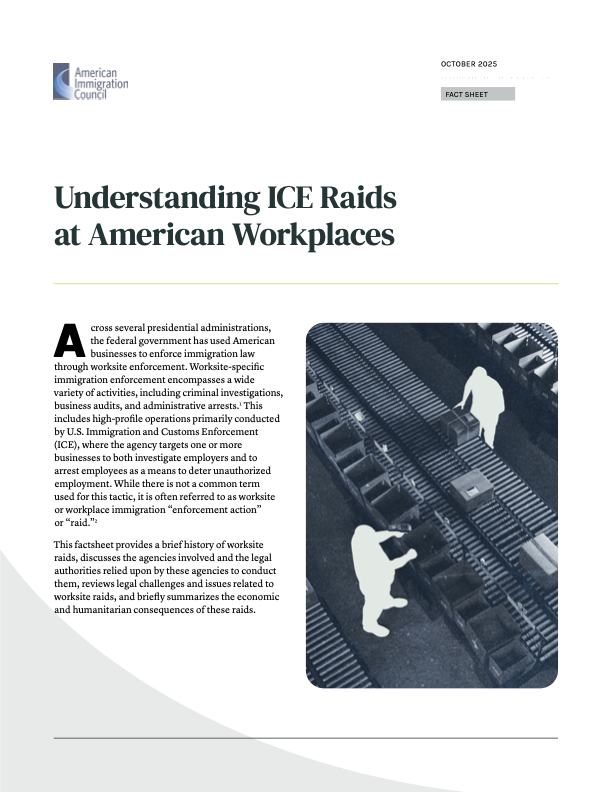
Understanding ICE Raids at American Workplaces

By The American Immigration Council

Across several presidential administrations, the federal government has used American businesses to enforce immigration law through worksite enforcement. Worksite-specific immigration enforcement encompasses a wide variety of activities, including criminal investigations, business audits, and administrative arrests.1 This includes high-profile operations primarily conducted by U.S. Immigration and Customs Enforcement (ICE), where the agency targets one or more businesses to both investigate employers and to arrest employees as a means to deter unauthorized employment. While there is not a common term used for this tactic, it is often referred to as worksite or workplace immigration “enforcement action” or “raid.”2 This factsheet provides a brief history of worksite raids, discusses the agencies involved and the legal authorities relied upon by these agencies to conduct them, reviews legal challenges and issues related to worksite raids, and briefly summarizes the economic and humanitarian consequences of these raids.

PLANNING, IMPLEMENTING, AND ASSESSING : Law Enforcement Responses to Homelessness  

By The Council of State Governments Justice Center

Homelessness is a growing crisis in America, increasing by 12% between 2022 and 2023 alone. While there are a range of ideas about how to address this issue, in many places across the country, law enforcement officers are still typically the default first responders to these kinds of community concerns. This publication details how communities can strategically plan for and assess their law enforcement homelessness response efforts, using a shared vision, a logic model, and regular assessments to determine if the response is achieving its intended goals. It also discusses the importance of expanding the knowledge base of law enforcement practices and strategies to establish a set of national standards for effective and successful homelessness responses.

Preventing Crime: A Reader's Guide

by Graeme R. Newman with the assistance of Claude.

Can you stop crime before it starts, without fully knowing what causes it? A reader's guide to the 1936 symposium that gathered twenty-four programs trying to find out.

Preventing Crime: A Symposium, edited by Sheldon and Eleanor Glueck, brought together the directors of coordinated community councils, school bureaus, police prevention units, residential homes, child guidance clinics, a parent school, and boys' clubs, and asked each the same questions: what evidence shows the need for your program, how does it work, and how do you know whether it succeeds? The editors were candid from the start. Their title, they admitted in the preface, was optimistic, and a more accurate one would have been "Promising Efforts to Prevent Delinquency and Criminality." Only time and real evaluation, they wrote, could say whether these programs actually prevented anything.

The book is a portrait of what serious people believed about crime prevention in the depths of the Depression, and a case study in the gap between good intentions and good evidence. This Reader's Guide makes it accessible without replacing it. It explains what each program did, sets out the twelve principles the Gluecks drew from the contributions, and shows exactly what counted as proof of success in 1936, and how little of it would count today.

INSIDE THIS GUIDE

  • A reading plan and a chapter-by-chapter map of the original, with all twenty-five contributors

  • The Gluecks' opening argument: can crime be prevented without knowing its causes?

  • Twelve principles distilled from the programs, from starting early to using trained personnel

  • Community councils, school programs, police prevention bureaus, residential homes, clinics, and boys' clubs, program by program

  • A close look at "the audit problem": what each contributor offered as evidence, and what it actually showed

  • A worked example that tests one program's before-and-after numbers against six hard questions

  • What has changed since 1936, including the Cambridge-Somerville Youth Study's sobering results and decades of research on what works, what doesn't, and what's promising

  • Five common misreadings, a primer of evaluation terms, a glossary, an annotated reading list, an FAQ, 26 discussion questions and classroom activities

WHO IT'S FOR: Students of criminology, social work, education, public policy and program evaluation; practitioners designing youth programs; teachers and reading groups; and general readers curious about where crime prevention came from and why proving it works is so hard.

PLEASE NOTE: This is an independent guide, not an abridgment or edition of the original symposium. It does not reproduce the original's text and is not endorsed by the editors', or contributors', heirs. It is meant to be read alongside the original, which is in the public domain in the United States.

Written by Graeme R. Newman with the assistance of Claude, an AI model made by Anthropic. The AI-generated content is disclosed in accordance with Read-Me.Org policy.

Download the original book here.

Read-Me.Org Inc. New York-Philadelphia-Australia. 2026. p.54p.

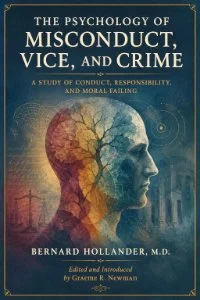
The Psychology Of Misconduct, Vice, And Crime: A Study of Conduct, Responsibility, and Moral Failing

bby Bernard Hollander (Author), Graeme Newman (Introduction)

Why do people do what they know is wrong—and how much responsibility should they bear for their actions?

First published in 1922, Bernard Hollander’s The Psychology of Misconduct, Vice, and Crime: A Study of Conduct, Responsibility, and Moral Failing is a fascinating early attempt to understand wrongdoing through psychology rather than through moral condemnation alone. Drawing on twenty-five years of medical practice with patients suffering from nervous and mental disorders, Hollander examines the impulses, habits, emotions, circumstances, and failures of self-control that can lead ordinary people toward destructive or criminal behavior.

Moving across the emerging fields of psychology, psychiatry, and criminology, Hollander asks questions that remain strikingly familiar today. How do heredity and environment shape conduct? Why can one person resist temptation while another cannot? What roles do opportunity, habit, intoxication, anger, fear, acquisitiveness, and sexual desire play in misconduct? And at what point should psychological impairment affect our judgment of moral and legal responsibility?

Across twelve wide-ranging chapters, Hollander investigates the psychological foundations and causes of misconduct before turning to alcohol and drug habits, aggression and violence, suspicion and deceit, theft and crimes for gain, fear of consequences, sexual conduct, egotism and domination, moral weakness, responsibility, and treatment.

Of particular interest to readers of criminology is Hollander’s rejection of simplistic explanations based entirely upon free will. He sees behavior as emerging from the interaction of predisposition, upbringing, social environment, opportunity, competing motives, and the individual’s capacity for inhibition and self-control. His treatment of professional offenders also distinguishes calculated criminality from impulsive or psychologically troubled misconduct—an early recognition that there is no single psychological type called “the criminal.”

Hollander’s science is unmistakably that of his era. Some of his terminology, assumptions about heredity and mental deficiency, views of sexuality, and continuing interest in phrenology have long since been rejected or superseded. Yet this is precisely what makes the book valuable as a historical document: it captures a formative period when psychology, psychiatry, medicine, and criminology were struggling to replace simple categories of vice and wickedness with explanations based on individual differences and the causes of human behavior.

At the same time, Hollander frequently argues against indiscriminate punishment. He considers upbringing, poverty, physical and mental condition, temptation, and circumstance; questions whether fear and punishment genuinely reform offenders; and advocates individualized treatment rather than a single remedy for every form of misconduct.

This 2026 Read-Me.Org Classic Reprint, designed and edited with a new introduction by Graeme R. Newman, preserves Hollander’s historical arguments and period terminology while correcting obvious OCR and typographical defects, regularizing punctuation, and converting spelling to contemporary American English.

More than a century after its first appearance, The Psychology of Misconduct, Vice, and Crime offers historians, criminologists, psychologists, criminal-justice students, and general readers a provocative window into the origins of modern thinking about crime, deviance, self-control, treatment, and human responsibility.

Read-Me.Org Inc. New York-Philadelphia-Australia. 2026. 153p.

Stop Thief: A Study of Crime in America

by Col. V. M. Masten (Author), Graeme Newman (Introduction)

What did Americans believe caused crime a century ago—and what did they think should be done about it?

First published in 1921, Stop Thief is a forceful and revealing examination of crime, punishment, policing, prisons, and social disorder in Progressive-Era America. Written by Col. V. M. Masten, the book captures a nation deeply concerned about rising crime and fiercely debating whether criminals should be deterred, punished, rehabilitated, or reformed.

Across eight wide-ranging chapters, Masten addresses immigration and crime, criminal influence and “crime by suggestion,” the courts and judges, prison reform, correctional regimes, professional sport and gambling, and proposals for improving probation, sentencing, and prison administration.

Masten is an uncompromising writer. He challenges the growing rehabilitative philosophy of his period and argues instead for discipline, deterrence, personal responsibility, and the vigorous enforcement of law. Yet some of his observations—particularly his concern with gambling, criminal association, and the ways people learn criminal behavior from others—anticipate debates that remain remarkably current.

At the same time, Stop Thief is very much a document of 1921 America. Its discussions of immigration, race, heredity, and social fitness contain prejudices and pseudo-scientific assumptions characteristic of parts of Progressive-Era criminological writing. This edition preserves that language rather than disguising or rewriting it, allowing the book to be read critically as an important historical source.

This new Read-Me.Org edition reproduces the complete original text, corrected for scanning and transcription errors, and includes a new introduction by criminologist Graeme R. Newman, placing Masten and his arguments within the history of American crime, criminal justice, immigration, and penal reform.

Essential reading for students and readers interested in criminology, criminal justice, American social history, policing, prisons, immigration history, and the Progressive Era, Stop Thief offers something more valuable than a modernized account of the past: it allows us to encounter the American debate over crime as it was actually being conducted more than a century ago.

Read-Me.Org Inc. New York-Philadelphia-Australia. 2026. 189p.

London Prisons: A Retrospective

by Graeme R. Newman

In 1862, Henry Mayhew and John Binny walked into eleven of London's most notorious institutions — Newgate, Millbank, Pentonville, Brixton, the prison hulks at Woolwich, Coldbath Fields, Tothill Fields, Wandsworth, Holloway, the House of Detention at Clerkenwell, and Horsemonger Lane — and wrote down exactly what they saw: the governors, the warders, the chaplains, and the prisoners themselves, in their own words.

This edition brings that record back to life. Each chapter has been fully rewritten in modern prose while preserving every fact, every interview, and every argument the original authors made — from their case against purposeless hard labour to their unflinching accounts of the convict nursery, the condemned cell, and the boy discharged from prison with no one waiting at the gate.

A new introduction and retrospective, written for this edition, follows these institutions into the present: which ones were demolished, which became galleries, cathedrals, and post offices — and which are still open today, cited in current inspection reports for the very same overcrowding and neglect that Victorian reformers were fighting a century and a half ago.

What you'll find inside: • Eleven Victorian prisons, reconstructed room by room, cell by cell • Real testimony from governors, chaplains, and prisoners — first offenders and lifelong professionals alike • A frank, often moving record of Victorian London's poorest and most desperate • A new historical retrospective connecting each institution to its fate today

Part social history, part true crime, part uncomfortable mirror — London Prisons: A Retrospective is a door-by-door tour of a city's conscience, then and now.

Read-Me.Org Inc. New York-Philadelphia-Australia. 2026. p.339.

London and Its Criminals: A Portrait of London's Underworld in the 1920s

by Nettly Lucas (Author), Graeme Newman (Introduction)

Step into the hidden London of the 1920s—a city of fashionable hotels and crowded streets, respectable suburbs and shadowy back rooms, Scotland Yard detectives and professional criminals who made deception, burglary, fraud and blackmail their trade.

First published in 1926, London and Its Criminals is Netley Lucas’s remarkable journey through the criminal underworld of interwar London. Rather than simply recounting celebrated crimes, Lucas sets out to describe criminals themselves: how they lived, where they gathered, the methods they used, the slang they spoke, and the elaborate machinery of policing that pursued them.

The result is an extraordinary period portrait of crime and criminal justice.

Lucas takes his readers inside Scotland Yard and its Criminal Record Office, explaining the growing importance of fingerprints, criminal records and systematic detection. From there he ventures into a very different London—the world of professional burglars, pickpockets, confidence tricksters, jewel thieves, forgers, blackmailers and criminal gangs. He introduces his readers to figures he describes as the “Kings” and “Queens” of the Underworld: men and women who move between cheap public houses, prosperous suburban homes, exclusive restaurants and fashionable hotels while living secret criminal lives.

Among the book’s most striking chapters are Lucas’s accounts of “master criminals” and “crooked women.” His characters include expert burglars, ingenious forgers, sophisticated jewel thieves and accomplished confidence tricksters. Some are frightening, some ingenious, some surprisingly ordinary. Again and again Lucas emphasizes the unsettling proximity of the criminal world to respectable society.

Yet London and Its Criminals is more than a gallery of rogues. Lucas was writing at a moment when attitudes toward crime and punishment were beginning to change. He opens the book by discussing the emerging scientific study of crime, criminal psychology, rehabilitation and the limitations of imprisonment—questions that remain central to debates about criminal justice a century later.

Lucas is also an unusually provocative guide. He claims familiarity with criminals themselves and repeatedly describes conversations, meals and encounters with people operating on the wrong side of the law. His London is consequently not the London of official police reports alone. It is a city observed from its restaurants, streets, clubs, pubs, courtrooms and criminal meeting places.

Modern readers should approach some of Lucas’s language, assumptions and sweeping judgments as products of their time. That is also part of the historical importance of the book. It provides a vivid primary-source window into how crime, policing, punishment, class and the urban underworld were represented during the 1920s.

This new Read-Me.Org Classic Reprint presents Lucas’s fascinating account to a new generation of readers, accompanied by a detailed new Introduction by Graeme Newman that places the work in its historical and criminological context.

For readers interested in true crime, criminology, Scotland Yard, policing, criminal history, London history, organized crime and the social history of the 1920s, London and Its Criminals offers a fascinating journey into a vanished—but sometimes surprisingly familiar—criminal world

Read-Me.Org Inc. New York-Philadelphia-Australia. 2026. p.194.

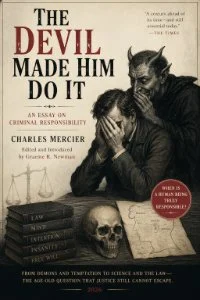
The Devil Made Him Do It

A Forgotten Classic of Criminological Thought—Reintroduced for the Twenty-First Century

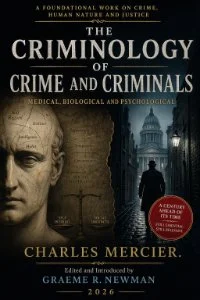
Originally published in 1918 and now carefully edited and introduced by Graeme R. Newman, The Criminology of Crime and Criminals: Medical, Biological and Psychological restores Charles Mercier’s groundbreaking exploration of crime, punishment, criminal behavior, and social order.

Long before modern criminology embraced concepts such as situational crime prevention, environmental opportunity, offender decision-making, and restorative justice, Mercier argued that crime cannot be explained by biology, psychology, or environment alone. Instead, criminal behavior emerges from the interaction between human nature and circumstance, between personal disposition and criminal opportunity.

Rejecting the popular theories of his day, Mercier challenges the notion of the “born criminal” and dismisses simplistic environmental explanations of lawbreaking. His provocative and highly original analysis examines:

  • The psychological foundations of criminal conduct

  • The roles of instinct, reason, desire, self-control, and will

  • How opportunity and temptation shape criminal action

  • The classification of crimes and criminals

  • The relationship between crime, morality, and society

  • The purposes of punishment: deterrence, retaliation, reform, and reparation

  • The prevention, detection, and punishment of crime

Mercier’s central insight—that criminals are not a separate species but ordinary human beings responding differently to circumstances—remains strikingly relevant more than a century later.

Graeme R. Newman’s contemporary introduction places Mercier within the broader history of criminological thought and connects his ideas to modern developments in crime prevention and criminal justice. Together, Mercier and Newman illuminate enduring questions that continue to shape public policy and scholarly debate:

Why do people commit crimes? How should society respond? Is prevention more effective than punishment?

Part intellectual history, part criminological theory, and part social philosophy, this edition offers a fascinating window into the origins of modern criminology and the continuing struggle to understand crime and criminals.

Essential reading for students and scholars of criminology, criminal justice, sociology, psychology, legal history, and anyone interested in the causes of crime and the future of punishment.

Read-Me.Org Inc. New York-Philadelphia-Australia. 2026. 195p.

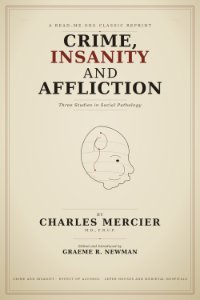
Crime, Insanity And Affliction: Three Studies in Social Pathology

by Graeme Newman (Editor), Charles Mercier (Author)

Why do people commit crime? When does mental illness diminish responsibility? Should punishment always follow wrongdoing?

More than a century before modern debates about criminal responsibility, forensic psychiatry, and the treatment of mentally ill offenders, the distinguished British physician Charles Mercier confronted these enduring questions with remarkable clarity and originality.

In Crime, Insanity and Affliction, Mercier explores the complex relationship between criminal behaviour, mental disorder, and human suffering. Rejecting simplistic explanations, he argues that crime cannot be understood apart from the biological, psychological, and social forces that shape human conduct. His examination ranges from drunkenness, epilepsy, intellectual disability, and mental illness to questions of moral responsibility, punishment, and the proper role of the criminal law.

Although written in the early twentieth century, many of Mercier's observations anticipate debates that continue today. His discussion of diminished responsibility, the treatment of mentally ill offenders, addiction, and the limits of punishment remains surprisingly relevant in an era still struggling to balance justice, compassion, and public safety.

This new Read-Me edition presents Mercier's influential work with a new editorial introduction that places his ideas within the development of modern criminology, forensic psychiatry, and criminal justice. It also examines where Mercier's conclusions have been confirmed, where later research has challenged them, and why his work continues to deserve the attention of students, scholars, and general readers alike.

More than a historical curiosity, Crime, Insanity and Affliction is a thoughtful exploration of one of society's oldest and most difficult questions: how should we judge those whose minds, circumstances, or afflictions place them beyond the ordinary boundaries of responsibility?

Read-Me.Org Inc. New York-Philadelphia-Australia. 2026. 182p.

The Criminology Of Crime And Criminals: Medical, Biological And Psychological

A Forgotten Classic of Criminological Thought—Reintroduced for the Twenty-First Century

Originally published in 1918 and now carefully edited and introduced by Graeme R. Newman, The Criminology of Crime and Criminals: Medical, Biological and Psychological restores Charles Mercier’s groundbreaking exploration of crime, punishment, criminal behavior, and social order.

Long before modern criminology embraced concepts such as situational crime prevention, environmental opportunity, offender decision-making, and restorative justice, Mercier argued that crime cannot be explained by biology, psychology, or environment alone. Instead, criminal behavior emerges from the interaction between human nature and circumstance, between personal disposition and criminal opportunity.

Rejecting the popular theories of his day, Mercier challenges the notion of the “born criminal” and dismisses simplistic environmental explanations of lawbreaking. His provocative and highly original analysis examines:

  • The psychological foundations of criminal conduct

  • The roles of instinct, reason, desire, self-control, and will

  • How opportunity and temptation shape criminal action

  • The classification of crimes and criminals

  • The relationship between crime, morality, and society

  • The purposes of punishment: deterrence, retaliation, reform, and reparation

  • The prevention, detection, and punishment of crime

Mercier’s central insight—that criminals are not a separate species but ordinary human beings responding differently to circumstances—remains strikingly relevant more than a century later.

Graeme R. Newman’s contemporary introduction places Mercier within the broader history of criminological thought and connects his ideas to modern developments in crime prevention and criminal justice. Together, Mercier and Newman illuminate enduring questions that continue to shape public policy and scholarly debate:

Why do people commit crimes? How should society respond? Is prevention more effective than punishment?

Part intellectual history, part criminological theory, and part social philosophy, this edition offers a fascinating window into the origins of modern criminology and the continuing struggle to understand crime and criminals.

Essential reading for students and scholars of criminology, criminal justice, sociology, psychology, legal history, and anyone interested in the causes of crime and the future of punishment.

Read-Me.Org Inc. New York-Philadelphia-Australia. 2026. 195p.

The Biology of Conduct Disorders

The book that criminology forgot — and urgently needs to remember.
Arthur M<ercier (Author). Graeme Newman (Editor and Introduction).

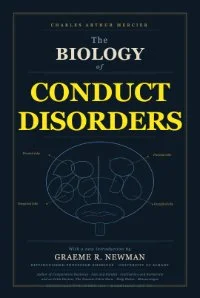
First published in 1918 by the University of London Press, Charles Arthur Mercier's Conduct and Its Disorders, Biologically Considered, published by Macmillan in 1911 is one of the most rigorous, most readable, and most unjustly neglected works in the history of criminological thought. Now reissued as The Biology of Conduct Disorders, with a major critical introduction by Graeme R. Newman, it arrives at a moment when the questions it raises — about criminal intent, biological disposition, the limits of punishment, and the poverty of criminological theory — are more pressing than ever.
Mercier was no armchair theorist. As medical officer of lunatic asylums, consulting physician at criminal trials, and the only systematic student of conduct as a science, he brought to the study of crime a combination of clinical experience and biological rigour that the field had not seen before and has rarely matched since. His target was the prevailing chaos of criminological thought — above all the Continental school of Lombroso, which he dismantled with surgical precision — and his method was the application of praxiology, his own science of conduct, to the specific problem of criminal action.

What Mercier argued — and why it still matters:

  • Every criminal act is the product of two factors: an internal factor (the biological constitution of the offender) and an external factor (circumstance and opportunity). Ignoring either produces not criminology but ideology.

  • The turpitude of the criminal and the gravity of the crime are entirely separate questions — and confusing them has produced centuries of unjust punishment.

  • Punishment should be calibrated to intention, not outcome: the man who intends murder and fails is more culpable than the man who kills by accident, whatever the body count.

  • Statistical criminology — mass data gathered from convicted prisoners — cannot produce a science of crime. Only the study of individual criminal action, grounded in biology, psychology, and jurisprudence together, can do that.

  • Certain acts currently outside the law (stealing the use of a thing; deliberate breach of contract) deserve criminal status; certain acts currently criminalised do not.

This new edition includes a critical introduction by Graeme R. Newman, Distinguished Professor Emeritus at the School of Criminal Justice, University at Albany, and one of the most provocative and original voices in the study of crime, deviance, and punishment. Author of Comparative Deviance: Perception and Law in Six Cultures, The Punishment Response, Just and Painful: A Case for the Corporal Punishment of Criminals, and Civilization and Barbarism: Punishing Criminals in the Twenty-First Century — and, as Colin Heston, of darkly satirical fiction including The Tommie Felon Show, Miscarriages, and Holy Water — Newman brings a unique authority to this text. Writing with the unflinching directness that earned him national television appearances and a reputation as the most uncomfortable conscience in American criminology, he traces the connections between Mercier's 1918 arguments and the debates that have defined — and divided — the field ever since.
"With the exception of logic, there is no subject on which so much nonsense has been written as this of criminality and the criminal." — Charles Arthur Mercier, 1918
Essential reading for students and scholars of criminology, criminal justice, the history of psychiatry, legal theory, and the philosophy of punishment — and for anyone who has ever wondered why, after two centuries of criminal science, we understand so little about why people commit crimes and what we should do about it.

Read-Me.Org Inc. New York-Philadelphia-Australia. 2026. 208p.

MAPPING SYNTHETIC DRUG MARKETS IN WEST AFRICA

By Lucia Bird | Jason Eligh,  Kingsley Madueke | Mouhamadou Kane

The proliferation of synthetic drugs across West Africa potentially represents one of the most urgent and complex public health and security challenges facing the region. In recent years, the illicit drug landscape has been fundamentally reshaped, moving away from traditional plant-based substances controlled by hierarchical criminal networks towards a fragmented, decentralized market for man-made psychoactive compounds. The harms driven by the synthetic drug market – overdoses, chronic health conditions, severe mental health conditions, community fragmentation – are escalating. Consumption, and consequences, are concentrated in the youth: in the worst-affected countries this poses a serious threat to future stability and economic development. The effects of synthetic drugs in parts of West Africa have become so severe that since 2024 two countries have declared states of emergency – an unprecedented response previously reserved for deadly epidemics and pandemics.1 This report examines the emergence and rapid expansion of this synthetic drug economy in West Africa, detailing how factors such as low barriers to entry, the convenience and anonymity afforded by the proliferation of online platforms and technology, and the minimal capital required for production have enabled a diverse array of new criminal actors to enter the trade. The subsequent influx of substances such as synthetic cannabinoids, nitazenes and other novel compounds of unknown composition, and the expansion of pre-existing synthetic drug markets such as methamphetamine, present a multifaceted threat that is rapidly outpacing the response capacity of regional governments. The breadth and depth of synthetic substance presence globally has grown enormously over the past decade. Increasingly, synthetic substances are being detected in local illicit drug markets that have no prior record of their presence, often being identified as contaminants of, or unknown substitutes for, other more traditional substances. Expanding use of synthetic opioids, particularly tramadol, tramadol derivatives (most prominently tapentadol) and nitazenes in West Africa, is a particularly alarming trend within this growing illicit drug marketplace. These substances, some vital to public health institutions for pain relief and palliative care purposes, have been responsible for a significant increase in drug-related morbidity and mortality worldwide. Their potency and availability pose unprecedented challenges to public health systems and law enforcement agencies alike.

The sheer diversity of substances being synthesized, the inability of existing surveillance systems to effectively identify many of them, and the challenge of interdicting and mitigating their harms significantly impairs the ability of health and security services to respond. Further, the intersection of synthetic drug markets with other illicit activities further complicates efforts to address these challenges effectively. Organized criminal networks leverage the profits generated from synthetic drug production, trafficking and distribution to fund their criminal operations and purchase protection, driving corruption. The report explores the mechanisms driving this rapid expansion in synthetic drug markets in West Africa, analyzing the critical roles of digital technology and globalized supply chains. It looks at how internet penetration across the region has facilitated growth in the online purchase of precursor chemicals and finished products, often from suppliers in Asia and Europe, which are smuggled into the region through difficult-to-monitor channels such as postal and courier services. The report discusses the profound economic incentives that make the synthetic drug trade so attractive, functioning as a ‘bridge’ market that allows new entrants to accumulate capital rapidly. By examining case studies and discussing market trends, the report illustrates how these dynamics have allowed synthetic drugs to capture a growing share of the retail market with alarming speed, potentially leading to devastating social and public health consequences.

Geneva:  Global Initiative Against Transnational Organized Crime. 2026. 47p.

Police standards: Conduct

By William Downs

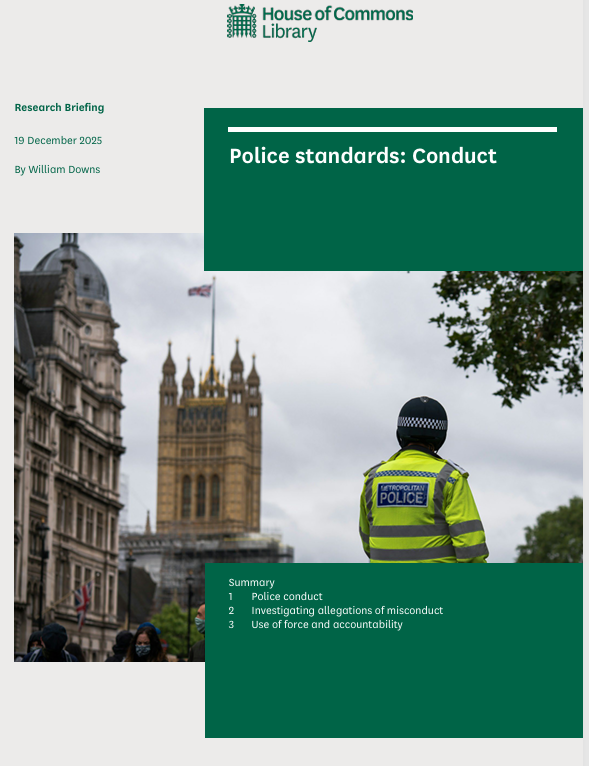
Police misconduct is behaviour by a police officer that falls below the standards of professional behaviour for the police.

Cases of police misconduct can arise from concerns raised by police officers or staff, or following incidents where members of the public have been harmed by the actions of the police.

What are the laws on police misconduct?

Legislation specifies how allegations of police misconduct should be handled, though the framework is complex. In short, most allegations of police misconduct are handled in line with rules set out in the Police Act 1996 and Police (Conduct) Regulations 2020. This legislation is designed to support the police in maintaining a disciplined force. The Home Office provides statutory guidance on implementing this legislation.

London: UK Parliament, House of Commons Library, 2025. 23p.