Open Access Publisher and Free Library
CRIME+CRIMINOLOGY.jpeg

CRIME

Violent-Non-Violent-Cyber-Global-Organized-Environmental-Policing-Crime Prevention-Victimization

Posts in Crime Trends
The right to be free of corruption: A new frontier in anti-corruption approaches through national courts

By Naomi Roht-Arriaza

Courts in several jurisdictions have recognised corruption as a direct human rights violation, enabling broader legal standing, integrating international law and focusing on victims. Case studies, predominantly from Latin America, illustrate different legal theories used to hold officials accountable and expand access to justice in anti-corruption proceedings. Consequently, the formulation of a stand-alone right has merit despite limitations.

CONTRABAND TOBACCO: SYSTEMATIC PROFILING OF CIGARETTE PACKS FOR FORENSIC INTELLIGENCE

By Laurie Caron, Frank Crispino and Cyril Muehlethaler

Tobacco smuggling remains a widespread illegal activity in Canada, associated with important social and economic impacts, and often linked to organized crime. This study explores the application of forensic profiling as an intelligence tool to support the analysis of contraband cigarette production and distribution. Physical and chemical manufacturing characteristics of seized contraband cigarette packs, provided by the Canada Border Services Agency (CBSA), were observed and coded using macroscopic, microscopic, and spectroscopic techniques. Multivariate statistical analyses were then conducted to compare manufacturing characteristics between packs and identify potential links. The analyses highlighted links between cigarette packs and seizures based on shared manufacturing characteristics. The results and the identified groups were also compared with seizure data provided by the CBSA. The results demonstrate the relevance of forensic profiling to formulate hypotheses regarding shared production processes or supply networks. These hypotheses provide information that contributes to understanding tobacco smuggling and aim to examine how forensic intelligence can support law enforcement and measures to prevent and disrupt this criminal activity. A preliminary optimal procedure for applying forensic profiling in operational contexts targeting contraband tobacco was finally proposed. Despite limitations in the dataset creation that were beyond our control, this study represents a starting point for applying this scientific approach to tobacco smuggling

Female Empowerment and Intimate Partner Violence

By Elisabetta Calabresi and Núria Rodríguez-Planas

The chapter reviews the economic literature on intimate partner violence (IPV), a widespread human rights violation affecting nearly one in three women globally and generating significant societal costs. It focuses on the relationship between various dimensions of female empowerment and IPV. The chapter begins by outlining key theoretical frameworks—including household bargaining, instrumental violence, male backlash, and exposure theories—as well as the main data sources used to study IPV. It then reviews empirical evidence on how factors shaping female empowerment at the individual, relationship, community, and societal levels influence IPV outcomes. Central themes include labor market dynamics, education, income shocks, family formation, legal frameworks, institutional access, and gender norms. The chapter also considers how these factors interact across levels and discusses additional drivers of IPV not directly linked to female empowerment. The goal is to provide an overview of causal evidence from the economic literature on IPV while emphasizing its complexity and the importance of a context-specific, intersectional approach to both its analysis and prevention.

Parental Leave and Intimate Partner Violence

By Dan Anderberg. Line Hjorth Andersen,  N.Meltem Daysal, Mette Ejrnæs

We examine the impact of a 2002 Danish parental leave reform on intimate partner violence (IPV) using administrative data on assault-related hospital contacts. Using a regression discontinuity design, we show that extending fully paid leave increased mothers’ leave-taking and substantially reduced IPV, with effects concentrated among less-educated women. The reform also lengthened birth spacing, while separations remained unchanged and earnings effects were modest. The timing and heterogeneity of impacts point to fertility adjustments—rather than exit options or financial relief—as the key mechanism. Parental leave policy thus emerges as an underexplored lever for reducing IPV.

Sovereignty and the Environment: complaints of environmental crimes and the protection of indigenous peoples as mechanisms of international constraint to Brazil

By Tássio Franchi

The text discusses, in an exploratory way, how the environmental issue related to the Brazilian Amazon attracts international attention and potentially serves as a mechanism of external constraint in Brazil’s internal affairs. Complaints of environmental crimes and crimes against indigenous peoples are debated in the international political environment, without considering Brazilian sovereignty on these and other topics. In some cases, such debates are used, as pretexts, to halt negotiations of trade agreements beneficial to the country. In summary, the text explores the concept of national sovereignty in the face of global pressures and the impacts of international agendas on Brazilian government action, pointing out that there are complexities and nuances of this geopolitical interaction, in addition to the common good of environmental preservation or the protection of indigenous peoples. 


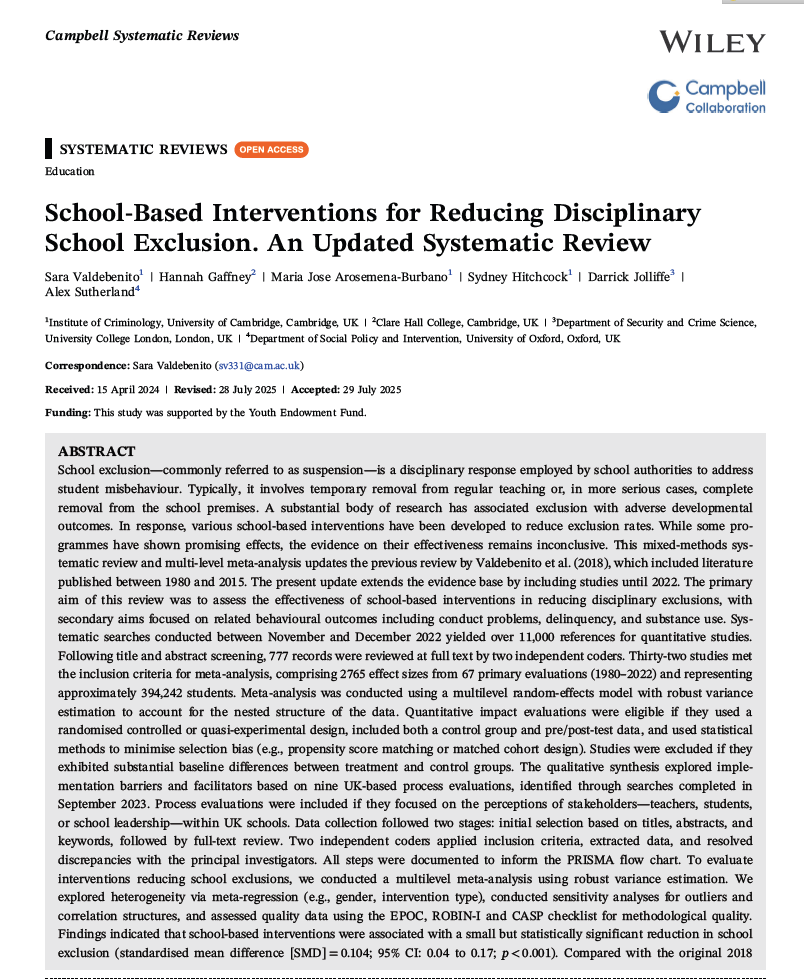
School-Based Interventions for Reducing Disciplinary School Exclusion. An Updated Systematic Review

By

Sara Valdebenito, Hannah Gaffney, Maria Jose Arosemena-Burbano, Sydney Hitchcock, Darrick Jolliffe, Alex Sutherland

School exclusion—commonly referred to as suspension—is a disciplinary response employed by school authorities to address student misbehaviour. Typically, it involves temporary removal from regular teaching or, in more serious cases, complete removal from the school premises. A substantial body of research has associated exclusion with adverse developmental outcomes. In response, various school-based interventions have been developed to reduce exclusion rates. While some programmes have shown promising effects, the evidence on their effectiveness remains inconclusive. This mixed-methods systematic review and multi-level meta-analysis updates the previous review by Valdebenito et al. (2018), which included literature published between 1980 and 2015. The present update extends the evidence base by including studies until 2022. The primary aim of this review was to assess the effectiveness of school-based interventions in reducing disciplinary exclusions, with secondary aims focused on related behavioural outcomes including conduct problems, delinquency, and substance use. Systematic searches conducted between November and December 2022 yielded over 11,000 references for quantitative studies. Following title and abstract screening, 777 records were reviewed at full text by two independent coders. Thirty-two studies met the inclusion criteria for meta-analysis, comprising 2765 effect sizes from 67 primary evaluations (1980–2022) and representing approximately 394,242 students. Meta-analysis was conducted using a multilevel random-effects model with robust variance estimation to account for the nested structure of the data. Quantitative impact evaluations were eligible if they used a randomised controlled or quasi-experimental design, included both a control group and pre/post-test data, and used statistical methods to minimise selection bias (e.g., propensity score matching or matched cohort design). Studies were excluded if they exhibited substantial baseline differences between treatment and control groups. The qualitative synthesis explored implementation barriers and facilitators based on nine UK-based process evaluations, identified through searches completed in September 2023. Process evaluations were included if they focused on the perceptions of stakeholders—teachers, students, or school leadership—within UK schools. Data collection followed two stages: initial selection based on titles, abstracts, and keywords, followed by full-text review. Two independent coders applied inclusion criteria, extracted data, and resolved discrepancies with the principal investigators. All steps were documented to inform the PRISMA flow chart. To evaluate interventions reducing school exclusions, we conducted a multilevel meta-analysis using robust variance estimation. We explored heterogeneity via meta-regression (e.g., gender, intervention type), conducted sensitivity analyses for outliers and correlation structures, and assessed quality data using the EPOC, ROBIN-I and CASP checklist for methodological quality. Findings indicated that school-based interventions were associated with a small but statistically significant reduction in school exclusion (standardised mean difference [SMD] = 0.104; 95% CI: 0.04 to 0.17; p < 0.001). Compared with the original 2018 review, which reported a slightly larger effect size, this update benefits from a broader evidence base and more advanced statistical modelling. However, the results for secondary behavioural outcomes were more limited: effects on conduct problems and delinquency were negligible or non-significant, and the impact on substance use was small and not statistically significant. Risk of bias was assessed using the Cochrane EPOC 2 tool (Higgins and Green 2011) for randomised controlled trials and ROBINS-I (Sterne et al. 2016) for quasi-experimental designs. Randomised studies generally exhibited lower risk of bias, while quasi-experimental studies showed greater variability in quality. Four major themes emerged from the analysis. First, intervention format mattered: flexible, collaborative, and well-structured interventions facilitated implementation, while outdated materials or content misaligned with local context impeded delivery. Second, consistency in school policies and practice enabled smoother implementation, whereas inconsistency acted as a barrier. Third, staff buy-in—particularly among senior leaders—was essential for successful implementation, although resistance from more experienced staff was noted. Finally, perceived effectiveness played a motivational role: visible improvements in pupil behaviour supported continued engagement with the intervention. In summary, the updated review finds that school-based interventions can modestly but significantly reduce school exclusions. While more serious disciplinary sanctions such as permanent exclusions and out-of-school suspensions appear less responsive, in-school exclusion shows greater potential for reduction. Impacts on other behavioural outcomes remain limited. These findings suggest that targeted, context-sensitive interventions supported by strong implementation strategies and whole-school engagement are most likely to achieve sustained reductions in school exclusion.


Evaluating the Texas Risk Assessment System (TRAS) Predictors of Revocation and Early Release in Adult Felony Probation

By Sarah A. El Sayeda, Carley R. Sheltonb, and Michael F. TenEyck

Although much is known about recidivism risk, less is known about factors predicting early release. The current study analyses a sample of 2,070 adult felony probation clients to see if offense characteristics, domains from the Texas Risk Assessment System (TRAS), and demographic variables impact both revocation and successful early release. Results revealed that predictors of early release mirrored those of revocation with one exception—race. Specifically, Black clients were 27% less likely to be granted early release. The findings highlight the TRAS is an effective tool to help mitigate bias for revocation of probation but not for granting early release.

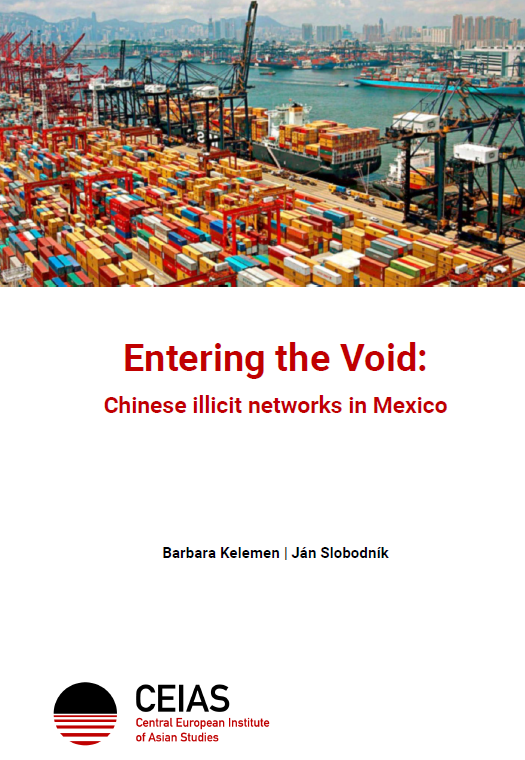
Entering the Void: Chinese illicit networks in Mexico

By Barbara Kelemen | Ján Slobodník

This CEIAS paper aims to shed light on cooperation between Chinese businesses and Mexican criminal groups. It specifically analyzes cases related to drug trafficking and the exploitation of natural resources in three states in Mexico. The topic is particularly relevant for countries in Latin America that have been expanding their commercial ties with China. This research suggests that the lack of state supervision in some of these countries could allow alternative structures—such as criminal groups and Chinese organized networks—to thrive and fill the security and economic void if not regulated properly.

Summary

Mexico’s macroeconomic stability and abundant natural resources have made the country into an attractive destination for Chinese businesses.

The country still suffers from a lack of internal security, most of it stemming from the Mexican Drug War, an ongoing multilateral low-intensity conflict between the Mexican government and a large number of criminal organizations.

In some of Mexico’s states, pervasive violence and instability have resulted in a power vacuum. With the government being unable to guarantee security, non-state actors such as criminal organizations and/or civilian militias seize the opportunity to establish their own rule.

When foreign companies operate in such troubled areas, they inevitably run into problems caused by Mexico’s security issues.

Within this trend of foreign companies operating in Mexico, some level of tacit cooperation has been observed between Chinese businesses and non-state actors. This cooperation is often an outcome of localized security vacuums that are exploited by alternative security providers, such as criminal organizations, that can fill them and provide operational safety for local businesses.

A growing body of research has identified the existence of Chinese illicit networks and their involvement in the trafficking of people, narcotics, and contraband goods, as well as money laundering and illegal arms trade in Mexico.

Concealed under the guise of legal commercial activity, networks of Mexican criminal organizations and their Chinese business partners exploit the dire security situation in some areas of Mexico.

Despite attempts by the Chinese and the Mexican governments to regulate certain sectors that contribute to the existence of the illicit networks in Mexico, there are still substantial opportunities that are ripe for exploitation by the criminal group-legitimate business partnerships

Birthright Citizenship and Youth Crime

By Leander Andres, Stefan Bauernschuster, Gordon B. Dahl, Helmut Rainer, Simone Schüller

This paper studies the impact of birthright citizenship on youth crime. We leverage a reform which automatically granted birthright citizenship to eligible immigrant children born in Germany after January 1, 2000 and administrative crime data from three federal states. Immigrant youth who acquired citizenship at birth are substantially less likely to engage in criminal activity, with estimates indicating a 70% reduction. These results are particularly relevant in light of ongoing debates in the U.S. about abolishing birthright citizenship. Our findings suggest that inclusive citizenship policies can reduce crime and its associated costs, which in turn could strengthen social cohesion.

Exploited to exploiter? Preventing the unjust criminalisation of victims of child criminal exploitation in the transition to adulthood

By The Alliance for Youth Justice

The briefing, funded by the Barrow Cadbury Trust, examines what happens as exploited children turn 18, exploring how responses across safeguarding and criminal justice fail to keep pace with ongoing risk and harm. It sets out principles and practical steps to ensure protection continues into young adulthood and to prevent the unjust criminalisation of victims.

While awareness of CCE has grown, responses for children remain inconsistent and are too often led by punishment. At 18, those weaknesses are magnified. Support frequently falls away, thresholds for help rise, and young adults are more likely to be treated as perpetrators than recognised as victims. As parliament considers the Crime and Policing Bill’s new offence of child criminal exploitation (CCE), there is a critical opportunity to improve the response for victims – but a growing risk that exploited young adults will be prosecuted as perpetrators.

The briefing is informed by an evidence review and consultation with professionals, legal practitioners, academics, civil servants, and sector experts and identifies several urgent issues:


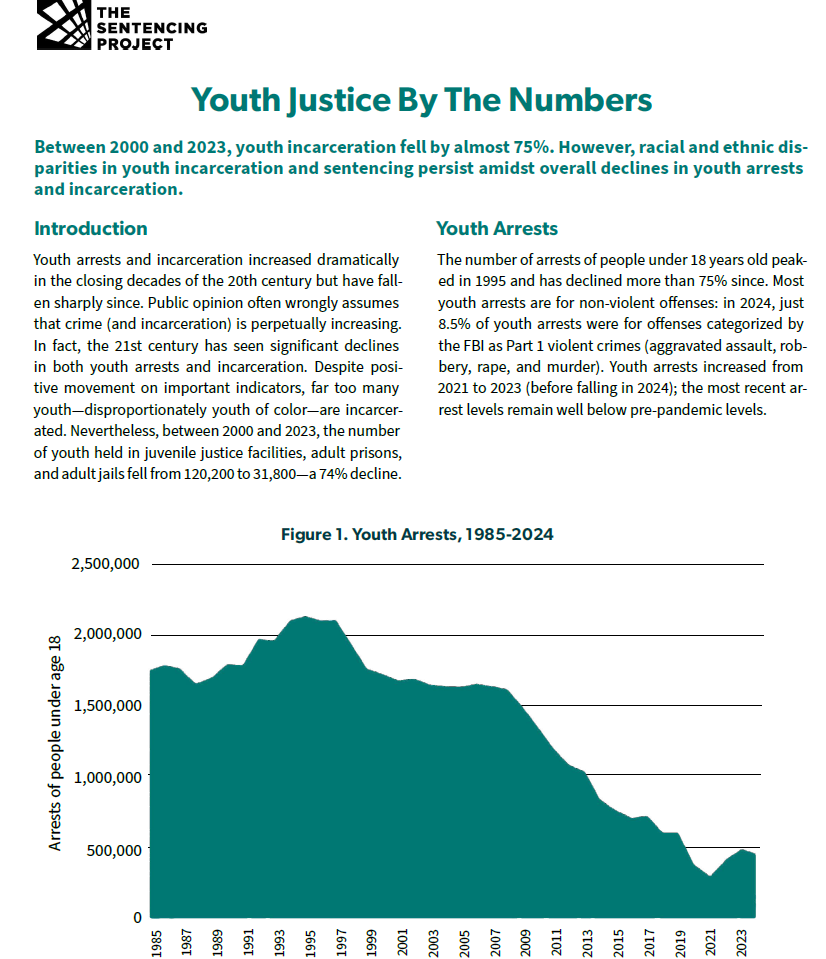
Youth Justice by the Numbers

By Joshua Rovner

Youth arrests and incarceration increased dramatically in the closing decades of the 20th century but have fallen sharply since. Public opinion often wrongly assumes that crime (and incarceration) is perpetually increasing. In fact, the 21st century has seen significant declines in both youth arrests and incarceration. Despite positive movement on important indicators, far too many youth—disproportionately youth of color—are incarcerated. Nevertheless, between 2000 and 2023, the number of youth held in juvenile justice facilities, adult prisons, and adult jails fell from 120,200 to 31,800—a 74% decline.

Understanding variation in juvenile life without parole legislation following Miller

By Leah Ouellet, Daphne M. Brydon, Laura S. Abrams, Jeffrey T. Ward, Dylan B. Jackson, Rebecca Turner, J. Z. Bennett, Reese Howard, Ashley Xu


Miller v. Alabama and Montgomery v. Louisiana restricted states’ ability to impose life without parole for youth under age 18 (henceforth JLWOP). Since Miller, 46 pieces of legislation across 34 states and the District of Columbia have altered JLWOP sentencing policies. The current study provides the first comprehensive and scientific review of this legislation. Using policy surveillance as a methodological guide, we found that a majority of statutes (N = 28) ban JLWOP sentencing, above and beyond the Supreme Court's requirement. Many statutes also extended sentencing reforms and post-conviction relief eligibility to other types of sentencing beyond JLWOP. However, all but one statute still allows either JLWOP or life with parole as a sentencing option for minors convicted of homicide crimes and requires between 15 and 40 years, at minimum, to be served before being eligible for release. Grounding our analysis in institutional theory, we argue that the relative punitivity of the JLWOP reforms enacted was associated with measures of JLWOP institutionalization across states (i.e., pre-Miller JLWOP population and pre-Miller sentencing schema), suggesting that states where JLWOP was more routinely used were more resistant to policy reform.

Policy Implications

The current study provides implications for future decarceration efforts. Findings suggest that state legislatures are willing to enact post-conviction relief measures (e.g., judicial review or “second look” measures) for individuals convicted of violent crimes to address over-incarceration, deviating from previous decarceration efforts focused on non-violent, low-level offenses. In spite of the promising window for juvenile justice reform that Miller provided, however, these reforms have taken a relatively modest, incremental approach toward altering extreme youth sentencing practices in the United States. Policy makers and advocates seeking to promote sentencing reform efforts should factor in how highly institutionalized a sentencing practice is in each state, as this might inform effective strategies for policy change.

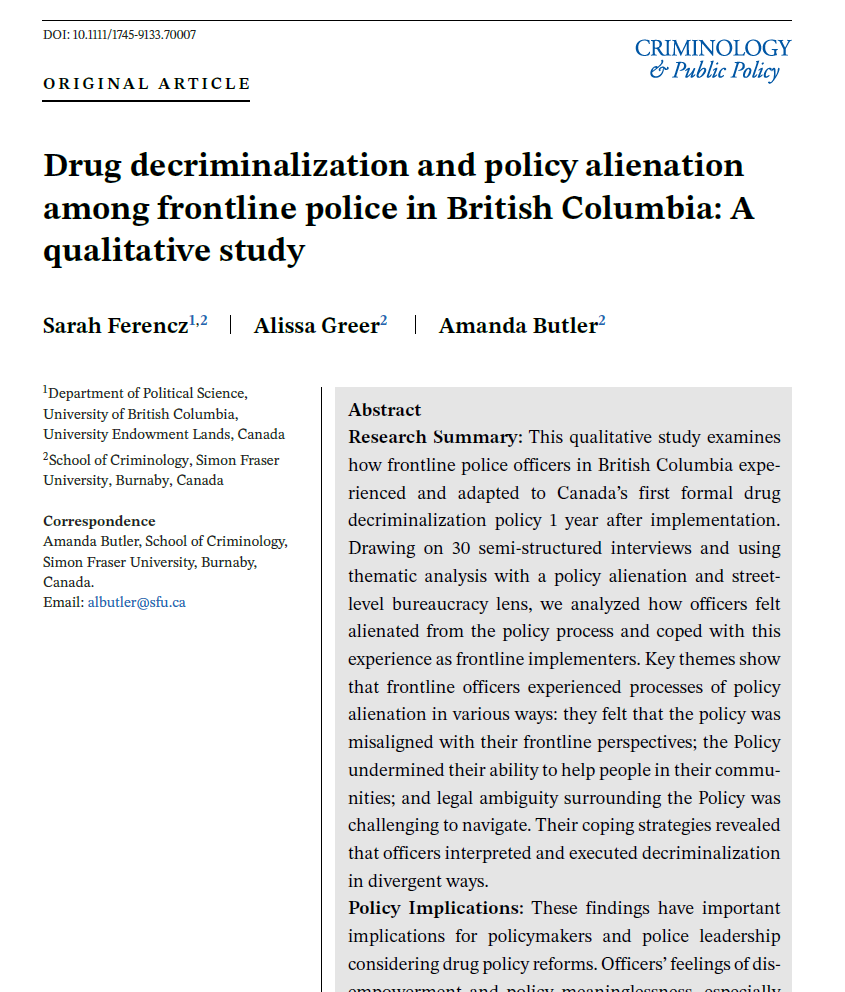
Drug decriminalization and policy alienation among frontline police in British Columbia: A qualitative study

By Sarah Ferencz, Alissa Greer, Amanda Butler

This qualitative study examines how frontline police officers in British Columbia experienced and adapted to Canada's first formal drug decriminalization policy 1 year after implementation. Drawing on 30 semi-structured interviews and using thematic analysis with a policy alienation and street-level bureaucracy lens, we analyzed how officers felt alienated from the policy process and coped with this experience as frontline implementers. Key themes show that frontline officers experienced processes of policy alienation in various ways: they felt that the policy was misaligned with their frontline perspectives; the Policy undermined their ability to help people in their communities; and legal ambiguity surrounding the Policy was challenging to navigate. Their coping strategies revealed that officers interpreted and executed decriminalization in divergent ways.

Policy Implications

These findings have important implications for policymakers and police leadership considering drug policy reforms. Officers’ feelings of disempowerment and policy meaninglessness, especially in contexts of legal ambiguity, may lead to inconsistent or inequitable enforcement. Strengthening communication across police ranks is critical. Middle managers may help translate reform goals, identify resource gaps, and support effective coping strategies. Legal clarity should extend beyond policy updates to help officers reconcile overlapping laws and reduce liability concerns. While there are limits to policy consultation with frontline officers within the hierarchical structure of police institutions, reform efforts should still engage with frontline officers’ working logics. Training should address harmful attitudes and misunderstandings of drug use, clarify legal boundaries, and mitigate unintended harms of enforcement. Ultimately, effective drug policy reform in a multi-jurisdictional system requires acknowledging how frontline officers interpret and shape 

 policy within institutional constraints.

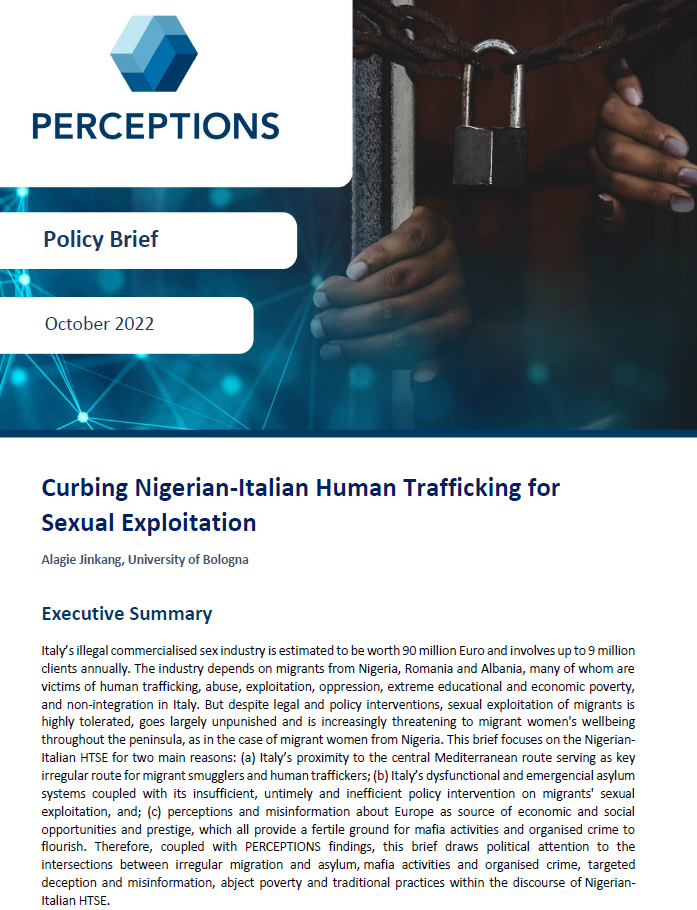
Curbing Nigerian-Italian Human Trafficking for Sexual Exploitation

By Alagie Jinkang

Italy’s illegal commercialised sex industry is estimated to be worth 90 million Euro and involves up to 9 million clients annually. The industry depends on migrants from Nigeria, Romania and Albania, many of whom are victims of human trafficking, abuse, exploitation, oppression, extreme educational and economic poverty, and non-integration in Italy. But despite legal and policy interventions, sexual exploitation of migrants is highly tolerated, goes largely unpunished and is increasingly threatening to migrant women's wellbeing throughout the peninsula, as in the case of migrant women from Nigeria. This brief focuses on the NigerianItalian HTSE for two main reasons: (a) Italy’s proximity to the central Mediterranean route serving as key irregular route for migrant smugglers and human traffickers; (b) Italy’s dysfunctional and emergencial asylum systems coupled with its insufficient, untimely and inefficient policy intervention on migrants' sexual exploitation, and; (c) perceptions and misinformation about Europe as source of economic and social opportunities and prestige, which all provide a fertile ground for mafia activities and organised crime to flourish. Therefore, coupled with PERCEPTIONS findings, this brief draws political attention to the intersections between irregular migration and asylum, mafia activities and organised crime, targeted deception and misinformation, abject poverty and traditional practices within the discourse of NigerianItalian HTSE.

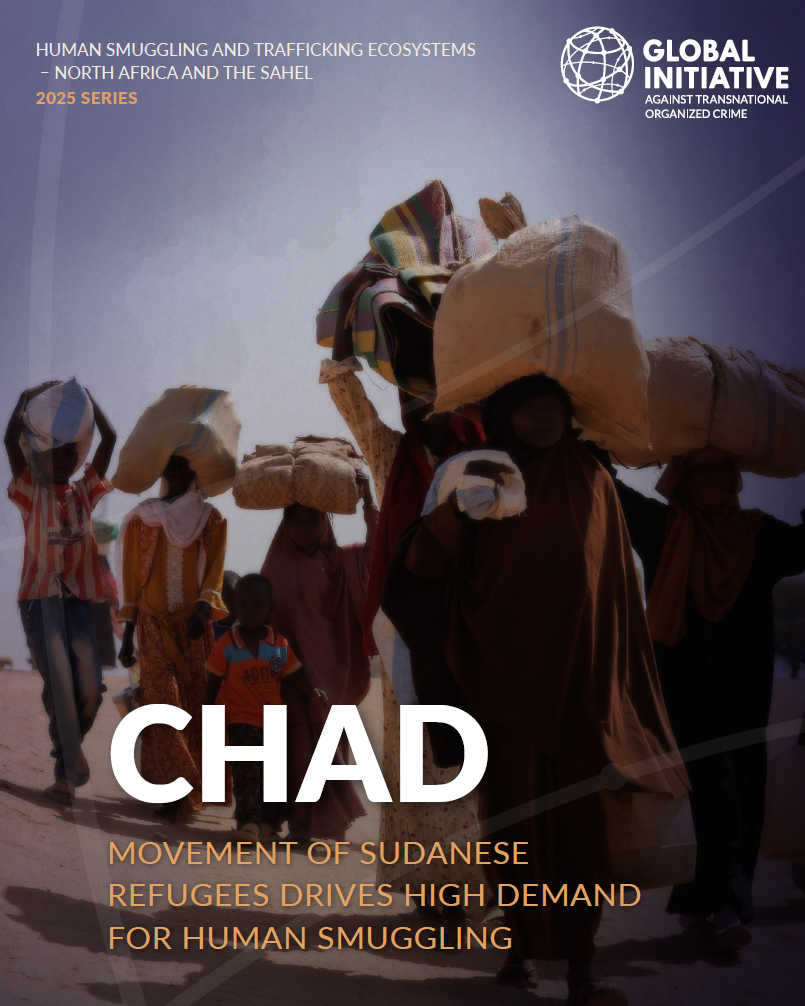
Chad-Movement-of-Sudanese-refugees-drives-high-demand-for-human-smuggling

By Alice Fereday

Chad’s role as a departure and transit country for northbound migration to North Africa and Europe is often overlooked, particularly in comparison to neighbouring Niger and Sudan. However, the country’s position at the crossroads of routes connecting central and eastern Africa to Libya and Niger makes it a significant transit corridor for regional migration, and its role as a bastion of relative stability in an increasingly volatile region has further increased its importance in recent years. Since 2023, the conflict in Sudan and a major influx of refugees into Chad have further shaped these mobility dynamics, making the country a major destination and transit point for Sudanese refugee displacement in the region. At the same time, Chad is navigating a fractious and contested political transition. Political violence escalated in 2024 and remains an important source of tension and political instability. The combination of these complex internal and regional dynamics, and their impact on human smuggling dynamics, make Chad a key country to monitor. A major component of human smuggling dynamics in Chad is internal movements to the country’s northern goldfields. These mobility patterns have typically been shaped by internal factors, including political instability, rebel activity and gold mining.1 This changed in 2023 with the outbreak of the conflict in Sudan and the massive influx of refugees and returnees into eastern Chad. Though northbound movements were temporarily hindered by this shift, which resulted iI emerged as the dominant model of migration in Libya in 2021 and remained so in 2024. Hybrid smuggling refers to the system whereby migrants initially travel to Libya through regular or semi-regular routes, such as flights into airports, and then are moved overland to coastal departure points for the sea crossing to Europe. This system is adaptable to local changes and delivers a consistently high level of attempted departures, despite some localized improvements in security. Critically, the Government of National Unity (GNU), which rules western Libya, continued to struggle with internal division and weak control over crucial areas, especially on the west coast, a key region for human smuggling stretching from the Tunisian border to the city of Zawiya. Political infighting and disputes over state resources 

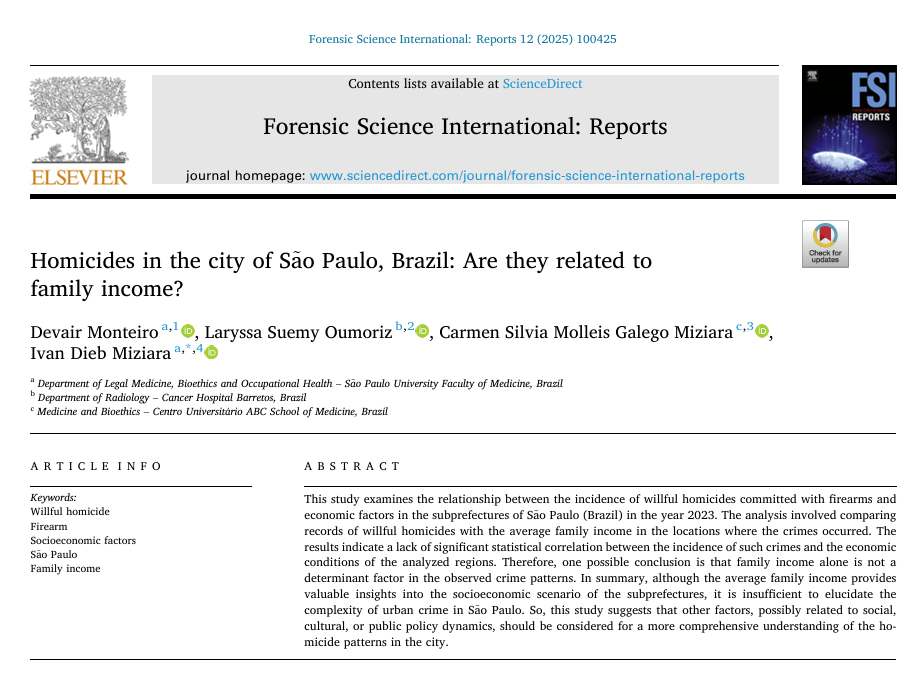
Homicides in the city of Sao ˜ Paulo, Brazil: Are they related to family income?

By Devair Monteiro, Laryssa Suemy Oumoriz , Carmen Silvia Molleis Galego Miziara , Ivan Dieb Miziara

This study examines the relationship between the incidence of willful homicides committed with firearms and economic factors in the subprefectures of São Paulo (Brazil) in the year 2023. The analysis involved comparing records of willful homicides with the average family income in the locations where the crimes occurred. The results indicate a lack of significant statistical correlation between the incidence of such crimes and the economic conditions of the analyzed regions. Therefore, one possible conclusion is that family income alone is not a determinant factor in the observed crime patterns. In summary, although the average family income provides valuable insights into the socioeconomic scenario of the subprefectures, it is insufficient to elucidate the complexity of urban crime in São Paulo. So, this study suggests that other factors, possibly related to social, cultural, or public policy dynamics, should be considered for a more comprehensive understanding of the homicide patterns in the city.

Forensic Science International: Reports, Dec. 2025

Police standards: Discipline 

By William Downs

Police disciplinary proceedings are brought in cases where it is agreed, following an investigation, that a police officer has a case to answer for: • misconduct (meaning a breach of the standards of professional behaviour that justifies disciplinary action of at least written), or • gross misconduct (meaning a breach of the standards of professional behaviour that is so serious to justify dismissal) A decision on whether there is a case to answer is based on whether there is sufficient evidence upon which a misconduct panel “could make a finding on the balance of probabilities” that an officer’s behaviour amounted to misconduct or gross misconduct. The Commons Library briefings Police standards: Complaints and Police Standards: Conduct explain in more detail how allegations of police wrongdoing are investigated.

London: UK Parliament. House of commons Library.. 2025. 19p.

Garbage in garbage out? Impacts of data quality on criminal network intervention

By Wang Ngai Yeung, Riccardo Di Clemente & Renaud Lambiotte

Criminal networks such as human trafficking rings are threats to the rule of law, democracy and public safety in our global society. Network science provides invaluable tools to identify key players and design interventions for Law Enforcement Agencies (LEAs), e.g., to dismantle their organisation. However, poor data quality and the robustness of criminal networks make effective intervention extremely challenging. Although there exists a large body of work building and applying network scientific tools to green intervene criminal networks, these work often neglect the problems of data incompleteness and inaccuracy. Moreover, there is thus far no comprehensive understanding of the impacts of data quality on the downstream effectiveness of interventions. This work investigates the relationship between data quality and intervention effectiveness based on classical graph theoretic and machine learning-based targeting approaches. Decentralization emerges as a major factor in network robustness, particularly under conditions of incomplete data, which renders intervention strategies largely ineffective. Moreover, the robustness of centralized networks can be boosted using simple heuristics, making targeted intervention more infeasible. Consequently, we advocate for a more cautious application of network science in disrupting criminal networks, the continuous development of an interoperable intelligence ecosystem, and the creation of novel network inference techniques to address data quality challenges.

 EPJ Data Sci. 14, 37 (2025)

Artificial Intelligence, Cybersecurity, and National Security:

By Richard Danzig

In this paper, the author warns national security decisionmakers that to accomplish their missions they urgently need to better prepare for the impact of artificial intelligence (AI) on cybersecurity. He analyzes the present failings of the U.S. government in this respect, highlights the consequences of these failings, and makes recommendations for correcting them. He offers this effort as a case study and draws from it ten propositions relevant to those who are more broadly concerned with how AI, other technologies, and human decisions are intertwined and co-evolving.

Santa Monica, CA: RAND, 2025.

 Cybercrime against senior citizens: exploring ageism, ideal victimhood, and the pivotal role of socioeconomics

By Suleman Lazarus  · Peter Tickner  · Michael R. McGuire1

 We discuss cybercrimes against senior citizens from three standpoints: (a) online fraudsters often target senior citizens because of their age, which results in the propagation of ageism. Thus, we explicitly defne ageism in the context of cybercrime, characterising it as the intentional targeting or prioritisation of senior citizens as potential victims of online fraud. (b) Senior citizens are vulnerable to online fraud schemes for physiological (e.g., cognitive decline), psychological (e.g., elevated fear of cybercrime), familial (e.g., insider fraud), and sociocultural (e.g., isolation) reasons. (c) Cybercrimes against older adults predominantly fall under the socioeconomic category driven by a common fnancial motive. We argue that ageism serves as a weapon used by online offenders to target older adults, whilst the concept of the ideal victim acts as society’s shield in response to these reprehensible actions. This framework invites closer attention to how age-based targeting in cyberspace reproduces broader social, economic, and moral asymmetries.  Future empirical studies are warranted to substantiate these claims beyond the theoretical realm.

Security Journal (2025) 38:42